You are used to thinking of time as a straight line: past behind you, present under your feet, and future stretching endlessly ahead. Clocks tick, calendars flip, and your life seems to march forward in one clean direction. But when you start looking closely at what physics and philosophy actually say about time, that simple picture starts to wobble in surprising and sometimes unsettling ways.
Once you let go of the idea that time must be linear, a whole new universe of possibilities opens up. You begin to wonder whether the past is really gone, whether the future might already exist, and whether your sense of “now” is just a useful illusion. In this article, you’ll explore some of the strangest, most well-supported ideas about time from modern science, and you’ll see how they quietly challenge your everyday experience without requiring you to believe in magic.
Are You Sure You Know What “Now” Is?

If you pause and ask yourself what “now” actually is, you probably feel like the answer is obvious: it’s the present moment you’re living in. But when you compare your “now” with someone else’s “now” far away, the certainty starts to crack. Relativity theory tells you that what counts as “simultaneous” events depends on how you’re moving, so two observers in different states of motion won’t agree on what is happening at the same time.
That means your sense of a single universal “now” is not something built into the universe; it’s something your brain stitches together based on your local perspective. You feel like there’s one shared present moment because your senses and your environment are relatively slow and nearby. Once you consider distant galaxies, high speeds, or extremely strong gravity, your private “now” turns out to be just that: private, local, and not uniquely privileged by the laws of nature.
The Block Universe: All Times Existing at Once
Imagine the universe not as a three-dimensional space that changes, but as a four-dimensional block where time is just another dimension, like height or width. In this “block universe” view, your past, present, and future all exist together as different slices of one big structure. You move through this block the way a character moves through the pages of a book, experiencing each page as if it’s the only one that’s real, even though the whole story already exists.
In this picture, you are not watching time flow; you are simply located at different places in spacetime. The event where you are reading this, your childhood birthday, and a future conversation you haven’t had yet are all fixed in the block. What changes is not the universe itself, but your subjective experience of moving along one particular line through that block. This idea can feel unsettling, but it fits surprisingly well with how relativity treats time and space on equal footing.
Relativity: When Time Bends, Stretches, and Slows Down
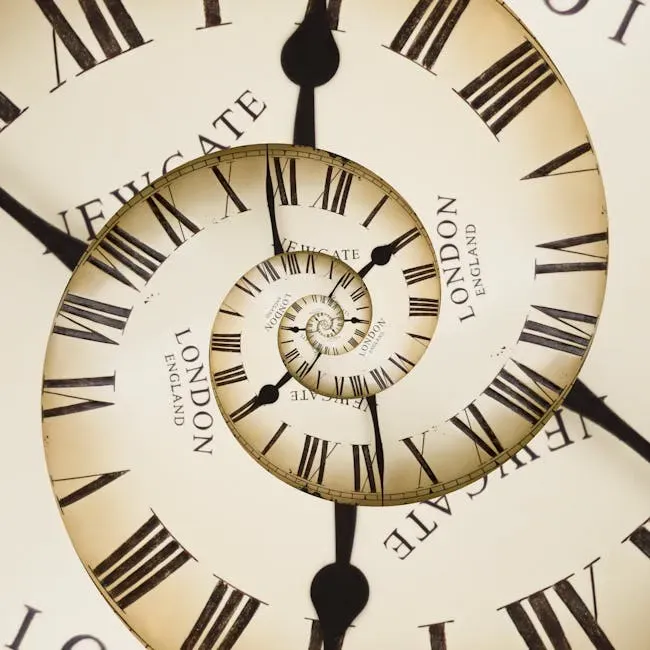
You already know that time seems to crawl when you are bored and race when you are busy, but physics shows you that time can literally run at different rates depending on speed and gravity. If you fly in a fast plane or orbit Earth on a satellite, your clock will tick ever so slightly slower than a clock on the ground. The effect is tiny in everyday life, but it becomes essential when you’re dealing with high precision systems like GPS, which would fail without correcting for time dilation.
Strong gravity can also warp time, so that a clock near a massive object ticks more slowly than a clock farther away. If you hovered just outside a black hole (and somehow survived), you would experience your own time as normal, but observers watching you from a distance would see you moving in extreme slow motion. This kind of behavior makes it harder to hold onto the idea of a single, uniform time that flows smoothly for everyone in the same way.
Entropy and Why Time Feels Like It Flows One Way
Even if physics allows time to be treated like a dimension, you still feel a strong sense of direction: you remember the past but not the future, eggs break but never unbreak, and spilled coffee never jumps back into the cup. This arrow of time is deeply tied to entropy, a measure of disorder in a system. In general, physical systems tend to evolve from more ordered states to more disordered ones, and that one-way drift gives you the feeling of moving from “before” to “after.”
The laws of physics that govern tiny particles mostly work the same forward or backward, but the overall state of the universe started in a remarkably ordered condition. As it evolves, entropy increases, and you experience that increase as the forward march of time. If you ever wondered why you can remember childhood but not your old age, the best answer science has right now is that your memories are physical records formed as entropy grows, not because the future “does not exist” yet in any strict physical sense.
Quantum Weirdness: Superposition, Measurement, and Time
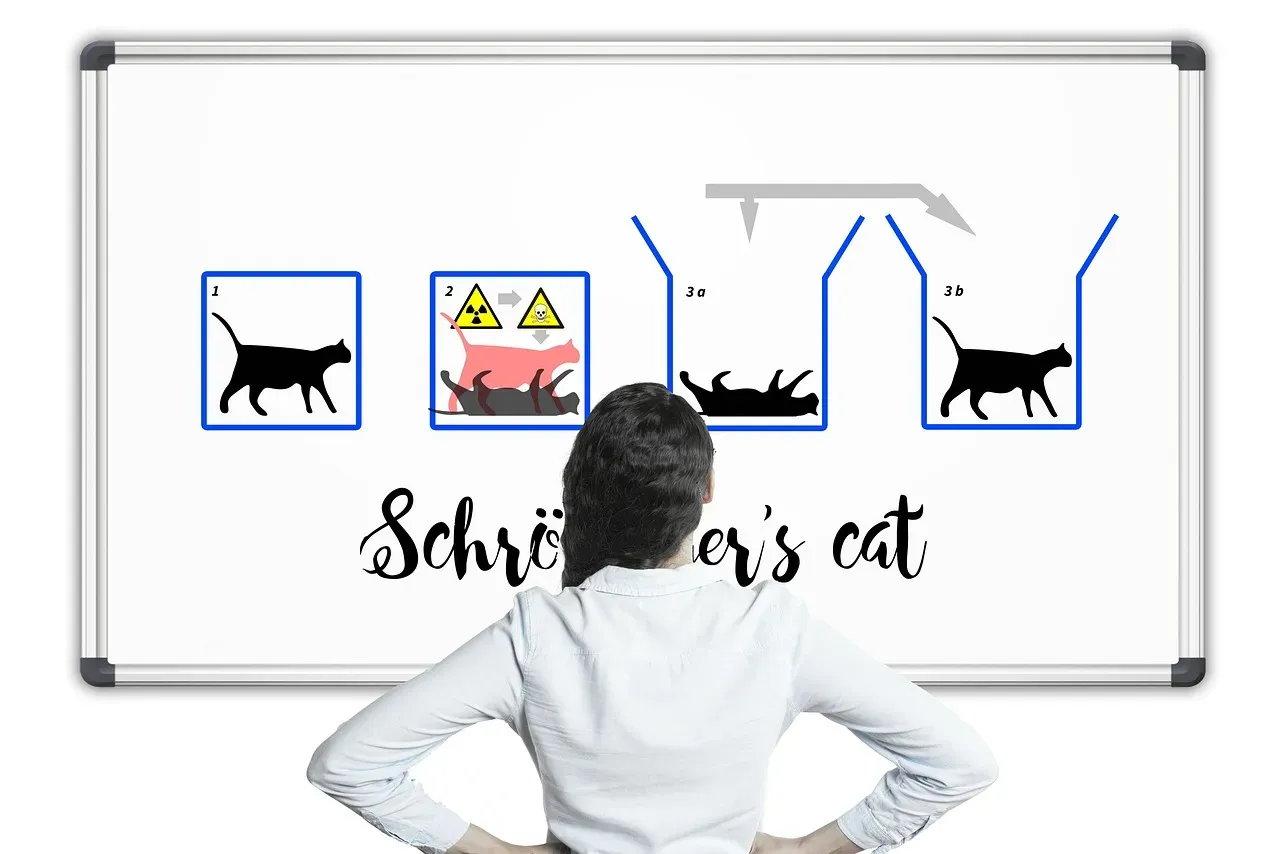
Some interpretations of quantum mechanics suggest that there is no unique single history of the universe, only a web of possible histories that interfere with one another. From your point of view, you still experience a single chain of events, one moment leading to the next. But under the surface, the mathematics does not clearly prefer one timeline over another. You are left with the unsettling possibility that your intuitive story of a single, cleanly unfolding future may be more about how your mind organizes information than about how reality fundamentally works.
Are You Really Free If the Future Already Exists?

If you take the block universe seriously, you might immediately worry about free will: if your future is already laid out in spacetime, can you genuinely choose anything? From this perspective, your decisions are just as much part of the block as your birth and your earlier memories. You do not “change” the block; you are one of the patterns inside it, and your choices are woven into that pattern from the start, even if you only discover them as you go along.
However, from your own first-person perspective, you still experience decision-making as real and meaningful. You weigh options, reflect on values, and then act, and that process is part of how the universe behaves. Some philosophers argue that your choices can be both determined and free, in the sense that they arise from who you are, what you know, and what you care about, all of which are themselves physical facts. You may not escape the laws of nature, but you are also not a passive spectator being dragged through time; you are an active participant whose actions are genuine events in the fabric of spacetime.
Living in a Nonlinear Time: How This Changes Your Perspective
Even if you never solve the deepest questions about time, simply entertaining the idea that time is not fundamentally linear can change how you live. You may start to see your life less as a narrow track and more as a complex landscape of possibilities, shaped by physical laws but still experienced through your choices and relationships. Thinking in terms of spacetime can make the present moment feel both smaller, as just one slice of a vast structure, and more precious, as the only place where you actually feel anything.
You might also find comfort in the idea that moments you love are not truly “gone” in a block universe sense; they exist as parts of spacetime, even if you cannot revisit them. That does not remove grief or loss, but it can offer a different way to picture your story, one where every instant you live is permanently etched into the universe’s geometry. Instead of imagining time as a river that carries everything away, you can picture it as a grand tapestry in which every thread you lay down remains forever part of the pattern.
When you step back from all these ideas, you realize that your usual picture of time as a simple, linear track is more like a convenient user interface than a deep description of reality. Physics invites you to think of time as flexible, relative, woven into space, and possibly all “there” at once. Philosophy reminds you that your sense of flow and direction might be anchored less in the cosmos and more in memory, entropy, and the way your mind works.
Instead of making life feel meaningless, this can do the opposite: it can make every moment feel like a deliberate, irreplaceable part of a much larger whole. You may never get a final, satisfying answer to what time really is, but you can let the mystery sharpen your attention to the present and soften your grip on rigid expectations about the future. Knowing all this, how does it change the way you want to spend the next moment on your personal line through the universe?