
If you have ever felt that something or someone far away was strangely in sync with you, you have already brushed up against the kind of mystery that quantum entanglement is trying to describe. You do not need a physics degree or a chalkboard full of equations to grasp the main idea; you just need a bit of curiosity and a willingness to let go of everyday intuitions for a moment. In fact, once you see what is going on, you may find that the world feels even more astonishing and alive than you thought.
In this article, you are going to walk through entanglement step by step, in plain language, staying close to what experiments actually show rather than drifting into wild speculation. You will see how two tiny particles can act like a perfectly coordinated pair, why this does not mean you can send secret messages faster than light, and how this strange behavior powers real technologies like quantum computers and ultra-secure communication. By the end, you will understand why many scientists say that at the deepest level, reality is less about isolated things and much more about relationships and connections.
What Quantum Entanglement Really Means (Without the Jargon)

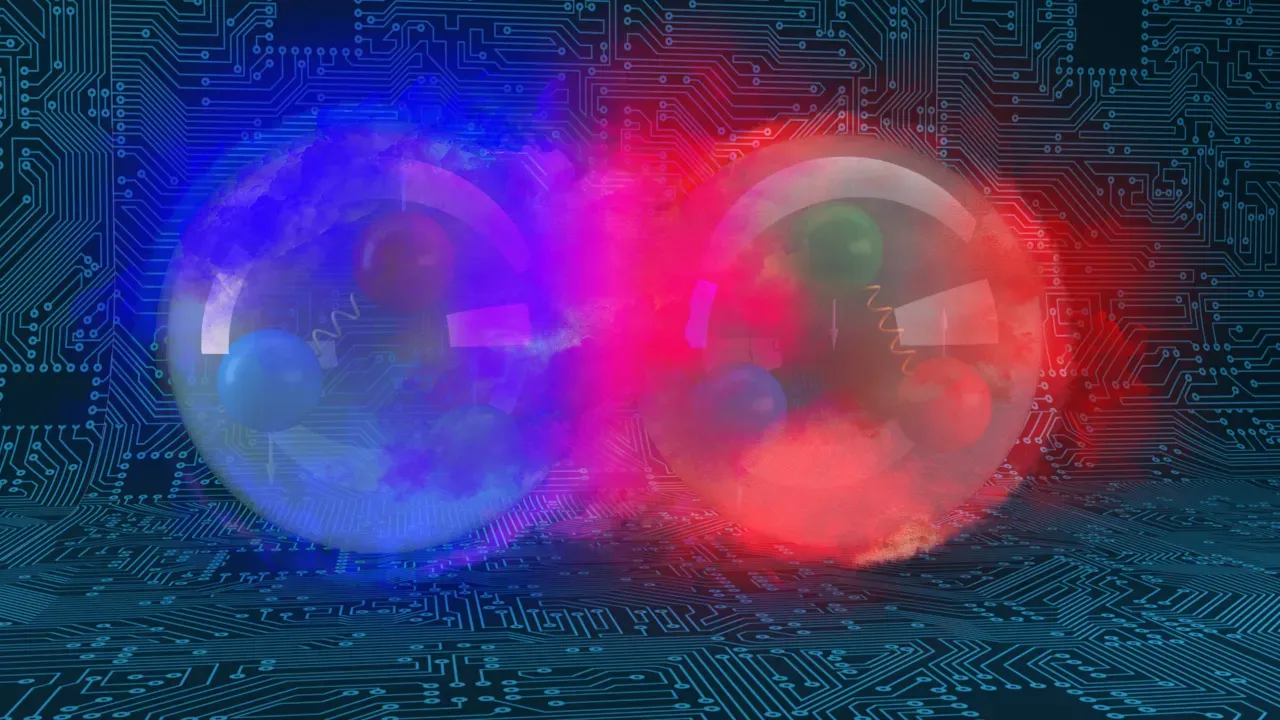
At its core, quantum entanglement is the idea that two or more particles can share a single, unified state, no matter how far apart they are. Instead of each particle having its own separate description, you have to describe them together, like a single system, because what happens to one is tightly linked to what you find when you look at the other. You can imagine it like a pair of perfectly matched gloves: if you open a box and see the left glove, you instantly know the other box contains the right one, even if it is on the other side of the planet.
Where entanglement goes beyond the glove example is that, before you measure them, the quantum particles are not just waiting around with fixed properties already decided. Instead, they exist in a kind of spread-out cloud of possibilities, and only when you measure do you get a definite result. When two particles are entangled, this cloud of possibilities is shared between them, so your measurement on one instantly fixes what you will see on the other, in a way that no ordinary pre-arranged plan can explain. You are not just revealing what was already there; you are helping to create the outcome, and that outcome is correlated across distance in a way that defies everyday logic.
How Einstein Turned This Into a “Spooky” Problem
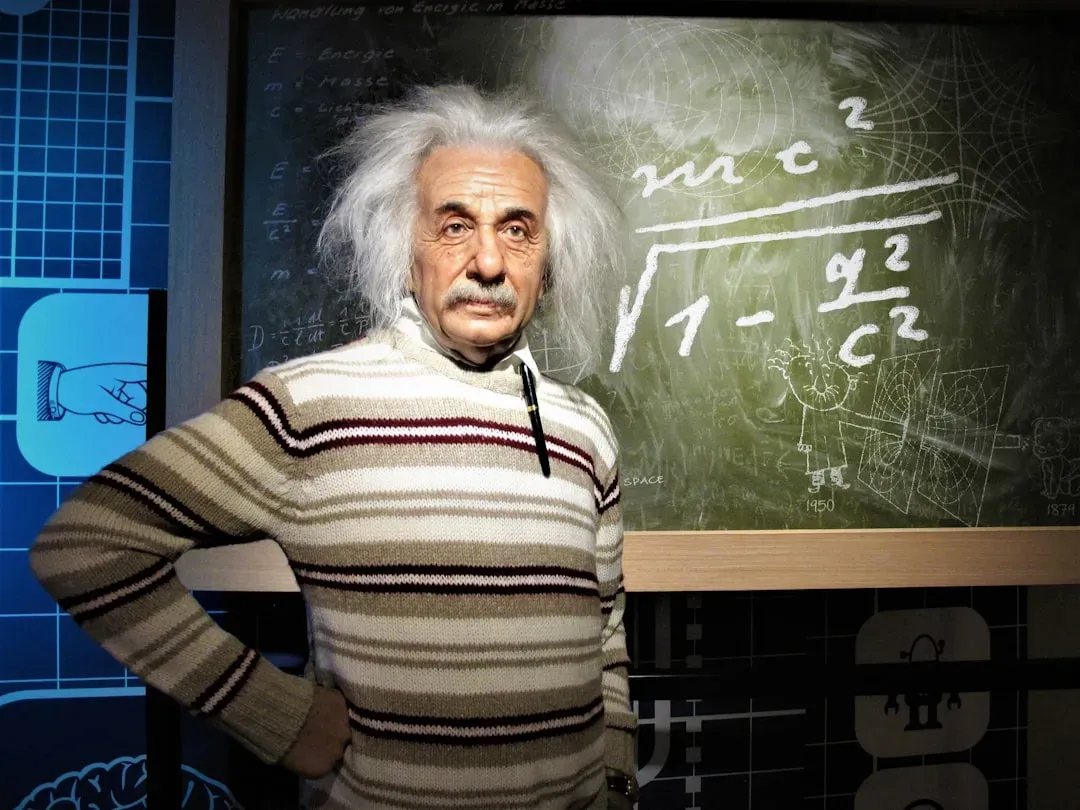
You might be relieved to know that even Albert Einstein thought this stuff sounded suspicious. He famously argued that entanglement implied a kind of “spooky” influence at a distance that should not be possible if nothing can travel faster than light. From his point of view, the only reasonable explanation was that particles carried hidden instructions all along, so that when you finally measured them, they would simply reveal those pre-set values and no mysterious faster-than-light connection would be needed. If you feel tempted by that explanation, you are in very good company.
The problem for Einstein’s view is that later analyses and experiments showed that any such hidden instruction set would have to obey certain mathematical limits on how strongly the measurement results could be correlated. These limits, known as Bell inequalities, give you a concrete way to test whether the world is built from local hidden instructions or something stranger. When physicists carried out these tests with photons and other particles, the results exceeded the limits that local hidden instructions would allow. That means you are forced to abandon at least one cherished idea: either influences never travel faster than light in any sense, or physical properties are not fixed in advance in the way you instinctively imagine.
Bell Tests: How Experiments Prove Entanglement Is Real

If all of this sounds like an argument about philosophy, Bell tests are where it becomes hard experimental fact. In a typical setup, you create a pair of entangled photons and send them to two distant detectors, where you randomly choose how to measure each one. By collecting many measurement results and comparing the correlations between the two sides, you can check whether they obey or violate Bell’s inequalities. Over the decades, experiments have consistently found that the correlations are stronger than any local hidden instruction model can produce.
Modern versions of these tests go out of their way to close every possible loophole you might worry about, such as detector inefficiencies or subtle ways the random choices might not be truly independent. Researchers have used distant telescopes, ultra-fast electronics, and carefully shielded setups to make sure that no ordinary signal could coordinate the outcomes in time. When you look at the data from these experiments, you are staring directly at the evidence that nature really does behave in an entangled, non-classical way. You are not relying on interpretation or hearsay; you are relying on repeated, independently confirmed measurements.
Does Entanglement Mean You Can Send Messages Faster Than Light?

Once you hear about entanglement, your first instinct might be to imagine an instant cosmic telephone: you tinker with one particle here, and your friend sees a message over there, faster than any radio signal could travel. It sounds like the perfect sci-fi communication tool, but nature is not that generous. When you measure an entangled particle, you always see a result that, by itself, looks completely random. Your friend, measuring the other particle, also sees random results. It is only when you later compare notes that you notice the results are correlated in that eerie, stronger-than-classical way.
This detail matters because it blocks you from encoding a useful message into those results. You cannot choose which outcome you get for your measurement, so you cannot use the entanglement to dial a pattern of zeros and ones that your friend could decode instantly. Even though the correlations are established faster than light could travel, no usable information gets transmitted that way. In a strange compromise, you are left with a universe where connections exist beyond classical limits, but the familiar speed-of-light rule for sending signals remains firmly in place, preserving the overall consistency of relativity and causality.
How You Already Use Quantum Entanglement in Daily Life
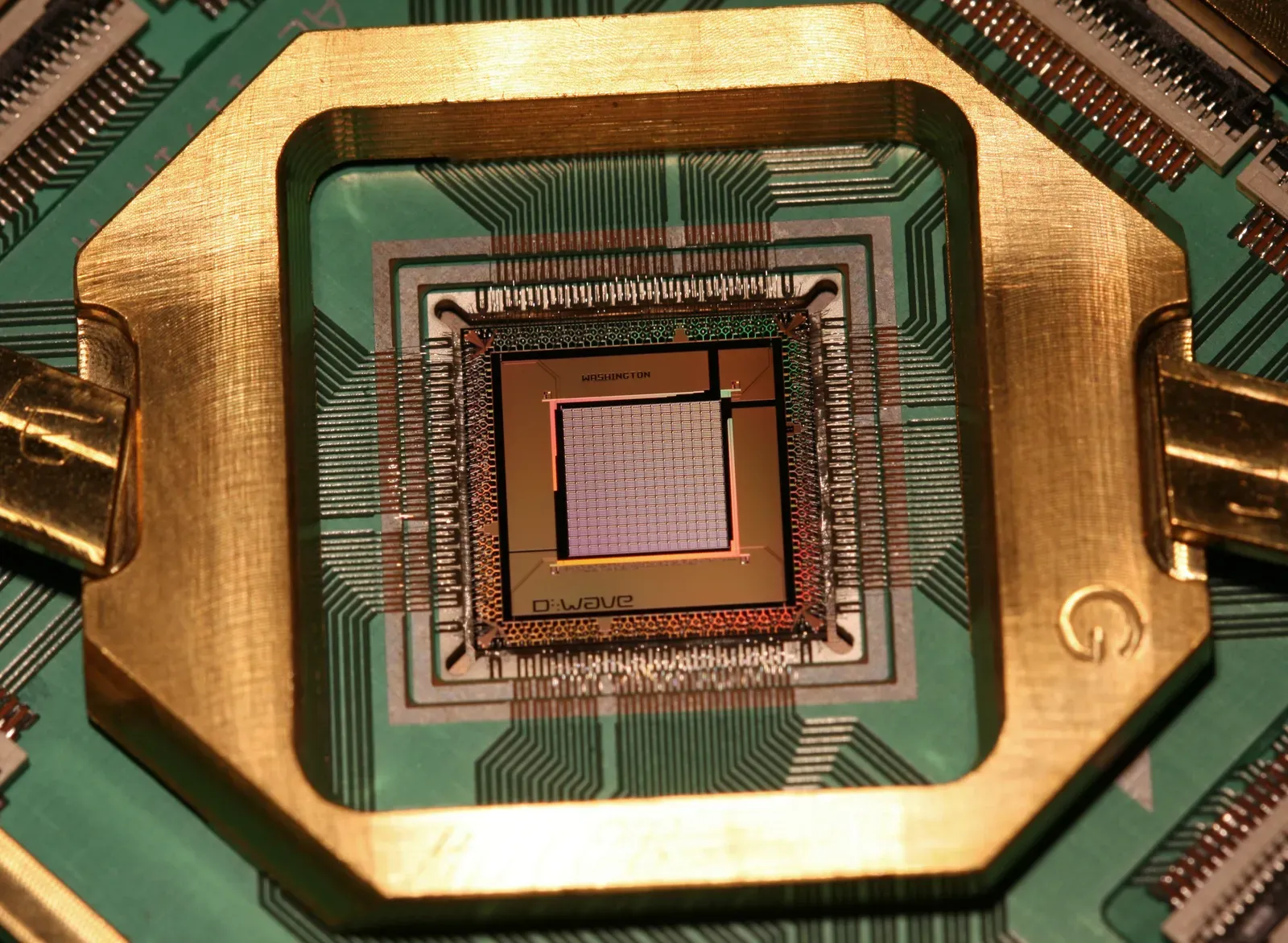
Even if all of this feels abstract, you are already living in a world that quietly depends on quantum principles, including ideas closely related to entanglement. For example, the tiny chips in your devices rely on the quantum behavior of electrons in semiconductors, and the lasers in scanners, fiber optics, and Blu-ray players depend on carefully controlled quantum transitions. While not every modern gadget uses entanglement directly, the same theoretical framework that describes entanglement underpins the technologies you interact with every day.
As experiments and engineering have advanced, you now see entanglement starting to move out of the lab and into practical applications. Quantum key distribution systems use entangled photons to let two parties share encryption keys in such a way that any eavesdropping attempt disturbs the correlations and can be detected. Early quantum networks that link distant labs through entangled states have already been demonstrated, hinting at future communication systems that will feel just as normal to you as Wi‑Fi does today. What began as a puzzling thought experiment is slowly turning into an engineering resource.
Quantum Computing: Using Entanglement as a New Kind of Resource
If you have heard about quantum computers, you have already run into one of the most ambitious uses of entanglement. Instead of ordinary bits that are either zero or one, quantum computers use quantum bits, or qubits, that can exist in superpositions of zero and one. When you entangle many qubits together, you create a rich web of correlations that lets the machine explore many possible solutions in a structured way that classical computers cannot easily imitate. You can think of it as a kind of collective dance, where the steps of each qubit are tightly choreographed with the others.
From your perspective, what matters is that this entanglement can, in principle, give quantum computers dramatic advantages for certain specialized tasks, like factoring large numbers, simulating complex molecules, or optimizing tricky problems. Researchers are still wrestling with real-world challenges such as noise, error correction, and scaling up the number of reliable qubits. However, the devices that already exist, while limited, have shown behaviors that strongly suggest entanglement is doing useful work. As this field matures, you may find that systems built on entangled qubits start to influence everything from drug design to logistics and materials science.
Why Entanglement Changes How You Think About Reality

Beyond gadgets and algorithms, entanglement nudges you to rethink what it means for something to be “real.” In everyday life, you tend to picture objects as having their own independent properties, sitting in space like marbles on a table. Entanglement forces you to accept that, at the quantum level, the most fundamental description is often not about individual objects at all, but about the relationships between them. The properties you measure on each particle can depend on the entire experimental context, including choices you make far away.
This does not mean you have to throw away logic or believe that anything goes; it means you adopt a new kind of logic that is tuned to how the world actually behaves. Different interpretations of quantum mechanics offer different stories about what is really going on behind the equations, but they all agree on the experimental predictions that include entanglement. As you get comfortable with this, you may notice your intuition slowly shifting from “things first, connections second” to “connections first, things as a byproduct,” which can be a surprisingly powerful way to see both physics and everyday life.
Are We “All Connected” in a Literal Quantum Sense?
With a phrase like “we are all connected,” it is tempting to imagine that quantum entanglement offers a scientific proof of spiritual or emotional unity. You should be careful here. Entanglement is a precise physical phenomenon with strict rules, and it does not say that every person or object on Earth is currently entangled in a useful or controllable way. In practice, entangled states are extremely delicate, and interactions with the environment tend to destroy that delicate correlation pattern very quickly, a process known as decoherence.
That said, entanglement does highlight something profound: the universe is not fundamentally a collection of isolated pieces bumping into each other. The deepest mathematical descriptions you have involve holistic structures where parts of a system cannot always be considered independently. If you like metaphors, you might say that the universe behaves less like a pile of bricks and more like an intricate pattern in a tapestry, where pulling on one thread changes the shape of the whole design. While that does not give you a magic shortcut for personal growth or relationships, it does offer a humbling reminder that your intuition about separation and independence is not the final word on how reality is built.
Conclusion: Living in a World Woven From Invisible Links
When you step back and look at quantum entanglement as a whole, you see a picture of reality that is stranger and richer than the one you grew up with, but also surprisingly coherent. You learn that particles can share a single state across distance, that experiments rule out simple hidden-instruction explanations, and that faster-than-light messaging is still safely off the table. At the same time, you discover that these invisible links are already starting to power new forms of computing, communication, and measurement that may reshape parts of your technological landscape in the coming decades.
Most importantly, you come away with a new way of thinking: instead of seeing the world as a set of separate objects, you start to see it as a web of relationships, where what something is cannot always be disentangled from what it is connected to. You do not need to exaggerate, mystify, or force big spiritual claims to feel the weight of that shift; the facts themselves are startling enough. As you go back to your daily routines, you might find yourself wondering, every now and then, how many unseen patterns and connections are quietly shaping the world around you. Knowing what you now know, does reality feel a little less solid and a little more alive to you?