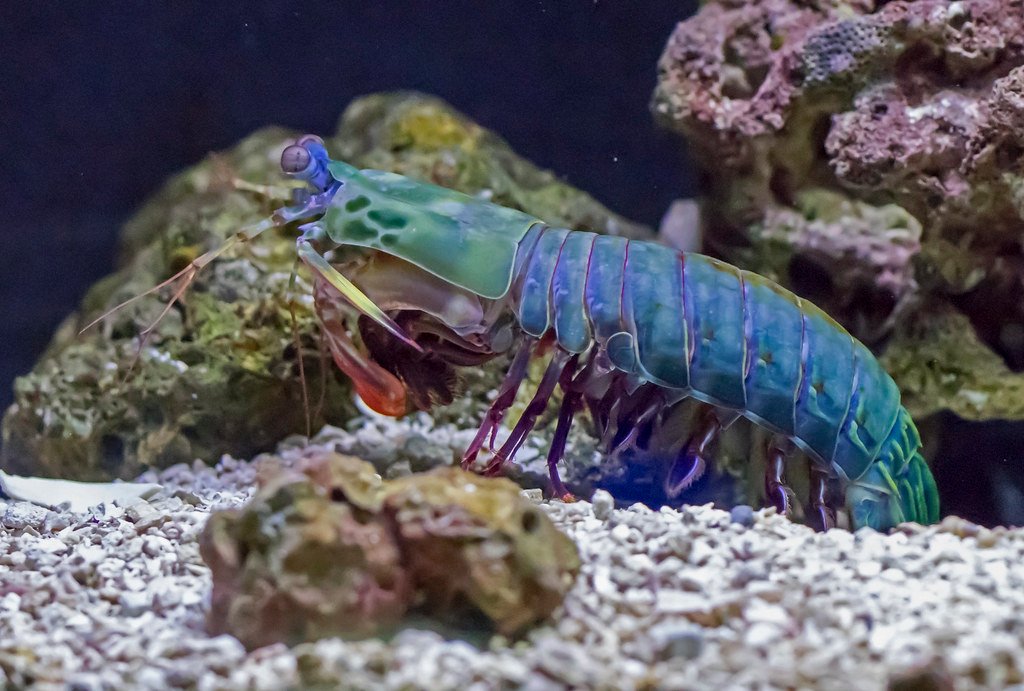
Imagine a tiny creature, no bigger than your thumb, capable of creating temperatures that rival the surface of the sun with nothing more than a snap of its claw. This isn’t science fiction or some mythical beast from ancient legends. This is the mantis shrimp, one of the most extraordinary predators lurking in our oceans right now. These vibrant, alien-looking crustaceans pack a punch so powerful that it creates cavitation bubbles reaching temperatures of 8,500 degrees Fahrenheit – nearly as hot as the sun’s surface at 10,000 degrees Fahrenheit.
Meet the Rainbow Warrior of the Deep
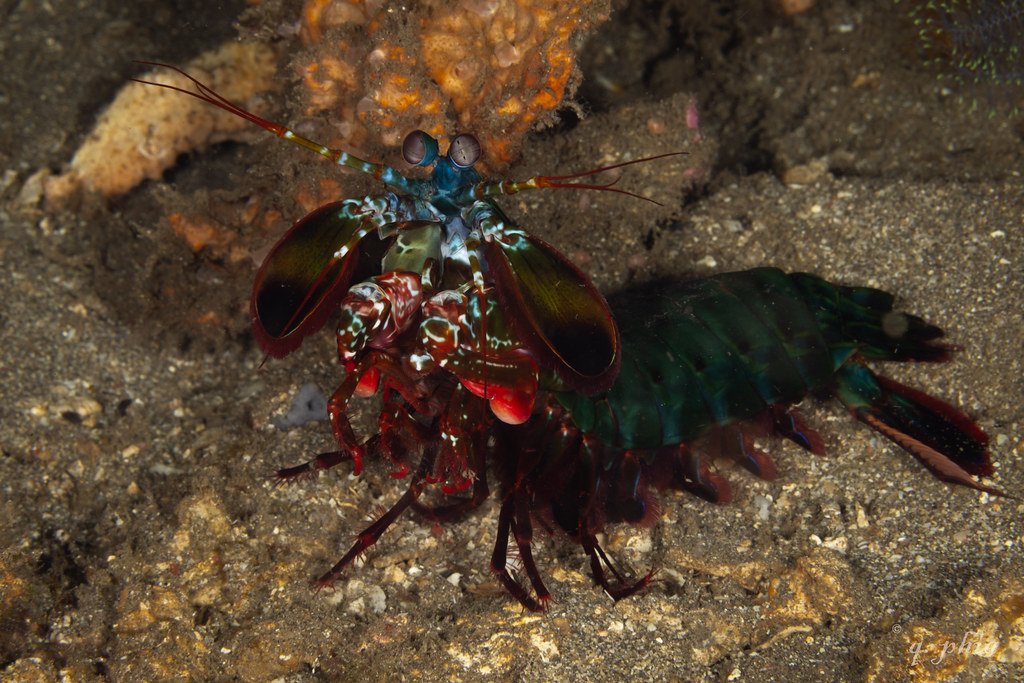
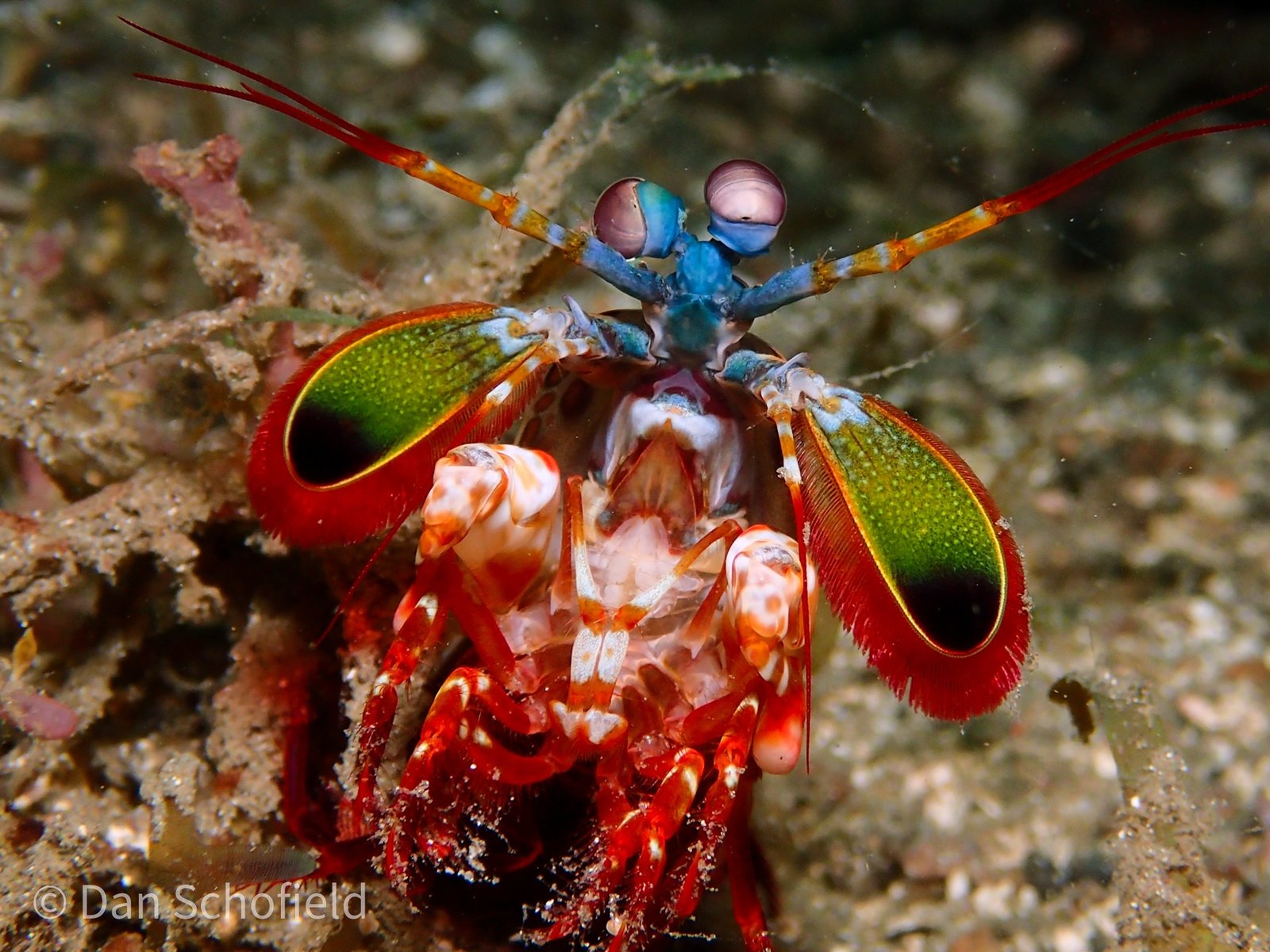
The mantis shrimp isn’t actually a shrimp at all, but belongs to an order called Stomatopoda. These marine marvels come in over 400 species, each more colorful and bizarre than the last. Their bodies shimmer with iridescent greens, blues, reds, and oranges that would make a peacock jealous.
Most mantis shrimp measure between 4 to 6 inches long, though some giants can reach up to 15 inches. They’ve been patrolling ocean floors for over 400 million years, which means they were perfecting their deadly techniques long before dinosaurs even existed. Think of them as the ocean’s ultimate boxing champions, except their gloves are naturally weaponized.
The Physics-Defying Punch That Creates Plasma

When a mantis shrimp strikes, it accelerates its club-like appendages at speeds reaching 75 feet per second. To put this in perspective, that’s faster than a .22 caliber bullet leaving the barrel of a gun. The acceleration is so intense that it generates forces over 1,500 times the shrimp’s own body weight.
This incredible speed creates something called cavitation – the formation of vapor-filled bubbles in liquid. When these bubbles collapse, they generate temperatures hot enough to melt metal and produce actual light through a process called sonoluminescence. It’s like having a miniature star exploding in the water every time they punch.
The strike happens so fast that if you blinked, you’d miss it entirely. We’re talking about movements that last just 2.7 milliseconds from start to finish.
Two Deadly Weapon Types for Different Hunting Styles

Mantis shrimp fall into two main categories based on their hunting weapons: smashers and spearers. Smashers possess club-like appendages perfect for pulverizing hard-shelled prey like crabs, snails, and mollusks. These clubs are reinforced with a structure similar to carbon fiber, making them incredibly durable.
Spearers, on the other hand, have sharp, pointed appendages lined with barbs. They prefer softer prey like fish and worms, impaling them with lightning-fast strikes. Both types are equally deadly, just specialized for different dining preferences.
Eyes That Put Human Vision to Shame

If their punching power wasn’t impressive enough, mantis shrimp possess what might be the most complex eyes in the animal kingdom. While humans have three types of color receptors, mantis shrimp have up to 16 different types. They can see ultraviolet, visible, and polarized light simultaneously.
Their eyes move independently of each other, giving them a 360-degree view of their surroundings. Each eye has trinocular vision, meaning they can judge depth and distance with just one eye – something humans need both eyes to accomplish. It’s like having built-in thermal imaging, night vision, and high-definition cameras all rolled into one.
The Secret Behind Their Indestructible Clubs

Scientists have discovered that mantis shrimp clubs are biological masterpieces of engineering. The outer layer contains a mineral called hydroxyapatite, the same stuff that makes our teeth and bones hard. Beneath this lies a layer of chitin fibers arranged in a spiral pattern, similar to plywood construction.
This unique structure allows the club to absorb and distribute impact forces without breaking. Even after thousands of strikes, these weapons remain intact. Engineers are now studying this design to create better body armor and impact-resistant materials for everything from cars to spacecraft.
Hunting Techniques That Would Impress Navy SEALs

Mantis shrimp are patient, strategic hunters who spend hours planning their attacks. They typically hunt from burrows, which they excavate with remarkable precision. These underground lairs can extend several feet into the seafloor and feature multiple chambers for different purposes.
When prey approaches, they remain perfectly still until the optimal moment. Then they explode from their hiding spots with devastating accuracy. Their strikes are so precise they can crack aquarium glass, which is why marine biologists handle them with extreme caution.
Some species even use tools, manipulating rocks and coral pieces to improve their hunting success or fortify their burrows.
The Sonic Boom Effect Underwater

The mantis shrimp’s punch creates a secondary shockwave that can be just as deadly as the initial impact. This shockwave travels through water at incredible speeds, stunning or killing prey even if the primary strike misses. It’s essentially like creating a sonic boom underwater.
The cavitation bubbles that form during the strike collapse with such force that they emit light and sound. This phenomenon, called cavitation-induced luminescence, is so intense it can be detected by underwater microphones from considerable distances.
Temperature Records That Break Thermodynamics

The temperatures generated by mantis shrimp strikes are truly mind-boggling. At 8,500 degrees Fahrenheit, these tiny creatures create heat comparable to lightning bolts or the core of a nuclear reactor. For context, water boils at 212 degrees Fahrenheit, and most metals begin melting around 2,000 degrees.
These extreme temperatures exist for only microseconds and in incredibly small spaces, which is why the shrimp doesn’t cook itself. The surrounding water absorbs and disperses the heat almost instantaneously. It’s like having a controlled nuclear explosion happening in a space smaller than a grain of rice.
Aquarium Nightmares and Glass-Breaking Legends
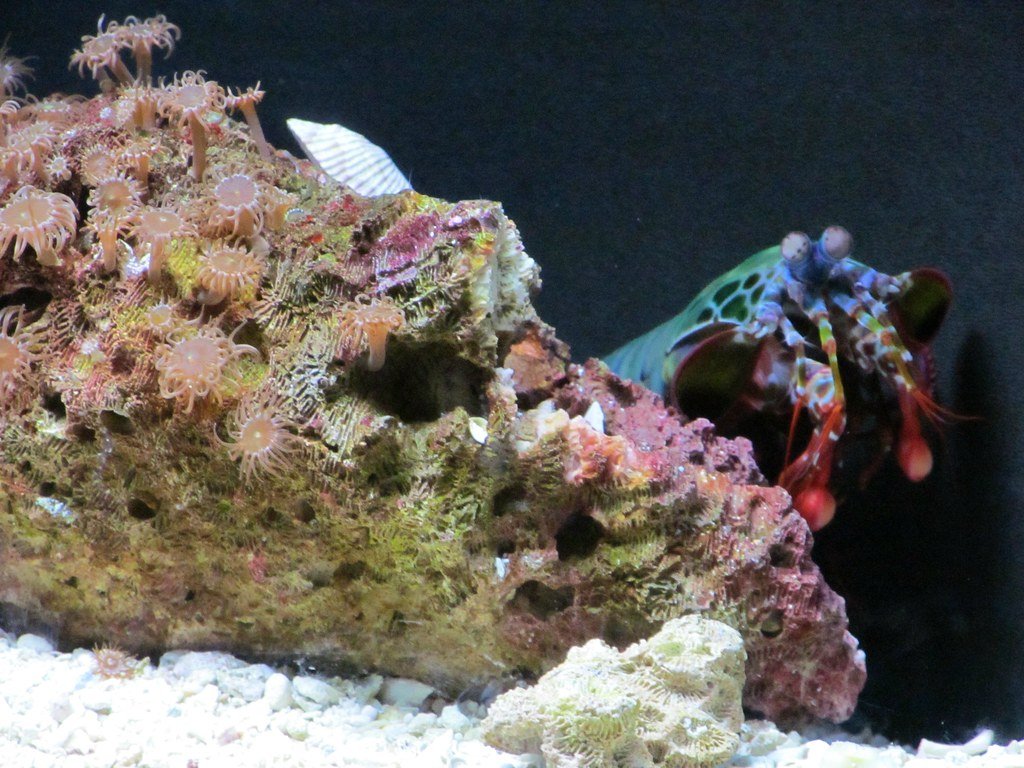
Marine aquarium enthusiasts have learned to fear mantis shrimp the hard way. These creatures regularly shatter the thick glass walls of their enclosures, earning nicknames like “thumb splitters” and “glass breakers.” Public aquariums that display them often use reinforced acrylic that’s several inches thick.
There are countless stories of mantis shrimp escaping their tanks and terrorizing other aquarium inhabitants. They’ve been known to systematically hunt and eliminate every other creature in a tank overnight, like underwater serial killers.
Evolutionary Arms Race Spanning Millions of Years

The mantis shrimp’s incredible abilities are the result of an evolutionary arms race that’s been going on for hundreds of millions of years. As their prey developed stronger shells and better defenses, mantis shrimp evolved more powerful weapons and hunting techniques.
This constant evolutionary pressure has produced creatures that are essentially living weapons systems. Every aspect of their anatomy, from their reinforced clubs to their lightning-fast reflexes, has been honed by millions of years of natural selection.
Their success is evident in their longevity as a species group – they’ve survived multiple mass extinction events that wiped out countless other creatures.
Communication Through Color and Dance

Beyond their deadly hunting skills, mantis shrimp are surprisingly sophisticated communicators. They use their brilliant colors to send messages to potential mates and rivals. Some species can actually change colors rapidly, like underwater mood rings.
They also communicate through elaborate dances and posturing displays. Males often perform intricate courtship rituals, showing off their clubs and vibrant colors to attract females. These displays can last for hours and involve complex choreographed movements.
Parental Care That Puts Helicopter Parents to Shame

Female mantis shrimp are devoted mothers who guard their eggs with fierce determination. They fan their egg masses continuously to provide oxygen and remove debris, rarely leaving their burrows during the incubation period. This maternal care can last several months.
Some species even continue protecting their young after they hatch, teaching them hunting techniques and helping them establish their own territories. This level of parental investment is unusual among marine crustaceans and contributes to their survival success.
Biomedical Breakthroughs Inspired by Shrimp Vision

Scientists are revolutionizing medical imaging technology by studying mantis shrimp eyes. Their ability to see polarized light could lead to better cancer detection methods, as cancerous tissues often have different polarization properties than healthy cells.
Researchers are also developing new types of cameras and sensors based on mantis shrimp vision systems. These could have applications in everything from satellite imaging to underwater exploration vehicles.
The pharmaceutical industry is particularly interested in how these creatures process visual information so efficiently, which could lead to breakthroughs in treating human vision disorders.
Engineering Marvels Copied from Nature’s Design
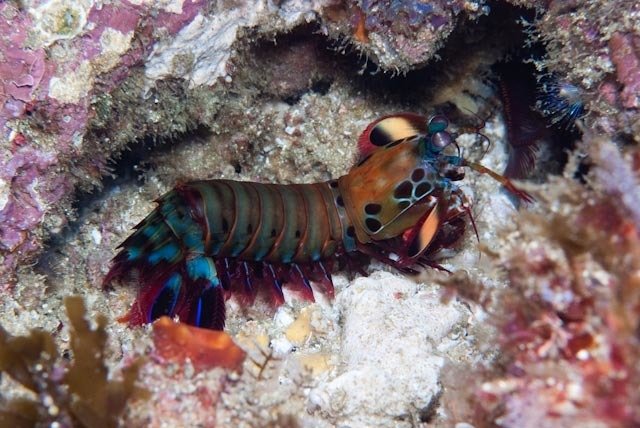
The mantis shrimp’s club structure is inspiring next-generation materials science. Researchers have created new types of composites that mimic the layered structure of these biological hammers. These materials could revolutionize everything from protective equipment to spacecraft design.
The military is particularly interested in applying these principles to develop better armor and impact-resistant materials for vehicles and buildings. Some prototypes have already shown remarkable improvements in strength and durability compared to traditional materials.
Climate Change Threats to Ocean’s Tiny Titans
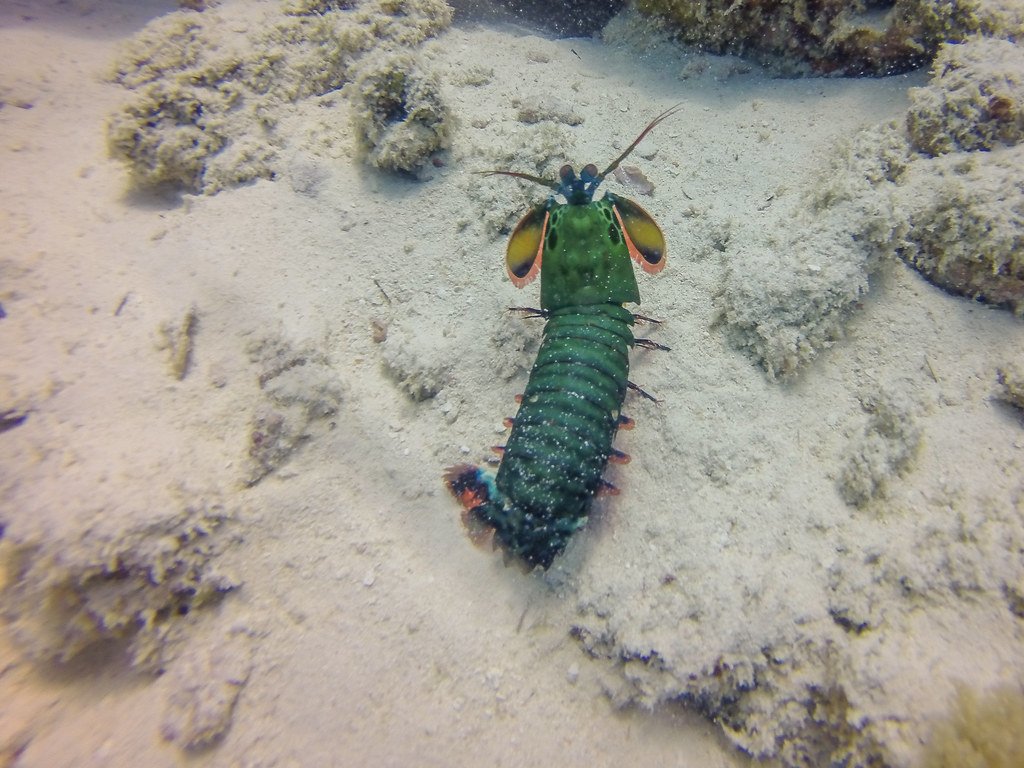
Despite their incredible abilities, mantis shrimp face serious challenges from climate change and ocean acidification. Rising water temperatures are forcing some species to migrate to deeper, cooler waters, while acidification weakens the shells of their prey species.
Pollution and habitat destruction also threaten mantis shrimp populations worldwide. Coastal development destroys the sandy and rocky habitats where many species make their burrows. Chemical pollutants can interfere with their sensitive visual systems and disrupt their hunting abilities.
Conservation efforts are underway to protect critical mantis shrimp habitats, particularly in coral reef ecosystems where many species thrive.
Laboratory Studies Revealing New Secrets

Recent research has uncovered even more amazing abilities of mantis shrimp. Scientists have discovered that some species can actually control the intensity of their strikes, using lighter taps for exploration and devastating blows for hunting.
High-speed cameras have revealed that mantis shrimp can adjust their strike mechanics in real-time, compensating for water resistance and target movement. This level of motor control rivals that of professional athletes and suggests remarkable neural processing capabilities.
Researchers are now investigating whether mantis shrimp might have more complex cognitive abilities than previously thought, including problem-solving skills and memory formation.
The Future of Mantis Shrimp Research
Scientists are just beginning to unlock the secrets of these remarkable creatures. Current research projects are exploring everything from their genetic makeup to their potential applications in robotics and artificial intelligence.
New imaging technologies are allowing researchers to study mantis shrimp behavior in unprecedented detail. Underwater drones equipped with specialized cameras can now observe these creatures in their natural habitats without disturbing them.
The next decade promises exciting discoveries as we continue to learn from these living marvels of evolution. Their combination of incredible physical abilities and complex behaviors makes them one of the most fascinating subjects in marine biology.
Conclusion
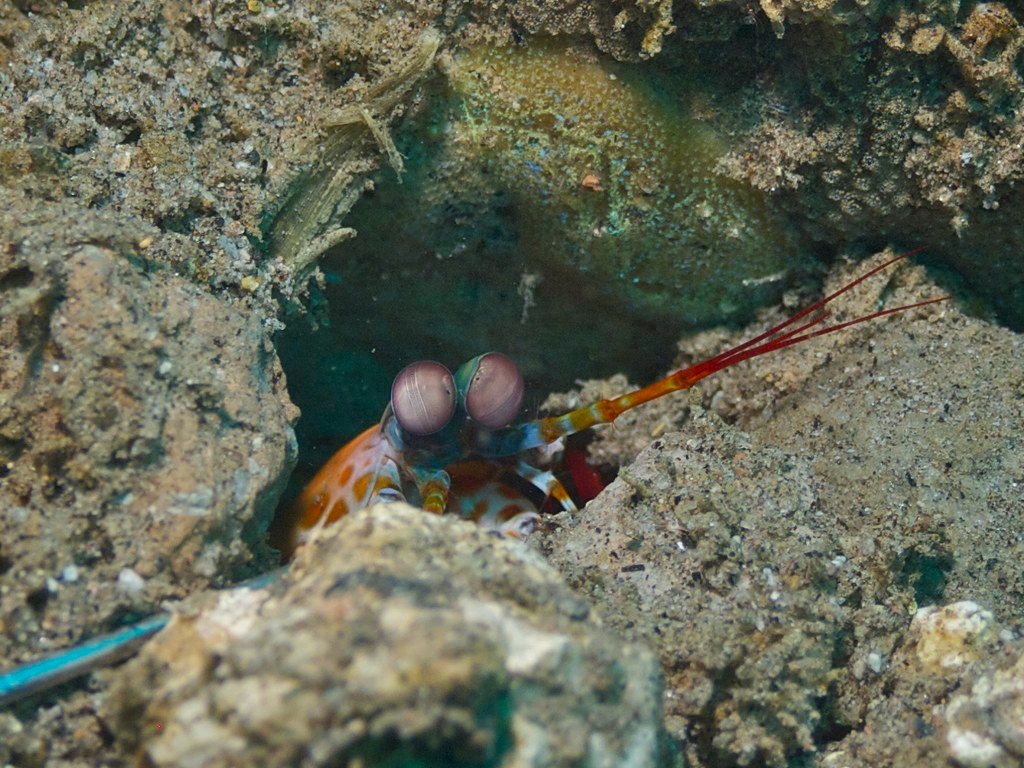
The mantis shrimp stands as one of nature’s most extraordinary examples of evolutionary engineering. From creating temperatures hotter than the sun to possessing vision systems that put our best technology to shame, these creatures continue to amaze and inspire scientists worldwide.
Their impact extends far beyond the ocean floor, influencing advances in materials science, medical imaging, and robotics. As we face environmental challenges that threaten marine ecosystems, protecting these incredible creatures becomes not just an environmental imperative but a scientific one.
The next time you think about the wonders of our natural world, remember the humble mantis shrimp – proof that some of the most incredible phenomena on Earth come in surprisingly small packages. What other secrets might be hiding in the depths of our oceans, waiting to revolutionize our understanding of physics and biology?