Articles for tag: astrophysics, Cosmic Mysteries, dark matter, Space Science

a very bright blue object in the middle of the night sky

12 Mysteries of the Universe That Astrophysicists Are Still Trying to Solve

Suhail Ahmed

  The deeper we look into the universe, the stranger it becomes. Every new space telescope image, every gravitational wave detection, every particle collision seems to answer one question while quietly smuggling in three more. Astrophysicists are mapping black holes, measuring the echo of the Big Bang, and tracking stars that move like bullets through ...

blue and black galaxy illustration

Why Does The Universe Exist

Suhail Ahmed

  Every so often, a question crashes into everyday life with the subtlety of a meteor: why does anything at all, instead of nothing? It sounds like a late‑night dorm room debate, yet it sits at the cutting edge of modern physics and cosmology, shaping billion‑dollar experiments and bold new theories. Strangely, the most powerful ...

white and brown starry night

7 Scientific Breakthroughs That Are Changing Our Understanding of the Cosmos

Suhail Ahmed

  The universe keeps refusing to behave the way we expect, and that’s exactly what makes this moment in astronomy so electric. In just the past few years, a wave of discoveries has forced scientists to redraw cosmic timelines, rethink how galaxies form, and even question whether our cherished “standard model” of cosmology is the ...

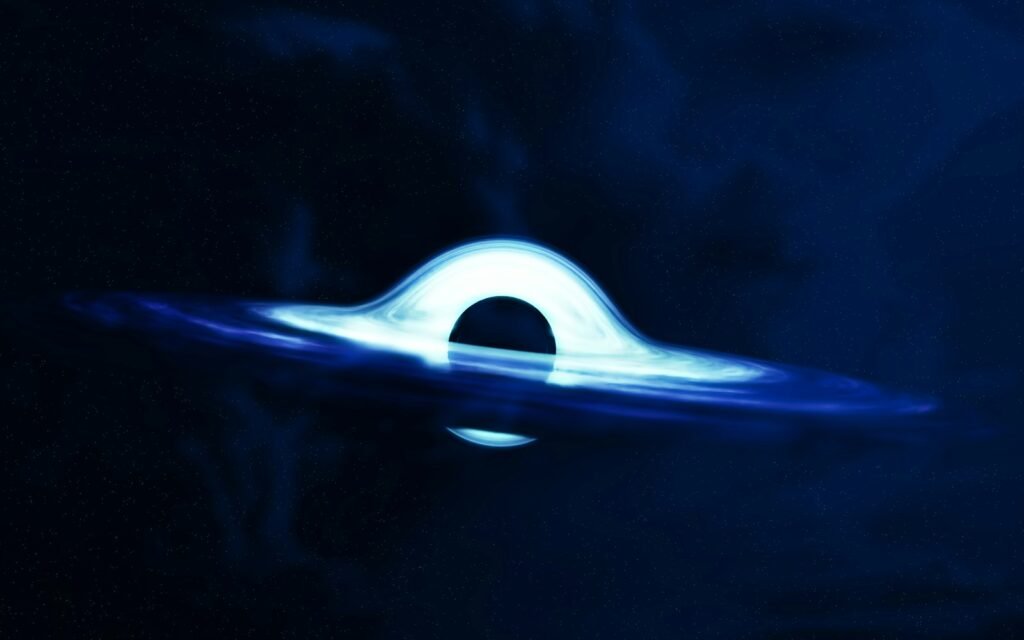
black hole galaxy illustration

The Universe Is Expanding Faster Than Scientists Ever Predicted

Suhail Ahmed

  For more than a century, astronomers thought they had a decent grasp on how fast the universe is growing. Now, that confidence has cracked. Precise new measurements of cosmic expansion disagree in a way that stubbornly refuses to go away, hinting that something deep in our understanding of physics may be missing. What began ...

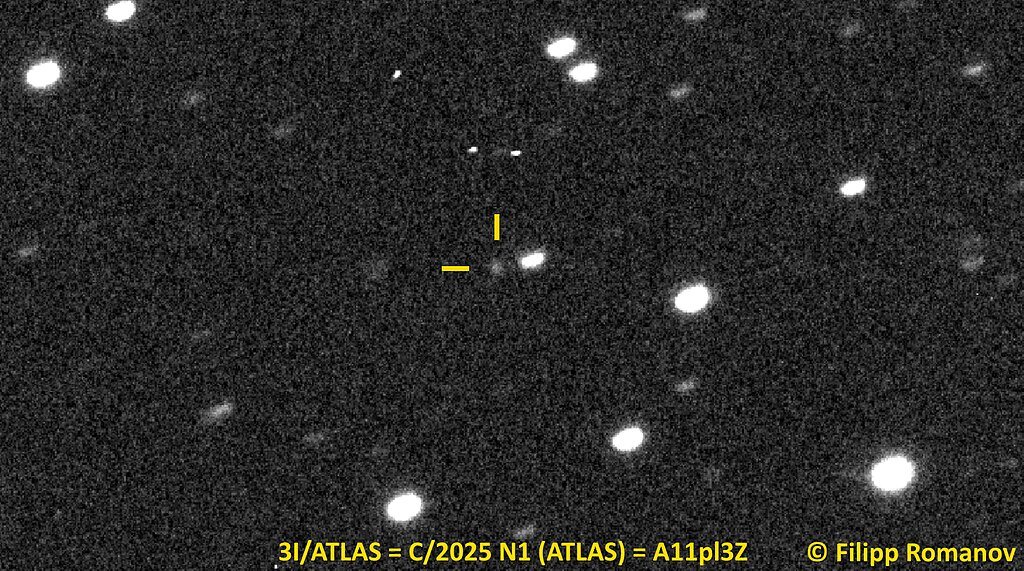
Comet 3I ATLAS

Mysterious Object From Deep Space Heads Toward Earth’s Neighborhood

Suhail Ahmed

The extraordinary features of a rapidly moving celestial object are scintillating astronomers’ interest. Upon initial discovery, A11pl3Z was given a name but recently NASA has confirmed it as 3I/ATLAS, the third interstellar object out of four comets or asteroids discovered. Unlike the comets or asteroids which are bound to the sun’s asteroid belt and viewable ...

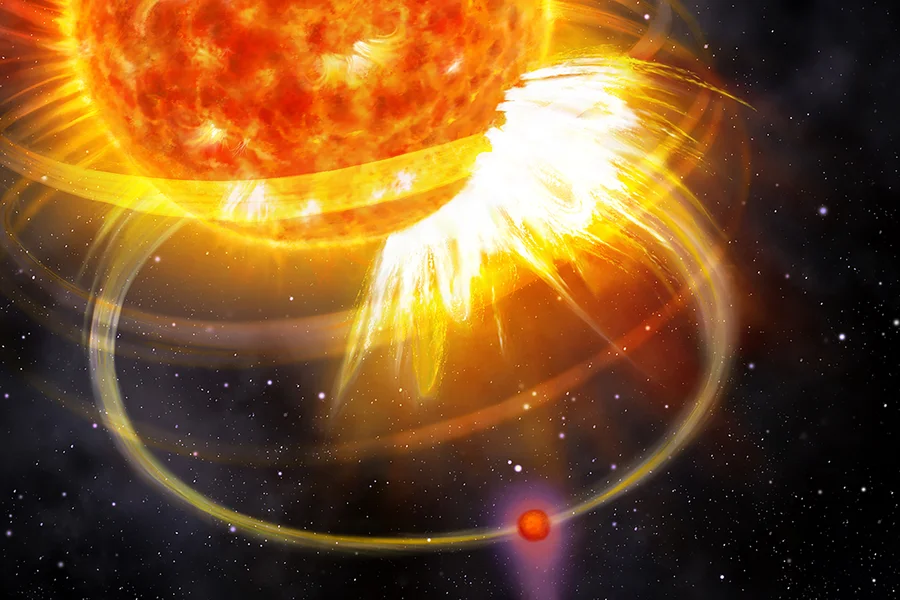
planet HIP 67522 b

‘Death Wish Planet’ Found Whipping Its Star Into Violent Eruptions

Suhail Ahmed

Jupiter-sized exoplanets which emerge as a proxy for accelerating self-sabotage by instigating tremendous outbursts from their parent stars seem as violations to the conventional structure of planetary systems; astronomers have identified such a diabolic planet, HIP 67522 b. Located within its parent star’s magnetic field, HIP 67522 b’s orbital position subjects it to flare beams ...

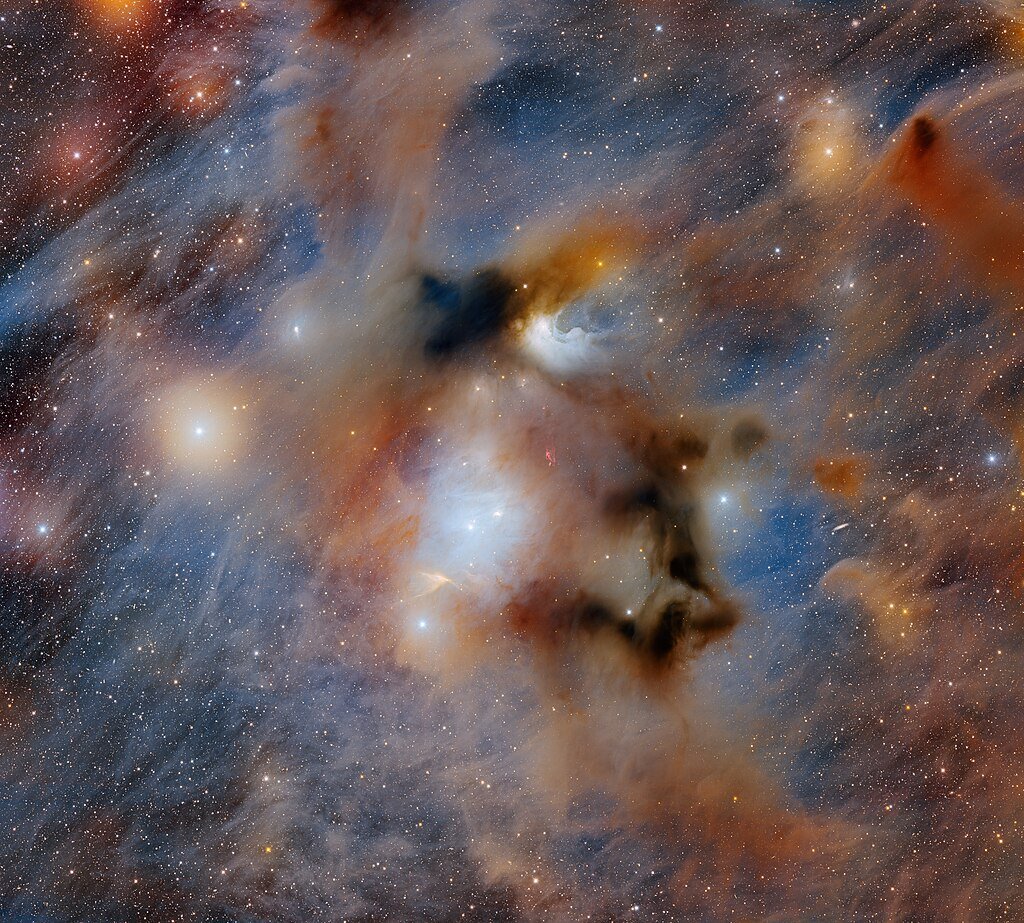
The ominous Chamaeleon I dark cloud, the nearest star-forming region to Earth, is captured in this image taken with the 570-megapixel Department of Energy-fabricated Dark Energy Camera mounted on the U.S. National Science Foundation Víctor M. Blanco 4-meter Telescope at Cerro Tololo Inter-American Observatory, a Program of NSF NOIRLab. Chamaeleon I is one portion of the larger Chamaeleon Complex and is home to three reflection nebulae that are brightly illuminated by nearby newly formed stars.

Chamaeleon I: Where New Stars Light Up Cosmic Darkness

Jan Otte

Behind clouds of interstellar dust, a cosmic drama is playing out deep in the southern constellation of Chamaeleon. The Chamaeleon I dark cloud is one of the closest places to Earth where stars are born. It is only 550 light-years away. In this “stellar nursery,” newborn stars break through the darkness and light up huge ...

light didn't emerge unfettered after the Big Bang. Here, we see the phases following the Big Bang (top left), about 13.8 billion years ago, to present day (lower right).

Was the Early Universe Dark or Full of Light?

Jan Otte

For most of human history, the night sky has been a place where stars, planets, and faraway galaxies can be seen. But what was there before the first stars came to life? Was the universe full of light when it was young, or was it a dark void? The answer is much more interesting than ...