Articles for tag: Dinosaurs, Paleontology, Prehistoric Life, Wind Influence, Wing Development

Did the Wind Help Dinosaurs Learn to Fly?

Suhail Ahmed

Picture a late Jurassic hillside: scrubby trees, broken rock, a restless afternoon breeze kicking into steady gusts. Small, feathered dinosaurs – nimble, hot-blooded, curious – run, leap, and splay proto-wings that catch the air like kites tugging at their strings. It’s a scene that flips the usual script: not silent forests of gliders, but noisy ...

Dramatic wave crashing in Yangyang, South Korea. Perfect for nature and seascape themes.

115-Million-Year-Old Tsunami Revealed in Glowing Amber from Japan

Jan Otte

First, scientists have found the record of an enormous tsunami that hit Japan when dinosaurs roamed the Earth stored not in rock but in amber. A new research shows that twisted pieces of ancient tree resin, 115 million years old, have the characteristic marks of a deadly oceanic wave. In a study published in Scientific ...

The Dinosaur With Two Brains? Debunking a Morbid Paleontological Myth

The Dinosaur With Two Brains? Debunking a Morbid Paleontological Myth

Annette Uy

Imagine a creature so enormous, so mind-bogglingly vast, that it needed not one, but two brains just to function. For decades, this idea captured the imaginations of kids, scientists, and movie-goers alike. Picture a massive dinosaur, lumbering across prehistoric landscapes, with a brain in its head and another in its tail—a bizarre backup system from ...

An amber fossil.

The Role of Amber in Preserving Prehistoric Creatures

Amber has long fascinated humans with its captivating beauty and mysterious origins. Beyond being a prized gemstone, amber has played a crucial role in preserving prehistoric life. Understanding how amber is formed and how it preserves ancient creatures opens a window into Earth’s distant past. What is Amber? Amber is fossilized tree resin, not to ...

Malaysia’s Dinosaur Fossils Were Found in a Tin Mine — Jurassic Jackpot!

Malaysia’s Dinosaur Fossils Were Found in a Tin Mine — Jurassic Jackpot!

Annette Uy

Imagine the ordinary clang of pickaxes in a Malaysian tin mine, the dust swirling in the humid air—then, suddenly, a discovery that turns ordinary miners into unwitting paleontologists. Dinosaur fossils in Malaysia? It sounds like a plot twist straight out of an adventure movie, yet this extraordinary event is grounded in real science and has ...

Embedded dinosaur fossil.

The Most Complete Dinosaur Skeletons Ever Discovered

Jan Otte

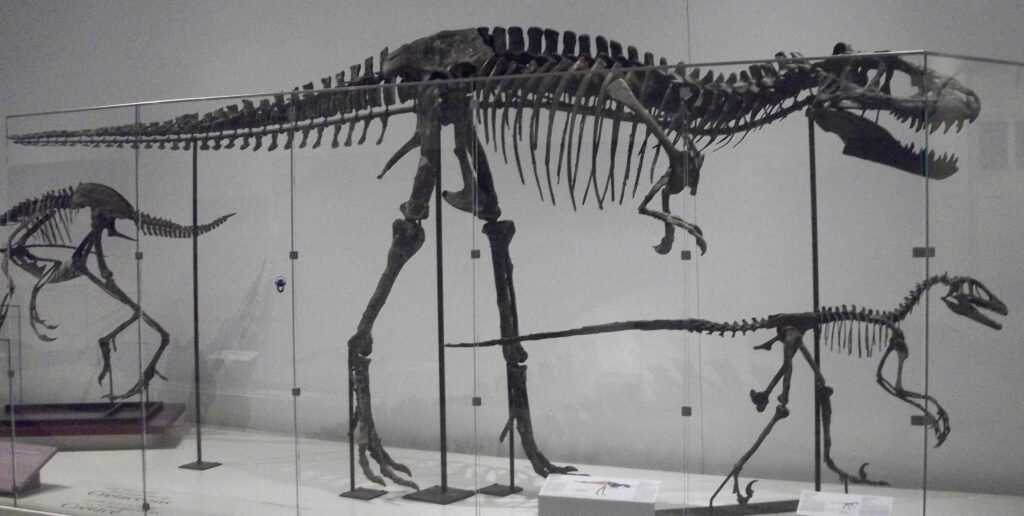
Dinosaurs have captivated the imagination of both scientists and the public for centuries. Their colossal sizes, peculiar shapes, and extinction have driven an insatiable curiosity. Among the many dinosaur discoveries, finding a complete skeleton is rare and offers valuable insights into the ancient world. This article explores some of the most complete dinosaur skeletons ever ...

Skeleton of an ancient mammal with large tusks.

10 Ancient Giants: Discovering the True Scale of Prehistoric Animals

Suhail Ahmed

  Prehistoric life is often reduced to a few overused images of roaring tyrannosaurs and lumbering sauropods, but the fossil record tells a far stranger and more staggering story of size. Over the last two decades, scientists have been quietly revising the record books as new skeletons, better models, and advanced imaging reveal animals that ...

Italy’s Dino-Footprint Sites Look Like Jurassic Dance Floors

Italy’s Dino-Footprint Sites Look Like Jurassic Dance Floors

Annette Uy

Imagine wandering through a sunlit Italian valley and stumbling upon a scene that seems ripped straight from a prehistoric dream—a rocky surface covered with enormous, three-toed footprints, as if a troupe of dinosaurs had been caught mid-tango millions of years ago. These extraordinary dino-footprint sites across Italy are not just relics of the past; they’re ...

Scientists Now Know where the Asteroid that Wiped Out the Dinosaurs Came From

Understanding the Extinction of the Dinosaurs and What That Could Mean for Modern Animals

Jan Otte

Dinosaurs, the magnificent creatures that once roamed Earth for over 160 million years, vanished approximately 66 million years ago. This mass extinction event, known as the Cretaceous-Paleogene (K-Pg) extinction event, remains a topic of extensive study and fascination. Understanding why and how the dinosaurs disappeared not only satiates our curiosity but also provides valuable insights ...