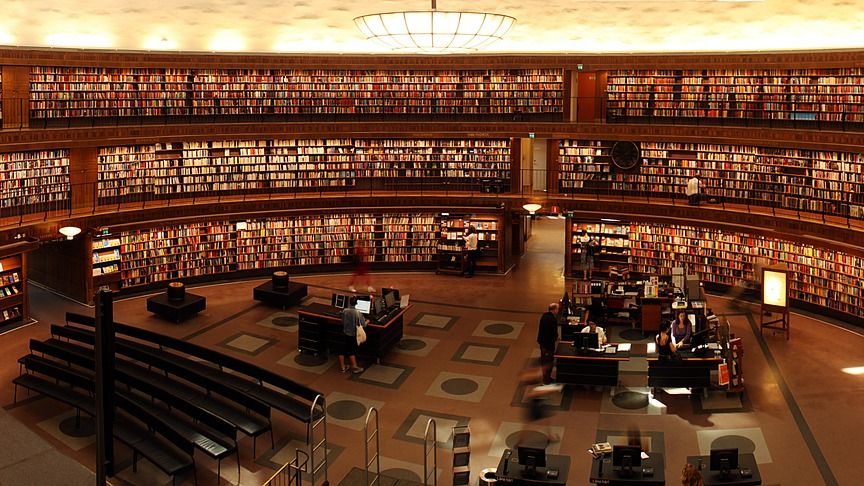
Imagine waking up to the news that every scientific paper, every classic book, every film, every online course, and most of the internet’s knowledge had just vanished overnight. That empty, sinking feeling you get just picturing it is a tiny echo of what the loss of the Library of Alexandria represents. We are talking about a place where some of the greatest minds of the ancient world gathered, argued, experimented, and wrote things down that we will never be able to read.
The truth is, no one alive today knows exactly what was on those shelves, and that mystery is part of what makes Alexandria so haunting. Historians can only piece together fragments, secondhand references, and scattered clues. Between the facts and the legends lies a question that won’t go away: what if the ideas that could have changed the course of history were reduced to smoke and ash two thousand years ago?
The Real Alexandria: What We Actually Know About the Great Library
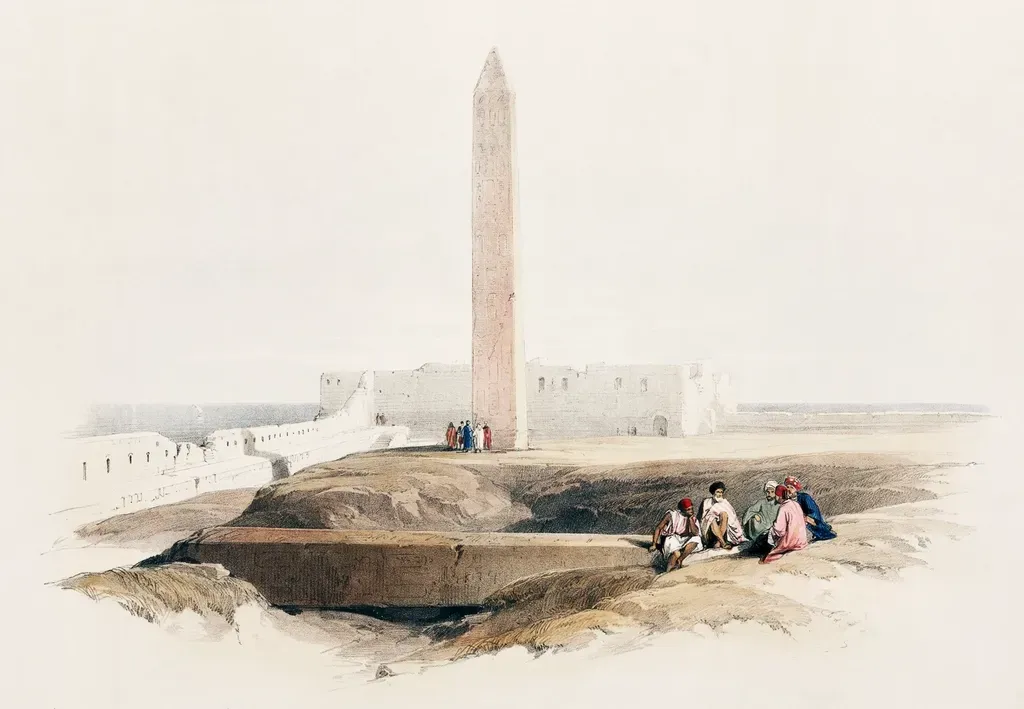
It is tempting to picture the Library of Alexandria as a single massive marble building with endless corridors of scrolls, but reality was probably more complex and less cinematic. The library was part of a larger scholarly complex in Alexandria, closely tied to the Mouseion, a kind of research institute and intellectual community funded by the Ptolemaic kings of Egypt. Think of it as a blend of a university campus, a think tank, and a state-backed research lab, where scholars were paid to study, write, and teach.
What we know comes from scattered descriptions by ancient writers and later historians, not from neat floor plans or official catalogues. Estimates of how many scrolls it held range all over the place, from several hundred thousand down to far fewer, and even those numbers are educated guesses. The library seems to have grown aggressively by copying texts from ships arriving in Alexandria’s harbor and by acquiring collections from across the Mediterranean. It was powerful enough that if a book existed in Greek, there was a good chance Alexandria tried to get its hands on it.
Inside the Stacks: What Types of Knowledge Were Collected There?
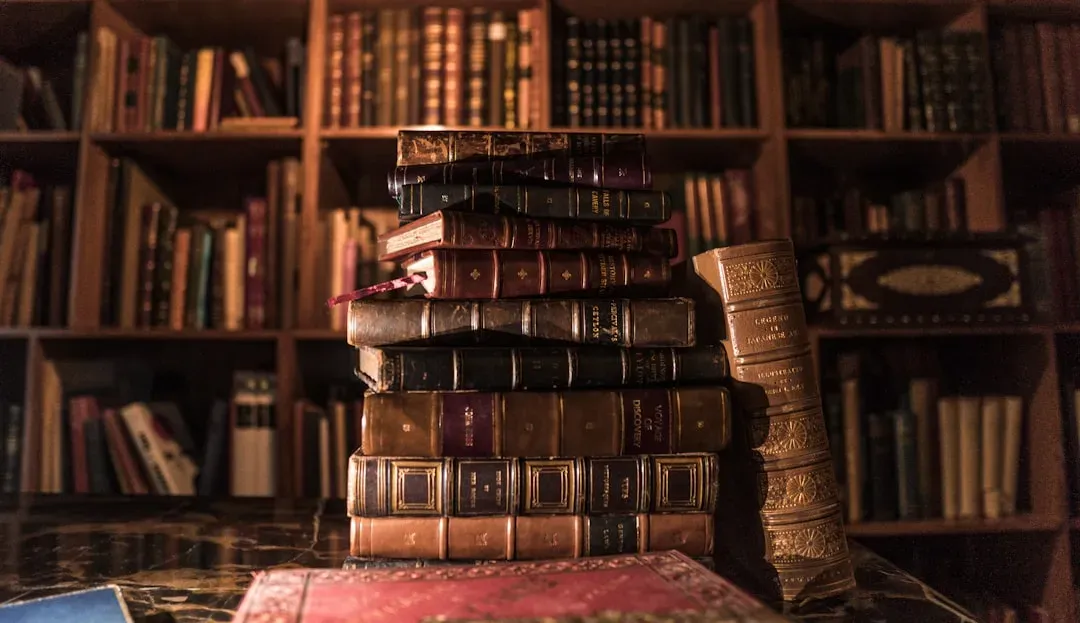
Even if we do not have a definitive inventory, we can make some careful inferences from what we know about the scholars who worked there and the works they mention. The library almost certainly held texts in philosophy, mathematics, astronomy, medicine, geography, poetry, drama, history, and more. It was not a niche archive. It was closer to an attempt at building a universal library of the ancient Mediterranean world, with special strength in Greek works but also materials from Egypt, the Near East, and beyond, translated or at least studied.
Imagine shelves that mixed plays from Athens, mathematical treatises from earlier Greek thinkers, Egyptian records, Babylonian astronomical observations, and texts from other cultures that traders brought in. Many of the scholars associated with Alexandria, like Eratosthenes and Aristarchus, drew on older sources that we no longer possess, and it is likely that those sources lived, at least for a time, in those collections. In other words, the library did not just store knowledge; it concentrated and cross-pollinated it in a way that must have felt like intellectual electricity.
Glimpses Through the Smoke: Lost Works We Can Name (and Only Imagine)

Even though the scrolls themselves are gone, we still hear faint echoes of them in references, summaries, and complaints from later authors. Many ancient writers casually mention works that no longer exist, like it was obvious that everyone knew them. Whole plays by the greatest dramatists, entire historical narratives, and detailed scientific treatises are known only by their titles or short descriptions. A bit like hearing people talk about legendary movies that were never backed up anywhere and are now lost forever.
For example, we know that Hellenistic scholars produced vast commentaries on Homer, analytical works on earlier philosophers, and detailed catalogues of texts themselves. These meta-works sometimes preserve snippets or paraphrases of the originals, but the larger bodies of work have simply vanished. When you realize that what survives is just the tiny fraction that was copied again and again over centuries, the scale of what is missing becomes almost nauseating. We are looking at history through the barest slits, knowing that entire landscapes of thought used to lie just beyond our reach.
Scientific Revolutions That Might Have Come Too Early
One of the most haunting questions about Alexandria is this: how much earlier could certain scientific breakthroughs have happened if more of its knowledge had survived and spread? We already know that scholars linked to Alexandria made astonishing leaps. Eratosthenes measured the Earth’s circumference using shadows and geometry and came surprisingly close. Aristarchus proposed a heliocentric system, placing the Sun at the center and suggesting that Earth moves around it, long before Copernicus. These are not half-baked guesses; they are serious, well-argued ideas rooted in observation and calculation.
Now picture those ideas preserved, taught, debated, and steadily refined for centuries instead of being sidelined, forgotten, or written off as curiosities. It is not wild to imagine that certain scientific revolutions could have arrived centuries earlier if the chain of knowledge had not been broken so many times. At the same time, we have to stay honest: ancient science still lacked modern tools, methods, and global communication. Even with Alexandria intact, there is no guarantee we would be piloting spaceships in the Middle Ages. But the thought that humanity may have reinvented key ideas from scratch, more than once, is both humbling and a little maddening.
Myths, Fires, and Blame: How the Library Really Disappeared

Popular culture usually loves a simple story: one villain, one fire, one night, everything gone. The real story of the Library of Alexandria is much messier, slower, and more human. Instead of a single apocalyptic event, historians increasingly think its decline unfolded over centuries through a mix of political upheaval, religious tension, underfunding, neglect, and several destructive episodes. War, civil conflict, and changing regimes all chipped away at this fragile ecosystem of scrolls and scholars.
Multiple incidents are blamed in different traditions: military campaigns, riots, purges, and shifts in power that saw scholarship fall out of favor. Scribes stopped copying certain works. Resources went elsewhere. The building complex may have been repurposed, damaged, or simply allowed to decay in parts. In a way, the library’s death feels eerily modern: it was not just flames, it was a long series of bad decisions, short-term priorities, and cultural shifts that treated deep knowledge as a luxury instead of a foundation worth fiercely protecting.
Did We Really Lose a Golden Age, or Are We Romanticizing It?
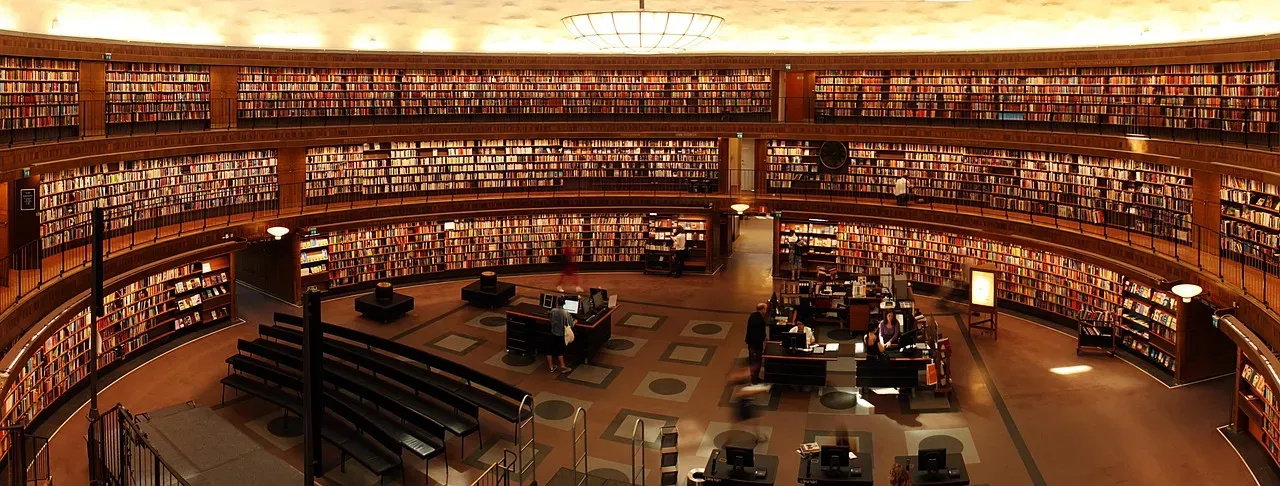
There is a seductive story we like to tell ourselves: that the Library of Alexandria was a kind of ancient Silicon Valley of pure genius, and that once it burned, humanity plunged into darkness for centuries. There is a grain of truth in the sense that important knowledge was absolutely lost and progress in some areas genuinely stalled or reversed. But that story also oversimplifies and, ironically, underestimates the resilience and spread of knowledge through other centers like Pergamon, Rome, Baghdad, and countless local traditions that never saw Alexandria at all.
My own view is that we both underestimate and overestimate Alexandria at the same time. We overestimate it when we imagine that every brilliant idea humanity could ever have lived only on those shelves, like a magical save file for civilization. We underestimate it when we talk as if it was just one library among many and its loss was no big deal. The truth sits in the uncomfortable middle: we almost certainly lost specific insights, lines of reasoning, and unique combinations of ideas that would have changed the tempo and texture of human progress, even if not its final direction. That gray area may not be emotionally satisfying, but it is probably closest to reality.
The Real Lesson: How We Protect (and Still Risk) Our Knowledge Today

It is easy to look back and judge the people who let the Library of Alexandria wither, but in some ways we are flirting with our own version of that story right now. Yes, we back things up in the cloud, store data in multiple formats, and replicate important archives across the world. Yet we are also building an enormous amount of our collective memory on fragile technologies, proprietary platforms, and formats that might not be readable in just a few decades. A library can burn, but hard drives can fail, companies can vanish, and digital archives can silently rot.
When I think about Alexandria, I do not just feel nostalgia for something I never saw. I feel a kind of warning. The real tragedy was not only the flames or the politics; it was the assumption that such a hub of knowledge would always somehow be there. Maybe the responsible response to that loss is not just to mourn what we will never recover, but to double down on protecting what we have now: to fund real archives, open access where possible, print and preserve, translate widely, and treat librarians, archivists, and educators as guardians of civilization rather than footnotes. If the Library of Alexandria teaches us anything, it is that knowledge is never guaranteed to survive just because we think it should.
In the end, the lost library sits somewhere between history and a ghost story, a reminder of how fragile our brightest ideas really are. We will probably never know exactly what humanity lost when its shelves went dark, and maybe that permanent uncertainty is part of why the story still stings. But we do get to decide what we do with that discomfort: shrug and move on, or use it as fuel to build a world where ideas are harder to silence and easier to share. The question that lingers for me is simple and uncomfortable: if a future historian looks back at our time, will they say we learned from Alexandria’s fate, or that we quietly repeated it in a more digital disguise?