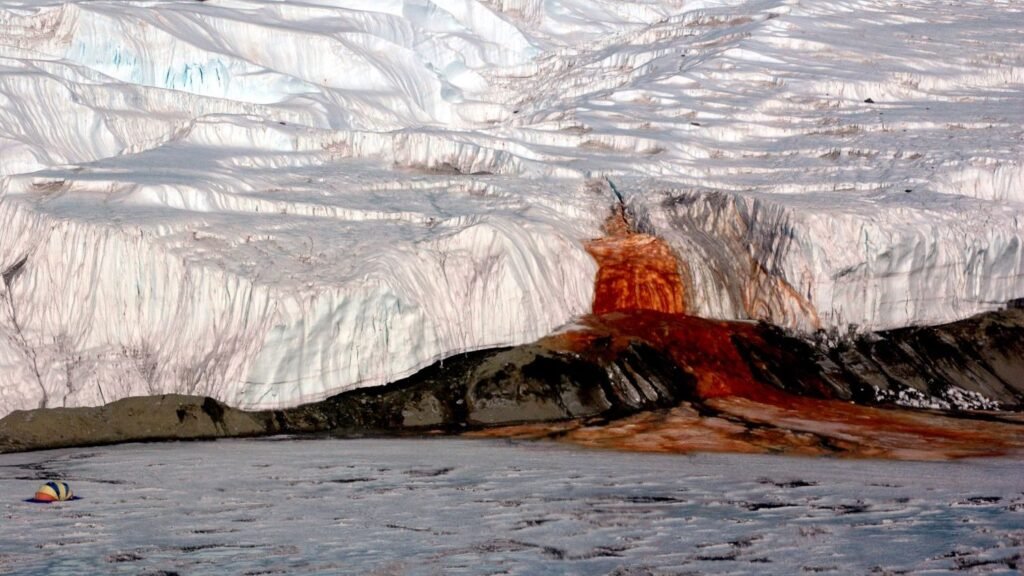

You stand in front of a glacier in one of the coldest, driest places on Earth, and it looks like it’s bleeding. A smear of deep red spills down the white ice like something out of a horror movie. For more than a century, Antarctica’s Blood Falls has looked like a scene from a sci‑fi nightmare, and for just as long, scientists couldn’t fully explain what was going on beneath the ice.
Now the picture is finally coming together, and it’s stranger and more beautiful than any myth. When you follow the trail of this “blood,” you’re really tracing the hidden plumbing of an ancient subglacial world: buried lakes, salty rivers, iron, and even microbes that thrive in the dark. As you unpack the story, you start to see Blood Falls less as a creepy oddity and more as a window into how ice, rock, water, and life can quietly reshape a frozen planet.
What You’re Really Looking At: A Glacier That Bleeds Iron
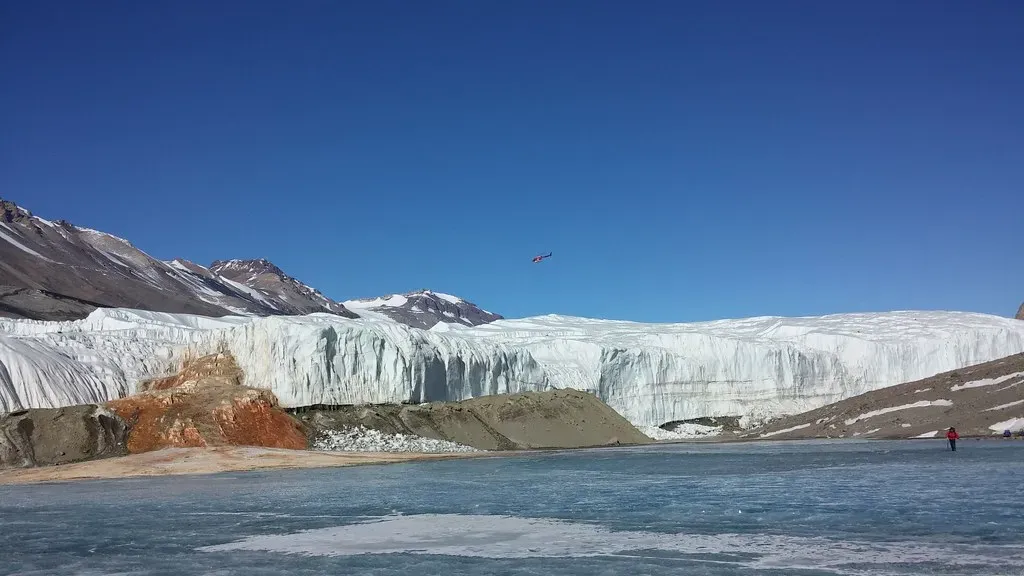
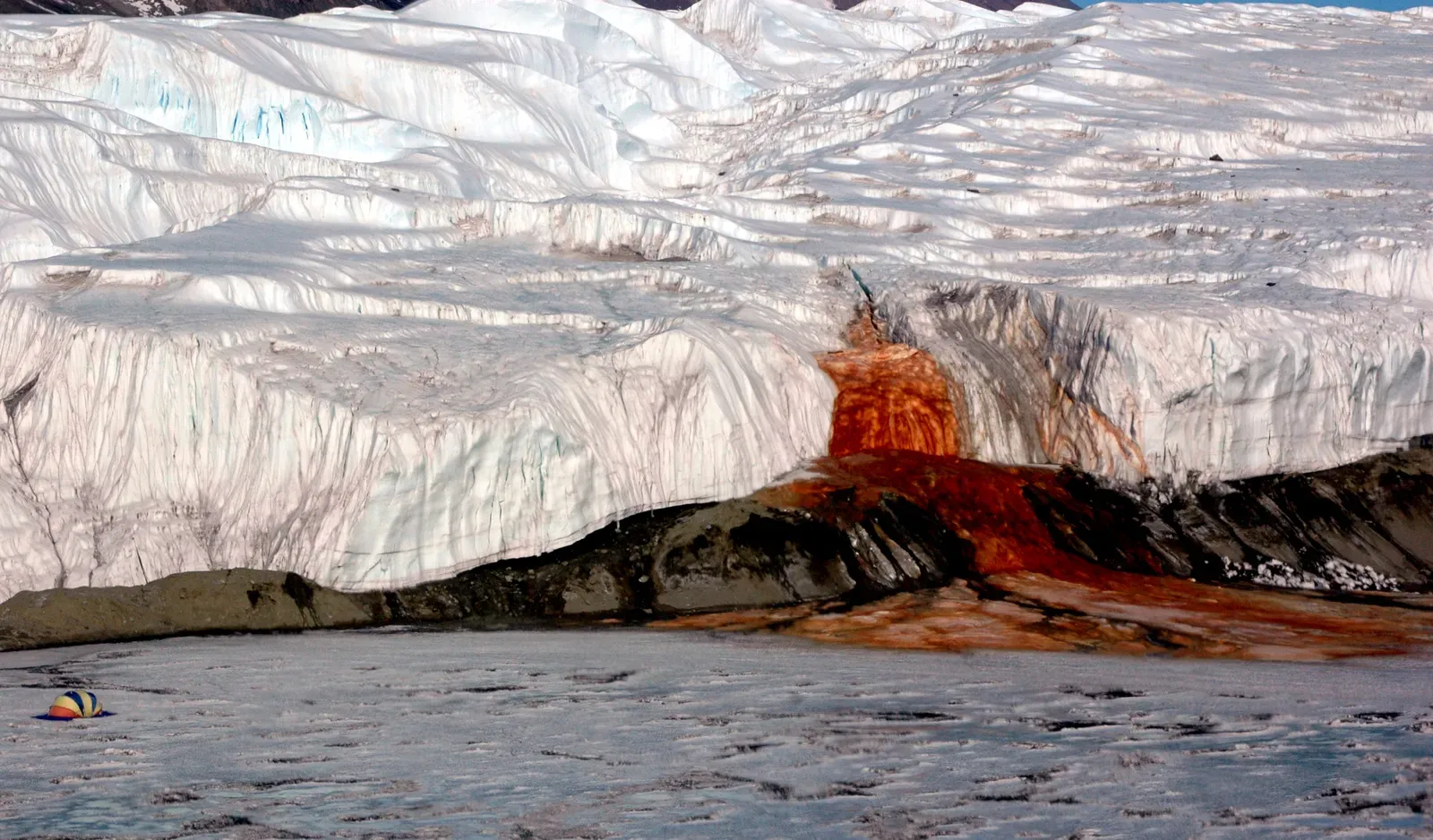
When you first see photos of Blood Falls, it’s tempting to assume some kind of algae bloom or volcanic mess is staining the ice. But what you’re actually seeing is water loaded with iron that has been locked away beneath Taylor Glacier and then suddenly released. As that water hits the open air, the iron reacts with oxygen and essentially rusts in real time, turning the flow a rusty red that spreads across the frozen surface like spilled paint.
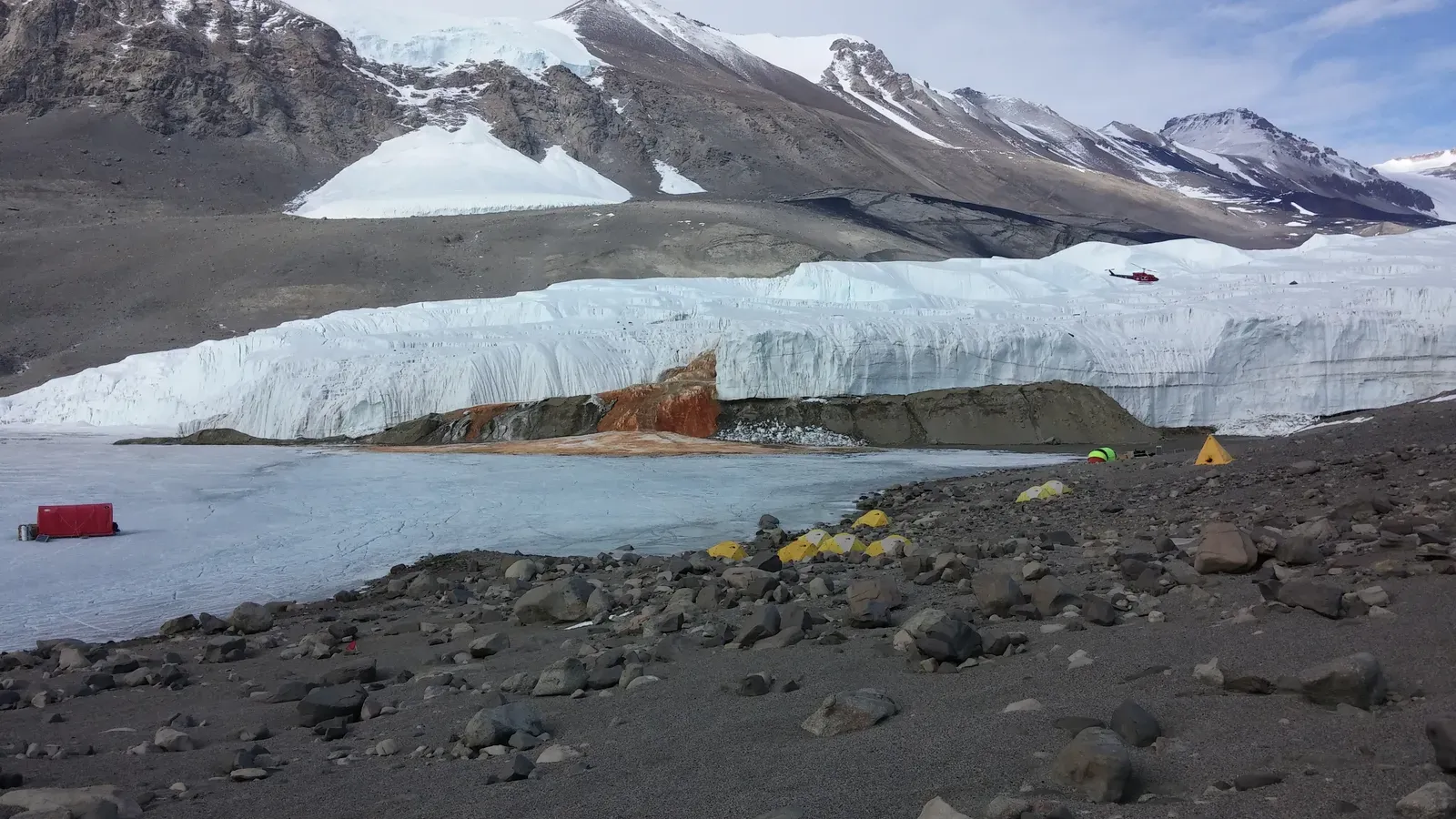
Instead of a classic waterfall tumbling off a cliff, you’re watching a slow, pressurized seep from fissures at the snout of Taylor Glacier in Antarctica’s McMurdo Dry Valleys. The red liquid oozes and fans out over the ice before spilling onto the frozen surface of Lake Bonney below. It looks violent, but the process is more like a glacier exhaling: a hidden brine finally finding a narrow crack to escape through, then staining everything in its path.
The Hidden Brine Reservoir: An Ancient, Salt‑Locked Time Capsule
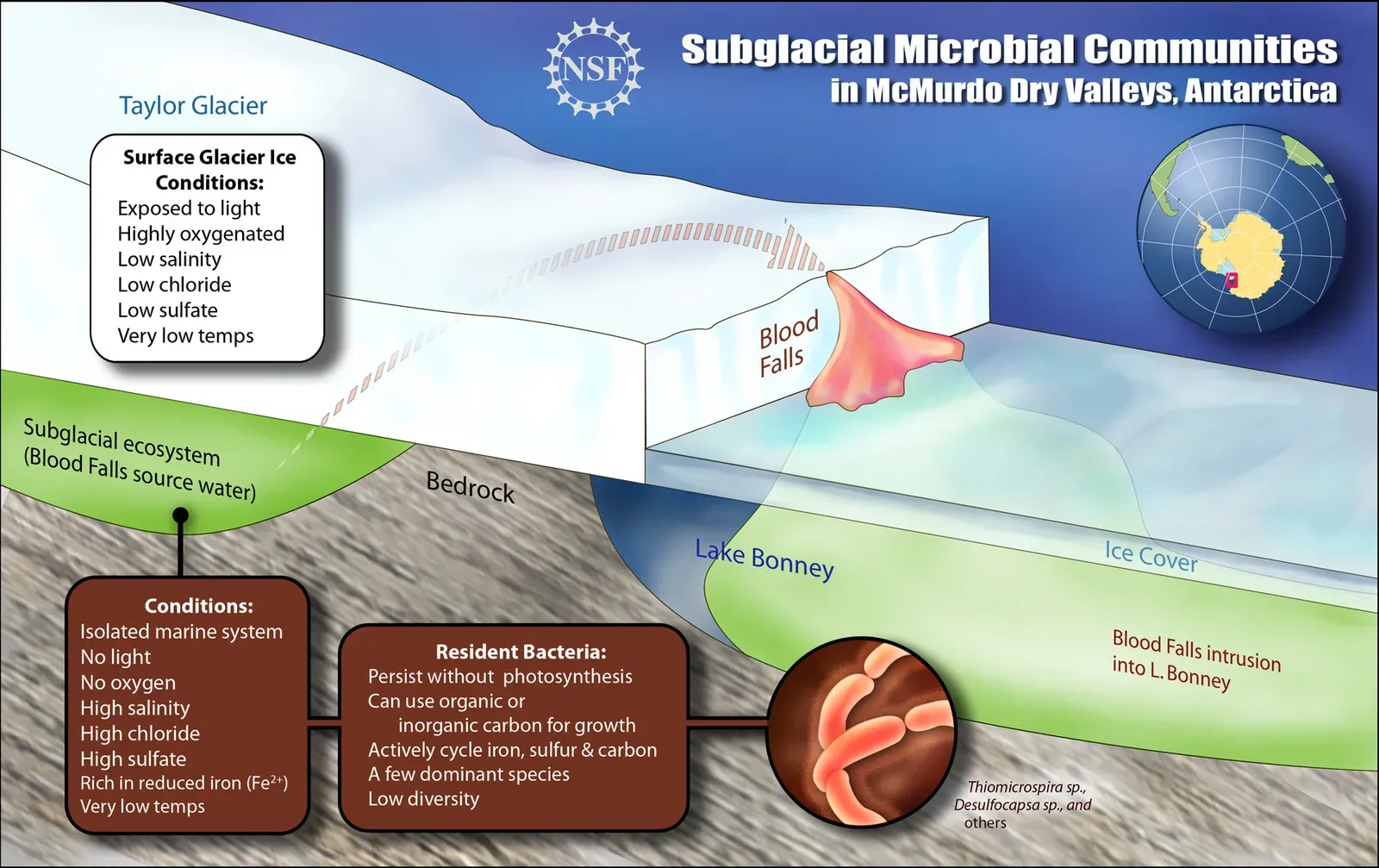
The real story of Blood Falls starts far upstream, under hundreds of meters of ice. You’re not looking at meltwater from recent snow; you’re looking at a hypersaline brine that likely formed around a couple of million years ago, when seawater and glacial ice got trapped in a pocket and concentrated over time. Because the brine is packed with salt and other dissolved minerals, it stays liquid at temperatures that would freeze normal freshwater solid, even in the brutal cold of East Antarctica.
Imagine a buried, super‑salty aquifer threaded through sediments and fractured rock, sealed off by ice and left to stew in the dark. As the glacier slowly grinds over that buried reservoir, it scrapes up minerals and delivers them into the brine, including huge amounts of iron. You end up with a dense, metal‑rich solution that’s heavier than ordinary water, pressurized by the weight of the glacier above it, and constantly seeking any pathway to the surface it can find – no matter how small the crack.
Why The Water Is Red: Rust, Nanospheres, And A Chemical Magic Trick
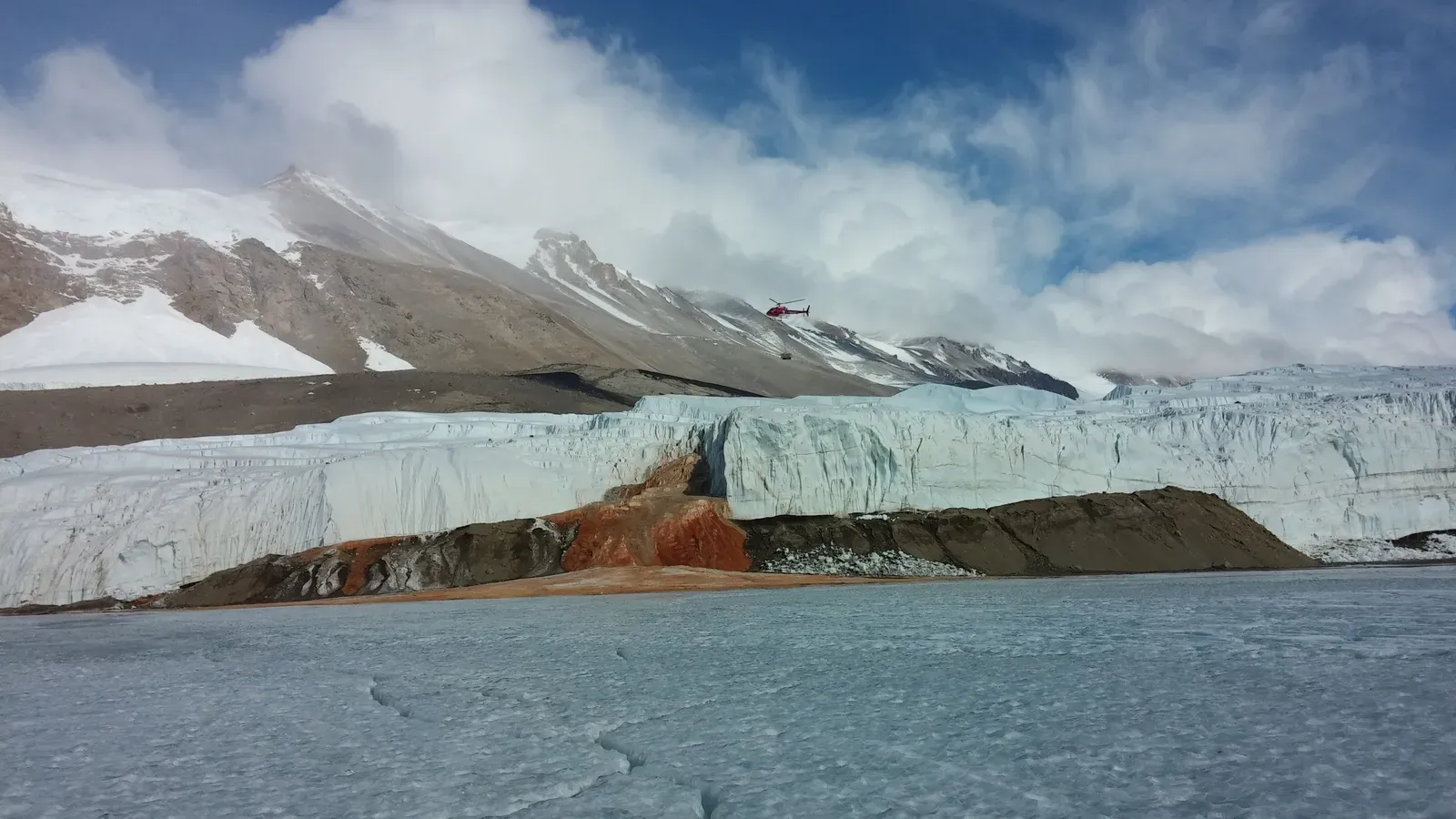
If you could scoop up the brine before it reaches the open air, you wouldn’t necessarily see a dramatic blood‑red color right away. The real color show happens when that iron‑rich liquid meets oxygen at the glacier’s face. As soon as it emerges, the iron in the water oxidizes, just like a piece of metal left in the rain. That rusting process shifts the color from a duller tone to vivid reds and oranges that smear across the ice like watercolor running down a canvas.
Zoom in even closer, and the story gets weirder. Under powerful microscopes, scientists have found that the brine carries tiny iron‑rich nanospheres – minute particles that also contain elements like silicon, calcium, and aluminum. When they oxidize, they scatter light in a way that enhances the red staining. So you’re not just looking at colored liquid; you’re looking at a suspension of microscopic mineral grains acting together to turn the glacier’s outflow into something that looks almost disturbingly organic.
How The Glacier’s “Plumbing” Works: Pressure, Cracks, And Surprising Motion
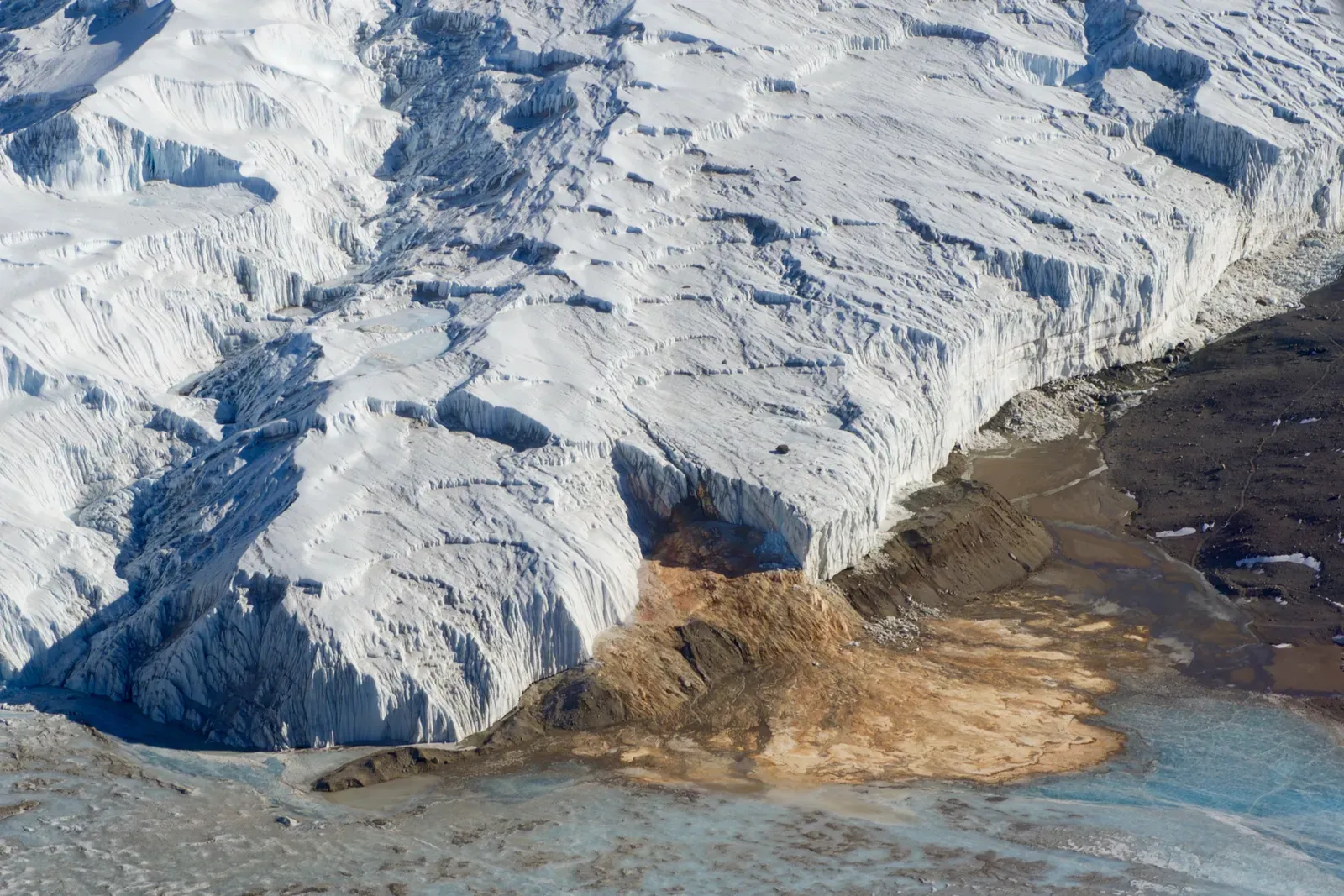
To understand why Blood Falls turns on and off over time, you have to picture Taylor Glacier as a slow‑moving, semi‑frozen dam with a leaky, hidden plumbing system. As the glacier creeps downhill, the weight of all that ice squeezes the buried brine reservoir. That pressure drives salty water into fractures and channels inside the ice, sometimes forcing it along winding, subglacial pathways for several kilometers before it finally finds a way out at the front of the glacier.
Recent observations show that when the brine really starts to move, the surface of the glacier can actually drop slightly and its forward motion can slow, almost like the ice is relaxing as some of the pressure drains away. You can think of it like a frozen sponge being compressed and then slowly releasing fluid through its weakest point. Blood Falls is simply the place where that internal pressure, the shape of the bedrock, and the structure of the glacier’s ice all line up perfectly to let the brine break through into the daylight.
A Hidden Ecosystem In The Dark: Life That Breathes Iron And Sulfate
Here’s where the story shifts from geology to something closer to science fiction. That buried brine is not just salty and old – it’s alive. When you drill into the subglacial environment near Blood Falls and analyze the water, you find microbial communities that have adapted to pitch darkness, crushing pressure, freezing temperatures, and no direct access to the usual sources of energy like sunlight or plant material. Instead of using sugars and oxygen the way you do, these microbes tap into iron and sulfur compounds in the water and surrounding sediments to fuel their metabolism.
In other words, Blood Falls is like a periscope for a hidden biosphere that survives entirely on chemical energy. Every time the red brine spills out onto the glacier surface, you’re seeing both a chemical reaction and a biological export event: cells and by‑products that have been trapped for hundreds of thousands to millions of years are suddenly exposed to the modern atmosphere. That makes this spot a powerful natural laboratory for asking one of the biggest questions in science: how flexible is life, really, when you strip away light, warmth, and the comforts of the surface world?
Why Blood Falls Matters Far Beyond Antarctica
Once you understand what you’re looking at, Blood Falls stops being just a creepy photo and turns into a key piece of a much bigger puzzle. The same kind of salty, iron‑rich groundwater that feeds this crimson outflow could be seeping out at other points around Antarctica’s coasts, quietly delivering nutrients like iron into oceans where they can boost microscopic life. That means a seemingly tiny, localized feature might hint at a continent‑wide process that helps feed marine ecosystems and even nudges global climate systems.
There’s also a more cosmic angle. When you imagine icy moons like Europa or Enceladus, or the frozen subsurface of Mars, you can use Blood Falls as a real‑world analog. If life can use iron and sulfate chemistry to hang on in a salty, oxygen‑poor, lightless environment under Antarctic ice, it becomes much more reasonable to ask whether something similar could be doing the same thing beneath alien ice shells. So when you look at those eerie red streaks on Taylor Glacier, you’re not just looking at a local curiosity – you’re staring at a natural experiment that helps you imagine where else in the universe life might find a foothold.
Visiting The “Bleeding” Glacier: What It Would Be Like For You
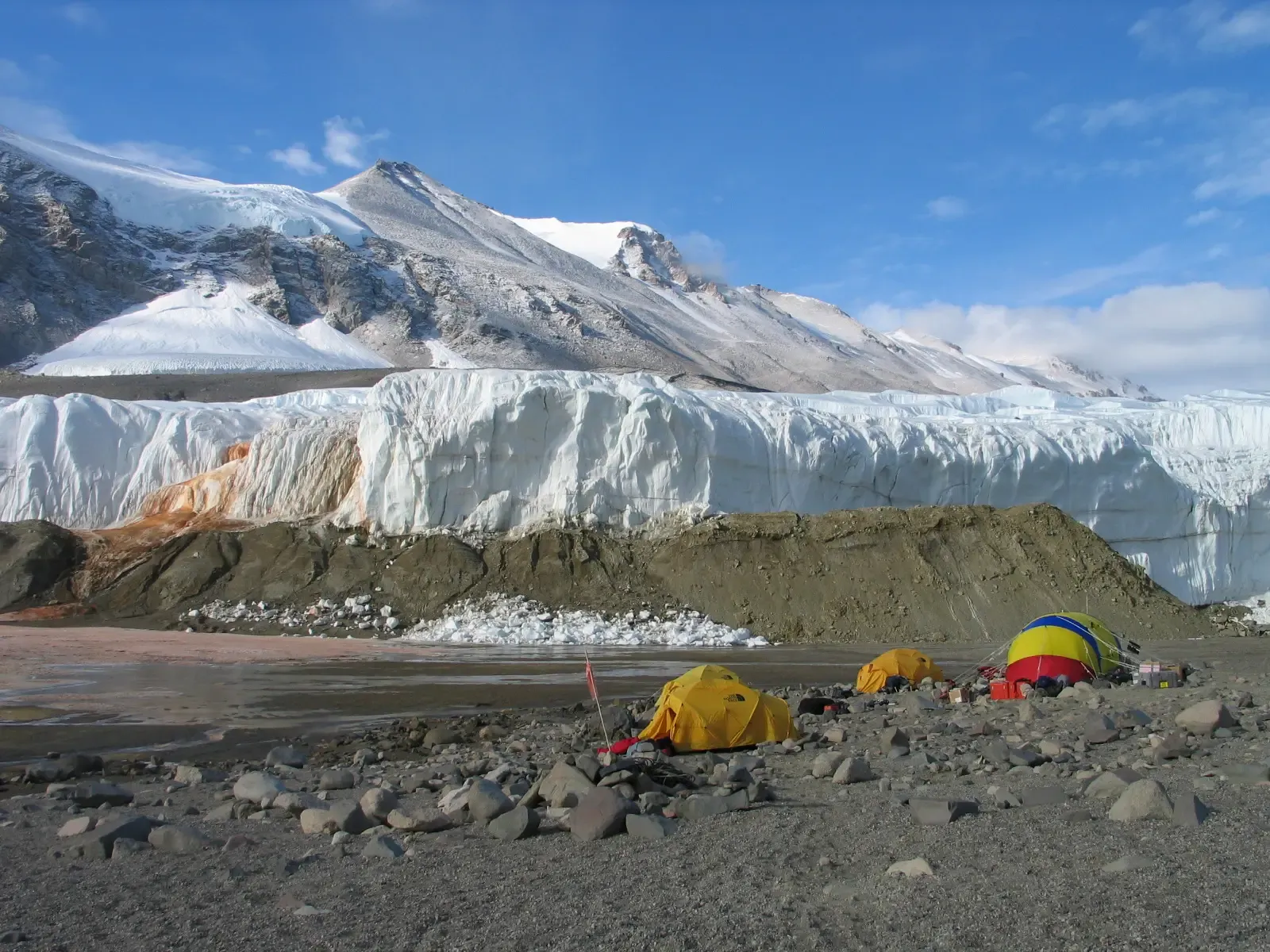
Odds are, you’ll never casually stroll up to Blood Falls on vacation, and in a way, that’s part of its mystique. The feature sits deep in the McMurdo Dry Valleys, one of the harshest, most remote regions on the continent, far from the usual tourist routes along the Antarctic Peninsula. If you ever did make it there as a researcher or a very lucky visitor, you’d likely arrive by helicopter, step out into cutting cold air, and see the glacier’s pale face marked with a startling red stain that looks almost painted on.
Up close, you’d notice that it doesn’t thunder like a typical waterfall; it seeps and trickles, sometimes barely flowing at all. The surface can look like layered, frozen drips rather than a continuous rush of water. You’d be standing in a landscape that feels more Martian than earthly: bare rock, dry valleys, and an icefall that looks alive without being alive at all. And if you’re anything like most people who study it, you’d probably walk away with a sense that you’d just glimpsed something both ancient and oddly fragile – a slow pulse from the buried heart of the ice.
In the end, Blood Falls turns out to be less of a mystery and more of a revelation. You now know it’s not blood, not a supernatural omen, but an iron‑rich, hypersaline brine pushed out of a buried reservoir by the weight and movement of Taylor Glacier, staining the ice as it rusts and briefly exposing a hidden, resilient microbial world. That story ties together geology, chemistry, biology, climate, and even the search for life beyond Earth, all in one unsettlingly beautiful red streak on an Antarctic glacier. Now that you know what’s really flowing there, does it seem less eerie to you – or even more?