
If you’ve ever stared at the night sky and felt very small very quickly, you’re not alone. The wild part is that almost everything we now know about the universe – from how stars live and die to the fact that space itself is expanding – is astonishingly recent. A few centuries ago, people thought the cosmos was tiny, changeless, and built just for us. Today, that idea feels almost quaint.
What changed were a handful of discoveries that hit like intellectual earthquakes. Each one didn’t just add a new fact; it broke and rebuilt our entire mental picture of reality. Some of these breakthroughs are over a century old and still reshaping research in 2026. Others are so unsettling that even now, physicists argue about what they really mean. Let’s walk through seven of the biggest shocks the universe has ever thrown at us.
1. Copernicus and the Shocking Idea That Earth Is Not the Center
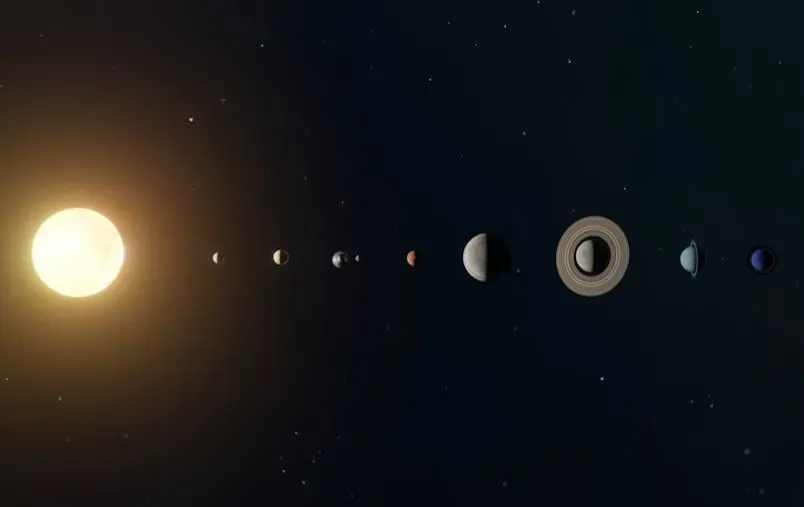
Imagine being told that the ground beneath your feet – the one thing that feels solid and central – is actually just another rock circling a star. That was the emotional impact of the heliocentric model that Nicolaus Copernicus proposed in the sixteenth century. Before that, the dominant view in Europe placed Earth at the center of the universe, with everything else swirling neatly around us in perfect heavenly spheres.
Copernicus argued that the planets, including Earth, orbit the sun instead. At first, his idea was more mathematical convenience than fully proven reality, but it cracked something open. It set the stage for later observers like Galileo and Kepler to gather hard evidence that we weren’t sitting in a cosmic VIP seat after all. This discovery didn’t just rearrange planets; it hit human ego directly, launching a long, uncomfortable lesson that the universe doesn’t revolve around us – literally or figuratively.
2. Gravity: Newton’s Invisible Force Holding the Cosmos Together
Once Earth was demoted from the center, a brutal question appeared: what actually keeps everything in place? Planets whip around the sun at huge speeds, so why don’t they fly off into the dark? Isaac Newton’s law of universal gravitation, introduced in the late seventeenth century, delivered an answer that still feels almost magical. He showed that every object with mass pulls on every other object with mass, with a force that weakens with distance but never quite disappears.
This invisible glue suddenly tied apples falling from trees to the moon’s orbit in one elegant sweep. It meant the universe was not a collection of unrelated motions but a single system governed by the same rules everywhere. For the first time, people could calculate how planets move, predict eclipses precisely, and even design early orbits centuries before real spacecraft existed. In a way, Newton’s gravity gave the universe a personality: ordered, lawful, and surprisingly predictable, at least on the big scales.
3. Einstein’s Relativity: Space and Time Are Not What We Thought
Just when gravity felt nicely settled, Einstein walked in and quietly blew it up. In the early twentieth century, his theories of special and general relativity revealed that space and time are not rigid backdrops but flexible, interwoven, and influenced by matter and energy. Time can slow down. Lengths can contract. Massive objects bend spacetime, and what we experience as gravity is really just matter following those curves.
This is not some abstract math trick; it shows up in very real ways. Modern GPS systems, for example, have to correct for both special and general relativity or your maps would be noticeably wrong. Einstein’s view turned the universe from a stage into a dynamic fabric that stretches, warps, and evolves. It also opened the door to wild possibilities: black holes, expanding space, and even the idea that time itself had a beginning. Once you accept that spacetime can flex, the universe stops feeling like a static machine and starts to look more like a living story.
4. Hubble and the Expanding Universe: The Big Bang Enters the Scene
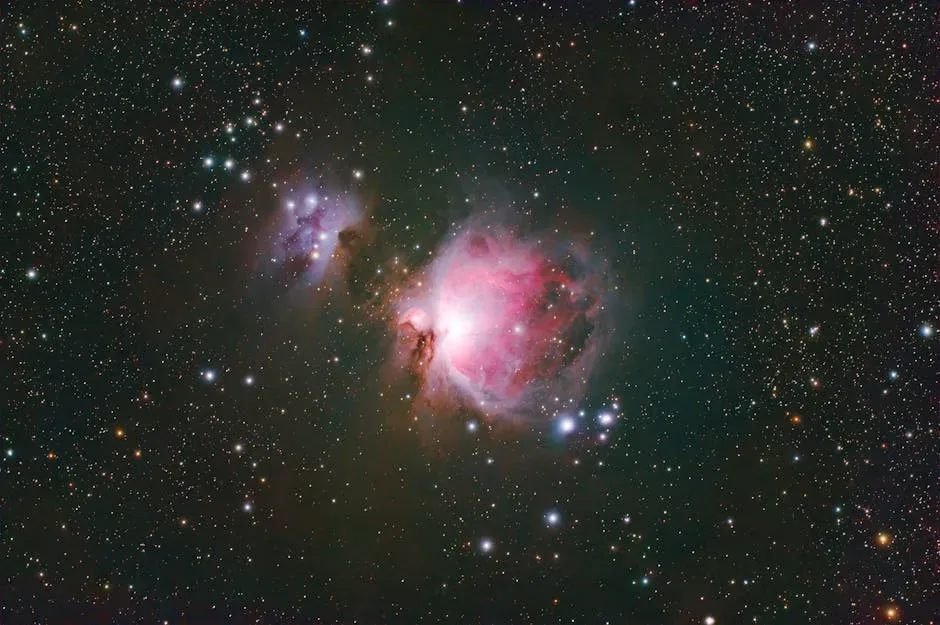
For a long time, even with relativity in hand, many scientists assumed the universe was eternal and unchanging on the largest scales. Then, in the 1920s, Edwin Hubble measured the light from distant galaxies and found something shocking: most of them are rushing away from us, and the farther they are, the faster they seem to recede. Space is not just big; it is stretching. This led to the realization that, in the past, the universe must have been smaller, denser, and hotter.
From that insight grew the modern Big Bang model: the idea that our universe has a finite age and has been expanding for billions of years. Additional evidence, like the cosmic microwave background radiation discovered in the mid‑twentieth century, backed this up strongly. Suddenly, questions that were once philosophical – Did the universe have a beginning? – became scientific questions with testable answers. The universe went from being a steady, eternal backdrop to a dynamic, evolving entity with a dramatic origin story.
5. The Discovery of Galaxies: Our Milky Way Is Not Alone
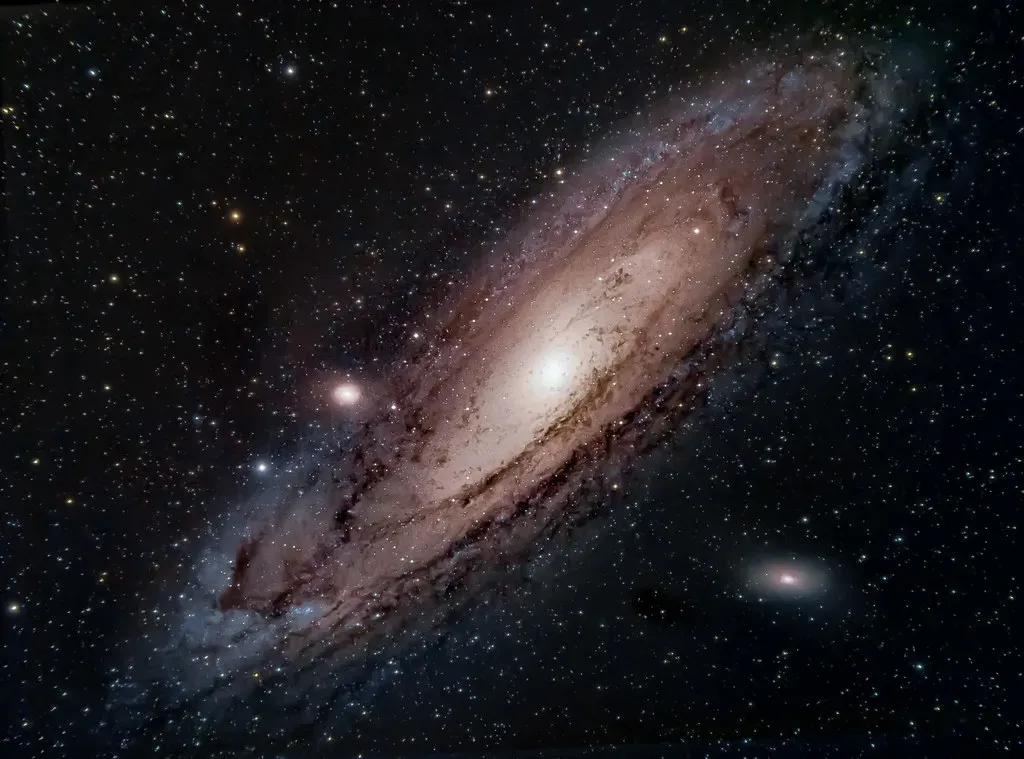
It’s easy now to say “galaxies” in the plural and picture those spiral images from space telescopes, but that plural was once controversial. In the early twentieth century, many astronomers believed the Milky Way was the entire universe and that the mysterious “spiral nebulae” were just small clouds inside it. As telescopes improved, especially with Hubble’s work at Mount Wilson, it became clear those spirals were separate “island universes” – galaxies far beyond our own, containing billions of stars each.
This realization was like zooming out on a map and discovering an entire continent you didn’t know existed. Our galaxy went from being the universe to being one middling member in a vast cosmic city. Today, observations suggest there are hundreds of billions of galaxies in the observable universe, maybe more. That sheer scale forces a mental reset: if our grand home galaxy is just one of countless others, what else might be out there that we haven’t yet named or even imagined?
6. Dark Matter and Dark Energy: Most of the Universe Is Invisible
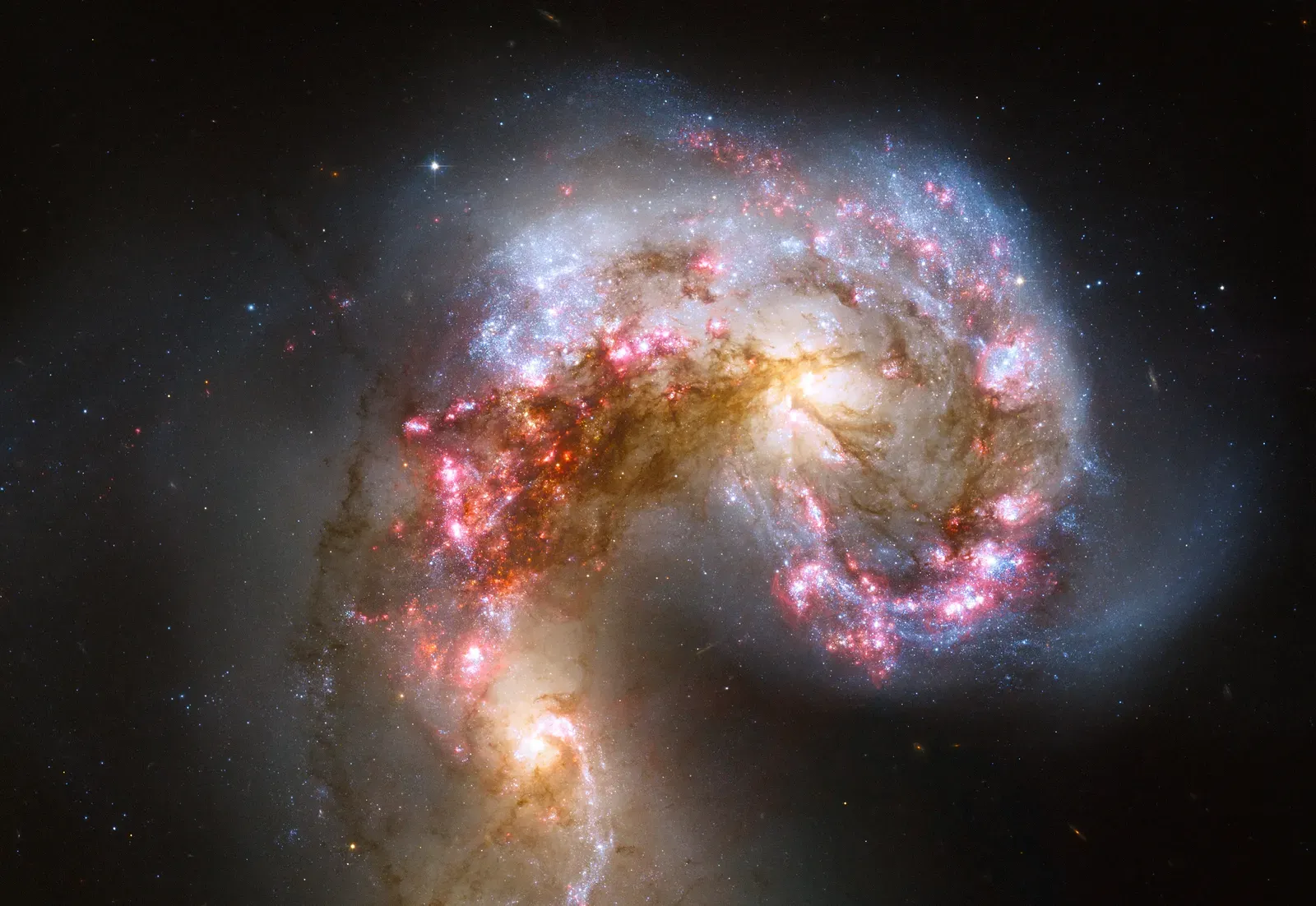
Just when astronomers thought they were getting a handle on the contents of the cosmos – stars, gas, dust, planets – the universe pulled its meanest trick so far. Careful measurements of galaxy rotations, galaxy clusters, and the large‑scale structure of the universe showed a mismatch. Visible matter alone simply could not explain the way things move and clump. Something unseen, dubbed dark matter, appeared to be providing extra gravity without emitting light.
As if that weren’t unsettling enough, observations of distant supernovae in the late twentieth century revealed that cosmic expansion is not slowing down under gravity as expected but speeding up. To explain this, scientists proposed dark energy, a mysterious form of energy tied to space itself, driving accelerated expansion. Put together, dark matter and dark energy seem to make up the vast majority of the universe’s content, while ordinary matter – everything we directly see and touch – is just a small fraction. It’s like realizing your entire life has been spent studying the foam on top of an ocean you can barely see.
7. Exoplanets and the Growing Possibility of Other Worlds Like Ours
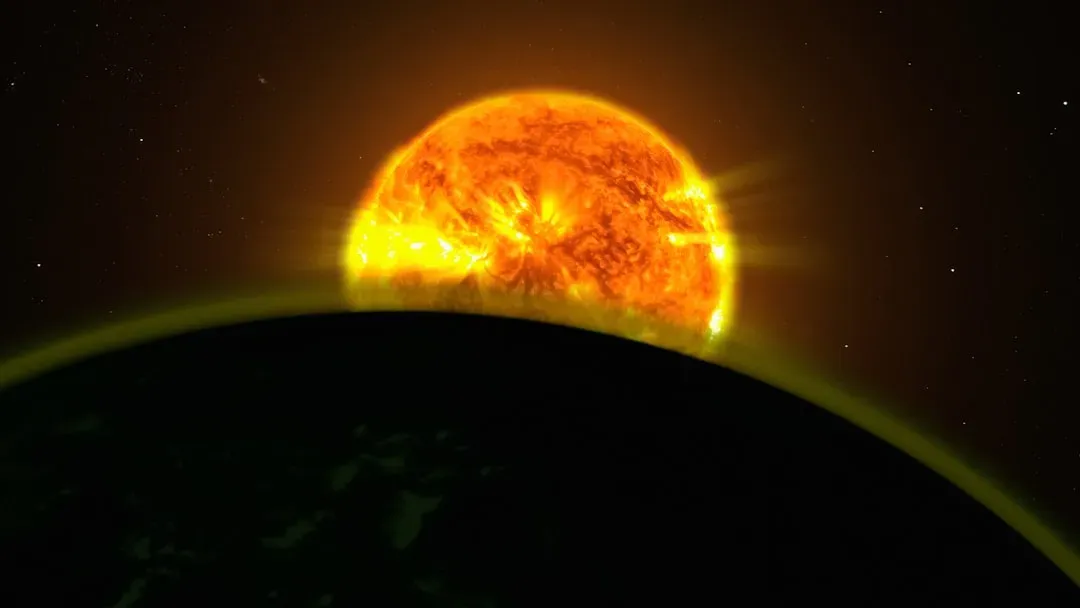
For most of human history, wondering about other worlds was a mix of philosophy and daydreaming. We only had one example of a planetary system that we knew existed: our own. That changed dramatically in the 1990s and early 2000s, when astronomers began detecting exoplanets – planets orbiting other stars – using subtle techniques like measuring tiny stellar wobbles and slight dips in starlight. Since then, dedicated missions have revealed thousands of confirmed exoplanets, from scorched hot Jupiters to rocky worlds not so different from Earth.
What truly shifts is not just the number of exoplanets but their diversity and the realization that planets seem to be common rather than rare. Some orbit in their star’s habitable zone, where temperatures might allow liquid water, a key ingredient for life as we know it. We now live in an era where scientists can begin to study the atmospheres of some of these distant worlds, looking for chemical hints that might point toward biological activity. Even if we have not yet found definitive signs of life, the discovery of exoplanets has transformed the question from “Are there other worlds?” to “How many, and what kind of life might they host?”
Conclusion: A Universe That Keeps Getting Stranger
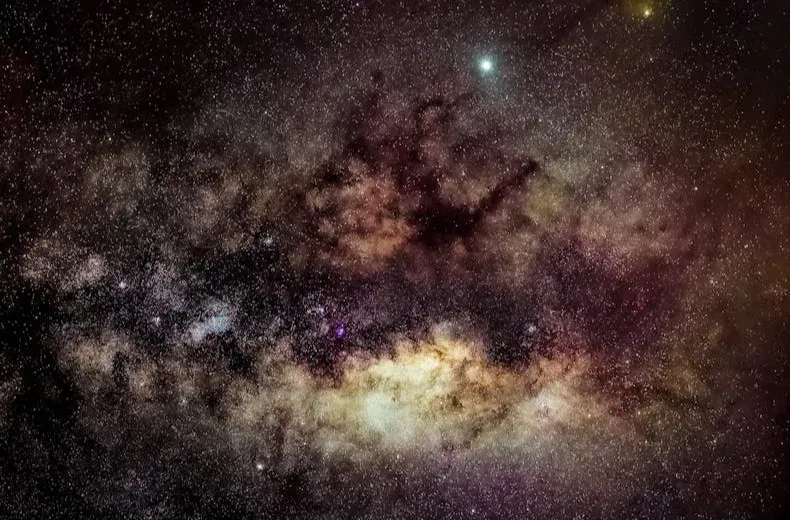
Looking across these discoveries, there’s a pattern that’s hard to miss: every time we think we’ve found our place in the universe, the universe gently – or not so gently – pushes us further from the center. We are not the hub of planetary motion, not the only galaxy, not made of most of the matter and energy that exist, and possibly not the only cradle where life could emerge. Instead of shrinking our importance, though, I think that makes our curiosity feel even more valuable. We’re tiny, yes, but we’re tiny creatures capable of mapping the shape of spacetime and spotting planets orbiting stars hundreds of light‑years away.
What comes next is anyone’s guess: better dark matter detectors, sharper space telescopes, or some completely unexpected anomaly that forces another rewrite of the textbooks. If history is any guide, the biggest revelations will be the ones we can’t currently imagine, hiding in data we don’t yet know how to interpret. The universe has surprised us seven times over and more; it almost certainly isn’t done. When the next revolution arrives, what long‑held assumption do you think it will overturn?