You probably like to think of yourself as a pretty rational person. Things follow rules, causes lead to effects, and if you think hard enough, the world more or less makes sense. Then you crash straight into a paradox, and suddenly the mental floor drops out from under you. A single strange idea can leave you staring at the ceiling at three in the morning, quietly wondering whether reality is as solid as it feels.
Paradoxes are not just clever puzzles; they’re like stress tests for your mind and for the concepts you trust most: time, identity, truth, infinity, free will. When you follow them carefully, they expose hidden assumptions you did not even know you were making. Some have helped shape modern physics and logic; others just sit in your brain like little time bombs, waiting to go off when you least expect it. Let’s walk through ten of the most brain-twisting paradoxes and see how deeply they can shake your sense of what is real.
1. The Ship of Theseus: Are You Still You After Everything Changes?

Imagine you own an old wooden ship. Over the years, you replace one rotten plank at a time until every single piece has been swapped out. At the end of the process, you’re standing in front of a vessel that looks the same, sails the same route, and carries the same name. But none of its original material remains. At that point, are you still looking at the same ship, or is it a completely new one that only feels familiar because of memory and habit?
Now push it further: suppose someone secretly collected all the discarded original planks and rebuilt another ship somewhere else. That one has all the original matter, but no continuity of use or history in your hands. Which is the real ship now: the one with continuity but new parts, or the one with original parts but a broken story? When you apply this to your own body – where cells die and are replaced, memories shift, and your personality evolves – you’re forced to ask a painfully personal question: at what point, if ever, do you stop being you?
2. The Grandfather Paradox: Can You Break Time by Saving the Past?
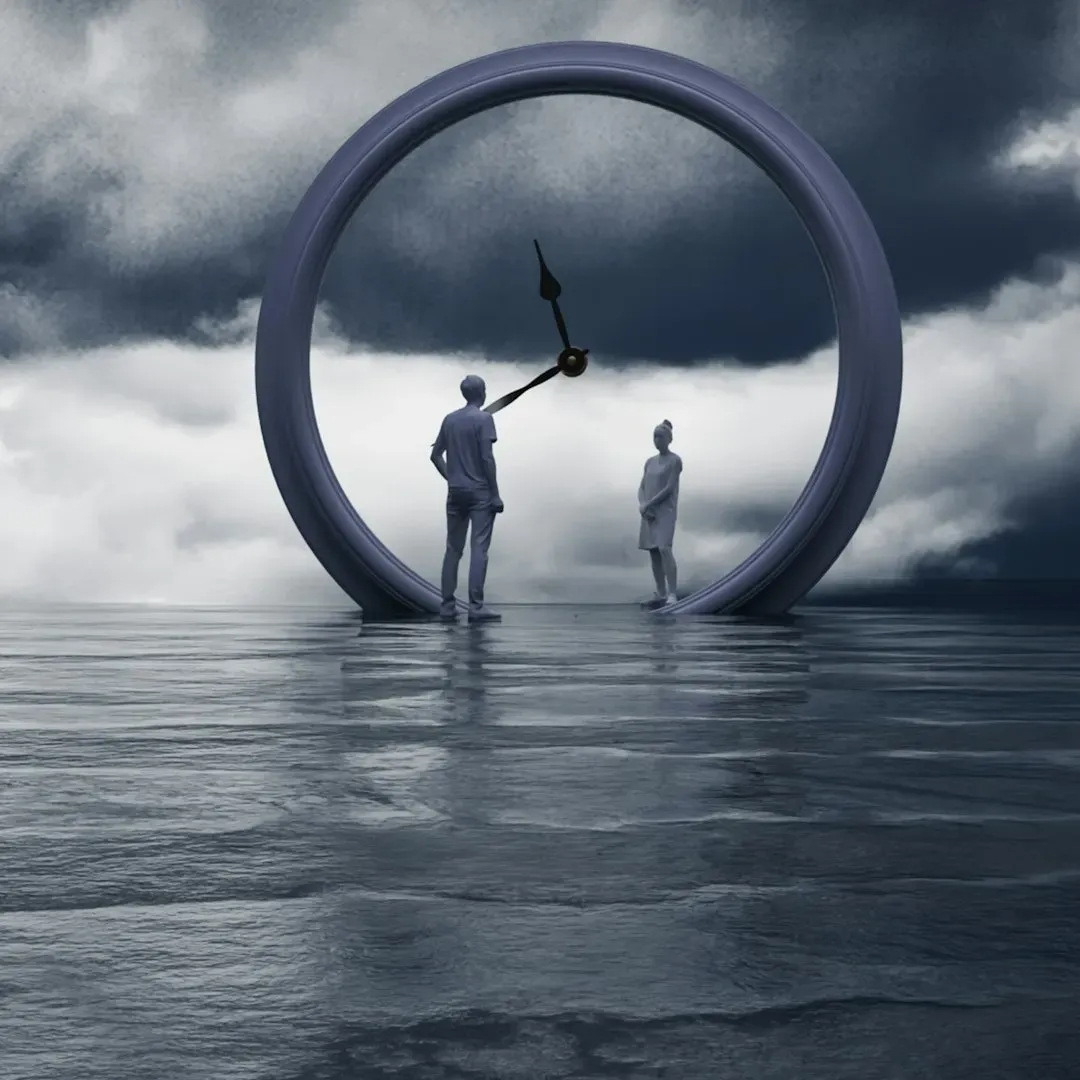
Picture yourself stepping into a time machine and jumping back decades, arriving long before you were born. You walk into a world where your grandparents are young and your parents do not exist yet. The paradox appears when you imagine preventing your own grandfather from ever having children – through some drastic action or even just accidentally derailing his life. If you succeed, then one chilling fact follows: you will never be born and cannot travel back to do it in the first place.
This loop traps you in a logical tangle: your actions erase the conditions that allow those actions to happen. To resolve it, you’re forced into strange options. Maybe the universe simply does not allow events that create contradictions. Maybe there are branching timelines, so your interference spins off a new reality while leaving your original history intact. Or maybe time travel to the past, at least in the traditional sense, is just not physically possible. Whatever explanation you lean toward, you’re really deciding what you think time actually is: a single fixed line, a branching tree, or something even weirder that your everyday intuition cannot quite grasp.
3. The Bootstrap Paradox: Something From Nothing in a Time Loop
Now imagine another time-travel scenario that feels even stranger. You travel to the future, find a brilliant piece of technology or a complete novel, and bring it back to the present. You pass the invention to an engineer or the book to an author, who publishes or builds it, making it famous. Many years later, you encounter that exact invention or book in the future, copy it, and bring it back – completing a loop with no clear beginning. Where did the original idea actually come from?
In the bootstrap paradox, an object or piece of information seems to exist in a closed time loop without ever being created in the ordinary sense. You are left with a cause that is also its own effect, like a staircase that starts where it ends. If you treat time as a single, self-consistent timeline, this loop technically works, but it offends your usual sense that everything should have a clear origin. The paradox forces you to question whether your demand for a first cause is a deep truth about reality or just a psychological comfort your brain clings to.
4. Zeno’s Paradox: Why Motion Should Be Impossible (But Somehow Isn’t)
Take a step across the room in your mind. Zeno asks you to think of that trip as a sequence: first you must go halfway. Then you must go halfway of the remaining distance, then halfway of that, and so on without end. Because you can divide the journey into infinitely many smaller parts, it seems like you’d have to complete an infinite number of tasks to finish a single step. That sounds impossible, so by this logic, you should never reach the other side of the room.
The paradox comes from treating infinity like a stack of chores instead of what it really is in mathematics: a process that can converge to a finite result. When you add up each of those halves and quarters and eighths, you do not get an infinite distance; you get a simple, finite one. Modern calculus handles this neatly, but your everyday intuition still tends to get snagged on the idea of infinity as something you can never complete. Zeno’s puzzle quietly shows you just how far your basic mental picture of space, time, and motion is from the mathematical picture that actually makes physics work.
5. The Liar Paradox: When a Simple Sentence Breaks Logic

Consider a short sentence: “This statement is false.” If you assume it’s true, then what it says must hold, so it is false. But if you treat it as false, then it is not the case that the statement is false, which means it would be true. You end up bouncing endlessly between truth and falsity with no stable landing spot. Your normal rule that every meaningful statement should be either true or false just shatters in your hands.
Logicians have wrestled with this puzzle for centuries because it squeezes right into the boundary where language, self-reference, and truth collide. One way out is to redesign your logical system so that some self-referential sentences are not allowed to have a truth value at all. Another approach is to accept degrees of truth or multiple layers of language, so a sentence cannot straightforwardly talk about its own status. Whatever escape route you pick, you are forced to accept that your basic idea of truth, which feels rock solid in everyday life, becomes slippery and fragile when you push it hard enough.
6. The Sorites Paradox: When Small Changes Suddenly Become Big Ones
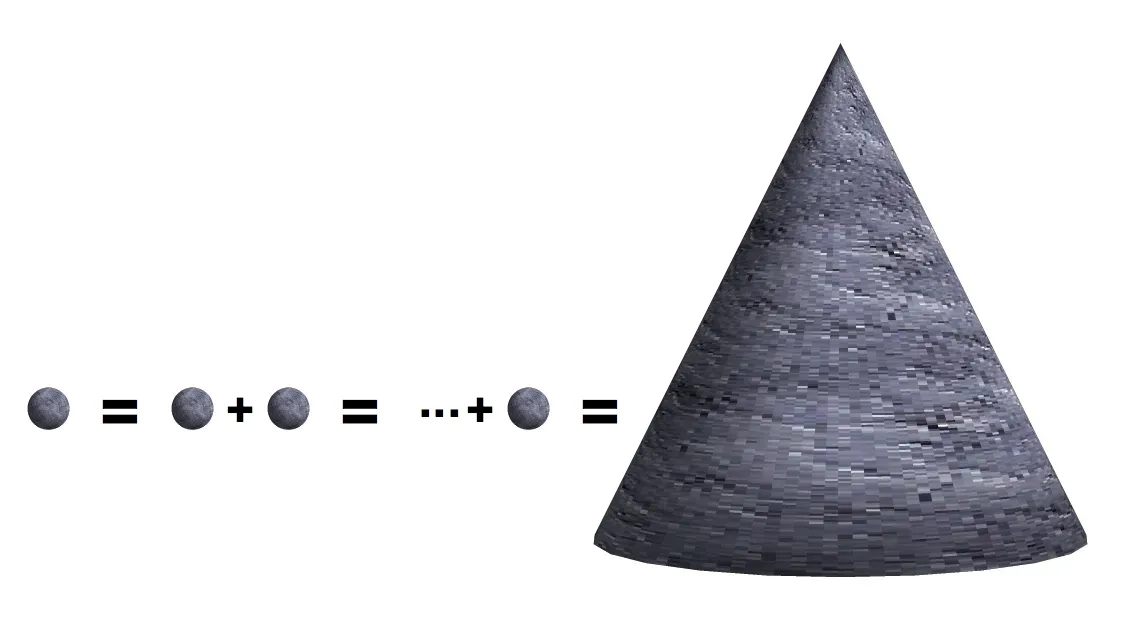
Imagine you have a heap of sand. You remove a single grain; surely it is still a heap. You remove another grain, and another, and each time it seems absurd to say that one tiny removal suddenly destroys heap-ness. But if you keep going, grain by grain, at some point you are left with a single grain, which you would never call a heap. Somewhere in that slow slide, the heap vanished, but there is no single obvious moment where you can honestly say, “Here is where it stopped being a heap.”
This puzzle nails you on something you usually skate past: many everyday concepts – like “bald,” “tall,” “rich,” or “old” – are vague and fuzzy at the edges. You want them to behave with clean, sharp boundaries, but in practice they do not. You might respond by accepting that some borderline cases simply have no definite answer, or by using more precise numerical definitions in scientific contexts. Either way, the paradox exposes a gap between the crisp categories your brain craves and the gradual shades of gray that reality often actually gives you.
7. The Fermi Paradox: Where Is Everybody in This Vast Universe?
When you look up at the night sky, you see only a tiny fraction of an unimaginably huge universe. Given the sheer number of stars and planets, it seems overwhelmingly likely that life has appeared somewhere else. With so many chances and so much time, you might expect the galaxy to be buzzing with signals, probes, or visible evidence of advanced civilizations. And yet, every time you check the data so far, you keep running into the same eerie silence.
The Fermi paradox is the tension between high expectations of extraterrestrial life and the current total lack of confirmed contact. You can soften it in many ways: maybe technological civilizations are short-lived, maybe intelligent life is much rarer than you guess, or maybe advanced beings choose to stay quiet or operate in ways you cannot detect. It is also possible that you are just incredibly early in the cosmic story. Whatever explanation you favor, this paradox has a way of making you feel both very small and strangely central, as if your lonely little planet might be playing a much bigger role than you ever imagined.
8. The Simulation Paradox: What If Your Reality Is Not the Original?
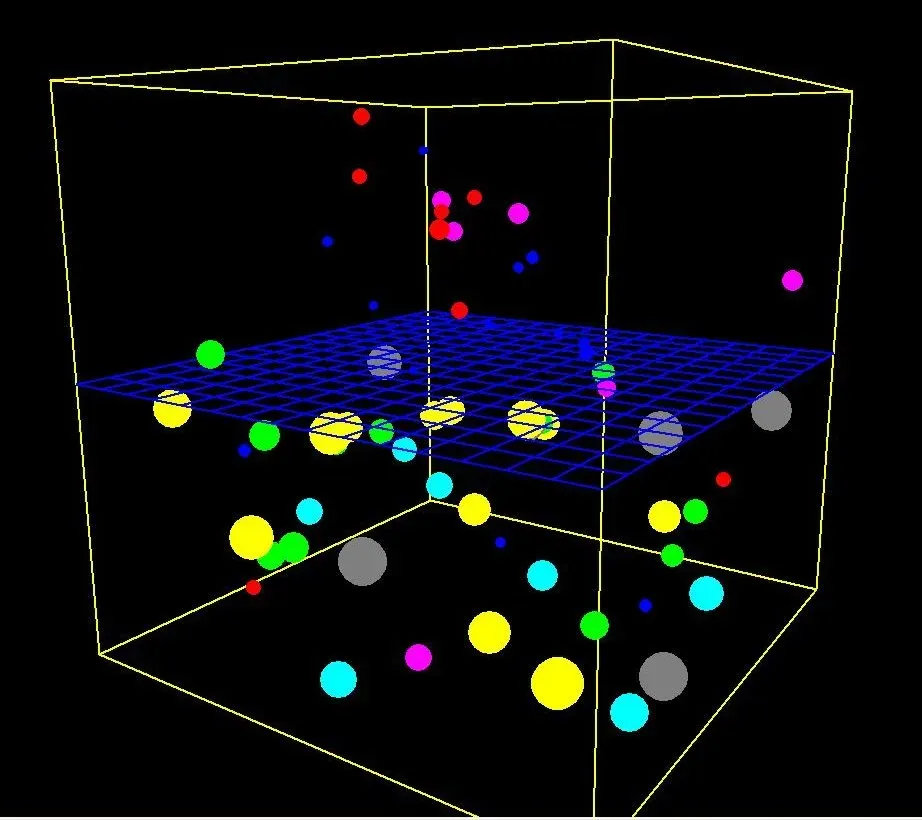
Picture a future where technologically advanced beings can run detailed computer simulations of entire worlds – complete with conscious minds that feel as real as you do right now. If such simulations are possible and cheap enough, then there could be countless simulated worlds for every one original, physical universe. That leads to an unsettling thought: if you woke up with no memory of your origin, basic probability might suggest you are more likely to be in one of the many simulations than in the single base reality.
This line of thinking does not prove you are in a simulation, but it jerks the rug out from under your everyday trust in your senses. You rely on the consistency of physical laws, shared experiences, and your ability to test the world. But in a perfect simulation, all of that could be artificially generated. Some people look for glitches or subtle limits to physics that might hint at a digital structure, while others argue that the question itself may be unanswerable from the inside. The paradox here is that the more advanced your understanding of computing and consciousness becomes, the harder it might be to convince yourself that your own reality is the original one.
9. The Paradox of Tolerance: Can Too Much Tolerance Destroy Itself?

Imagine a society that values openness and allows many different beliefs and behaviors to coexist. At first, that seems obviously positive. Now introduce an intolerant group that wants to shut down or eliminate other viewpoints by force if necessary. If your tolerant society continues to tolerate this intolerant group without limits, you risk creating the conditions for your own freedoms to be dismantled from within. Tolerance, pushed to an extreme, seems to invite its opposite.
This paradox confronts you with an uncomfortable boundary: to preserve a tolerant and free community, you may need to be actively intolerant of certain destructive forms of intolerance. That feels like a betrayal of your ideal of accepting everyone, yet doing nothing can be just as dangerous. Different legal systems and philosophies draw the line in different places, often wrestling with where free speech, harmful incitement, and public safety properly meet. When you think this through personally, it forces you to decide which values you are willing to fiercely defend, even at the cost of welcoming fewer voices into the space.
10. The Free Will vs. Determinism Paradox: Are You Really Choosing Anything?
Think about the last major decision you made – where to live, whom to date, which job to take. It felt like you weighed options, reflected on your values, and genuinely chose one path over another. Now imagine zooming in on your brain until you could see every neuron and chemical interaction. If every one of those tiny events followed the strict laws of physics, then in principle, the outcome of your decision was fixed by prior conditions long before you even became aware of it. Where, in that chain, does free will actually live?
You can respond in a few ways. You might accept full determinism and say that free will is just a powerful inner illusion that helps you function. You might argue that randomness in physics does not help, because a random event is not the same as a meaningful choice. Or you might land on a middle view: your choices are determined by your character, reasons, and desires, and that is exactly the kind of freedom that matters. Whatever you decide, this paradox forces you to confront a strange tension between the scientific picture of humans as physical systems and your deeply felt experience of being an agent who truly picks one future over another.
Paradoxes like these are not just intellectual toys; they’re pressure points where your deepest assumptions start to crack. Each one invites you to slow down, question what you usually take for granted, and accept that some of the most basic parts of reality – time, identity, truth, freedom – may be far less straightforward than they look from a distance.
If you let them, these puzzles can make you more curious, more humble, and oddly more comfortable with uncertainty, because you realize that not fully understanding things is not a failure; it is your default state as a human staring into a very strange universe. The real question is this: now that you’ve glimpsed just how wobbly your picture of reality can be, which of these paradoxes will come back to haunt you when the lights are off and your mind is free to wander?