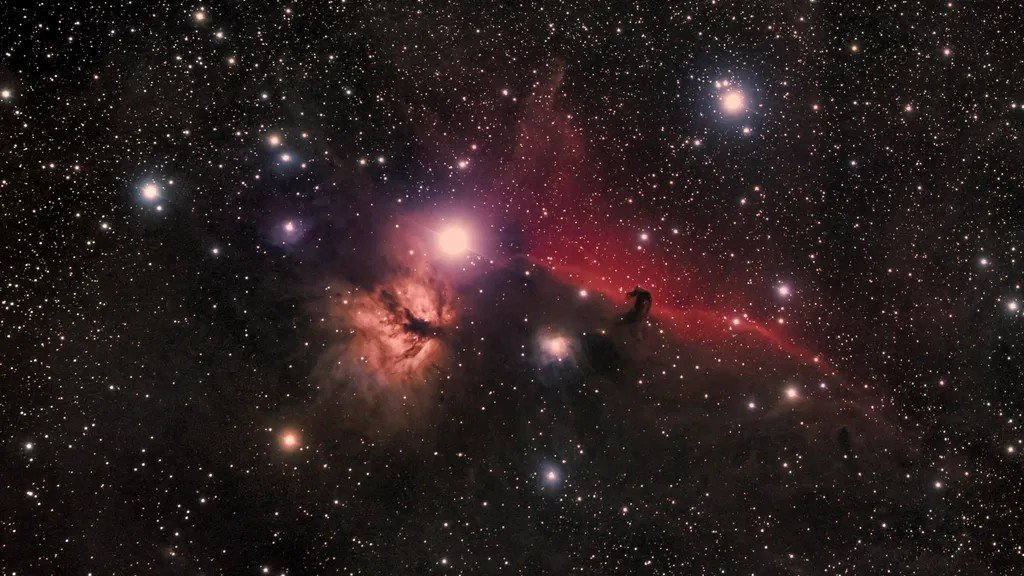
Every time we think we’ve finally wrapped our heads around the universe, it quietly shifts the goalposts. A new telescope comes online, a particle collider runs a fresh experiment, and suddenly the tidy picture we had in mind looks almost childlike. The cosmos is not just big and beautiful; it’s subtle, layered, and sometimes downright weird in ways that keep scientists awake at night.
What makes this especially wild is that we’re not peering at the universe from some special vantage point; we’re tiny organisms on a small rock, trying to decode a reality that existed billions of years before us. And yet, bit by bit, we’re starting to see how astonishingly intricate it all is – from the ghostly swirl of dark matter around galaxies to the quantum jitters in empty space. Once you start looking closely, the universe stops feeling like a simple stage and starts looking more like a vast, unfolding puzzle we’ve only just begun to solve.
The Cosmic Web: Galaxies Strung Like Invisible Threads
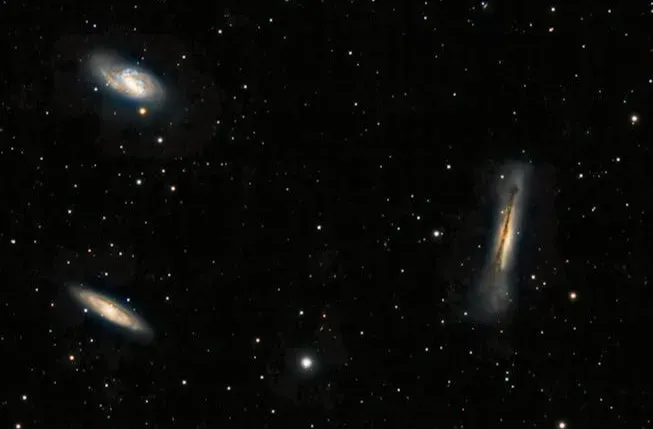
Imagine zooming so far out from Earth that entire galaxies shrink to specks, and then noticing those specks are not scattered randomly but woven into gigantic filaments. That’s the cosmic web: vast strands of galaxies and dark matter stretching across hundreds of millions of light-years, separated by enormous cosmic voids. Large surveys using instruments like the Sloan Digital Sky Survey have mapped these structures, revealing that the universe on the grandest scales looks a bit like a three-dimensional spiderweb.
This alone breaks the old picture of a homogeneous, evenly mixed cosmos. Galaxy clusters pile up at the intersections of these filaments, fed by streams of gas and dark matter flowing along the strands. Our own Milky Way sits inside one of these filaments, part of a gigantic supercluster complex. The pattern wasn’t designed; it emerged naturally from gravity acting on tiny fluctuations in the early universe, which is an almost unsettling reminder of how simple rules can produce shockingly elaborate cosmic architecture.
Dark Matter: The Hidden Scaffolding Of Reality
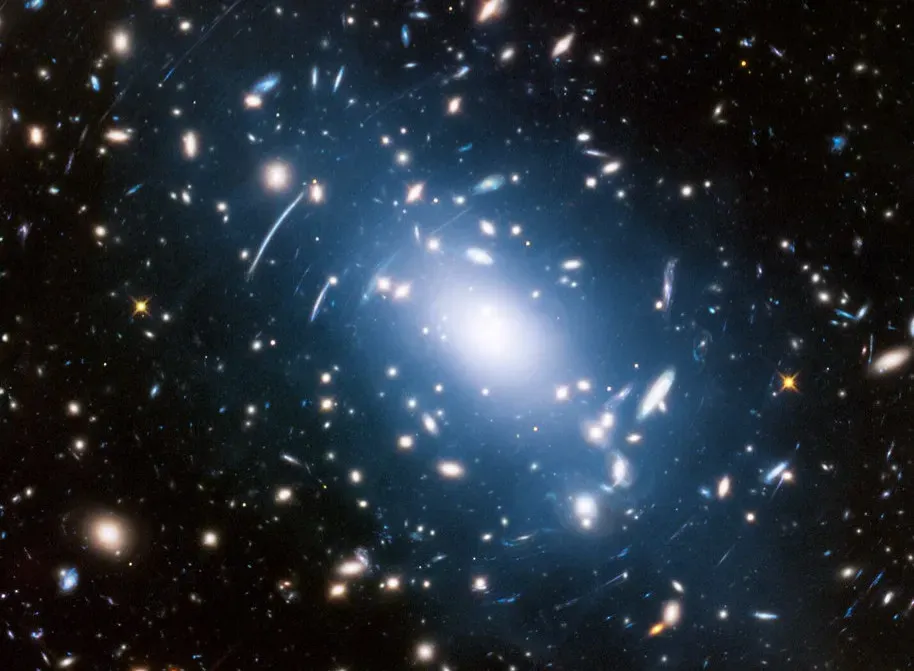
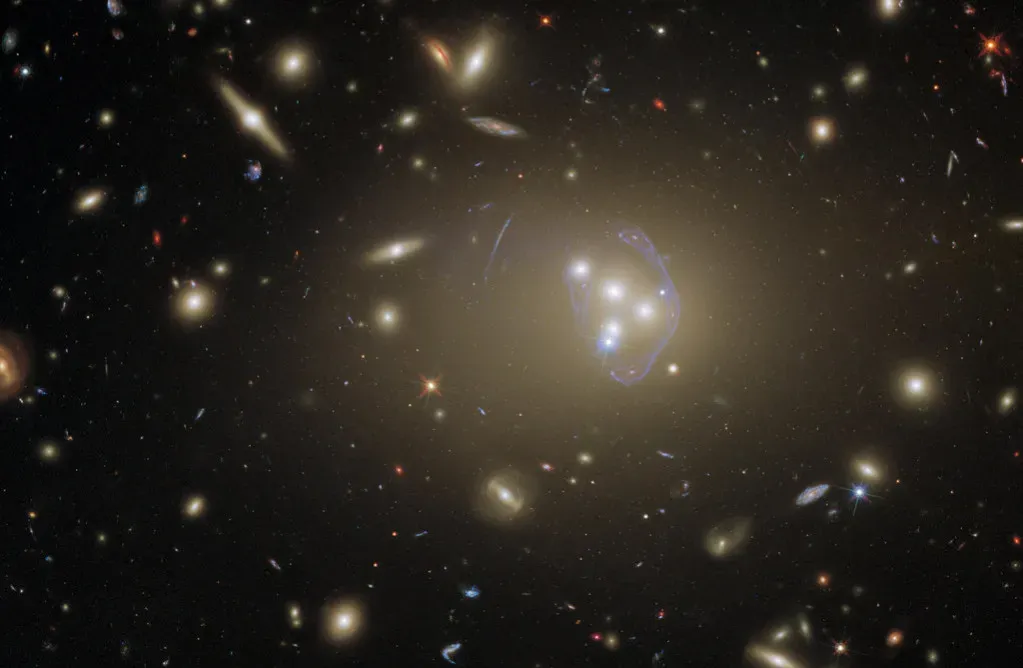
One of the strangest truths in modern cosmology is that all the stars, planets, gas, and dust we can see make up only a small fraction of what’s really out there. The rest is dominated by something we can’t see directly: dark matter. We infer its presence from the way galaxies rotate too fast to be held together by visible matter alone, and from how galaxy clusters bend light more than they should through gravitational lensing. It’s like discovering a city by only seeing its streetlights, then realizing almost everything is hidden in the dark.
Despite decades of effort, no experiment has definitively detected dark matter particles, though underground detectors, space-based instruments, and particle colliders keep pushing the limits. The leading idea is that dark matter is made from some new kind of particle that doesn’t interact with light, only with gravity and maybe weakly with normal matter. That means the large-scale shape of the universe is being sculpted by something we can’t touch, taste, or see – only deduce. It’s a humbling reminder that our senses, and even our best instruments, still only give us a partial view of the real cosmic stage.
Dark Energy: A Mysterious Force Stretching Space Itself
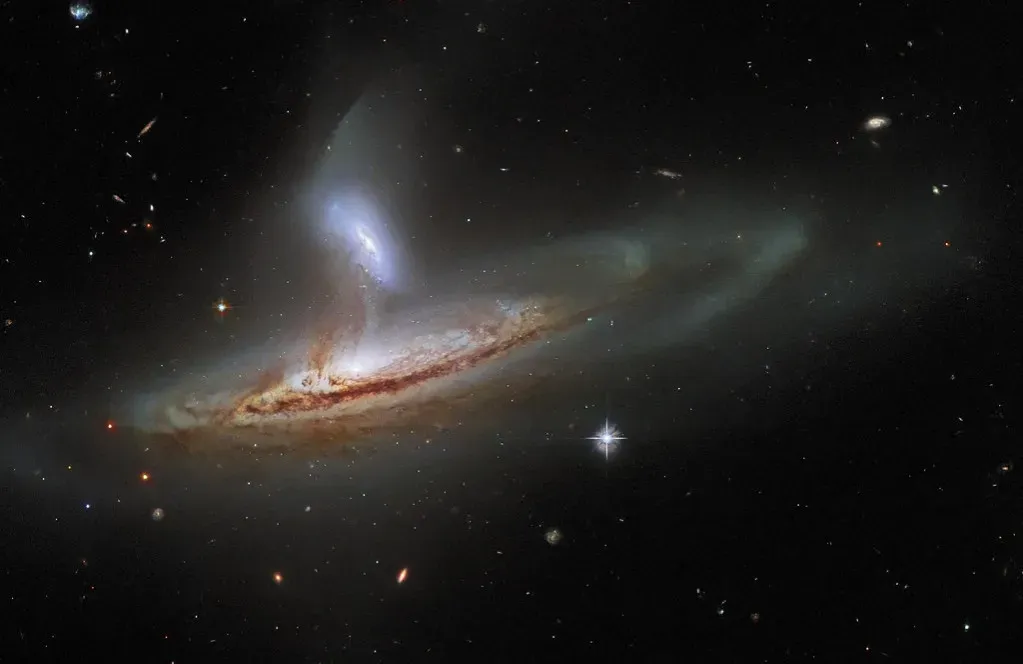
As if invisible matter weren’t enough, the universe also seems to be pushed apart by something even stranger: dark energy. Observations of distant supernovae in the late nineteen-nineties revealed that the expansion of the universe is not slowing down under gravity, but speeding up. That discovery flipped a century of assumptions on its head. Whatever dark energy is, it acts a bit like a built-in pressure of space, causing the fabric of the cosmos to expand faster over time.
Current measurements suggest dark energy accounts for the majority of the energy content of the universe, dwarfing both dark matter and normal matter. Yet we don’t know whether it’s a property of empty space, a new kind of field, or a sign that our theory of gravity needs an upgrade on huge scales. When I first learned that most of the universe is made of things we don’t really understand, it felt a bit like realizing your house is mostly held up by invisible beams you’ve never seen. Dark energy is one of those beams, quietly defining the long-term fate of everything, while we’re still debating what to even call it.
Quantum Fluctuations: The Universe’s Smallest Tremors
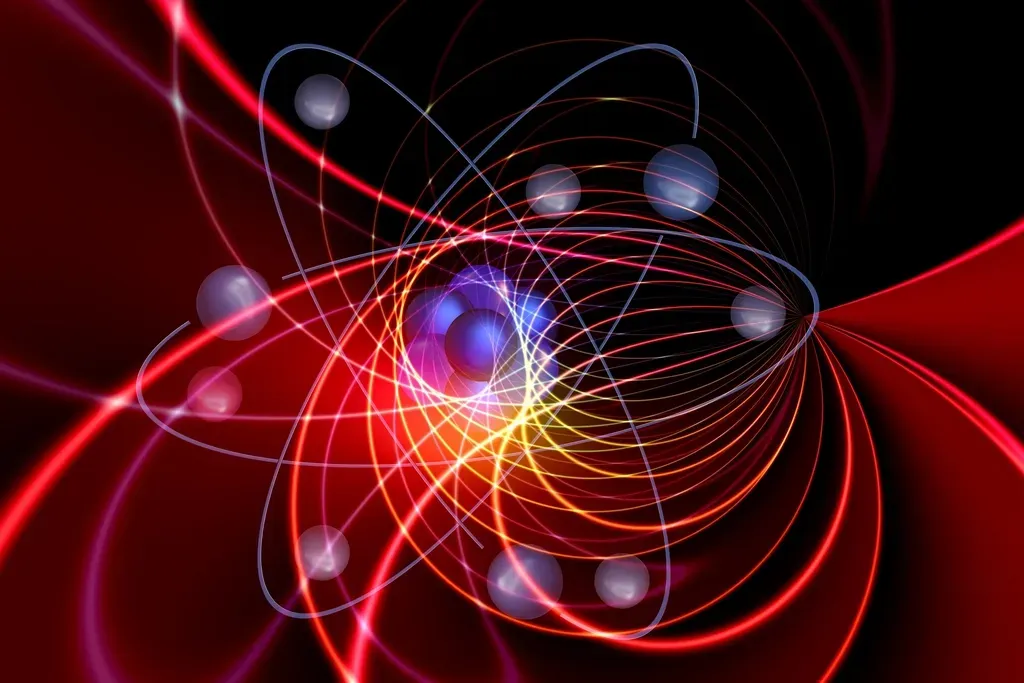
On the tiniest scales, reality refuses to sit still. What we think of as “empty” space is actually a restless sea of quantum fluctuations, where particles and antiparticles briefly appear and vanish. In quantum field theory, every point in space is buzzing with potential, like a calm-looking ocean hiding churning currents just beneath the surface. That jittery foundation affects everything from the stability of atoms to how light propagates across space.
The wildest part is that these microscopic jitters appear to have shaped the entire cosmos. Leading models of the early universe suggest that quantum fluctuations, stretched by an early rapid expansion phase, became the seeds for galaxies and clusters. Tiny differences in density from place to place were amplified by gravity over billions of years into the cosmic web we see today. So every sunset, every star, every galaxy traces its story back to random quantum ripples in what we’d casually call “nothing.” That’s not just intricate – that’s the universe acting like an artist working with noise as raw material.
Black Holes: Engines Of Chaos And Order
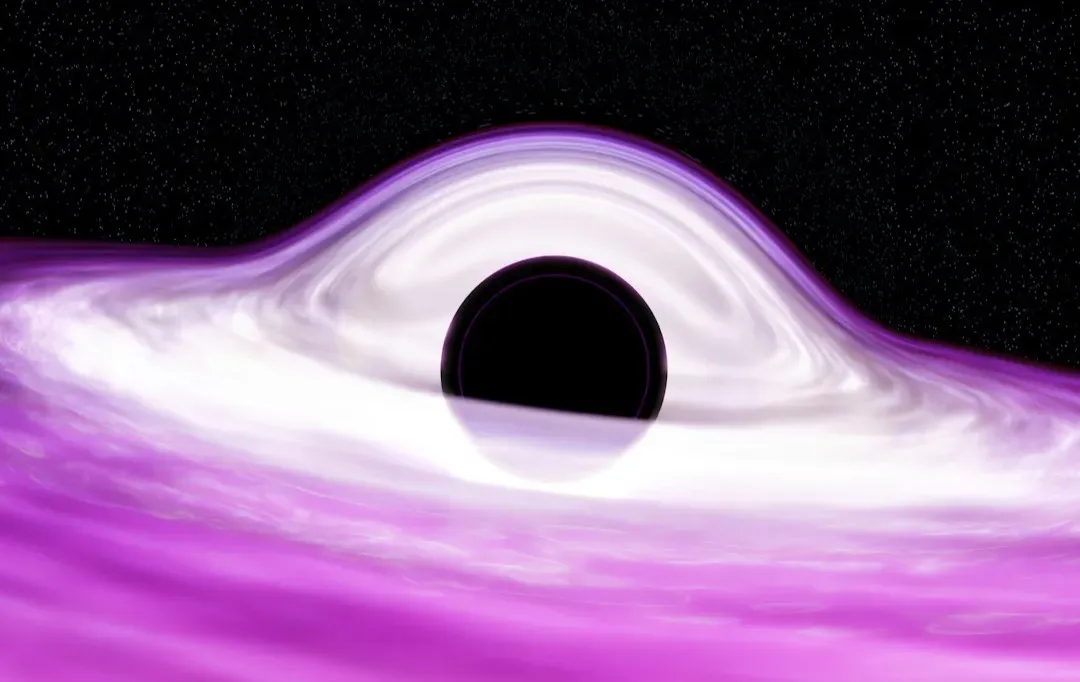
Black holes used to sound like pure science fiction: regions of space where gravity is so intense that nothing, not even light, can escape. Now we not only take them seriously; we’ve imaged the shadow of a supermassive black hole and detected the ripples in spacetime when black holes collide. At the centers of most large galaxies, including our own, sit supermassive black holes weighing millions or billions of times the mass of the Sun. These monsters shape their surroundings far beyond their immediate event horizons.
Ironically, black holes don’t just swallow matter; they help organize galaxies. As gas spirals in and heats up around them, powerful jets of particles and radiation shoot out, regulating how quickly stars form in their host galaxies. Observations suggest a tight relationship between a galaxy’s central black hole and the galaxy’s overall structure. It’s as if these objects act like both demolition crews and city planners at once. For something we can’t see directly, that combination of brutality and precision is one of the clearest signs of how weirdly coordinated the universe can be.
Gravitational Waves: Listening To The Universe Ring
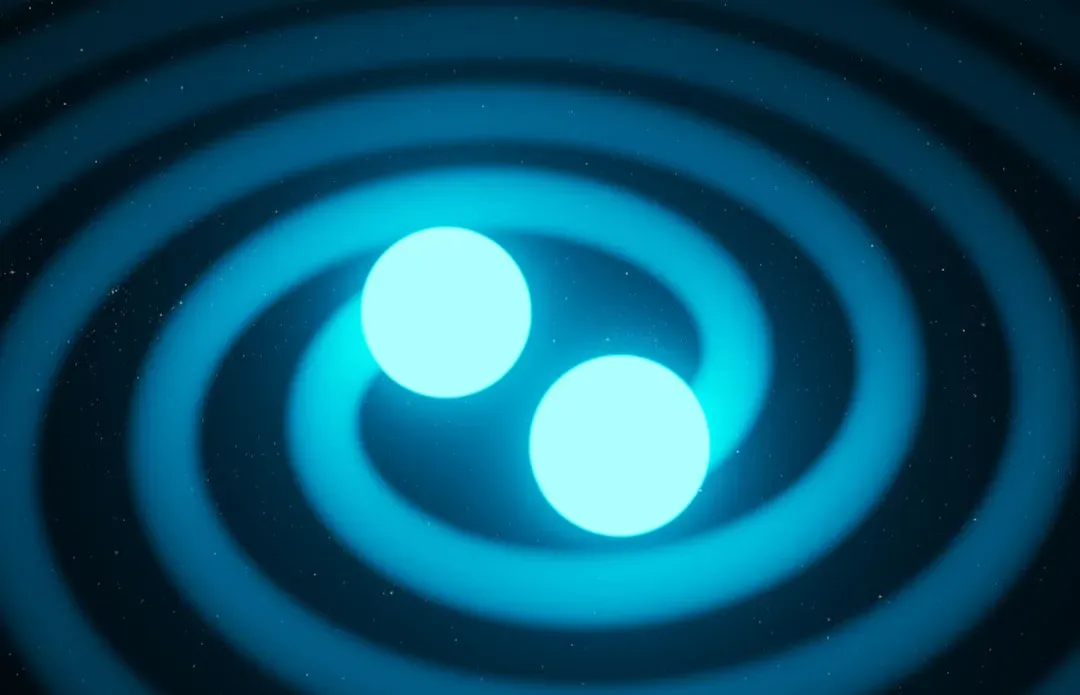
For most of human history, astronomy has been about light: visible, radio, infrared, X-ray, and more. Then, in the twenty-first century, we learned to listen to the universe using gravitational waves – tiny ripples in spacetime itself produced by massive accelerating objects. The first confirmed detection, from colliding black holes, opened a completely new way of exploring the cosmos. These waves travel nearly unimpeded across the universe, carrying information from places light can’t easily escape.
This new “hearing” has already revealed systems we would likely never have found otherwise, like pairs of stellar-mass black holes merging far from gas and dust. Future detectors on Earth and in space aim to pick up more subtle signals from neutron star collisions, supermassive black hole mergers, and possibly even echoes from the early universe. When I try to imagine this, it feels like we’ve spent centuries staring at a silent movie and have finally switched on the sound. The cosmos hasn’t gotten more intricate; we’ve just begun to notice how rich the soundtrack always was.
Exoplanets: Worlds Stranger Than Our Sci‑Fi
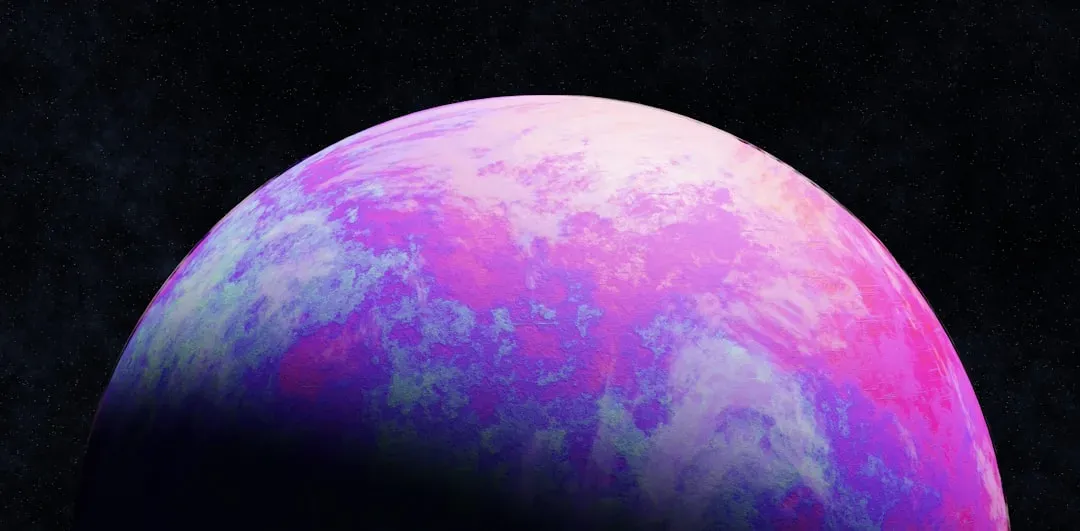
Not long ago, the idea of other planets around distant stars lived mostly in novels and speculation. Now astronomers have confirmed thousands of exoplanets, with many more candidates waiting to be verified. We’ve found “hot Jupiters” skimming the surfaces of their stars, rocky super-Earths that are larger than our planet but smaller than Neptune, and worlds that might be covered in oceans or wrapped in thick, exotic atmospheres. Our solar system, which once felt like a template, increasingly looks like just one quirky configuration among countless possibilities.
What’s even more mind-bending is how these discoveries reshape the question of life beyond Earth. Some exoplanets lie in the so-called habitable zones of their stars, where liquid water could exist. Space telescopes now can analyze the light filtering through some of these planets’ atmospheres, searching for gases that might hint at biological activity. We have not found definitive signs of life, and we have to be cautious, but we’re at the point where that question is no longer pure philosophy. The universe doesn’t just contain stars and galaxies; it’s dotted with an almost overwhelming diversity of worlds, each a separate experiment in planetary evolution.
Fine-Tuning And Cosmic Coincidences
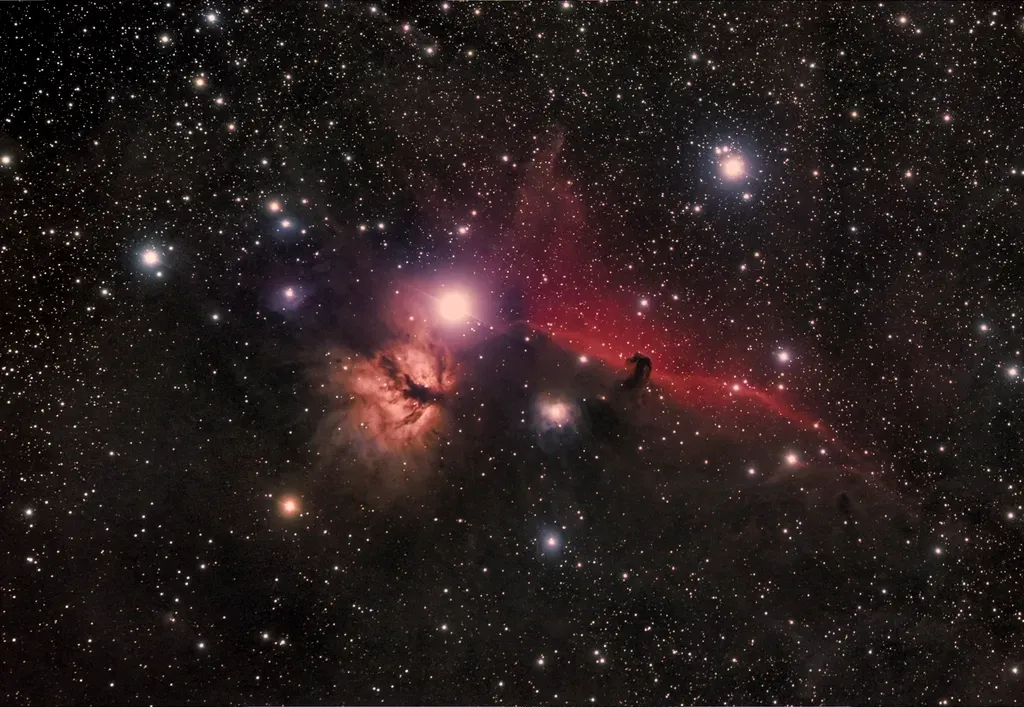
When physicists talk quietly among themselves, one topic that keeps coming up is how delicately balanced many of the universe’s basic parameters seem to be. If the strength of gravity, the charge of the electron, or the rate of cosmic expansion were even slightly different, stars might not form, heavy elements might not exist, or complex chemistry could fail. This apparent fine-tuning has fueled both intense scientific curiosity and philosophical debate. Are we seeing deep underlying principles, or are we just noticing the conditions that happen to permit our existence?
Some ideas, like the multiverse concept, propose that there could be many universes with different parameters, and we simply find ourselves in one that allows life. Other researchers look for new physical laws that could make these “coincidences” inevitable rather than arbitrary. We don’t yet have clear answers, and it’s important not to overstate what we know. Still, the fact that the numbers describing our universe line up so neatly for complexity to emerge feels a bit like walking into a random room and finding it perfectly set up for you. Whether that’s deep physics at work or just selection bias, it adds another layer of intricacy to an already baffling cosmos.
The Arrow Of Time And The Mystery Of Entropy

Everyday life is full of processes that only run one way: eggs break, ice melts, stars burn their fuel. This flow from order to disorder is described by entropy, and it gives time an arrow that points from past to future. Yet the fundamental equations of physics are mostly time-symmetric; they don’t care which direction time flows. That mismatch is one of the quiet but profound puzzles in our understanding of the universe. Why did the cosmos begin in such a low-entropy, highly ordered state that left room for everything we see to unfold?
Cosmologists suspect that the conditions of the early universe hold the key, but we still don’t fully grasp why those conditions were so special. The expanding universe, the growth of structure, the formation of black holes, and even our own ability to remember the past but not the future are all entangled with this arrow of time. When you sit with that for a moment, a simple cup of coffee cooling on your desk becomes evidence of a deep cosmic asymmetry. The universe isn’t just intricate in space; it’s intricate in how it handles time itself.
Human Consciousness As A Cosmic Mirror
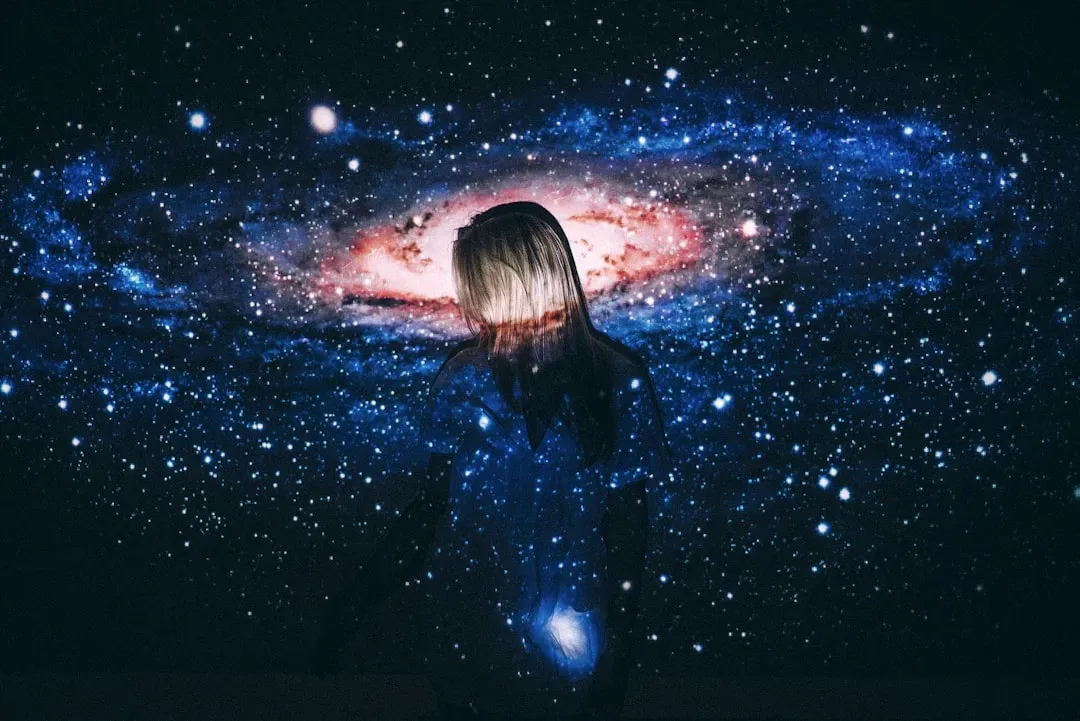
Amid all this talk of black holes and dark energy, it’s easy to forget one of the strangest facts of all: the universe has produced beings capable of reflecting on it. Human consciousness is still poorly understood in scientific terms, but it clearly arises from physical processes in brains made of ordinary atoms, forged in stars. That means the laws governing particles and fields also allow for self-awareness, curiosity, and wonder – qualities that feel miles away from equations on a chalkboard. The bridge between neurons firing and lived experience is one of the biggest unsolved puzzles.
There’s a quiet irony in the idea that tiny clumps of matter on a small planet can reconstruct, with some accuracy, the history of a universe billions of years old and unimaginably large. We build instruments, gather data, argue over interpretations, and slowly refine our picture. In that sense, the universe is not just intricate out there; it’s intricate in here, in the networks of living minds that arise within it. When I think about that, the line between “observer” and “observed” blurs a bit, and the cosmos starts to feel less like a cold machine and more like a story that is still, somehow, being told through us.
Conclusion: Living Inside A Cosmic Puzzle
Step back from all these pieces – dark matter, dark energy, black holes, exoplanets, quantum jitters, and human minds – and a pattern emerges: the universe refuses to be simple. Each time we peel back a layer, we find another, often more counterintuitive one beneath it. Our old mental image of a straightforward clockwork cosmos has given way to something more like a fractal, where intricacy appears at every scale, from the subatomic to the intergalactic. And we’re still early in this exploration; the tools we’ve built so far are powerful, but they’re clearly only scratching the surface.
Yet that very complexity is part of what makes being alive right now feel extraordinary. We get to witness a moment in history when our species is just beginning to comprehend its place in a deeply textured reality. The universe did not owe us clarity, beauty, or the chance to understand it, but somehow we’ve been granted at least a glimpse of all three. Maybe the most honest thing we can say today is that – and probably more intricate than we can yet imagine. When you look up at the night sky now, knowing all this, what do you find yourself feeling?