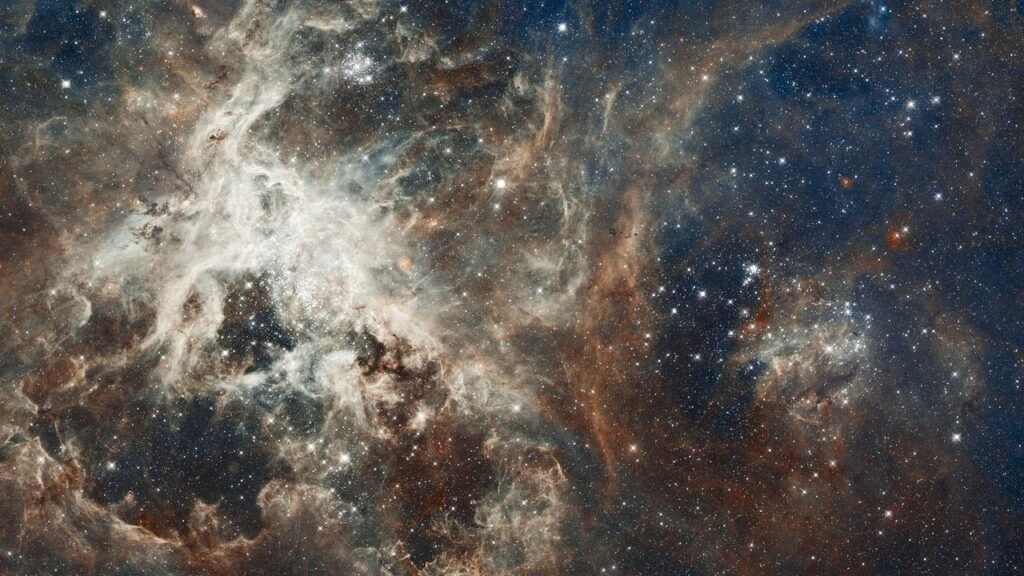
If you have ever stared at the night sky and felt like something about reality just does not add up, the holographic universe idea will hit you right in that restless curiosity. It sounds wild at first: the thought that everything you see, touch, and feel might be more like a cosmic projection than a solid, three‑dimensional world. But this is not just a late‑night stoner thought experiment; it is a serious proposal some physicists use to make sense of deep puzzles in gravity and quantum physics.
As you explore this idea, you are not being asked to abandon common sense so much as to stretch it, the way you might when you first learn that time runs differently for someone on a fast spaceship. You will see that “hologram” here is not just a cool metaphor; it has a precise scientific meaning, rooted in black holes, information, and the strange way nature seems to store data. You may not walk away convinced the universe really is a hologram – but you will understand why smart people are willing to consider it.
What Scientists Actually Mean By “Hologram”
When you hear “hologram,” you probably picture a sci‑fi movie: shimmering 3D images floating in the air, or that famous pop star performance projected on stage. In physics, though, the idea is different and a bit more subtle. A hologram, in this context, is a way of saying that the information describing a region of space can be fully stored on a lower‑dimensional boundary, kind of like how a flat credit card chip can hold all the data needed about your account.
So when someone says the universe might be a hologram, they are not claiming you live in a glitchy video game or that your body is literally made of light beams. Instead, they are saying that the deepest description of the universe might live on a distant, lower‑dimensional “surface,” while what you experience as three‑dimensional reality is like a richly detailed display of that underlying information. You still feel chairs, bump into tables, and hit your head on low ceilings; it is the hidden bookkeeping of reality, not your daily experience, that might be holographic.
How Black Holes First Hinted at a Holographic Universe
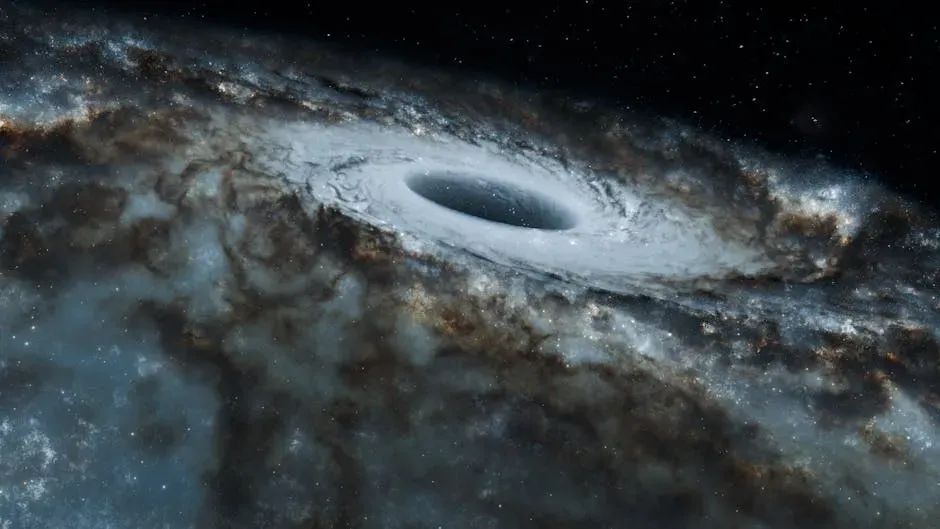
If you really want to see why this idea is taken seriously, you have to go to the scariest places in the cosmos: black holes. Decades ago, physicists realized something surprising about them. The amount of information – a sort of maximum “content” – that can fit inside a black hole does not scale with its volume, as you might expect, but with the area of its event horizon, that two‑dimensional surface that marks the point of no return.
This discovery suggested that nature counts and stores information in a way that cares about surfaces more than volumes, which is the opposite of your everyday intuition. If a black hole, the most extreme object you know of, encodes its information on a surface, you are pushed to wonder if the entire universe might work that way. That is the seed of the holographic principle: the idea that the fundamental description of everything you see could be written on a kind of cosmic boundary, with three‑dimensional reality emerging from it like a high‑resolution, fully interactive display.
The Holographic Principle in Plain Language
To make this less abstract, imagine you own a massive library stuffed with shelves and books. Normally, you would assume the amount of information in that room depends on its volume – the bigger the room, the more books you can store. The holographic principle tells you that, at the deepest level, nature does something different: it limits how much information can live in that room based on the area of the walls, not how much space is inside.
Translated to your universe, that means the total information describing everything in a region of space might already be encoded on a surrounding surface, like a cosmic hard drive. The “stuff” inside – the stars, planets, your body, your thoughts – would then be emergent patterns, the way a rich video game world emerges from a flat disk full of data. You still move through three dimensions, but those dimensions might be more like how you experience depth on a screen than like something fundamentally built‑in.
Why Quantum Physics Keeps Pushing You Toward Weird Ideas
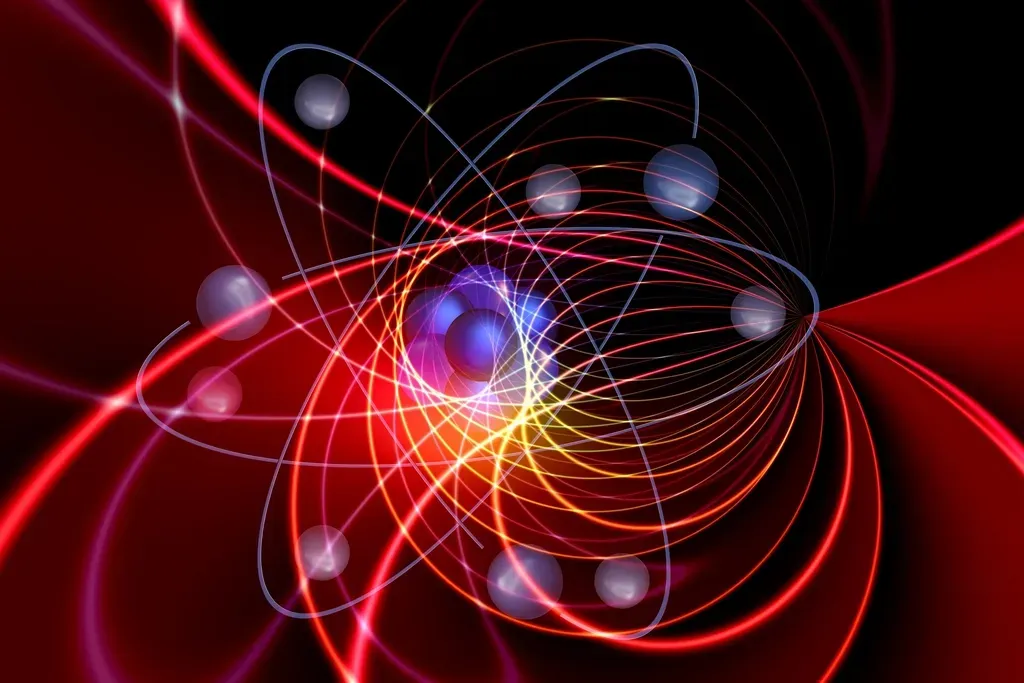
Part of why the hologram idea will not go away is that quantum physics refuses to behave like your mental picture of little billiard balls. At tiny scales, particles behave like smeared‑out waves, exist in many possibilities at once, and influence each other instantly over large distances in a way that feels almost like cheating. When you combine this weirdness with gravity – the thing that shapes space and time – you quickly run into paradoxes that standard pictures cannot handle well.
The holographic approach gives you a different way to think about those puzzles. Instead of forcing both quantum rules and smooth space‑time to coexist inside the same three‑dimensional box, it lets you describe the system on a lower‑dimensional boundary where gravity might not even appear explicitly. From that boundary description, gravity and the familiar three‑dimensional world can emerge. You shift from asking “How do I cram quantum stuff into space?” to “What lower‑dimensional information pattern gives rise to the space I think I see?”
Are You Living in a Simulation or a Hologram? Here’s the Difference
At this point, you might be thinking this sounds a lot like the popular simulation idea – the thought that you are inside some advanced civilization’s computer. It is tempting to merge these concepts, but they are not the same thing. A simulation argument is about who or what is generating your reality and whether it is artificial, like running a video game on a server somewhere in a higher “real” world.
The holographic universe concept, by contrast, does not assume any programmer, designer, or external machine. It is a claim about how your universe’s own laws might organize information: as if your three‑dimensional world is equivalent to a lower‑dimensional theory living on a boundary. You can, if you like, combine the two ideas – imagining a simulated holographic universe – but you do not need to. The hologram story stands on its own as a way to reconcile gravity, quantum mechanics, and information without invoking a cosmic coder.
What Evidence Do You Actually Have for a Holographic Universe?
Here is where you need to be careful and honest with yourself: you do not currently have direct, airtight experimental proof that the entire universe is a hologram. What you do have are strong theoretical hints and models where a holographic description works beautifully in specific cases. For example, certain toy universes used in high‑energy physics can be described in two equivalent ways: one with gravity in a higher‑dimensional space, and another without gravity on a lower‑dimensional boundary. This duality strongly supports the general holographic idea.
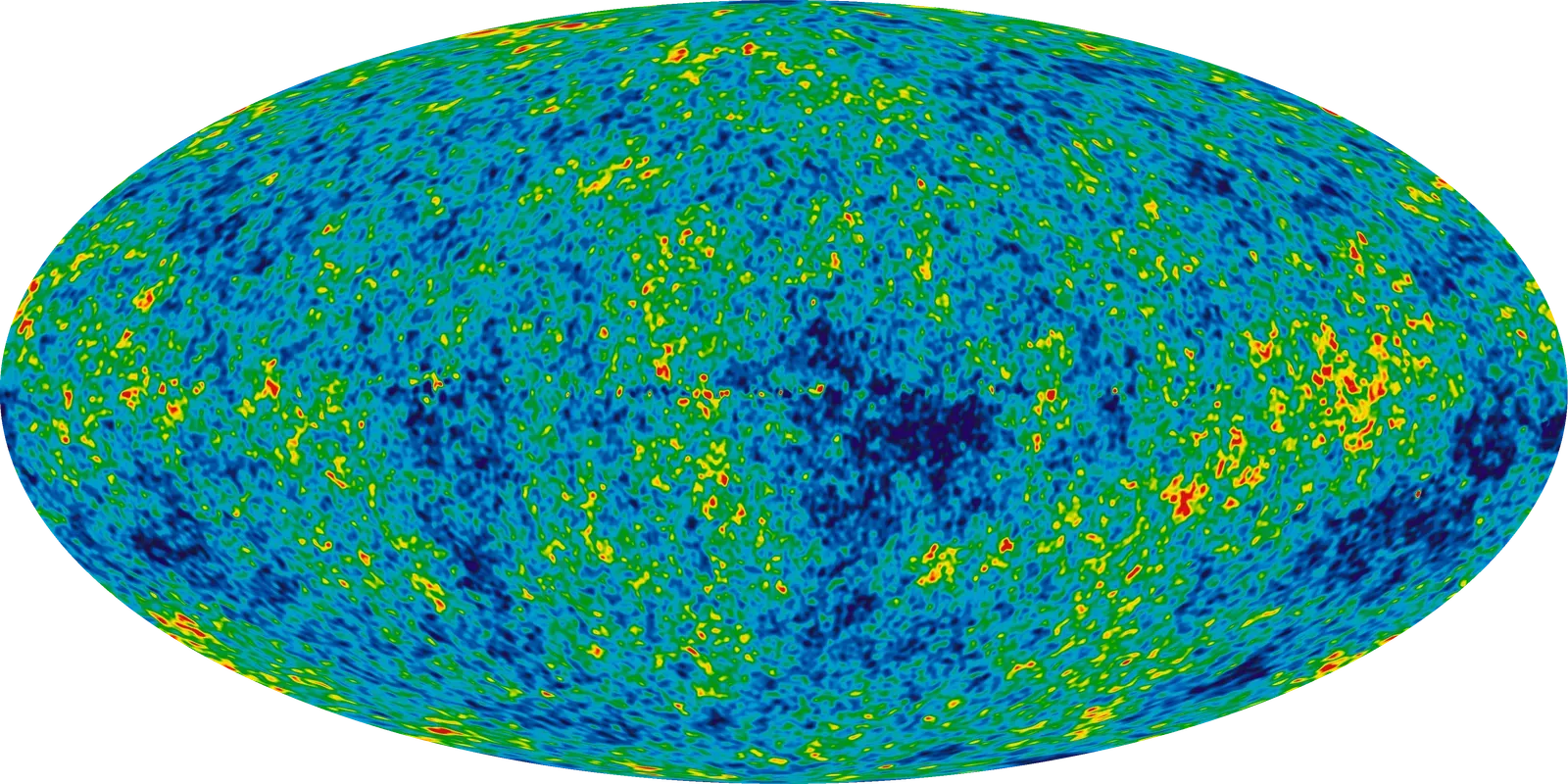
In your own universe, researchers have looked for subtle fingerprints of holographic behavior in things like the cosmic microwave background – the afterglow of the Big Bang – and in how quantum information is structured in complex systems. So far, nothing has definitively screamed, “Yes, this is a hologram,” but some results show patterns that are at least compatible with holographic reasoning. So you stand in a middle ground: the idea is serious, mathematically powerful, and somewhat supported by indirect clues, but far from settled fact.
How This Changes the Way You Think About Reality and Yourself

If you lean into this idea for a moment and assume the universe is holographic, you are pushed to rethink what it means for something to be “real.” You are used to thinking that the deepest level of reality is made of little bits of matter bouncing around in three‑dimensional space. A holographic picture tells you instead that information and relationships might be more fundamental than the solid objects you see, a bit like realizing that what really matters about a song is not the particular device playing it but the pattern of notes and timing.
That shift can affect the way you think about yourself, too. You are no longer only a collection of particles moving through space, but also a complex pattern of information woven into the universe’s fabric. Your memories, personality, and choices become part of an intricate informational dance that could, in principle, be encoded on some cosmic boundary just as fully as in your brain. You still have to deal with traffic, bills, and laundry, but you might carry those burdens with the quiet, slightly mind‑bent awareness that the “solid” world you navigate could be a sophisticated projection of deeper, unseen data.
So, Is the Universe Really a Hologram – or Just a Powerful Metaphor?
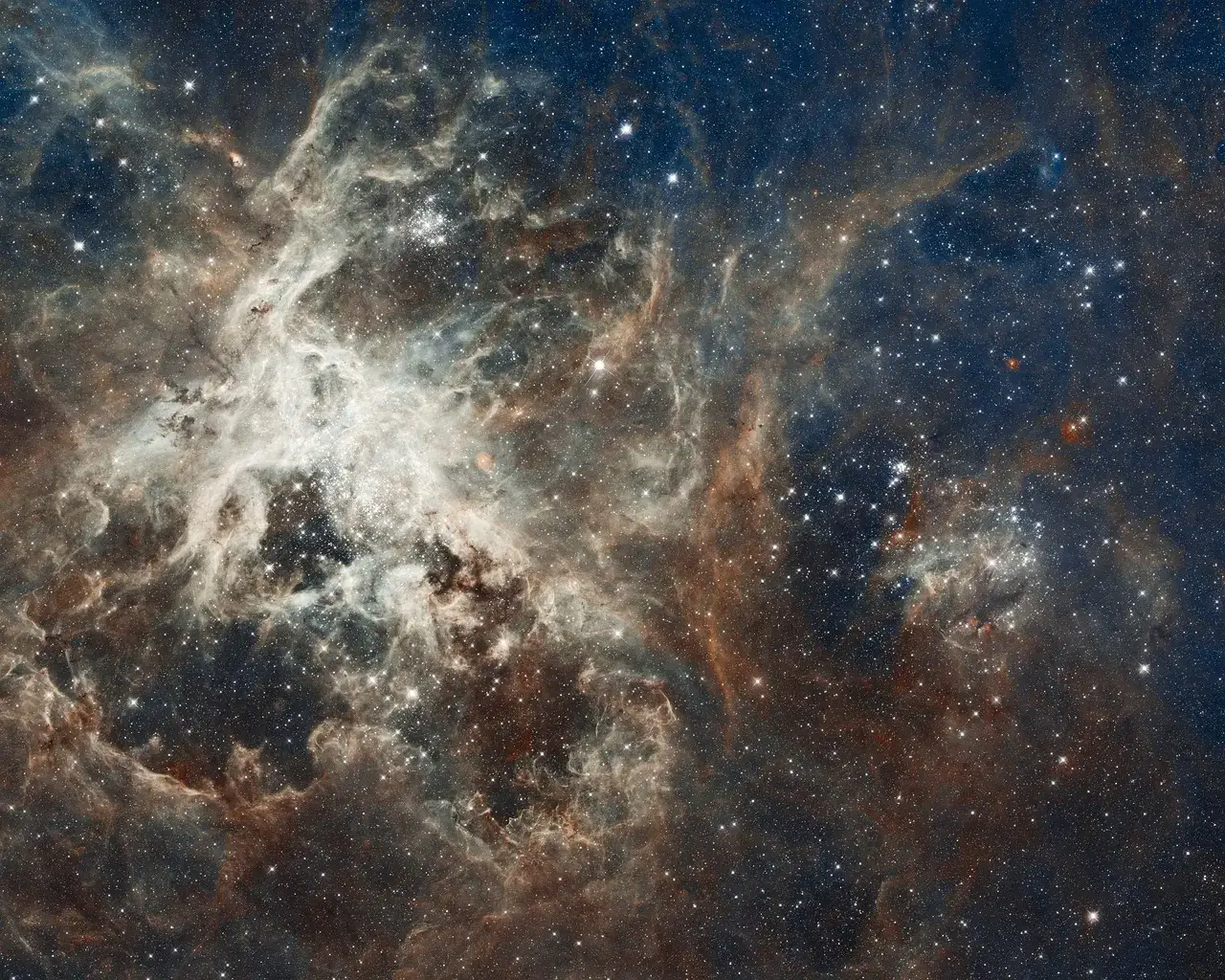
After all this, you might be hoping for a clear yes or no, but reality rarely cooperates with your desire for neat answers. Right now, the most honest thing you can say is that the holographic universe is a compelling framework that solves tough theoretical problems and has inspired a huge amount of fruitful research. It is not just a metaphor, because in some carefully studied scenarios it is an exact, calculable equivalence between two very different descriptions of the same physics.
At the same time, you should resist the urge to treat it as settled truth about your everyday world. The evidence is suggestive, not decisive, and your current experiments cannot yet probe the deepest structure of space‑time with the precision you would need. So you live in an interesting tension: you inhabit a universe that might be fundamentally holographic, but you do not yet know. That uncertainty is not a failure; it is an invitation for you – and for the scientists pushing the frontier – to keep asking sharper questions about what “real” really means.
In the end, the holographic universe idea is less about proving that your life is a cosmic projection and more about expanding the range of stories you are allowed to tell about reality. You have moved from a simple, solid, mechanical picture of the world to one where information, surfaces, and hidden dimensions could all be quietly shaping what you see. Whether the theory ultimately stands or falls, it stretches your imagination in a way that will not easily snap back.
So the next time you look up at the stars, you might catch yourself wondering whether you are staring into an endless three‑dimensional abyss or at the flickering, exquisitely detailed image of a deeper informational canvas. Either way, you are part of something stranger and more intricate than your everyday senses suggest. And really, would you want your universe to be any less surprising than that?