

Every morning, you wake up and a world appears inside your head: colors, sounds, memories, worries, dreams, that quiet voice narrating your day. We take it for granted, but nobody can fully explain how a piece of biological tissue gives rise to this vivid inner movie. That gap between brain and experience is where science hits one of its strangest walls.
We’ve mapped galaxies, built quantum computers, and edited DNA, yet we still don’t know how it feels like something to be you. Consciousness sits awkwardly at the intersection of physics, biology, psychology, and philosophy, refusing to be pinned down by any single field. The closer we look, the more it seems like a magic trick being performed in plain sight: the brain is right there, but the “you” watching from the inside stays stubbornly mysterious.
The Weird Fact At The Center: You Are A Mystery To Yourself

Here’s the unsettling part: you’re the only person who has ever experienced your consciousness from the inside, and nobody else can look directly at it. Scientists can scan your brain, measure your heart rate, analyze your speech, but they can only ever see the outer ripples of your inner life. Your pain, your joy, your private memories, your sense of “I am” all exist in a space no one else can enter.
This simple fact makes consciousness different from almost everything else science studies. We can all agree when a rock falls or a star explodes, but we can’t directly share an experience the way we share a photograph. Consciousness is private, first-person, and subjective, and science was mostly built to handle things that are public, third-person, and objective. That mismatch is exactly why, even in 2026, consciousness still feels like an unfinished chapter in our understanding of reality.
What Do We Actually Mean By “Consciousness”?
Part of the chaos comes from the word itself. People use “consciousness” to mean all sorts of things: being awake instead of asleep, having a sense of self, being able to reason, or simply “what it feels like” to exist right now. In science and philosophy, a common way to narrow it down is to focus on conscious experience: the felt quality of a moment, whether it’s seeing red, tasting coffee, or feeling embarrassed.
Researchers also distinguish between different layers. There’s basic wakefulness: the difference between being in a coma and being alert. There’s awareness: noticing what’s happening and being able to report it. Then there’s self-consciousness: realizing not just that something is happening, but that it’s happening to “me”. When people argue about whether animals or machines are conscious, they’re often talking past each other, because they mean different levels of this layered stack.
The Brain Is Not Enough: The “Hard Problem” That Won’t Go Away
We’ve gotten pretty good at linking brain activity to specific mental functions. We know which regions help you see faces, move your arm, or store memories. But that still leaves the nagging question: why does any of this neural activity feel like something from the inside? This is what many philosophers and neuroscientists call the “hard problem” of consciousness.
You can imagine a future scan that perfectly tracks every neuron firing in your brain. In theory, we might be able to predict your behavior with incredible accuracy. But even then, there’s a gap: a complete description of your brain is not the same thing as what it’s like to be you. That jump – from physical process to felt experience – remains unexplained. Some researchers think this gap will shrink as science advances; others think it reveals a deeper limitation in how we currently understand reality itself.
Neuroscience: Stunning Maps, Missing Explanation
Modern brain science has exploded over the past few decades. Functional MRI, EEG, single-neuron recordings, and other tools let us see the brain lighting up in real time. Scientists have identified what they call “neural correlates of consciousness” – patterns of activity that tend to show up when someone reports being conscious of something, like a flashed image or a spoken word.
But a correlate is not a cause and definitely not a full explanation. Knowing that certain networks, especially in the cortex, are active when you’re aware of a stimulus still doesn’t tell us why those networks generate experience instead of silent computation. It’s a bit like finding which transistor patterns in a computer match a game on the screen, without understanding how the code works. The maps are beautiful and getting more detailed every year, but the question “why does this feel like anything at all?” keeps slipping through the cracks.
Are There Levels Of Consciousness… And Who Has Them?
One of the toughest, and most emotional, questions is who or what counts as conscious. Most scientists agree that a healthy adult human is conscious, and someone in a deep coma usually isn’t. But what about a newborn baby, a sleeping person, or a patient under anesthesia somewhere between responsive and totally offline? Consciousness starts to look more like a dimmer switch than an on/off button.
Then there’s the animal question. Many researchers argue that at least mammals and birds, with their rich behavior and complex brains, likely have conscious experiences of some kind. Others extend that to octopuses, given their problem-solving skills and unique nervous systems. Once you realize consciousness might come in degrees and different flavors, it becomes a messy landscape of maybes. This isn’t just academic – it affects how we think about animal welfare, medical decisions, and even which forms of life we treat as moral beings.
Could A Machine Ever Really Be Conscious?
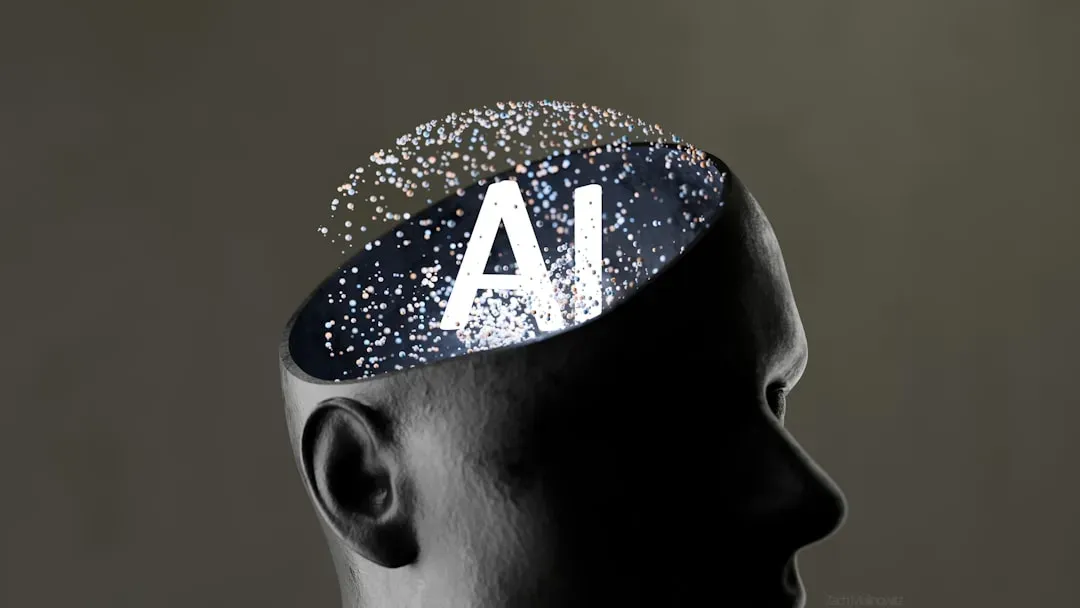
With artificial intelligence getting more powerful and conversational systems sounding more and more human, a once-fringe question is now mainstream: could a machine ever have real consciousness, not just fake it? Right now, most large AI models work by predicting patterns in data, without any inner viewpoint we can point to. They don’t feel pain, they don’t have a private stream of awareness, and they don’t have bodies in the way living creatures do.
But in principle, many scientists think there’s no law of nature that forbids artificial consciousness. If consciousness arises from information processing and certain kinds of structure, a sufficiently complex machine might one day cross that threshold. The tricky part is, we don’t even know what the threshold is. We barely know how to tell when another human is conscious, let alone an alien intelligence we built ourselves. If we ever do create machines that are genuinely aware, the ethical and philosophical shockwave will be enormous.
The Leading Theories: From Global Workspaces To Integrated Information
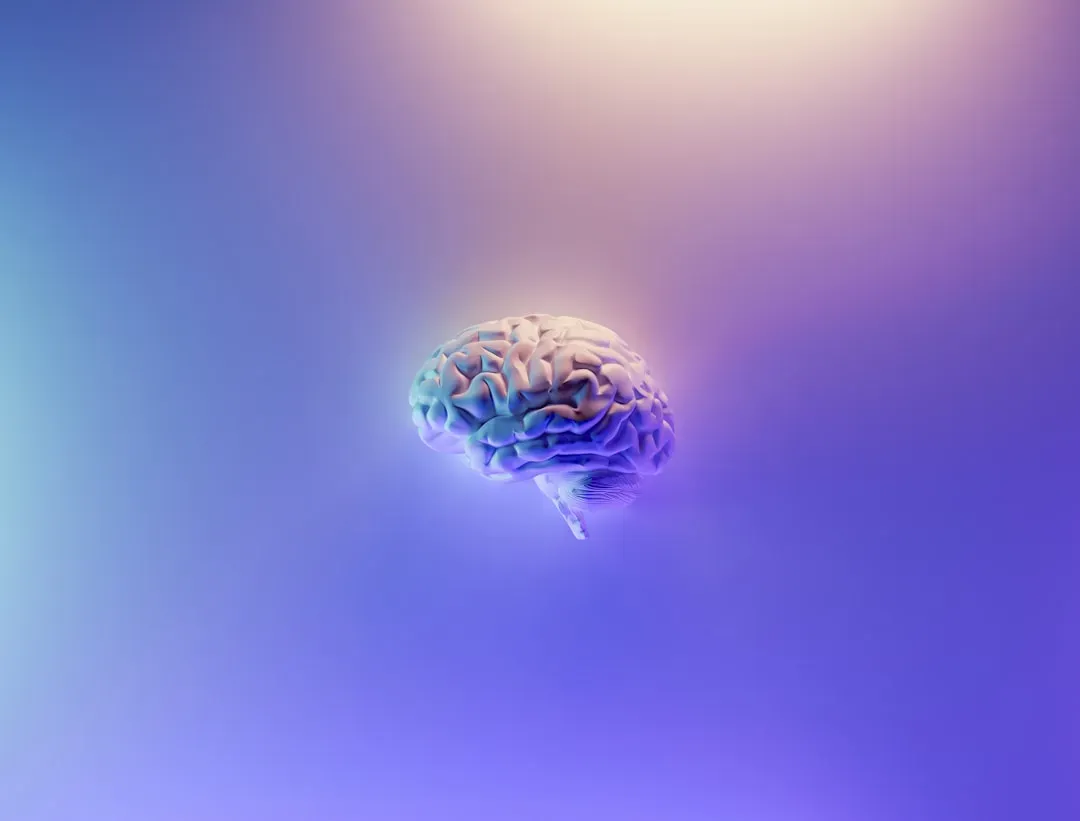
Despite all the mystery, there are serious scientific theories trying to crack consciousness. One influential idea, often called the global workspace view, suggests that consciousness arises when information in the brain becomes globally available to many different processes – attention, memory, decision-making, and so on. In this picture, being conscious of something means it has “won” a kind of competition to be broadcast across the brain’s networks.
Another major approach, sometimes called integrated information theory, focuses on how unified and structured the brain’s activity is. According to this view, a system is conscious if it holds a large amount of information in a way that can’t be broken down into independent parts. These theories inspire actual experiments, like measuring how much a brain’s activity reacts to stimulation during sleep, anesthesia, or coma. Still, none of them has achieved the sort of decisive proof that would make everyone agree we’ve “solved” the puzzle.
A third family of ideas emphasizes prediction and embodiment. On this view, the brain is constantly predicting the world and even predicting its own body, and consciousness emerges from this ongoing loop of expectations and corrections. These approaches try to tie feelings and experiences to the way an organism is hooked into its body and environment. They are compelling because they connect consciousness to survival and action, but they still face the same old question: why does any of this predictive processing feel like something from the inside?
Altered States: Sleep, Dreams, Psychedelics, And Anesthesia

If you want proof that consciousness is fragile and flexible, you don’t have to look far. Every night, as you fall asleep, your awareness loosens, fragments, and then disappears – until it sometimes pops back up in a dream that feels real enough to scare or delight you. Under anesthesia, people can lose hours in what feels like a single blink, even though the brain is still doing plenty behind the scenes. These states give scientists rare windows into what changes when consciousness fades and returns.
Psychedelic substances add another angle, dramatically reshaping people’s sense of self, time, and meaning. Brain scans during these states show altered connectivity and unusual patterns of activity, especially in networks involved in self-processing. Some researchers argue that by studying how consciousness can stretch, distort, and dissolve, we’ll learn more about its normal shape. Others caution that experiences are messy and deeply subjective, making them hard to pin down with clean models. Either way, altered states make it impossible to pretend that consciousness is a static, simple thing.
Why Consciousness Research Matters For Ethics And Society

At first glance, consciousness might seem like a philosophical luxury, the kind of thing people argue about late at night but ignore in everyday life. In reality, it’s tightly woven into some of our hardest practical decisions. When doctors and families decide whether to continue life support for a patient in a minimally conscious state, they are wrestling with the question of whether someone is “still in there.” Our justice systems assume people are responsible agents with conscious intentions, not just collections of reflexes.
The stakes spread even further as we think about animals, advanced AI, and future technologies that might enhance or alter mental states. If an artificial system ever shows signs of having an inner life, do we owe it anything? At what point does switching it off stop being a technical decision and start looking like harm? These aren’t questions we can just outsource to future generations. How we understand consciousness now quietly shapes laws, medical guidelines, research ethics, and how we treat other beings who might be more like us on the inside than we realize.
Living With The Mystery: Humility, Wonder, And The Road Ahead
Personally, I find it oddly comforting that after all our scientific triumphs, human consciousness still resists a neat formula. It’s a reminder that we’re not just sophisticated machines running in predictable ways, but participants in a mystery that even our best tools have not fully untangled. At the same time, it’s frustrating, because every brain scan and clever experiment feels like getting closer to a locked door we still can’t open.
The most honest stance right now is probably a mix of humility and curiosity. We know consciousness is deeply tied to the brain, but we don’t yet know how or why. We have powerful theories, but none that everyone agrees has cracked the code. We can measure, model, and simulate, but the inner glow of experience keeps slipping through our nets. Maybe the next big insight will come from a new technology, or from a fresh way of thinking that reframes the whole problem. Until then, you’re walking around as living proof of a puzzle that science has not yet solved – did you ever expect that the biggest mystery in the universe might be the fact that you can read these words and feel something about them?