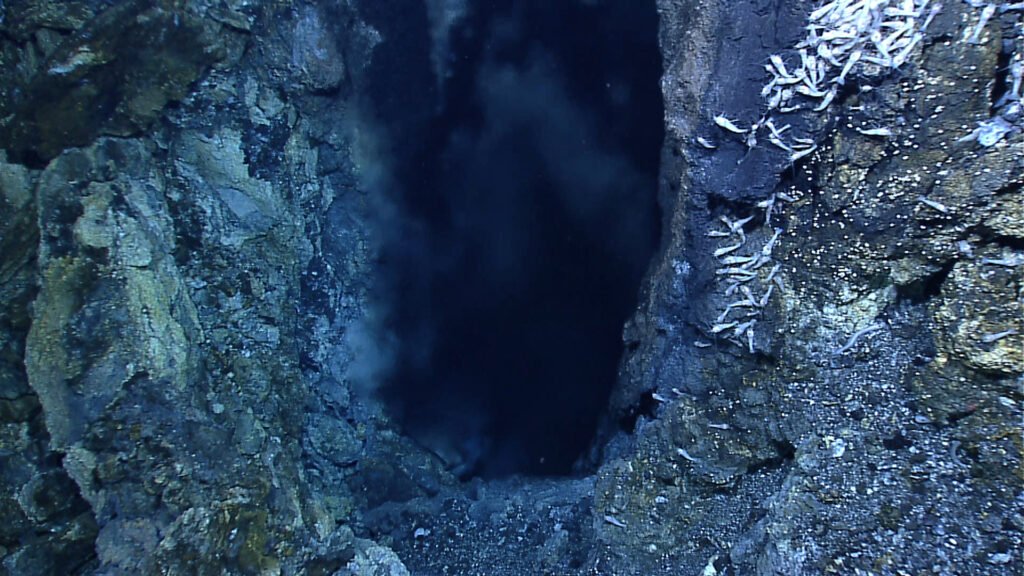
You live on a planet that quietly breaks almost every rule you were taught about what life needs. For most of your life, you probably heard that without sunlight, there can be no food, no plants, and therefore no complex ecosystems. Yet, miles below the ocean surface, in crushing darkness and toxic water, entire communities not only survive but boom with a kind of wild, alien energy.
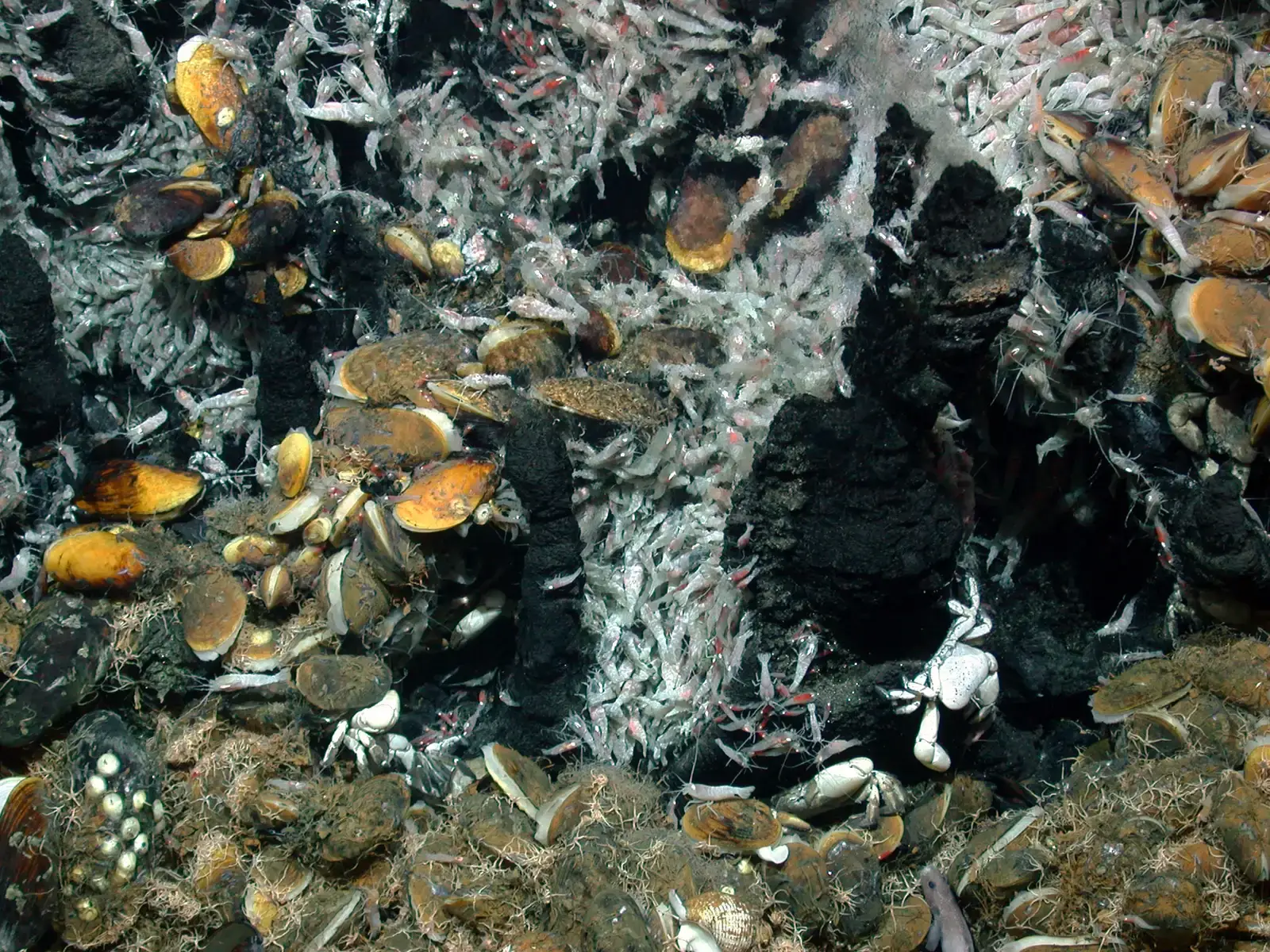
If you could ride a submersible down there, your first glimpse of a vent field would feel almost unreal: tall chimneys gushing black or white “smoke,” ghostly crabs, red-plumed worms packed shoulder to shoulder, and shimmering water that looks like a heat mirage in the middle of a midnight desert. At deep sea vents, life has cut the cord from sunlight and plugged directly into the power of the planet itself. Once you see that, your idea of where life can exist – on Earth and beyond – never really goes back to normal.
The Moment Scientists Realized Life Does Not Need Sunlight
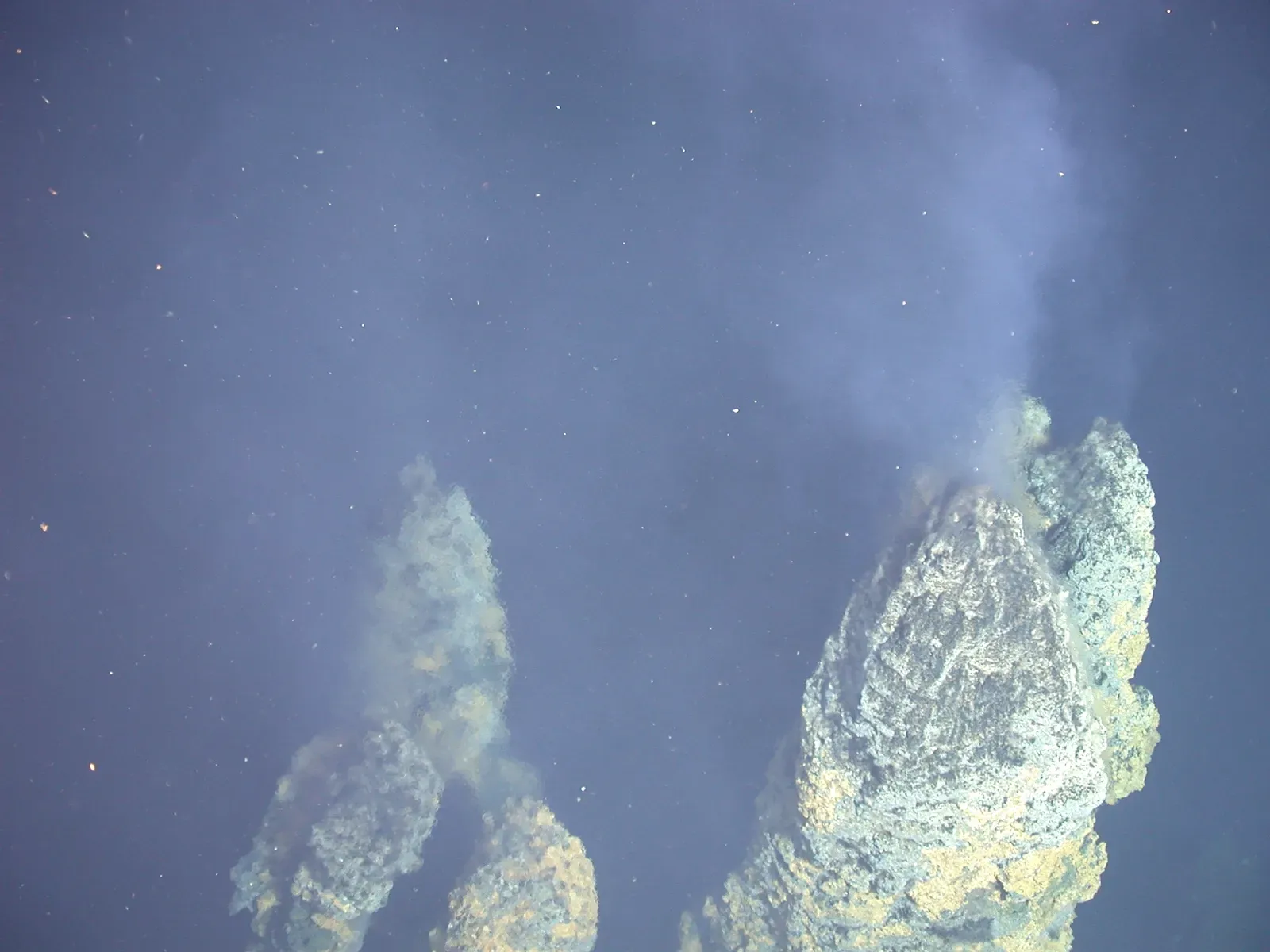
Imagine you are a scientist in 1977, dropped in a tiny sub called Alvin to explore a mid-ocean ridge near the Galápagos Islands. You expect a cold, barren seafloor – maybe a few scattered creatures picking up scraps that drift down from above. Instead, your lights reveal towers belching hot fluid and dense crowds of giant clams and bright red tubeworms, as if you’ve stumbled into an underwater city lit only by chemical fire. It would have felt like discovering rainforests on the Moon.
Up to that moment, the deep sea was supposed to be a biological desert, surviving only on the leftovers of photosynthesis from the surface. What you would have seen at those vents ripped that story apart. Here was a full, bustling ecosystem with its own energy source, independent of sunlight. That realization did more than surprise people in lab coats – it forced everyone to rewrite one of the most basic lines in the rulebook of biology: life does not always start with the sun.
How Chemosynthesis Turns Rock and Poison Into Food
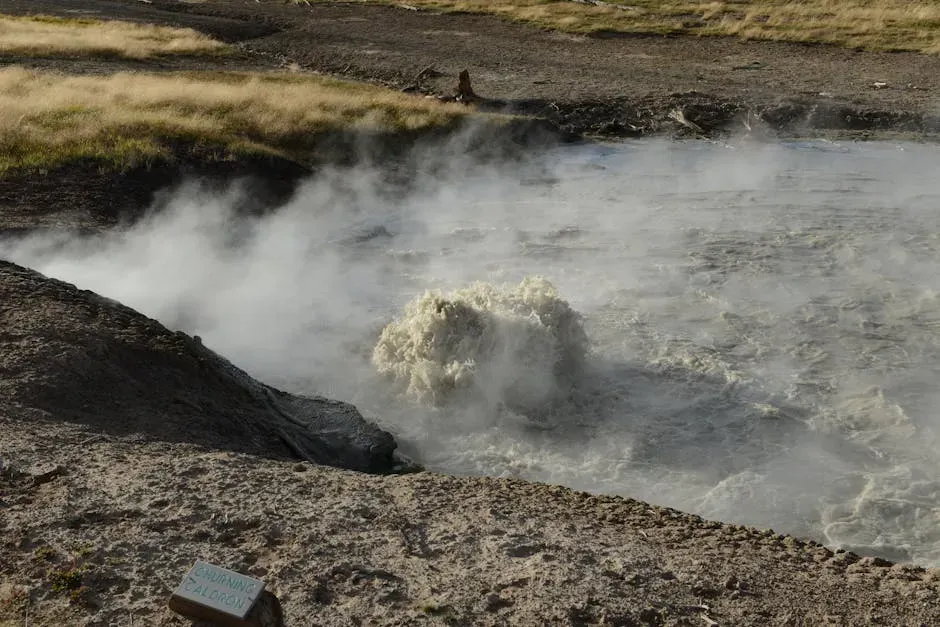
If there is no sunlight, you might wonder, what on Earth takes the place of photosynthesis? In vent ecosystems, the answer is chemosynthesis, a kind of chemical alchemy performed by bacteria and archaea. Instead of capturing light, these microbes grab the chemical energy locked in hydrogen sulfide, methane, and other compounds spewing from the vents and use it to build sugars from carbon dioxide. In plain language, they eat the chemistry of the Earth itself and turn it into living tissue.
You can think of chemosynthetic microbes as tiny underground farmers, planting chemical “seeds” in the dark and harvesting enough energy to support everything else around them. Many of the larger animals at vents actually farm these microbes inside their own bodies or on their skin, like walking greenhouses – only their crops do not need light. Once you realize that rocks, heat, and dissolved gases can stand in for sunlight, the world feels less like a closed system and more like a giant chemistry experiment where life keeps finding loopholes.
Black Smokers, White Smokers, and the Plumbing of the Planet
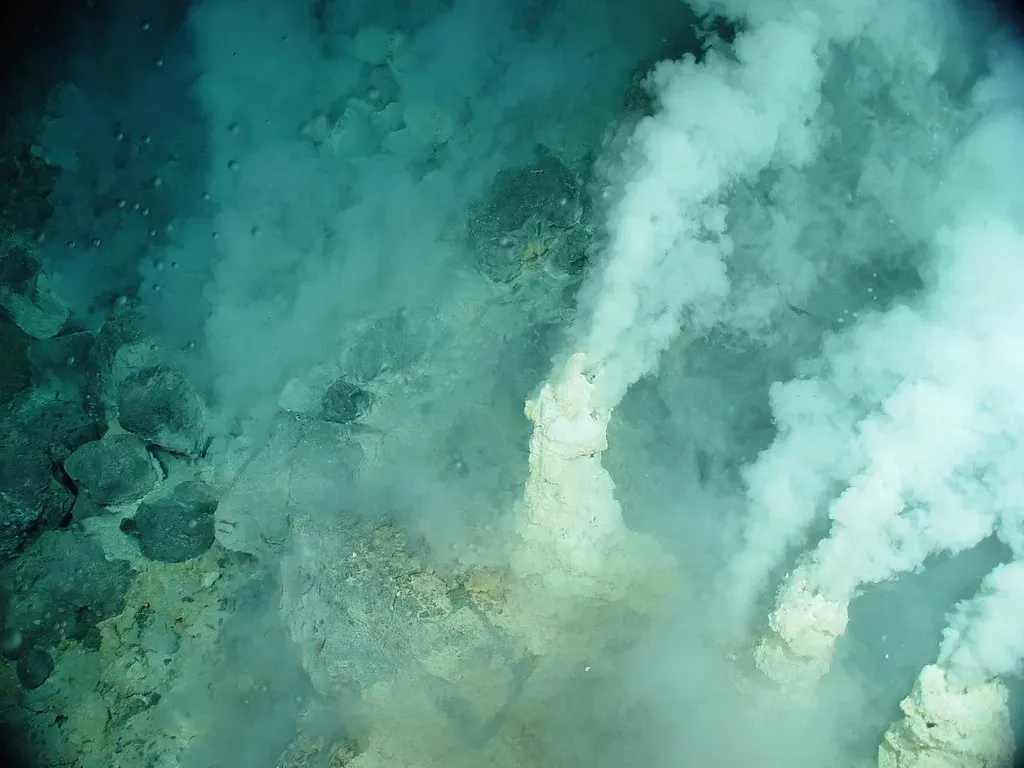
To understand deep sea vents, you have to get a feel for the planet’s plumbing. Seawater seeps down through cracks in the seafloor near spreading ridges, heats up as it meets hot rock or magma, reacts with minerals, and then blasts back out as hydrothermal fluid. When that superheated water, rich in metals and sulfides, hits the cold deep ocean, it precipitates into a dense cloud of particles that looks exactly like smoke. Tall, dark chimneys built from metal sulfides are called black smokers; cooler, lighter chimneys spewing pale plumes are known as white smokers.
When you see photos of these chimneys, it almost looks like an industrial factory planted on the seafloor, except there are no human engineers, only geology and time. Temperatures in vent fluids can soar to hundreds of degrees Celsius, yet just a few centimeters away, the surrounding seawater is near freezing. This brutal gradient in heat and chemistry creates sharp boundaries where life can cling to the safe middle ground, carving out a narrow habitable zone on structures that are constantly growing, crumbling, and rebuilding as the Earth keeps venting its inner heat.
Meet the Extremophiles: Your Planet’s Most Hardcore Residents
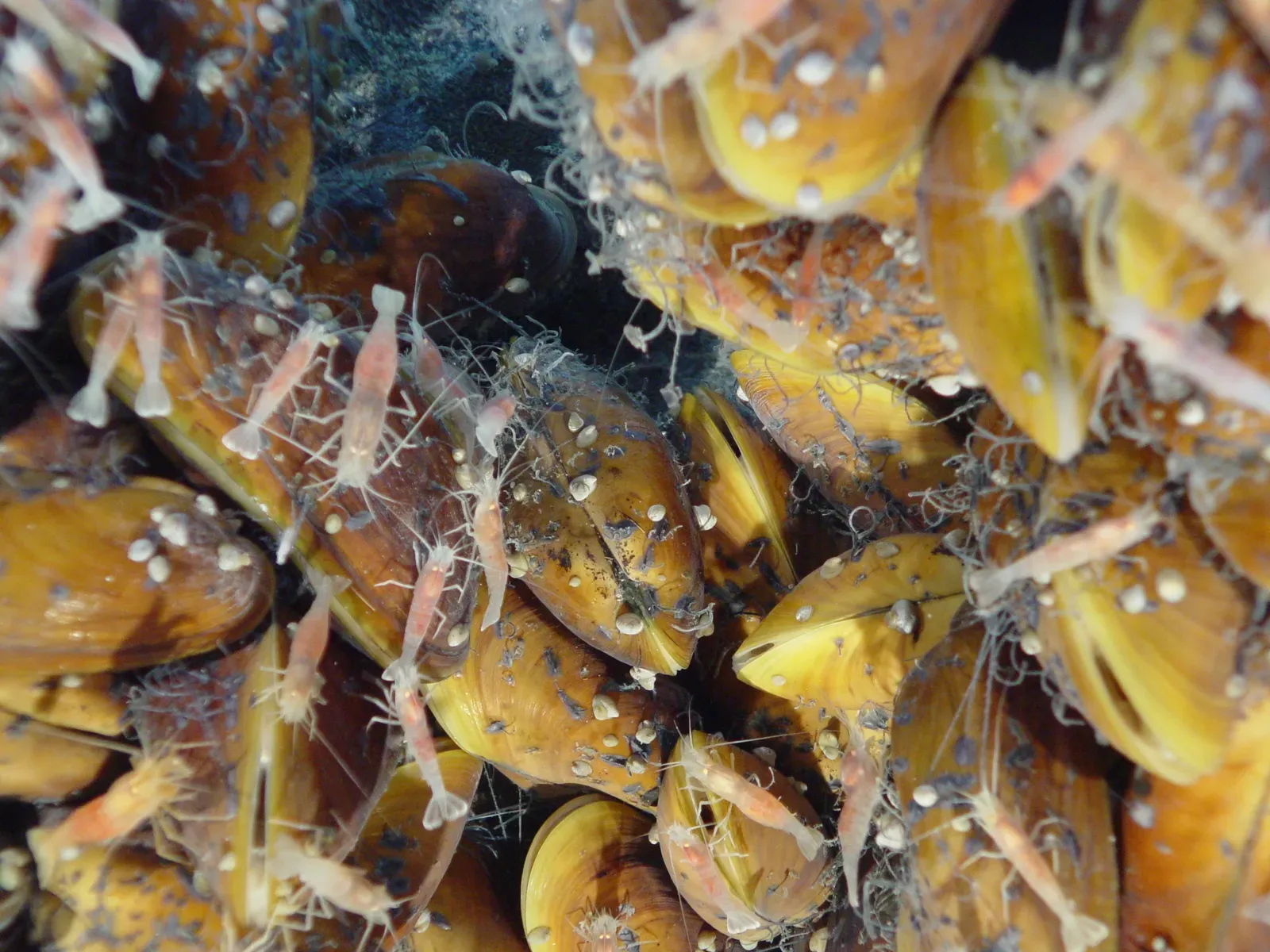
When you hear the word “extreme,” you might think of skydiving or space walks, but the real extremists are microbes and animals parked right next to boiling, acidic, metal-laced vent jets. These organisms, called extremophiles, are tailored to conditions that would kill you in seconds. Some bacteria and archaea at vents thrive at temperatures that would destroy most enzymes; others shrug off high pressure, toxic sulfides, or extremely low pH as casually as you handle a warm shower. If life had a hardcore fan club, these would be its founding members.
Among larger creatures, you find Pompeii worms living on the sides of hot chimneys, scaly-foot snails armored with iron sulfide, and shrimp or crabs densely packed in steamy shadows. Many of these animals would die in what you consider normal seawater because they are so specialized for their blistering, toxic neighborhoods. When you meet them, you realize that “habitable” is a slippery word: what feels impossible to you is simply home to them. They prove that life is not fragile glass; it is more like stubborn grass growing through cracks in concrete.
Symbiosis: Animals That Carry Their Own Power Plants
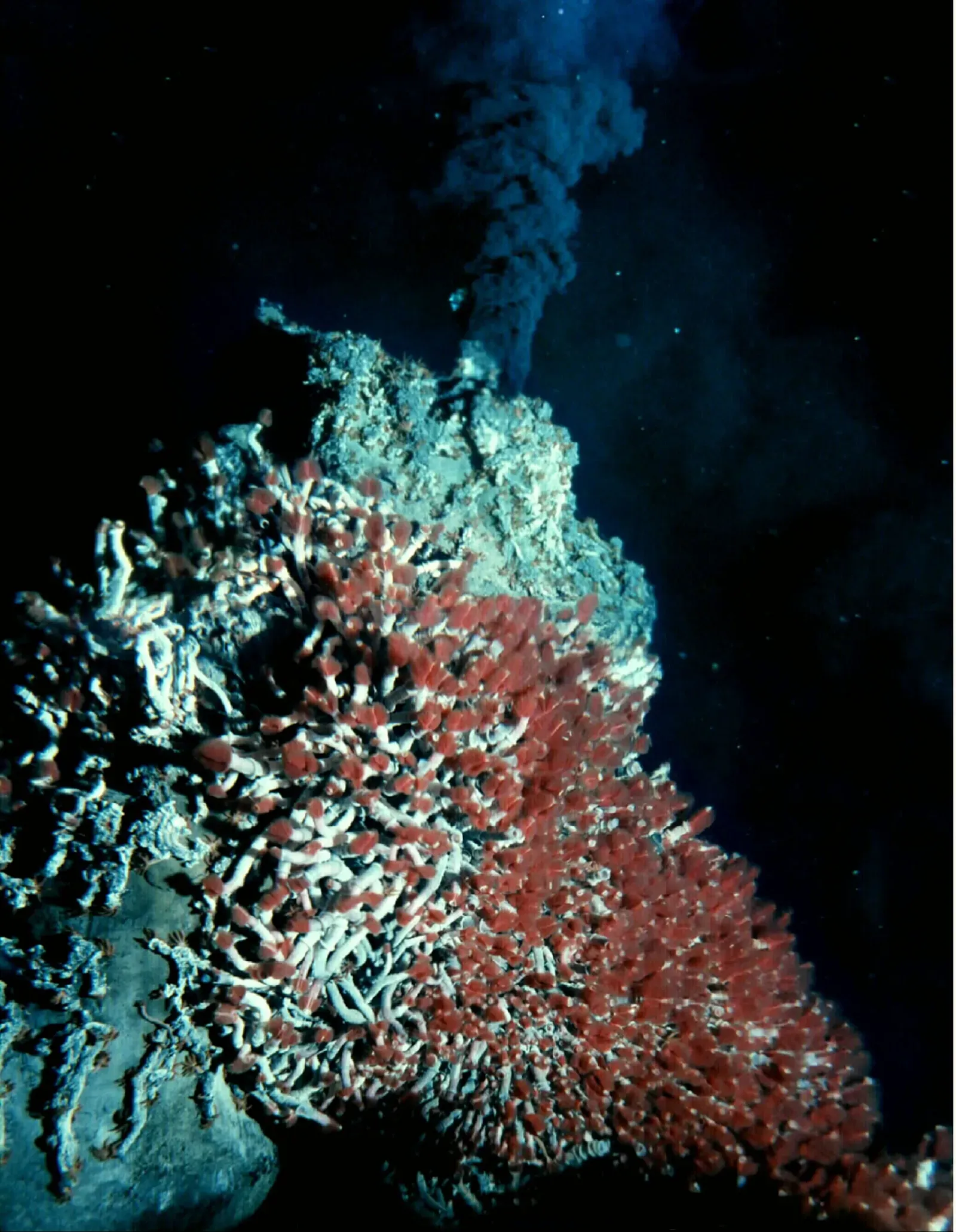
Vent animals do not just passively live near chemosynthetic microbes; they build deep partnerships with them. One of the most famous examples is the giant tubeworm, Riftia, which has no mouth and no gut as an adult. If you were to look inside, you’d find an organ packed with symbiotic bacteria that perform chemosynthesis, providing the worm with all of its food. In return, the worm delivers a steady supply of hydrogen sulfide, oxygen, and carbon dioxide, acting like a living delivery system for chemicals. It is as if the worm outsourced digestion entirely and installed a microbial power plant instead.
You see similar alliances in vent mussels, clams, and even some shrimp that farm bacteria on their bodies or in their gills. These relationships blur the line between where one organism ends and another begins. When you think of yourself, you likely picture a single, independent body, but vent ecosystems remind you that life can be built out of tightly interlocked partnerships. In a place with no sunlight and constantly shifting conditions, cooperation is not a nice extra – it is often the only reason anything larger than a microbe can survive.
Life on a Knife-Edge: Constant Change and Vent “Boomtowns”
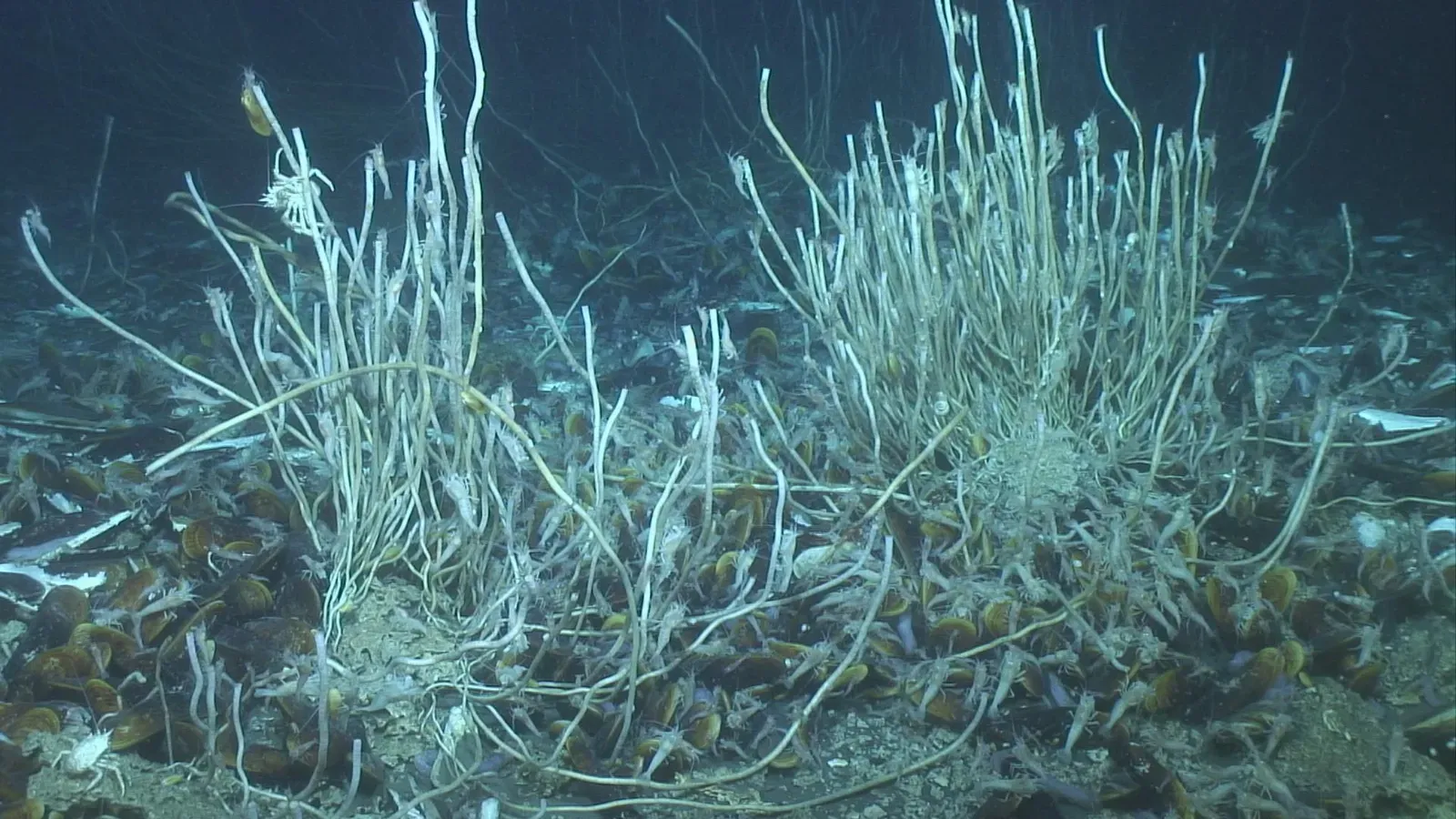
Deep sea vents might look ancient and stable in photos, but in reality, they can be wildly temporary. A vent field might roar with activity for a few years or decades and then suddenly shut down when the underlying plumbing shifts. When that happens, the heat and chemicals disappear, and the once-thriving community slowly collapses, like a mining town after the ore runs out. If you were a vent worm or crab, your entire world could vanish in geological minutes, even though you experience it as a lifetime.
Yet, vent life has adapted to this unpredictability in clever ways. Many species release larvae that drift long distances in deep currents, searching for the chemical cues of new vents opening up along the ridges. You can picture the ocean floor as a chain of temporary boomtowns, blinking on and off as geological forces rearrange the plumbing beneath them. To survive here, species need to be both rooted and ready to move on, a combination that feels surprisingly familiar when you think about human communities built around shifting jobs, resources, or technologies.
Why Deep Sea Vents Matter for the Origin of Life
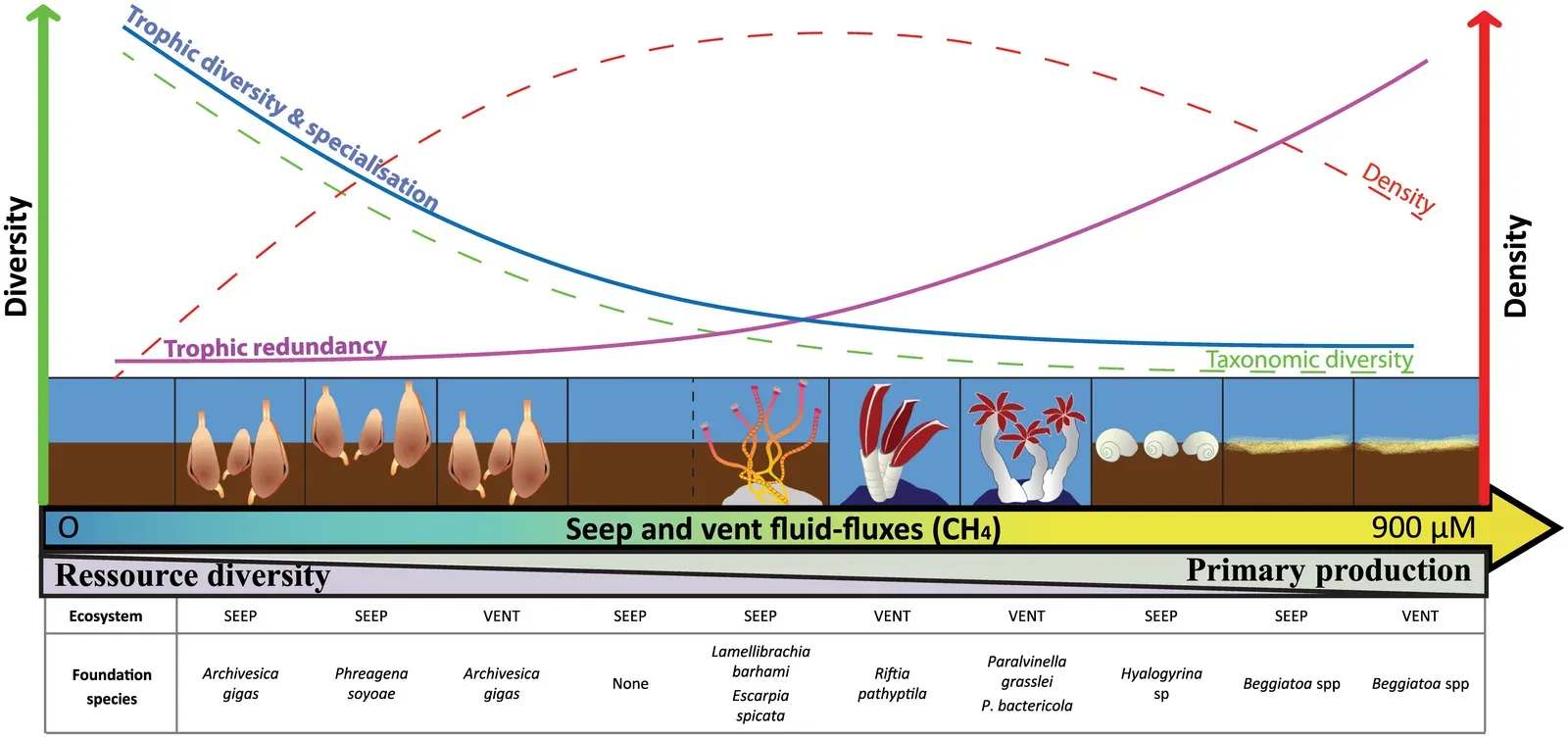
Once you accept that vents host self-contained ecosystems, it is hard not to ask a bigger question: could similar environments have hosted the very first life on Earth? Many researchers see hydrothermal vents as strong contenders for life’s birthplace. The steep gradients in temperature and chemistry, the constant flow of energy-rich compounds, and the presence of mineral surfaces that can catalyze reactions all create a natural laboratory for complex chemistry. If you were trying to cook up life from scratch, vents would give you an energetic, messy, and reactive kitchen.
Of course, you do not have a time machine to watch the first cells spark into existence, so any origin-of-life scenario stays partly hypothetical. But vents give you something concrete: an example of how life today can thrive using geochemical energy alone. That makes it much easier to picture a time before oxygen, before photosynthesis, before even the simplest plants, when the only show in town was chemistry at places like these. Whether or not vents were the exact cradle of life, they show you that Earth has always had more than one way to keep biology running.
Clues for Finding Life Beyond Earth
![Clues for Finding Life Beyond Earth ([1], CC BY 4.0)](https://nvmwebsites-budwg5g9avh3epea.z03.azurefd.net/dws/87b4faf8d0c8af29767cd0490ba523f3.webp)
Once you know life can thrive without sunlight, your imagination has a lot more room to roam across the solar system. Worlds like Europa and Enceladus – icy moons with evidence of subsurface oceans and hydrothermal activity – suddenly look less like dead ice balls and more like potential vent worlds. If you can run an ecosystem off chemical gradients where rock meets water, you do not need a bright, warm star. You just need energy, liquid water, and time. Vents teach you that the universe might hide habitable real estate in places that never see a sunrise.
This changes how you think about exploration. Instead of only dreaming about beaches on distant exoplanets, you start picturing robotic submersibles sniffing for chemical plumes under ice shells, or landers sampling jets that may carry traces of seafloor vents into space. You may never personally dive into an alien ocean, but every new vent field discovered on Earth acts like a training ground for that possibility. The more you understand about how life rides the energy of geology here, the better your chances of recognizing its fingerprints somewhere else.
Human Footprints in the Deep: Mining, Conservation, and Responsibility
For now, deep sea vents still feel remote to you, but they are not completely out of reach of human ambition. The same metal-rich deposits that make black smokers so striking also attract interest from deep sea mining companies. Sulfide chimneys can contain copper, zinc, and other valuable metals in high concentrations. If industrial extraction ramps up, the very vent fields that rewrote your understanding of life could be scraped, crushed, or smothered before you fully understand what they host. It is a bit like tearing down a library to harvest the bricks before reading the books inside.
At the same time, vents are fragile in ways that are not always obvious. Many species there live nowhere else, and because vent areas are patchy and isolated, damage to one site can erase unique lineages that will not simply reappear elsewhere. As you learn more about these ecosystems, you face an uncomfortable but necessary question: how much are you willing to risk for minerals, and what does responsible stewardship look like in a place most people will never see? It forces you to expand your idea of environmental ethics down into the dark, high-pressure corners of your own planet.
Conclusion: Rethinking What “Habitable” Really Means
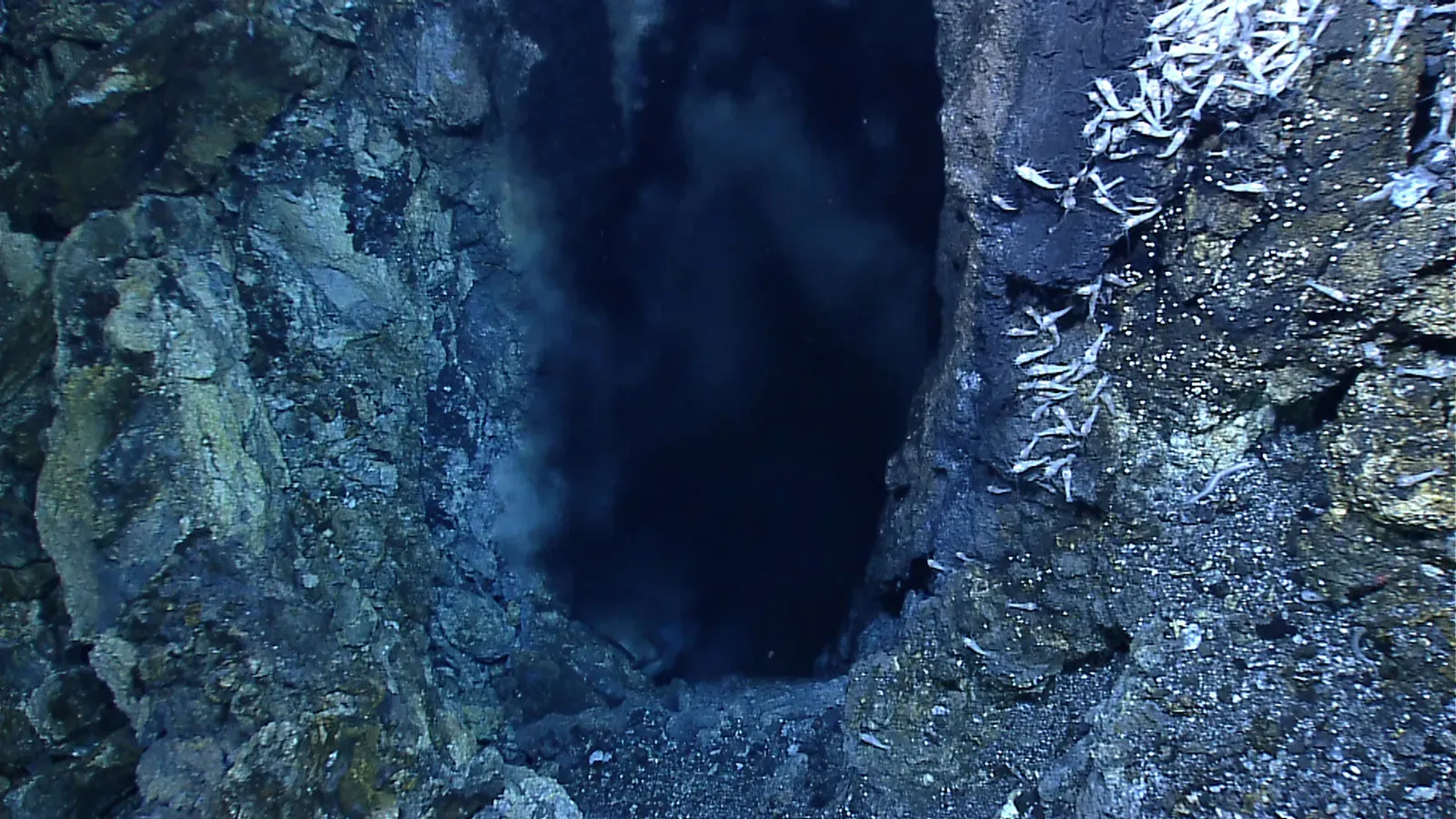
Deep sea vents quietly blow apart one of your most basic assumptions: that sunlight sits at the base of every food chain. When you look closely, you find entire communities thriving on the raw chemistry of the Earth, animals that carry their own microbial power plants, and microbes that laugh in the face of heat, pressure, and toxicity. These places are not just scientific curiosities; they are reminders that life is less like a delicate house of cards and more like a shape-shifter, willing to inhabit any niche where energy and matter can be coaxed into patterns.
As you think about origins, other worlds, and your own impact on this one, vents push you to adopt a wider, more flexible definition of “where life belongs.” They ask you to care about places you will probably never visit and to recognize that your planet still holds ecosystems that feel as strange as anything in science fiction. Next time someone says life needs sunlight, you can picture black smokers roaring in the dark and quietly know that the story is richer, stranger, and far more resilient than that. Now that you have met these hidden worlds, where else might you start to look for signs of life?