Blog

The Human Brain Can Process Information Faster Than Any Supercomputer

The Human Brain Can Process Information Faster Than Any Supercomputer

Kristina

You are carrying around the most sophisticated computing device ever known to exist – and you probably have not thought much about it today. It sits quietly inside your skull, weighing roughly as much as a small bag of flour, consuming less power than a dim light bulb, yet doing things that would make the ...

Argentavis: The Magnificent Thunderbird

Argentavis: The 70kg Giant That Soared Over Prehistoric Skies

Trizzy Orozco

Picture this: you’re standing in the vast grasslands of ancient Argentina, and suddenly, a shadow falls across the landscape. Looking up, you see a bird so massive it blocks out the sun, its wingspan stretching wider than a small airplane. This isn’t fantasy—this was reality six million years ago when Argentavis magnificens ruled the skies ...

Unraveling the Secrets of Methane on Mars

Could Radiolysis Be the Power Source for Life on Mars?

Trizzy Orozco

Imagine a world where life thrives not on the surface, but beneath layers of rock and soil. The intriguing notion that Mars could harbor life beneath its surface is a tantalizing thought for many scientists. One potential lifeline for such life forms is radiolysis, a process that might just provide the energy needed for survival. ...

Caterpillars That Turn Into Goo Before Becoming Butterflies

Caterpillars That Turn Into Goo Before Becoming Butterflies

Annette Uy

Picture this: a plump caterpillar, happily munching on leaves, suddenly decides to wrap itself in a silky prison. What happens next sounds like something from a science fiction movie. That seemingly solid creature literally dissolves into a soupy mess of biological matter. Yet from this primordial goo emerges one of nature’s most breathtaking transformations—a butterfly. ...

The Giant Beaver: Castoroides and Its Engineering Marvels

7 Prehistoric Giants That Would Break the Laws of Physics Today

Trizzy Orozco

Picture this: you’re standing in a modern zoo, looking at the largest animals on Earth. A towering giraffe stretches its neck toward the sky, an elephant trumpets in the distance, and a massive saltwater crocodile lounges by the water’s edge. These creatures seem enormous, but they’re practically miniature compared to the colossal beasts that once ...

The Physics of Flight: How Birds Break Aerodynamic Rules

The Physics of Flight: How Birds Break Aerodynamic Rules

Andrew Alpin

You’ve probably watched birds soaring overhead and wondered how something that seems to defy logic can move through air with such apparent ease. For centuries, scientists believed that birds simply followed the same aerodynamic principles we use to design aircraft. Yet the more we study avian flight, the more we discover that birds operate in ...

Olmec Collection, Xalapa, Mexico.

The Giant Stone Heads of the Olmec: Who Carved Them and Why?

Trizzy Orozco

The Olmec civilization, often referred to as the “mother culture” of Mesoamerica, is shrouded in mystery and intrigue. Among their most enigmatic creations are the colossal stone heads, each weighing up to 20 tons and towering over eight feet tall. These monumental sculptures, scattered across the Gulf Coast of Mexico, have puzzled archaeologists and historians ...

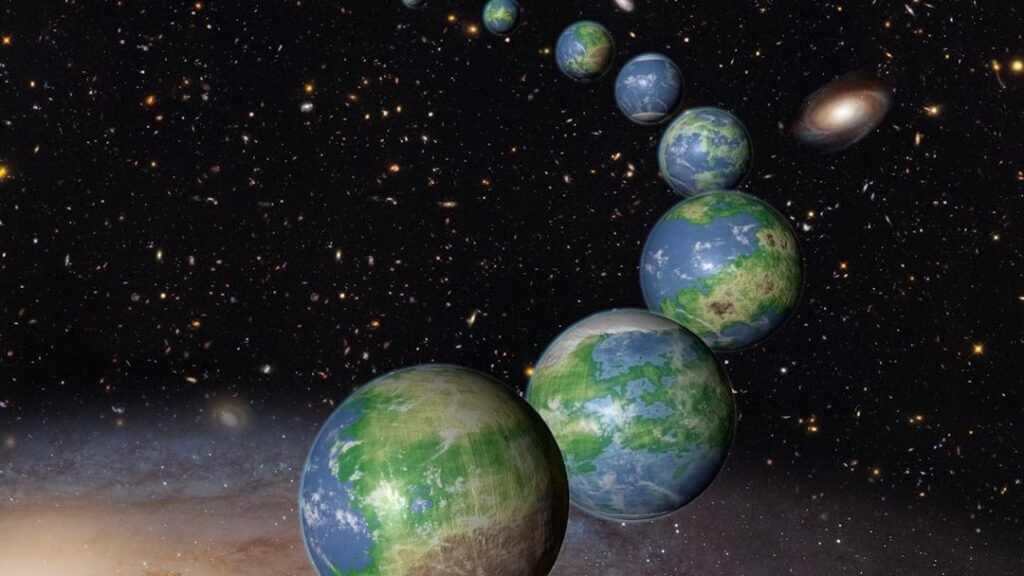
Could Parallel Universes Be More Than Just a Sci-Fi Concept?

Could Parallel Universes Be More Than Just a Sci-Fi Concept?

Kristina

You have probably seen it a dozen times in movies. A portal opens, a hero steps through, and suddenly there is an alternate version of everything you thought you knew. It is a beautiful narrative trick. But here is what most people do not realize: the idea is not just Hollywood fantasy. Serious theoretical physicists, ...