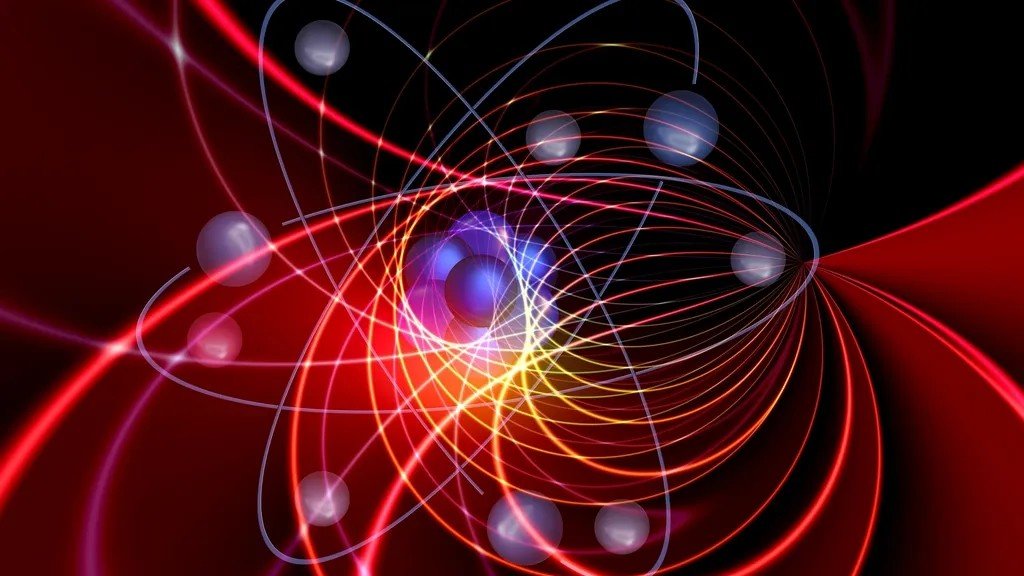

If you could strip the universe down to its bare bones, past the stars and galaxies and glowing gas clouds, you’d find something unsettling: most of what truly runs the show is invisible. Not just hard-to-see invisible, but cannot-be-seen-at-all invisible. Yet these hidden forces quietly choreograph everything from the spin of atoms to the birth of galaxies.
That sounds like science fiction, but it’s our best understanding of reality in 2026. Modern physics has uncovered a handful of deep, almost eerie influences that never show up on a photograph but leave fingerprints everywhere. Once you start seeing their patterns, it’s hard to look at the night sky – or even your own body – the same way again.
1. Gravity: The Gentle Tyrant That Bends Space and Time
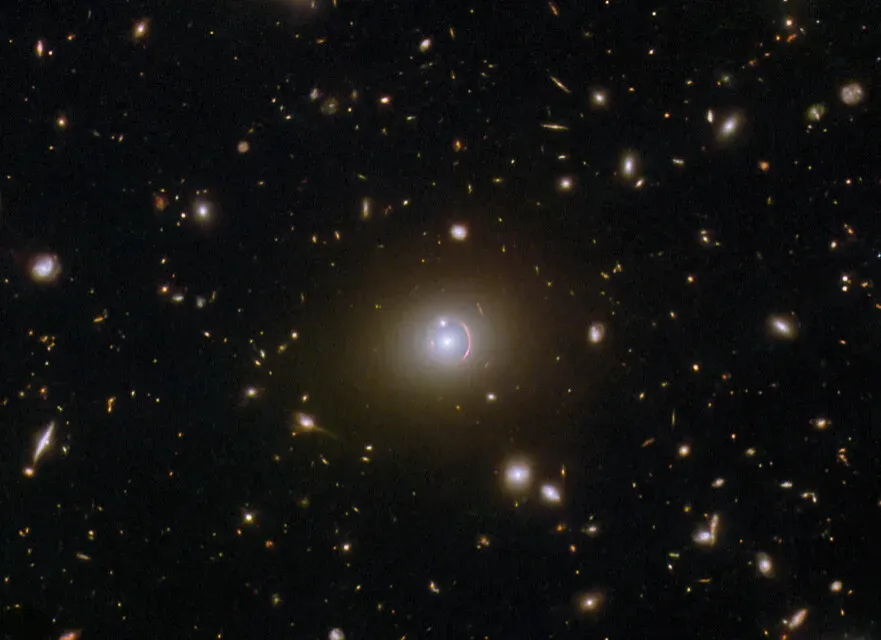
Gravity feels familiar, almost boring – just the thing that keeps your feet on the ground. But the modern view of gravity is wildly more dramatic. According to general relativity, what we call gravity isn’t a pull at all; it’s the curvature of space and time itself caused by mass and energy. Planets and light rays follow those curves like marbles rolling across a warped trampoline, and that gentle “downward” tug you feel is really you being guided along a bent path through spacetime.
This unseen bending shapes everything large-scale in the cosmos. Gravity squeezes diffuse gas into stars, nudges stars into galaxies, and drives galaxies into vast clusters that form a kind of cosmic web. It even slows the flow of time near massive objects, so clocks on satellites tick very slightly faster than clocks on Earth’s surface. Without constant corrections based on Einstein’s equations, GPS systems would drift and fail within days. The quiet fact that your phone can tell you where you are is daily proof that spacetime really is warped.
2. Electromagnetism: The Invisible Glue of Everyday Life
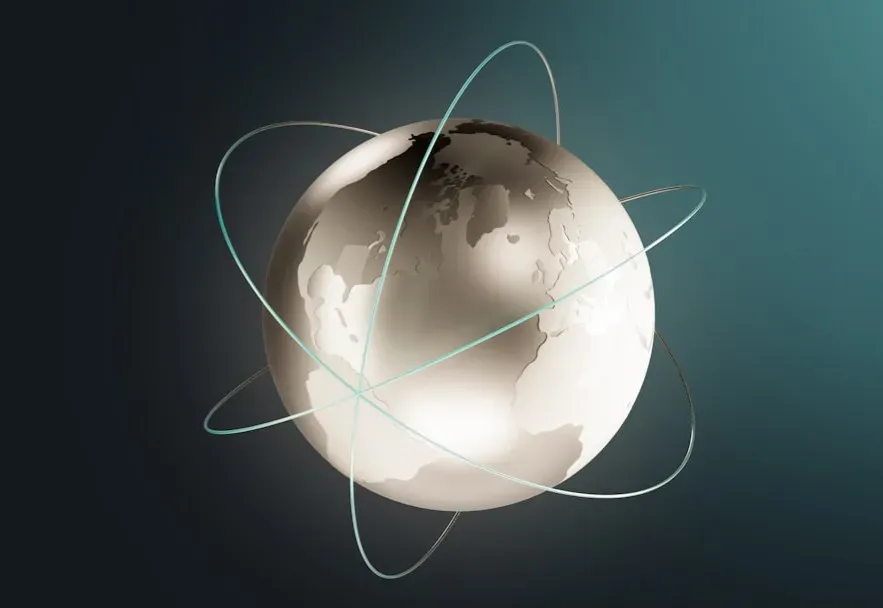
If gravity rules the grand architecture of the cosmos, electromagnetism rules everything you can touch. This force binds electrons to atoms, atoms into molecules, and molecules into the stuff of life and technology. When you press your hand against a table, you’re not actually “touching” it in the intuitive sense; what you feel is the repulsion between invisible electromagnetic fields of the atoms in your skin and those in the wood. It’s like two force fields refusing to occupy the same space.
Electromagnetism also controls light itself, from radio waves and microwaves to visible light and X‑rays. Every photo you take, every Wi‑Fi signal, every color in a sunset is a ripple in the electromagnetic field racing through space at light speed. This single force quietly runs electric motors, powers your laptop, and lights entire cities. Despite being completely intangible, it shapes our daily experience far more directly than gravity ever does, and it does so with a reach that extends from the inside of atoms to the outer layers of stars.
3. The Strong Nuclear Force: The Cosmic Superglue Inside Every Atom
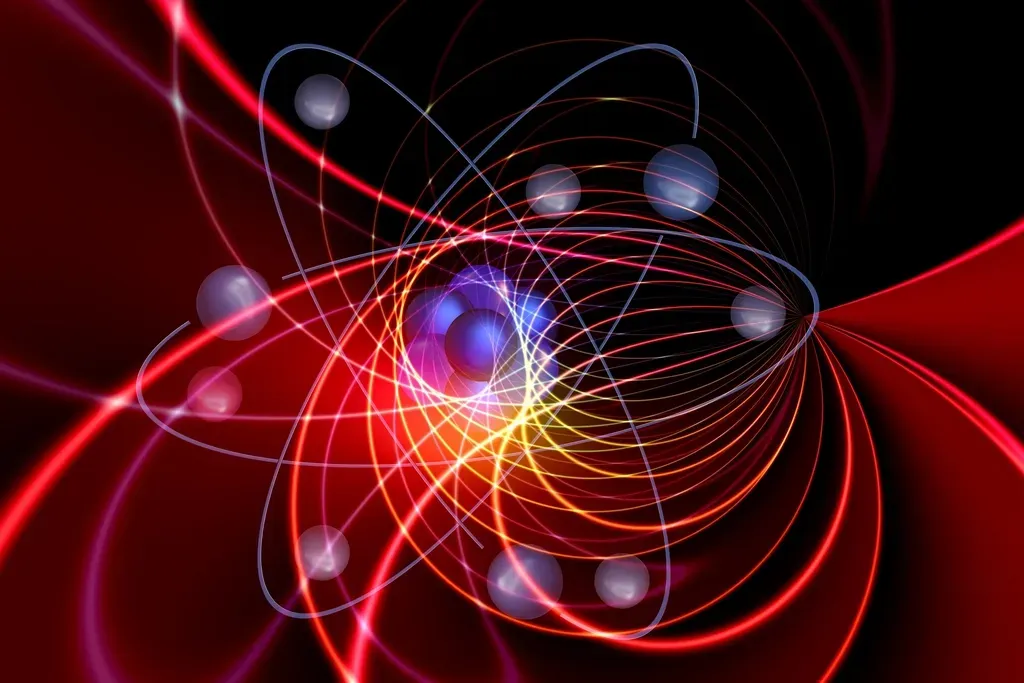
Deep inside the atomic nucleus, where protons and neutrons huddle together, the rules change again. Protons all carry the same positive electric charge and should fling apart like identical magnets trying to repel each other. Yet nuclei mostly stay intact, and the reason is the strong nuclear force. It’s an extremely powerful but short‑range force that binds quarks into protons and neutrons, and then binds those protons and neutrons into nuclei.
This force is so intense that a tiny imbalance in it would make the universe unrecognizable. If it were a bit weaker, complex nuclei might not form, leaving mostly hydrogen and a sterile cosmos. If it were a bit stronger, stars might burn their fuel too quickly or never synthesize the heavier elements needed for planets and life. Nuclear power plants and nuclear weapons are macroscopic reminders of the energies locked up in these tiny bindings. Every time you breathe, the oxygen in your lungs owes its existence to the strong force quietly doing its job in some long‑dead star.
4. The Weak Nuclear Force: The Subtle Architect of Change

With a name like “weak,” it sounds unimportant, but the weak nuclear force is one of the main reasons the universe is chemically rich rather than frozen in a simpler state. This force governs certain types of radioactive decay and processes where particles change identity, such as a neutron turning into a proton, an electron, and a neutrino. It’s incredibly short‑ranged and feeble compared to the strong force, yet it’s essential for the inner workings of stars and some of the earliest moments after the Big Bang.
Inside the sun, the weak force helps convert hydrogen into helium, releasing the energy that eventually becomes sunlight. Without it, the sun wouldn’t shine in the way it does, and the chain of reactions that leads to carbon, oxygen, and heavier elements would break. The weak force also underlies many forms of radioactivity used in medicine, like certain cancer treatments and diagnostic scans. It’s an unseen hand that gently rebalances matter, quietly transforming particles and enabling the cosmic chemistry that makes your own body possible.
5. Dark Matter: The Hidden Scaffold of Galaxies
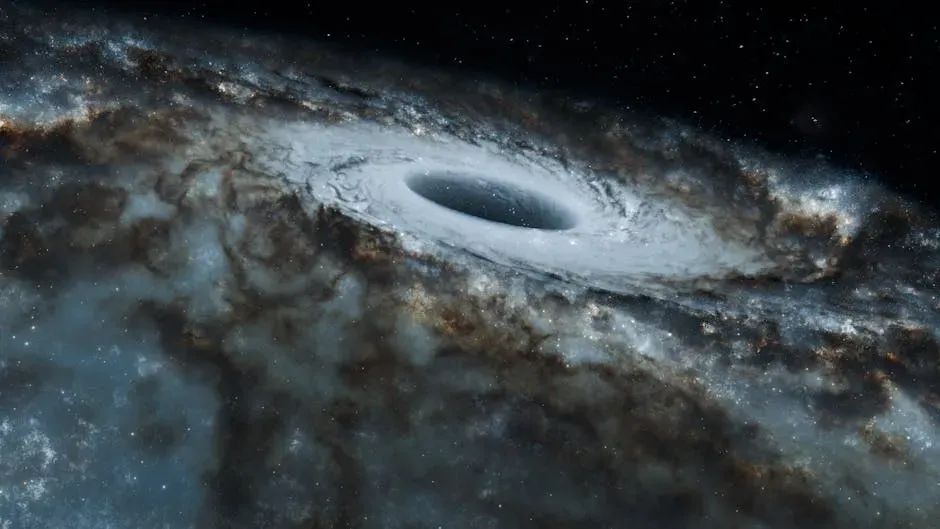
When astronomers measured how fast stars orbit within galaxies, they hit a brick wall of confusion. Stars in the outer regions moved so fast that, based on visible matter alone, they should have been flung into intergalactic space. Instead, they stayed put. The most straightforward explanation is that galaxies are embedded in massive halos of invisible dark matter, providing the extra gravity needed to hold everything together. This isn’t just a small correction; dark matter appears to outweigh normal matter by several times.
Dark matter doesn’t emit, absorb, or reflect light, which is why we haven’t seen it directly. But its gravitational fingerprints are everywhere: in the rotation curves of galaxies, in how light from distant objects is bent on its way to us, and in the large‑scale pattern of galaxy clusters spread across the universe. It acts like an invisible scaffolding on which cosmic structures grow. We still don’t know what particles make it up, and that mystery has turned deep underground labs and powerful accelerators into modern treasure hunts for this unseen mass that shapes nearly all galactic architecture.
6. Dark Energy: The Mysterious Driver of Cosmic Expansion
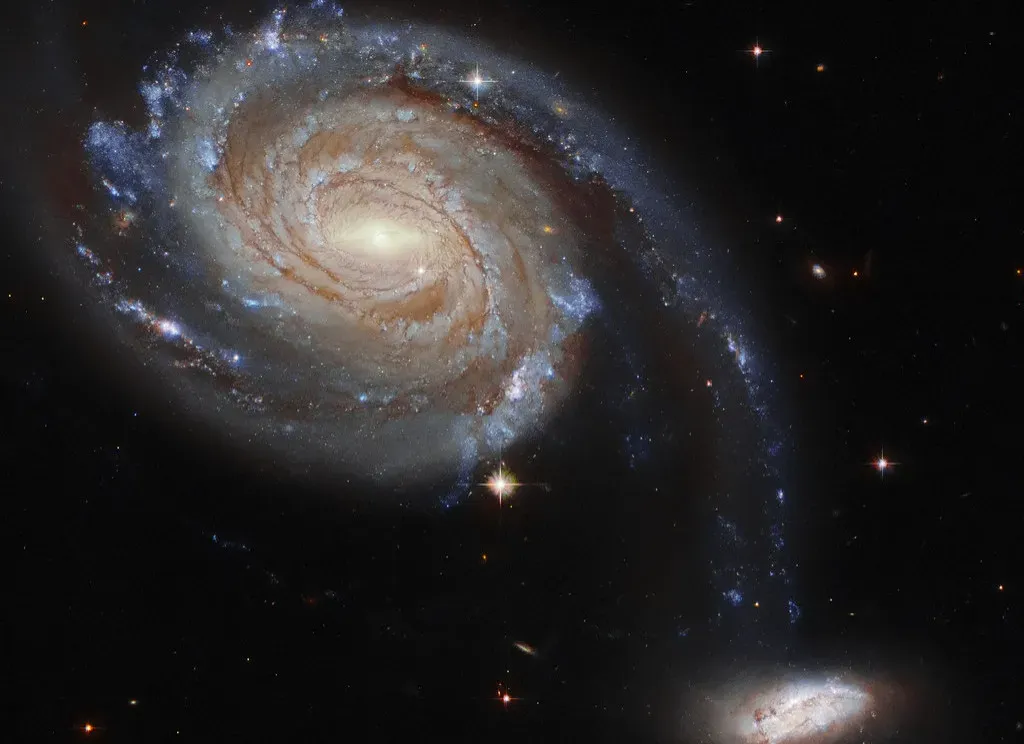
In the late twentieth century, astronomers expected to find that the universe’s expansion was slowing down under the pull of gravity. Instead, distant supernovae revealed the opposite: the expansion is accelerating. To account for this, cosmologists inferred the presence of a new, pervasive ingredient dubbed dark energy. Whatever it is, it acts like a kind of negative pressure or energy of empty space that pushes galaxies apart faster and faster over time.
Dark energy has quickly become one of the deepest puzzles in physics. Observations suggest it makes up the vast majority of the universe’s total energy budget, dwarfing both normal matter and dark matter. Yet we have no solid, experimentally confirmed explanation for its nature. Some ideas link it to a cosmological constant, others to new fields that slowly change over cosmic time, but all remain unproven. If this acceleration continues indefinitely, it will gradually stretch the cosmos into an ever more lonely place, where distant galaxies fade beyond visibility, leaving future observers stranded in a much emptier‑looking universe.
7. Quantum Fields and Vacuum Fluctuations: Reality’s Restless Background
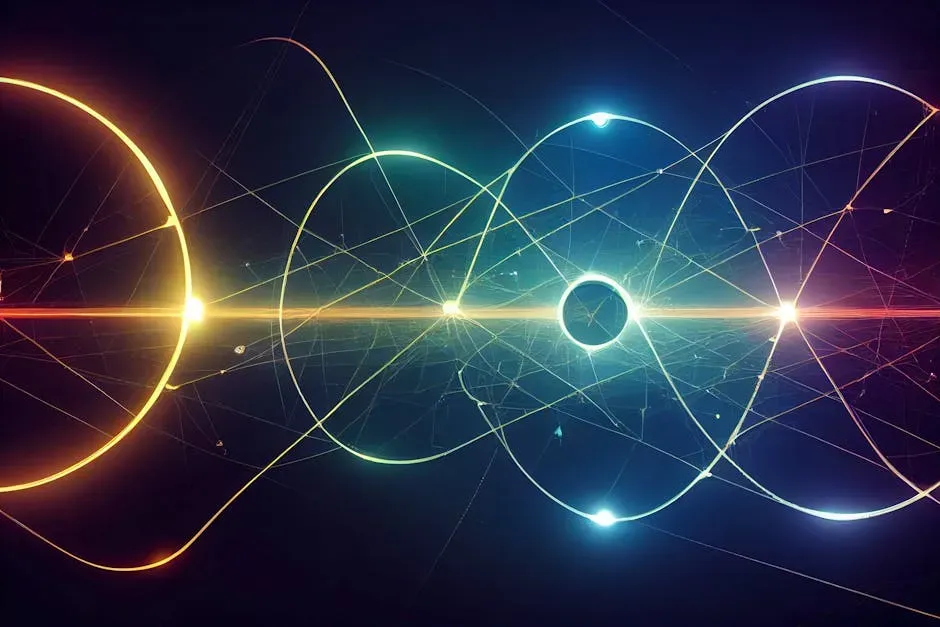
On the smallest scales, the universe doesn’t behave like a collection of tiny billiard balls. Instead, modern physics describes everything as excitations of underlying quantum fields that fill all of space. Particles are not little beads flying around, but ripples or packets of energy in these fields. Even when nothing seems to be happening, these fields never sit perfectly still. They jitter with what are called vacuum fluctuations, brief appearances and disappearances of particle‑like disturbances, allowed by the strange rules of quantum mechanics.
These fluctuations aren’t just an odd theoretical detail; they leave measurable effects. They shift the energy levels of atoms by tiny but detectable amounts and contribute to phenomena like the Casimir effect, where two uncharged metal plates can be gently pushed together by changes in the vacuum energy between them. Some theories even link vacuum energy to dark energy, though the numbers don’t line up well yet. It’s like discovering that what you thought was an empty room is actually filled with an invisible, constantly churning ocean whose ripples subtly move everything inside.
8. The Arrow of Time and Entropy: The Hidden Current of Change

Physics equations often work just as well forward or backward in time, but our lived experience doesn’t: you remember the past, not the future; broken glasses don’t spontaneously reassemble; smoke doesn’t jump back into a match. The deep reason behind this one‑way flow is tied to entropy, a measure of disorder or the number of ways a system can be arranged. Left alone, systems tend to move from more ordered states to more disordered ones, simply because there are overwhelmingly more disordered arrangements available.
This tendency, captured in the second law of thermodynamics, gives time its arrow. The early universe appears to have started in an astonishingly low‑entropy, highly ordered state, and ever since, entropy has been creeping upward as stars burn fuel, structures form and decay, and energy spreads out. That rising tide of disorder shapes everything from the cooling of coffee on your desk to the ultimate fate of the cosmos. It quietly dictates that memories are traces of lower‑entropy past states and that life itself survives only by exporting disorder to its surroundings, riding the arrow of time like a surfer on a one‑way wave.
Conclusion: Living Inside an Invisible Symphony
When you step back from the details, a strange picture emerges: we live our entire lives inside an invisible symphony of forces and fields. Gravity molds spacetime, electromagnetism sculpts matter and light, nuclear forces forge the elements, and dark components guide and accelerate the cosmos on scales our minds can barely hold. Even “nothing” turns out to be a restless quantum background, while entropy silently pushes everything along a one‑way timeline. The visible universe – the stars, planets, and people – is just the bright foam riding on top.
What makes this both humbling and exhilarating is how much we still do not know. Dark matter and dark energy remain largely mysterious, and the deeper nature of quantum fields and time’s arrow is far from settled. Yet with each experiment, telescope survey, and new idea, we get a slightly clearer glimpse of the machinery behind the curtain. The next time you look up at the night sky, it’s not just points of light you’re seeing, but the shadows of these unseen forces at work – shaping everything you are and everything you’ll ever know. Which of these hidden players surprised you the most?