
You grow up thinking Earth is mostly mapped, measured, and understood. Then you stumble across places that look like they were pulled straight from a fantasy novel or a sci‑fi movie, and suddenly the planet feels wild and mysterious again. Some of these spots do have working scientific theories behind them, but when you stand there in person, those neat explanations feel tiny compared to the sheer weirdness in front of you.
In this article, you’ll step into eight of the strangest geological wonders on Earth – places where stones seem to walk, lakes glow bubble‑gum pink, and a crater burns like a portal to another world. You’ll see what scientists think is going on, where the questions remain, and what it would feel like if you were actually there. As you read, notice how often the most honest answer is: “We know some of what’s happening, but not everything.”
1. The Sailing Stones of Racetrack Playa, California
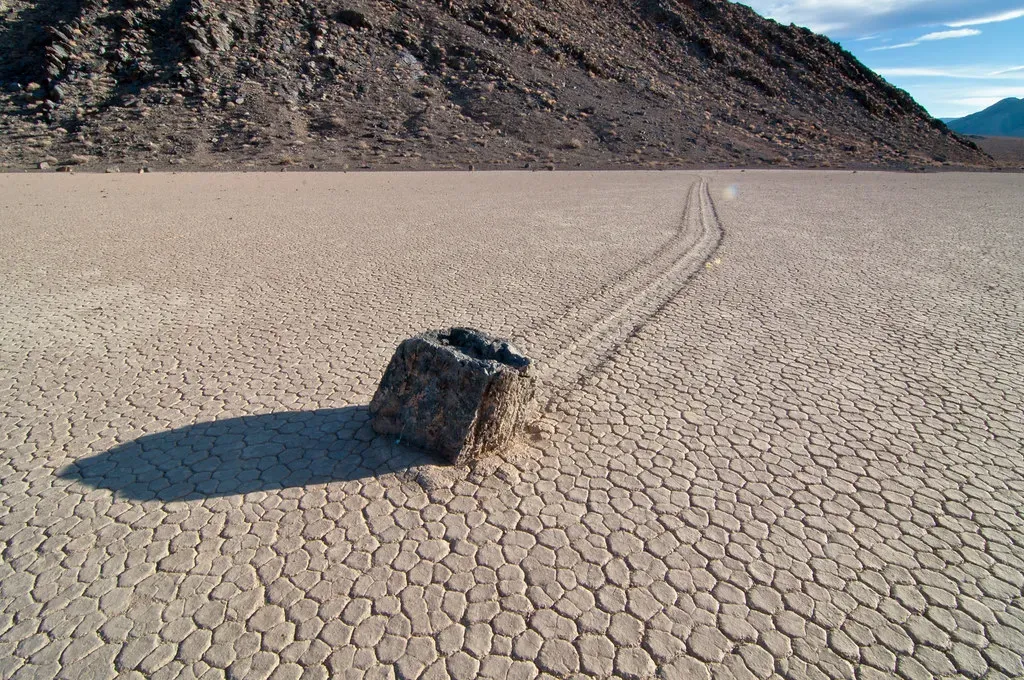
Imagine hiking across a bone‑dry desert valley and finding heavy rocks that have left long, snaking tracks in the mud – as if they’ve been dragged, except there are no people, no animals, and no machines anywhere. At Racetrack Playa in Death Valley National Park, that’s exactly what you see: dark stones scattered across a flat, cracked lakebed, each with a trail behind it, some straight, some curving, some intersecting like a giant, slow‑motion race. You know the rocks are not alive, and yet the evidence sits right in front of you: they have clearly moved.
Researchers have shown that under rare winter conditions, a thin sheet of ice can form around the rocks, float slightly on shallow water, and then, when light winds push the ice, the rocks slide slowly along the slick mud underneath. You could stand there and see nothing happen for hours, then in the right moment, the whole surface might creep a few centimeters at a time. Still, even with this ice‑raft explanation, the phenomenon feels eerie. You’re left staring at those tracks, feeling like you’ve just caught the Earth performing a magic trick it didn’t mean you to see.
2. The Door to Hell, Darvaza Gas Crater, Turkmenistan
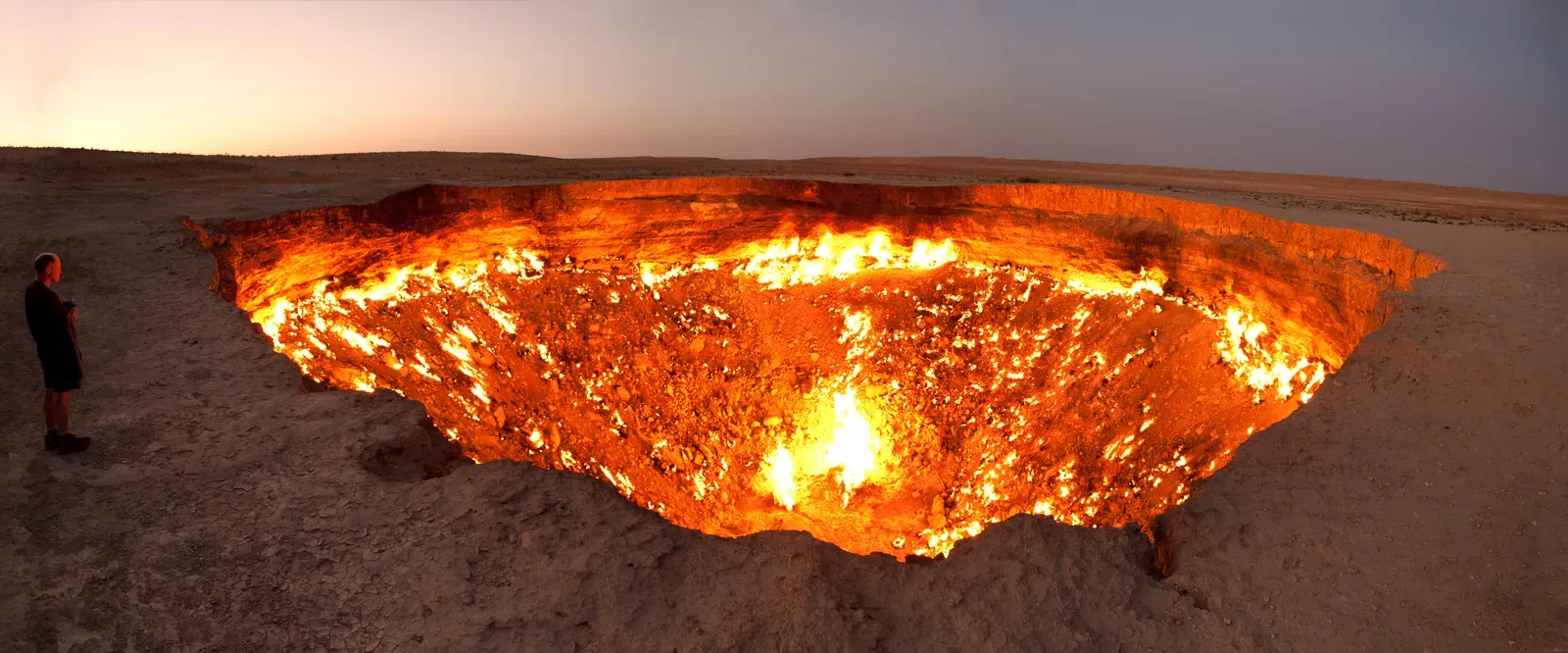
Picture driving through a dark desert at night and spotting an orange glow on the horizon that grows into a roaring pit of fire as you approach. In the Karakum Desert of Turkmenistan, the Darvaza gas crater – often called the Door to Hell – does exactly that. You walk toward a circular hole roughly the size of a football field, nearly a hundred feet deep, with flames licking and roaring from dozens of vents along the floor and walls. The heat hits your face, the air smells faintly of gas, and for a moment you understand why locals leaned into the hellish nickname.
The most accepted story is that in the early 1970s a Soviet drilling operation punched into a cavern of natural gas, the ground collapsed, and engineers set the escaping gas on fire, expecting it to burn off quickly. Decades later, the crater is still burning, and no one can say for sure how much fuel is left underground or exactly how the collapse played out. Standing at the rim, you’re watching geology, chemistry, and politics all fused into one endless, accidental bonfire. It’s technically “explained,” but the sight of a man‑made volcano blazing for half a century makes you feel like the Earth is keeping more secrets beneath your feet than anyone can comfortably admit.
3. The Pink Lake of Lake Hillier, Western Australia
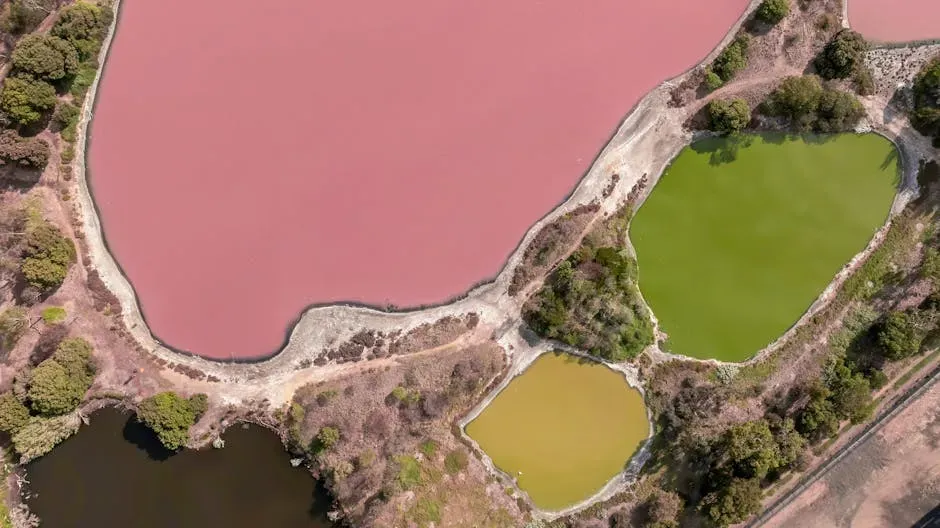
When you first see photos of Lake Hillier from above, it looks fake – like someone dumped a giant bottle of pink paint next to the deep blue ocean. In reality, you’re looking at a small, highly salty lake on Middle Island off Western Australia, glowing a wild shade of bubble‑gum or flamingo pink. From the air the color is outrageous; up close, it softens but still looks like someone tinted the water in a photo editor and forgot to turn the saturation back down. You half expect a sign saying “Do not drink the strawberry milkshake.”
Scientists have traced the color to a community of salt‑loving microorganisms, including certain algae and bacteria that produce red and orange pigments in the super‑salty water and surrounding salt crusts. That sounds straightforward, but the exact balance of species, salinity, light, and temperature that makes Lake Hillier look so uniquely, persistently pink has proved surprisingly tricky to pin down, and the lake has even shifted color in recent years with changes in rainfall and salt levels. When you peer over the edge of the shoreline, you’re seeing a microscopic ecosystem painting an entire lake – and you’re reminded that even something as simple as “why is this water pink?” can take years of detective work to untangle.
4. The Devil’s Kettle, Minnesota, USA
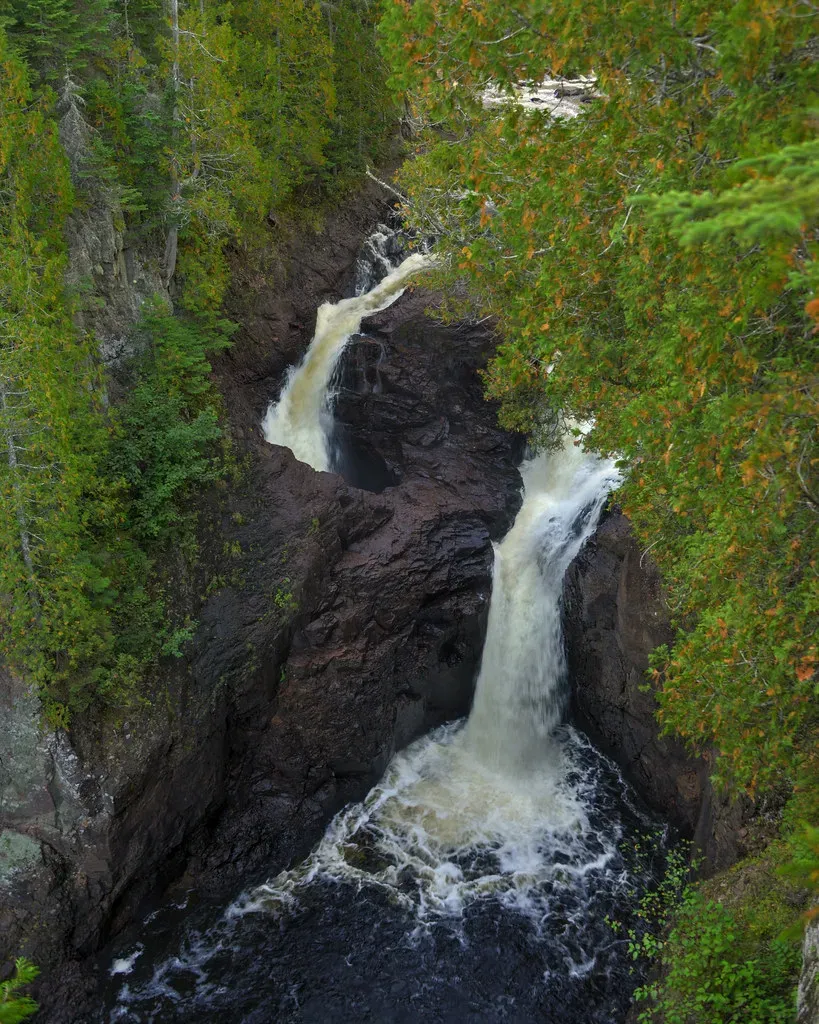
If you tend to distrust nature already, the Devil’s Kettle in northern Minnesota will not help. Here, a river flows normally through a forested gorge until it reaches a point where the water splits in two. One branch tumbles over a regular waterfall. The other plunges into a deep, churning hole in the rock – and seems to vanish. You watch it roar into the opening like water being poured down a giant drain, with no obvious outlet downstream. It feels wrong in a way that gets under your skin.
For years, people tossed in dye, ping‑pong balls, logs, and even GPS trackers, trying to see where the missing water reappeared. Nothing obvious popped up, which fed myths about bottomless pits and underground tunnels stretching for miles. More recent measurements suggest that the river’s total flow above and below the falls matches pretty closely, hinting that the “lost” water quietly rejoins the main channel underground not far away, probably through cracks and cavities in the rock. But because you cannot see the path with your own eyes, and because the pothole itself is violent and unreachable, the Devil’s Kettle keeps that delicious edge of mystery – like a magic trick that has been explained in theory but still leaves you wondering how, exactly, it works.
5. The Blood‑Red Waters of Lake Natron, Tanzania
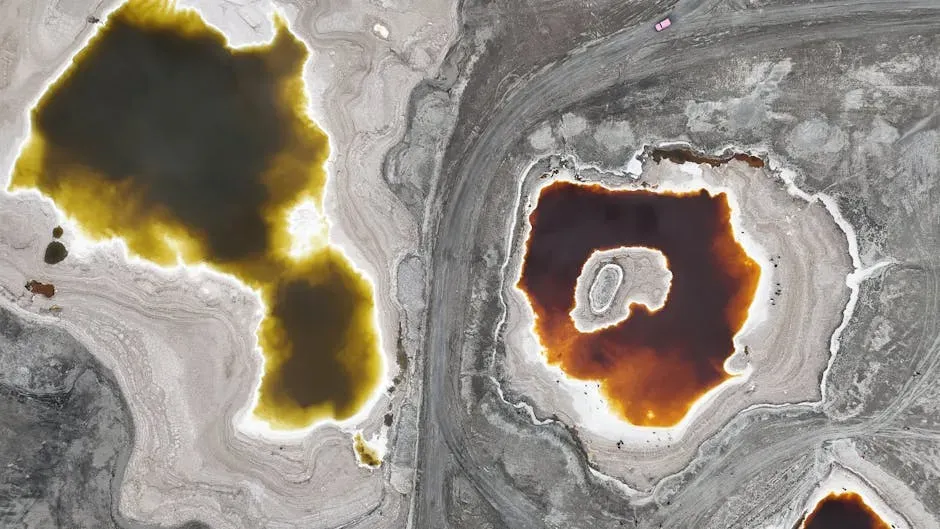
Now imagine a lake so caustic that it can strip skin, stain rocks white with soda salts, and, under the right conditions, turn an eerie blood‑red. That’s Lake Natron in northern Tanzania. From a distance, it can look like a normal body of water, but from the air or along certain shorelines, it often takes on rusty red or deep orange tones, framed by a cracked, alien‑looking crust. You may have seen dramatic photos of animals that appear “turned to stone” after dying in the lake, their bodies preserved in mineral deposits like sinister statues.
The color comes from salt‑loving algae and microorganisms that thrive in the hyper‑saline, alkaline water, especially when it warms up and concentrates during dry seasons. The lake’s chemistry is wild: fed by mineral‑rich hot springs and little outflow, it can reach temperatures that feel like a hot bath and alkalinity that rivals household cleaners. Flamingos manage to use it as a breeding ground, taking advantage of the same organisms that paint the water. You can point to the chemistry and biology, but when you stand on Natron’s shore staring at red water and calcified carcasses, you feel like you’ve stumbled into a myth about a cursed lake – and no tidy explanation fully erases that instinctive chill.
6. The Boiling Mud Pools of Hverir, Iceland
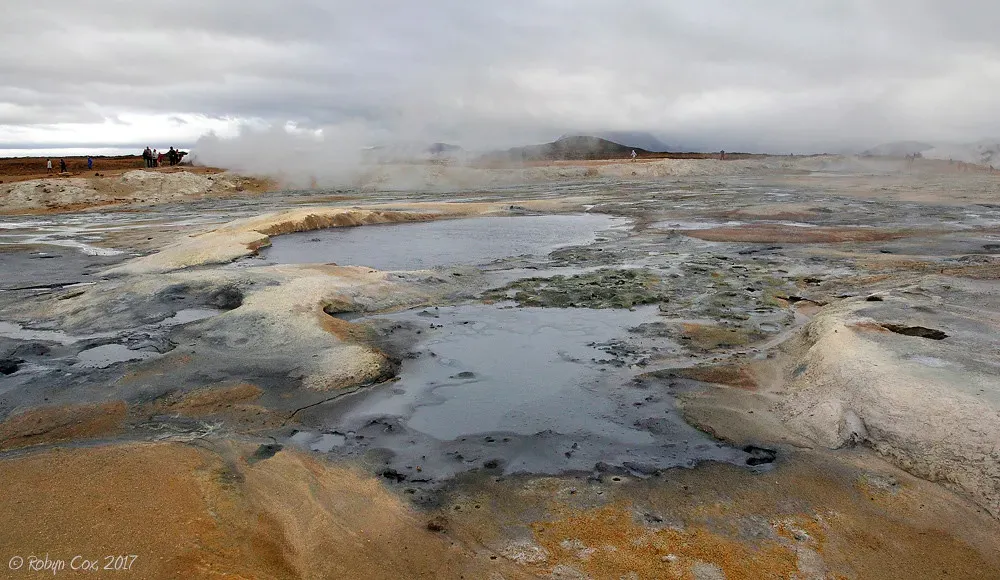
At Hverir in northern Iceland, the ground does not behave the way you expect solid earth to behave. You walk across a pale, cracked landscape, and instead of quiet soil and stone, you find bubbling gray pools belching steam, vents hissing like broken kettles, and sulfurous fumes that make you wrinkle your nose. The mud itself seems alive, heaving and spitting in slow motion. Warning signs remind you to stay on marked paths because just a thin crust might separate you from scalding water underneath.
You know, at a basic level, that this is what happens when volcanic heat meets groundwater and soft sediments: water superheats, rises as steam, and churns the mud into a hot, roiling stew. Still, that neat sentence does not capture what it feels like when the earth under your boots feels suspiciously thin, or when you watch a bubble rise, tremble, and burst with a wet, hollow pop. The whole area feels like a planet still under construction, as if you’ve caught the crust taking a break from pretending to be stable. You walk away with a deeper sense that the ground beneath your everyday life is only calm on the surface.
7. China’s Rainbow Mountains in Zhangye Danxia
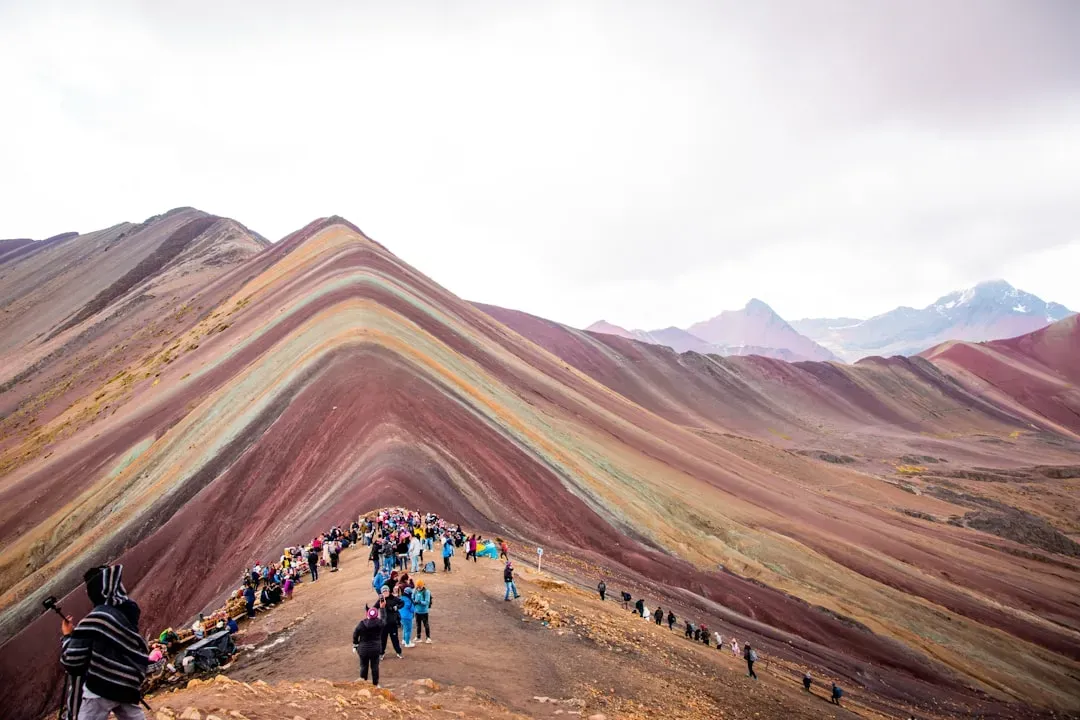
Think of a mountain landscape you know: maybe gray rock, dark forests, white snowcaps. Now replace that palette with stripes of red, orange, yellow, and even greens and blues, layered across rolling hills like a stack of painted blankets. That’s what you see at the Danxia landforms near Zhangye in northwestern China, often nicknamed the Rainbow Mountains. From the viewing platforms, the ridges look almost artificial, as if someone carved them from layered candy or sculpted them out of melted crayons.
The broad explanation is that different mineral‑rich sandstones and sediments were laid down over tens of millions of years, then uplifted and eroded so that their colored layers now stand exposed, tilted, and sculpted by wind and rain. Iron gives reds and yellows, other minerals add different hues, and weathering sharpens the patterns. That all makes sense when you read it on a sign, but standing in front of those hills, your eyes fight with your brain. The colors look too clean, too sharply divided to belong to messy natural processes. You end up with this pleasant cognitive dissonance: you know the basic recipe, but the final result still feels like cheating.
8. The Giant’s Causeway, Northern Ireland
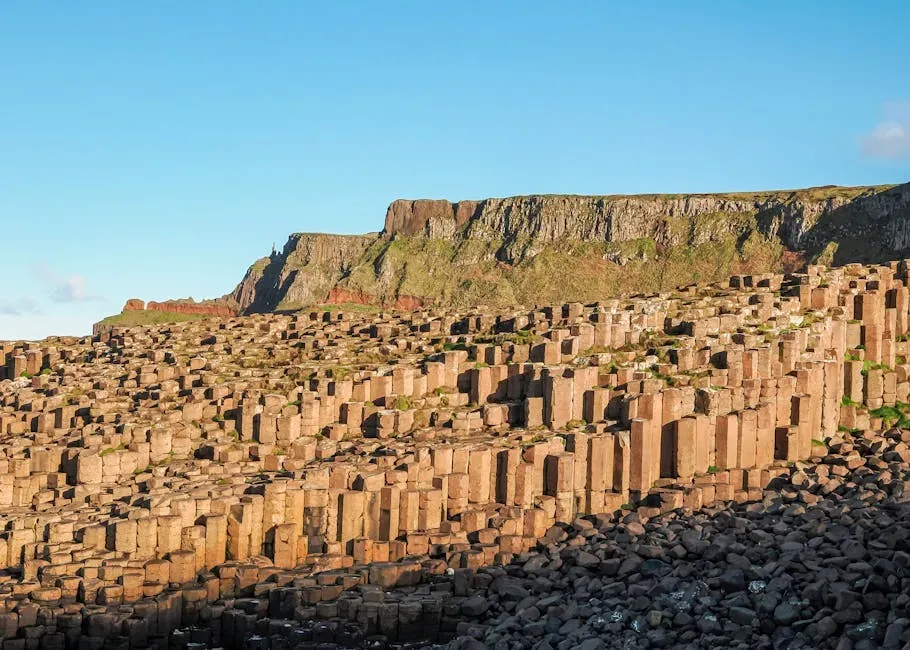
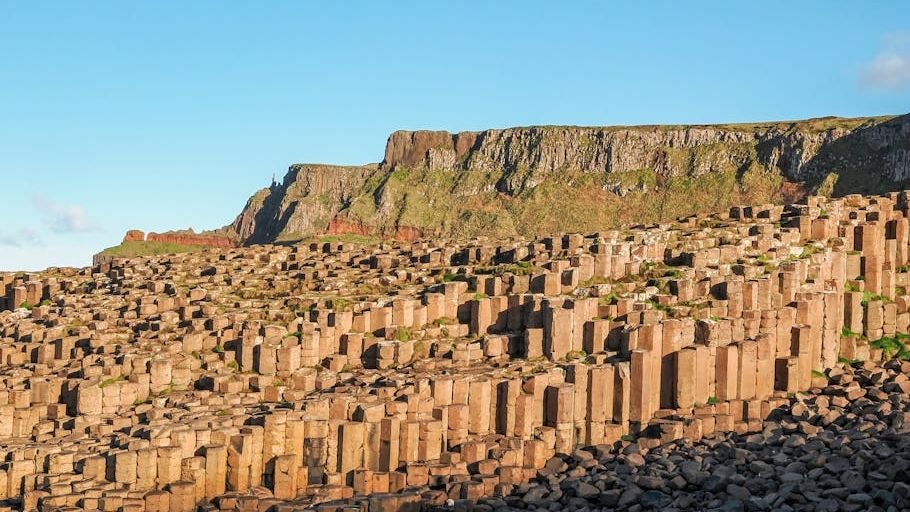
When you first step out onto the Giant’s Causeway, it is hard not to think of human hands. Thousands of interlocking stone columns, mostly hexagonal, step down from the cliff into the sea like a frozen staircase built for a titan. Some columns stand higher than you; others barely peek above the surf. You can walk along the tops like a cobblestone road, feeling the flat faces and sharp edges under your shoes, and it is almost impossible not to imagine someone designed it this way on purpose.
Geologists will tell you that this is what happens when a thick lava flow cools slowly and evenly: as it contracts, it cracks into a mosaic of polygons, and those cracks deepen into vertical columns that look suspiciously like paving stones. You may have seen the same pattern in dried mud on a much smaller scale. The principle is understood, yet the Causeway still feels uncanny because the scale is so huge and the pattern so regular. Folklore fills the gap, with tales of giants building bridges across the sea, and honestly, when you stand there with waves crashing around your ankles, the story about giants feels emotionally truer than the tidy diagram about cooling lava.
Standing back from all eight of these places, you start to notice a pattern. Earth rarely hides its weirdness in one tidy category; it mixes geology with chemistry, biology, climate, and time, then serves it to you as a scene that feels almost too strange to be real. Explanations exist, at least in part, but they never fully kill the mystery – and maybe that’s a good thing. The more you learn, the more you see how much is still going on behind the curtain.
In a world where so much of your daily life is predictable and engineered, these geological oddities are a reminder that the planet is still creative, still surprising, still capable of making you stop and whisper, “How is this even possible?” The next time you see a strange rock, an oddly colored pool, or a patch of steam rising where it “shouldn’t,” will you shrug and walk by – or pause and wonder what other impossible‑seeming stories the Earth is still quietly writing beneath your feet?