
If you think quantum mechanics lives only in dusty textbooks and billion-dollar labs, your everyday routine might disagree. From the moment your alarm buzzes in the morning to the instant you scroll through messages at night, the strange rules of the quantum world quietly keep your life running.
When I first studied quantum physics, it felt like reading fantasy: particles in two places at once, information jumping instantly across space, energy coming in tiny packets. Then it hit me: a lot of this “weirdness” is literally built into the gadgets on my desk. Once you see it, you can’t unsee it. Let’s pull back the curtain on where quantum mechanics is hiding in your day.
1. The GPS In Your Phone Only Works Because Of Quantum Timekeeping

Imagine trying to find a friend in a crowded city if every clock in town was off by even a tiny fraction of a second. Your GPS has the same problem, except it’s talking to satellites tens of thousands of kilometers above Earth. To know where you are, your phone measures how long signals take to travel, and that timing has to be incredibly precise. That kind of precision simply isn’t possible with old-school mechanical clocks; it needs atomic clocks, which are built directly on quantum rules.
In an atomic clock, time is defined using the energy jumps of atoms, usually cesium or rubidium. Those jumps are quantized: atoms can only absorb or emit energy at very specific, discrete values predicted by quantum mechanics. By locking a clock to one of these ultra-stable transitions, satellites keep time so accurately that GPS can locate you within a few meters. Without quantum mechanics nailing down how atoms behave, your maps app would slowly drift into nonsense, telling you your car is parked in the river or your house is two streets away.
2. Your Smartphone Screen Relies On Quantum Physics In Semiconductors
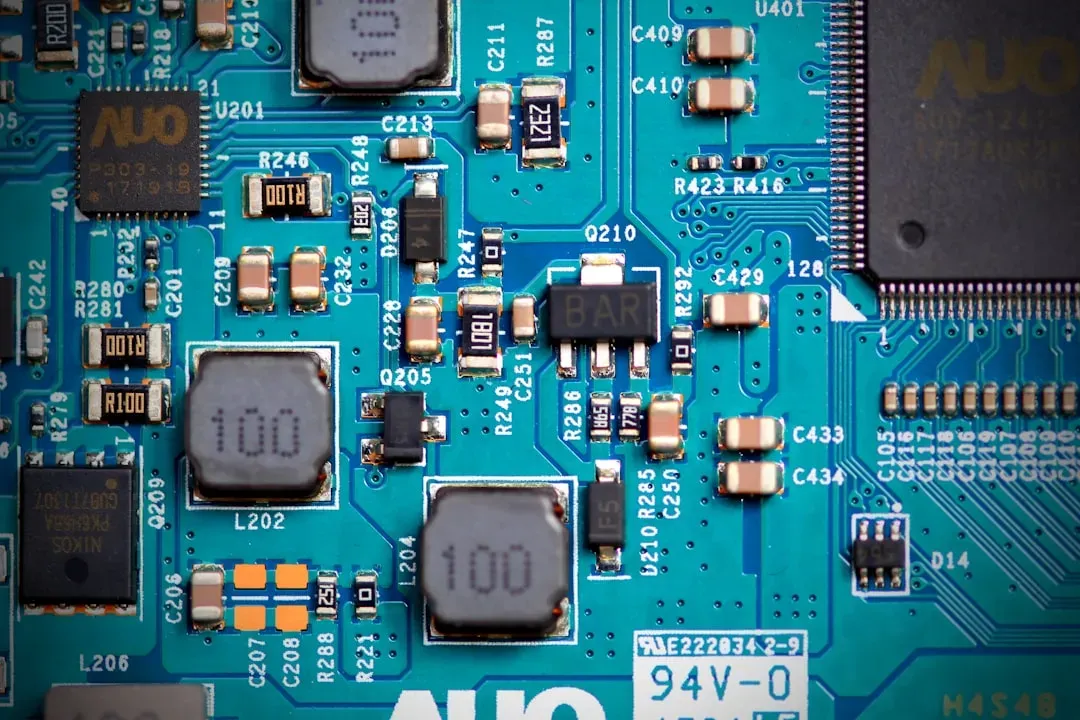
Every time you tap your screen and an app pops open, you’re watching quantum mechanics at work in silicon. Modern electronics are powered by semiconductors, materials engineered so that electrons can be corralled, nudged, and stopped in controlled ways. Quantum mechanics explains how electrons occupy specific energy bands, and how you can tweak those bands by adding tiny amounts of other elements, a process called doping. That band structure is what makes a semiconductor a semiconductor instead of a boring lump of metal.
Transistors, the tiny on–off switches etched by the billions into your phone’s chips, only make sense when you accept that electrons behave like both particles and waves. Engineers use quantum models to predict how thin a barrier can be before electrons start tunneling through it, or how likely they are to flow under a given voltage. The color and brightness of your screen’s LEDs or OLED pixels are also set by quantum rules: electrons fall between energy levels and release light whose color depends on the energy gap. When you admire a sharp, vivid display, you’re really looking at carefully choreographed quantum transitions made visible.
3. MRI Scans Use Quantum Spin To See Inside Your Body

If you’ve ever lain inside an MRI scanner listening to that strange clattering rhythm, you’ve literally been inside a quantum device. MRI relies on a property of particles called spin, a deeply quantum concept that doesn’t have a perfect everyday analogy. Protons in the hydrogen atoms in your body act like tiny bar magnets because of their spin. When you’re placed in a strong magnetic field, those little magnets tend to line up, though not perfectly. Radio waves then nudge them out of alignment, and as they relax back, they emit signals that the scanner detects.
The way those signals vary across your body depends on the quantum behavior of spins in different tissues. Subtle changes in alignment and relaxation times are turned into high-resolution images of your brain, joints, or organs. What looks like a grayscale picture is really a quantum map, translated into something a radiologist can read. Without the theory of spins and energy levels, we wouldn’t have this noninvasive window into the body; we’d be stuck with older, riskier methods or cruder images that miss the detail doctors now take for granted.
4. LEDs, Lasers, And Barcode Scanners Are Built On Quantum Light

From the tiny red dot of a supermarket barcode scanner to the laser inside your fiber internet, quantum mechanics is running the light show. Ordinary light bulbs spray out photons with random energies and directions, but lasers produce organized light where all the photons march in step. That order comes from a quantum process called stimulated emission: one photon passing by an excited atom can trigger it to emit another identical photon. Stack that up in a carefully designed material, and you get a focused, intense beam you can aim and control.
LEDs, the little lights that now show up in everything from bike lamps to TV backlights, also lean heavily on quantum rules. When electrons in a semiconductor drop from a higher energy band to a lower one, they release their excess energy as light. The size of that energy gap, set by the material’s quantum properties, decides whether the LED glows red, blue, or something in between. Engineers now tune these gaps with almost artistic precision, mixing materials to get the exact color and brightness they want, all by playing with the quantum structure of matter.
5. The Security Of Your Online Data Is Starting To Depend On Quantum Ideas
When you log in to your bank, send a private message, or pay for something online, you’re trusting that no one can secretly copy your data in transit. Traditional encryption relies on math problems that are brutally hard to solve with normal computers, like factoring very large numbers. While that side of things is not inherently quantum, the growing push toward quantum computers has sparked a race to update and harden encryption. At the same time, new methods of securing information are emerging that use quantum mechanics directly.
One such approach is quantum key distribution, which uses single photons to share encryption keys between two parties. Thanks to the quantum rule that measuring a system disturbs it, any eavesdropper trying to spy on those photons will inevitably leave detectable traces. The users can check for that disturbance and know whether their connection was secure. While this technology is still rolling out in limited forms, it shows how the same strange rules that once seemed abstract are now being pulled into the very practical job of keeping your personal information safer.
6. Everyday Electronics Are Pushing Up Against Quantum Limits
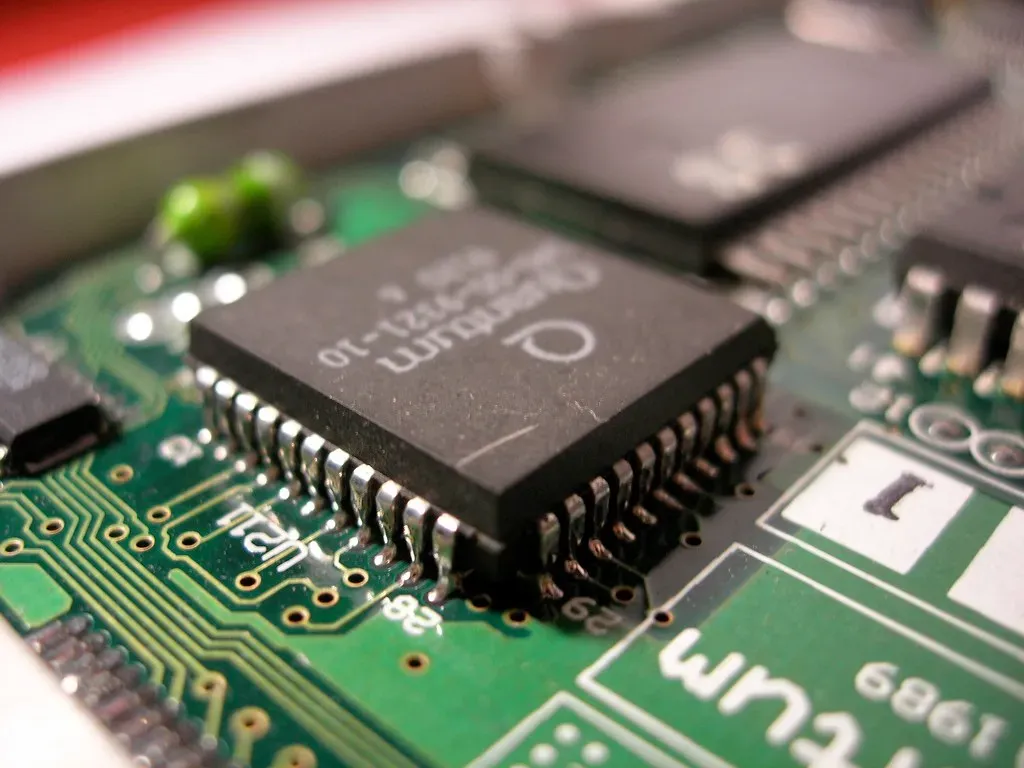
The smaller we make our devices, the less they behave like neat, predictable classical objects and the more they reveal their quantum side. In modern chips, some features are only a few dozen atoms wide. At that scale, electrons don’t just follow clean paths; they can tunnel through barriers that, classically, they shouldn’t cross at all. Engineers constantly battle this tunneling, because it can turn a carefully designed off switch into a leaky mess of unwanted current and heat.
This quiet war against quantum effects shapes everything from your laptop’s battery life to how hot your game console runs. It’s also why research teams are exploring new materials and architectures, including quantum-based devices, instead of simply shrinking old designs. In a way, your phone and computer are already half-quantum: classical in how they’re programmed, but deeply quantum in how their parts really behave. The line between the everyday world and the quantum world is no longer far away in some lab; it’s sitting in your pocket, humming along while you text.
Conclusion: The Quantum World Is Closer Than It Looks
It’s tempting to think of quantum mechanics as a niche topic reserved for scientists scribbling equations on chalkboards, but it’s woven into daily life more tightly than most of us ever realize. Your navigation, your medical care, your lights and screens, your data security, and even the basic functioning of your devices are all riding on rules that defy our common sense. We’ve learned to harness behaviors that no one would have believed a century ago, turning abstract theory into the quiet infrastructure of modern life.
I still find it slightly surreal that the same equations describing electrons tunneling through barriers also explain why my laptop charger gets warm. The quantum world is not just under a microscope; it’s under your fingertips, in your pocket, and over your head in orbiting satellites. Next time your map reroutes flawlessly or an MRI image catches something early, maybe you’ll feel a flicker of appreciation for the strangeness behind it all. Knowing that, does the everyday world still feel as ordinary as it did yesterday?