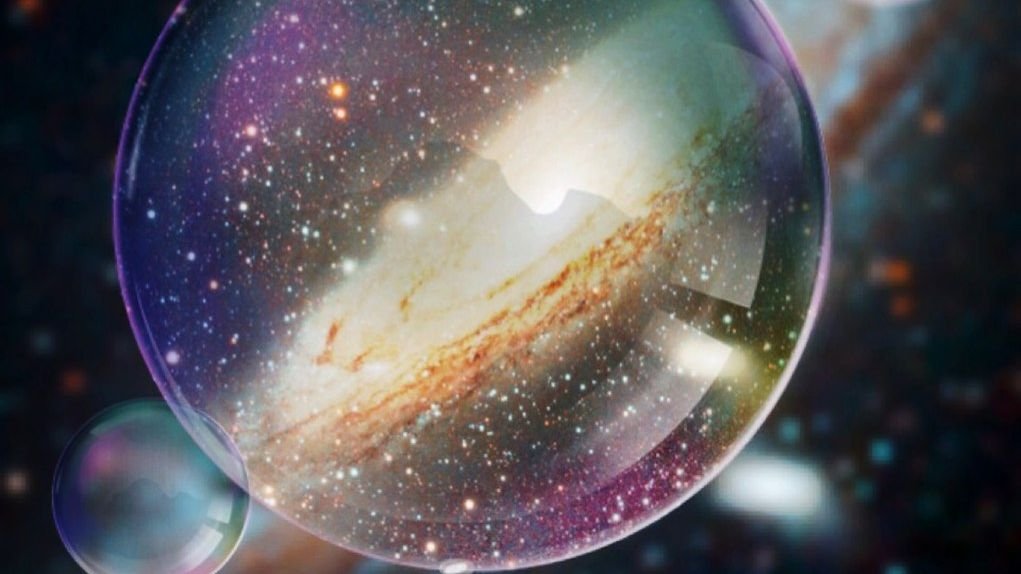
If you have ever stared at the night sky and felt a strange mix of awe and unease, you are already halfway into the rabbit hole. The more you learn about the universe, the weirder and less solid reality starts to feel, almost like the ground under your feet is just a temporary stage set. Modern cosmology and physics are not just about distant galaxies and fancy equations; they are quietly suggesting that your everyday idea of “what’s real” might be deeply incomplete.
In this article, you are going to walk through ten of the most mind-bending ideas about what the universe might really be like beneath the surface. Some of these theories are well-developed scientific frameworks; others are more speculative, sitting on the edge of what we can test right now. You will not get neat, final answers here – because nobody has them – but you will get a clearer sense of just how strange the universe might be, and why serious scientists take these possibilities seriously.
1. The Holographic Universe: Reality As a Cosmic Projection
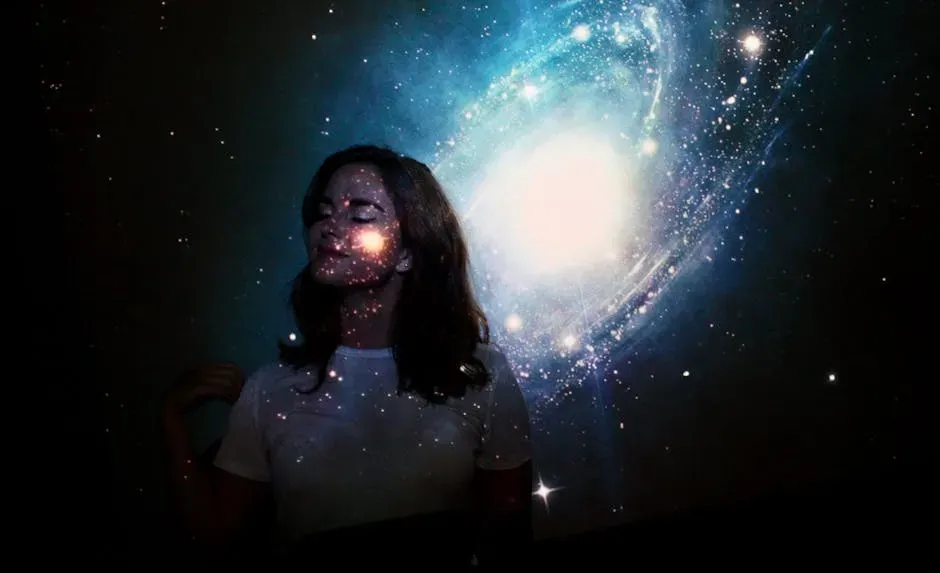
Imagine if everything you see, touch, and experience – the three-dimensional world of solid objects – were more like a detailed projection coming from a distant, two-dimensional surface. The holographic principle suggests that the entire volume of the universe could be described by information encoded on a boundary, a bit like how a hologram stores a 3D image on a flat plate. In this view, you are living inside something that behaves like a 3D world, but the fundamental “data” of reality might live on a cosmic screen at the universe’s edge.
This idea did not come out of nowhere; it grew from attempts to understand black holes and quantum gravity. When you look at how black holes store information, the math says their information content scales with the surface area of their event horizons, not the volume inside. That is a huge clue. If nature really works this way, then your body, the Earth, and the galaxies might be like rich, high-resolution images rendered from a deeper informational layer, challenging your most basic sense of what it means for something to be “in” space.
2. The Simulation Hypothesis: Are You Living in a Cosmic Computer?
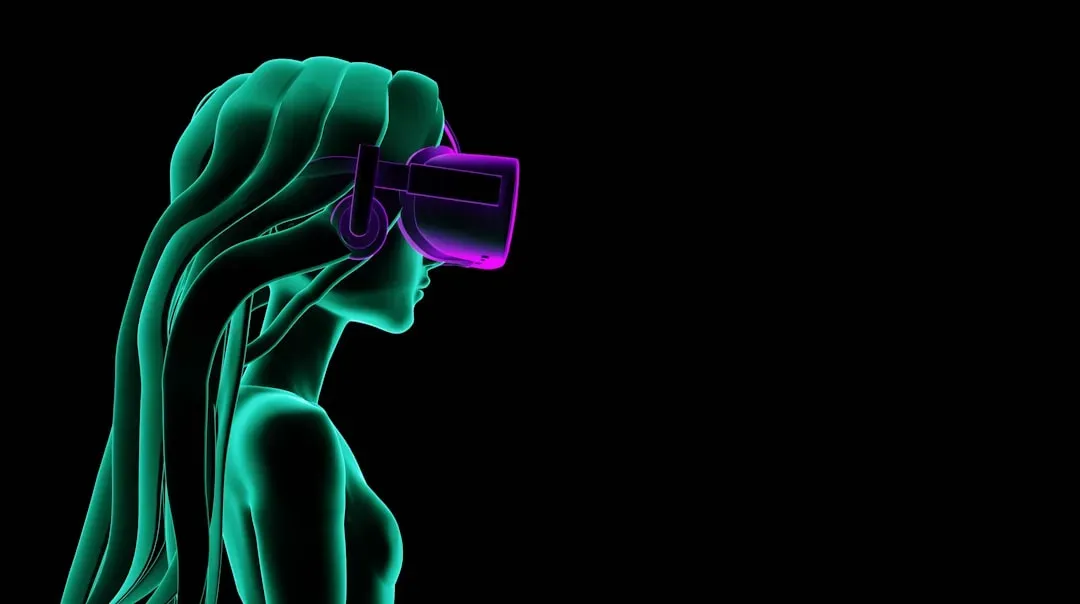
You have probably had that late-night thought: what if this is all some kind of simulation? The simulation hypothesis takes that hunch and turns it into a serious, if controversial, argument. The core idea is simple: if advanced civilizations can eventually run extremely detailed simulations of conscious beings and entire universes, then simulated realities could be far more numerous than “base” physical ones. If that is true, the odds that you are in the original, unsimulated universe might be smaller than you would like to admit.
From your perspective, the unsettling part is that a perfectly detailed simulation would feel completely real. Your memories, your emotions, your sense of choice – all of it could be patterns in some unimaginable computational substrate. You might picture it as a supercomputer, but it could be something even stranger. Right now, nobody has a reliable way to test this, although some researchers look for tiny “pixelation” or limits in physical laws that might hint at an underlying grid. For now, you are left with a weird possibility: everything around you may be both real to you and artificial at a deeper level.
3. Multiverse Theories: Your Universe as One Bubble Among Many
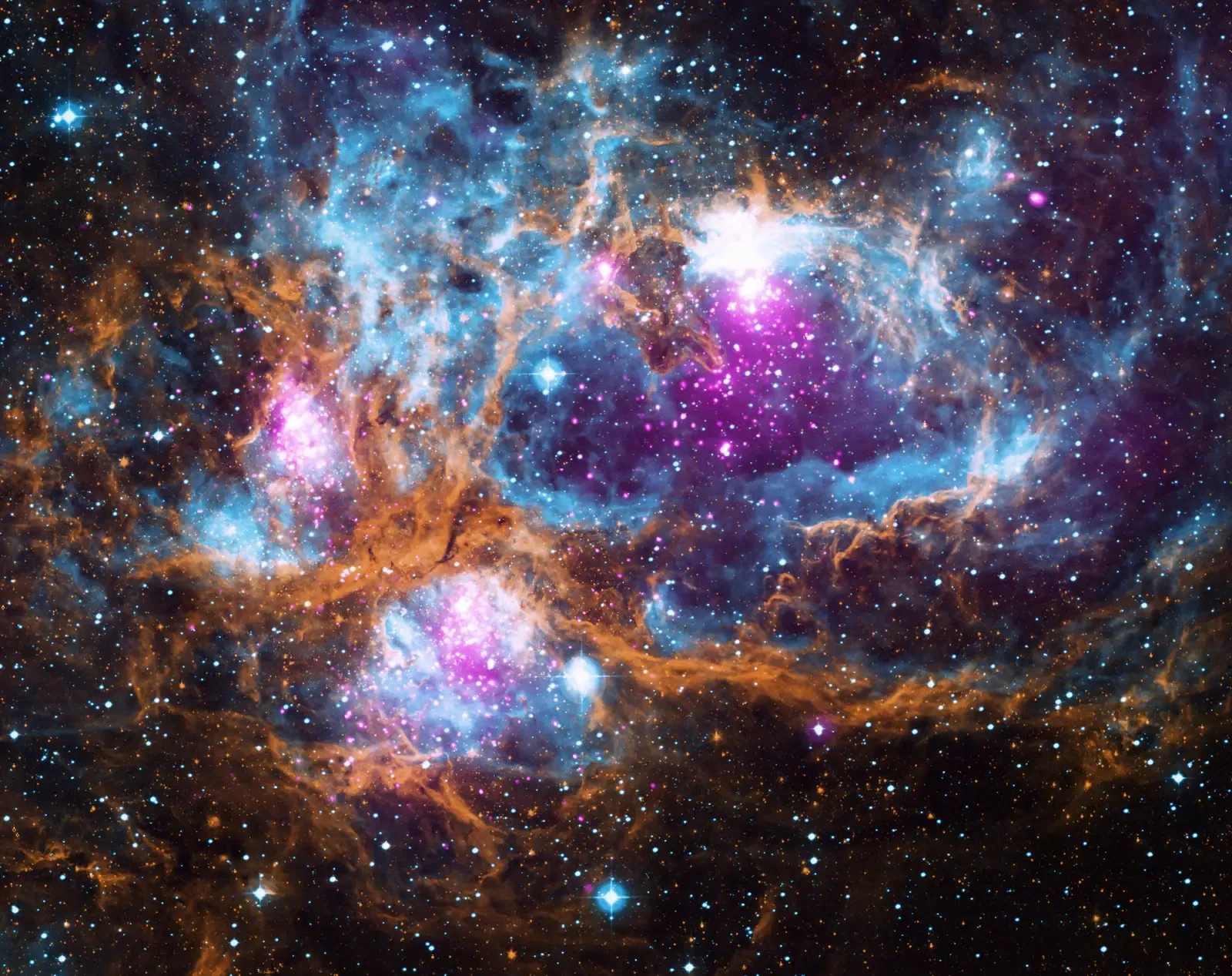
When you look up, it is easy to think of “the universe” as everything that exists. Multiverse theories challenge that instinct by suggesting that your universe might just be one bubble in a vast cosmic foam. In one version, called eternal inflation, space keeps ballooning forever, spawning separate regions where conditions freeze out differently. Each of those regions can become its own universe with its own properties, like separate balloons drifting apart so far that they can never collide again.
For you, this means that what you experience as the laws of nature – things like the strength of gravity, the masses of particles, or even the number of dimensions – could be local settings rather than universal rules. Somewhere else in the multiverse, stars might never form, or chemistry might not work, or time itself might behave differently. You would never visit those places, but their existence would turn your own universe into just one chapter in a much grander and stranger story, where “everything possible” might exist somewhere out there.
4. Quantum Many-Worlds: Every Choice You Make Actually Happens
Quantum mechanics already tells you that particles can exist in overlapping possibilities until they are measured. The many-worlds interpretation takes this seriously and pushes it all the way: every time a quantum event can go one of several ways, the universe splits into versions where each outcome happens. In this picture, there is no single, unique future. Instead, the cosmos branches endlessly, and you are constantly “splitting” into different versions of yourself that live out every possible path.
What does that mean for your life? In one branch, you take that job; in another, you walk away. In one path, your car narrowly avoids the accident; in another, it does not. You only ever experience one thread, but all the others are just as real in the wider quantum structure. This turns the usual idea of probability into something deeper: rather than some outcomes not happening, they all unfold, but your awareness rides just one of the rivers flowing through a vast, branching delta of realities.
5. Block Universe: Past, Present, and Future All Existing at Once
You probably feel like time flows: past behind you, future ahead, and a moving “now” that slides along. The block universe concept, inspired by relativity, overturns that intuition. It says you should think of the universe as a four-dimensional block of spacetime, where all events – past, present, and future – exist together in a fixed structure. Your sense of flowing time is more like the way your mind experiences a movie frame by frame, even though the entire film reel already exists from start to finish.
From your point of view, this raises uncomfortable questions about free will and change. If future events are as “real” as past ones, it feels like your choices might already be woven into the block, even though you still experience them as open decisions. In daily life you still plan, hope, and act as if the future is flexible, because that is how your brain has evolved to navigate the world. But under the block universe view, you are traveling through a cosmic sculpture that is already complete, with your life as a path etched into its geometry.
6. Loop Quantum Gravity: Space and Time as Tiny, Discrete Atoms
When you zoom out, space feels smooth and continuous, like an infinite, seamless canvas. Loop quantum gravity suggests that this is an illusion that breaks down at incredibly tiny scales. In this framework, space and maybe time are built from minuscule, discrete units – like a woven fabric made from loops rather than a perfectly smooth sheet. You never notice the “threads” because they are unimaginably small, far beyond anything you can probe with current technology.
If this is right, your everyday world floats on top of a granular structure where areas and volumes jump in tiny steps instead of changing continuously. Near black holes or right after the Big Bang, those quantum “atoms” of spacetime might dramatically change how gravity behaves, potentially removing singularities where physics currently breaks down. For you, that means the stage on which your life plays out is not a featureless void, but a quantum network with a rich internal architecture you can hardly begin to picture.
7. Emergent Spacetime: Space and Time as Products of Deeper Information
You are used to thinking of space and time as the basic backdrop of reality, the canvas on which everything else is painted. Emergent spacetime flips that hierarchy and hints that space and time themselves might arise from more fundamental ingredients, such as networks of quantum information or entanglement. In this view, location and distance are not primitive; they are consequences of how underlying bits of reality are connected to each other.
One way to picture it is to imagine a social network: people are connected by relationships, and communities form from patterns of links. Similarly, space might be what you get when deeply entangled quantum systems organize in particular ways. For you, this means that when you say two objects are “near” each other, you are really describing a high level summary of a much more abstract web of information. Reality starts to look less like stuff in a container and more like relationships in a giant, evolving graph of interactions.
8. Dark Energy and the Cosmic Acceleration: A Universe Pushing Itself Apart
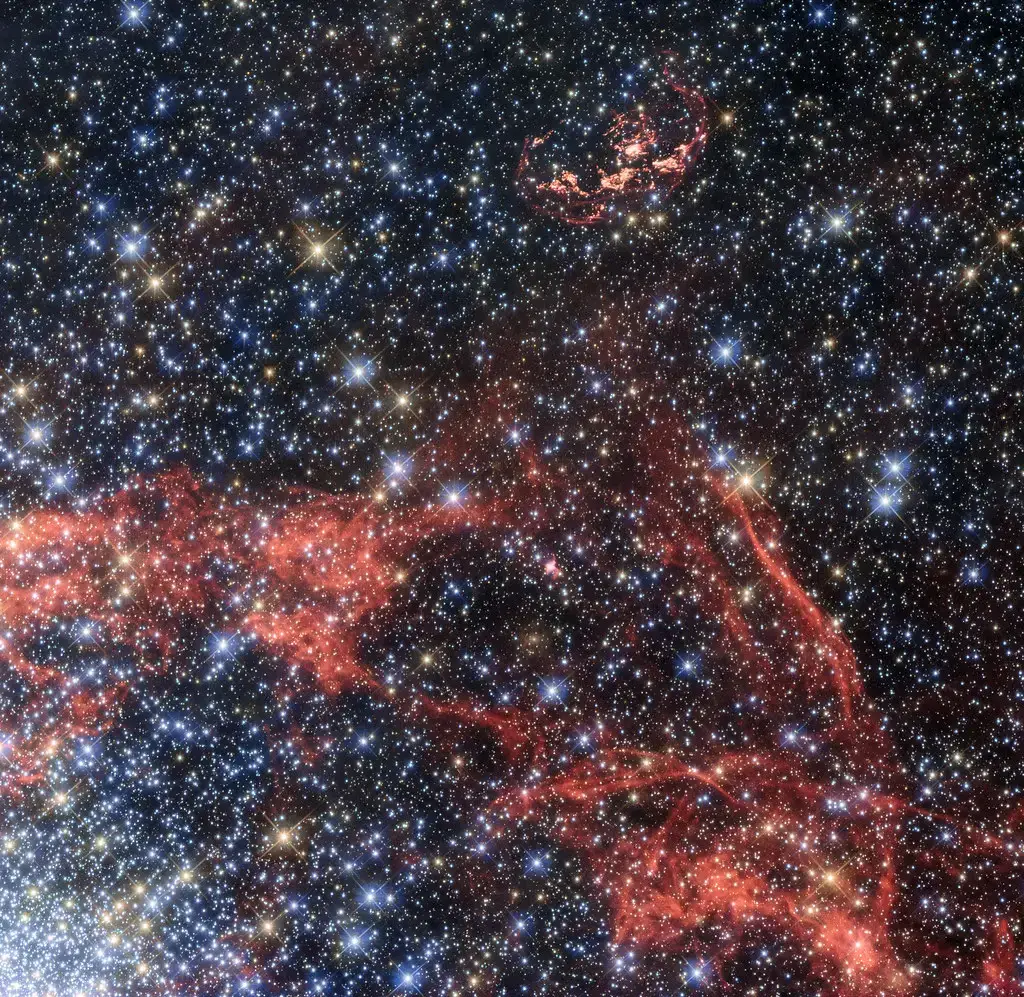
If you had looked at the universe a century ago, you might have expected gravity to be slowly pulling everything back together. Instead, observations show that distant galaxies are not just receding; the rate of expansion is speeding up. To account for this, you are forced to accept something called dark energy, a mysterious component that acts like a repulsive pressure built into the fabric of spacetime. It does not shine, clump, or behave like normal matter; it simply pushes on the universe itself.
For your understanding of reality, this is a serious twist. Roughly about two thirds of the universe’s total energy content appears to be in this dark form, meaning most of what drives cosmic evolution is something you cannot see or touch directly. Depending on the exact nature of dark energy, the universe could keep expanding forever, thin out into near emptiness, or evolve in stranger ways over immense timescales. You live in a cosmos that is not drifting lazily but accelerating, like a car still pressing the gas billions of years after it left the driveway.
9. Anthropic Reasoning: The Universe Looks “Designed” Because You Are Here
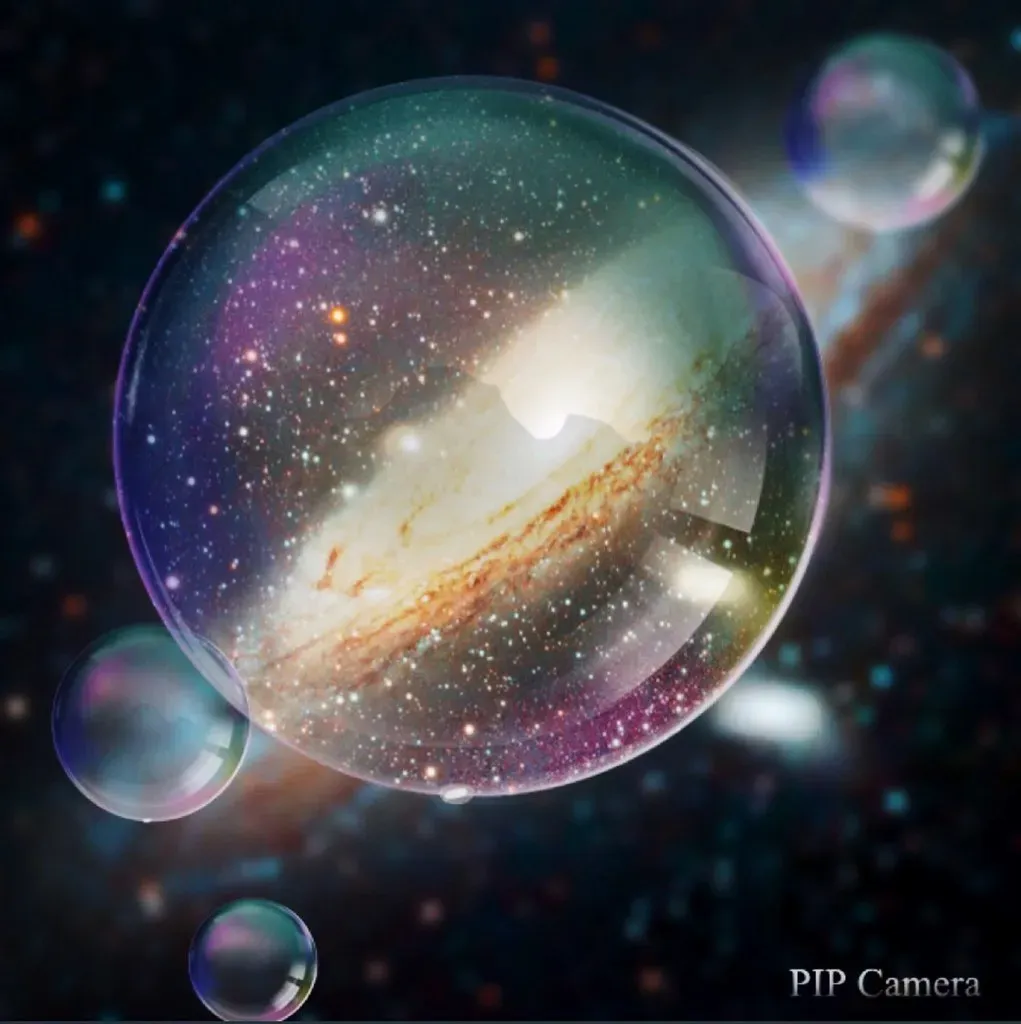
When you examine the numbers that describe your universe – the strengths of forces, the masses of particles, the overall density – they seem oddly well-suited for stars, planets, and life. Small tweaks in many of these values could lead to a sterile cosmos where complex structures never form. Anthropic reasoning offers a blunt explanation: you see a life-friendly universe because only in such a universe can observers like you exist to ask the question in the first place.
If you combine this with multiverse ideas, you get a strange kind of cosmic selection effect. In this larger picture, countless universes might exist with different settings, but you inevitably find yourself in one of the rare versions where conditions allow chemistry, biology, and consciousness. To you, it can feel like the universe is fine-tuned on purpose, but anthropic reasoning tells you that this appearance might simply be the result of survivorship bias on the grandest possible scale. You are, in a sense, the biased witness of a lottery that was overwhelmingly stacked against your existence.
10. Cosmic Cycles: A Universe That Dies and Reboots
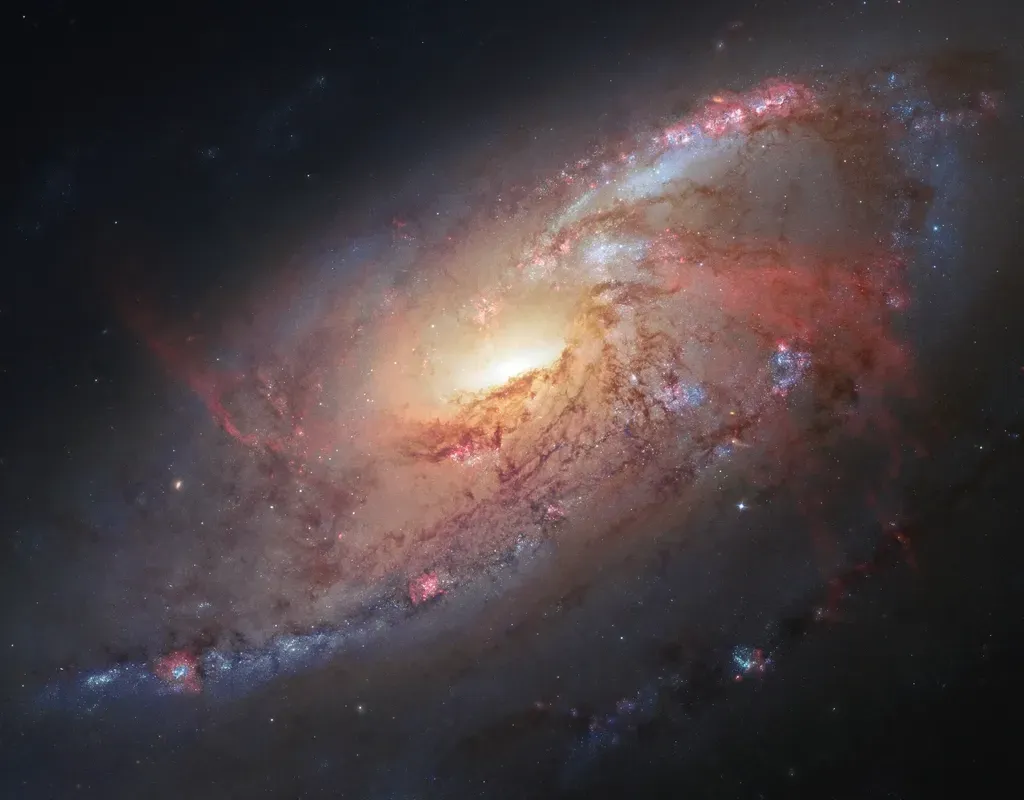
You might have grown up with the idea that the universe started with a single Big Bang and has been expanding ever since. Some cyclic models suggest a more dramatic story, where your universe is just one episode in an endless sequence of births, expansions, contractions, or phase changes. In certain scenarios, the Big Bang could be more like a bounce, where a previous universe collapsed, reached extreme conditions, and then rebounded into the one you inhabit now.
From your point of view, this transforms the universe from a one-shot event into something more like a heartbeat or a breathing rhythm on cosmic scales. Instead of a simple beginning-and-end narrative, reality might have no true start, just repeating or evolving cycles that span unimaginable spans of time. You may never see a full cycle, of course, but the idea that the cosmos could renew itself over and over again adds a strangely hopeful note to an otherwise cold and indifferent universe, hinting that endings might secretly be transitions.
Conclusion: Living in a Universe Stranger Than You Can Easily Believe
When you step back from all these theories, one thing becomes clear: the universe is far less straightforward than your everyday senses suggest. Whether reality is holographic, simulated, part of a multiverse, built from quantum loops, or woven from pure information, each idea pushes you to loosen your grip on familiar concepts like space, time, and even self. You are not just living in a big empty room with some stars; you are floating inside a mystery where the rules themselves might be emergent and where your intuition is often a poor guide.
At the same time, you do not need to solve these puzzles to let them change you. Simply knowing that serious, careful thinkers are entertaining such wild possibilities is a good reminder to stay humble about what you “know” and curious about what you might still learn. The next time you look up at the night sky, you might feel less like you are gazing at a quiet ceiling and more like you are peeking through a crack in the set of a far grander play. Which of these possibilities feels closest to the way you secretly imagine the universe really is?