
If you think the world around you is solid, predictable, and mostly understood, quantum physics is here to quietly laugh at that idea. At the smallest scales of reality, the universe behaves in ways that feel closer to a magic trick than to everyday common sense, and yet these strange rules are the very foundation of everything you see, touch, and experience.
As you walk through your day, you probably do not think about particles popping in and out of existence, or about your decisions influencing the past. But when you peek into the quantum world, you start to realize that your normal intuition is just a comforting story, not the full picture. Once you see how weird reality gets underneath the surface, it is hard to look at anything the same way again.
1. Particles Can Be In Two Places At Once (Superposition)

You have probably grown up with the idea that things are either here or there, not both at the same time. In quantum physics, a tiny particle like an electron is described by a wave that can spread out over space, meaning it can genuinely exist in a superposition of different locations or states at once. You only see a definite result when you measure it, as if reality waits for you to look before picking a single outcome.
You can think of it like being asked to imagine you are both at home and at work at the same time until someone checks where you actually are. Until that check happens, quantum theory tells you to treat the particle as occupying every possibility encoded in its wave. This is not just a philosophical idea; experiments with electrons, photons, and even larger molecules have repeatedly shown that superposition is a real, measurable feature of nature.
2. Your Measurement Changes Reality (Observer Effect)
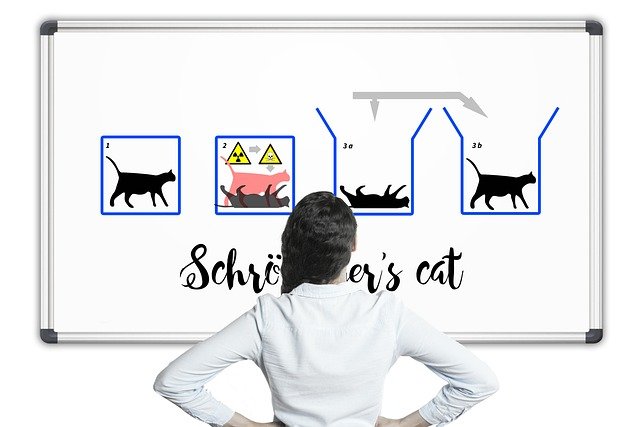
In everyday life, you are used to observing things without changing them in any noticeable way, like looking at a tree without disturbing it. In the quantum world, the very act of measuring a particle unavoidably disturbs it, forcing it to “choose” one of the options it held in superposition. When you measure position, you destroy information about momentum; when you measure one property sharply, you blur others.
You can picture this like trying to check the pressure in a delicate balloon with a heavy-handed squeeze: the act of checking changes the very thing you are trying to measure. In quantum experiments, your measurement setup does not just passively reveal some pre-existing value; it takes part in creating the outcome you see. That means you can no longer pretend you are a detached observer standing outside reality – on the quantum scale, you are always part of the story.
3. Entangled Particles Behave Like A Single Object Across Space
Imagine you and a friend are holding a pair of coins that were created together in a mysterious way, such that when you flip yours, you instantly know what your friend’s coin will show, no matter how far away they are. Quantum entanglement is like that, but much deeper: two or more particles can become linked so that their properties are correlated beyond what any classical explanation can account for. When you measure one particle, the result for the other is fixed immediately, even if it is on the other side of the galaxy.
You might be tempted to think of hidden messages zipping between them faster than light, but experiments have strongly suggested that no such ordinary signal is being sent. Instead, you are forced to accept that the entangled system behaves as a single, non-separable whole, and that space between them does not work the way your everyday intuition says it should. When you look at one, you are not just learning about it; you are, in a sense, revealing a shared reality that spans the distance.
4. Reality Is Probabilistic, Not Deterministic

Classical physics gives you a comforting picture: if you know enough about how things started, you can in principle predict exactly how they will evolve. Quantum physics tears that comfort away and tells you that, even with perfect knowledge of the wave describing a particle, you can only predict the probabilities of different outcomes. When you measure, you do not uncover a hidden, fixed answer; you get one result randomly selected according to those probabilities.
This does not mean anything goes or that “mind over matter” decides results; the probabilities are calculated precisely and tested relentlessly in labs. But it does mean that, at the deepest known level, nature appears to leave room for genuine randomness. When you roll a quantum “dice,” the odds are not a reflection of ignorance or hidden information you have not found – they seem to be woven into the fabric of events themselves.
5. The Famous Double-Slit Experiment Defies Common Sense
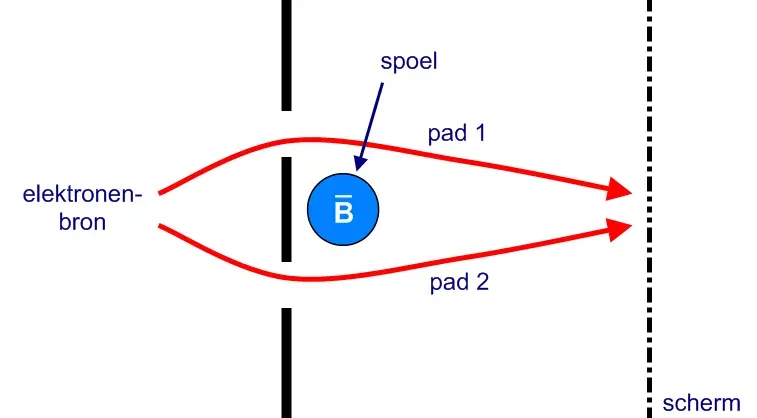
If you fire tiny particles like electrons or photons through two narrow slits toward a screen, you might expect them to form two bright bands, like small bullets going through two doorways. Instead, when you let them build up one by one, you see an interference pattern of many bright and dark fringes, the hallmark of waves. Each single particle behaves as if it somehow went through both slits at once and interfered with itself.
When you try to “catch” which slit it goes through by adding a detector at the slits, the interference pattern disappears, and you get the simple two-band pattern you expected all along. By asking a different question, you change the behavior you see, as though the particle “chooses” between being wave-like or particle-like depending on how you measure it. You are left with a strange lesson: even a single quantum object does not have a simple path in space until you force it to reveal one.
6. Virtual Particles Constantly Flicker In And Out Of Existence

You might imagine empty space as truly empty, but quantum field theory paints a different picture. According to it, what you call vacuum is more like a restless sea where fields are never perfectly quiet; instead, they fluctuate constantly. Out of these fluctuations, pairs of so-called virtual particles can briefly appear and then annihilate again so quickly that you cannot observe them directly as real particles.
Even though you cannot see these virtual particles in isolation, you do see their effects. They subtly shift the energy levels of atoms, alter the strength of forces, and even contribute to the pressure on metal plates placed very close together in a vacuum. In other words, when you look at an “empty” region of space, you are actually looking at a bubbling quantum stew whose effects quietly shape the behavior of matter and light.
7. Quantum Tunneling Lets Particles Pass Through Barriers
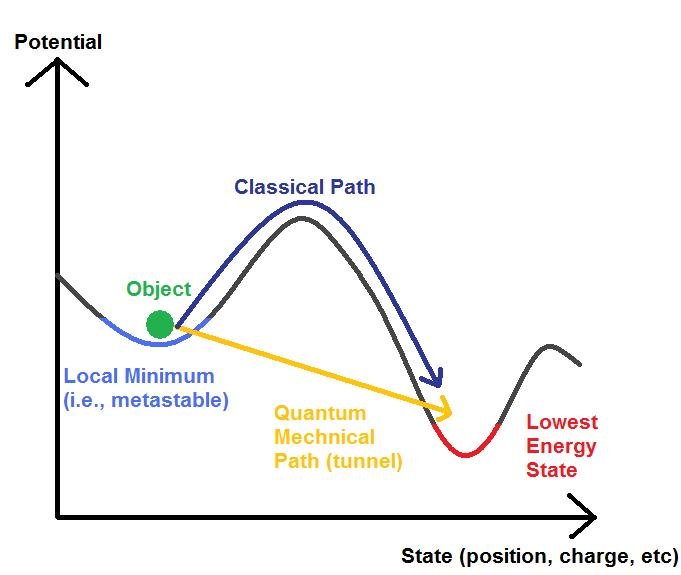
In everyday life, if you do not have enough energy to climb a hill, you simply cannot get to the other side. In the quantum world, a particle facing an energy barrier that is higher than its energy sometimes still appears on the far side, as if it has magically slipped through. This is called quantum tunneling, and it arises from the fact that the particle is described by a spread-out wave that can extend into and beyond the barrier.
You might think of it like a ghost that has a small chance of ending up beyond a locked door even though it never had the key. This is not just a theoretical quirk; many real devices rely on tunneling, from certain types of microscopes that let you image individual atoms to components in electronic circuits. Even in stars, nuclear fusion in their cores is helped by tunneling, allowing particles to join together at temperatures that would not be sufficient in a purely classical picture.
8. Quantum Physics Makes Modern Technology Possible
It is tempting to treat quantum physics as a collection of odd ideas that only matter to theorists, but your everyday life is already drenched in quantum effects. The behavior of electrons in solids, which underpins semiconductors, only makes sense using quantum rules. Without that understanding, you would not have modern computers, smartphones, or the internet as you know it.
When you use technologies like lasers, medical imaging scanners, and some types of sensors, you are directly benefitting from the strange properties of photons and atoms. Even the GPS signals helping you navigate rely on extremely precise atomic clocks, which are designed and understood with quantum principles. So every time you swipe, tap, or stream, you are quietly leaning on a set of rules that defy your everyday intuition but work with stunning reliability.
9. Quantum Computers Use Qubits That Can Hold Many Possibilities At Once
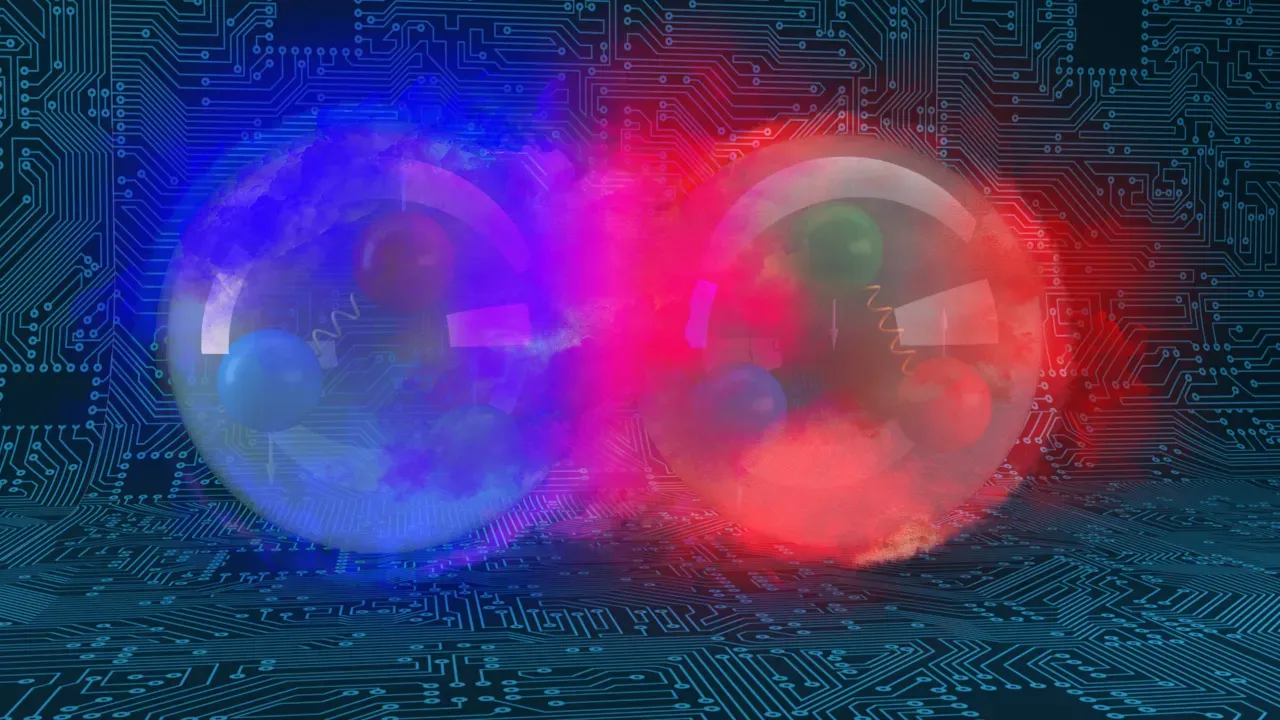
In a regular computer, you work with bits that can be either zero or one, and all computation is built from switching and combining these definite states. In a quantum computer, you use qubits, which can exist in superpositions of zero and one at the same time. When you entangle many qubits together, you create a rich structure of correlated possibilities that you can manipulate in ways a classical machine cannot easily mimic.
You are not speeding up every task magically, but for certain types of problems – like factoring large numbers, simulating complex molecules, or optimizing tricky systems – quantum algorithms can offer dramatic advantages. When you run such an algorithm, you are carefully steering patterns of interference between different possible outcomes so that the paths leading to the wrong answers cancel out, while the paths to the right answer reinforce. It is like exploring a massive maze, not by trying each corridor one by one, but by letting quantum superpositions sample many paths at once and then amplifying the route that leads to the exit.
10. Space, Time, And “Reality” Might Be Emergent, Not Fundamental
As you follow quantum physics deeper, you start to run into an unsettling possibility: what you think of as solid, continuous space and flowing time might not be the ultimate building blocks of reality. Some modern approaches suggest that information, quantum entanglement, or abstract mathematical structures could be more fundamental. In these views, space and time might emerge from the way quantum degrees of freedom are entangled with each other, much like a smooth image emerging from many tiny pixels.
This does not mean you can ignore space and time in your daily life; they remain excellent descriptions at human scales. But it does mean that, when you push physics to its extremes – near black holes, at the beginning of the universe, or at unimaginably small distances – the familiar stage on which events unfold might itself be a kind of approximation. You are left with a humbling thought: the reality you move through each day could be more like a high-level interface, while the true machinery underneath is written in a language your senses were never built to read.
Conclusion: Living With A Stranger Universe
When you put all these quantum facts side by side, you are staring at a universe that is far stranger than the one your everyday experience suggests. Particles can be in many states at once, your measurements help shape outcomes, distant objects can behave like a single whole, and even empty space seethes with activity. Yet despite all this weirdness, the equations of quantum theory have passed every experimental test with an accuracy that is almost unnerving.
You might never need to calculate a wavefunction or align a particle detector, but understanding that the world beneath your feet “plays by” these rules changes how you see everything. Instead of a rigid, clockwork universe, you find one that is probabilistic, relational, and deeply interconnected. Knowing that your seemingly solid reality sits on top of such a bizarre foundation, how could you not look around with a little more curiosity and wonder the next time you flip on a light or unlock your phone – did you ever imagine so much strangeness was hiding in plain sight?