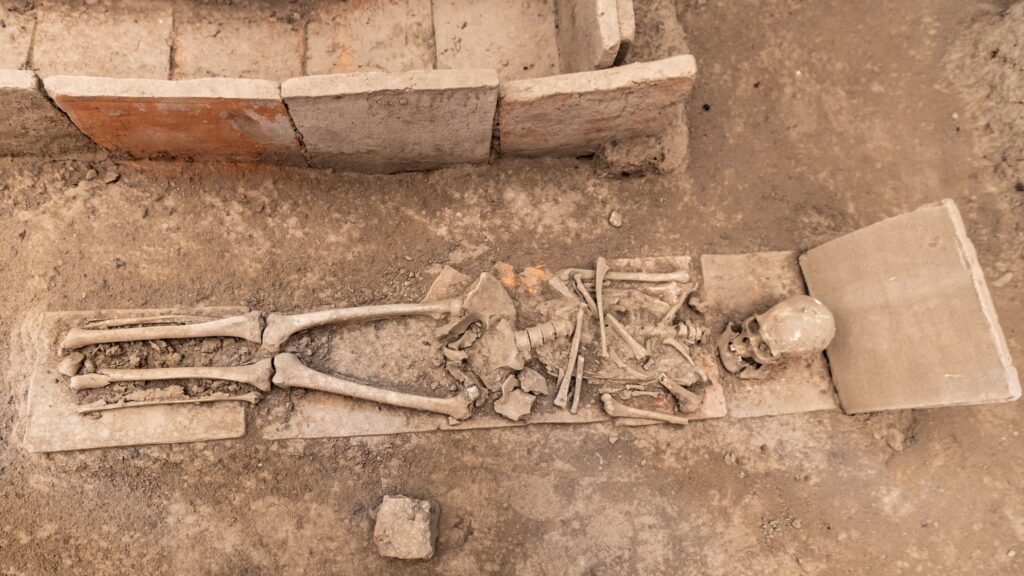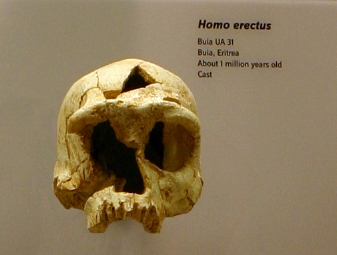
Most people assume everything we learned about human origins in the twentieth century got quietly demolished by DNA labs and dramatic new fossil digs. Headlines love a shake-up: a new skull, a “hidden branch,” a rewritten timeline, a headline that screams everything you knew was wrong. But strip away the clickbait, and a surprising number of the oldest ideas in paleoanthropology have survived every new tool science has thrown at them.
Some of these ideas go back to 1871, when Charles Darwin made a guess with no fossils to back it up, and decades of DNA sequencing, isotope analysis, and fresh digs have only made him look more right. Here’s what actually held up when researchers checked the receipts, and why a few of the “boring” old theories turned out to be some of the toughest science ever wrote.
#1 – Africa Is Still Ground Zero for Everyone Alive Today
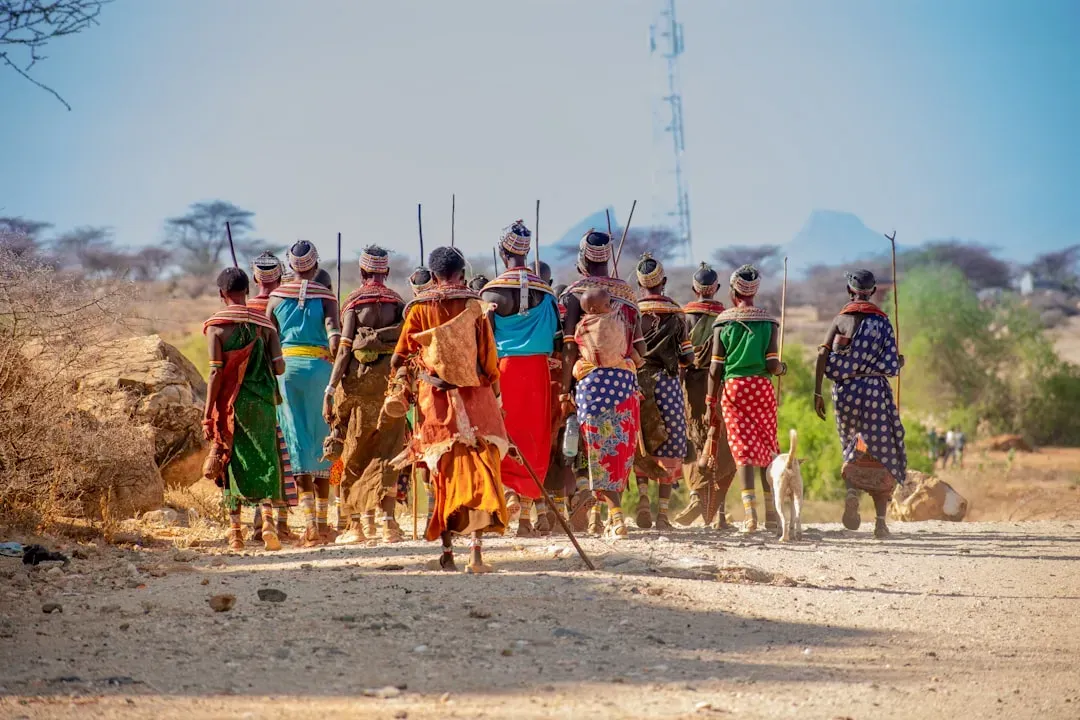
Every human on Earth traces their ancestry back to Africa, and that single fact has outlasted a century of attempts to disprove it.
Darwin guessed it in 1871 based on nothing more than the fact that gorillas and chimps, our closest living relatives, live there. He had no fossils to back it up.
It is therefore probable that Africa was formerly inhabited by extinct apes closely allied to the gorilla and chimpanzee; and as these two species are now man’s nearest allies, it is somewhat more probable that our early progenitors lived on the African continent than elsewhere.
Charles Darwin, The Descent of Man, 1871
Decades later, genetics did the job fossils couldn’t, confirming that modern human genetic diversity is deepest and oldest on the African continent, exactly what you’d expect if that’s where the species began.
Newer genome projects have only sharpened the picture rather than overturning it. Researchers have found that Africa alone holds more human genetic variation than the rest of the world combined, a detail that keeps surfacing in study after study. Multi-regional theories that once argued modern humans evolved separately on different continents have been quietly abandoned as the DNA evidence piled up against them.
Fast Facts
- The oldest widely accepted Homo sapiens fossils, found at Jebel Irhoud in Morocco, date back roughly 300,000 years.
- Large-scale migrations out of Africa are generally dated to somewhere around 60,000 to 70,000 years ago.
- Some African populations, including certain San and Khoisan groups, represent among the deepest and oldest branches in the entire human family tree.
- No other continent comes close to matching Africa’s internal genetic diversity, even though it holds a smaller share of the world’s total population.
That doesn’t mean the African story is simple. New teeth, jaws, and partial skulls keep complicating exactly which population, which valley, which lake bed served as the true starting point. But the core claim, that our species is African by birth, has never seriously wobbled.
#2 – Walking Came Long Before Big Brains
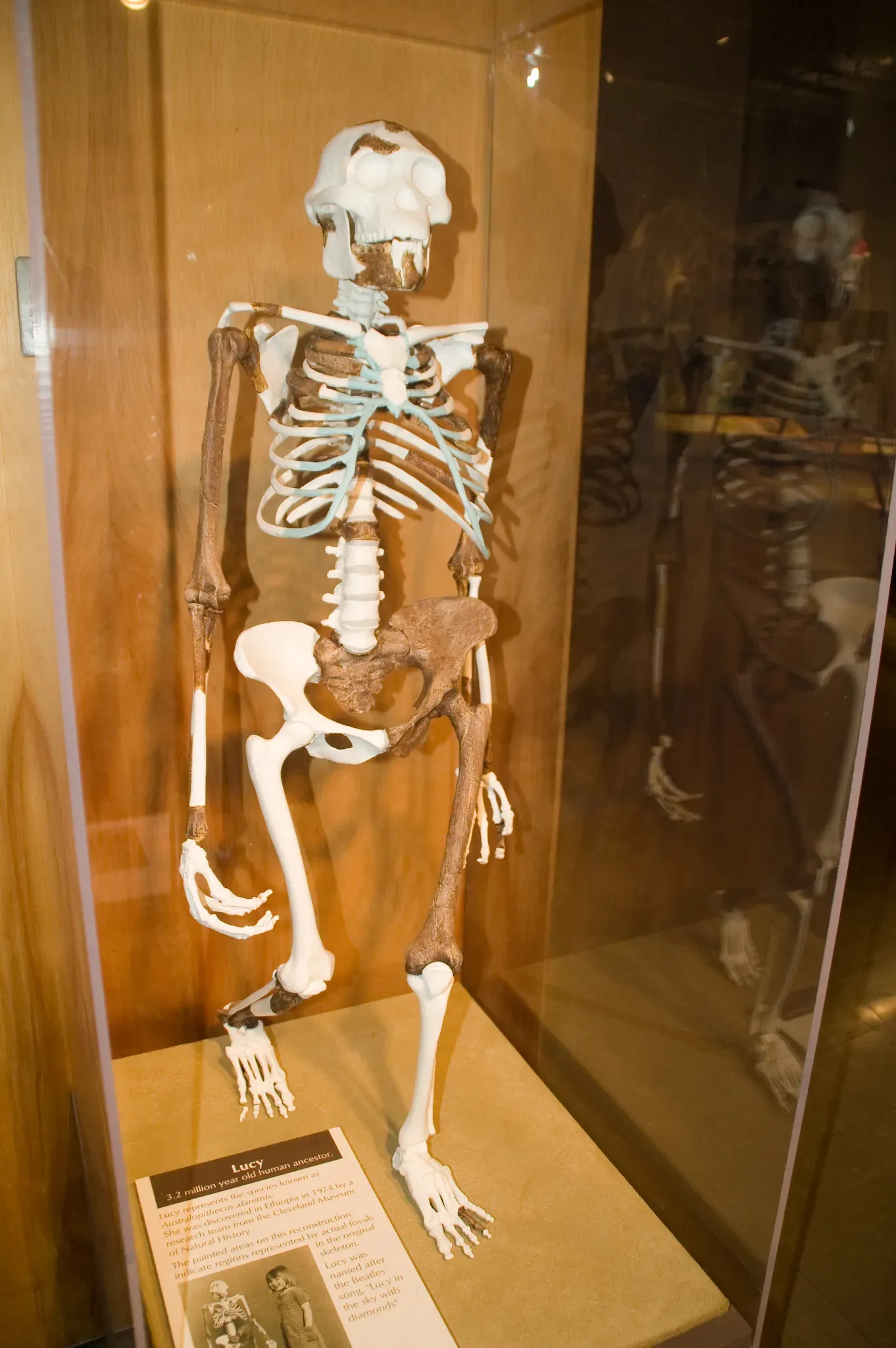
For over a century, scientists assumed a bigger brain must have come first, driving our ancestors to stand up and free their hands. They were wrong.
Fossil hunters kept finding creatures with tiny, ape-sized skulls who were already walking upright on two legs. Lucy, the famous 3.2-million-year-old Australopithecus afarensis skeleton found in 1974, had a brain barely a third the size of a modern human’s, yet her hip and knee anatomy show she walked bipedally, not knuckle-walking like a chimpanzee.
The brain didn’t get big until millions of years after our ancestors were already standing tall.
This reversed a huge assumption baked into early twentieth-century textbooks, and it has held up remarkably well since. Newer finds, including partial skeletons from Ardipithecus dated even earlier, keep pushing bipedalism further back in time while brain size stays stubbornly primate-sized for millions of years afterward.
Some researchers now argue this makes the old “big brain first” cartoon version of evolution one of the most embarrassing wrong turns in the field’s history, and honestly, they’ve got a point.
#3 – We Really Do Share a Grandparent With Chimpanzees
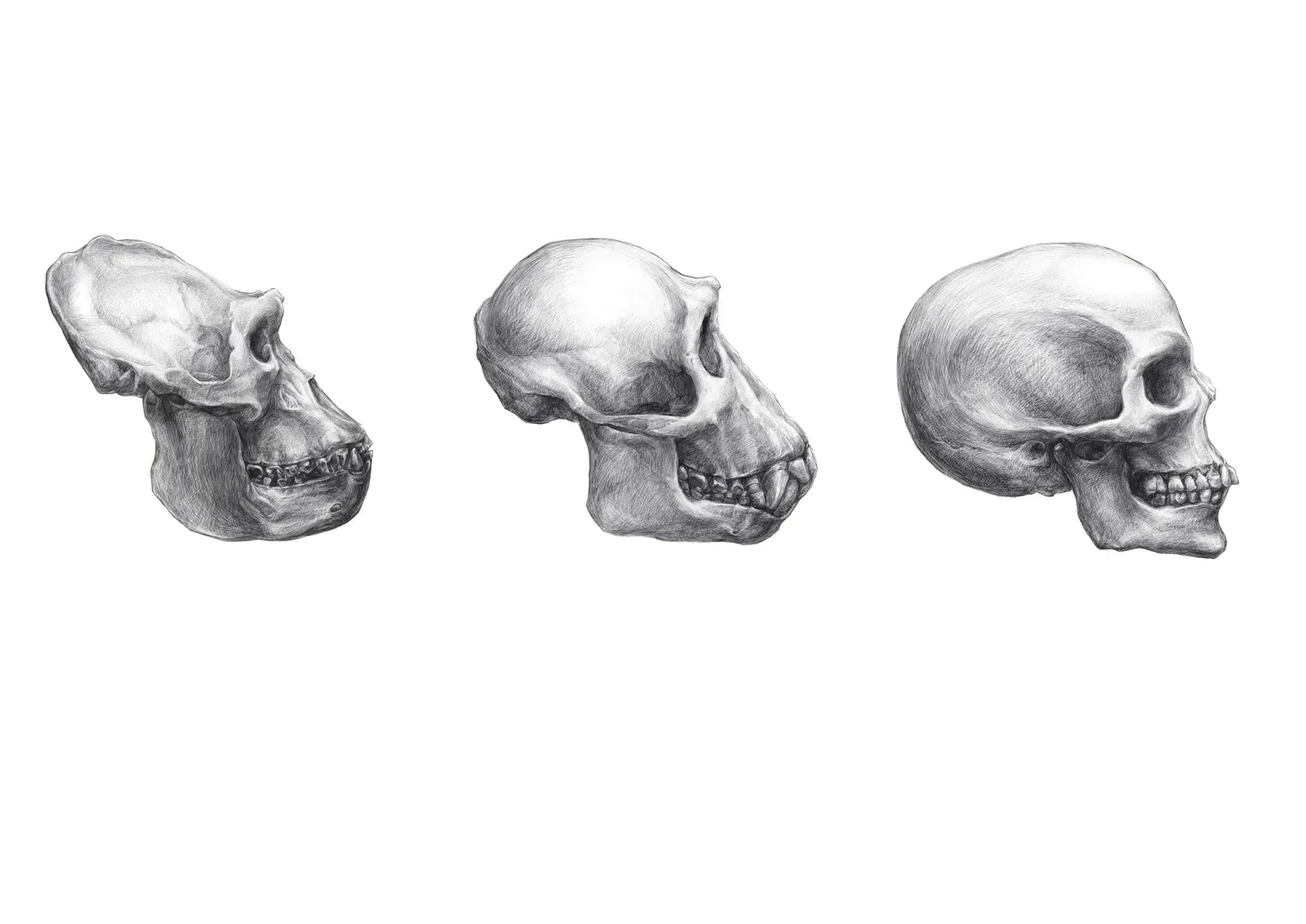
The idea that humans and chimpanzees split from a shared ancestor roughly six to eight million years ago has taken more scientific beatings than almost any other claim in biology, and it’s still standing.
Early molecular clock studies in the 1960s shocked researchers by suggesting humans and chimps diverged far more recently than fossil-based estimates implied at the time. Skeptics dismissed it.
Then genome sequencing arrived and confirmed humans and chimpanzees share around 98 to 99 percent of their DNA, a similarity so extreme it forced a generation of scientists to eat their words.
Fossil candidates for the actual common ancestor, or creatures close to it, keep surfacing in East and Central Africa, adding detail without changing the basic timeline much. The split window has narrowed slightly with better dating techniques, but it hasn’t been blown up or reversed.
What’s controversial isn’t the science, it’s the discomfort some people still feel about it. Plenty of museum visitors still bristle at the idea that a chimpanzee is, genetically speaking, closer to a human than a chimpanzee is to a gorilla. The data doesn’t care how anyone feels about it.
#4 – Neanderthals Weren’t a Dead End, They’re in Your DNA
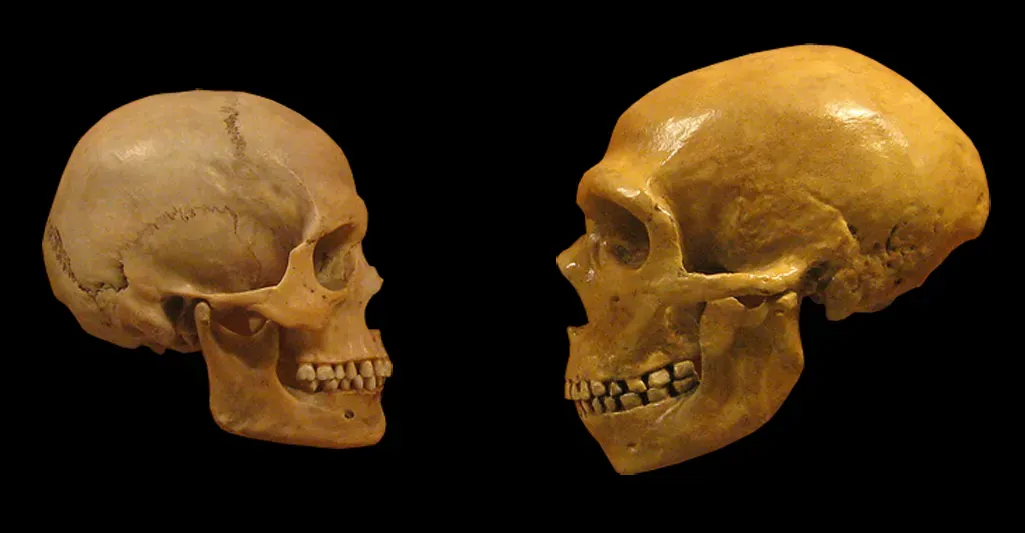
For most of the twentieth century, Neanderthals were treated as an evolutionary failure, a brutish side branch that went extinct because modern humans simply outcompeted them. That story is only half true.
The idea that Neanderthals contributed genes to living humans was floated decades before anyone could prove it, based purely on skeletal similarities and overlapping timelines in Europe and the Middle East. It sounded like fringe speculation.
Then ancient DNA sequencing confirmed it outright: most people with non-African ancestry carry roughly 1 to 2 percent Neanderthal DNA. That “extinct” species never really left; it just got absorbed.
This finding has aged well precisely because every new genome sequenced adds more detail rather than undermining the basic claim. Scientists have even started identifying which Neanderthal genes affect modern immune responses, skin, and hair.
What’s shifted is the tone. Recent coverage has pushed back on breathless framing of ancient “romance” between the species, noting that claims that Neanderthal men “preferred” Homo sapiens women make for catchy headlines, but the underlying research does not actually show prehistoric romance. The interbreeding is real. The soap opera version isn’t.
#5 – Stone Tools Are Older Than the Genus Homo Itself
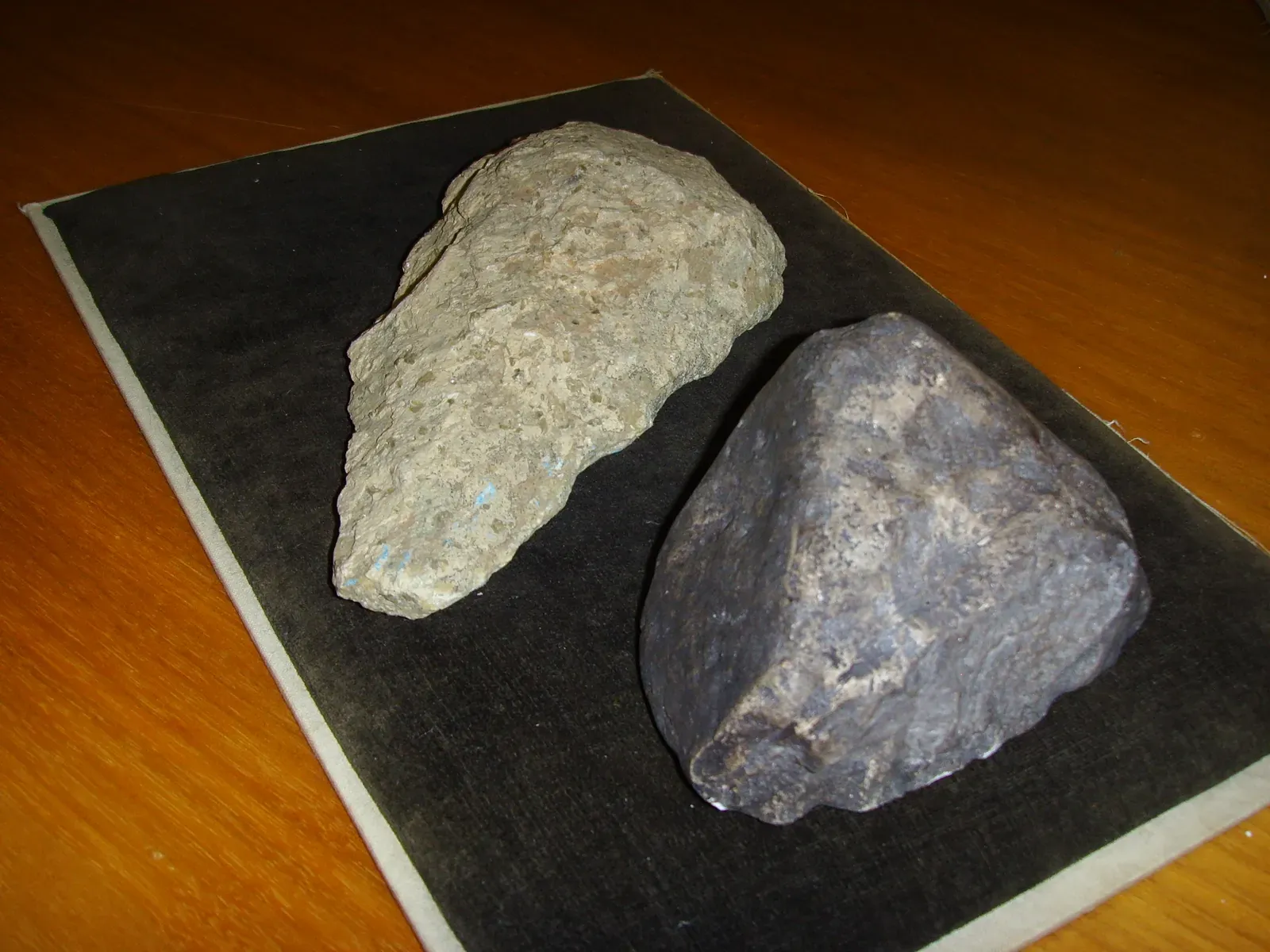
The assumption that tool-making required a “real” human brain, meaning a brain from our own genus, has been quietly falling apart, and the oldest version of that idea is actually being vindicated in reverse.
Researchers long assumed sophisticated stone tools appeared alongside the first members of Homo, essentially defining what counted as “human” behavior. Oldowan tools dated to roughly 2.6 million years old were originally credited to early Homo.
But newer analysis of hand anatomy in Paranthropus boisei, a heavy-jawed relative outside our direct lineage, suggests that species may have had the manual dexterity to make and use stone tools too, a finding that builds on other recent evidence.
This matters because it confirms an older, less popular hypothesis: tool use wasn’t a magic switch flipped only in our own genus. It was a capability shared more broadly across the hominin family tree, exactly as some outlier researchers argued decades ago before it was fashionable.
Anthropologists who clung to “only real humans make tools” as a species boundary are being proven wrong, and it’s worth saying plainly: that assumption was more about ego than evidence.
#6 – The Human Brain Really Did Triple in Size
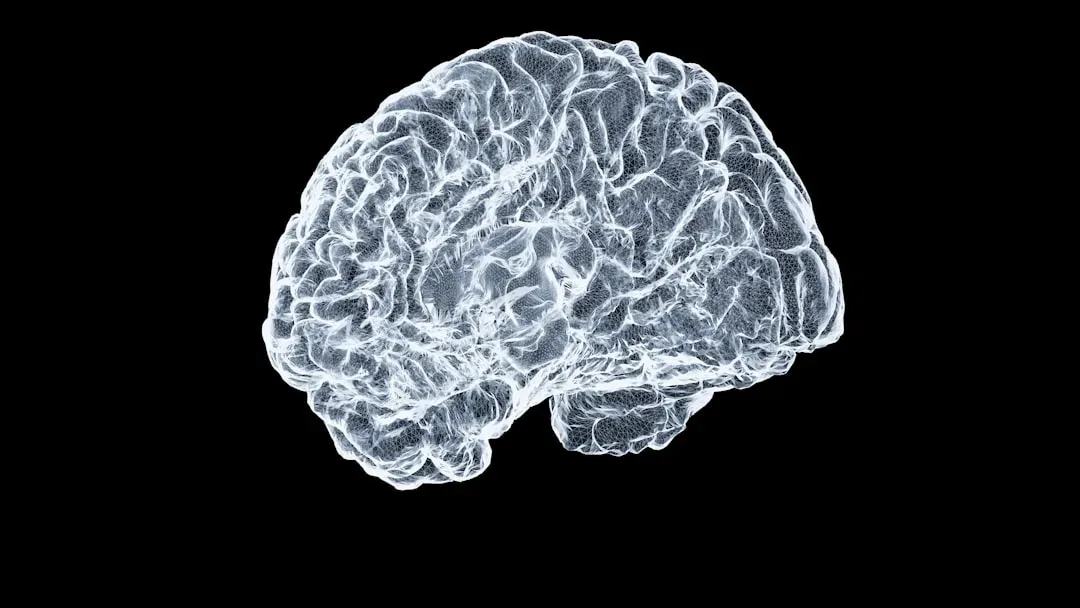
Long before genetics existed as a field, fossil hunters noticed a pattern: skull capacity kept climbing as you moved up through the hominin timeline. That basic trend line has never been seriously disputed.
Early Australopithecus skulls hold roughly 400 to 500 cubic centimeters of brain volume, not far off a modern chimpanzee. By the time Homo erectus appears around 1.8 million years ago, that number climbs toward 900 to 1,100 cubic centimeters. Modern humans average around 1,350 cubic centimeters.
At a Glance
- Australopithecus (roughly 3 to 4 million years ago): about 400 to 500 cubic centimeters
- Homo habilis (roughly 2 million years ago): about 600 to 650 cubic centimeters
- Homo erectus (roughly 1.8 million years ago): about 900 to 1,100 cubic centimeters
- Homo sapiens (today): about 1,350 cubic centimeters on average
That’s nearly a tripling of brain size over a few million years, and it remains one of the most consistent measurements in the entire fossil record.
New discoveries keep adding wrinkles to the story rather than erasing the trend. A newly reconstructed 1.5-million-year-old Homo erectus face out of Ethiopia recently showed an unexpectedly primitive appearance, where the braincase fits with classic Homo erectus, but the face and teeth resemble much older human ancestors. That’s a mosaic detail, not a contradiction of the overall growth curve.
The controversial part isn’t whether brains grew, it’s why. Diet, social complexity, cooking, and childhood length have all been proposed, and researchers still argue fiercely about which factor mattered most.
#7 – Multiple Human Species Really Did Share the Planet
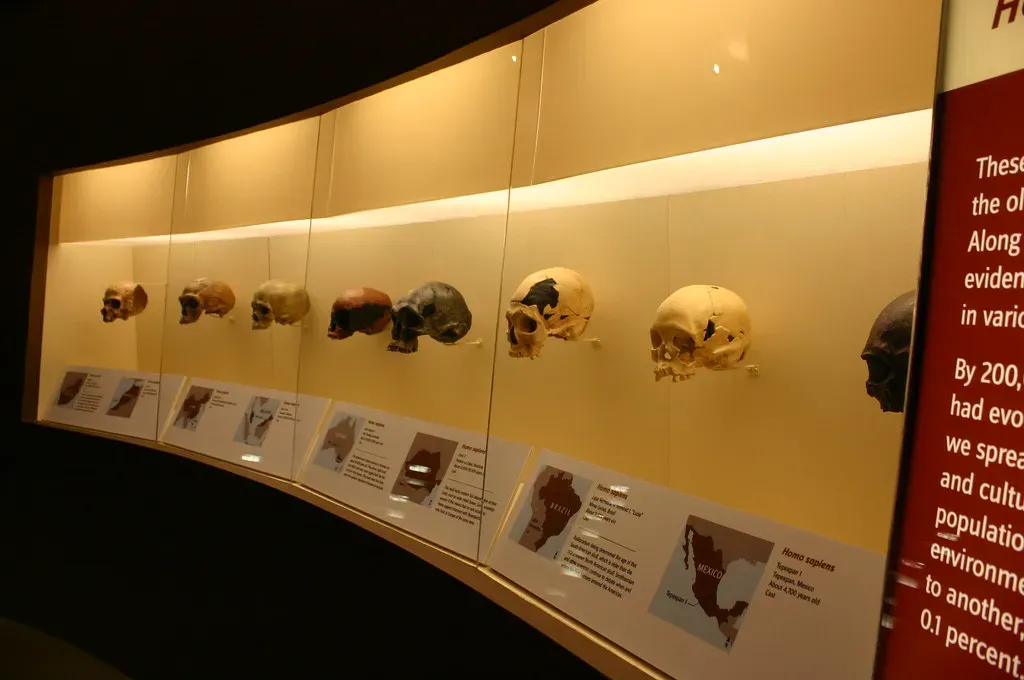
The old “March of Progress” poster, the one showing a single tidy line from ape to caveman to modern man, was scientifically dead on arrival, and researchers have known it for longer than most people realize.
Paleontologists in the mid-twentieth century already suspected multiple hominin species coexisted rather than replacing each other in a clean sequence. That idea has only gotten stronger. Recent fossil finds in Ethiopia confirmed early Homo specimens living alongside a previously unknown Australopithecus species roughly 2.8 million years ago, and researchers now describe human evolution as a tangled, branching tree with multiple species coexisting rather than a straight line.
There are now 21 recognized species of ancient human relative, a number that keeps climbing as new fossils get named. Species like Homo longi were only formally identified as recently as 2018, decades after the “bushy tree” hypothesis was first proposed by researchers frustrated with the linear cartoon version.
Worth Knowing
- Homo naledi, found deep in a South African cave system in 2013, had a brain roughly the size of an orange yet may have deliberately placed its dead in hard-to-reach chambers.
- Homo floresiensis, nicknamed the “hobbit,” stood barely over three feet tall and survived on the Indonesian island of Flores far more recently than most extinct hominins.
- Homo luzonensis was identified from fossils on the Philippine island of Luzon, adding yet another isolated island-dwelling branch to the family tree.
- Denisovans are known almost entirely from DNA and a handful of bone and tooth fragments, no complete skeleton has ever been recovered.
This is one of the clearest cases of an old, unpopular idea getting fully vindicated by modern fossils. The scientists who argued against a single evolutionary ladder decades ago were right all along, and the museum posters owe them an apology.
#8 – Homo Erectus Really Was the First Great Wanderer
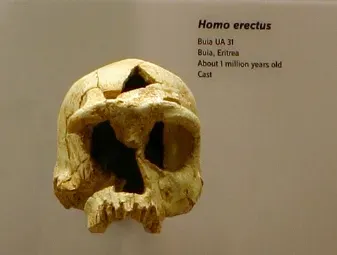
The claim that Homo erectus was the first hominin species to leave Africa and colonize Europe and Asia has survived a full century of fossil hunting, and it keeps getting reinforced rather than replaced.
Fossils found at Dmanisi in the country of Georgia, dated to around 1.8 million years ago, confirmed Homo erectus had already reached the edges of Asia while other hominin species remained confined to Africa. That basic migration timeline, first proposed based on much scrappier fossil evidence decades earlier, has held up as better dating techniques and more complete skeletons emerged.
What keeps changing is the complexity of that journey. Some researchers studying skulls from that same Dmanisi site now argue a second, more primitive hominin may have traveled alongside Homo erectus during that first great exodus out of Africa, which would mean humanity’s first migration wasn’t a solo trip at all.
Whether that second-species claim survives peer scrutiny is still being debated, and skepticism is healthy here. But the foundational claim, that Homo erectus led the charge out of Africa long before modern humans existed, remains one of the sturdiest ideas in the field.
#9 – Meat (or at Least Fat) Really Did Fuel Bigger Brains
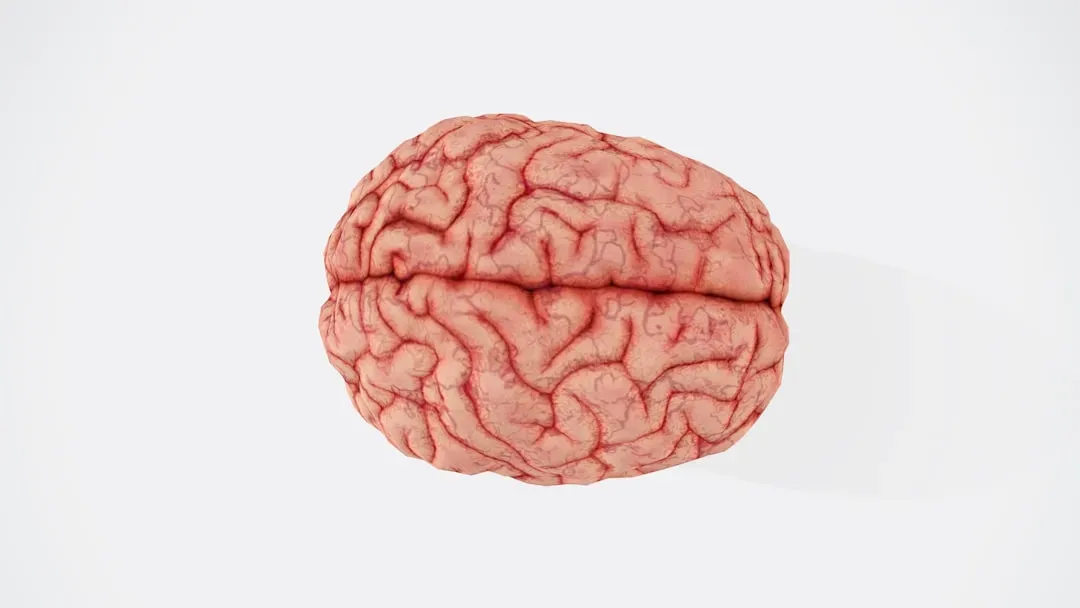
The idea that a dietary shift toward more calorie-dense food helped power the growth of the human brain has been controversial for decades, and it has mostly survived the fight.
Researchers proposed decades ago that brains are metabolically expensive tissue, and that early hominins couldn’t have afforded bigger brains without also finding richer food sources, likely meat, marrow, and fat from scavenged or hunted animals. Isotopic analysis of ancient teeth and butchery marks on animal bones dated to around 2.6 million years ago have repeatedly supported that timeline, lining up closely with the early expansion of brain size in the fossil record.
This is also one of the more genuinely contested ideas on this list. Some anthropologists argue the “meat made us human” narrative has been oversold, pointing out that root vegetables, cooking technology, and social sharing of food may have mattered just as much or more. The popular “paleo diet” movement leans hard on a simplified version of this science that most actual researchers would call misleading.
The core mechanism, richer diets correlating with brain growth, holds up. The idea that this means modern humans should eat like it’s 2.5 million years ago does not.
#10 – Humans Really Are Genetically Boring Compared to Chimps
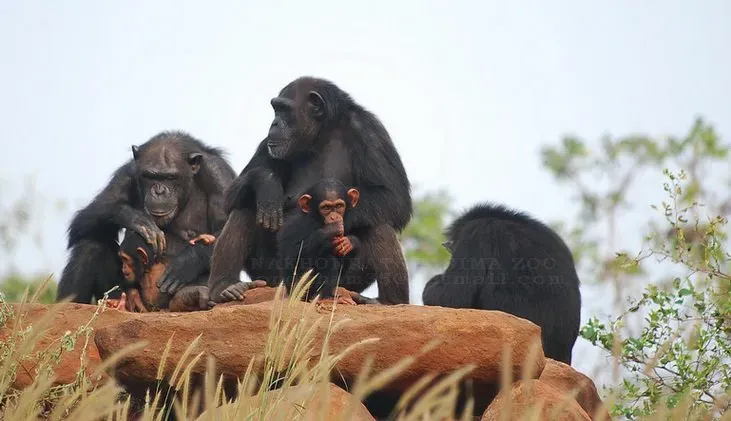
It sounds insulting, but it’s one of the oldest and best-supported findings in human genetics: our species has less genetic diversity than almost any other wild primate population.
Researchers noticed this pattern decades before they fully understood why. Comparing genetic variation across chimpanzee populations in different African regions to genetic variation across all humans worldwide produced a lopsided result: a single group of chimpanzees living in one forest can show more genetic diversity than the entire human species combined.
That’s the signature of a population that nearly didn’t make it.
The leading explanation is a severe genetic bottleneck at some point in human prehistory, a population crash that squeezed our ancestors down to a small breeding group before numbers rebounded. Some researchers have tied the timing loosely to catastrophic events like a supervolcano eruption roughly 74,000 years ago, an event so severe it may have plunged the planet into years of darkened skies and cold.
The bottleneck evidence itself is solid. The exact cause is still argued over, and probably always will be, since a single fossil eruption layer can’t prove what happened to human population numbers thousands of miles away.
#11 – Climate Really Did Shape the Human Body Plan
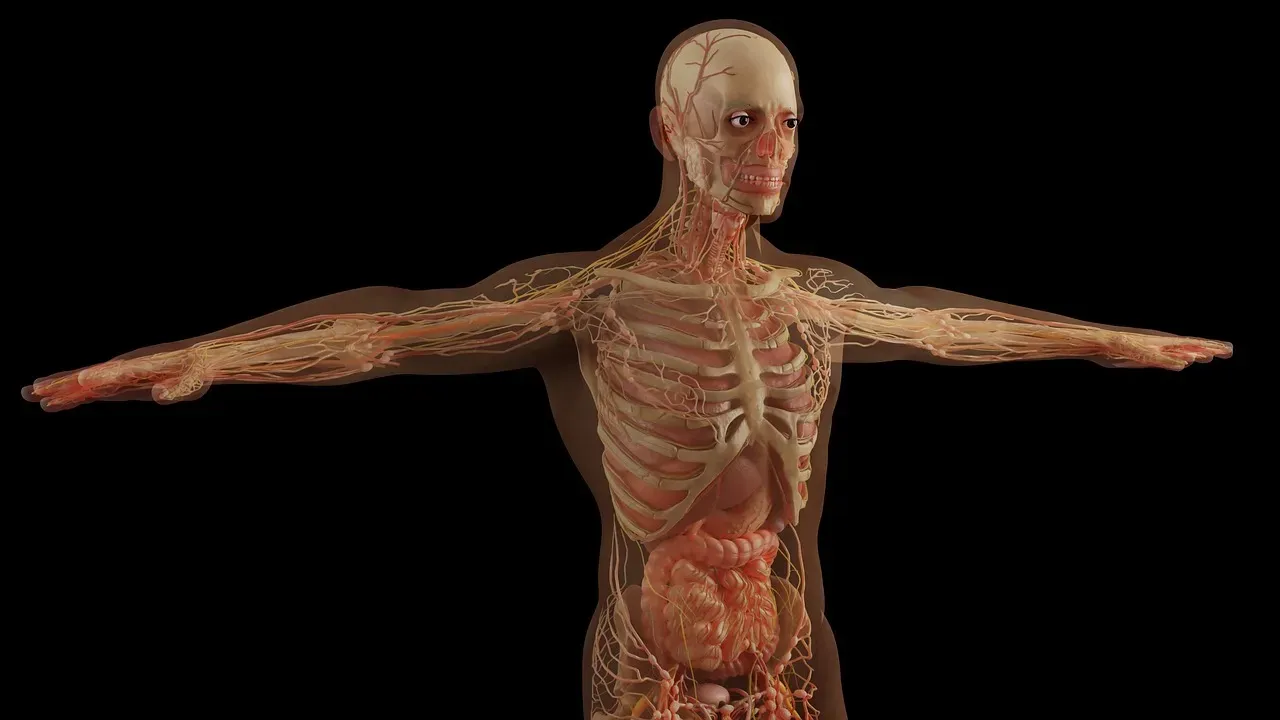
Long before genetics existed, nineteenth-century naturalists proposed a simple ecological rule: animals in cold climates tend to have stockier bodies and shorter limbs to conserve heat, while animals in hot climates tend to be leaner with longer limbs to shed it. That rule applies to humans too, and it has held up remarkably well in the fossil and modern record.
Skeletal measurements across human populations worldwide consistently show this pattern. Populations with deep ancestral roots in colder regions tend to show shorter limb-to-torso ratios, while populations from hot, arid regions tend to show the opposite.
This isn’t a modern discovery, it’s a 150-year-old ecological principle that keeps checking out every time researchers measure a new skeletal sample.
Fossil hominins follow the same logic. Neanderthals, who lived through brutally cold ice age winters in Europe, show notably stockier, more compact builds compared to their contemporaries in warmer regions, exactly what the old climate-adaptation rule would predict.
This is one of the rare ideas on this list that almost nobody argues with anymore, mostly because the pattern shows up so consistently across so many independent skeletal collections that there’s little room left for debate.
#12 – Grandmothers Really Did Change the Course of Evolution

The idea that women living well past their reproductive years gave early human groups a survival edge sounded like a nice sentiment when it was first proposed. It has since become a serious, evidence-backed theory.
Most female primates rarely survive long after they stop reproducing. Humans are a strange exception, often living decades past menopause. Researchers proposed that this extended lifespan wasn’t an accident, it was selected for, because older women who could no longer have children of their own instead helped feed and protect their grandchildren, boosting the survival odds of their genetic line indirectly.
Skeletal evidence backs this up in an unexpected way. Ancient remains show clear signs of individuals surviving serious illness and injury for extended periods, recoveries that would have been impossible without sustained care from others. That trail of compassion and support stretches back roughly 1.5 million years, far earlier than most people assume “caring” behavior existed among our ancestors.
It’s a genuinely warmer story than the old “survival of the fittest, every hominin for themselves” narrative that dominated earlier textbooks, and the evidence for it keeps growing rather than shrinking.
#13 – Handedness Really Is Written Into Deep Time

The overwhelming right-handed bias in modern humans, roughly nine out of ten people, isn’t a cultural quirk. It’s ancient, and the fossil evidence for that claim has held up for decades.
Researchers studying scratch marks on fossil teeth, made when ancient hominins used stone tools to cut meat held between their teeth and hands, have found consistent patterns showing right-hand dominance stretching back well over a million years. This lines up with subtle skeletal differences in arm bone strength between left and right sides in fossil specimens, another old clue that keeps getting confirmed by new specimens.
This matters because handedness is tied to brain lateralization, the specialization of the brain’s two hemispheres for different tasks, including language. Finding consistent right-hand dominance that deep in the fossil record suggests brain lateralization, and possibly early language capacity, developed much earlier than casual assumptions would suggest.
It’s a small, almost trivial-sounding detail, tooth scratches, that turned out to be one of the more reliable windows into cognitive evolution available to researchers.
#14 – Childhood Really Is Evolution’s Secret Weapon

The single strongest, longest-standing idea in human evolution might be the simplest one: humans take far longer to grow up than any other primate, and that slow, expensive childhood is precisely what made bigger brains possible in the first place.
Researchers noticed this pattern before modern genetics even existed. Human children have unusually long periods of dependency, delayed sexual maturity, and extended brain development that continues well into the teenage years. Chimpanzees reach reproductive maturity years earlier than humans do, despite living in similar social groups.
Quick Compare
- Chimpanzee reproductive maturity: reached around age 8 to 10
- Human reproductive maturity: typically reached around age 12 to 16
- Chimpanzee brain growth: largely complete within the first few years of life
- Human brain growth: continues developing into the mid-twenties
This extended childhood isn’t a side effect of big brains, it’s the mechanism that allows them to exist. A longer developmental window gives the human brain more time to wire itself based on experience, language exposure, and social learning, something a faster-maturing brain simply doesn’t have time for. This idea has been tested against fossil growth-ring data preserved in ancient teeth, and the timeline keeps checking out across multiple hominin species.
It also explains something the “meat made us smart” and “walking came first” theories can’t fully account for on their own: why human intelligence is so deeply tied to years of vulnerable, dependent childhood rather than raw brain size alone.
The Bottom Line
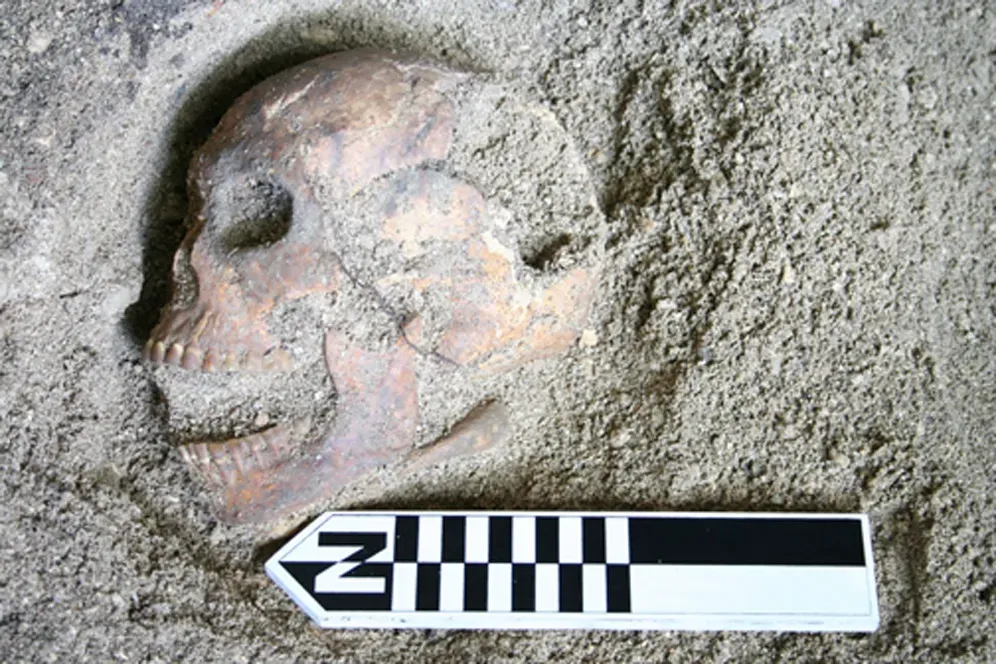
The real story isn’t that old ideas about human origins were wrong, it’s that the loudest ones were. The single-line “march of progress,” the “brains before bipedalism” myth, and the caveman-as-brute stereotype all deserved to die.
But the careful, less flashy ideas, African origins, ancient tool use, deep-time handedness, extended childhood, kept getting confirmed decade after decade.
That’s the uncomfortable truth headlines rarely admit: good science isn’t always overturned. Sometimes it’s just proven right, again and again, by people who did the boring work of checking, measuring, and re-measuring long after the headlines moved on.