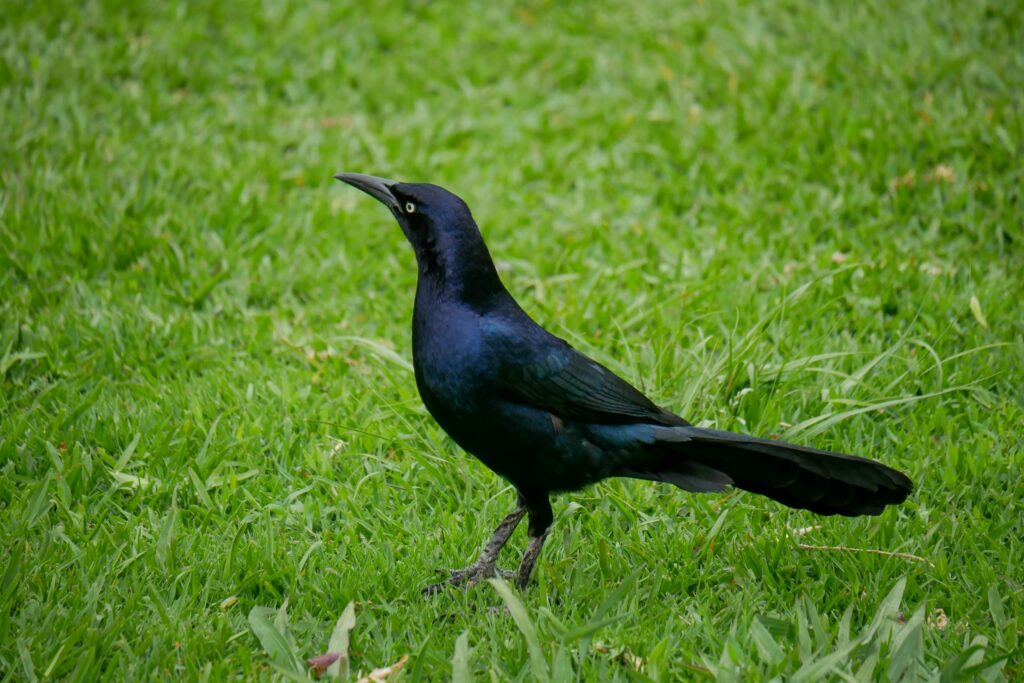
Walk past a noisy flock of grackles in a parking lot or park, and you might notice something strange: several birds suddenly freeze, bodies stiff, bills pointed straight up to the sky like tiny periscopes. It looks a little dramatic, a little eerie, and very intentional. They are not just daydreaming. This posture is part of a complex body-language system that grackles use to navigate status, mating, and safety in a world where every move can change their chances of survival.
Even though grackles are familiar city birds, scientists are still piecing together the full meaning of this behavior. What we do know is that a raised bill is not random; it sits at the center of how grackles talk without sound. Think of it like a loaded facial expression in humans: one small change in posture can say flirtation, threat, or curiosity, depending on the context. Once you know what to look for, your everyday stroll past a grocery store flock becomes a front-row seat to social drama.
A Display of Dominance and Status
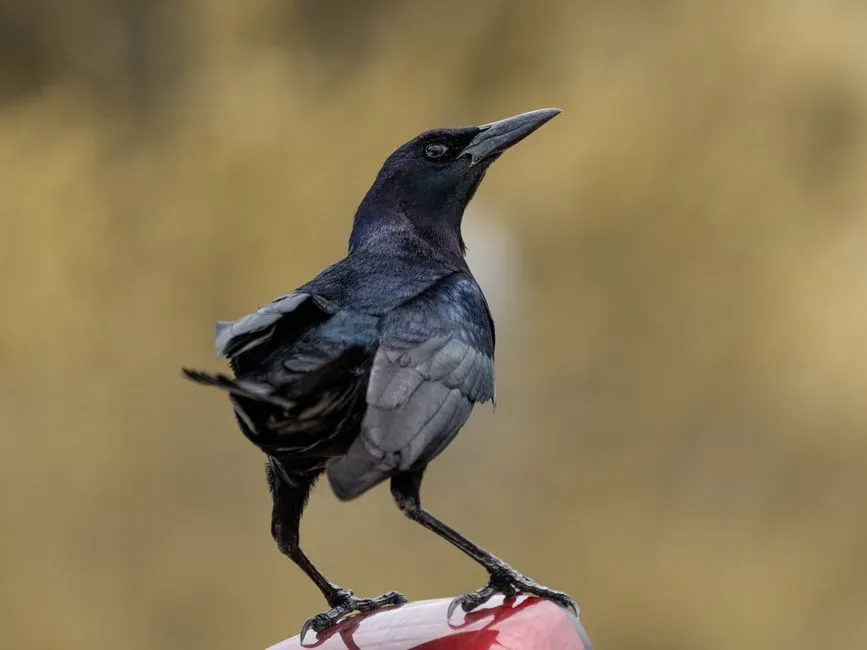
One of the strongest interpretations of bill-pointing in grackles is that it is about status. When a grackle raises its bill, straightens its body, and often fluffs its feathers slightly, it is making itself look taller and more impressive. In the bird world, size often signals power, even if that size is mostly illusion created by posture. A bird that claims space with this upright pose can be saying something like, “I am not backing down” to nearby rivals.
This is especially noticeable when several males are close together around food or a prime perch. They are not just eating; they are negotiating rank. You can almost feel the tension as a dominant bird locks into that sky-pointing stance and the others decide whether to hold their ground or quietly step aside. It reminds me of how people sometimes straighten their backs and lift their chins in a heated conversation, without saying a single extra word.
Mating Rituals and Courtship Drama
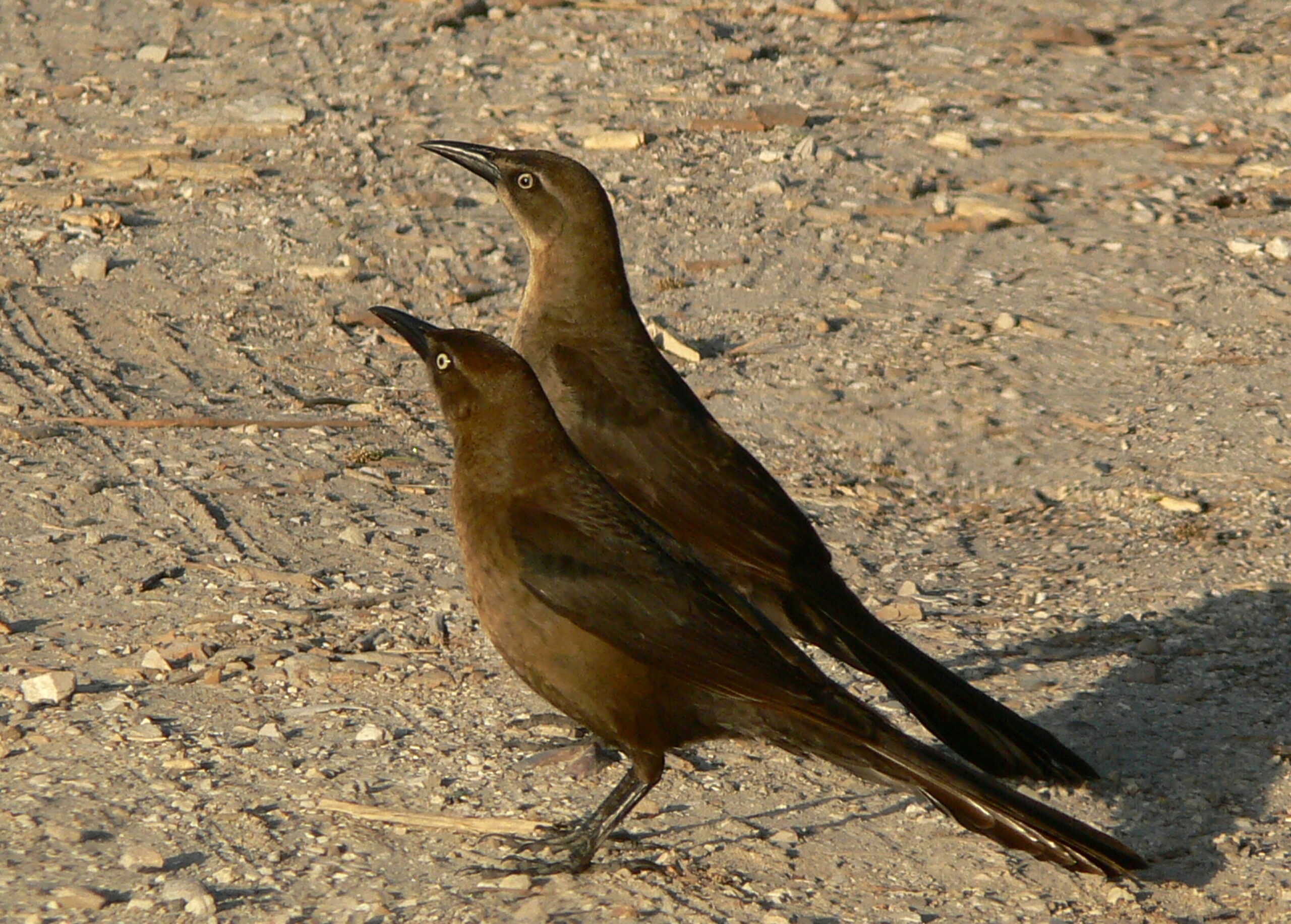
During the breeding season, bill-pointing often becomes part of a showy courtship performance. Male grackles, with their iridescent blue-black feathers, do not simply sing and hope for the best. They combine calls, wing positions, tail fanning, and that distinctive upright bill posture into a kind of choreographed display aimed at nearby females. The raised bill helps highlight their glossy plumage and intense eye contact, turning the bird into a moving spotlight of “look at me.”
What is fascinating is that this pose can blur the line between aggression and attraction. The same stiff, upright bill that intimidates rivals can appear impressive and bold to potential mates. Evolution often works exactly like this: a single signal gets reused and refined for multiple purposes, depending on who is watching. From a human perspective, it is not that different from someone showing off at a party, trying to signal confidence to a crush while simultaneously warning other suitors to back off.
Coordinated Group Vigilance and Predator Awareness
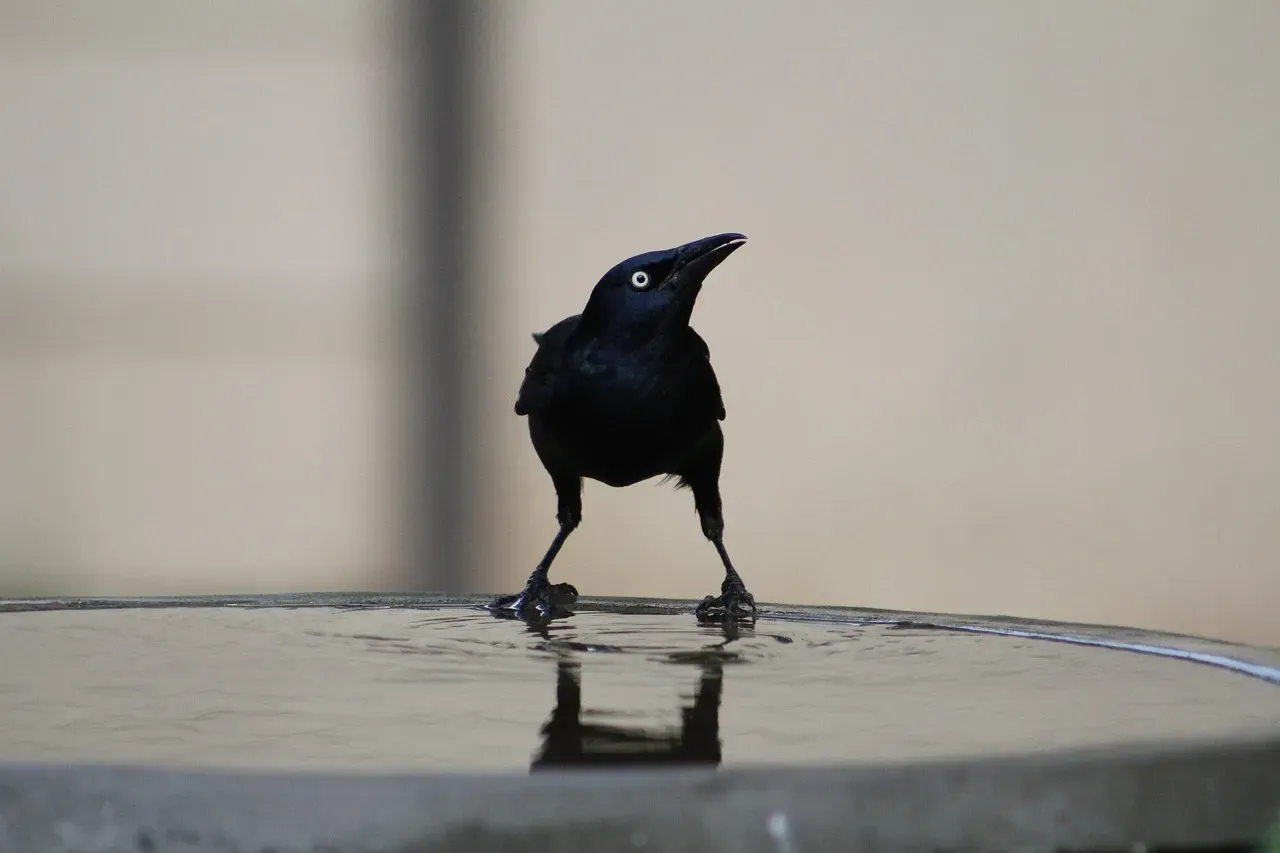
When several grackles suddenly pause together and point their bills upward, it can also be part of a shared vigilance response. Birds live in a world where danger often comes from above – hawks, falcons, or even a fast-moving crow. A raised bill is aligned with a raised line of sight, and a group of birds all staring up can be a real-time “sky scan” for threats. Even subtle changes in head angle help them lock onto movement overhead.
In a flock, one bird’s reaction can spread in an instant. If a single grackle spots something suspicious and snaps into that tall, vertical posture, nearby birds may copy the behavior before they even fully know what is wrong. It is a bit like when one person in a crowded room suddenly looks toward a doorway and everyone else instinctively follows their gaze. This cascade of body language makes the group much safer than any single bird could ever be alone.
Subtle Communication Inside a Crowded Flock
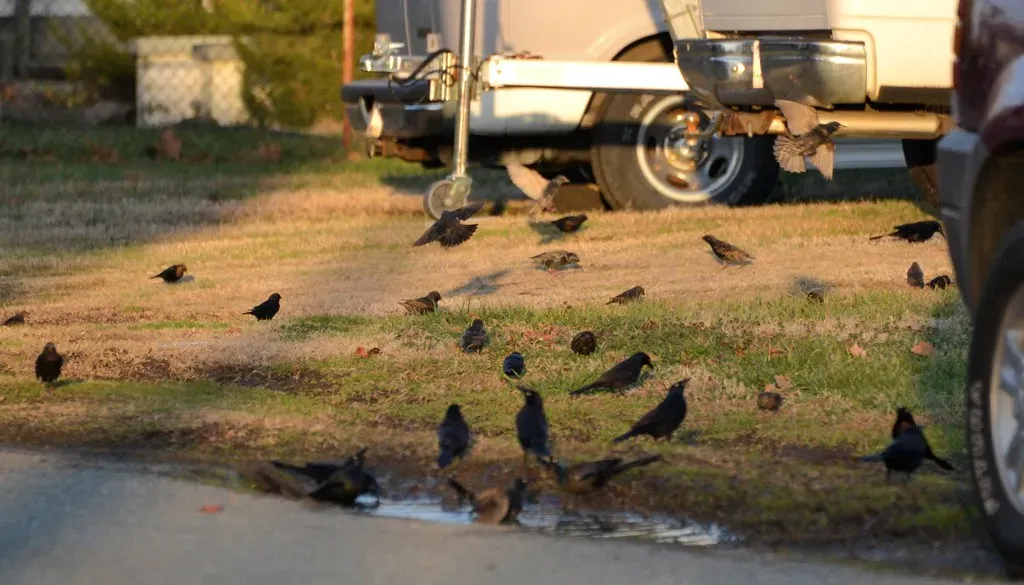
To our eyes, a pointed bill might look like a one-note gesture, but among grackles it is part of a nuanced communication system. Tiny differences in how long the bird holds the pose, how fluffed the neck feathers are, or whether the tail is spread can change the message entirely. In a dense flock where hundreds of birds are jostling, these nonverbal signals help them avoid constant physical conflict and keep some kind of order.
From a distance, it may just look like chaos and noise. But if you focus on a small group, you start to notice patterns: one bird stiffens, another sidles away; two birds face off with upward bills before one gives in; a smaller bird briefly mirrors the pose but then breaks off to avoid a fight. It is not unlike watching a crowded subway platform, where people use eye contact, body orientation, and small shifts in posture to navigate tight space without repeatedly bumping into each other.
Stress, Uncertainty, and Freezing in Place
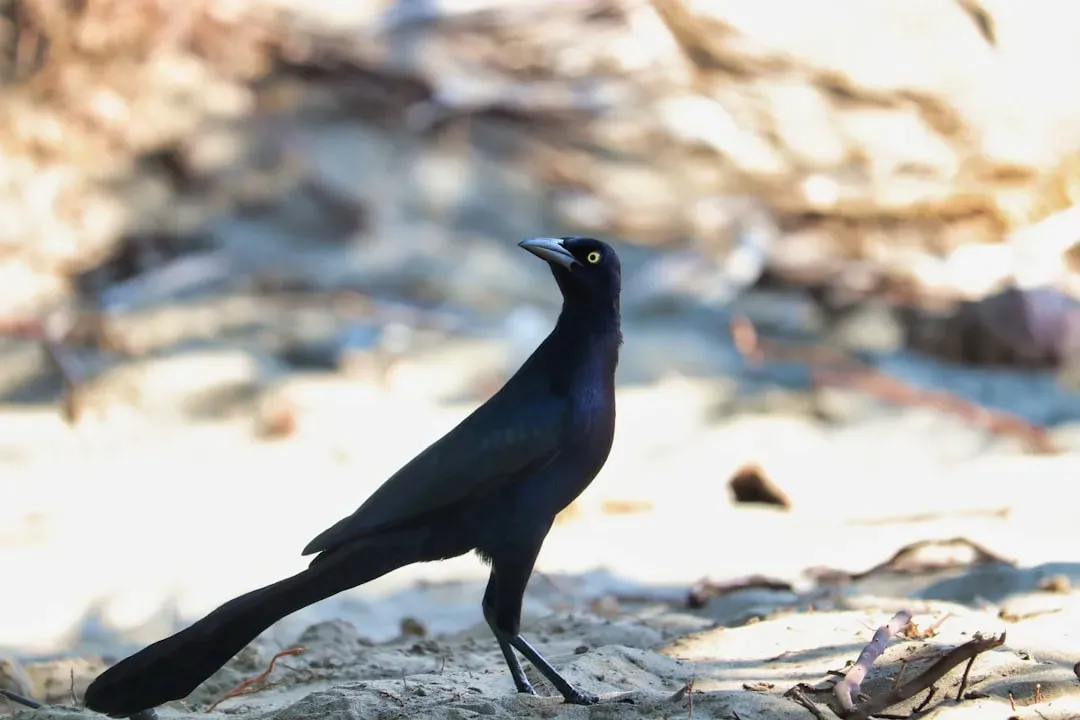
Sometimes, a grackle pointing its bill upward while standing still can be less about dominance and more about uncertainty or stress. Birds often freeze when they are not sure whether to fight, flee, or ignore a potential threat. By stretching up and staring, a grackle buys itself a little time to gather information. It can monitor its surroundings, check what others are doing, and decide if the situation is escalating or settling down.
I have watched flocks near busy streets suddenly go quiet and assume these taller, alert postures when a loud truck rumbles by or a dog rushes past. The birds are not always panicking, but they are clearly on edge, like a person pausing mid-step when they hear a sudden crash around the corner. The raised bill becomes part of a whole-body pause button, holding the bird in a ready state until the world feels safe again.
Young Grackles Learning the Social Code
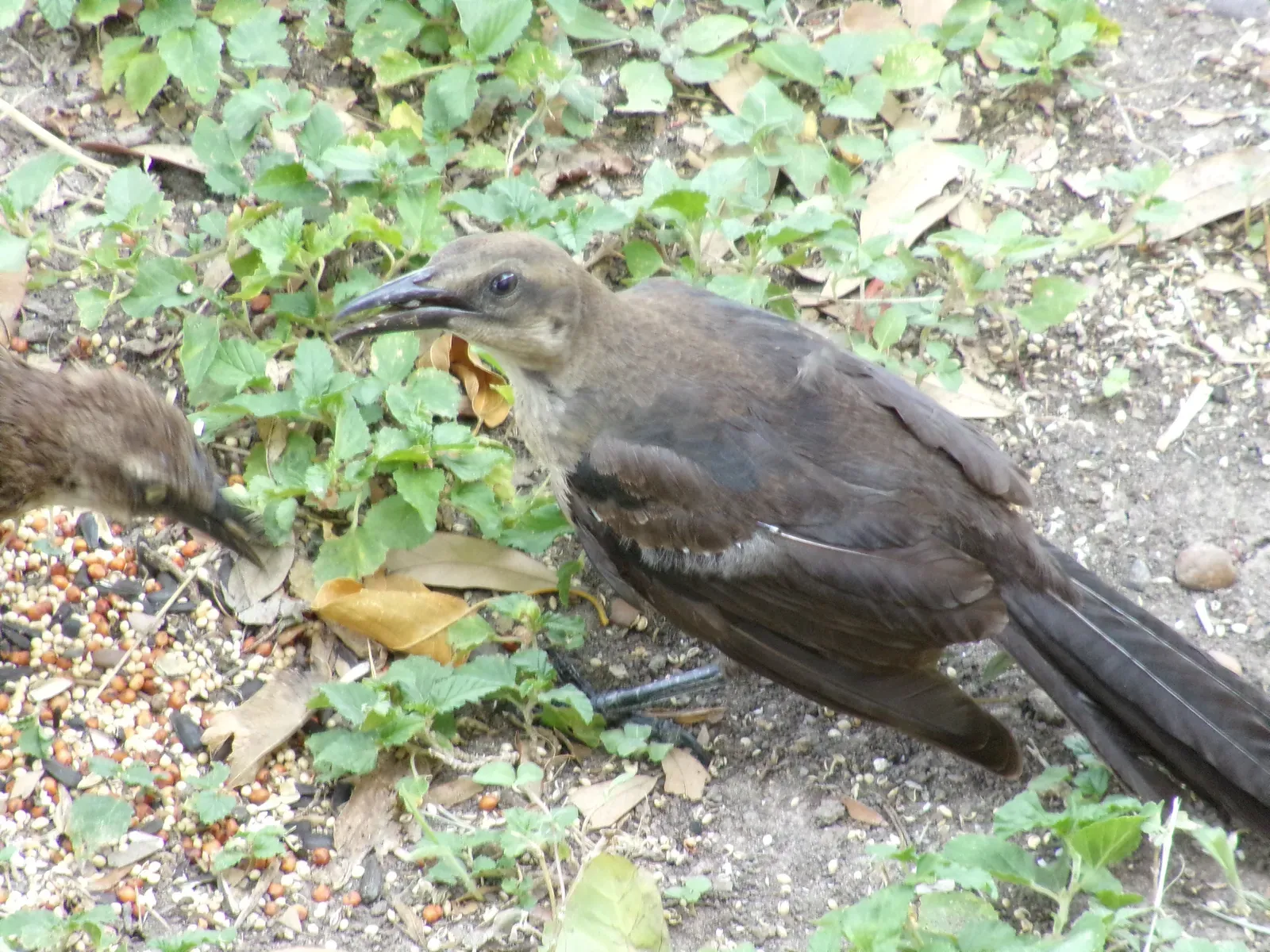
Juvenile grackles do not pop out of the nest already fluent in bill-pointing etiquette. They have to learn what these signals mean and how to use them without triggering unnecessary fights. You can sometimes see younger birds trying out the posture a bit awkwardly, holding it too long or aiming it at the wrong individual. Adults may respond with a quick chase or a sharp movement that tells the youngster they have crossed a line.
This trial-and-error process is part of how grackles grow into their place in the flock. Just as young humans learn when a raised eyebrow is playful and when it is serious, young grackles learn that context matters. The same bill-pointing gesture used near a dominant bird at a food source may get a very different reaction than when it is used among similar-aged peers on a casual perch. Over time, they refine their timing and posture until it blends seamlessly into the flock’s social choreography.
Why This Behavior Fascinates Birdwatchers and Scientists
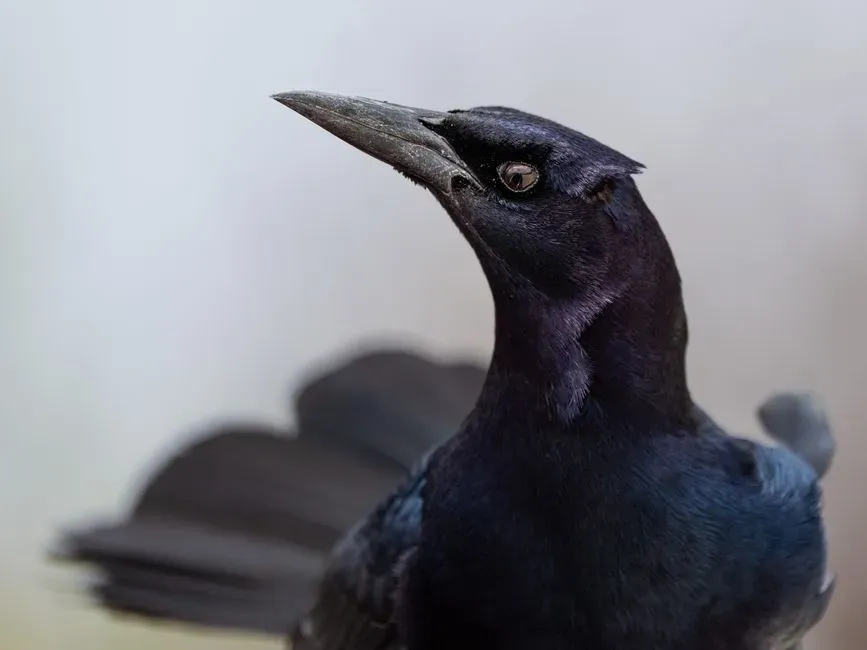
For people who love birds, this simple-looking behavior opens a door to a much larger conversation about animal communication and intelligence. A grackle with its bill pointed skyward is not just a feathered statue; it is an individual navigating power, attraction, fear, and curiosity using a highly tuned physical language. Observing when and where this happens helps researchers map the social networks within flocks and better understand how these adaptable birds thrive in cities and suburbs.
On a personal level, once I started paying attention to bill-pointing, I stopped seeing grackles as just background noise in parking lots. Their group stances, frozen poses, and synchronized looks upward began to feel like scenes in a movie that I had been watching on mute for years. There is something strangely modern and relatable about a bird using body posture to send layered messages in a crowded, noisy world. In a way, they are dealing with the same messy social multitasking that we are – just with feathers instead of smartphones.
Conclusion: More Than Just “Weird Bird Behavior”
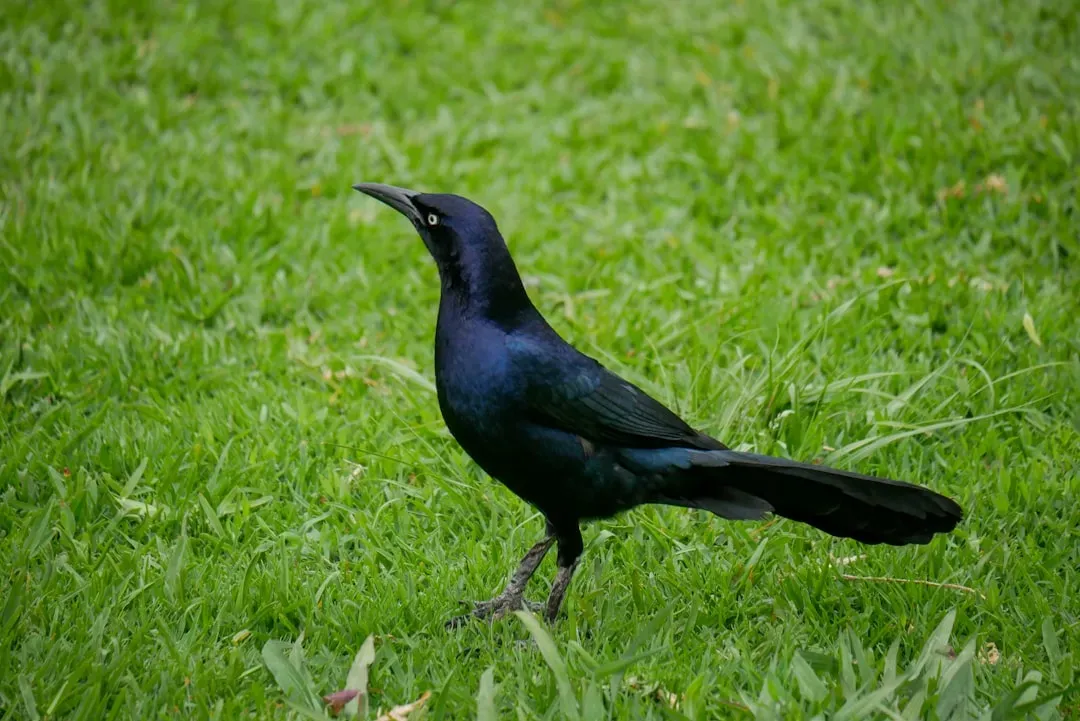
When grackles stand together and point their bills straight up, they are not performing some random quirk that we can laugh off and ignore. They are broadcasting status, flirting, scanning for danger, negotiating space, and sometimes just freezing in a moment of tension. That stiff, skyward posture is a kind of punctuation mark in their social conversations, and I think it deserves more respect than the casual label of “weird bird behavior.” Once you see it as language, it is hard to unsee.
My opinion is that behaviors like this should change how we talk about so-called “common” birds. Grackles are often dismissed as noisy, messy, or annoying, especially in urban spaces, but their body language hints at a rich inner world of decisions and relationships. The next time you see a cluster of them all staring upward with bills like tiny spears, you are not just witnessing a flock; you are catching a glimpse of a complex society mid-sentence. It makes you wonder: how much other animal body language is happening right in front of us that we have not learned to read yet?