Imagine stepping out of your childhood home long before you can walk properly, let alone run. That’s basically what some baby birds do. Long before their wings are ready for true flight, they’re already hopping, sprinting, swimming, or scrambling away from the nest and into a world full of predators, bad weather, and competition. On the surface it sounds reckless, but in nature, what looks reckless is often a highly refined survival strategy.
These birds have evolved a totally different parenting style from the songbirds we usually picture gently feeding helpless chicks in a cozy nest. Their young are often surprisingly capable from day one: sharp-eyed, strong-legged, and covered in insulating down instead of naked skin. Still, they are not invincible, and this early leap into independence comes with serious trade-offs. Let’s dive into nine fascinating species whose chicks hit the ground running – sometimes literally – long before they can properly fly.
1. Common Murre: Cliff-Diving Chicks in the Dark
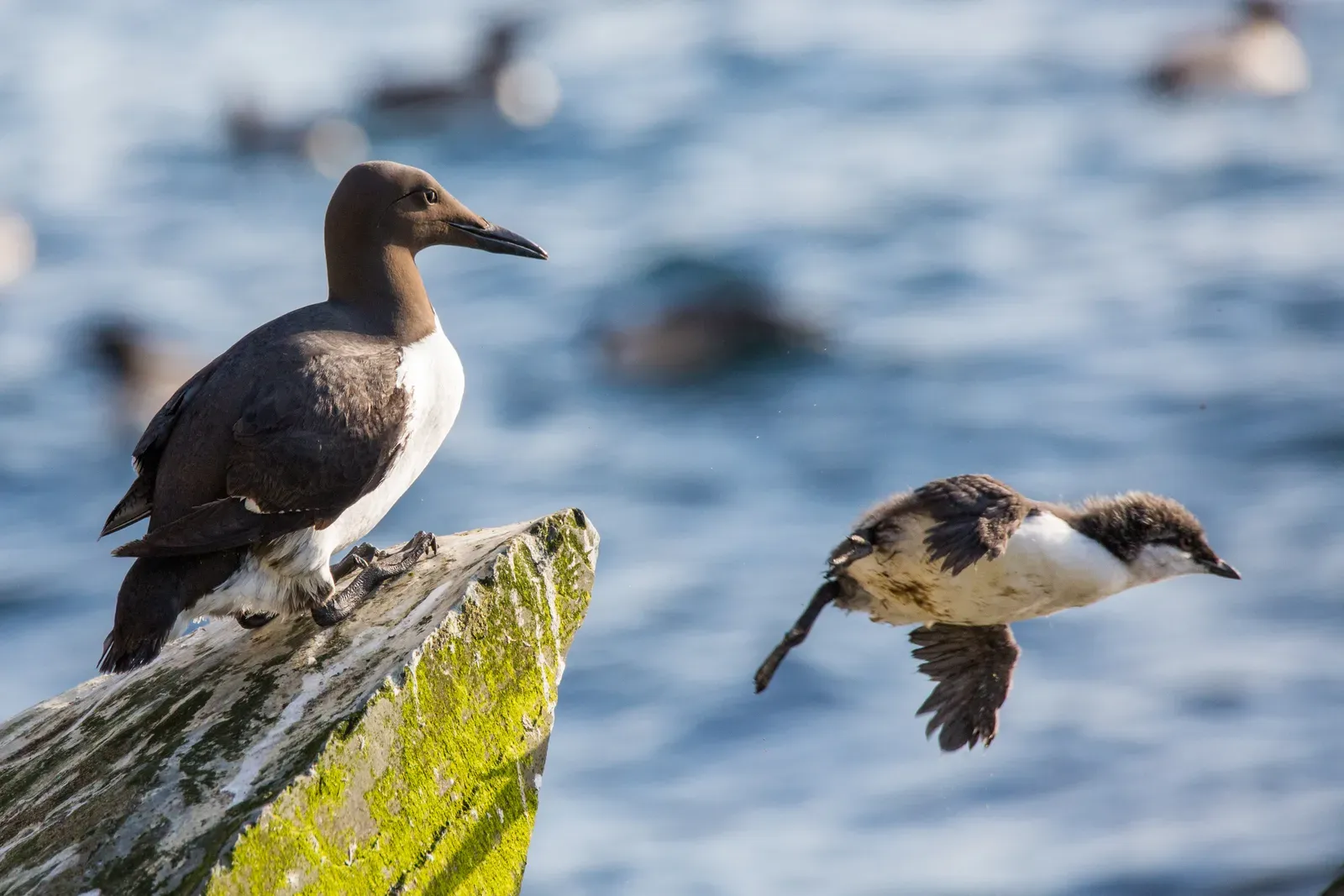
One of the most dramatic early-leaver stories belongs to the common murre. These seabirds nest on narrow cliff ledges, packed shoulder to shoulder with other adults, where a wrong step can mean a fatal fall. Yet when a murre chick is only a few weeks old and still completely flightless, its father calls it down from the ledge, usually at night, and the chick simply hurls itself into the darkness toward the sea below.
That plunge looks like a guaranteed disaster, but evolution has loaded the dice. The chick is small, light, fluffy, and bounces surprisingly well on impact with the water, not the rocks. Once in the ocean, still unable to fly, it follows its father, who continues feeding and guarding it far from the crowded colony. It’s a wild trade: risking one big jump to escape a cliff full of predators and competition and to start a life at sea as early as possible.
2. Guillemots and Razorbills: The “Jump First, Fly Later” Strategy
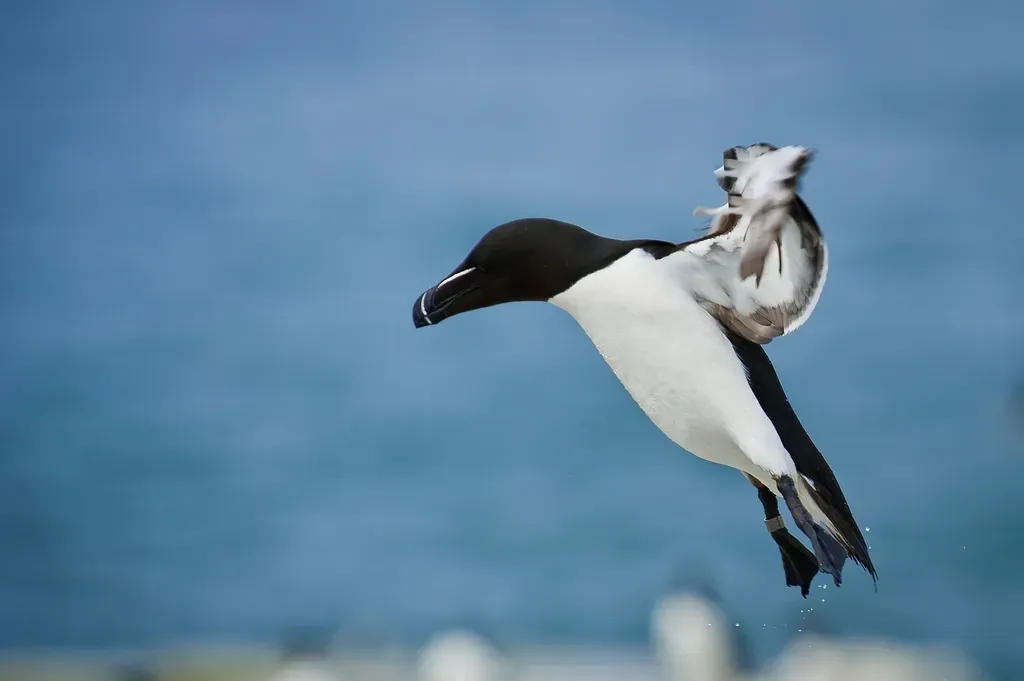
Closely related to murres, guillemots and razorbills play a similar high-stakes game with their chicks. These birds also nest on steep cliffs, often with hardly any nesting material, creating a precarious balcony that would terrify most human parents. The chicks, still flightless with stubby wings and fluffy down, eventually respond to their parents’ calls and leap into the void long before they have the muscle or feathers for powered flight.
Why does this strategy persist? Life at the nesting cliff is noisy, crowded, and dangerous, with gulls and other predators always on patrol. By leaving early at night and heading to the open sea with a parent, the chick lowers the odds of being snatched on the ledge and starts learning to swim and dive when it is still small and agile. They are not flying, but in a way they are “air-dropping” into the environment where they’ll spend most of their lives.
3. Megapodes: The Birds That Skip Parenting Almost Entirely

If early independence had a contest, megapodes would probably win. These chicken-like birds of Australasia and nearby islands have one of the most extreme strategies in the bird world: their chicks hatch fully feathered, strong-legged, and capable of fending for themselves from the moment they dig out of their incubation mound. The parents do not feed, brood, or guide them at all after hatching, and the young never really have a traditional “nest” period.
Megapode adults invest their energy in building massive compost-like mounds of decaying vegetation or sand that act as natural incubators. Once the eggs hatch, the chicks burst out, shake off the dirt, and go straight into the undergrowth as miniature, ground-running birds that can flutter into short weak flights pretty early, but not truly fly long distances. It’s a radical approach: massive parental effort upfront in mound-building, followed by zero hands-on childcare, forcing the chicks to be on their own from day one.
4. Shorebirds Like Killdeer: Tiny Runners on Open Ground
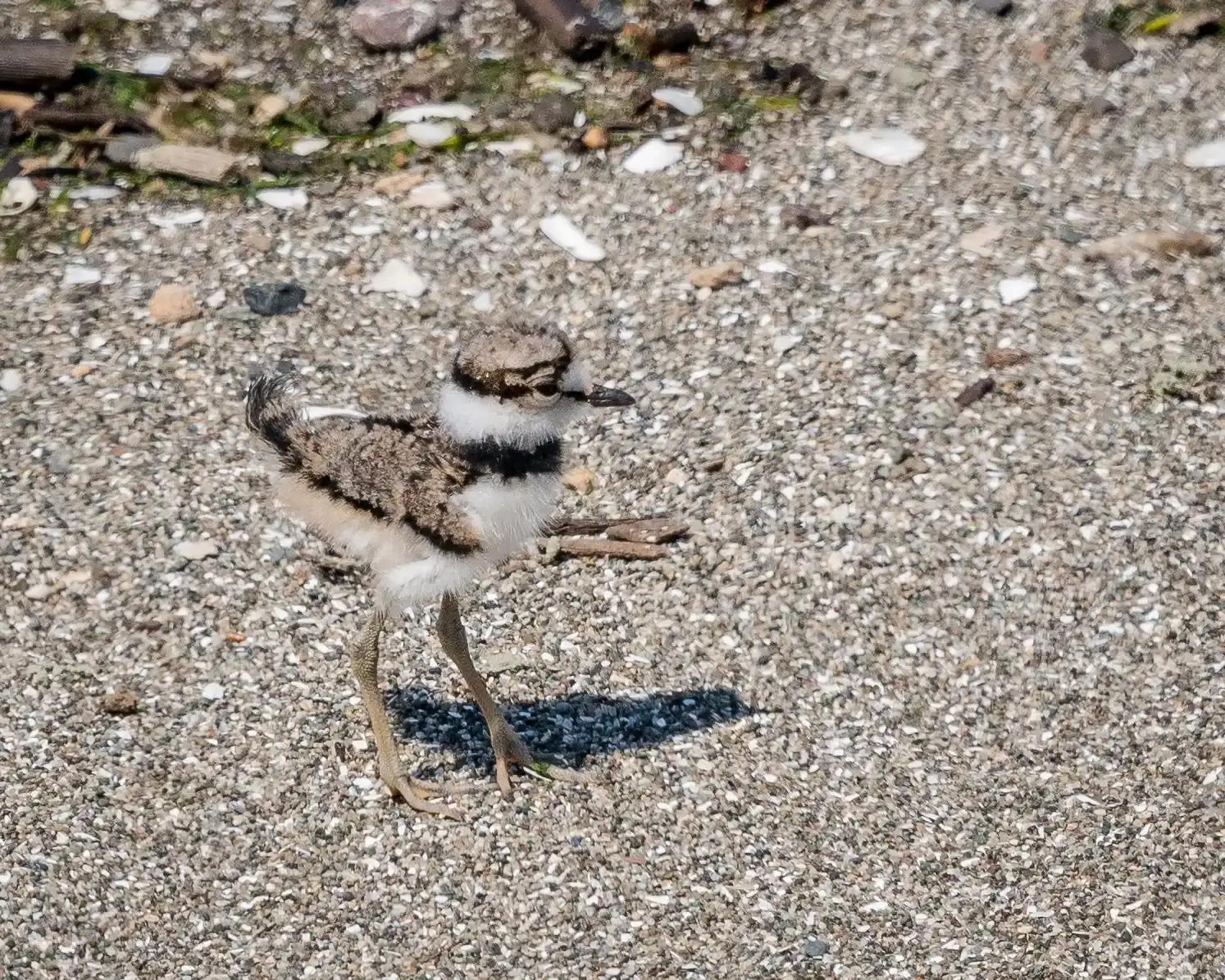
Many shorebirds, such as the familiar killdeer, raise chicks that leave the nest almost as soon as they dry off from hatching. They nest on the ground in open areas – gravel patches, fields, shorelines – where a stationary nest can quickly turn into an all-you-can-eat buffet for predators. To cope, their chicks are born alert, covered in camouflaged down, with muscular little legs ready to sprint, even though their wings are nowhere near ready for real flight.
These young birds follow their parents around, pecking at insects and seeds, copying behavior like toddlers shadowing adults in a busy kitchen. The parents still provide crucial protection, using distraction displays and fake broken-wing acts to lure predators away. But the chicks themselves are not helpless; they can run, freeze, hide, and feed on their own, living a surprisingly mobile land-based life long before any real flying enters the picture.
5. Ducks and Geese: Water-Bound Wanderers Before Flight

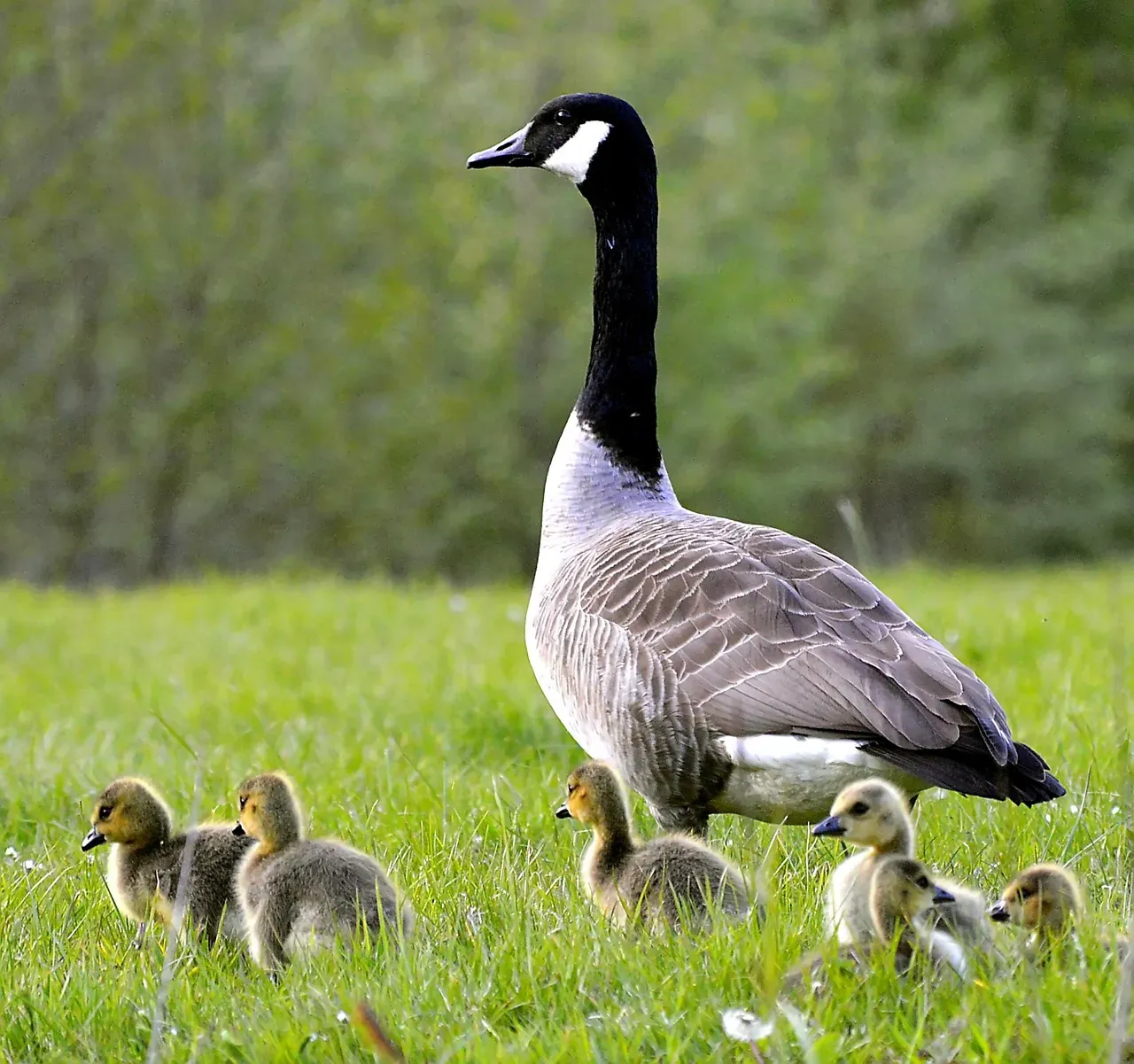
People often think of fluffy ducklings and goslings as the textbook example of cute, vulnerable babies, but in reality they are pretty tough. Mallards, Canada geese, and many other waterfowl species have chicks that leave the nest within roughly a day of hatching. Sometimes this involves a short drop from a nest in a tree cavity or over water, which can look alarming but usually causes no harm because the chicks are so light and well padded with down.
Once they hit the ground or water, they are on the move, swimming in tight formation behind a parent, feeding themselves almost immediately on small plants and invertebrates. Their wings are still short and useless for flight; if danger comes from above, they cannot simply take off. Instead, they rely on shallow water, cover, quick dives, and the vigilance of their parents. They live the full lifestyle of their species – feeding, migrating locally, learning group dynamics – well before they ever lift off.
6. Loons: Diving Experts Long Before They Fly
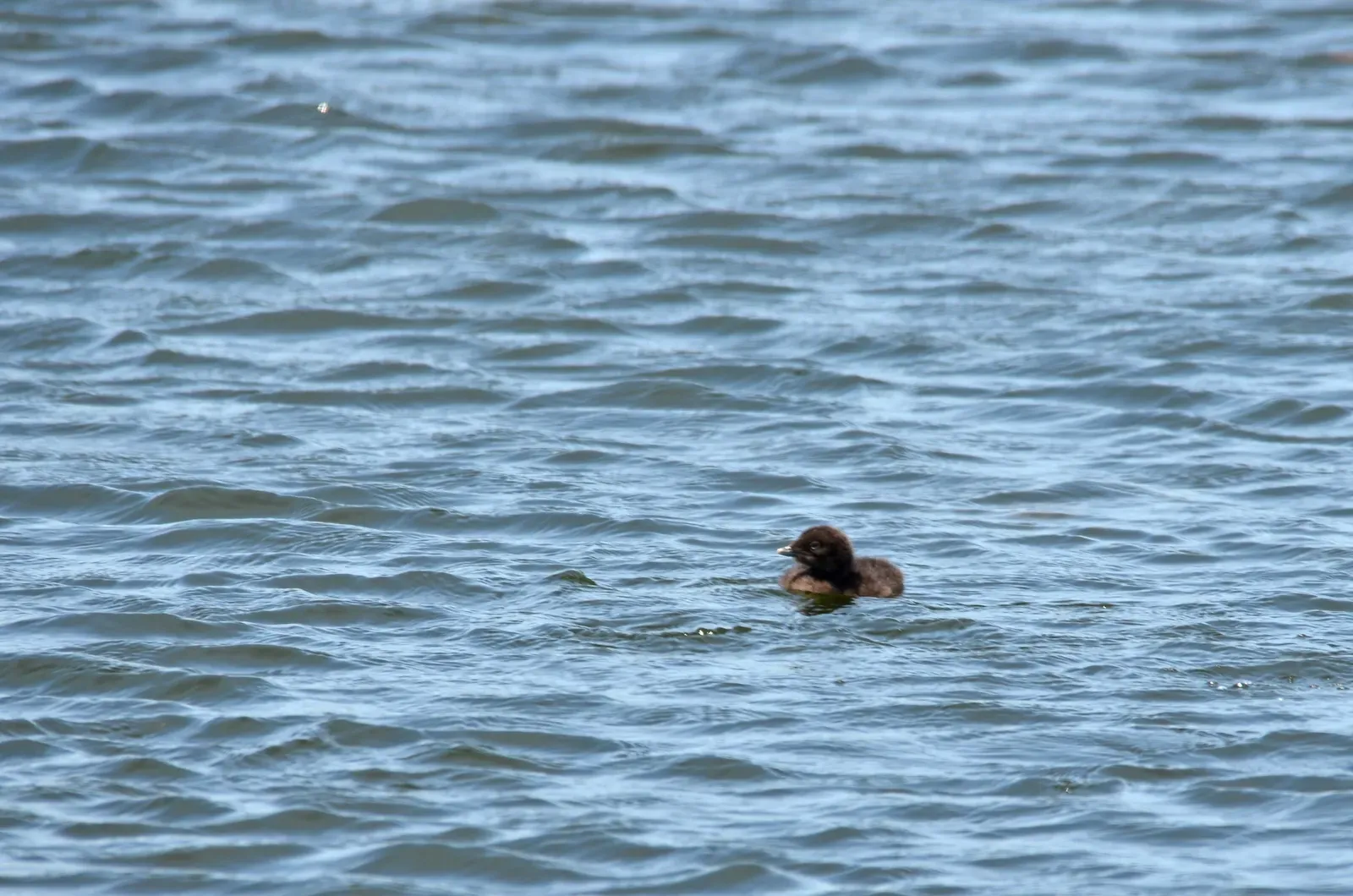
Loons are iconic diving birds of northern lakes, famous for their haunting calls and torpedo-like underwater speed. Their chicks, though adorably fluffy, are surprisingly capable from very early on. Soon after hatching, they leave the nest platform and swim with their parents, sometimes riding on an adult’s back like a living raft, but also paddling on their own even while their wings remain tiny and non-functional for flight.
These youngsters quickly learn to dive, at first in shallow, playful plunges, then in more serious attempts to chase prey. They feed partly from food brought by parents and partly by practicing their own hunting skills, gradually becoming better swimmers and divers long before they ever flap their way into the sky. For loons, flight actually comes late in development; aquatic survival skills are the main priority, and the nest is just a brief stopover at the start of life.
7. Grebes: Nest Hoppers and Back-Riders
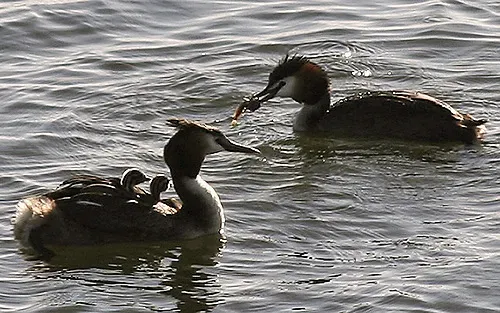
Grebes, those sleek freshwater divers often seen with sharp bills and flashy plumage, also have chicks that abandon the nest very early. Not long after hatching, grebe chicks climb aboard a parent’s back and hitch a ride across the water, sometimes even tucking under the adult’s feathers. The nest quickly becomes irrelevant, and the family shifts to a floating, mobile life on the lake or marsh, even though the chicks cannot fly at all.
While riding, they rest, stay warm, and avoid many aquatic predators, but they are not simply passive passengers. They slip off to practice swimming and peck at food, gradually increasing the time spent off the parent and learning how to maneuver in open water. Their world is entirely water-based while their wings are still developing, so they effectively “leave the nest” into a habitat that supports their body but asks them to move, learn, and respond quickly from the start.
8. Rails and Crakes: Ghosts of the Marsh on Tiny Legs
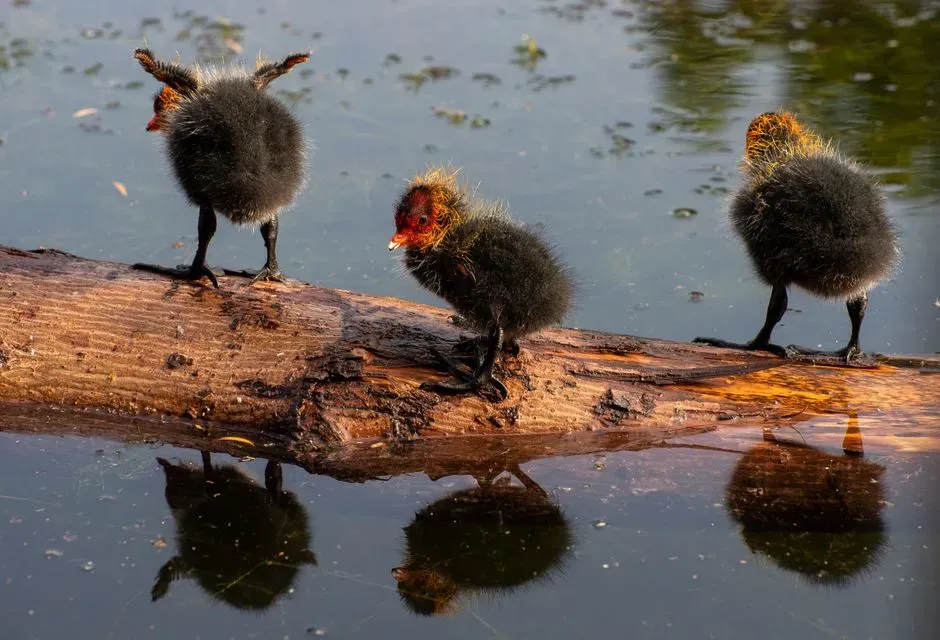
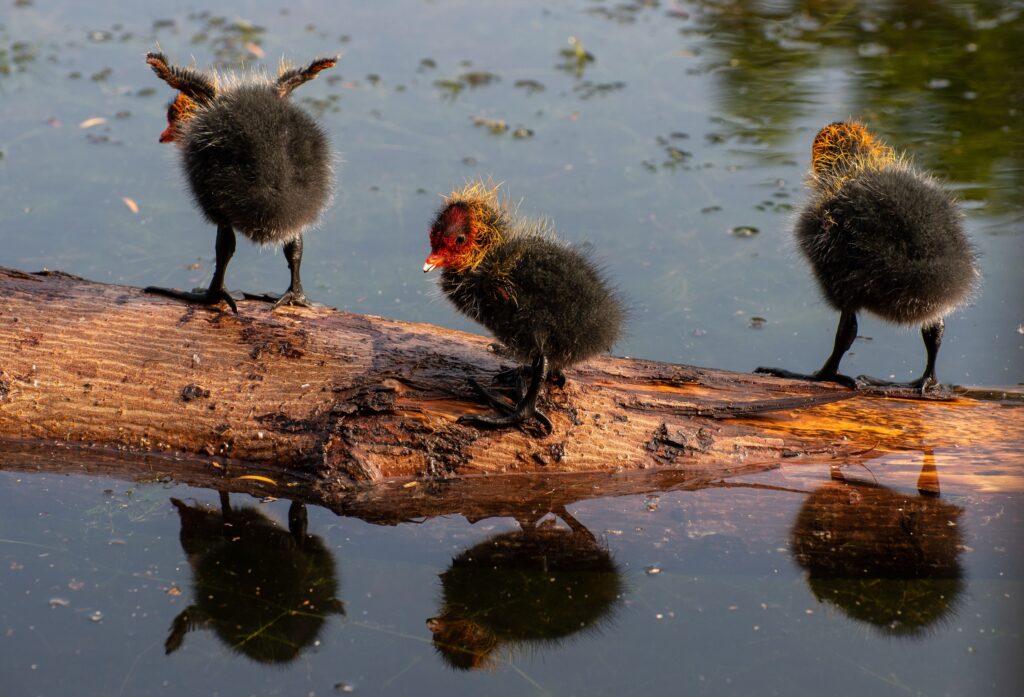
Rails and crakes are famously secretive marsh birds, more often heard than seen, and their chicks fit right into that stealthy lifestyle. These young birds leave the nest soon after hatching, already able to walk, dart, and squeeze through reeds, even though they are nowhere near ready to fly. Dressed in dark down, they almost vanish against muddy water and dense vegetation, relying on concealment and quick footwork instead of aerial escapes.
Because life in a marsh can change by the hour – with rising water, hunting predators, and shifting vegetation – being mobile early makes a lot of sense. The family can move to better cover, richer feeding spots, or safer water levels without being chained to a single nest. The chicks forage actively, picking at insects and tiny invertebrates, learning the complicated three-dimensional maze of reeds and channels while their wings slowly mature in the background.
9. Waders Like Avocets and Stilts: Long-Legged Kids in Shallow Water
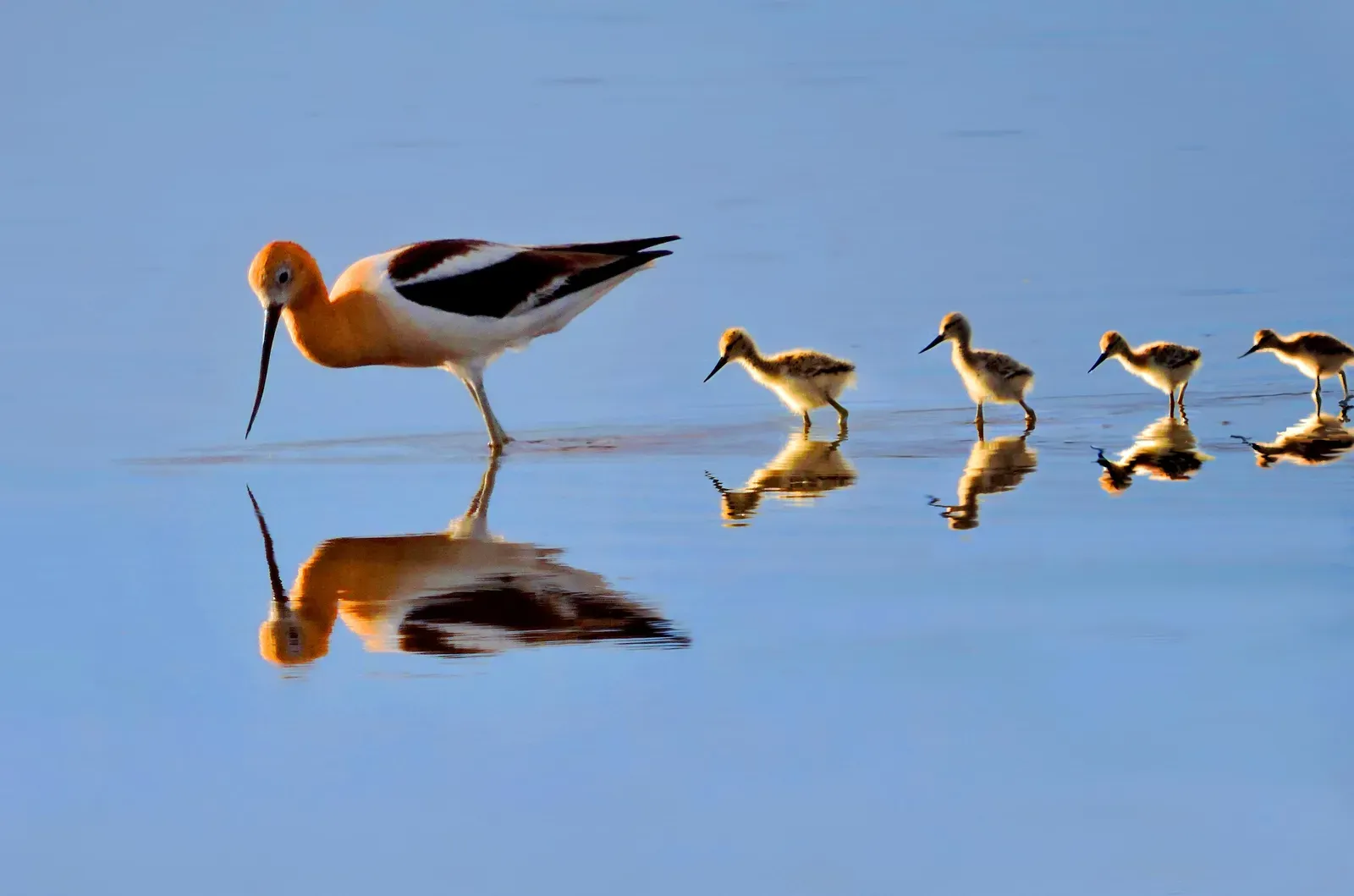
Many wading birds, including species like avocets and stilts, take the precocial strategy to stylish extremes. Their chicks hatch on open ground near water, then toddle out of the nest on comically long legs, stepping through shallow pools and mudflats as if they were miniature adults. They cannot fly, and their wings look almost decorative at first, but they can walk, probe, and paddle around, following their parents through a world of ripples and reflections.
These youngsters feed for themselves from early on, picking up tiny invertebrates from the water surface and mud while staying close to a watchful parent. Because they live in exposed places with few hiding spots, early mobility is essential. Instead of relying on staying hidden in a nest, they depend on constant movement, sharp awareness, and group reactions to danger. In effect, they live like ground-based foragers and shallow-water specialists long before flight becomes part of their daily toolkit.
Conclusion: Early Independence Is Risky, but It Works
When you look at these nine examples together, the pattern is clear: leaving the nest before you can fly is not a mistake; it is a deliberate evolutionary gamble that has paid off for many different bird families. Whether it is cliff jumpers like murres, mound-hatched megapodes, or leggy shorebird chicks sprinting across open ground, these species trade extended cozy nest time for early mobility and access to the habitats they depend on. Personally, I find it far more impressive than the sheltered, slow-start model we tend to romanticize.
Of course, this strategy is brutal; plenty of these early-leaving chicks do not make it, and that harsh reality is easy to forget when we focus only on the survivors. But nature is not optimizing for kindness – it is optimizing for what works across generations, and in many environments, being able to run, swim, or dive early beats sitting helplessly in a nest waiting for wings to grow. Next time you see a line of ducklings, a tiny shorebird chick, or a distant loon family, it is worth remembering that you are watching some of the boldest childhoods on the planet. If you had to choose, would you take the early jump into danger or the safer nest that keeps you grounded longer?