A Serendipitous Classroom Breakthrough (Image Credits: Unsplash)
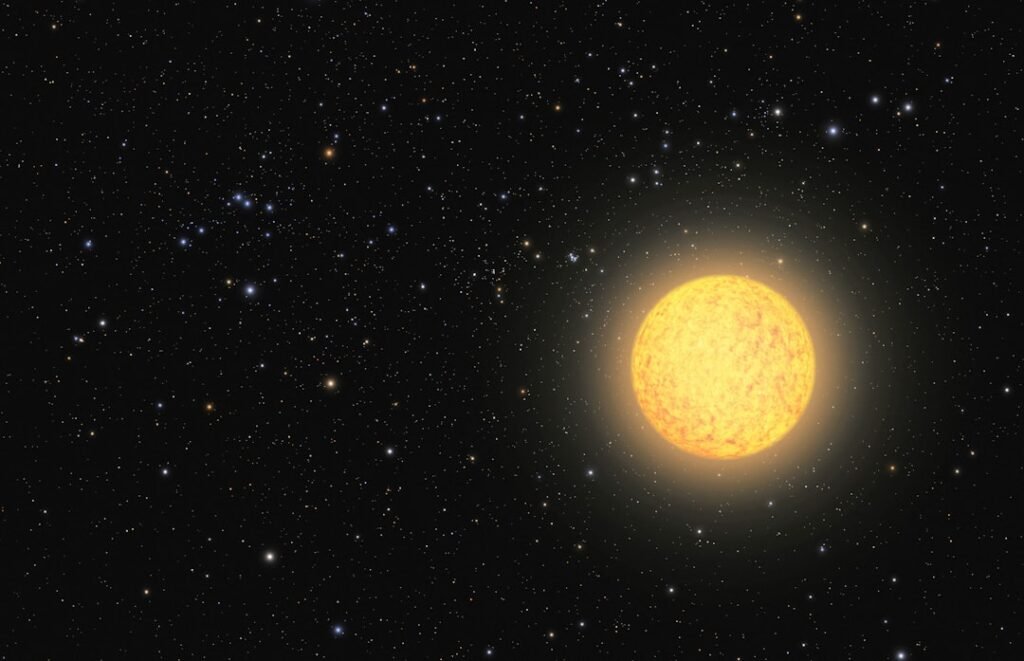
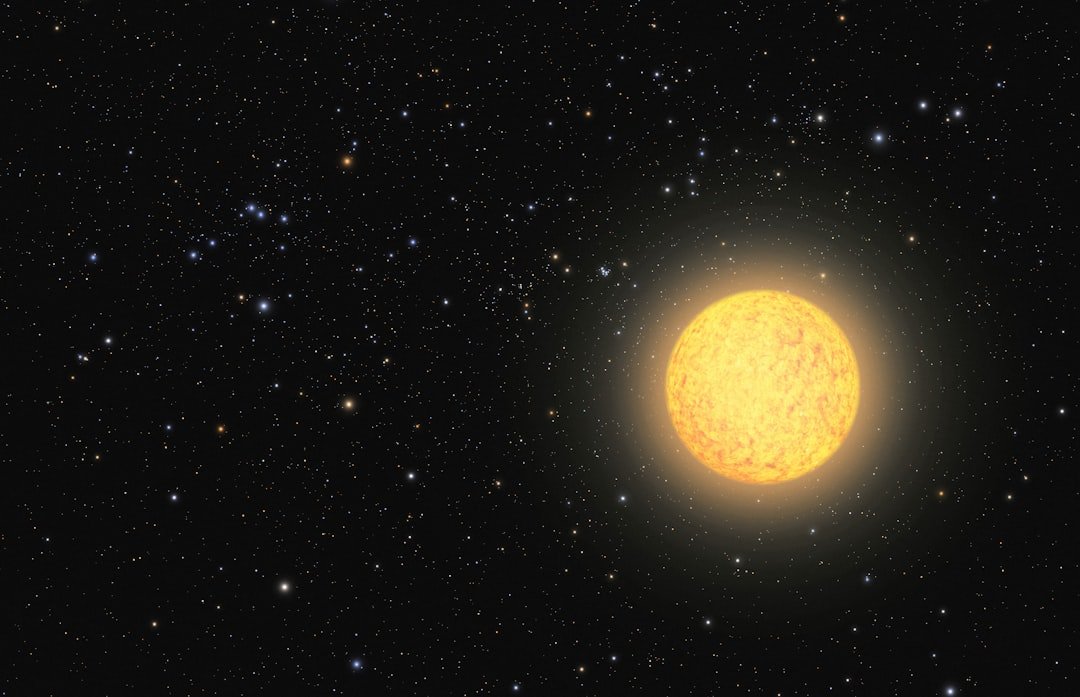
A team of undergraduate students sifted through vast astronomical datasets during a routine class assignment and stumbled upon one of the universe’s oldest known stars. This diminutive red giant, largely untouched by the heavy elements forged in stellar furnaces, now drifts through the Milky Way after a long journey from its birthplace. The discovery challenges astronomers’ understanding of early cosmic evolution and highlights the power of big data in modern research.[1][2]
A Serendipitous Classroom Breakthrough
Ten undergraduates enrolled in the University of Chicago’s “Field Course in Astrophysics” pored over spectra from the Sloan Digital Sky Survey during spring 2025. Under the guidance of Professor Alex Ji, they identified 77 promising candidates for ancient stars amid thousands of observations. The group traveled to Chile’s Las Campanas Observatory for hands-on telescope time with the Magellan Clay telescope and its MIKE spectrograph.
The pivotal moment arrived on their first observing night in March 2025. SDSS J0715-7334, the second target of the evening, demanded immediate attention. Students extended their planned 10-minute exposure to three hours after initial data hinted at something extraordinary. “I was looking at that camera the whole night to make sure it was working,” recalled student Natalie Orrantia.[1]
Unprecedented Chemical Purity
Analysis revealed SDSS J0715-7334 as the most metal-poor star ever detected. It contains just 0.005 percent of the heavy elements – everything beyond hydrogen and helium – found in the Sun. This metallicity surpasses the previous record holder by more than a factor of two, with iron levels 40 times lower than those in the next most iron-poor known star.[3]
The star’s composition consists almost entirely of primordial hydrogen and helium, echoing the universe mere moments after the Big Bang. Carbon proved undetectable, a rarity observed only once before in similar objects. “We analyzed the star for a large swath of elements, and the abundances are quite low for all of them,” noted student Ha Do.[4]
- Metallicity: 0.005% of solar levels
- Primary makeup: Hydrogen and helium
- Carbon: Undetectable
- Iron: Exceptionally depleted
- Type: Low-mass red giant
Tracing an Intergalactic Voyage
Orbital modeling using data from the European Space Agency’s Gaia mission painted a clear picture of the star’s history. Researchers traced its path backward billions of years, confirming it originated in the Large Magellanic Cloud, the Milky Way’s largest satellite galaxy roughly 160,000 light-years distant. Gravity from our galaxy gradually drew the wanderer inward over eons.[2]
Today, SDSS J0715-7334 resides about 80,000 light-years from Earth, in the Milky Way’s outer reaches near its former home. This migration explains its survival and pristine state, as the LMC’s distinct environment preserved such relics better than the Milky Way’s busier core. Professor Ji dubbed it an “ancient immigrant,” underscoring its outsider status.[1]
Windows into Cosmic Dawn
The star offers a rare proxy for the universe’s first stellar generations, known as Population III stars. These massive pioneers exploded as supernovae, seeding the cosmos with the first metals. SDSS J0715-7334, likely a second-generation object, formed from gas barely touched by those events, possibly aided by early cosmic dust that enabled collapse despite scant cooling agents.[5]
“This ancient immigrant gives us an unprecedented look at conditions in the early universe,” Ji stated. The finding, detailed in a April 2026 Nature Astronomy paper, suggests satellite galaxies like the LMC harbor more such ultra-poor stars. It prompts reevaluation of star formation models in the universe’s infancy.[4]
| Property | SDSS J0715-7334 | Sun |
|---|---|---|
| Metallicity (%) | 0.005 | 100 |
| Heavy Elements | Minimal | Abundant |
| Origin | Large Magellanic Cloud | Milky Way disk |
The project not only advanced science but inspired participants. Several students now eye careers in astronomy, crediting the hands-on experience. Juna Kollmeier, SDSS-V director, praised the effort: “These students have discovered more than just the most pristine star. They have discovered their inalienable right to physics.”[3]
Key Takeaways
- SDSS J0715-7334 sets a new benchmark for stellar purity, with metallicity 0.005% of the Sun’s.
- Its path from the LMC reveals dynamic galactic interactions over billions of years.
- The discovery underscores how student-led projects, powered by SDSS and Gaia, drive frontier astronomy.
This stellar fossil reminds us that the Milky Way’s edges hold echoes of creation itself. Future surveys may uncover more migrants, refining our grasp of cosmic beginnings. What do you think about this interstellar traveler? Share your thoughts in the comments.