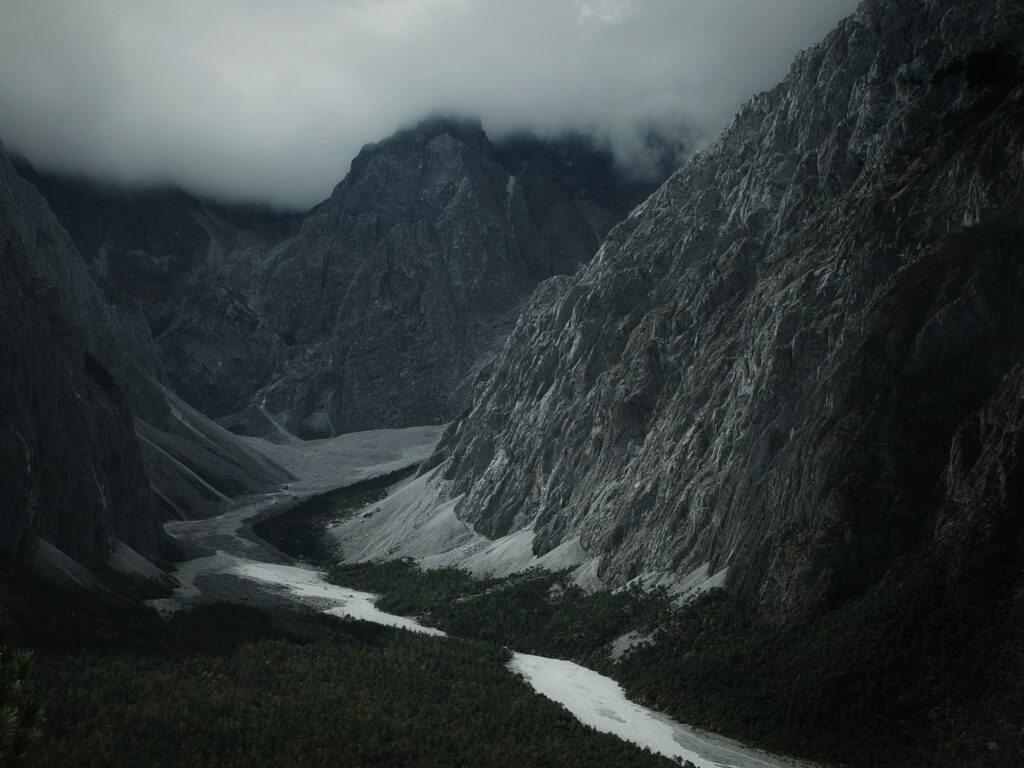
A cosmic leviathan stirs across the great, quiet expanse of the early universe. About 12 billion years old, a supermassive black hole has unleashed a jet of energy so strong it defies understanding illuminated not by starlight but by the fading echo of the Big Bang itself. Three times the width of our Milky Way, NASA’s Chandra X-ray Observatory has photographed this amazing event showing a jet spanning over 600,000 light-years. But this realization is a race against time, not only a window into the past. The very tool that enabled this discovery, Chandra, has an uncertain future as budget cuts risk silence it permanently.
A Cosmic Relic Illuminated by the Big Bang’s Afterglow
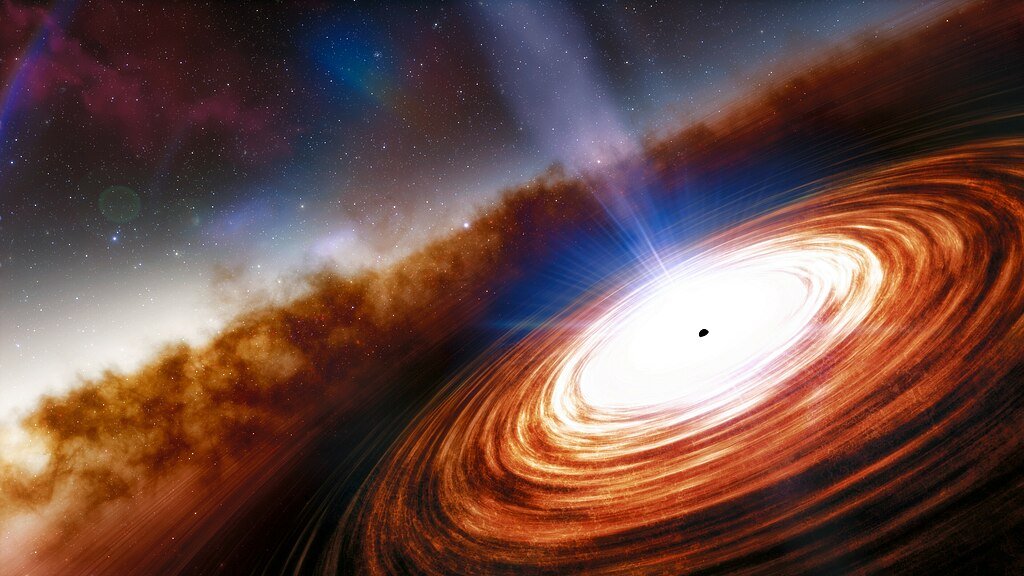
Located 11.6 billion light-years away, the quasar J1610+1811 is a relic from the most turbulent period in the universe, “cosmic noon,” two to three billion years following the Big Bang when black holes and galaxies grew at explosive rates. Not the light of the quasar but the cosmic microwave background (CMB), the afterglow of the birth of the universe, makes this jet observable.
Cosmic noon saw the CMB far denser than it is now. Chandra can see a ghostly glow produced as electrons in the jet collide with these old photons generate X-rays. The jet would remain invisible, lost in the gloom of deep space without this primordial light.
A Jet Moving at Nearly the Speed of Light
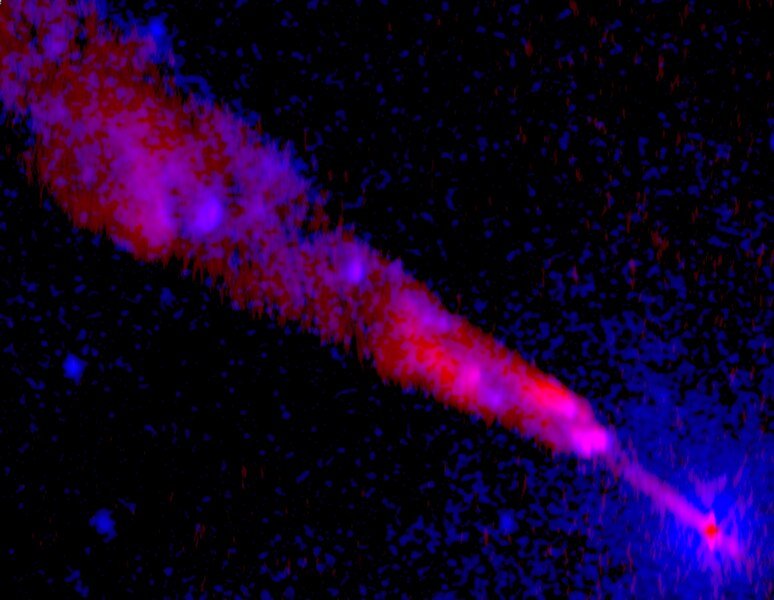
The Chandra observations expose that jet particles are accelerating toward Earth at 92% to 98% the speed of light. By comparison, a spacecraft traveling this quickly could circle Earth seven times in one single second. Such high velocities distort our view; some features seem to move faster than light because of relativistic effects, a cosmic illusion brought on by their angle relative to us.
This jet is not by itself. Another quasar, J1405+0415, shows a similarly enormous jet, implying that these structures were far more common at cosmic noon than hitherto believed. Their sheer force, half that of the black hole’s own accretion disk, begs problems about how they shaped the early universe.
Why Cosmic Noon Was a Black Hole Feeding Frenzy
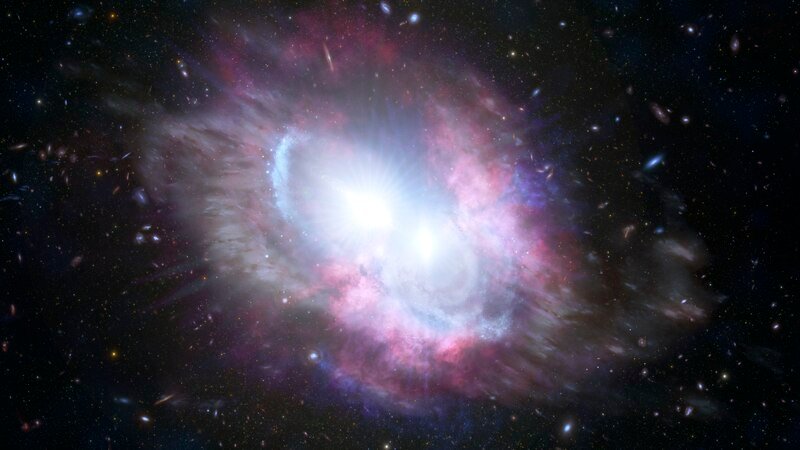
The epoch of cosmic noon marked a flourishing time in regard to black holes. The acceleration of supemassive black holes occurred as galaxies chaotically merged and directed gas towards their cores. The black holes then consumed and burgeoned at extraordinary rates. The recently discovered jets might provide clues as to why this period was so extreme.
It has been suggested that these jets tempered the surrounding gas to control star formation, preventing the matter from swirling down into fresh stars. They may have also driven matter outward, distributing heavy elements to seed future galaxies, which shapes the universe we know today. Either way, those jets acted like cosmic sculptors.
Chandra’s Uncertain Future And Why It Matters
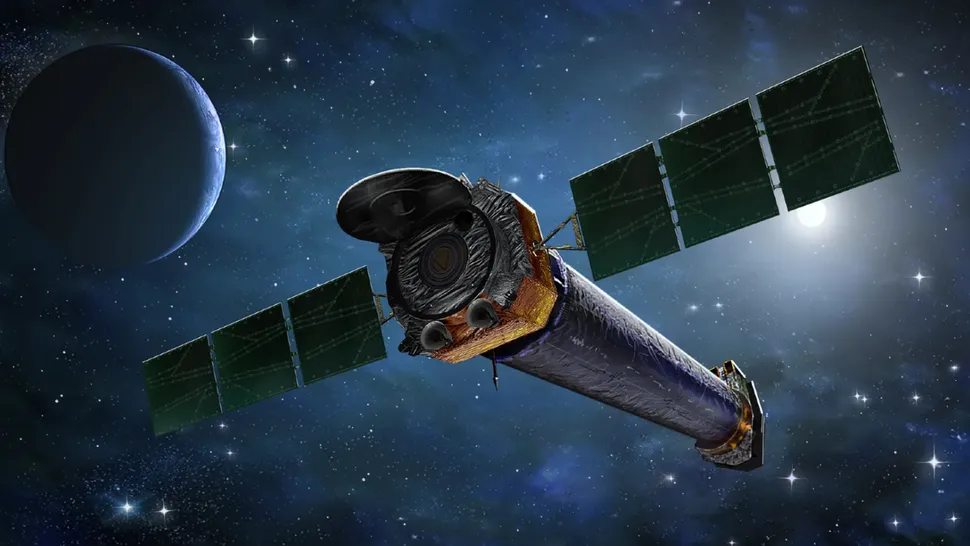
Launched in 1999, Chandra is still the most powerful X-ray telescope ever constructed since it can find sources 20 times fainter than its forebears. Still, it suffers budget cuts that might cause it to close early even if its operational life has ten years left.
The loss would be absolutely disastrous. “It’s an extinction-level event for X-ray astronomy,” notes SaveChandra.org. Scientists would lose their ability to investigate black holes, neutron stars, and galaxy clusters in X-ray light without Chandra, so undermining our knowledge of the high-energy universe.
Could This Jet Hold Secrets of Time Itself?
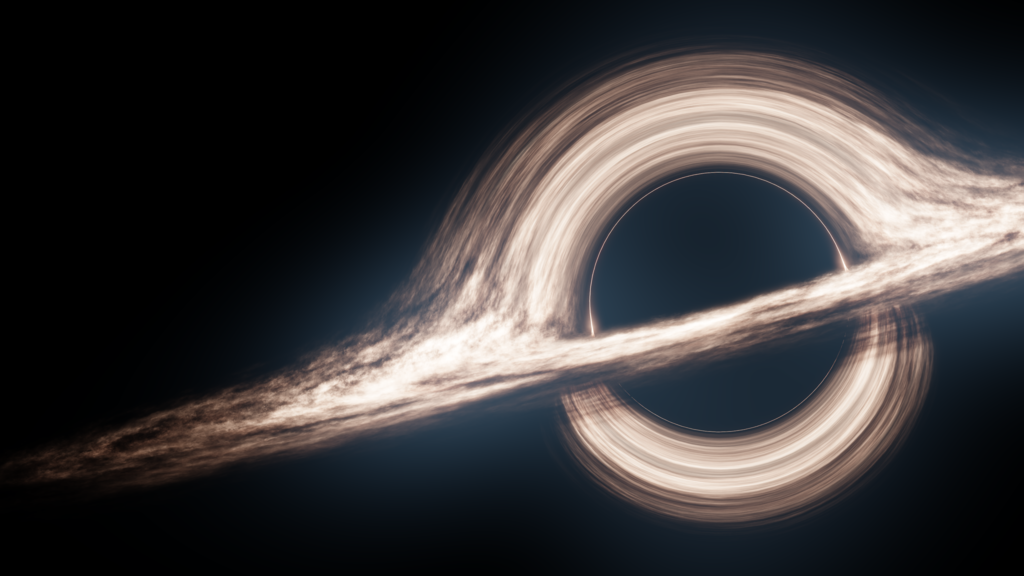
With their great gravity warping spacetime, theoretical physicists have long hypothesised about black holes as possible time machines. J1610+1811 provides a time capsule of the early universe even though its jet isn’t a literal time portal.
Fascinatingly, lately events like The Time Machine Factory 2024 have looked at how black holes might subvert our conception of causality. Should Chandra be decommissioned, we might miss the opportunity to investigate such events, thus severing a direct path to the most violent epochs of the universe.
What’s Next? A Final Fight to Save Chandra
Arguing that closing it down would strand future missions like LISA (the gravitational wave detector) without vital X-ray data, astronomers are banding to Save Chandra. Researchers are still paging over Chandra’s archives looking for fresh black hole jets, supernova remnants, and even fractures in “cosmic bones.”
The jet of J1610+1811 is a warning as much as a monument to Chandra’s unparalleled vision. Should funding vanish, we might not see it ever again. Astronomer Elisa Costantini says: “Losing Chandra would leave a hole in our knowledge that no other telescope can fill.”
Conclusion : A Universe Still Full of Mysteries
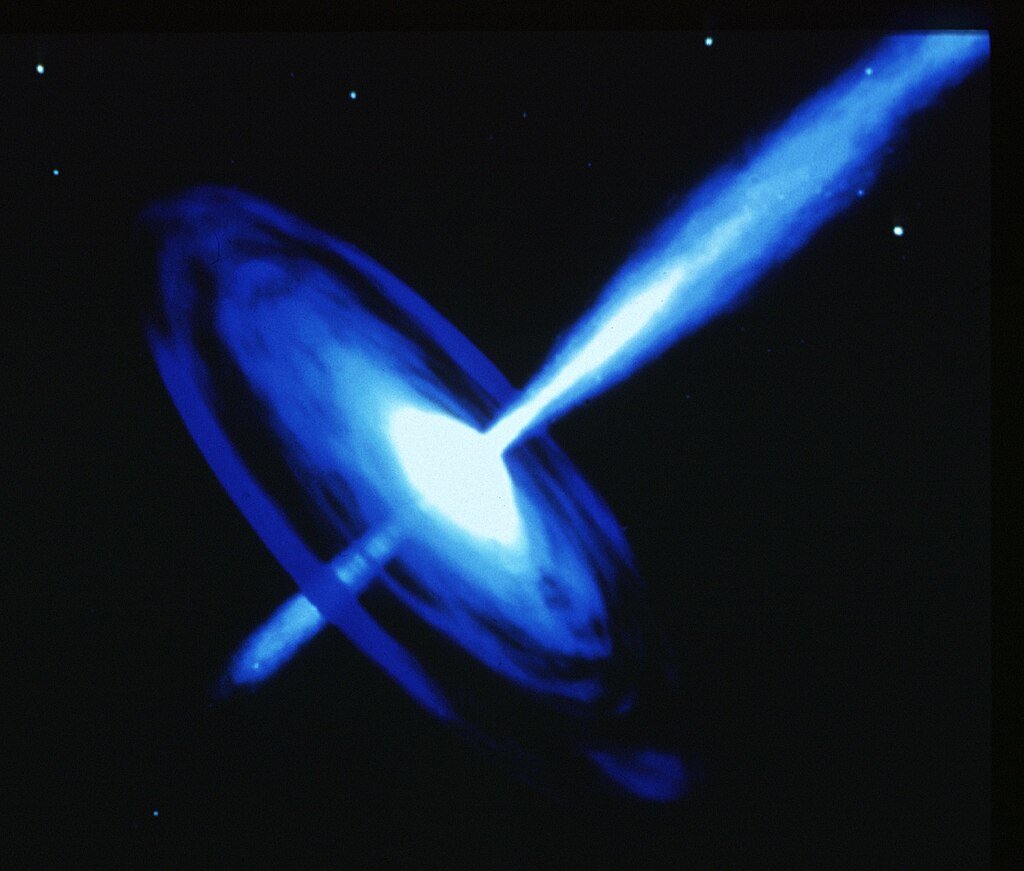
Finding this ancient jet reminds us that the universe is far stranger than we could possibly conceive. From black holes bending the rules of physics to quasars lit by the afterglow of the Big Bang, the universe still shocks us. But without Chandra, our view of these beauties may soon close, leaving future astronomers wondering what else we might have seen.
Right now, Chandra’s survival fight is still ongoing. Since some riddles are worth keeping ultimately.
Sources: