
If you’ve ever stared up at the night sky and felt a strange mix of wonder and unease, you’re not alone. The more you learn about the universe, the clearer it becomes that you’re living inside a mystery far bigger than anything your everyday life prepares you for. Scientists keep building better telescopes, more powerful particle colliders, and smarter simulations, yet some of the biggest questions just refuse to budge.
What makes these unanswered questions so gripping is that they’re not just abstract puzzles for academics. They quietly shape how you think about reality, time, purpose, even your own mind. As you walk through these seven cosmic riddles, you’ll see exactly where the science stands today – and where the gaps are so deep that even the world’s best researchers can only say, “We honestly don’t know…yet.”
1. What Happened Before the Big Bang?
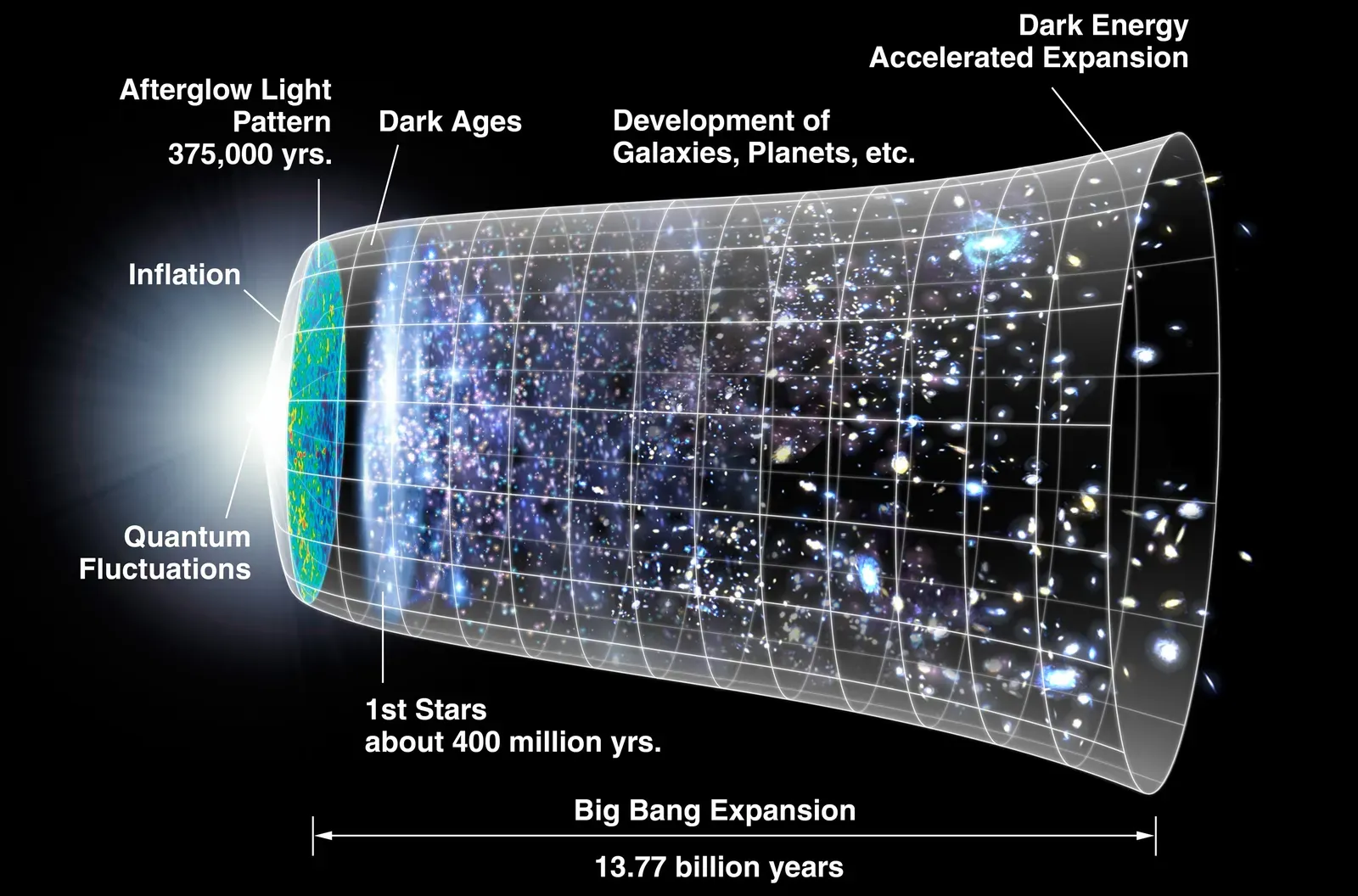
You’ve probably heard that the universe began with the Big Bang, but that neat phrase hides a brutal truth: when you push your questions all the way back to the first fraction of a second, your best theories fall apart. The standard picture describes space itself expanding from an extremely hot, dense state about 13 and a half billion years ago, and it does a great job explaining what you see today – galaxies moving apart, a faint afterglow of ancient light, and the spread of different elements. The trouble starts when you ask what, if anything, came before that initial fireball.
Right now, you’re stuck between ideas that are both bold and deeply uncertain. Some models suggest the universe might have gone through cycles, like an endless heartbeat of expansion and contraction, so what you call the Big Bang could just be one “bounce” in a much older story. Others hint that your universe might have emerged from quantum fluctuations in some deeper, still-unknown reality, where “before” and “after” are not even the right words to use. The harsh reality is that your current physics – especially when you try to combine gravity and quantum mechanics – cannot reliably trace the tape back to time zero, so “what happened before?” remains one of the most haunting questions you can ask.
2. What Is Dark Matter Really Made Of?
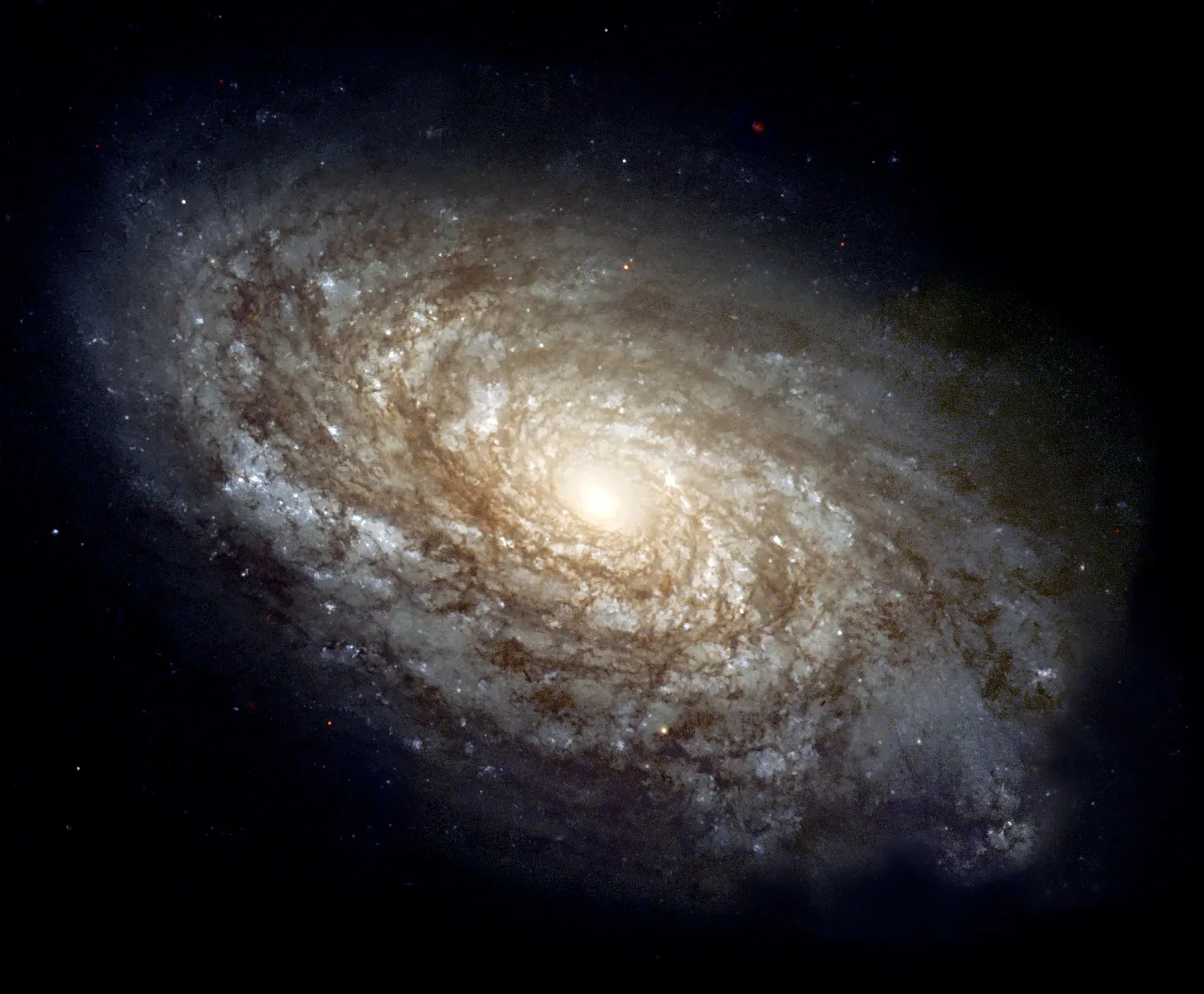
When you look at a galaxy in a picture, you’re only seeing a tiny portion of what’s actually there. Based on how stars orbit and how light bends around clusters of galaxies, you can tell there is a huge amount of invisible mass tugging on everything with gravity. This unseen substance, called dark matter, outweighs the ordinary matter in the universe by several times, yet you’ve never seen it, touched it, or detected it directly in your daily life. It doesn’t shine, it doesn’t glow, and it doesn’t seem to interact with light at all.
Physicists have built intricate detectors deep underground, hoping a dark matter particle might bump into an atomic nucleus and leave a tiny, tell‑tale signal, but so far the universe has stayed quiet. You’ll hear candidates thrown around – weakly interacting massive particles, axions, sterile neutrinos, even whole families of hidden-sector particles – but none of them has stepped forward with clear, undeniable evidence. The unsettling part is that you know dark matter is there from its gravitational effects, yet you don’t know if it’s made of one kind of particle, many kinds, or something more exotic than particles altogether. Until you catch it in the act, you are basically trying to describe a ghost by studying the way it rearranges furniture in the dark.
3. Why Is the Universe Dominated by Dark Energy?
As strange as dark matter is, dark energy is even more unnerving. In the late twentieth century, observations of distant exploding stars showed that the expansion of the universe is not slowing down as you might expect from gravity – it’s speeding up. To make sense of that, you have to accept that empty space itself is filled with some kind of energy that pushes galaxies apart. Today, when you tally up the cosmic energy budget, this dark energy makes up the majority of everything, even though you cannot bottle it, point to it, or switch it off.
You can try to model dark energy as a simple property of space, a constant energy density that fills the universe uniformly. The equations allow that, but when you compare the measured value to what your best theories of quantum fields predict, the numbers disagree by an absurd amount. Other possibilities imagine dark energy as a slowly changing field that evolves over cosmic time, which might change the fate of the universe in ways you can barely imagine – endless expansion, a gentle fade‑out, or, in some models, a catastrophic ripping apart of everything. For now, you can measure dark energy’s effects with growing precision, but what it actually is, and why it has the value it does, is still a question that makes cosmologists wince.
4. Are You Living in a Multiverse?
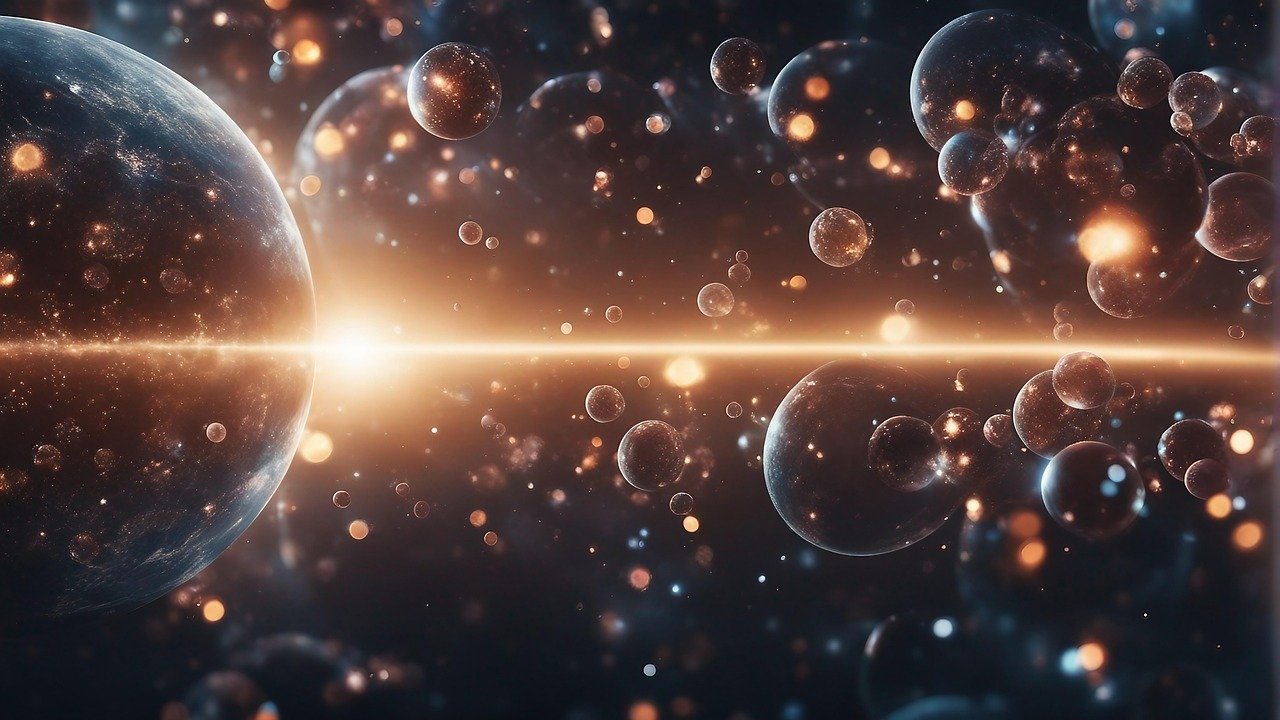
It sounds like something from a sci‑fi movie, but the idea of a multiverse shows up again and again when you try to push cosmology and fundamental physics to their limits. Some versions of inflation theory – the idea that the early universe went through a brief period of extremely rapid expansion – naturally produce not just one universe, but countless pocket universes, each forming in different regions of a larger inflating space. In many of these scenarios, you end up with slightly different physical constants or even different laws of physics in each pocket. That means your universe could be one bubble among many, with you stuck inside one specific example.
Quantum mechanics adds its own twist, suggesting that every possible outcome of a quantum event may exist in some branching version of reality. For you, that raises a truly weird possibility: when you talk about “the universe,” you might actually be referring to just one slice of a much richer structure. The problem is that testing these ideas is brutally hard, because by definition other universes might be causally disconnected from yours. You can look for subtle fingerprints – patterns in ancient cosmic light, for example – but right now the multiverse is more of a framework that might explain why your universe’s settings seem so oddly well‑tuned for life, rather than a hard, testable fact.
5. How Did Life First Begin from Non‑Living Matter?
If you strip life down to molecules, you find a messy, beautiful choreography of carbon chains, water, and energy flows. But knowing what life is made of is very different from knowing how it began. At some point on the early Earth, simple molecules must have organized into self‑copying systems that could store information and evolve. You can sketch pieces of this story – how certain molecules naturally form under the right conditions, how membranes might assemble, how basic chemistry can build complexity – but you still don’t have a single, complete pathway you can point to and say, “This is how your kind of life got started.”
You might picture a warm little pond, a deep‑sea vent, or even tiny droplets in the atmosphere as the original crucible. Each setting gives you different ingredients and energy sources, and experiments show you can build interesting pre‑life chemistry in all of them. Some researchers lean toward an early world dominated by RNA‑like molecules that both store information and act as chemical catalysts, while others favor metabolism‑first scenarios, where networks of reactions started humming before any genetic code existed. Despite decades of work, you still lack a lab experiment that starts with simple, realistic early‑Earth ingredients and ends with a fully self‑sustaining, evolving system. Until that bridge is built, the leap from chemistry to biology remains one of the most intimate mysteries you face.
6. Are You Alone in the Universe?
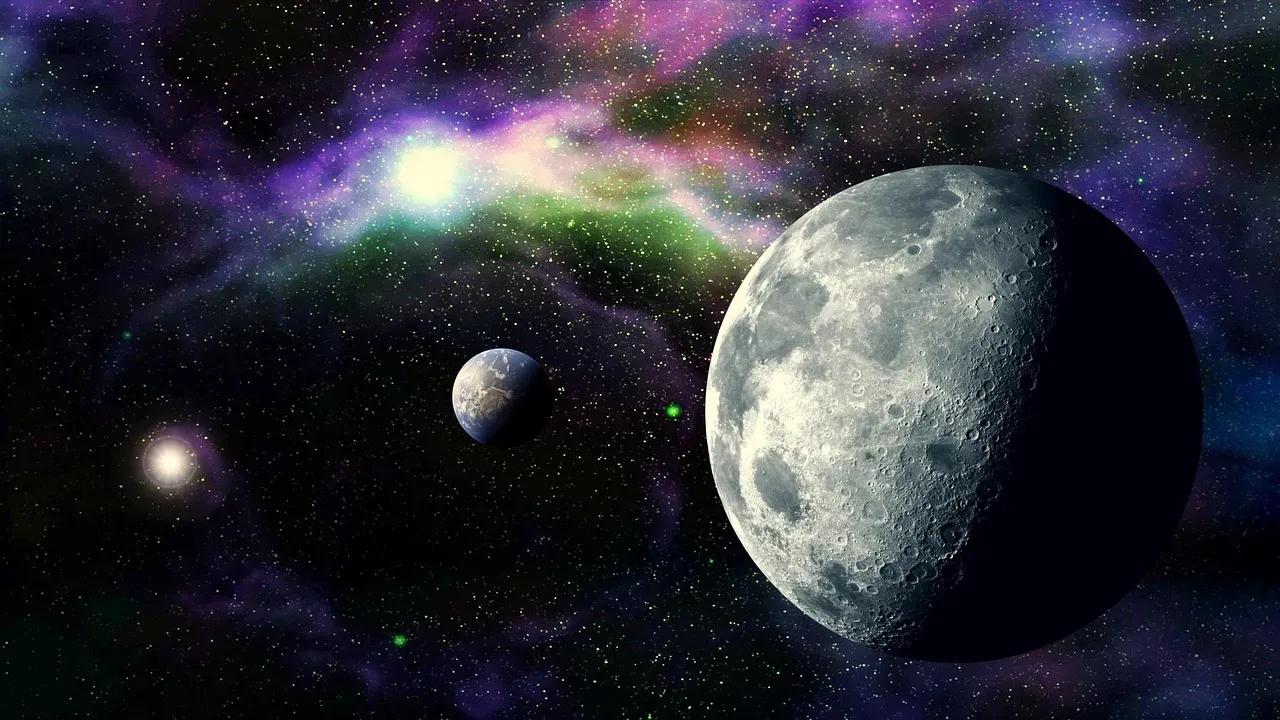
On a clear night, you can look up and know that nearly every star you see is likely surrounded by planets. Modern telescopes have confirmed that planets are everywhere, and many of them orbit in zones where liquid water could exist. Statistically, it feels almost impossible that your planet is the only one where chemistry has stumbled into biology and then into minds capable of building radio telescopes and writing about cosmic questions. Yet as of today, every confirmed life‑form you know about still comes from this single world, which makes your situation both encouraging and deeply frustrating.
You have a growing list of ways to search: scanning for faint chemical signatures in the atmospheres of distant exoplanets, listening for artificial radio signals, and even looking within your own solar system for microbes in subsurface oceans or buried ice. You also have the strange silence often called the Fermi paradox: if technological civilizations are common and long‑lived, the universe should be obviously buzzing with evidence of them, but your instruments have found no clear sign so far. That gap between expectation and observation forces you to ask hard questions about how often life starts, how often intelligence emerges, how long advanced societies survive, and whether you are even looking in the right way. For now, you live in a universe that feels like a crowded theater where you can hear no one else breathing.
7. What Is Consciousness, Really?
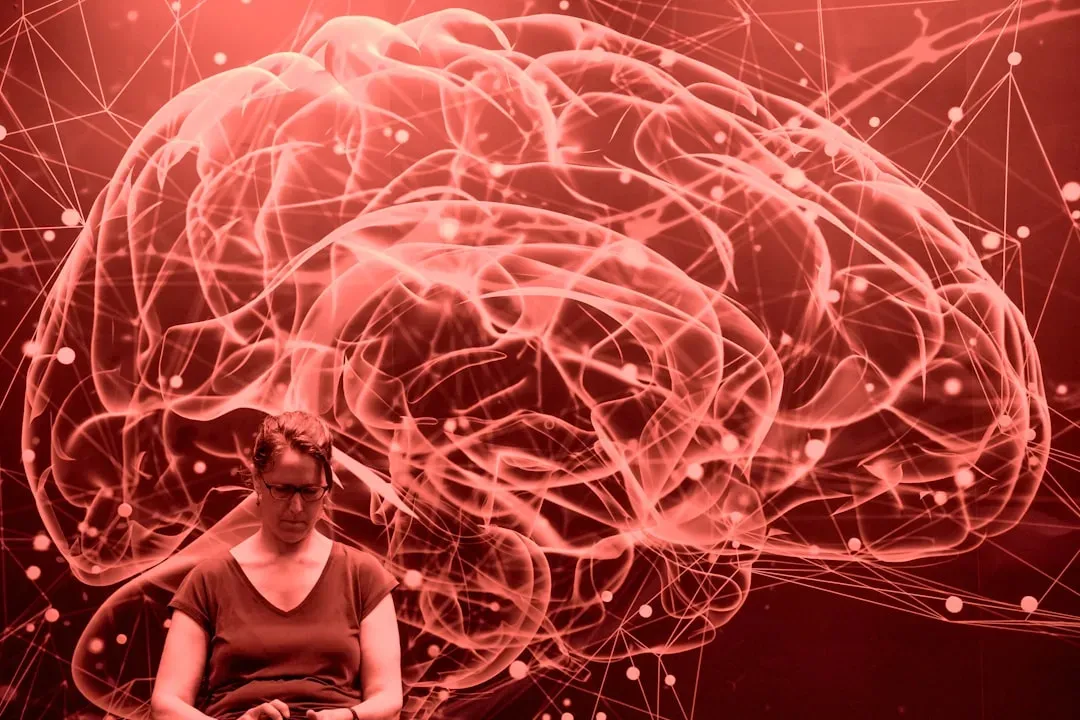
Of all the mysteries you face, consciousness is the one you literally cannot escape, because you experience it every moment you’re awake. You can scan a brain, measure electrical activity, and map which areas handle language, vision, or emotion. You can describe neurons firing and networks synchronizing, and you can even change someone’s experience with drugs, magnetic pulses, or surgery. But none of those measurements quite captures the raw, first‑person feeling of being you – the color red as you see it, the taste of coffee, the ache of heartbreak, the sudden shock of recognition in a familiar face.
You might think of consciousness as what it feels like when your brain processes information in a certain way, but there’s still no consensus on what that “certain way” actually is. Some theories emphasize global patterns of communication across the brain, others highlight how information is integrated into a unified whole, and still others treat consciousness as a fundamental property of reality, not just a byproduct of biological machinery. You’re also left wondering whether sophisticated AI systems, animals, or even alien minds – if they exist – have inner lives anything like your own. Until you can connect the physical story in your brain to the subjective story in your mind, you’re walking around with the biggest unanswered question quietly sitting behind every single thought you have.
When you step back from these questions – before the Big Bang, dark matter and dark energy, the multiverse, the origin of life, alien civilizations, and the nature of consciousness – you start to see a pattern. You’re living in a time where you know enough to ask incredibly precise questions about the universe, but not enough to tie them up with neat answers. That might feel unsettling, yet it’s exactly this unfinished state that keeps science alive, giving you new tools, new ideas, and new chances to be surprised.
Maybe the real gift is that you get to exist in a universe that refuses to be trivial, one that always leaves something just out of reach, like a star you can see clearly but never touch. As you go about your ordinary day – scrolling, commuting, cooking – it’s worth pausing now and then to remember that you’re a small, conscious patch of the cosmos trying to understand itself. Which of these unanswered questions pulls at you the most when you finally look up at the night sky and let yourself wonder?