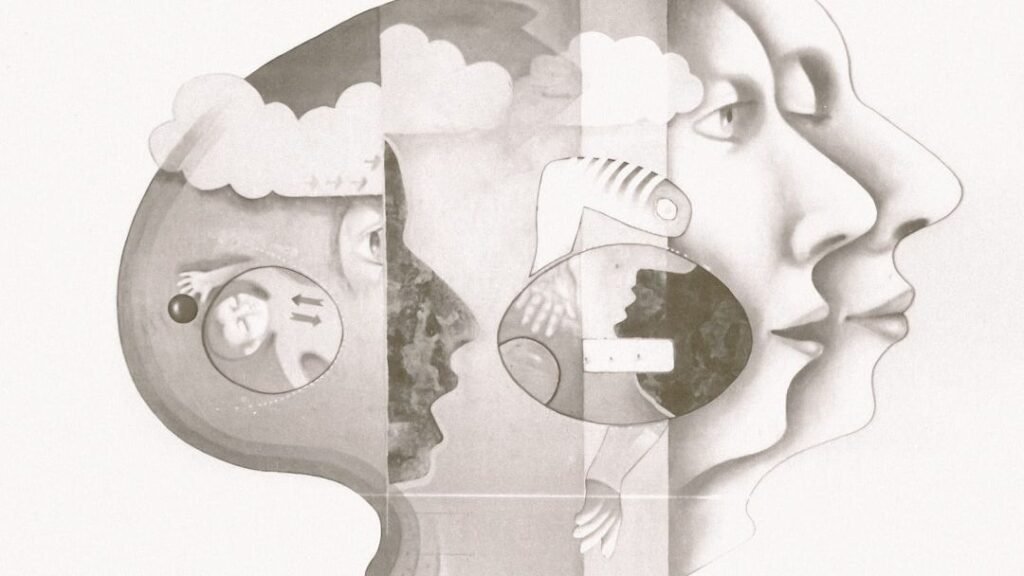
You have probably had moments where you felt oddly connected to something bigger than yourself: finishing a friend’s sentence, sensing someone’s mood before they say a word, or feeling strangely at peace in a forest or crowd. Those little flashes can feel like glitches in the story that you are a completely separate individual, sealed off inside your own skull. takes those small, familiar moments and asks a daring question: what if they are hints, not accidents?
In this view, your mind is not a lonely island but more like a wave on a vast ocean of awareness. The wave has its own shape, its own story, and its own struggles, but it is never actually separate from the water that gives it form. This idea shows up in philosophy, neuroscience debates, and even the way modern technology connects you to others. You are invited to explore it not as a wild fantasy, but as a serious, if unconventional, way of thinking about who you are and what consciousness might be.
The Strange Feeling That You Are More Than Your Brain

Think about those times when you suddenly “come back” to yourself, as if you had been on autopilot for hours. One moment you are absorbed in your routine, and the next you are watching your own life from a slight distance, wondering who is actually steering this thing. Experiences like this can make you suspect that the story “you are your brain” is a bit too simple, like explaining a movie by describing only the pixels on the screen. The pixels matter, but they are not the whole story you are actually living.
You also notice that your sense of self is not constant. When you are furious, you are convinced you are that anger. When you are deeply calm, you feel like somebody completely different. Yet something in you stays the same throughout all those shifting moods and thoughts, like a quiet background presence. That stable “something” often feels bigger than the swirl of your daily problems, which is exactly the doorway many philosophers and contemplative traditions use to suggest that your individual mind might be a small window into a much larger field of mind.
How Your Brain Might Be a Receiver, Not a Generator
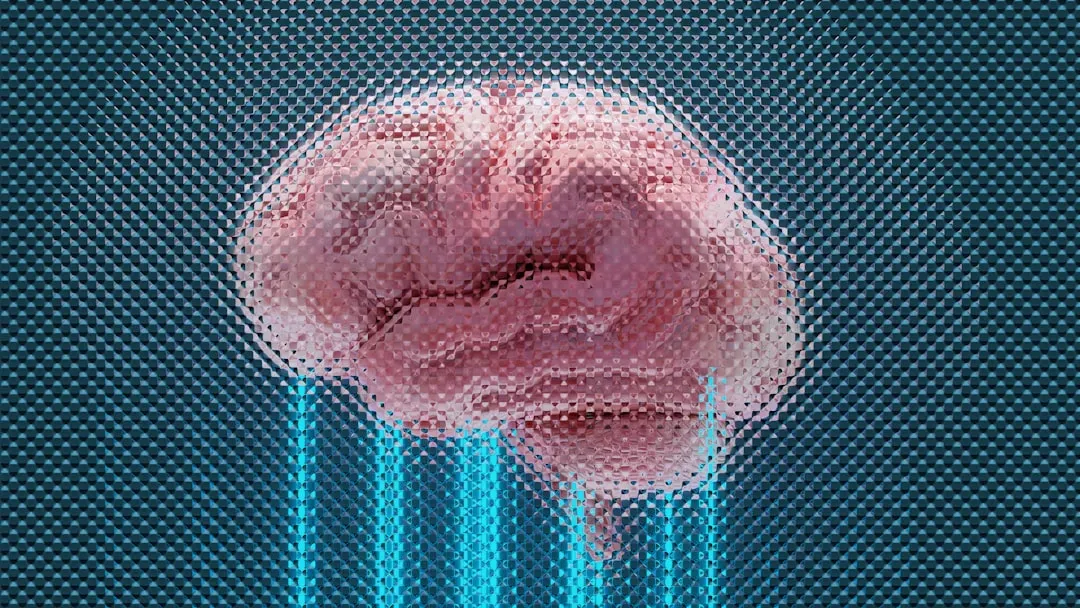
You are usually taught that the brain produces consciousness the way a factory produces cars: put in the right parts, and awareness rolls off the line. But there is another way to look at it: your brain might work more like a radio or a smartphone, tuning into and shaping a stream of consciousness that is not entirely created inside it. In this model, damaging the brain is like cracking the screen or bending the antenna: the signal still exists, but the device struggles to display or interpret it clearly.
When you see brain scans lighting up, it is tempting to conclude that those flashes are the origin of experience. Yet correlation is not the same as explanation. Just because turning the dial changes the music does not mean the music originates in the radio. You can accept that brain activity and mind are tightly linked, while still leaving room for the idea that your individual awareness is one local pattern of a more extensive, shared consciousness that your nervous system filters into a personal story.
Glimpses of a Bigger Mind in Everyday Life

You already get small hints that your mind might not be as isolated as you are taught. When you catch yourself mirroring someone’s posture or mood without trying, you are feeling how quickly your inner state blends with the emotional “weather” around you. Sit in a room full of anxious people and you tense up; spend an afternoon with a deeply relaxed friend and you start to unwind. You are not just a mind in a box; you are more like a sponge, soaking up and trading invisible signals with others all the time.
Even your sense of thought ownership is not as solid as it seems. Ideas pop into your head while you shower, drive, or drift off to sleep, often arriving fully formed, as if you tuned into the right station by accident. Entire cultures share myths, symbols, and dream themes that no one person invented alone. When you treat your mind as a fragment of something larger, these patterns stop being coincidences and start looking more like overlapping ripples in a vast mental ocean you are quietly swimming in every day.
The Collective Mind: Culture, Language, and Shared Stories

If you want proof that minds overlap, you do not have to look at anything mystical; you just have to look at language. The words you are reading right now are like mental software that you downloaded from people who lived long before you. The way you think about time, love, money, or success is not just “yours” but heavily shaped by phrases, metaphors, and stories you inherited from your culture. When you repeat them, you help maintain a shared mental world that stretches far beyond any single skull.
You also plug into larger mind-like structures whenever you join a group or community. A sports team develops a style of play that no single player controls. An online community grows its own in-jokes, norms, and moods. A country acts with a kind of personality that outlives generations of citizens. When you participate in these networks, you are lending your individual consciousness to a bigger, emergent mind that influences you back in ways you feel every time you say “we” instead of “I.”
What Science and Mysticism Cautiously Agree On

You might assume that science and spiritual traditions sit on opposite sides of this question, but they sometimes circle around surprisingly similar ideas using different language. Many contemplative practices encourage you to notice awareness itself rather than the passing content of your thoughts, and people who do this seriously often report a dissolving of the hard boundary between “me in here” and “the world out there.” While personal reports are not proof, they are consistent across cultures and eras in a way that is hard to ignore.
On the scientific side, researchers study how large-scale brain networks give rise to unified experience, and how consciousness might be related to patterns of information rather than just raw material stuff. Some theories argue that complex, integrated systems naturally give rise to a kind of subjective “point of view,” which means that whenever you have enough structure and interaction, you have the ingredients for awareness. If that is even partly true, then it becomes easier to entertain the idea that your individual stream of consciousness could be one localized pattern inside a broader, interconnected mental landscape.
How This Idea Changes Your Sense of Self and Others
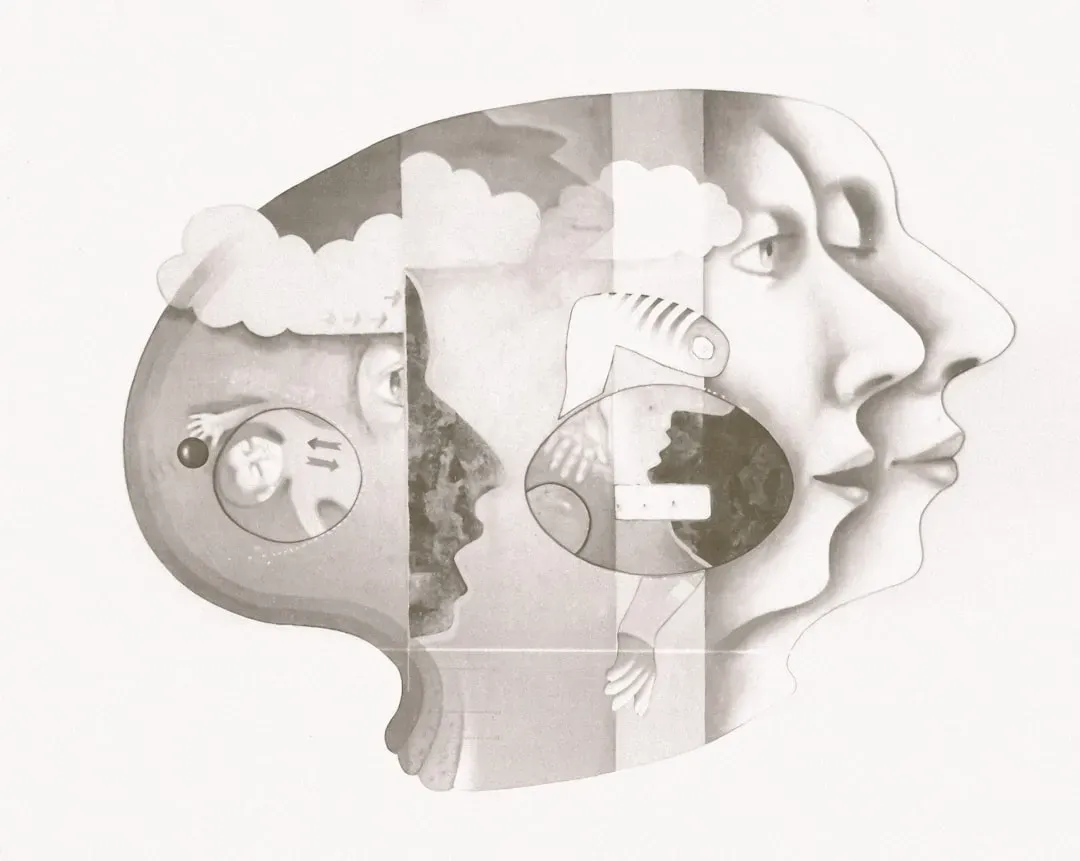
When you take seriously the possibility that your mind is a fragment of something larger, your sense of self shifts in subtle but important ways. You still have boundaries, preferences, and responsibilities, but you start to feel them as flexible rather than absolute, more like lines on a map than walls of a prison. Your inner life stops being just a private movie and starts looking more like one thread in a gigantic tapestry that includes everyone else’s joys, fears, and hopes.
This shift can make you more careful about how you treat other people’s minds. If you are all participating in a shared field of experience, then every time you add cruelty, contempt, or indifference to that field, you are not just hurting “them” out there; you are polluting the same mental atmosphere you breathe. On the other hand, every act of kindness, honesty, or genuine listening becomes a way of brightening that shared space, which eventually circles back to you in ways you feel in your own body and mood.
Living Practically as a Fragment of a Larger Mind
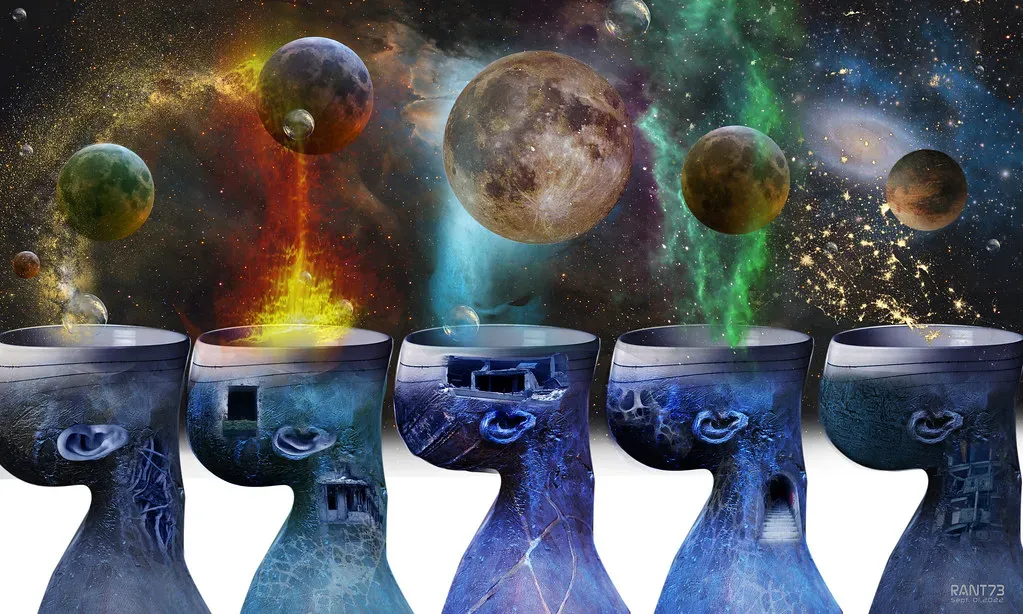
You might wonder what any of this means for real life, beyond being an interesting idea to think about before bed. One practical step is to pay closer attention to what you let into your mind, because you are not just shaping yourself; you are helping sculpt the larger mental environment you share with others. The media you consume, the conversations you choose, and even the thoughts you rehearse all become tiny contributions to a collective mind you are co-creating every day.
You can also experiment with practices that help you feel your connection more directly, like silent walks in nature, deep conversations where you really listen, or even simple moments of pausing to notice the flow of thoughts without immediately grabbing onto them. When you do this, you may start to sense that you are both an individual and more than an individual at the same time, like a single note in a song that only makes full sense when you hear the entire melody.
Staying Sane: Skepticism, Wonder, and Open Questions

It is easy to get carried away by big ideas, so you also need a healthy dose of skepticism alongside your curiosity. You do not have to swallow every claim about cosmic consciousness to explore the possibility that your mind is less isolated than it appears. You are allowed to say “I do not know,” to demand real evidence, and to keep your feet on the ground while your curiosity wanders. That balance between doubt and wonder keeps you from drifting into wishful thinking or dismissive cynicism.
Many of the questions here are still wide open: How exactly would a larger mind be structured? Could it be tested or measured? Is it something like a field, a network, or something you do not have the concepts for yet? Instead of rushing to an answer, you can treat these questions as invitations to keep looking, feeling, and thinking more carefully about experience itself. In a way, the mystery is not a problem to be solved but a space you get to live in.
In the end, the idea is less about proving a theory and more about how you choose to see yourself in relation to everything else. If you lean into it, even just as an experiment, everyday life starts to look different: your thoughts feel less lonely, your relationships feel more significant, and the world feels a bit more alive. You do not have to answer every philosophical riddle to sense that you might be a wave on a much deeper ocean of mind. Does that possibility change how you want to move through your day from here?