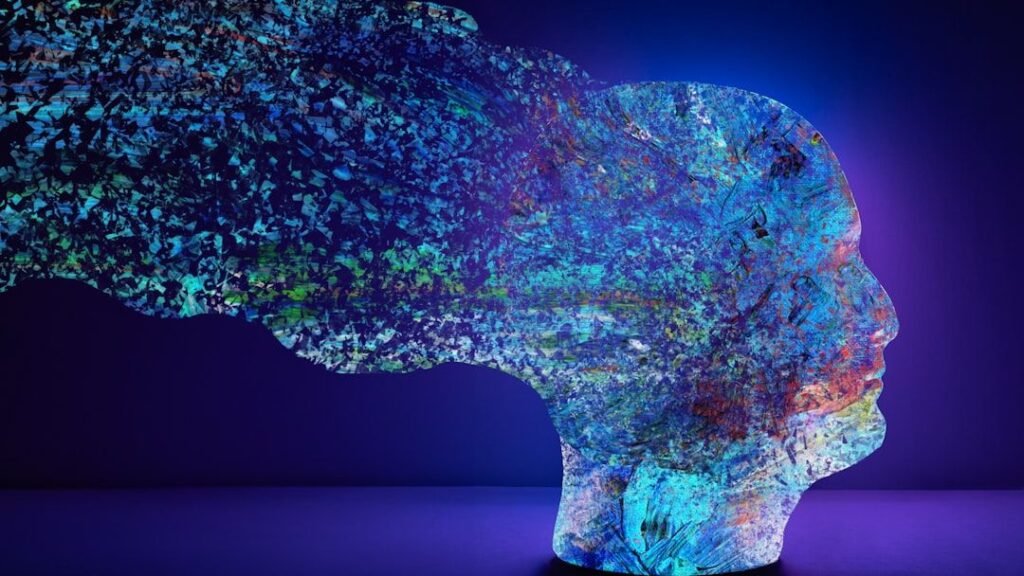
You have moments when life feels almost too precise to be random. A song comes on right as you think of it, you wake up seconds before your alarm, or you share a thought with someone and they say they were just thinking the same thing. In those flashes, you cannot help but wonder: is your awareness just the by-product of a brain made of meat and electricity, or are you tapping into something deeper that is already built into reality itself?
This question is not just late-night-philosophy material. It sits at the crossroads of neuroscience, physics, spirituality, and everyday experience. When you ask whether awareness is an accident or a feature of reality, you are really asking what you are, what the world is, and how the two fit together. You are also quietly asking how much power you actually have over your life, your choices, and even the meaning you give to existence.
The Strange Mystery of Being Aware at All

Start with the weirdest fact about your life: you are aware. You do not just process information like a thermostat or a calculator; you feel like something on the inside. You taste coffee, you feel embarrassment burning in your cheeks, you recognize your own thoughts as yours. From the outside, someone could scan your brain and see electrical patterns, but from the inside you live in a rich, private world of experiences that no one else can access directly.
This gap between brain activity and inner experience is often called the hard problem of consciousness. You can explain how light hits your eyes, how signals travel along your nerves, and how neurons fire in your visual cortex. But none of that seems to answer why all of this should feel like something. If awareness were just an accident of complexity, you might expect scientists to already have a clear path from matter to experience. Instead, the more closely you look, the stranger it gets.
How Neuroscience Frames Awareness as an “Accident”
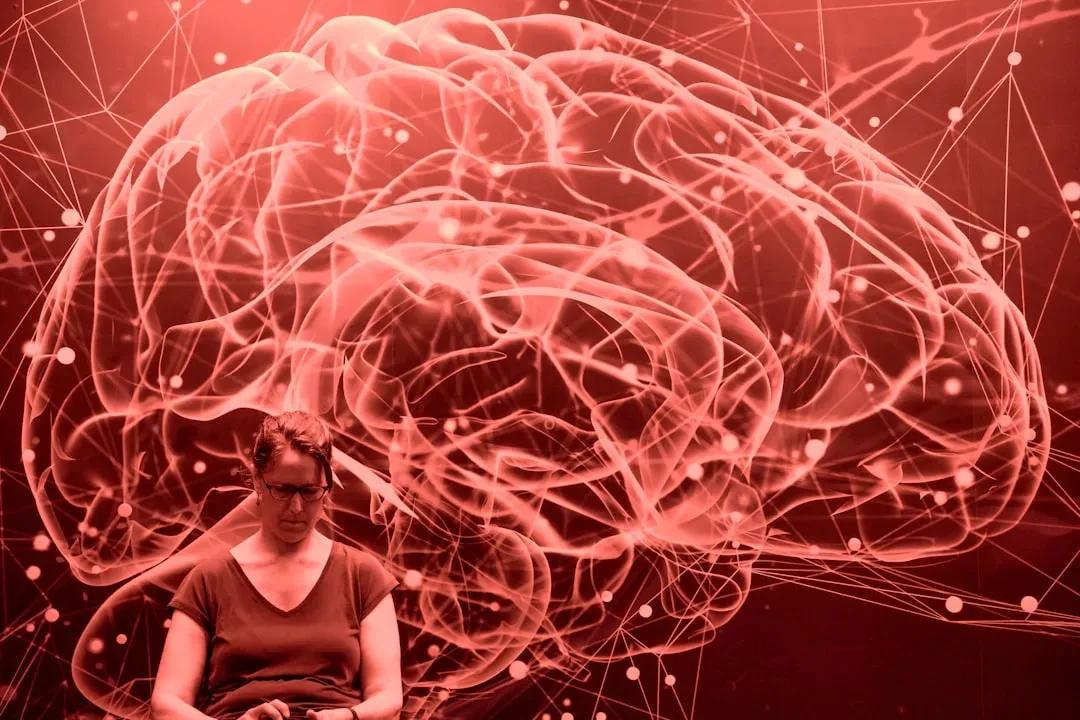
When you zoom in on your brain, the picture looks very physical. You see roughly about one and a half kilograms of tissue, made of cells using chemistry and electricity to pass signals. Neuroscience has shown that when certain parts of your brain are damaged, pieces of your awareness disappear: you might lose vision in part of your field, fail to recognize faces, or feel your emotions flatten. From this point of view, your awareness rides on brain activity the way music rides on a speaker system.
This leads some scientists to treat consciousness as an emergent property. In other words, once you have a system that is complex enough, like your brain, awareness just pops out as a side-effect, like a rainbow emerging from the interaction of light and raindrops. In this story, awareness is not a fundamental ingredient of reality; it is a latecomer, a useful but accidental feature of an evolved nervous system. If your brain had developed differently, your awareness might not exist at all, and the universe would go on just fine without it.
The Idea That Awareness Is Everywhere (In Some Form)

There is another way to look at things that you might find surprisingly intuitive: instead of being a glitch of complexity, awareness might be woven into the fabric of reality from the start. Some philosophers and scientists have explored views where every bit of matter has at least a tiny speck of experience, or the potential for it, even if it is unimaginably simple compared with yours. In that picture, your human awareness is not the first spark, it is just a richer, more organized version of something that was always there.
You can think of it like this: instead of saying that consciousness turns on suddenly at some level of brain complexity, you imagine a dimmer switch gradually turning up. A rock, a cell, a mouse, and you would all sit along a spectrum of increasingly complex and integrated awareness. In everyday life, you already talk like this without noticing it when you say your phone is confused or your car is stubborn. You are instinctively projecting awareness onto the world, and some modern theories suggest you may not be entirely wrong to do so.
Physics, Information, and the Hidden Structure of Reality

Modern physics complicates things in a way that quietly supports the idea that reality is not just dead stuff. On very small scales, particles seem to behave differently when you measure them, and systems remain in fuzzy states of possibility until an interaction takes place. You do not need to claim that human awareness magically collapses these states, but you do run into a universe that looks less like a static machine and more like a web of relationships and information.
Some researchers argue that information, not matter, might be the most basic ingredient of reality. If that is true, and your awareness is intimately tied to how your brain processes and integrates information, then your experience is not entirely separate from the universe’s deepest structure. Instead of a tiny biological accident staring out at a meaningless world, you become a local expression of the same informational fabric that shapes galaxies, particles, and everything in between.
What Your Everyday Experience Quietly Suggests

Set aside theories for a moment and look at how awareness feels from the inside. You never experience the world as a pile of separate objects; you experience it as a unified field of awareness in which sights, sounds, thoughts, and emotions all show up. When you are deeply absorbed in a conversation, a piece of music, or a walk in nature, the boundary between “you in here” and “the world out there” can soften. You feel more like a point of view in a larger flow than a lone observer trapped in a skull.
You also know that the quality of your awareness changes your reality in a very practical sense. When you are stressed and distracted, the world seems harsh, cramped, and hostile. When you are calm, present, and open, the exact same circumstances can feel manageable, even meaningful. That does not prove awareness is a built-in feature of reality, but it does reveal something powerful: your conscious state is not an optional overlay on life. It is the lens that makes your reality livable, and that should make you take it seriously.
Spiritual Traditions: Awareness as the Ground of Everything

Long before neuroscience or quantum physics, spiritual traditions across cultures were already treating awareness as fundamental. You find practices where you are invited to notice that everything you experience comes and goes, but the simple fact of being aware remains constant. From that angle, you are not primarily your thoughts, your story, or your roles; you are the open field in which all of that appears. This is not a belief you are supposed to swallow; it is a perspective you are meant to test directly in your own experience.
When you sit quietly and watch your thoughts, you start to see how they arise on their own, change, and fade. The same goes for sensations and emotions. Yet the basic sense of “I am aware” does not come and go in the same way; it feels like the background. Some traditions flip your usual assumption and claim that this awareness is not a product of the world but the stage on which the world is displayed. If you have ever had a moment of stillness where everything felt strangely clear and connected, you have already tasted the kind of insight they are pointing toward.
Living as If Your Awareness Really Matters

Even if you stay undecided about the cosmic status of awareness, you can live in a way that treats it as precious rather than accidental. You can train your attention through small daily habits, like putting your phone face down when talking with someone, taking three slow breaths before answering an email, or pausing to notice the sensations in your body during a stressful moment. Each of these practices reminds you that you are not just reacting; you are aware of reacting, and that tiny gap is where your freedom lives.
You can also explore how different states of awareness change your sense of self and world. Try journaling about situations where you felt most alive, present, or aligned and notice what they have in common. Often it is less about what was happening and more about how fully you were there for it. When you begin to see your awareness as the most important “place” your life happens, you naturally start protecting it from constant distraction and treating it like the core asset it actually is.
So… Accident or Built-In Feature?

When you put the pieces together, you do not get a neat answer tied up with a bow. You get two powerful stories that both fit part of what you know. One says your awareness emerges from brain activity and evolutionary history, making it a late, fragile, local phenomenon. The other says awareness is a fundamental aspect of reality, and your personal consciousness is a particular way that universal awareness shows up right here, right now. Both are trying to explain the same undeniable fact: you find yourself awake in a world that you can question.
Maybe the most honest position you can take today is humble openness. You acknowledge that science has mapped many of the mechanisms that correlate with awareness while also admitting that the raw feeling of being you is still mysterious. You live as if your awareness matters deeply, because every meaningful moment of your life depends on it, while staying curious about its ultimate source. In the end, whether awareness is an accident or a built-in feature of reality, you are the one who has to live with it, explore it, and decide what kind of world you create from it.
If there is one conclusion that seems hard to escape, it is this: your awareness is not a trivial side-effect. It is where your entire life happens. The universe may or may not be conscious in some grand, all-encompassing way, but for you, reality only ever shows up through the simple fact that you are aware right now, reading these words. The real question might not be what awareness is in the ultimate sense, but what you are going to do with this strange, luminous capacity while you still have the chance.