You probably take your own mind for granted most days. You wake up, remember who you are, juggle worries about money, friends, health, and the future, and somehow navigate a world that’s absurdly complex. Yet when you step back, it’s honestly shocking that a three‑pound lump of gray tissue in your skull can imagine black holes, split atoms, write symphonies, and wonder what happens after death. Your everyday thoughts are so familiar that you rarely notice how weird they really are.
That weirdness has led thinkers for centuries to a wild question: if your mind can reach so far beyond its immediate survival needs, does that hint at some deeper intelligence woven into the universe itself? Maybe your personal consciousness isn’t a random accident, but a tiny window into something larger, older, and far more mysterious. You do not need to jump into mystical claims to feel that tug; simply paying close attention to your own awareness can make the world feel strangely enchanted.
The Astonishing Improbability of Your Conscious Mind

When you trace your mind back through evolution, the story feels almost unbelievable. You start with a young Earth covered in rock and ocean, no plants, no animals, just chemistry doing its thing. Over unimaginable spans of time, simple molecules formed more complex structures, some of which could copy themselves, and eventually life emerged. From there, you get single‑celled organisms, then multicellular creatures, then nervous systems, then brains, and eventually you, sitting here wondering if the universe is conscious.
From a strict materialist angle, your awareness grew out of blind variation and natural selection, with no guiding purpose, only survival and reproduction. Yet here you are, thinking about art, morality, and the meaning of existence, things that don’t map neatly onto staying alive or having offspring. That gap can make you feel as if your conscious life overshoots what evolution strictly “needs,” as though reality is over‑delivering on complexity. You might not want to call that cosmic intelligence, but it does make the emergence of your inner world feel less like a trivial side effect and more like one of the universe’s strangest achievements.
How Your Brain Turns Atoms Into Experiences
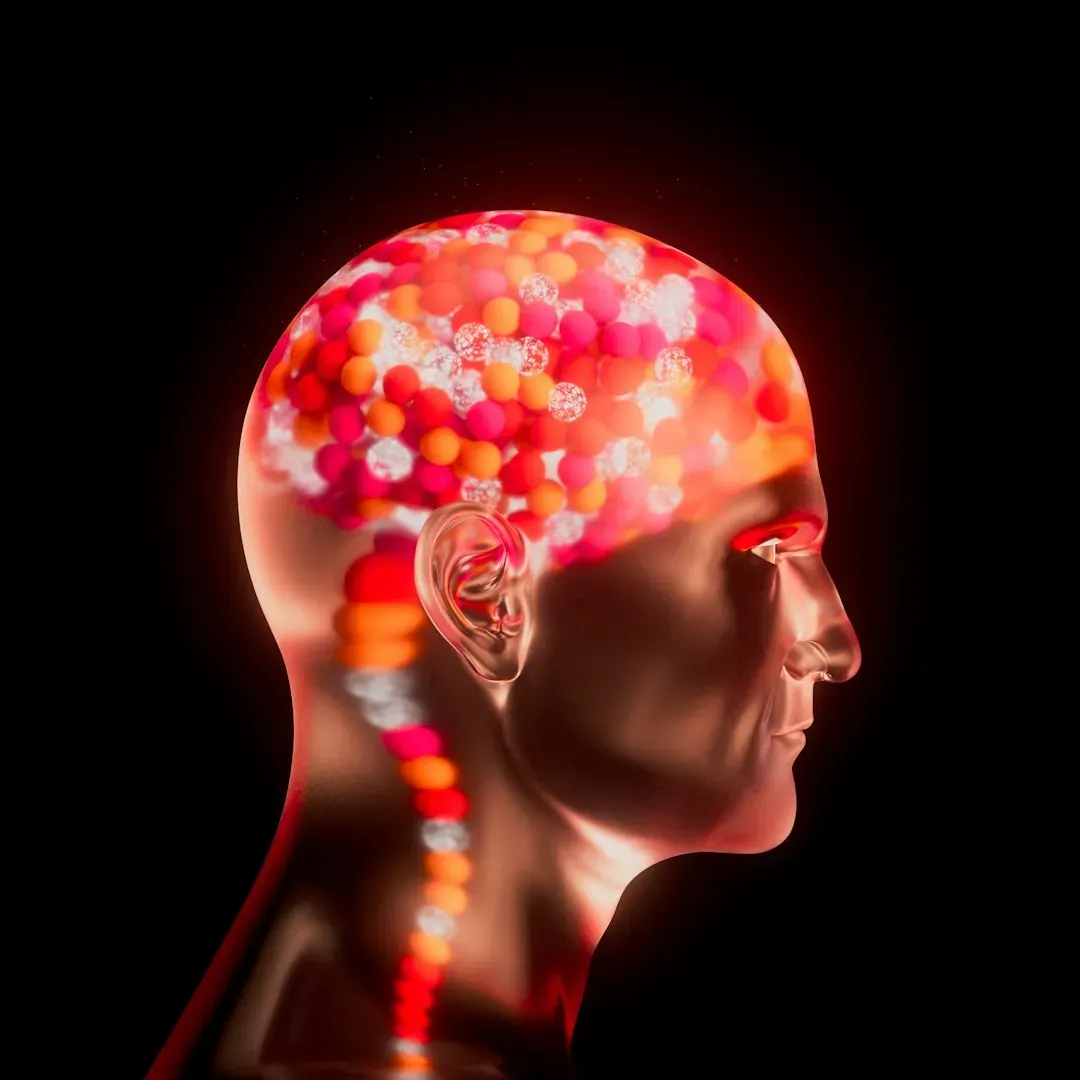
Your brain is made of the same basic stuff as stars, rocks, and coffee cups: atoms obeying physical laws. Yet unlike a rock, you don’t just exist, you experience. You feel pain, taste chocolate, see sunsets, and hear music. These are not just signals or data; they’re felt realities from the inside. Neuroscience can track which brain regions light up when you feel fear or joy, and it can show how networks of neurons fire together when you recall a memory or recognize a face.
But even with all that detail, there’s a stubborn mystery: how does electrical activity become the feeling of being you? You can scan a brain for patterns, but that only gives you the outside view. Your lived experience is the inside view, and no one fully knows how to bridge that gap. This puzzle has pushed some philosophers and scientists to wonder if consciousness is not something that appears late, only in complex brains, but something more basic, like a fundamental property of reality that brains happen to organize in a special way. If you take that idea seriously, your mind might not be a random glitch in matter, but a highly tuned expression of something that runs all the way down.
Patterns, Mathematics, and the Strange Power of Your Intuition
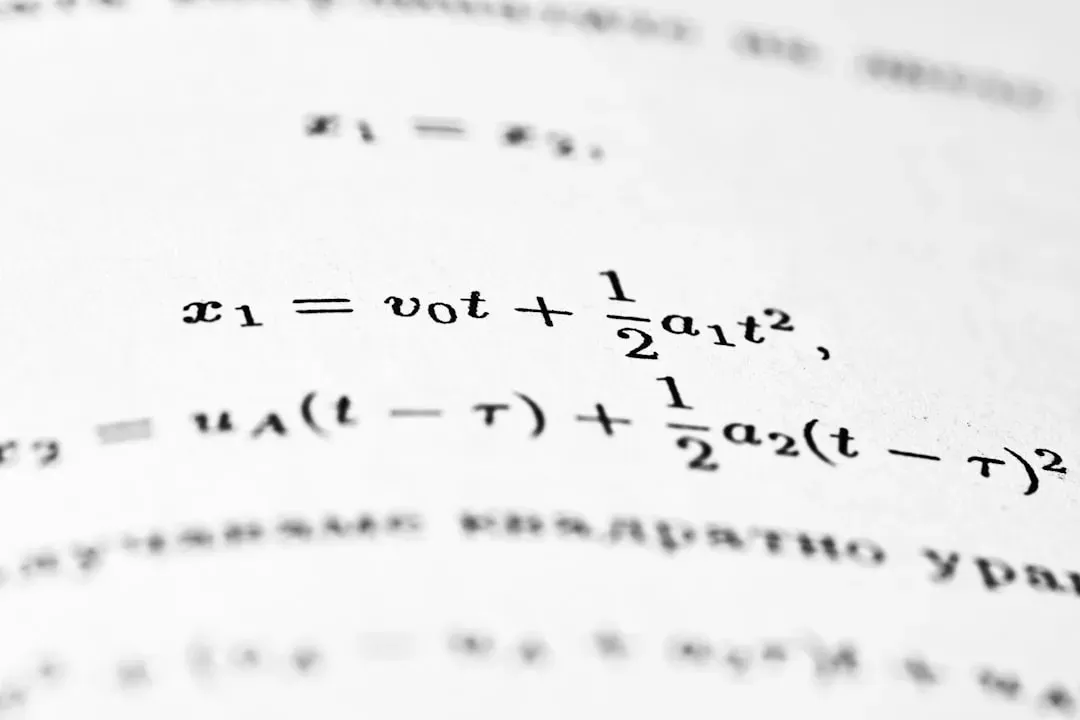
Think about how confidently you use ideas that have no obvious physical shape: numbers, equations, logical rules. You rely on them to build bridges, design phones, and send spacecraft past distant planets, and the weird part is that they work. You can sit at a desk working through abstract math, and those scribbles later guide an actual rocket across millions of miles. Your mind seems built to resonate with the deep structure of the world, as if it’s tuned to pick up patterns the universe “offers.”
That uncanny fit raises a question: why should your evolved primate brain be so good at grasping laws of nature that never mattered to your ancestors’ survival? You do not need to leap to grand claims, but it is hard not to feel that something interesting is going on when your private thoughts track the behavior of stars and particles with such accuracy. One way to read this is simple luck plus selection pressure. Another way is to see your mathematical intuition as a clue that your mind is not just floating in the universe, but participating in a shared, deeper structure that was there all along, waiting to be discovered.
The Case for a Purely Material Mind
If you lean toward a more skeptical view, you might see human minds as impressive but not mystical. On this picture, your thoughts, feelings, and decisions arise entirely from physical processes: neurons firing, chemicals diffusing, circuits forming and rewiring through learning and development. When you fall in love, meditate, or solve a puzzle, it all boils down to patterns of activity that could, at least in principle, be measured and modeled. As brain imaging, computational neuroscience, and artificial intelligence advance, this view gains more tools to explain mental life without invoking any cosmic intelligence.
From this angle, your sense that your mind points beyond matter is just another evolved illusion, like your craving for sugar or your fear of snakes. It helped your ancestors cooperate, find meaning, and cope with mortality, so it stuck around. You can still feel awe, gratitude, and purpose, but you do not need to assume the universe itself is intelligent; you can treat minds as local accidents in a vast, indifferent cosmos. That stance can actually be strangely liberating, because it tells you that meaning is something you build, not something you’re waiting to be handed from the sky.
Hints of Mind in Matter: The Panpsychist Temptation
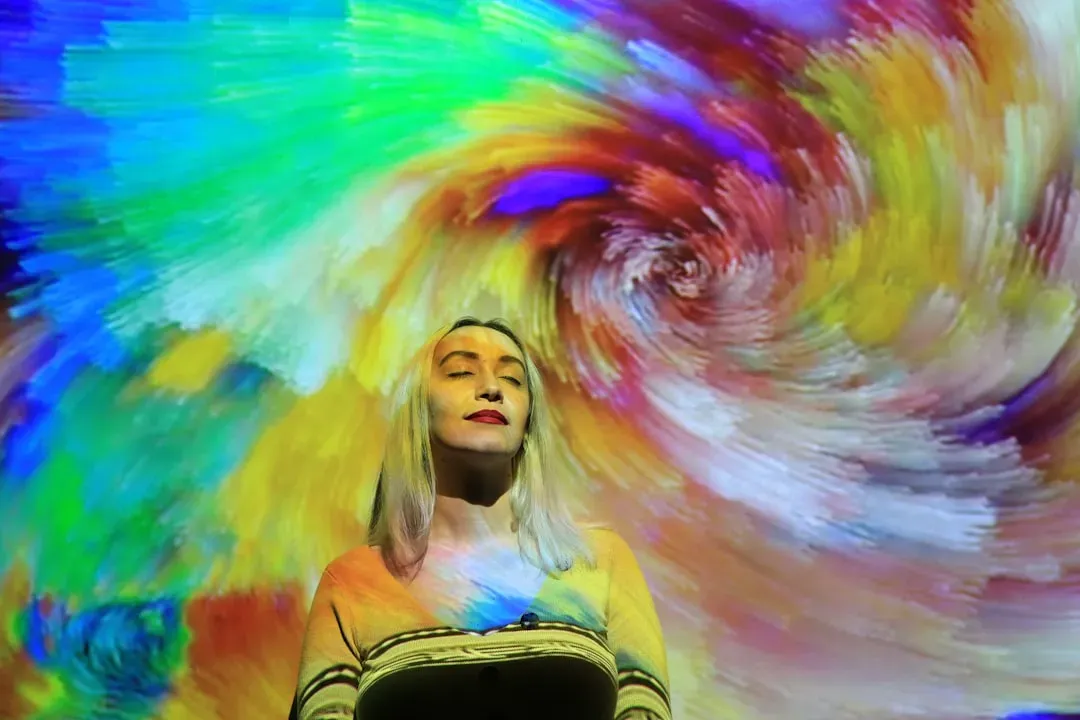
There is another route you can take, one that has gained fresh attention in philosophy and some areas of science: the idea that mindlike qualities might be fundamental in nature. According to this perspective, called panpsychism in some versions, you do not get consciousness out of utterly mindless matter. Instead, the building blocks of reality already contain tiny, primitive forms of experience or proto‑experience. Your brain does not magically create consciousness from scratch; it organizes and amplifies something that was already faintly there.
In this view, when you look out at the cosmos, you are not peering into a dead, mechanical void, but into a field of potential experience that becomes more complex in stars, planets, and especially living beings. Your individual mind would then be a particular pattern in a broader sea of awareness, the way a whirlpool is a particular pattern in water. This does not prove that the universe has a single, unified mind or a grand plan, but it does soften the line between you and everything else. Instead of minds appearing late in cosmic history as strange intruders, they become one of the ways reality shows itself.
Religious, Spiritual, and Mystical Readings of Your Mind

Across cultures and centuries, people have taken their own consciousness as the most direct clue that reality is more than physical stuff. If you come from a religious background, you might see your mind as a gift or a reflection of a divine mind that underlies the cosmos. Your capacity for love, creativity, moral insight, and self‑sacrifice can feel like evidence that there is a higher order of value baked into reality, not just a random scattering of particles. In this reading, when you think deeply or love unselfishly, you are aligning yourself with that larger intelligence.
Even if you do not identify with a specific tradition, you might have had moments of intense clarity, unity, or transcendence: during meditation, in nature, through music, or under the influence of psychedelics. In such states, you can feel as if the boundary between “you in here” and “world out there” dissolves, and a sense of profound connectedness floods in. Some people interpret those experiences as glimpses of a deeper mind in which your own is nested, like a wave realizing it is part of the ocean. Others see them as dramatic but purely brain‑generated illusions. The raw experience is real; how you read it depends on what you are willing to believe about the cosmos.
Artificial Intelligence and What It Reveals About Your Own Mind
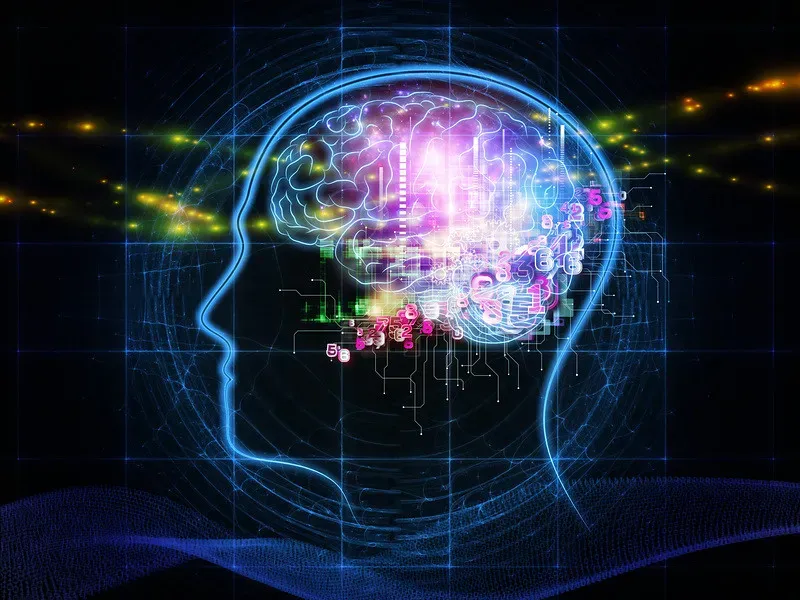
As you watch artificial intelligence systems grow more capable, it forces you to rethink what, exactly, makes human minds special. Machines can already recognize images, generate text, translate languages, and even mimic conversation in ways that can feel surprisingly human. If complex information processing can do so much without being conscious, you are nudged to separate intelligence as problem‑solving from consciousness as felt experience. You start asking whether your own mind is just a more tangled version of these patterns, or whether there is an extra spark that no algorithm can capture.
This comparison can cut both ways. On one hand, seeing machines handle tasks you thought were uniquely human might push you toward a more mechanistic picture of your own mind. On the other hand, the very fact that these systems, however advanced, do not seem to have an inner life, reminds you how remarkable it is that you do. If you ever create machines that genuinely seem to feel and reflect, that might change the argument again. For now, AI mostly highlights the mystery: in a universe where complex systems can emerge from simple rules, maybe minds like yours are one more expression of a deeper order that is still unfolding.
Living With the Mystery: What You Do With These Possibilities
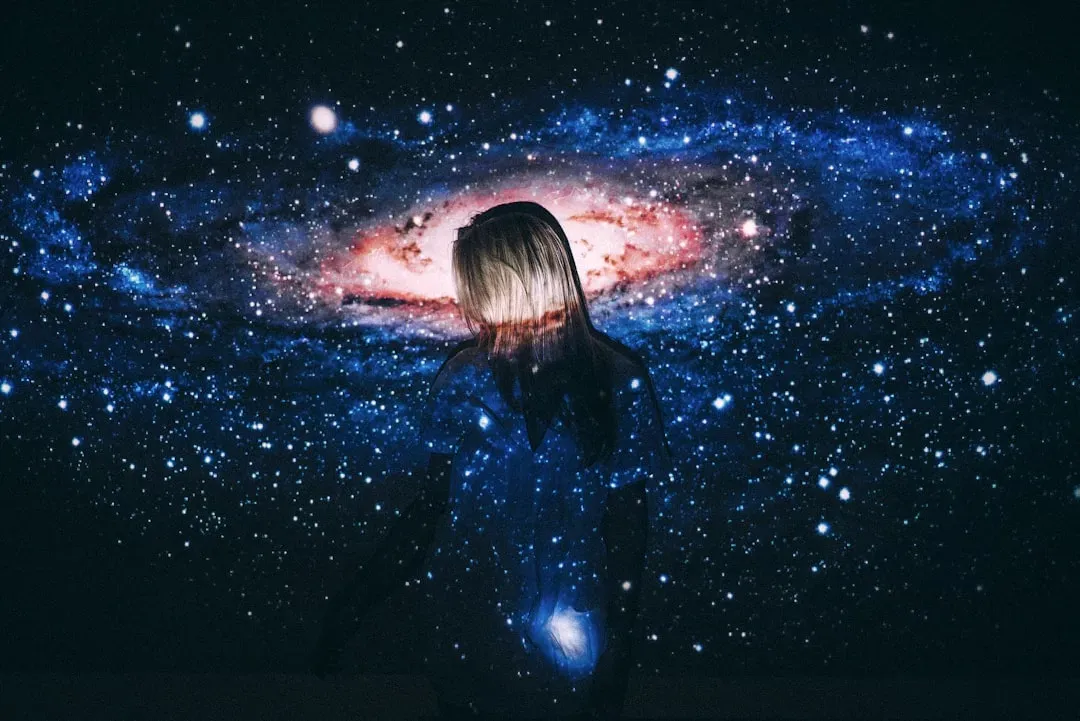
At the end of the day, you are left with possibilities rather than final answers. Maybe your mind is a brilliant but local accident in an uncaring universe. Maybe it is a high‑resolution window into a deeper field of awareness that runs through everything. Maybe reality is stranger than either camp tends to admit, and your current concepts are only rough sketches of something you barely grasp. You can gather arguments, weigh evidence, and study science and philosophy, but you still have to choose how to live under uncertainty.
Whatever stance you lean toward, you can let the sheer existence of your consciousness reshape how you move through the world. You can treat your mind less like a noisy problem to manage and more like a rare phenomenon that deserves curiosity and care. You can remain open to evidence, willing to update your view as you learn more, without rushing to comforting conclusions. Whether or not human minds are evidence of a deeper cosmic intelligence, the fact that you can even ask the question is already one of the strangest and most beautiful things about being alive. When you look out at the night sky, what feels more honest to you: a cold emptiness, or a mystery that might still be thinking back?