
If you pay attention, your backyard starts to feel less like a patch of grass and more like a tiny, feathery neighborhood with its own gossip, routines, and quiet dramas. Those flashes of red, yellow, and blue aren’t just decoration; they’re tiny signals, warnings, love songs, and sometimes flat-out arguments being thrown through the air.
Once you start understanding what these common birds are “saying,” you never really look at them the same way again. You learn when danger is near, when a storm might be coming, or when someone is trying to impress a mate or defend a favorite feeder. Think of this as your beginner’s guide to decoding bird body language and calls, right in your own backyard.
1. Northern Cardinal – The Bright Red Alarm System
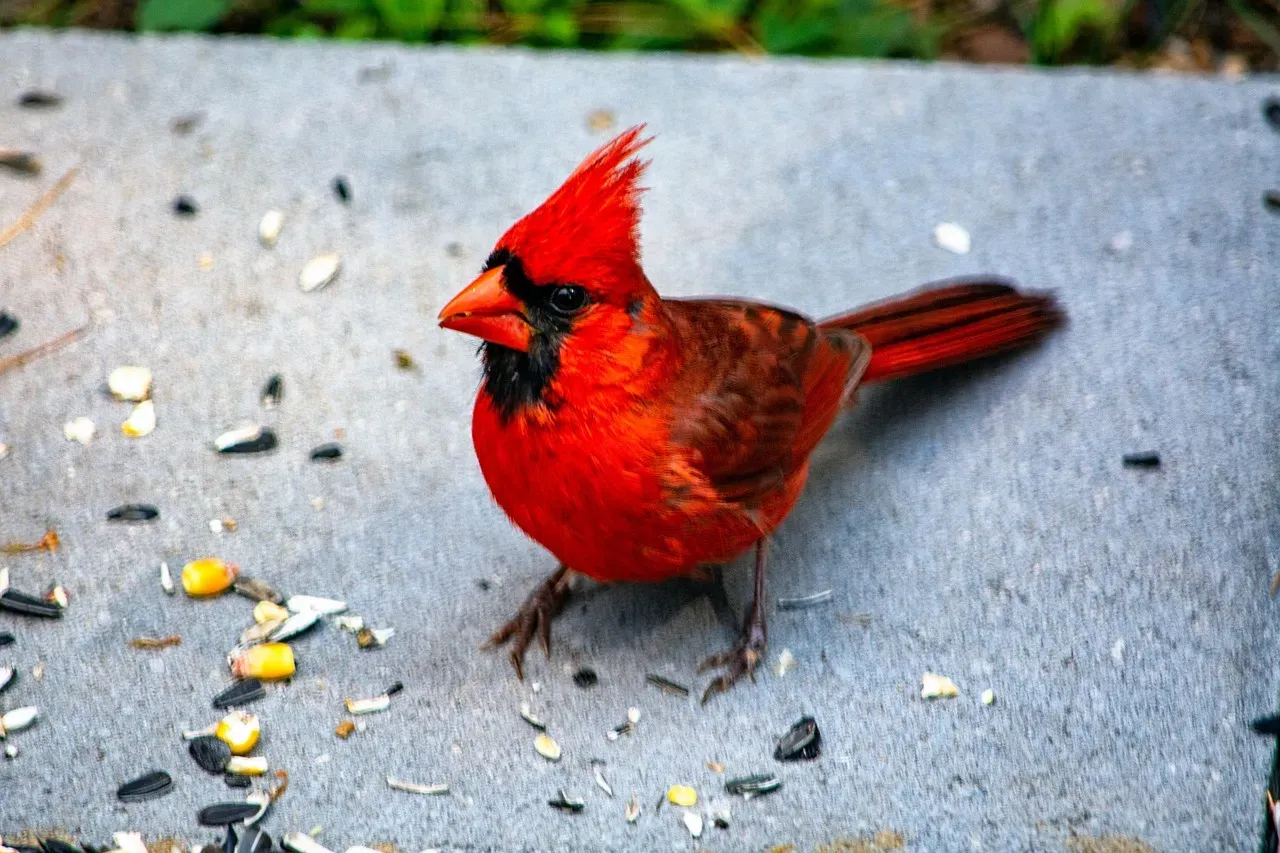
The moment you see that blazing red flash of a male Northern Cardinal, you’re looking at more than a pretty ornament; you’re seeing a walking, chirping territory sign. When a male sits high on a branch and belts out a strong, clear song, he’s staking a claim and telling every other cardinal, “This spot’s taken.” You’ll often notice he prefers exposed perches when he’s singing like that, because visibility is power in the bird world.
You can also treat cardinals as living security cameras. When you hear them give sharp, metallic “chip” notes over and over, especially in short bursts, they’re usually sounding an alarm about a predator like a hawk, cat, or snake. If the calls get faster and more intense, it’s often a sign that the threat is close. When you learn that pattern, you start to know when to look up, because something dangerous might be moving through your yard.
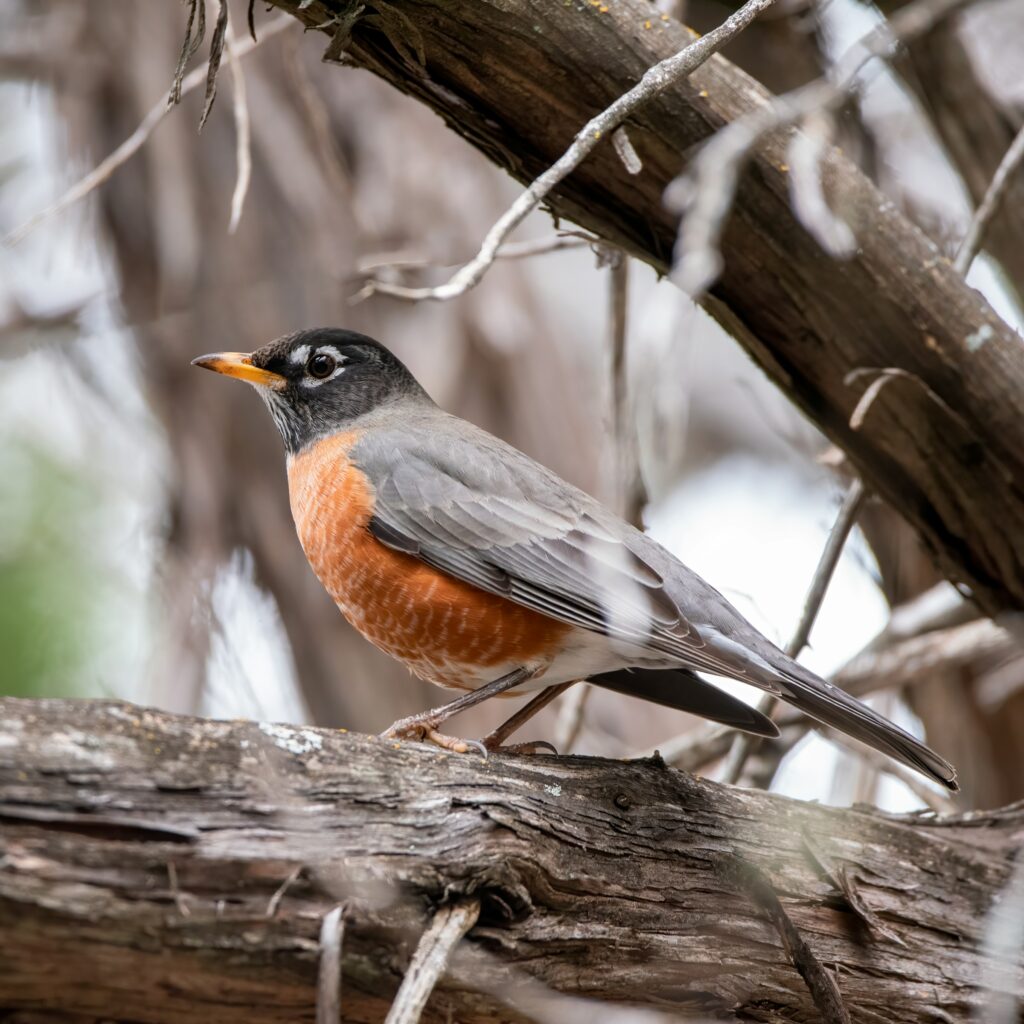
2. American Robin – The Backyard Timekeeper
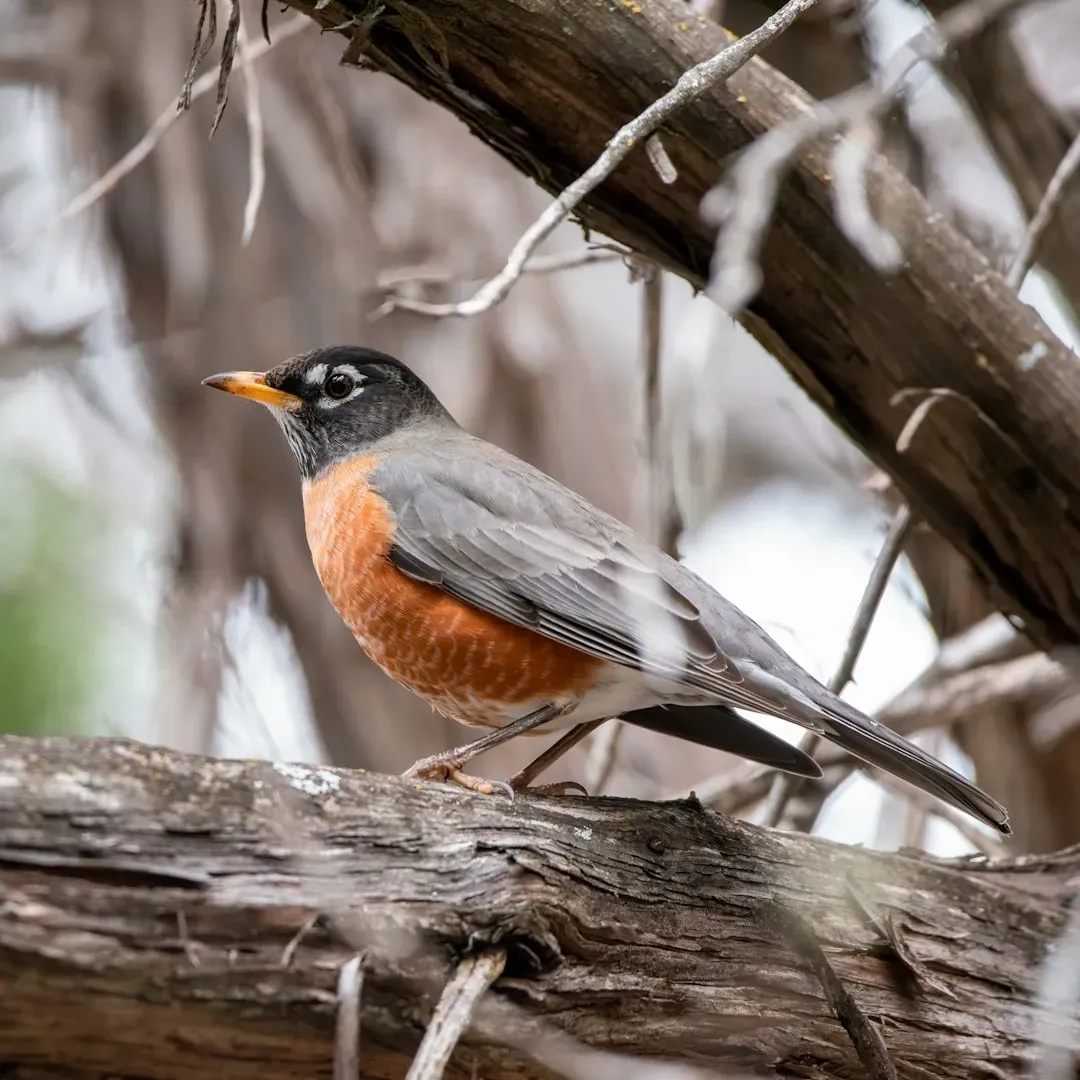
If you’re awake early, the American Robin is often one of the first voices you hear, long before the sun truly shows itself. Their mellow, whistling phrases at dawn are basically a daily roll call, telling other robins, “I made it through the night, and this area is mine.” You can almost use them as a natural alarm clock; when the robins start singing more intensely, dawn is coming whether your eyes are ready or not.
On the ground, robins send you another simple message: food and soil conditions. When you see them running, stopping, tilting their heads, and then pulling up worms, they’re responding to sound and vibrations in moist soil. If robins suddenly crowd your lawn after rain, they’re telling you that the ground is rich with invertebrates. And if they quiet down and gather in trees instead of singing and foraging, especially in late afternoon, they’re often shifting into roost mode for safety as night approaches.
3. Blue Jay – The Noisy Neighborhood Watch
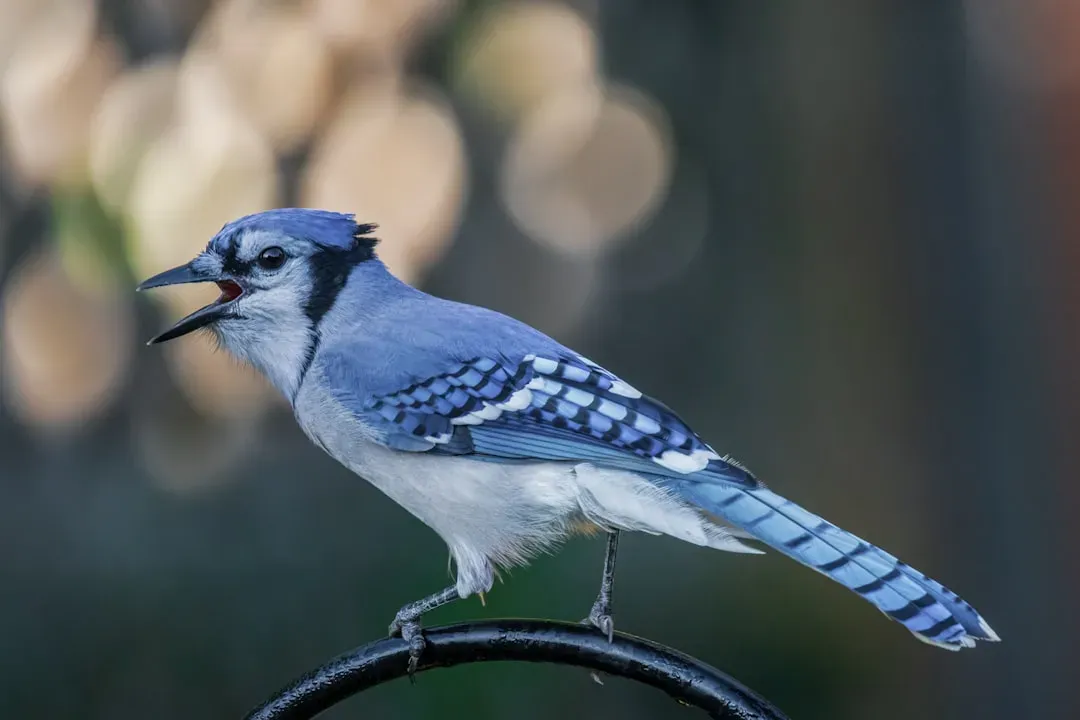
You’ll rarely accuse a Blue Jay of being subtle. When you hear that harsh, ringing “jay! jay!” coming from your trees, you’re listening to a bird that acts like the self-appointed security guard of the yard. Jays are famous for mobbing predators; when they spot a hawk or owl, they often gather and scream about it. When you suddenly hear multiple jays yelling in the same direction, you’re being tipped off that something big and toothy or taloned is nearby.
At the same time, Blue Jays are expert mimics, and that sends its own kind of message. When you hear what sounds like a hawk call but it’s a little off, you might actually be hearing a jay. Some researchers think they mimic hawks to test reactions or to scare other birds away from food. So if your feeders go strangely quiet right after a “hawk” call and you still see plenty of small birds hiding out, you may be witnessing a jay running a bluff.
4. Mourning Dove – The Soft-Spoken Weather Reporter
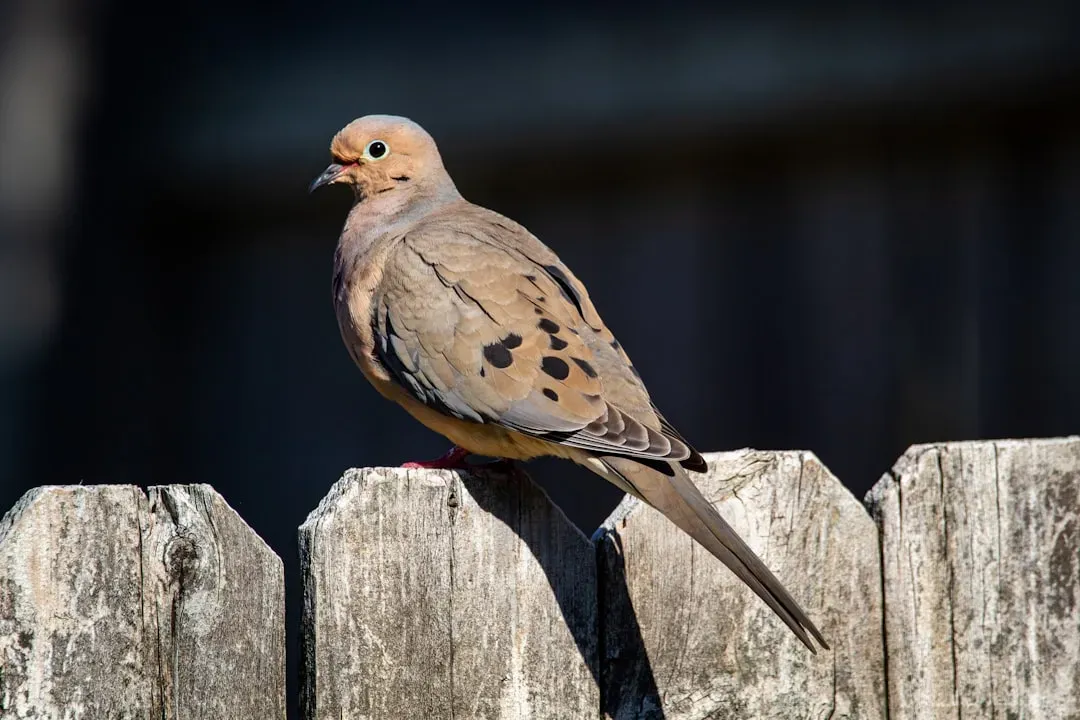
Mourning Doves sound like they’re whispering secrets at the edge of your hearing. That low, mournful cooing is usually a combination of courtship and territory, especially in the breeding season. When you hear repeated, gentle coos from a visible perch or rooftop, that bird is usually trying to attract or reassure a mate and quietly claim the area. You might even notice one dove following another on the ground with a kind of earnest, shuffling walk; that’s often courtship in motion.
They’re also quiet messengers of calm or tension. When doves feed peacefully on the ground, relaxed and scattered, your yard is probably fairly safe at that moment. But pay attention to the instant lift-off, that explosive whir of wings when something spooks them. That sound is not just an accident; the wing noise itself can startle predators and warn other birds. If you hear sudden, synchronized wing claps from doves, something just changed in your backyard’s danger level.
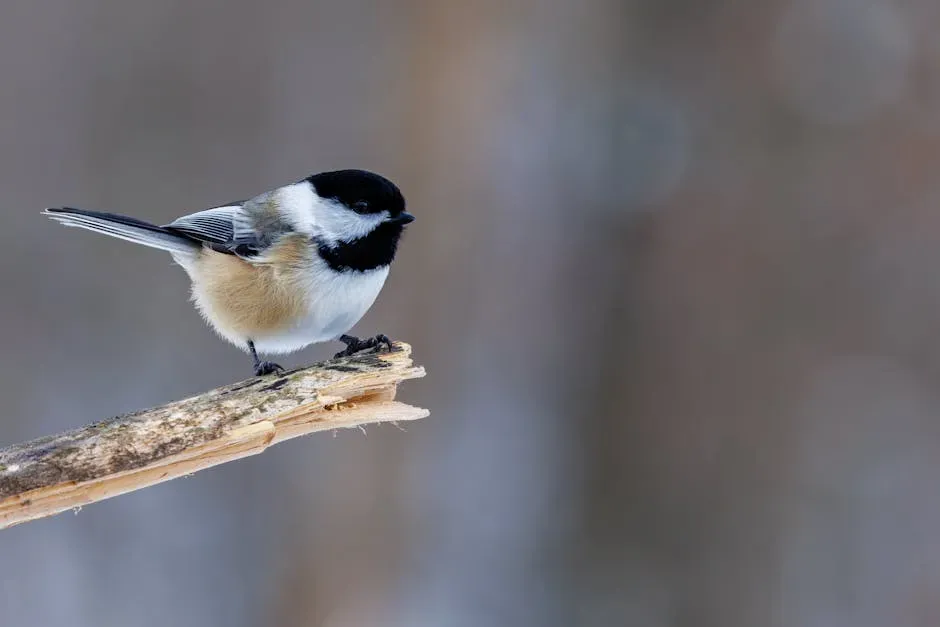
5. Black-capped Chickadee – The Tiny Code-Talker
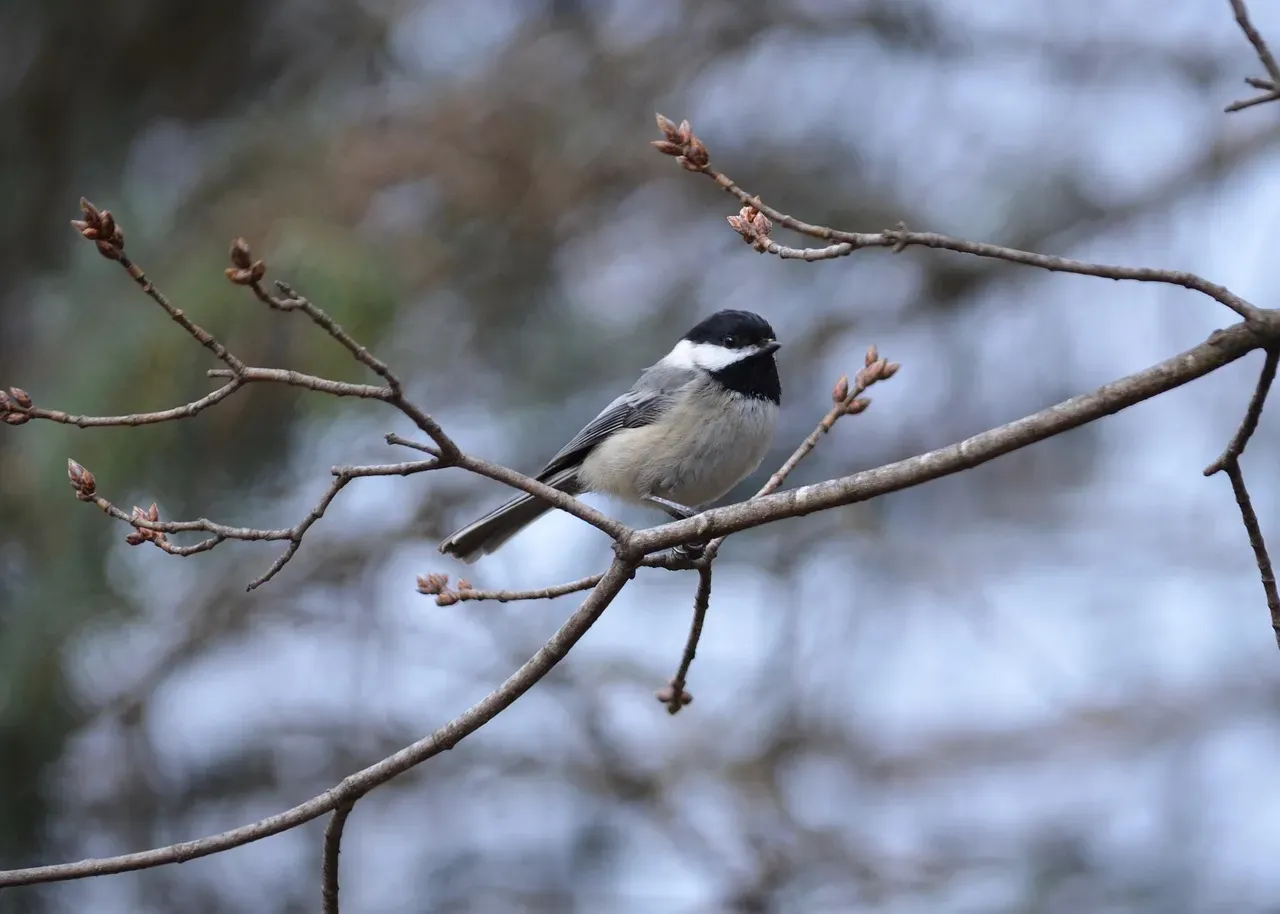
If you live in the northern or northeastern US, the Black-capped Chickadee is like the tiny messenger who never stops talking. Their famous “chick-a-dee-dee-dee” call isn’t random chatter; it carries real information. The number of “dee” notes at the end can shift depending on how threatening a predator is, with more “dees” often given for smaller, more agile dangers like certain owls. When you listen closely, you realize you’re hearing a code about what’s lurking in the area.
Chickadees also invite you into mixed flocks. In fall and winter, other small species like nuthatches and titmice often follow chickadee groups, because chickadees are so alert and vocal about threats and food sources. If your yard suddenly fills with their soft contact calls, you may have a roaming flock checking out your feeders and trees. You can think of them as the neighborhood’s social network, constantly sharing headlines about where the good food and bad news are.
6. American Goldfinch – The Optimistic Late Bloomer
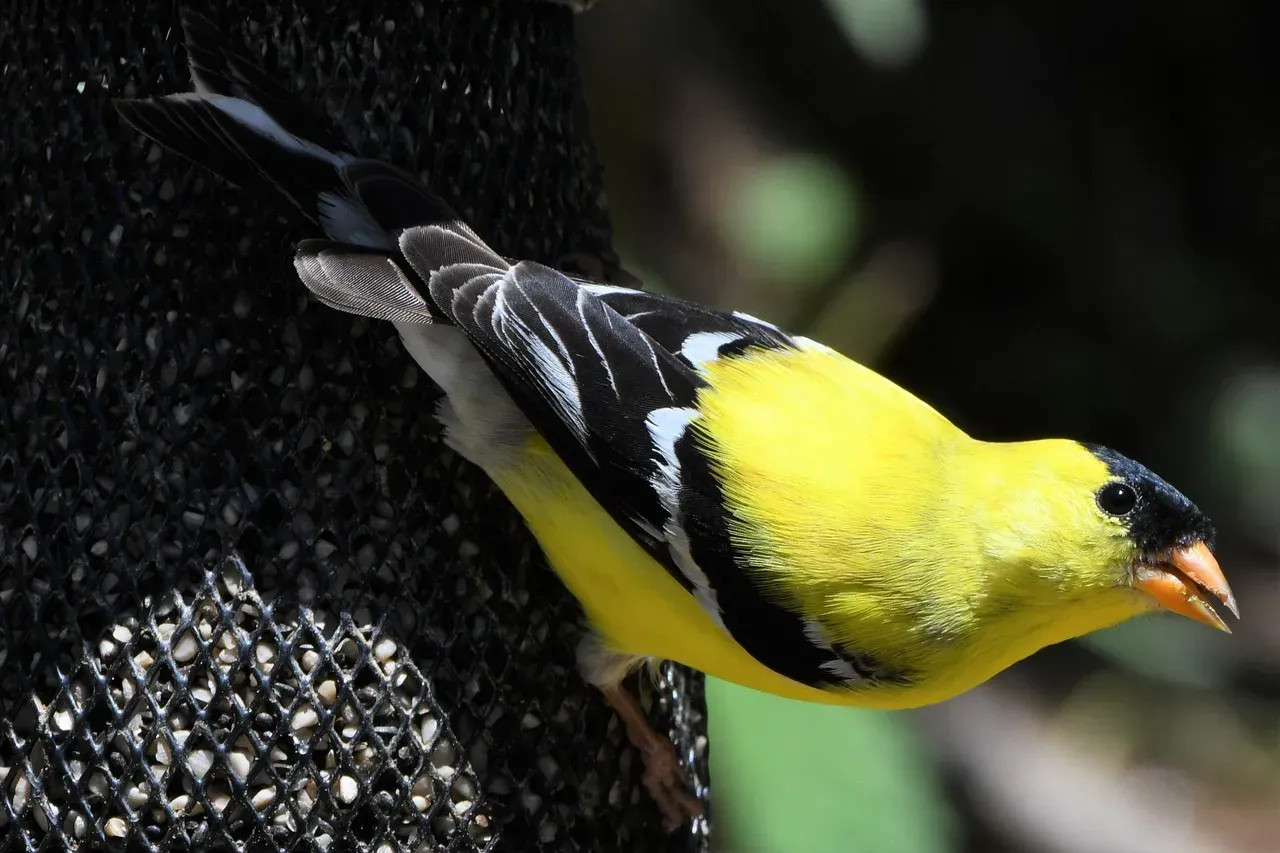
The American Goldfinch seems to bring a message of brightness and renewal, especially in mid to late summer when males are at their most vivid yellow. Unlike many songbirds, goldfinches nest quite late in the season, often waiting until thistle and other seed plants have matured. When you see them flying in bouncy arcs over weedy patches and flower beds, they’re telling you that your yard still supports wild seed sources, not just lawn and mulch.
Their calls also match their appearance: light and playful. As they fly, you’ll often hear them give a rhythmic series of notes that many people remember as sounding like “potato chip.” That chipper soundtrack is a way for flock members and mates to keep track of each other in the air. When they go quiet and cluster in shrubs instead, especially on cold or stormy days, they’re sharing another simple message: conserve energy, hunker down, and ride it out together.
7. House Finch – The Street Musician of Your Feeder
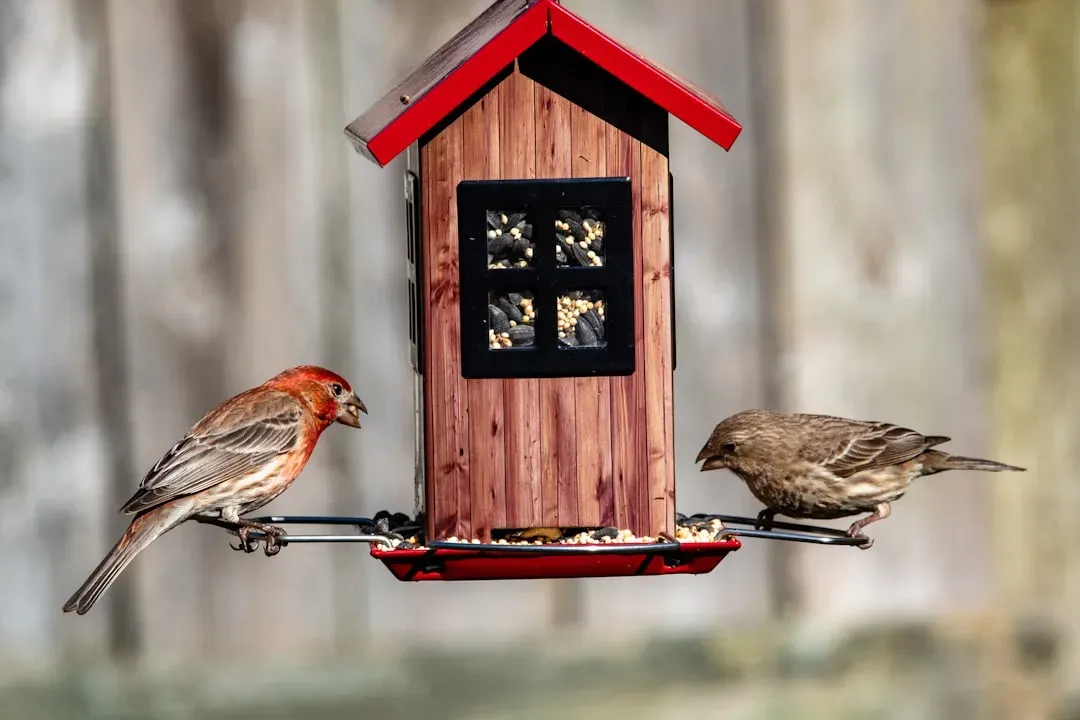
House Finches bring a cheerful, almost rambling song to your yard, especially from the tops of small trees, wires, or even porch lights. When you hear a male pouring out a long, jumbled series of notes, he’s advertising both his territory and his quality as a mate. The more persistent and confident his singing, the more he’s trying to show off to nearby females that he’s healthy, alert, and ready to raise chicks.
You can also read a lot from where they perch and how they move around your feeders. When finches bunch together and calmly take turns, you’re seeing a relatively relaxed social scene. But when they suddenly scatter, wings buzzing and calls sharp, there’s usually a fast-approaching disturbance like a cat, Cooper’s Hawk, or even a loud human. If you notice one finch lingering and scanning between bites, it may be acting as a sort of lookout, subtly reminding the group that safety always comes with a little bit of vigilance.
8. Downy Woodpecker – The Quiet Carpenter with a Loud Knock
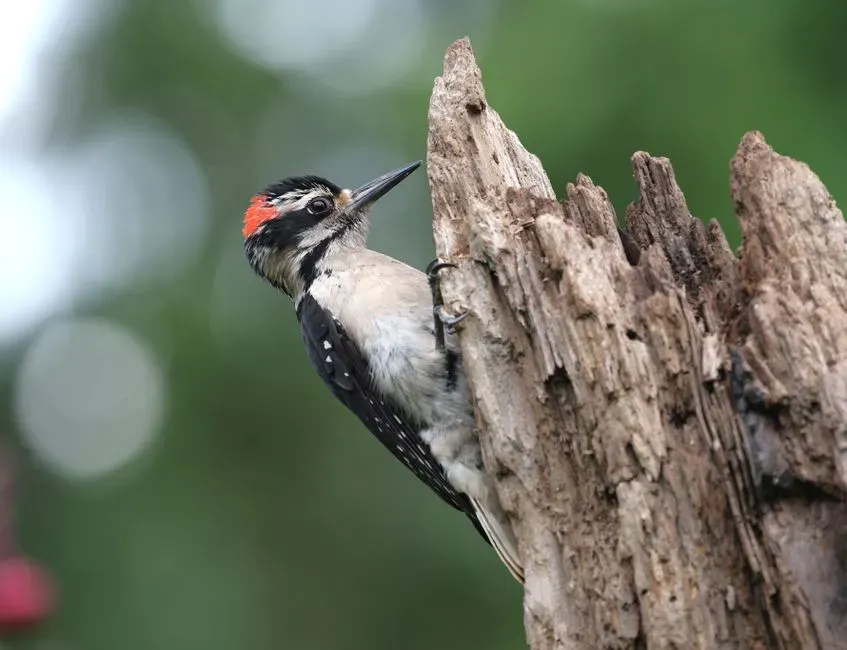
The Downy Woodpecker sends most of its messages through sound and body language rather than flashy colors. When you hear that rapid drumming on a tree trunk, gutter, or even metal sign, it’s not about finding food; it’s often a territorial or courtship display. The bird is using the loudest available surface as a kind of amplifier, turning your yard into a stage to tell other woodpeckers who’s around and who might be interested in pairing up.
When you see a Downy methodically tapping along branches and trunks, you’re watching a living pest-control service at work. Their focused, probing behavior is a sign that your trees host insects and larvae they’re pulling out from under the bark. If you suddenly notice them spending more time on a particular limb or trunk, it might point to a section that’s especially bug-infested or even beginning to weaken. In that sense, they’re quietly signaling which parts of your trees might need a closer look.
9. Song Sparrow – The Modest Poet in the Shrubs
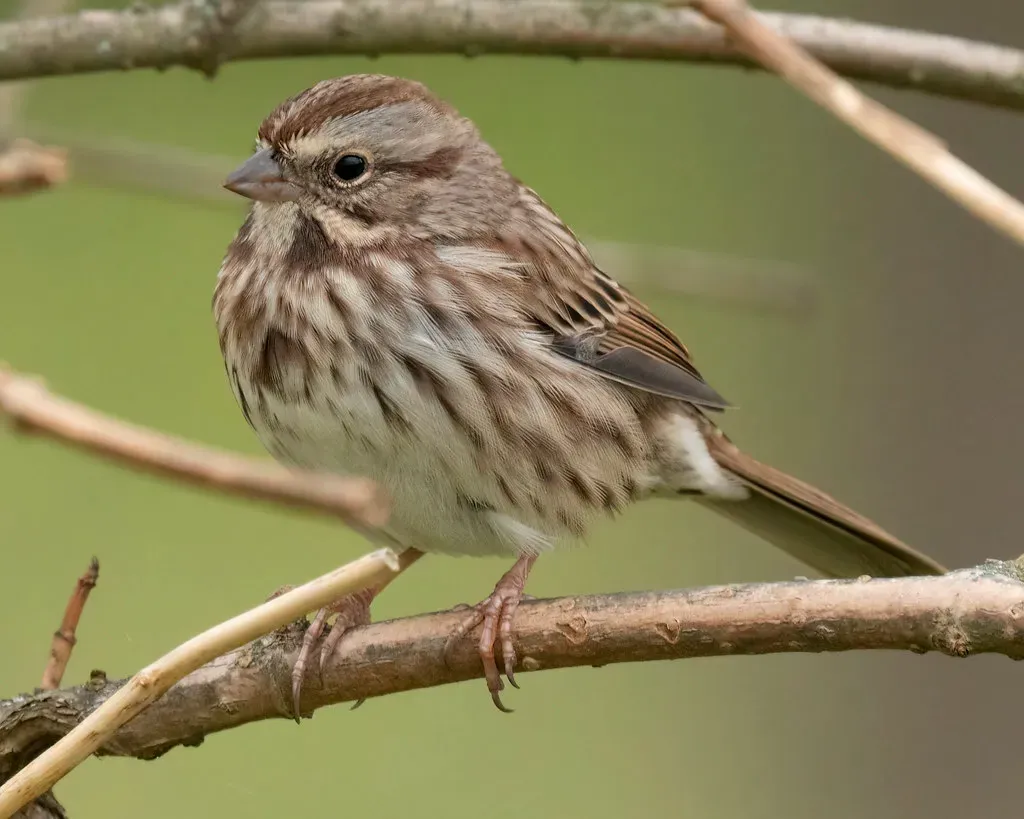
Song Sparrows may look plain compared to cardinals or goldfinches, but their voices carry a surprising message about individuality. Each male weaves his own version of the species’ song, with unique twists and patterns that can differ from one neighborhood to the next. When you hear that bright, complex tune delivered from a fence post or shrub top, you’re hearing a kind of musical signature that tells rivals and potential mates exactly who’s singing.
You can also read their body language on the ground. When Song Sparrows feed out in the open, flicking their tails and scratching in leaf litter, they’re showing relative comfort with the current threat level. If they suddenly dive for cover and go silent, something has shifted in your yard’s invisible safety meter. Watching where they choose to sing – exposed perches when confident, deeper cover when wary – gives you a live readout of how risky they think your little patch of habitat feels at that moment.
10. Red-winged Blackbird – The Boundary Enforcer
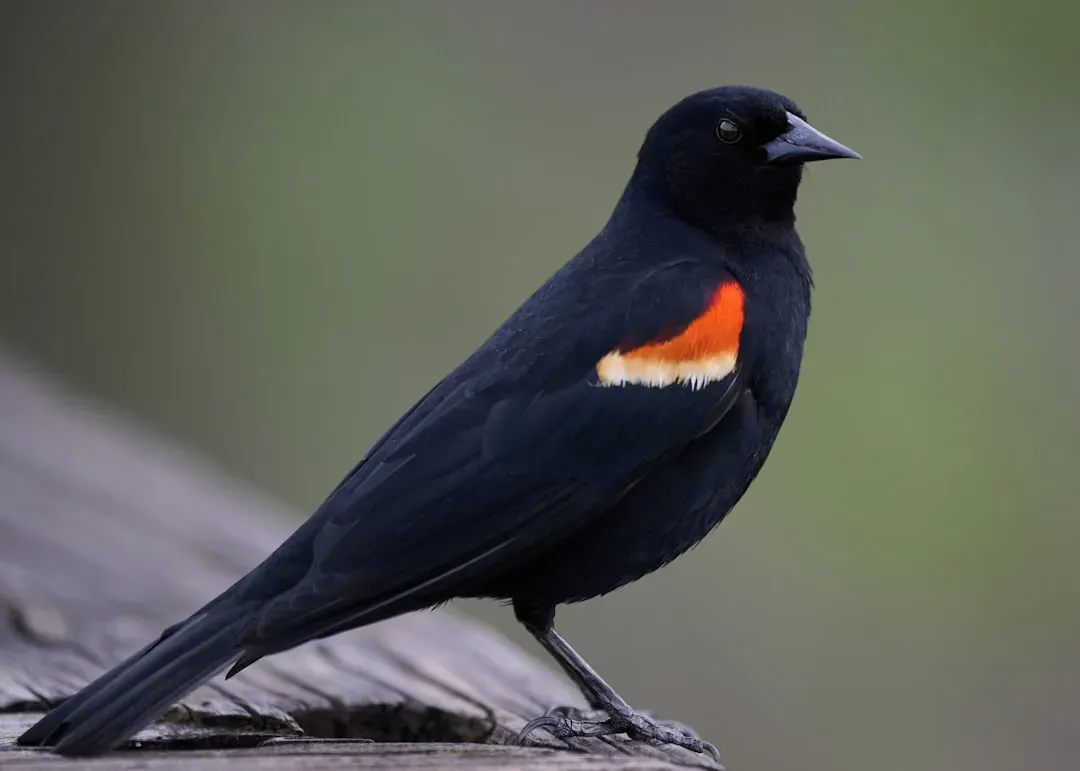
If there’s water or marshy ground near your backyard, the Red-winged Blackbird might be your loudest boundary marker. When a male flares those crimson and yellow shoulder patches and belts out his harsh, ringing call from a cattail or fence, he’s broadcasting a very clear message: this is his nesting territory. The more he spreads his wings and puffs himself up, the more serious he is about defending that space from other males or even large animals walking too close.
If you ever walk past a spot and feel a blackbird swoop close with a sharp call, you’ve just gotten a very personal reminder of how far that territory extends. Females and other birds pay close attention to where and when he displays those bright patches; he often hides them when he’s feeding quietly and reveals them fully when he’s on patrol. When you watch that pattern, you start to see invisible lines drawn across your landscape, like little fences only the birds fully understand.
Conclusion – Learning to Listen to the Backyard Chorus
Once you start recognizing the secret messages of these ten backyard birds, your yard stops being just a backdrop and turns into a living conversation. The cardinal’s sharp chips, the jay’s outbursts, the robin’s sunrise song, and the chickadee’s detailed alarm codes all blend into a kind of shared neighborhood language that you can tap into every day. You’re not just hearing random noise anymore; you’re listening to love songs, warnings, boundaries, and family check-ins.
If you add a few native plants, keep your feeders clean, and watch with a bit more intention, those messages become clearer over time. You’ll know when danger passes through, when the season shifts, and when new life arrives in hidden nests. And once you’ve learned to read all that from your own backyard, you might catch yourself wondering: how much else has been speaking to you all along, just waiting for you to really listen?