
Look up at a clear night sky and focus not on the stars, but on the blackness between them. For most of human history, we assumed that darkness meant nothingness, a cosmic void stretching endlessly between the pinpricks of light. Modern cosmology has turned that intuition upside down: those “empty” regions are where most of the universe actually hides, packed with something enormous in mass and utterly invisible.
For about half a century, scientists have been chasing this hidden component, now known as dark matter, and they still have not caught it directly. We can see its fingerprints everywhere in the sky, warping the motion of galaxies and bending light itself, yet the thing doing the pushing and pulling refuses to show up in any detector on Earth. That mix of solid evidence and stubborn mystery is exactly what makes dark matter one of the most fascinating, and honestly humbling, stories in all of science.
The Universe’s Biggest Plot Twist: Most of It Is Invisible
One of the most shocking results in cosmology is that all the stars, planets, gas clouds, and glowing nebulae we see add up to only a small slice of the universe’s total matter. When astronomers weigh galaxies and galaxy clusters using gravity, they consistently find far more mass than the visible stuff can explain. It is as if you walked into a room, counted three people, but the floor creaked like there were a dozen moving around.
Today’s standard cosmological picture says that the vast majority of matter in the universe is dark: it does not shine, absorb, or reflect light in any detectable way. Yet it has gravity, and that gravity dominates how structures grow and move on cosmic scales. The strange implication is that the familiar world we see is just the froth on top of a much larger, invisible cosmic ocean, and all our telescopes are really only seeing the decorative surface.
Dark Patches That Bend Light: Gravity Gives the Game Away
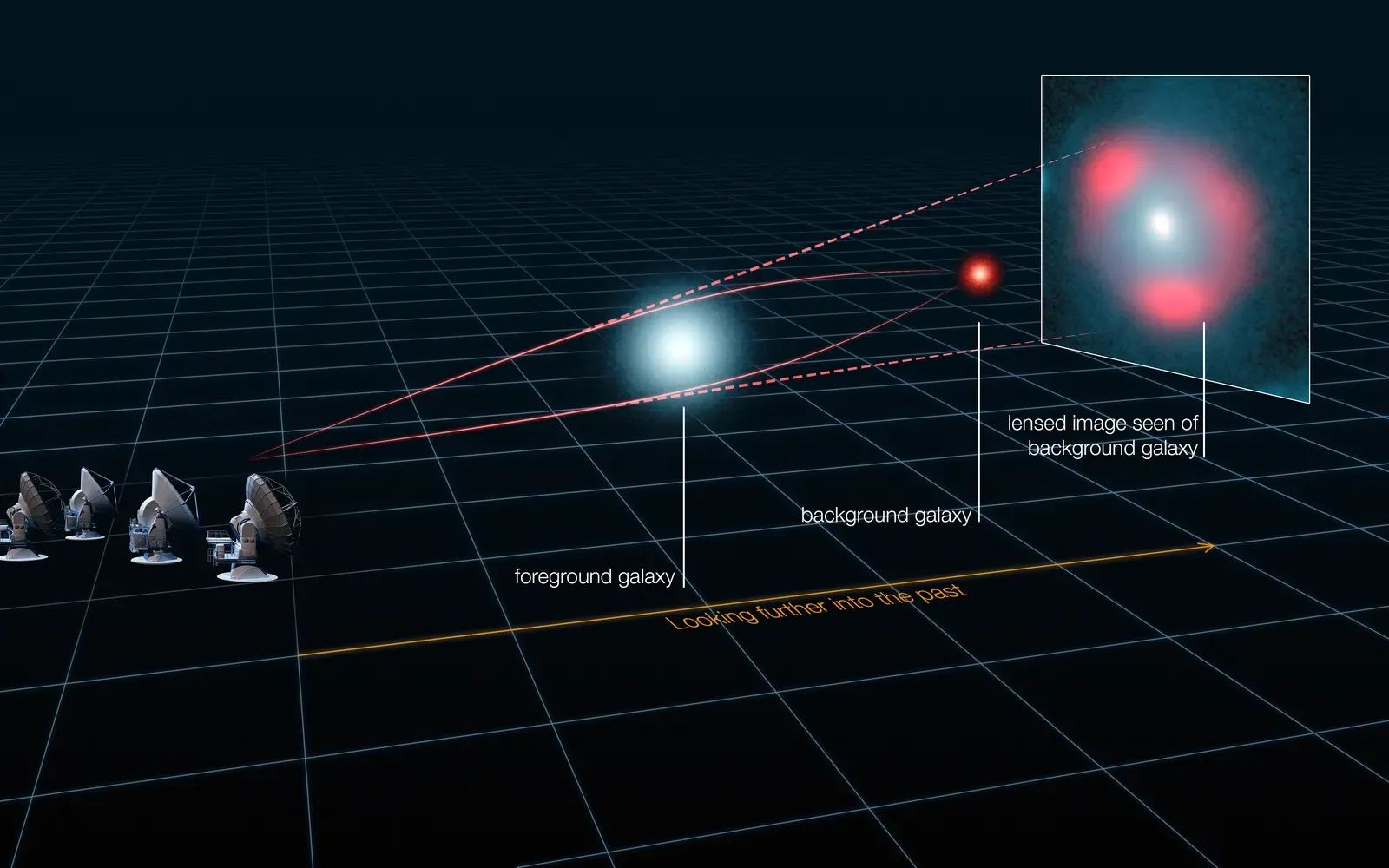
If you want proof that the darkest parts of the sky are not empty, you only need to follow how gravity behaves there. When light from distant galaxies passes by massive clumps of matter on its way to us, that light gets bent and distorted, a phenomenon called gravitational lensing. Astronomers can map the amount and distribution of mass in a region by how strongly it lenses background light, even if the mass itself is completely invisible.
Over and over again, these gravitational maps reveal huge halos and clumps of non-luminous matter around galaxies and clusters, far outweighing the stars and gas we can see. Sometimes the lensing shows mass piled up where there is almost nothing visible at all, like a ghostly footprint pressed into spacetime. That is one of the key reasons cosmologists say the dark voids between stars and galaxies are actually filled with something: gravity keeps betraying an unseen presence that light alone would totally miss.
How Galaxies Spin Too Fast for Visible Matter Alone
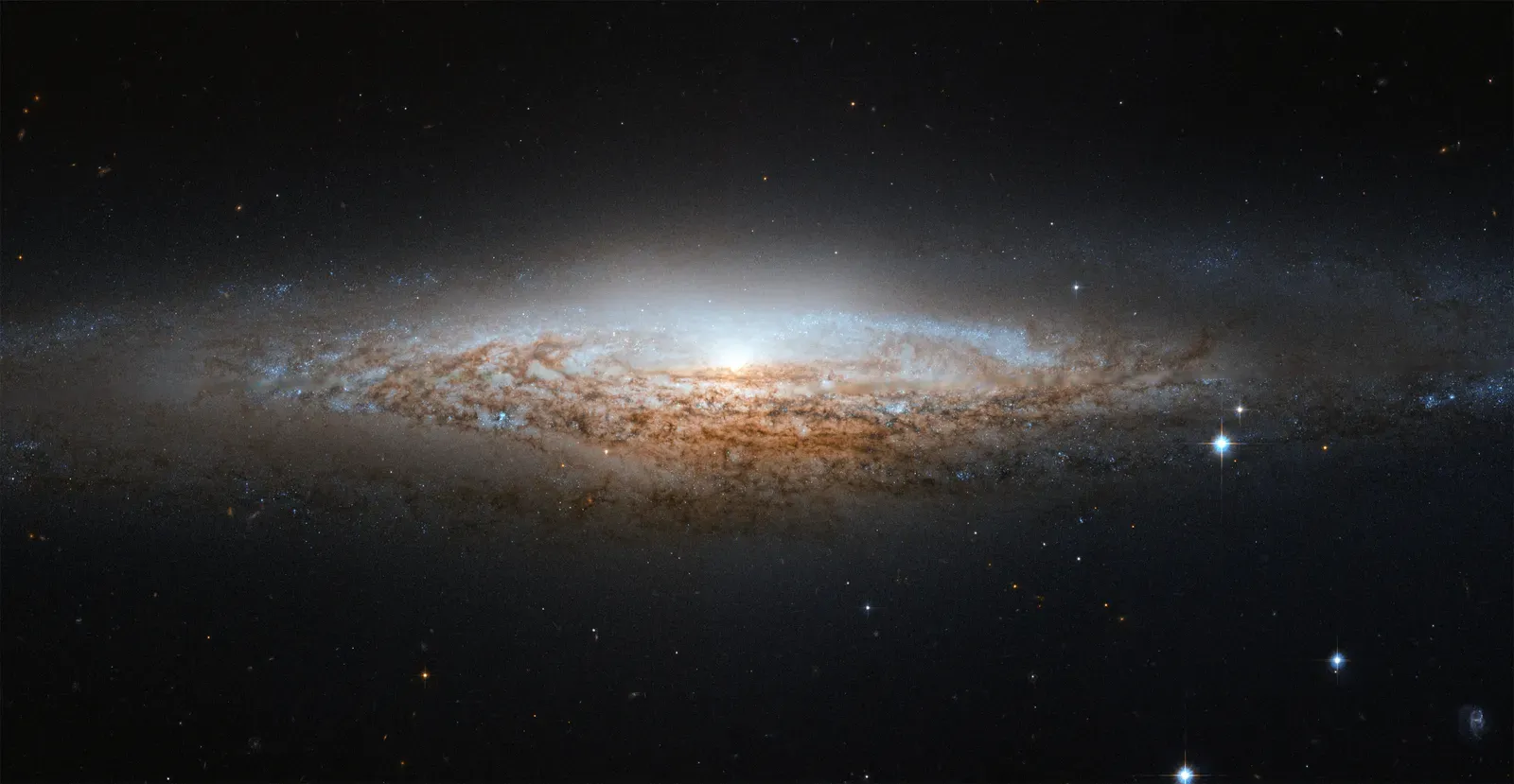
Another big clue came from an almost childlike question: if you spin a galaxy, why do the outer stars not just fly off into space? In our solar system, planets farther from the Sun orbit more slowly, because the Sun’s gravity gets weaker with distance and there is no extra hidden mass propping up their speed. But when astronomers measured how stars move in spiral galaxies, they found that the outer stars were orbiting far too fast for the visible mass to hold them in.
The only way to keep those fast-moving stars gravitationally bound is to surround the galaxy with a huge, invisible halo of extra mass. The same story repeats across thousands of galaxies: their rotation curves stay flat where they should decline. If all we had was normal matter, many galaxies would basically be tearing themselves apart. Instead, dark matter acts like a massive, unseen skeleton that holds the luminous parts together while remaining almost annoyingly shy about revealing what it actually is.
Fifty Years of Not Finding the Stuff We Know Must Be There

By the mid-1970s, the case for some form of unseen mass had become too strong to ignore, and since then physicists have been trying to catch dark matter particles in the act. Huge underground detectors have been built to shield out cosmic rays and background noise, watching for the faintest hints of collisions with hypothetical dark matter particles passing through Earth. So far, tantalizing hints come and go, but no unambiguous, universally accepted detection has stuck.
At the same time, particle colliders have smashed protons together at enormous energies, hoping to create dark matter in the lab so it could reveal itself through missing energy and momentum. Many of the most popular candidate particles – especially some forms of so-called weakly interacting massive particles – have been squeezed into tighter and tighter corners of possibility. The uncomfortable but exciting reality is that after roughly half a century of serious hunting, we still have no direct detection, which makes the mystery feel deeper, not thinner.
What Dark Matter Probably Is Not (And Why That Matters)
When people first hear about dark matter, they sometimes assume it is just dim dust, black planets, or burned-out stars. But those “normal” explanations have been pushed aside by evidence from cosmic microwave background measurements, element abundances from the early universe, and how galaxies form. If dark matter were mostly made of hidden ordinary matter like cold gas or faint stars, the early universe and the structures we see today would look very different from what observations show.
Instead, dark matter seems to behave like a new type of matter that barely interacts with light or with regular atoms, except through gravity. It does not clump into stars, it does not form planets, it does not ignite or shine; it forms huge diffuse halos and filaments stretching between galaxies, more like an invisible scaffolding. Knowing what it is not has been crucial, narrowing the field and forcing physicists to think beyond familiar categories, even if that means living with the frustrating sense that the answer is still out of reach.
Could Our Understanding of Gravity Be Wrong Instead?
There is a bold alternative camp that says maybe there is no extra matter at all; maybe our laws of gravity break down on very large or very small scales. Various modified gravity theories have tried to explain galaxy rotation curves and some other phenomena without invoking unseen matter. These ideas are taken seriously enough to be tested, because good science has to keep room for the possibility that our core assumptions are off.
However, dark matter currently does a better job of explaining the full range of evidence, from the pattern of temperature fluctuations in the cosmic microwave background to the growth of structure over cosmic time and the detailed shapes of gravitational lenses. Modified gravity theories often match one piece of the puzzle but struggle with others. My own view is that it is healthy to keep both routes in play, but the weight of the evidence still leans strongly toward there being something genuinely out there in those dark patches, not just a bookkeeping error in our equations.
Why This Invisible Majority of the Universe Should Change How We Feel About Reality
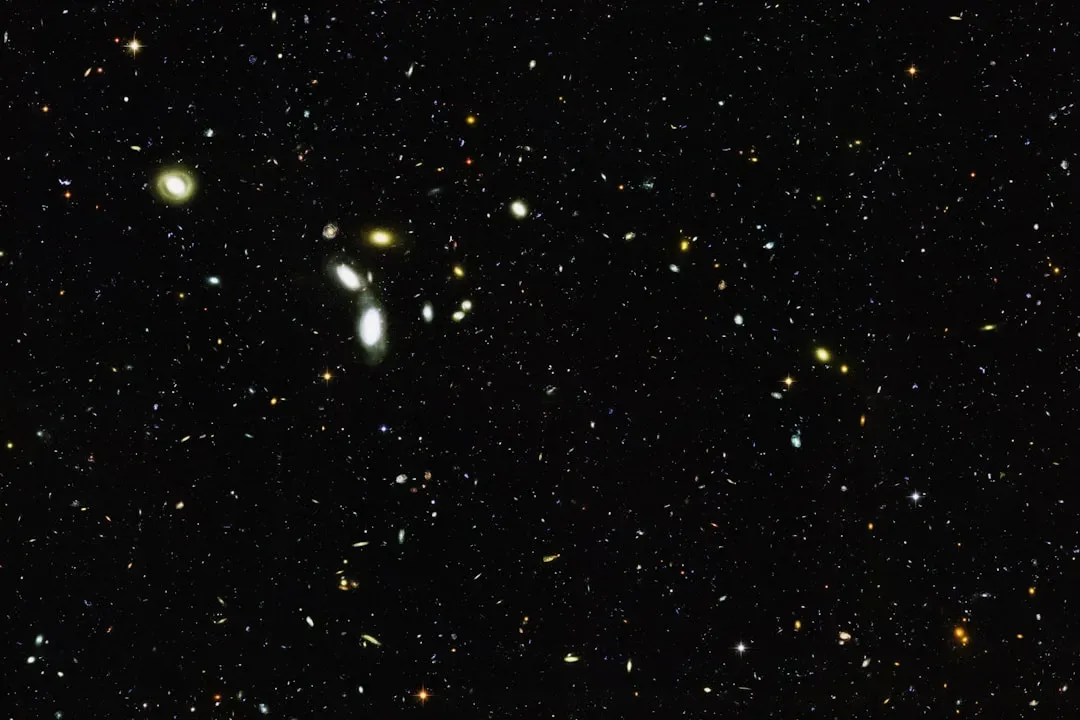
It is easy to treat dark matter as an abstract physics problem, but there is a deeper emotional punch hiding in the story. The idea that most of the matter in the universe is invisible and untouchable to us is a reminder that our everyday experience is a thin slice of what is really going on. The black gaps between stars are not empty pauses; they are where the bulk of the cosmic drama quietly unfolds, just outside the range of our senses.
On a more personal level, I find it oddly comforting and unsettling at the same time. Comforting, because it shows that ignorance is not a flaw in us but a built-in feature of a universe that is richer than we guessed. Unsettling, because it undercuts the instinctive belief that what we see is what there is. Every time you glance at the night sky, you are looking at a grand cover-up: a universe where the leading actor is still offstage, and we only see the scenery.
Conclusion: The Dark Between the Stars Deserves Our Attention
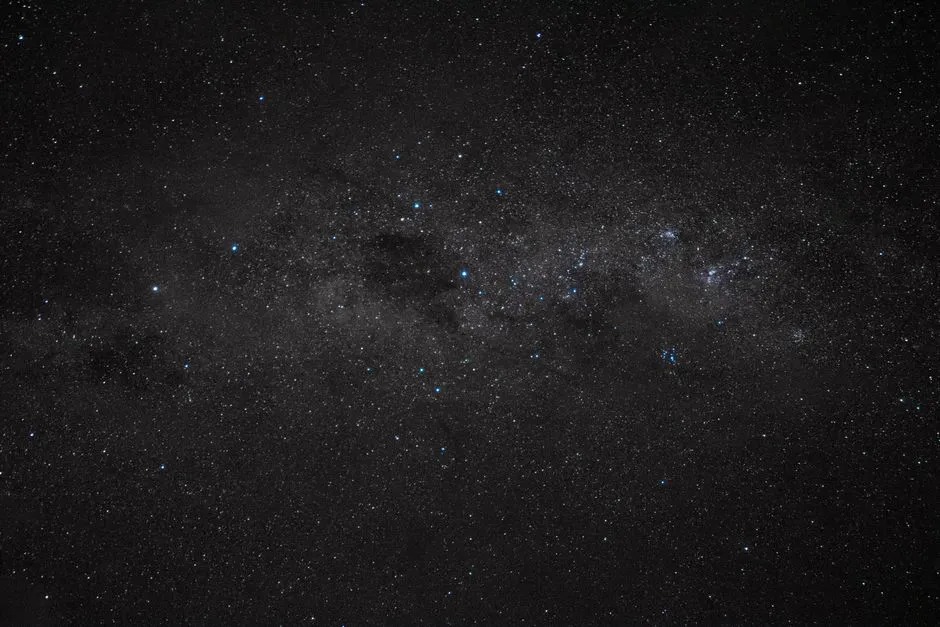
Cosmology’s message is blunt: the darkest regions between the stars are not empty, and whatever fills them outweighs all the glowing matter we have ever admired. The gravitational evidence is overwhelming, even if the underlying substance continues to evade our detectors and theories alike. In my opinion, clinging to the idea that the visible universe is the main event is no longer intellectually honest; the numbers simply do not let us get away with that comforting illusion.
If anything, the last fifty years of not directly detecting dark matter have made the mystery sharper and the stakes higher. Either we are on the verge of discovering a new sector of physics that will rewrite textbooks, or we will be forced to admit that some of our most cherished assumptions about matter and gravity are incomplete in ways we still barely grasp. The next time you stare into the blackness between the stars, it might be worth asking yourself: what else in your life looks empty at first glance but might be hiding the real weight of things?