
You know that feeling when a science fact sounds so over-the-top that it has to be an exaggeration? A teaspoon of sugar, a teaspoon of salt… then you hear that a teaspoon of neutron star material would weigh about a billion tonnes on Earth, and your brain just stalls. It sounds like something out of a wild sci‑fi novel, but in this case, the dramatics are not a figure of speech – they come straight out of solid physics and careful calculations. As you walk through this, you are not being asked to “just believe” a shocking number. You can actually trace how astrophysicists arrive at it, why it holds up under scrutiny, and what it tells you about matter, gravity, and the hidden extremes of the universe. By the time you are done, that one teaspoon will have completely rewired your sense of what “heavy” and “dense” really mean.
The Shocking Density Hiding Behind That Teaspoon
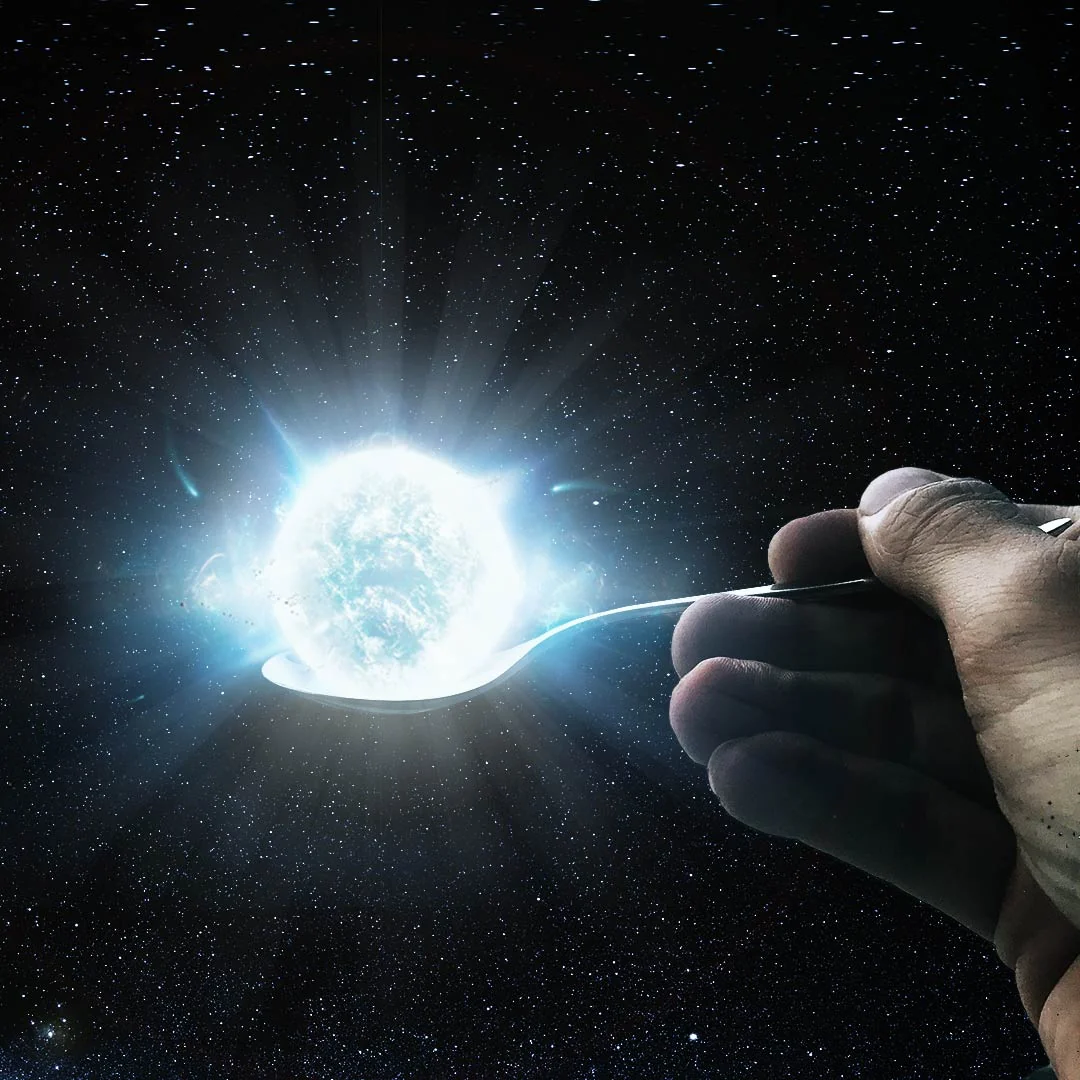
If you are used to everyday objects, your intuition about weight collapses the moment you meet a neutron star. You are used to steel being “really dense,” maybe lead being even denser, but a neutron star takes that idea and pushes it past anything you normally handle – it packs more mass than the Sun into a sphere only about the size of a city. When you hear that, suddenly a teaspoonful weighing roughly a billion tonnes stops sounding like a joke and starts sounding like the only way such an object could exist. Picture this: you hold a teaspoon in your hand, the kind you might use to stir your coffee. If that spoon were somehow filled with neutron star material, the mass would be comparable to a huge mountain chain or an enormous industrial complex, all crammed into that tiny volume. You are not dealing with heavy metal anymore; you are dealing with matter so compressed that atoms themselves have been crushed out of their usual structure, leaving almost nothing but neutrons packed together like a cosmic version of an ultra-tight spring.
From Everyday Matter to Neutron Star Stuff: What “Crushed Atoms” Really Means
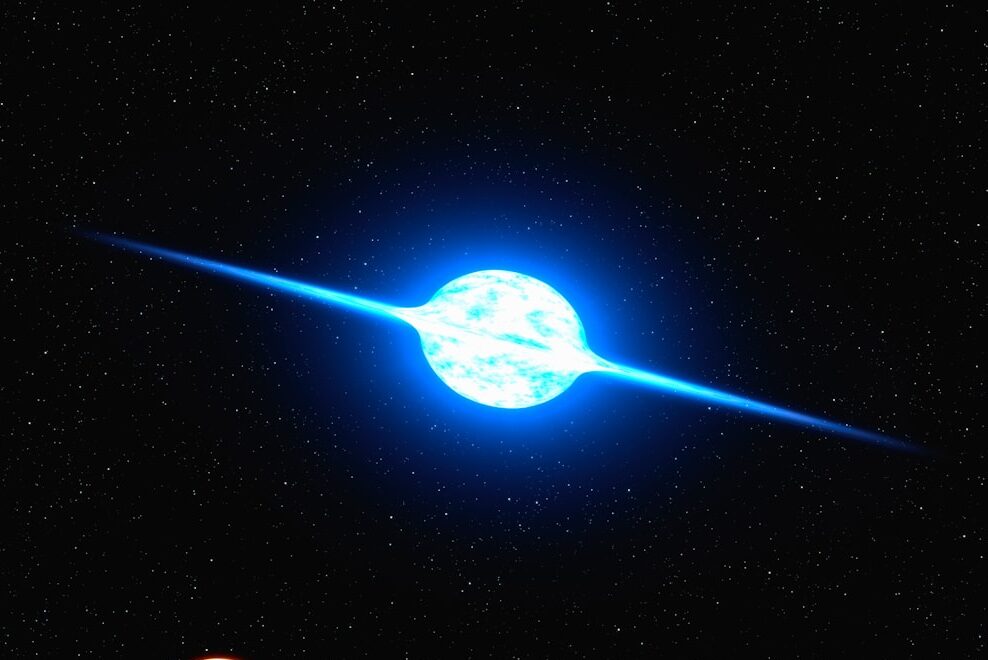
To understand why that teaspoon is so outrageously heavy, you first need to rethink what you consider “solid.” In the matter around you – your desk, your phone, your bones – atoms are mostly empty space. The nucleus is tiny, and electrons orbit far away (relatively speaking), so if you could squeeze out all that emptiness, you would end up with something unimaginably denser than what you started with. Neutron stars are what you get when nature takes that idea and pushes it to the limit. Inside a neutron star, gravity has collapsed matter so hard that protons and electrons are smashed together into neutrons. You can think of it as if every atom in a mountain has been forced into a single gigantic atomic nucleus. If you strip away the mental picture of electrons whizzing around and focus on a solid ocean of neutrons pressed shoulder to shoulder, you get the right idea. You are not just compressing material a little bit tighter; you are stepping into a regime where matter behaves more like a quantum fluid than a solid, with pressures that dwarf anything you can produce on Earth.
How You Actually Get to “About a Billion Tonnes”
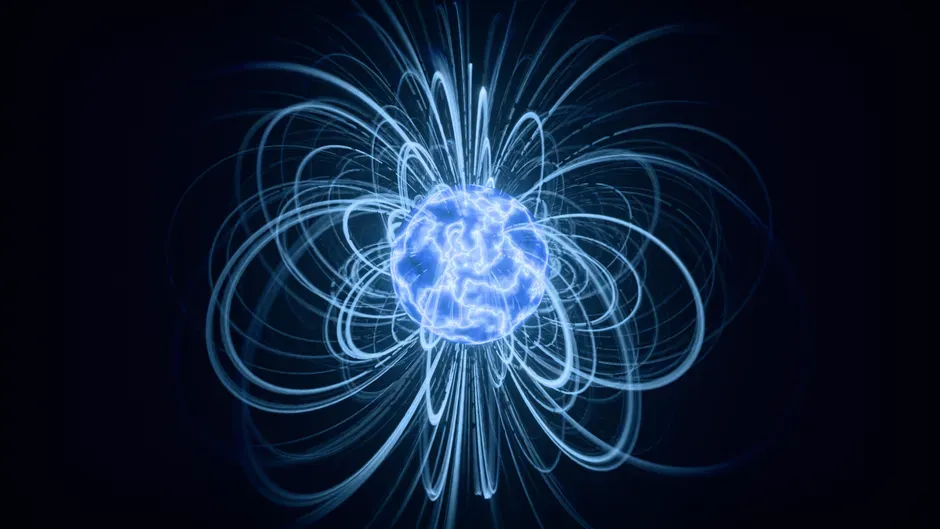
You might be wondering how anyone can say “about a billion tonnes” with a straight face – how do you calculate something this extreme? You start with the average density of a neutron star, which is often estimated at roughly a few hundred trillion kilograms per cubic meter. Then you compare that to the volume of a teaspoon, which is on the order of a few milliliters, or a few thousandths of a liter. When you multiply the density by that tiny volume, the number you get lands you in the range of a billion tonnes for just that one teaspoon. If you step back from the math and decode what that means, you are basically saying that the mass inside a region smaller than the tip of your thumb would rival the mass of some of the largest human‑built structures combined. Astrophysicists test these density estimates against observations of neutron star masses and sizes – using things like timing of pulsars and gravitational effects – and the numbers keep agreeing. So when you hear “approximately a billion tonnes,” you are not hearing a poetic flourish; you are hearing the result of crunching numbers that line up with what the universe actually does.
Why That Number Has Been Checked Over and Over
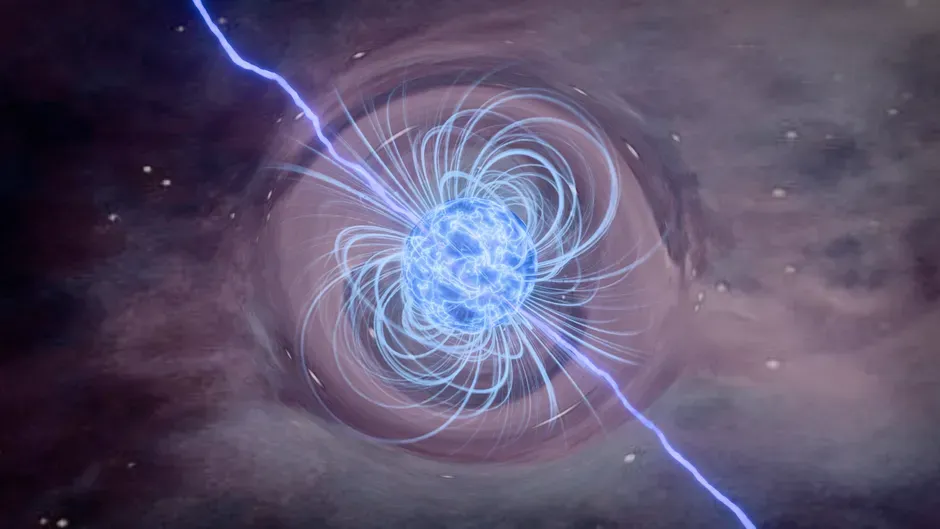
Once a claim becomes this famous, scientists do not just accept it and move on; they keep poking at it from every angle. You have independent measurements of neutron star masses from binary systems, where you watch two stars orbit each other and use gravity to infer their properties. You also have measurements of their radii from X‑ray observations and other techniques, and when you put those together, you get a range of possible densities. The calculations that give you the “billion‑tonne teaspoon” fall squarely inside that range. You also have theoretical models of how matter behaves at ultra-high densities, including equations of state that describe how pressure and density are related inside a neutron star. These models are not perfect, and there is still debate about the exact behavior in the deepest layers, but when you plug them into Einstein’s theory of gravity and compare the predicted stars to the ones you actually see, the story holds up. You are not relying on one fragile assumption; you are layering multiple methods, all converging on the same kind of extreme density.
What Would Happen If You “Brought Some Home”
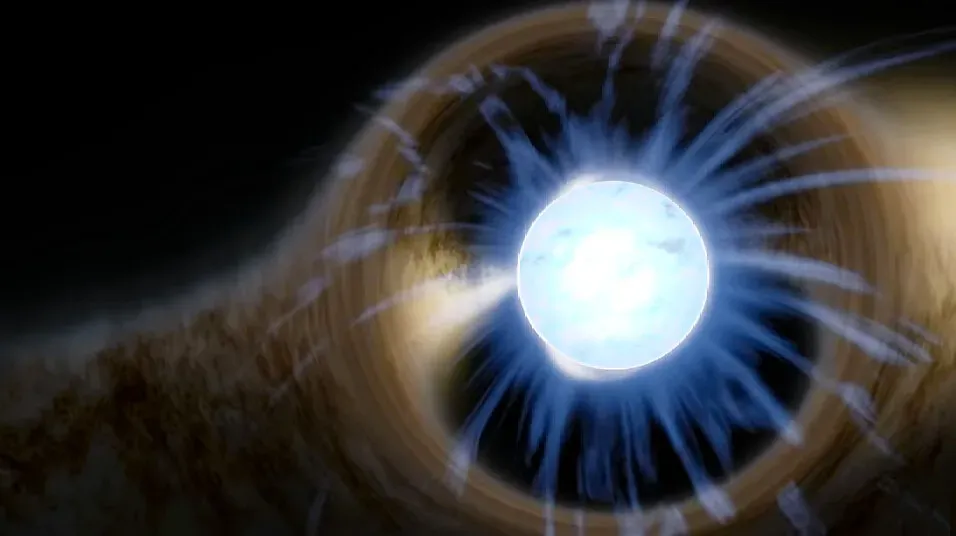
Here is a fun, slightly terrifying thought experiment: what if you could somehow scoop up a teaspoon of neutron star material and bring it to Earth? In reality, you would not manage it, because that matter only stays in its neutron‑packed state under the insane gravity of the neutron star itself. If you tried to remove it, the pressure holding it together would vanish, and the material would explode outward, ripping itself apart and rapidly turning into more ordinary (but still very energetic) forms of matter and radiation. Even if you imagine some magical way to keep it intact, the gravity associated with such a concentrated mass would be disastrous. You would be placing the mass of a gigantic mountain range into a small kitchen utensil. At close range, the gravitational pull would be strong enough to wreak havoc on anything nearby, pulling material toward it, severely distorting space, and likely causing catastrophic destruction. In short, you do not get to casually park a teaspoon of neutron star material on your table and admire it – the laws of physics simply will not let you.
How Neutron Stars Push Gravity and Physics to Their Limits
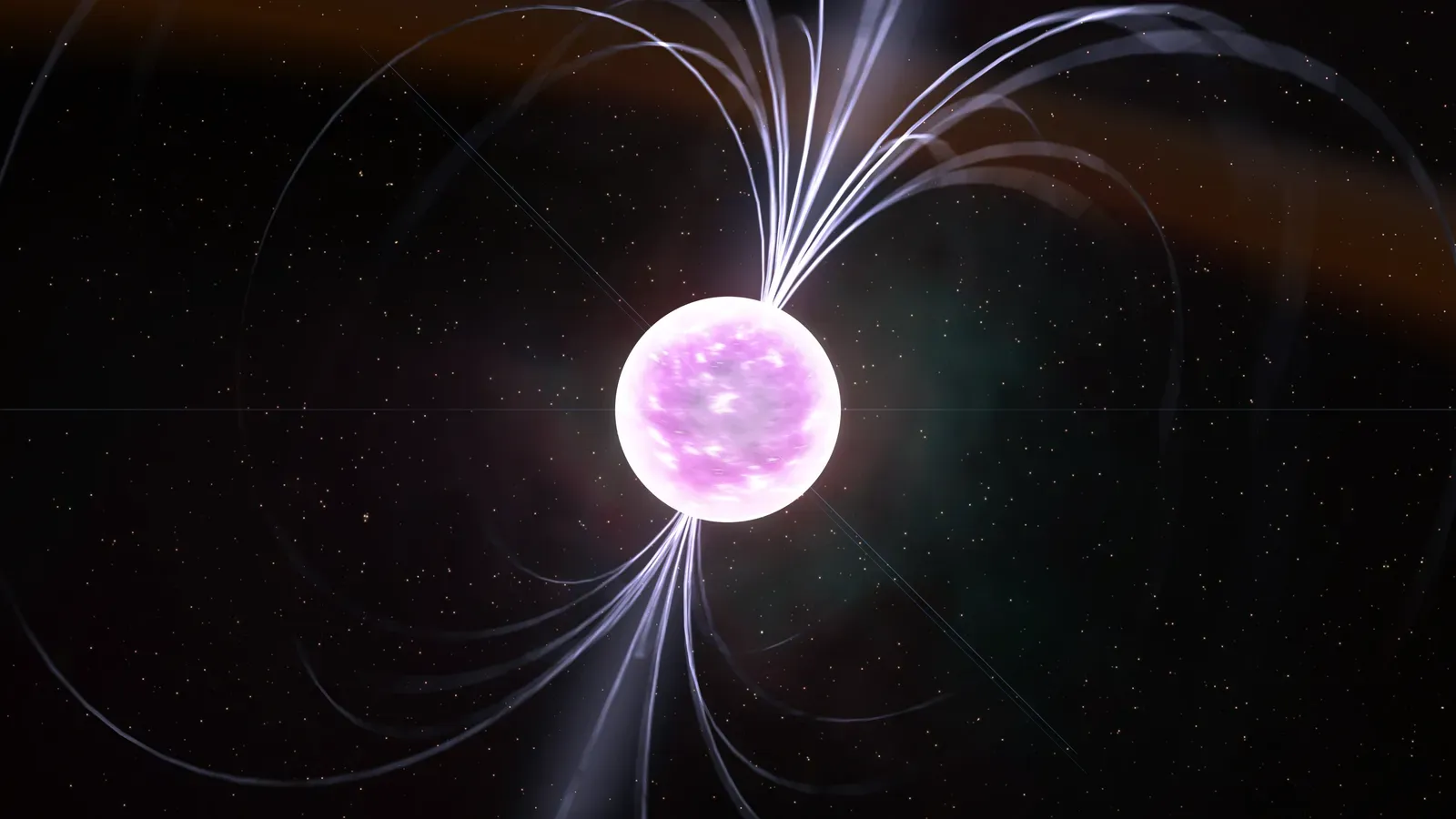
When you deal with neutron stars, you are standing at the edge of what gravity can do before it goes all the way into a black hole. If you added more and more mass to a neutron star beyond a certain point, no known type of pressure could hold it up, and it would collapse into a black hole. That tells you that neutron stars are balancing on a narrow line between stability and complete gravitational collapse, and that line is drawn by the properties of matter at densities far beyond anything in your daily life. For you, the billion‑tonne teaspoon is a gateway to appreciating just how strange gravity can get. You are used to thinking of gravity as a gentle, steady pull that makes things fall to the ground. In a neutron star, that same physical law becomes a crushing force capable of squeezing entire stars into city‑sized spheres. The same equations that describe an apple falling from a tree also govern this extreme compression; they just play out in a regime that puts your intuitive sense of “normal” completely out of its depth.
What This Teaspoon Teaches You About the Hidden Universe
It is easy to think of the universe as mostly empty space sprinkled with stars and galaxies, but this one fact about a teaspoon of neutron star material tells you something deeper. It reminds you that the cosmos can hide extremes behind ordinary appearances. From far away, a neutron star might look like just another point of light, but up close, its density, magnetic fields, and gravity create one of the most intense environments known. You are getting a reminder that nature often packs its wildest behavior into the smallest and most compressed forms. When you let that sink in, you start to see everyday matter differently, too. The objects around you feel solid and substantial, but compared to neutron star matter, they are feather‑light and full of empty space. You realize that under different conditions – intense gravitational collapse, for instance – the same fundamental particles can be rearranged into something entirely different. That teaspoon becomes a kind of thought‑experiment engine, forcing you to question how much more the universe might be capable of, beyond the familiar slice you experience on Earth.
Why This Is More Than Just a “Fun Fact”
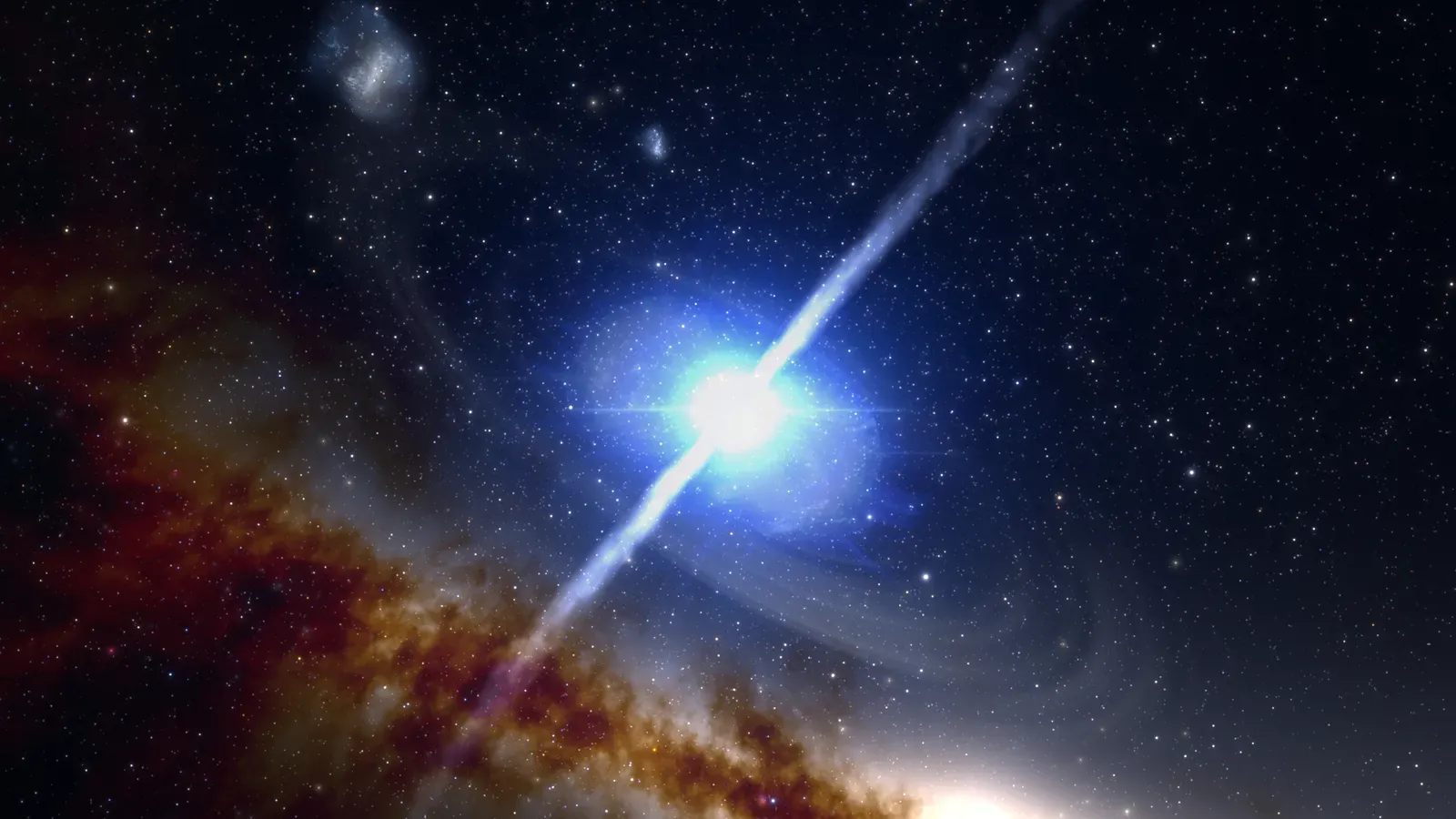
It is tempting to treat the billion‑tonne teaspoon as just a flashy trivia nugget, the sort of thing you pull out to impress a friend. But if you lean into it, you discover that it links together some of the deepest ideas in modern physics: how gravity behaves in strong fields, how quantum mechanics and nuclear forces shape matter, and how stars live and die. By following that one number back to its roots, you are tracing a path through stellar evolution, general relativity, and the frontier of high‑density physics. You also get a humbling perspective check. You might feel that human‑scale weights and sizes define what is “big” or “small,” but the universe casually throws around objects that laugh at those scales. A teaspoon that weighs a billion tonnes shatters your sense of proportion and invites you to see your familiar world as just one mild corner of a much larger, much stranger reality. Once you have held that idea in your mind, even for a moment, you do not quite look at a simple kitchen spoon – or the night sky – in the same way again.
Conclusion: Letting That Teaspoon Reshape Your Sense of Reality
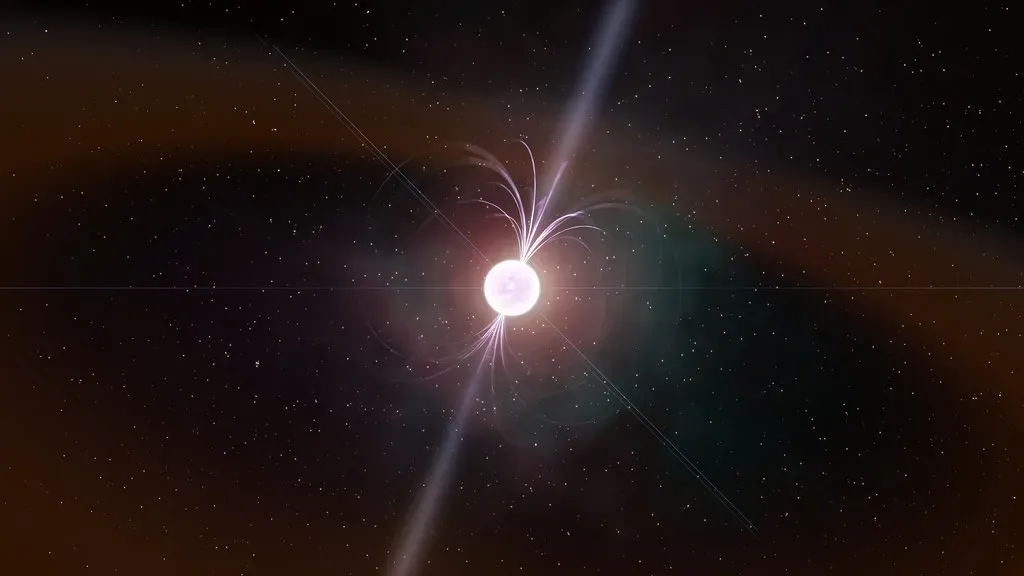
When you first hear that a teaspoon of neutron star material would weigh approximately a billion tonnes at Earth’s gravity, it sounds like a tall tale. But once you unpack what neutron stars are, how dense they must be, and how those densities are calculated from observation and theory, you realize you are looking at one of those rare facts that is both wildly dramatic and rigorously grounded. It is not an exaggeration; it is the universe quietly telling you it can do things far beyond your everyday experience. If you keep that teaspoon in mind, you gain more than just a cool story. You get a mental tool that reminds you how much of reality lies outside your intuition, and how far careful science can go in revealing it. So next time you stir your coffee, you might briefly imagine that impossible spoonful and feel a tiny shiver of cosmic perspective – knowing that somewhere out there, such densities are not hypothetical at all, but simply the way certain stars choose to exist. Did you expect a kitchen utensil to be your ticket to the edge of physics?