Every night, countless stars burn silently above us, exploding and collapsing without ever wondering what they are. Yet here you are, a fragile bundle of cells on a small rock in a vast universe, asking why you exist and why you know that you exist. That simple fact – that there is a feeling of being you – is one of the strangest things science has ever had to deal with. Matter, as far as we can tell, did not have to wake up, and yet somehow it did.
Consciousness is not just another topic in science or philosophy. It is the background of everything you will ever care about, because without it there would be no joy, no fear, no beauty, no meaning, and no sense of a mortal world at all. That makes the central question almost eerie: why does anything feel like something from the inside, especially in a universe where every conscious mind is doomed to vanish? The more we learn about brains and bodies, the clearer their mechanics become – and yet the existence of subjective experience itself still looks like an unsolved riddle staring us in the face.
The Hard Problem: Why Is There a “You” at All?
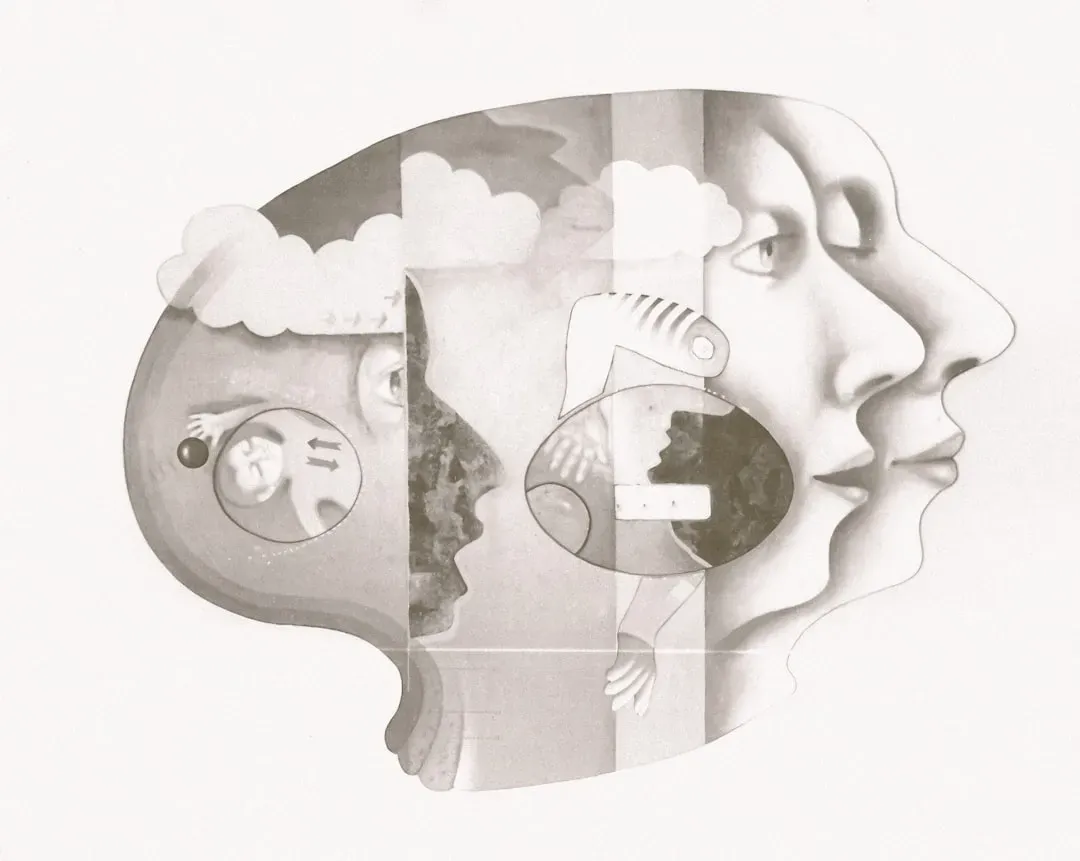
Here’s the unsettling part: science can describe your brain in exquisite detail – neurons firing, chemicals flowing, electrical patterns buzzing – without that ever explaining why it feels like something to be you. This is what philosophers call the “hard problem” of consciousness: not how the brain processes information, but why those processes are accompanied by a private inner movie. In principle, we could imagine a universe full of perfectly functioning robots, reacting to light and sound, moving and talking, but with no one home inside, no feelings, no awareness.
From a strictly physical point of view, your brain is a squishy biological machine that evolved to help an animal survive and reproduce. None of that logically requires the glow of experience – pain that hurts from the inside, the taste of chocolate, the color red as you see it. Some thinkers argue that once the information-processing is in place, experience simply comes along for the ride. Others say that line of reasoning is hand-waving, that we are missing a fundamental ingredient in our scientific picture of reality. Either way, the fact that there is something rather than nothing behind your eyes is still profoundly mysterious.
Evolution’s Bet: Is Consciousness Just a Survival Tool?
One common answer says consciousness exists because it was useful. According to this view, evolution stumbled into brains that could model not only the outside world, but also the organism itself – its body, its goals, its possible futures – in one unified, flexible workspace. Being conscious, in this sense, might be what it feels like when a brain runs a high-level, integrated model that can weigh options, imagine outcomes, and coordinate complex behavior. That could explain why conscious beings tend to make better long-term decisions than creatures running on pure reflex.
But even if that is true, it still only answers the “how” and “what for,” not the “why this feels like anything at all.” Many neuroscientists can point to brain networks that seem especially important for conscious awareness – for example, regions that integrate signals from sight, touch, memory, and emotions into a coherent picture of “what’s going on right now.” Yet that still leaves an uncomfortable gap: we can track the circuits, but we cannot derive the feeling. Evolutionary stories help us see why having a certain kind of sophisticated brain might keep an organism alive a bit longer, but they do not fully explain why that sophistication had to show up as an actual lived experience instead of a silent computation.
Physics, Panpsychism, and the Idea That Matter Might Always Have a “Glow”
Because of that gap, some philosophers and scientists have floated a bold idea: maybe consciousness is not something that suddenly appears when matter gets complicated enough, but a basic property of matter itself. This family of views, often called panpsychism, suggests that even the simplest physical entities have incredibly tiny, primitive forms of experience, which get combined and organized in complex ways inside brains. On this picture, human consciousness is not an unexplained magic trick; it is more like a very elaborate pattern built out of simpler building blocks that were there all along.
This idea sounds wild at first, but it comes from a familiar frustration. Physics, for all its success, tells us how stuff behaves, not what it is like from the inside. We describe particles, fields, and forces using equations, but those equations are silent about whether reality has any inner aspect at all. Panpsychism fills that silence by saying the inner aspect is proto-experience, and your conscious life is a rich, organized version of that. Whether this is true is still completely unsettled, but it is one of the few options that tries to directly explain why a physical universe might contain beings who can suffer, love, and wonder why they are here in a world where everything dies.
Brains, Illusions, and the Fragile Story of “Self”
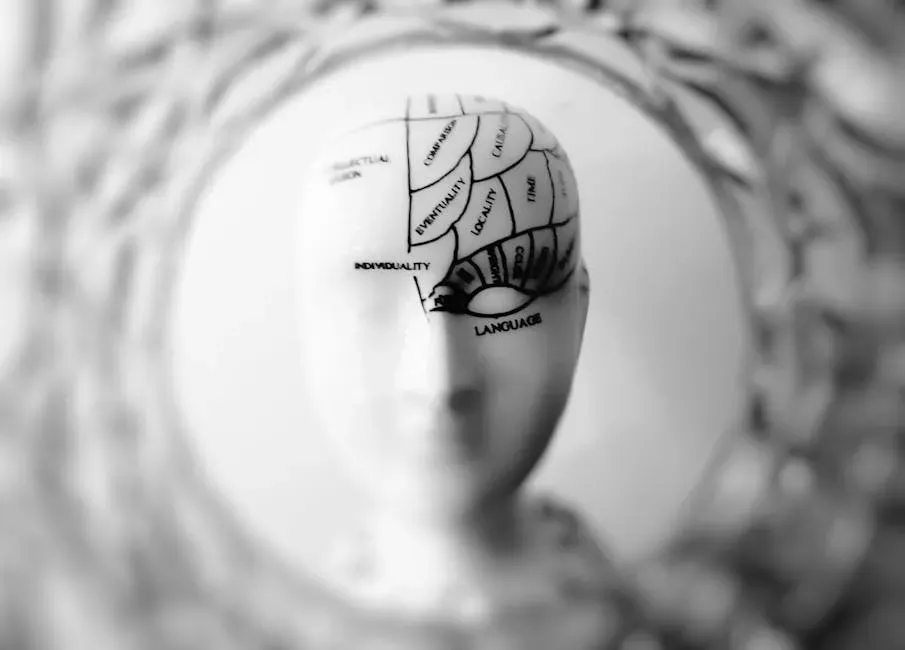
Another angle on the mystery zooms in not on consciousness itself, but on the particular kind of consciousness that says “I.” When you look closely, the stable, solid sense of being a single self turns out to be more like a story your brain is constantly rewriting. Neuroscience shows that different systems in your brain handle vision, movement, language, memory, and emotion, and only later are these stitched into a seamless narrative. That stitching creates the feeling of a continuous “me” moving through time, even though the underlying processes are scattered, noisy, and ever-changing.
Some researchers go further and say that even this unified self is a kind of helpful hallucination. According to that view, consciousness is your brain’s best guess about both the outside world and your own body and mind, updated moment by moment. That means the person you think you are is not a fixed entity, but a constantly updated model that can be bent, stretched, or broken by illness, injury, drugs, meditation, or trauma. In a mortal world, that is both terrifying and strangely liberating: the self you cling to is fragile and temporary, but it is also flexible enough to be re-shaped in ways that heal, mature, and open up new ways of being alive for the brief time you get.
Mortality, Meaning, and Why Being Aware Hurts So Much

If consciousness is such a powerful survival tool, it comes with a brutal side effect: the awareness of death. Most animals can fear danger and react to threats, but humans carry a more haunting burden – knowing, in clear detail, that their lives will end, and that everyone they love is equally vulnerable. That knowledge threads through almost every culture’s stories, rituals, and beliefs, shaping what people call meaning, purpose, or faith. In some ways, consciousness in a mortal world feels like a cruel joke: the more clearly you can see your life, the more clearly you can see its limits.
Yet that same awareness is also what makes meaning possible in the first place. A sunset you could see forever might be pretty, but it would not feel precious. A friendship that could never end would not carry the same urgency to forgive, to show up, to say what actually matters. Because we are aware and because we know we will die, our experiences are charged with a kind of emotional electricity. That is not a logical answer to why consciousness exists, but it is a human one: for better and worse, awareness in a mortal world turns mere time into a story, and mere events into something that can break your heart or fill it to the brim.
Are We Just the Universe Looking at Itself?
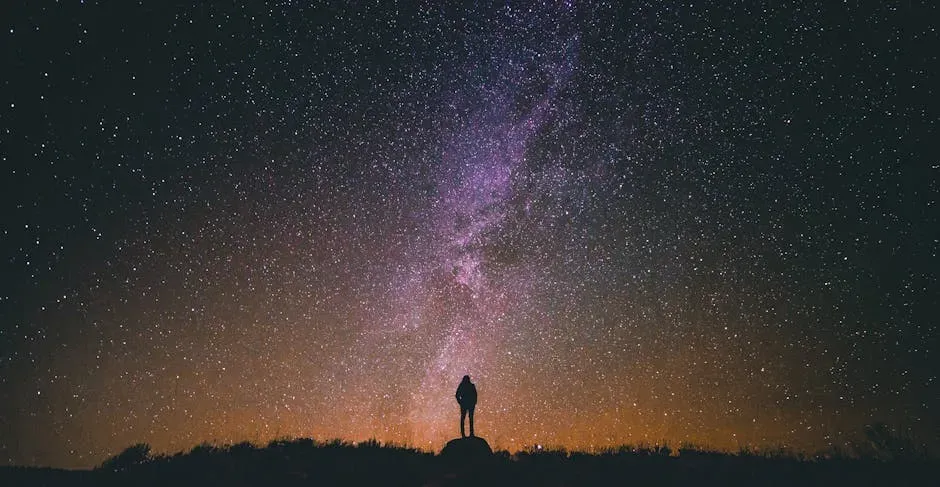
A more poetic line of thought says that conscious beings are what happens when the universe becomes able to notice itself. On this view, it is not an accident that matter eventually produced minds; rather, self-awareness is a natural phase in the life of a complex cosmos. Stars forged the heavy elements, planets formed, chemistry turned into biology, and eventually biology turned into beings who could hold the entire process in their thoughts. In that sense, your awareness is not separate from the universe; it is a way the universe has learned to say, in a quiet internal voice, that it exists at all.
That idea is beautiful, but it does not automatically solve any scientific puzzle. It is a metaphor that many people, including me, find emotionally powerful: the notion that your brief, local experience contributes to a much larger, unfolding pattern of matter waking up. At the same time, it can be a helpful antidote to existential loneliness. When you stand under the night sky and feel tiny, remembering that your ability to feel tiny is itself a cosmic phenomenon can shift the mood. It does not erase the mystery, but it makes it feel less like a glitch and more like a surprising feature of reality playing out through you.
Artificial Minds and the Question of Who Else Can Be Conscious
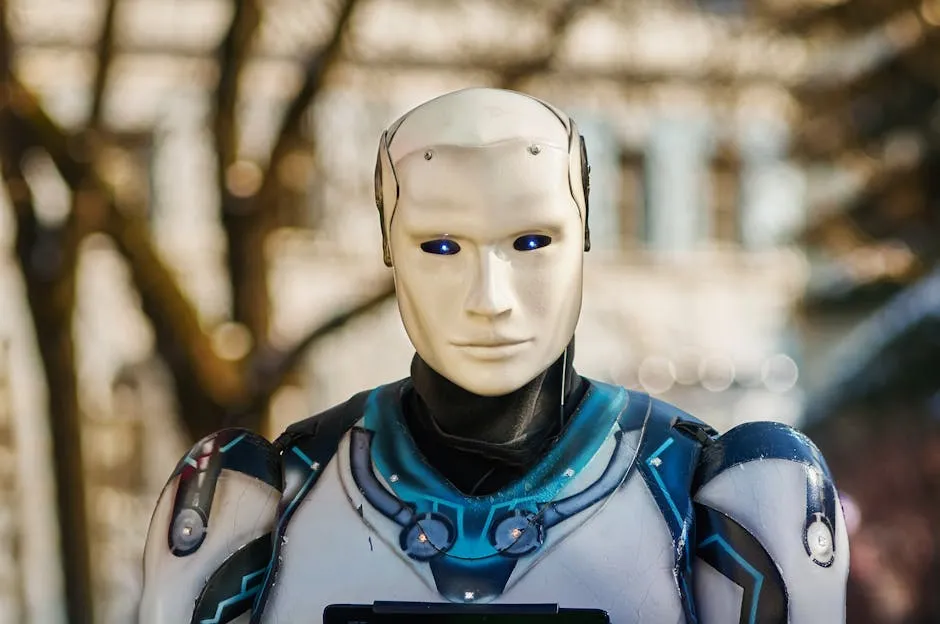
The rise of advanced artificial systems – from chatbots to creative tools – has made the mystery of consciousness feel suddenly practical. People now ask whether a machine could ever really feel pain, joy, or fear, or whether it would just be a very sophisticated imitation with no inner life. Our current systems, for all their impressive abilities, are built on pattern recognition and statistical prediction, not on bodies that sense hunger, warmth, or threat. That embodied, vulnerable side of life might be more central to consciousness than we first assumed.
Still, the line between “truly conscious” and “merely simulated” is not something we currently know how to draw in a precise, testable way. That uncertainty forces us to think harder about what we mean by consciousness in the first place and what ethical responsibilities come with creating entities that might one day claim to suffer or to want things. In a mortal world already full of fragile, feeling beings – other humans, animals, future generations – the question of who counts as conscious is not a game. It shapes how we treat each other, what we build, and whether we make room in our moral circle for minds that might be very different from our own, yet still capable of experiencing harm or wonder.
Conclusion: A Brief, Bright Flame in a Dark Universe
When I think honestly about why consciousness exists in a mortal world, I have to admit that no theory fully satisfies me. Evolutionary stories explain how conscious systems might have arisen, but not why they glow from the inside. Philosophical views like panpsychism try to make that glow fundamental, but they are still more suggestive than conclusive. For now, the fact that there is an experiencing “you” at all remains something like a miracle without a clear author: deeply entangled with the laws of nature, yet not fully explained by them.
My own opinion is that we should lean into both sides of this situation at once: the humility of not knowing and the responsibility that comes with being awake in a world where everything ends. You and I are brief, bright interruptions in a universe that mostly does not care, and yet, while we are here, we are the part that can care – about truth, about beauty, about each other. Maybe that is not the ultimate reason consciousness exists, but it is enough of a reason to treat it as sacred in practice. If your awareness is a mystery perched on the edge of nothingness, how do you want to spend the short time you get to feel anything at all?