
The Great Pyramid of Giza is supposed to be a solved mystery. Ask most textbooks and you’ll get the same confident story: it was a colossal tomb for a powerful pharaoh, built with ramps, ropes, and a lot of sweat. End of discussion. But when you start looking closely at the hard numbers, the engineering, and the weird little details that do not fit neatly into that tidy narrative, things get uncomfortable very fast.
This isn’t about aliens, magic, or wishful thinking. It’s about a growing pile of facts that standard explanations either wave away or barely mention. From impossible construction tolerances to baffling internal features, the Great Pyramid quietly breaks the rules of what should have been possible for an ancient Bronze Age culture. Let’s walk through seven stubborn facts that still do not sit comfortably inside any official theory – and see why this monument might be telling us a more complicated story than we’ve been taught.
1. The Astonishing Construction Precision That Makes “Crude Tools” Hard to Believe

The base of the Great Pyramid is aligned to true north with an accuracy that modern surveyors would respect, missing perfect alignment by only a tiny fraction of a degree. For something that weighs millions of tons and sprawls over a huge footprint, that level of precision is more like what you’d expect from a lab instrument than a stone pile in the desert. Official explanations tend to fall back on vague phrases about careful observation of the stars, but they rarely walk through the exact methods that would consistently yield this kind of accuracy using only simple tools.
Then there’s the flatness and squareness of the base. The foundation is remarkably level over its entire footprint, with differences so small they are measured in millimeters rather than hand spans. Corners are almost perfectly square. If you’ve ever watched a modern construction crew struggle to get a house foundation right, it’s hard not to be impressed – or suspicious – that a civilization with copper chisels and wooden sledges hit these tolerances on a structure of such scale. The usual theory of “they just worked very carefully” feels like an explanation placeholder, not a satisfying engineering account.
2. Multi-Ton Stones, Extreme Height – and No Fully Convincing Ramp System
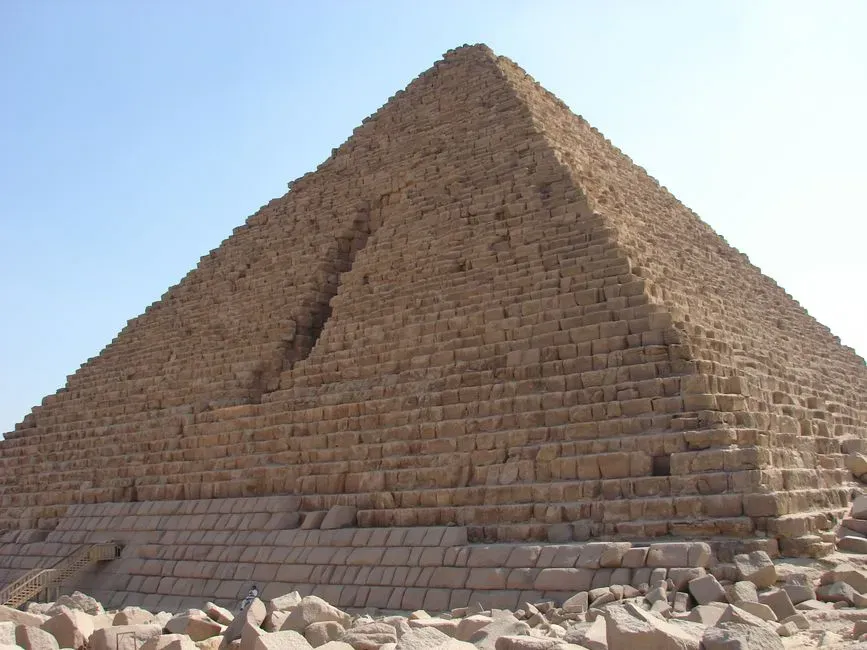
The standard mental image is simple: workers dragged huge limestone blocks up ramps until the pyramid was done. But when you model this idea at full scale, awkward questions pile up. A straight ramp with a gentle enough slope to haul multi-ton blocks would have to be longer than the pyramid is tall by a wide margin, requiring an absurd amount of material, engineering, and labor just to build the ramp itself. A spiral ramp wrapped outside the pyramid sounds clever, until you realize it would obstruct sightlines and make the precision placement of upper stones almost impossible to verify.
Various versions of internal ramps, zigzagging systems, and combined techniques have been proposed, but each one runs into its own set of practical problems: how to turn heavy sledges at tight angles, how to support and dismantle massive temporary structures, how to avoid the entire setup collapsing under its own weight. None of these ramp theories has been demonstrated at anything close to full scale with comparable materials and tools. In other words, the one thing textbooks tend to treat as obvious – “they used ramps” – is still not actually nailed down in a way that satisfies basic engineering scrutiny.
3. The Great Pyramid’s Position and Geometric Oddities That Go Far Beyond Chance
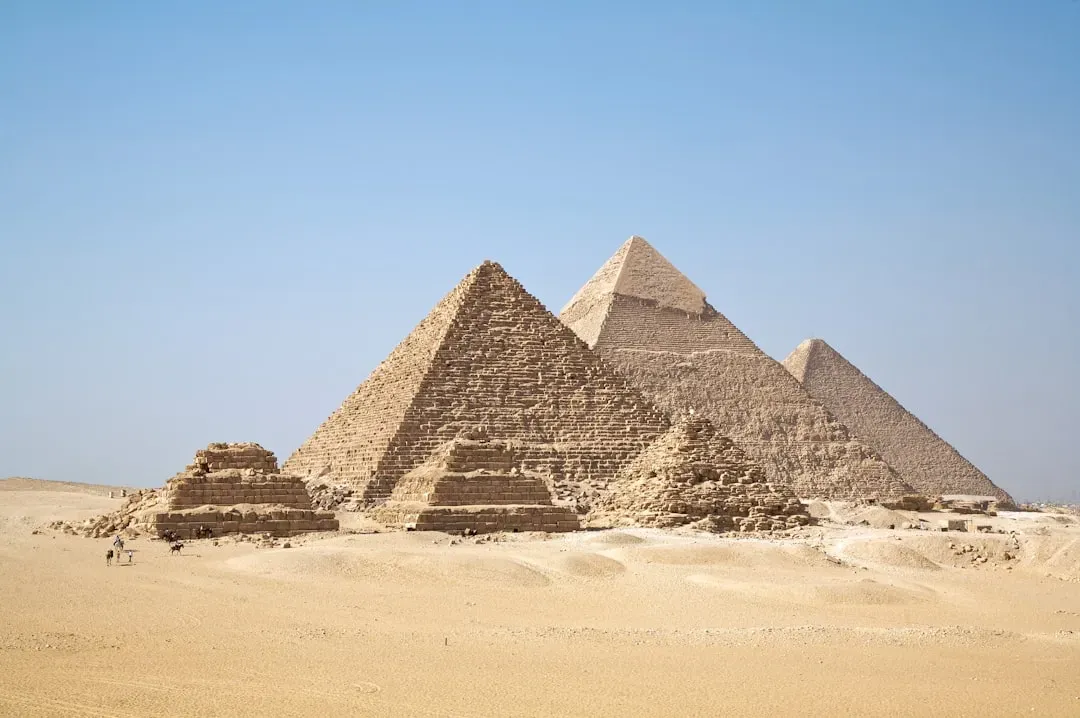
The Great Pyramid is oddly “lucky” in how it sits on our planet. It is located very close to the intersection of the Earth’s longest line of latitude and its longest line of longitude over land, making it eerily central when you look at the world’s landmasses. Some researchers argue this is a coincidence; others suspect it suggests an understanding of Earth’s global shape and geography that greatly exceeds what we usually credit to early civilizations. What’s striking is how little this uncanny placement is even mentioned in mainstream summaries.
On top of that, the proportions of the Great Pyramid encode relationships that look suspiciously mathematical. The ratio of the pyramid’s height to the perimeter of its base appears to approximate key geometric constants when scaled, including something close to the value of pi. Maybe this is a side effect of using practical building ratios that just happen to align with deeper math. Or maybe it reveals a tradition of geometric knowledge sophisticated enough to design those relationships intentionally. Either way, it is strange how quickly the conversation usually jumps past this pattern, instead of seriously asking whether the builders were aiming at more than just “tall and impressive.”
4. The Grand Gallery and Internal Chambers That Don’t Behave Like a Simple Tomb
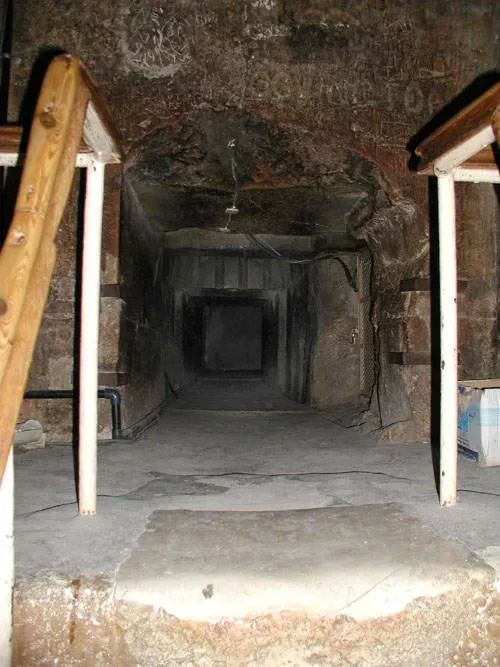
If the Great Pyramid were just a glorified burial monument, its interior is a very odd way to do it. The Grand Gallery is a long, steeply inclined passage with corbelled walls that rise high overhead in precise, repeating steps. It is far more elaborate than needed for a simple access corridor and does not match what we see in many other Egyptian tombs. The King’s and Queen’s Chambers are positioned and constructed with a kind of geometric obsession that feels more like a functional design than mere theatrics for a royal burial.
Then there’s the strange fact that no mummy has ever been conclusively found inside the Great Pyramid itself. The central sarcophagus in the so-called King’s Chamber was discovered empty, and there is ongoing debate about whether it even shows clear evidence of ever holding a body. Official theories usually suggest grave robbers or later disturbances, which is certainly possible. But that explanation conveniently sidesteps a deeper question: if this was the ultimate royal tomb, why is its internal architecture so unique and complex compared with other known burials, and why are the usual funerary markers, decorations, and texts conspicuously missing?
5. The “Air Shafts” With Bizarre Alignments and No Simple Practical Purpose
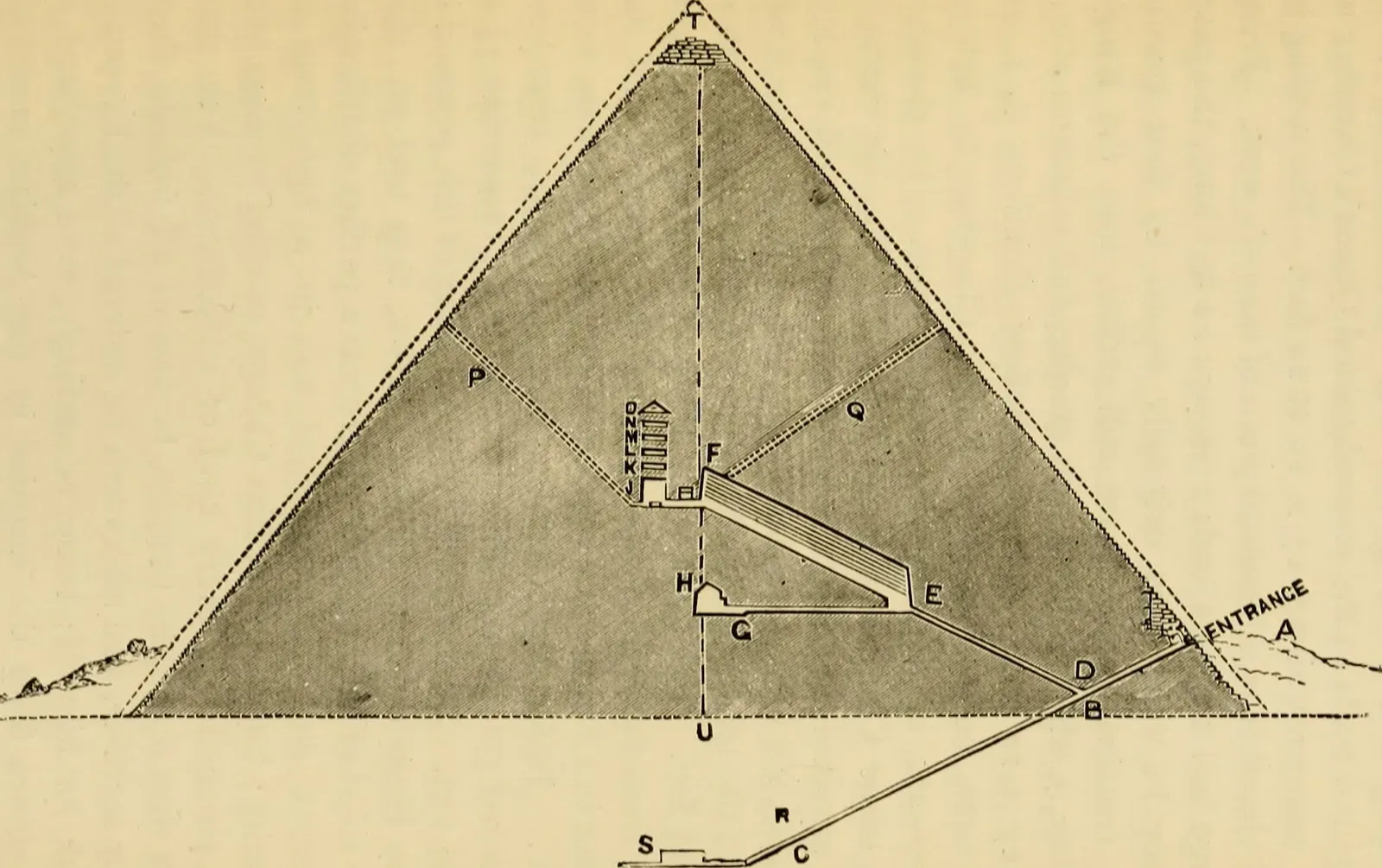
Some of the most intriguing features of the Great Pyramid are the narrow shafts leading from the King’s and Queen’s Chambers toward the exterior. They are too small for people to use, too precisely cut to be random gaps, and they do not neatly match any straightforward ventilation or construction need. Early archaeologists called them air shafts almost by reflex, but the more they’ve been measured and studied, the less that label seems to explain. Their angles and directions turn out to be anything but casual.
Several of these shafts appear to line up roughly with specific stars or regions of the night sky as they would have appeared at the time of construction, particularly important stars linked to Egyptian religious beliefs. That suggestive alignment has fueled theories that the pyramid functioned partly as a symbolic or ritual machine, connecting the pharaoh with the heavens. Yet this idea also bumps into questions official narratives rarely answer fully: if these alignments were deliberate and required such careful engineering, why is the Great Pyramid treated mostly as just a super-sized tomb instead of a more complex instrument of cosmology and ritual?
6. The Mysterious Relieving Chambers and the Problem of Over-Engineering
Above the King’s Chamber, there are multiple stacked “relieving chambers,” layers of stone spaces topped by huge granite beams, presumably designed to redirect the incredible weight of the pyramid so the chamber below would not collapse. This alone shows an advanced grasp of structural engineering. But if the builders could calculate and solve stress problems that accurately, it raises uncomfortable questions. How did a culture officially described as using trial-and-error stonework end up with a solution that still works thousands of years later on a structure this massive?
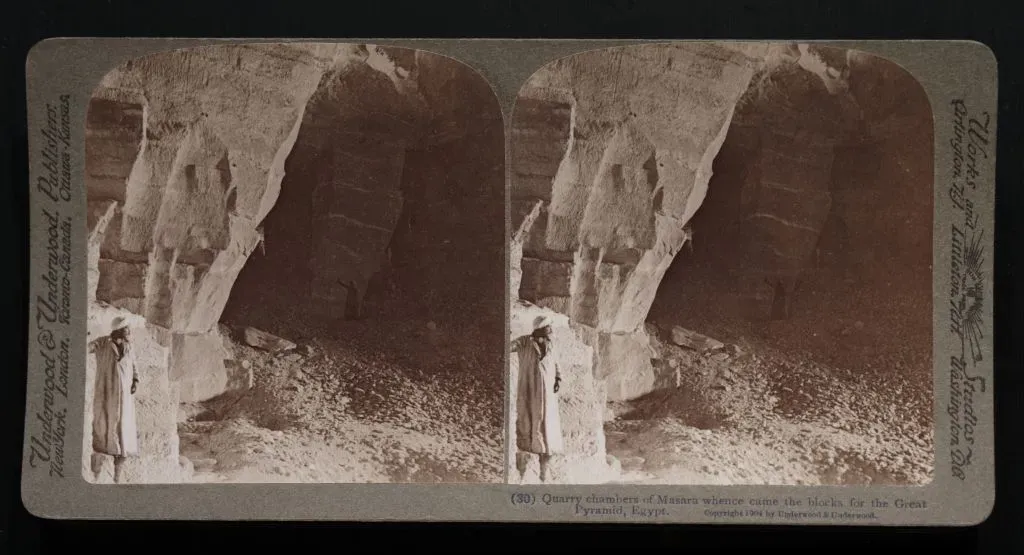
On paper, the usual explanation is that careful observation over generations taught them what worked. In practice, that feels thin when you look at the sheer size and precision of these elements. The granite blocks are enormous, hauled from quarries far away, and placed in tight, controlled arrangements that suggest deliberate design rather than incremental experimentation. It starts to look less like rough ancient ingenuity and more like the kind of knowledge we would attribute to a serious engineering tradition – one that, oddly, left us very little written instruction explaining how they pulled it off.
Recent non-invasive scanning projects have hinted at previously unknown voids or cavities within the structure, including a large one above the Grand Gallery. The existence of these spaces suggests that the internal architecture is even more complex than we thought, and likely not fully understood. Yet official theories tend to treat them as structural leftovers or incidental hollows unless absolutely forced to do otherwise. This reluctance to admit we might still not grasp the full function and design logic of the pyramid is one of the most revealing failures of the conventional story.
7. The Vanishing Blueprint: No Clear Construction Manuals, No Direct Explanations

You would expect that a project as vast and transformative as the Great Pyramid would come wrapped in extensive records, instructions, or even boastful commemorations. Instead, we have a strange silence. There are quarry marks, work gangs’ names, some indirect references, and plenty of later historical writings, but nothing that reads like a clear, step-by-step explanation from the ancient builders themselves. For something that must have dominated the lives and economy of an entire era, the lack of explicit surviving documentation about how and why it was done is baffling.
The official story leans heavily on circumstantial evidence and reasonable assumptions, filling in gaps with phrases like “they likely” or “they probably” did this or that. There is nothing wrong with careful inference; archaeology depends on it. But when the most iconic monument on Earth still requires this much guessing about basic construction, purpose, and methodology, it is honest to admit that our prevailing theories are not as solid as they are often advertised. The missing blueprint is not just a historical inconvenience; it is a standing challenge to the idea that we have this all figured out.
Conclusion: A Monument That Still Refuses to Behave

When you add these seven facts together – the microscopic precision, the unresolved ramp problem, the uncanny positioning, the anomalous interior, the strange shafts, the overbuilt relieving system, and the vanishing “how-to” manual – a pattern emerges. It is not a pattern that screams aliens or lost super-civilizations, but it absolutely does whisper that the Great Pyramid is more than a simple tomb built with brute force and basic tools. The official narrative explains pieces of the puzzle, but it leaves too many edges ragged, too many inconvenient details pushed to the margins.
My own opinion is that we have underestimated both the intellectual reach and the specific technical organization of the people who built this thing – and possibly misread what they were truly trying to achieve. Instead of clinging to a story that barely holds together, it might be healthier to admit that the Great Pyramid still outsmarts us in important ways. That humility would not weaken the scientific approach; it would sharpen it. After all this time, maybe the real mystery is not that the pyramid is “too advanced,” but that we are still too quick to pretend we understand it. If you stood at its base today and felt that quiet, unnerving sense that something still does not add up, would you really be wrong?