
Imagine standing on a cliff at the end of the world, staring into a dark, endless void. A lot of people secretly picture something like that when they hear that the universe is expanding: there must be a far-off edge, a cosmic fence, a final wall. But the more we’ve learned about space, the stranger – and more fascinating – that question has become. In 2026, with powerful telescopes on the ground and in orbit, astronomers are closer than ever to mapping the observable universe, yet the question of an ultimate edge still feels like a riddle.
I remember the first time I realized our galaxy is just one tiny fleck in a vast cosmic web; it felt less like a science lesson and more like a mild existential crisis. If space keeps going and going, where does it stop? Does it loop back like the surface of Earth, or stretch on forever? And if we can only see a limited part of it, what lies beyond the horizon of everything we’ve ever observed?
The Universe Is Expanding – But What Does That Really Mean?
It’s easy to imagine galaxies flying outward into empty space, like shrapnel from a cosmic explosion. That mental picture is wrong in a subtle but important way. In modern cosmology, it’s not that galaxies are racing through a fixed, pre-existing space; instead, space itself is stretching, carrying galaxies along with it, the way dots on an inflating balloon move apart as the balloon grows.
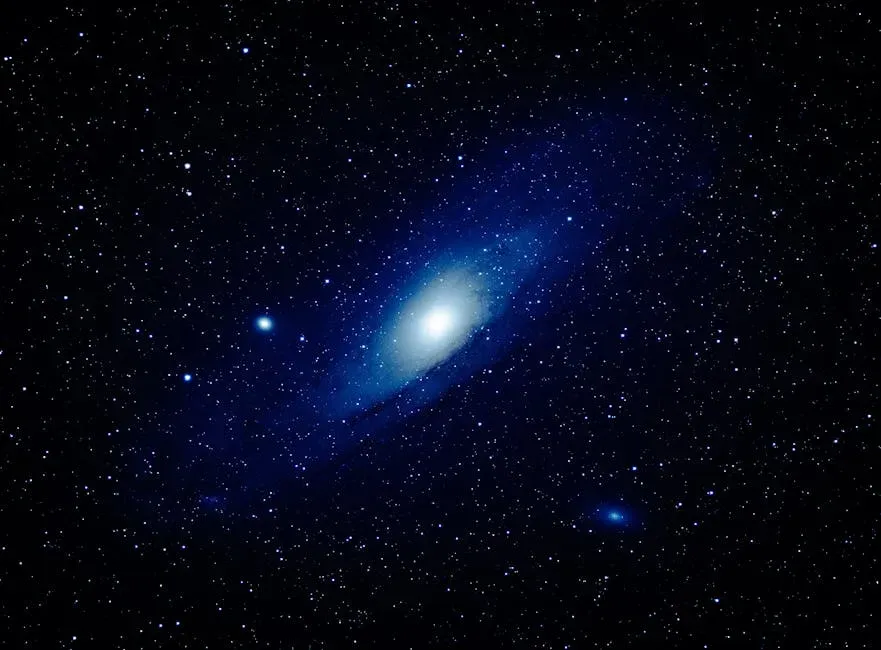
When astronomers say the universe is expanding, they’re describing how the distances between unbound galaxies increase over time, on average. Nearby galaxies can still move toward each other due to gravity – that’s why the Andromeda galaxy is on a slow collision course with the Milky Way – but on larger scales, almost all galaxies are drifting apart. This isn’t just an idea; it’s supported by roughly a century of observations, starting with measurements of galaxy light showing a redshift that grows with distance, a pattern that fits the picture of an expanding universe incredibly well.
The Big Bang Was Not an Explosion in Space
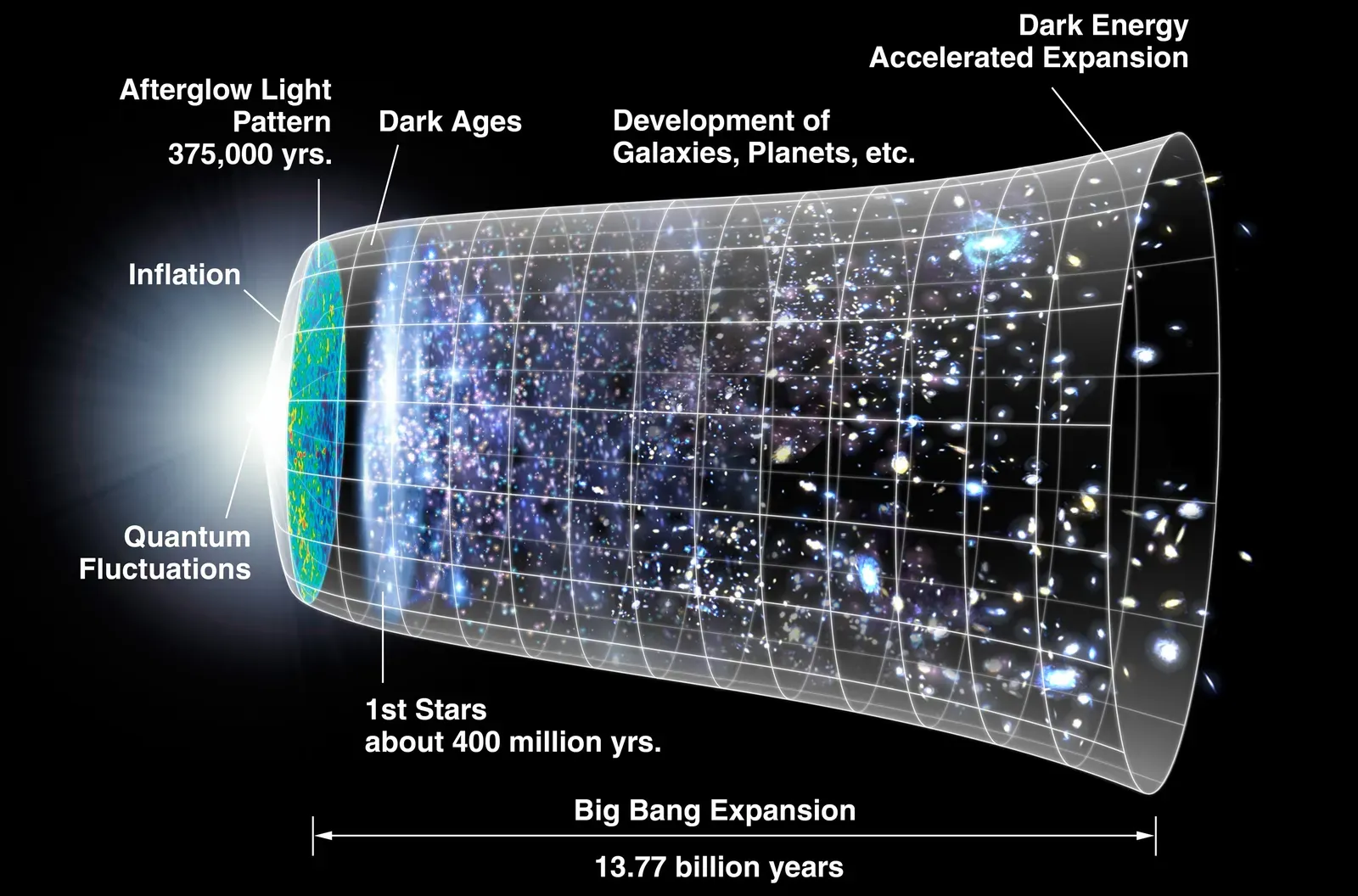
The phrase “Big Bang” makes most people think of a massive blast at a single point, throwing matter into surrounding emptiness. Cosmologists cringe a little at that image. The early universe was dense and hot everywhere, not just in one spot, and the Big Bang was the rapid expansion of that entire spacetime, not a bomb going off into some outside void. There was no pre-existing external space waiting to be filled.
A better way to picture it is to imagine every point in space squeezed together in the past, with everything closer to everything else, and then watch those distances grow as time moves forward. From that perspective, asking “where did the Big Bang happen?” is like asking “where on the surface of Earth is south of the South Pole?” The whole thing was the event. That doesn’t answer every deep question about origins, but it does knock down the idea that there must be a physical edge left behind by some cosmic blast.
Observable Universe vs. Entire Universe: Our Built-In Horizon
Here’s the twist that often shocks people: when cosmologists talk about “the observable universe,” they are not talking about the entire universe. The observable universe is just the spherical region around us from which light has had time to reach us since the Big Bang. Light travels at a finite speed, and the universe has a finite age, so we can only see out to a certain distance – beyond that, information simply hasn’t had time to get here.
This gives us a kind of cosmic horizon, like standing in the middle of the ocean and seeing only to where water meets sky. Crucially, that watery line isn’t the edge of the ocean, it’s just the edge of what you can see. In the same way, the radius of our observable universe sets a limit to our knowledge, not necessarily a limit to existence. Beyond that horizon, space and galaxies may continue – perhaps endlessly – but they are, in practice, forever out of reach.
Is There a Literal Edge? What General Relativity Actually Says
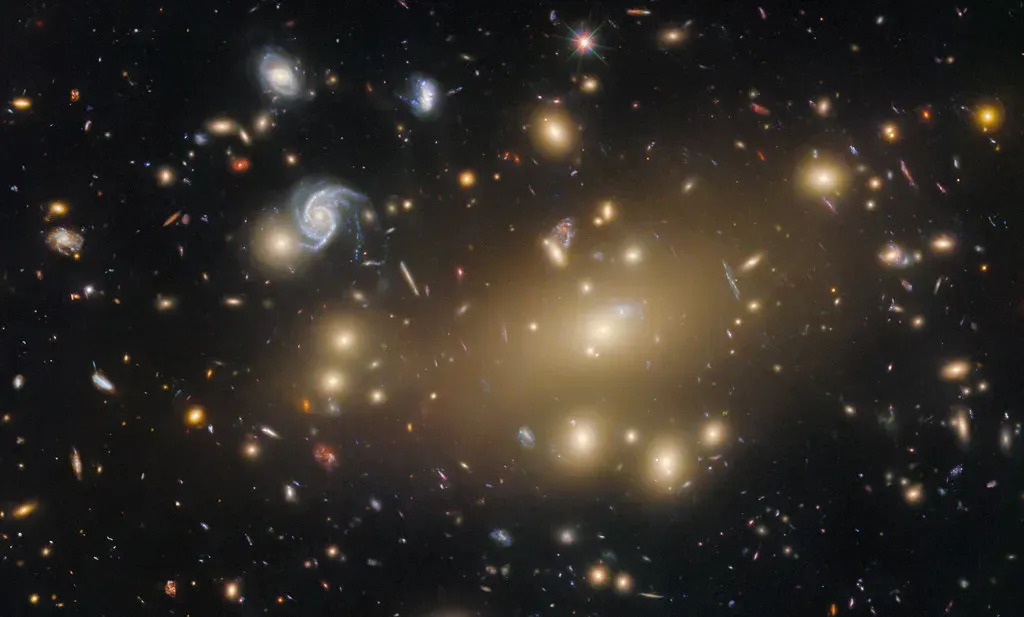
In Einstein’s theory of general relativity, space and time form a dynamic, four-dimensional fabric whose shape is governed by matter and energy. When cosmologists apply this framework to the universe as a whole, they do not find a requirement for a sharp edge, a wall, or a border where space suddenly stops. Instead, the models describe a spacetime that can be finite or infinite in volume, but in both cases it has no boundary in the usual, physical sense.
If the universe is finite but unbounded, it can be a bit like the surface of a sphere: you can walk around the world forever without finding an edge, even though the total area is limited. Translated into three dimensions of space, this means you could (in principle) travel in one direction and eventually return to where you started, without ever hitting a cosmic wall. If the universe is spatially infinite, then there is simply no “end” at all – space just keeps going, even beyond anything we’ll ever see.
Cosmic Geometry: Flat, Curved, and the Shape of Everything
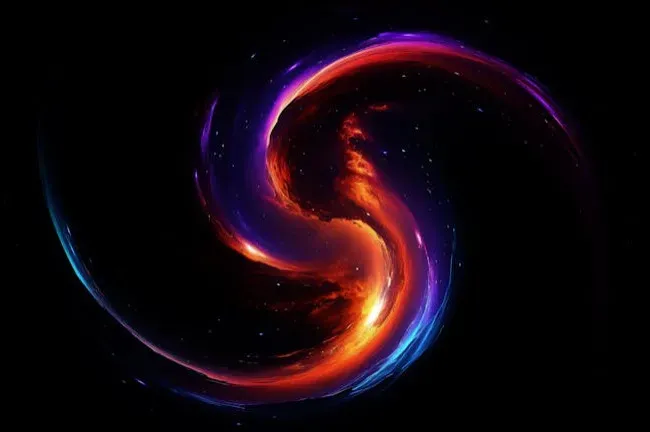
To figure out the global shape of the universe, astronomers study cosmic geometry: does space on large scales behave as if it’s flat, like a sheet of paper, or curved, like a sphere or a saddle? The main tool for this is the cosmic microwave background, the faint afterglow of the early universe, whose patterns carry a geometric fingerprint. Over the last couple of decades, satellites and observatories have measured those patterns with extraordinary precision.
The current evidence points strongly toward a universe that is very close to spatially flat on the largest scales. If it is exactly flat and the average matter-energy density stays the way we think it does, then the simplest interpretation is that space is either infinite or unimaginably large compared to the part we can see. There are still possibilities for more exotic shapes and topologies – like a universe that is finite but wraps around in tricky ways – but so far, nothing in the data demands a tidy, bowl-shaped cosmos with a clean edge somewhere “out there.”
Dark Energy and a Forever-Stretching Cosmos
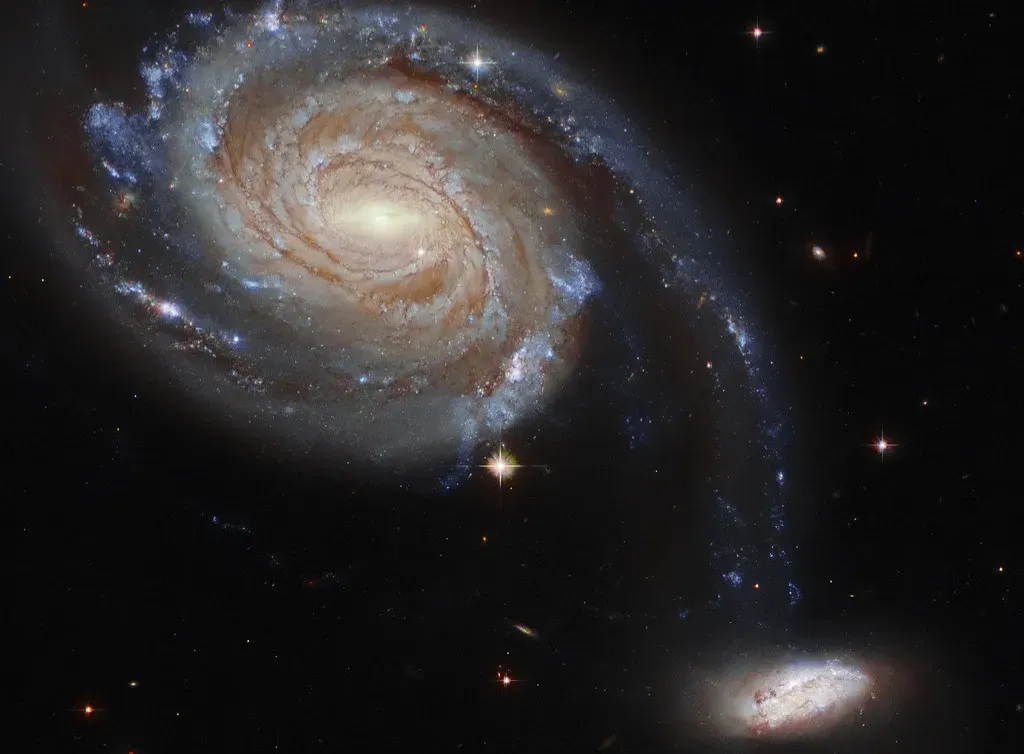
As if expansion weren’t weird enough, in the late nineteen-nineties astronomers discovered that the expansion of the universe is speeding up. Some unknown ingredient, named dark energy, seems to be acting like a kind of repulsive gravity on vast scales. Instead of the expansion slowing down under the pull of matter, space is stretching faster and faster with time. That discovery completely changed our expectations for the far future of the cosmos.
This accelerating expansion makes the idea of an accessible edge even less meaningful. Over time, more and more galaxies will slip beyond our observable horizon as space expands between us and them faster than their light can bridge the gap. It’s not that those galaxies hit a boundary; it’s that they become causally disconnected from us. In a very real sense, the universe will feel like it is shrinking to a lonely island of structures even as the underlying spacetime continues to grow.
Multiverse Ideas: Edges Inside a Bigger Reality?
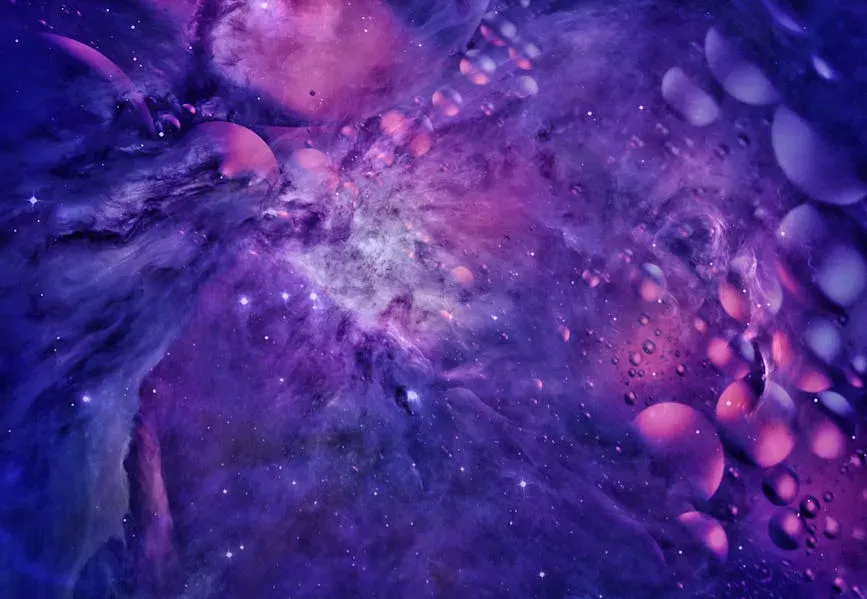
Whenever people hear that our observable universe might just be one part of something larger, the word “multiverse” is never far behind. Some versions of inflationary cosmology – theories about what happened in the universe’s first fractions of a second – naturally lead to a picture where our entire universe is just one bubble in a vast cosmic foam. In that view, there could be many regions with different physical conditions, scattered through a larger spacetime we can never visit.
If something like that is true, then our “edge” is not a wall in space but a limit of our specific bubble. Other bubbles would be beyond any possible observation, making them more philosophy than testable science, at least for now. This is where cosmology brushes up against the boundaries of what counts as empirical. It’s exciting and unsettling, but it also demands intellectual humility: even in 2026, some of the boldest ideas about edges and beyond-edges remain firmly in the realm of speculative but mathematically consistent possibilities.
What Lies Beyond What We Can See – And Can We Ever Know?
So what actually exists beyond our observable universe? The most conservative answer, favored by many cosmologists, is: more of the same. The laws of physics and the distribution of galaxies probably continue in a similar way, just farther out than light has had time to travel. In this view, the cosmos beyond our horizon is not magical or dramatically different, just permanently hidden from us by the structure of spacetime and the finite age of the universe.
Could there be truly different regions with different constants or even different physics altogether? Possibly – our best theories don’t rule it out. But right now, those ideas are extremely hard to test. New telescopes, more precise surveys of the cosmic microwave background, and better measurements of dark energy might sharpen our picture, but there will almost certainly remain a hard limit on how much we can confidently say about anything beyond our cosmic horizon.
How This Changes Our Place in the Cosmos
Thinking seriously about whether the universe has an edge is a fast way to feel very small, very quickly. At the same time, there’s something oddly comforting in realizing that there might be no outer wall, no looming border where existence just stops. Instead, we live inside a universe that is smooth and continuous on the largest scales we’ve measured, with no sign of a cosmic cliff waiting at the end of all roads. That picture makes our little corner of space feel like one neighborhood in a vast, unbounded city.
On a more personal level, I find it strangely grounding to know that our questions about edges are limited not just by technology, but by the deep structure of reality itself. We are creatures that evolved on a small planet, good at dealing with hills and horizons, now daring to ask about the shape of everything. Whether the universe is infinite or just incredibly large, the fact that we can even pose these questions – and test some of the answers – might be the most astonishing part of the story.
Conclusion: An Edge to Everything We See – But Not to Everything That Is
So, Yes, in a sense: the observable universe has a real, calculable horizon beyond which we cannot receive information. But that edge is not a wall in space; it is a boundary in time and causality, shaped by the speed of light and the age and expansion history of the cosmos. Beyond it, most evidence points toward more universe, not empty nothingness, even if we can never directly verify every detail of what lies there.
As of 2026, the expanding universe looks less like a contained bubble and more like a vast, possibly endless tapestry, with our cosmic horizon just one patch we can illuminate. There may be no final cliff where space abruptly ends, only deeper layers of mystery receding as we learn more. In the end, the question of edges tells us as much about our hunger to understand as it does about the universe itself. When you look up at the night sky now, do you picture a wall out there – or an open road that simply stretches beyond where light can ever meet you?