In a nation racing to industrialize, the Cherokee Nation quietly pulled off a media breakthrough that changed what literacy could mean on this continent. Within a decade of inventing a written script, the Cherokee launched a bilingual newspaper that rivaled any small-town press in the young United States. The leap from oral memory to hot metal type was not just cultural pride; it was information infrastructure built from scratch. The story of the Cherokee Phoenix is both daring and data-rich, a case study in how technology, language science, and political will can accelerate learning. It is also a reminder that innovation often blooms far from the places history books usually look.
The Hidden Clues
Start with the script itself, a lattice of characters that looks unfamiliar until you hear them aloud: each sign marks a syllable rather than a single sound. Sequoyah’s syllabary, completed in 1821, compressed the sounds of Cherokee into about eighty-five symbols, a design choice that made learning to read fast for new learners. Children and elders alike could map speech to print with fewer steps, turning the new writing system into a community-wide experiment in rapid literacy. What fascinates linguists is how a carefully tuned syllabary reduces cognitive load during decoding, letting readers recognize meaningful chunks in one glance. When I first saw a page of the syllabary in a museum, it felt like listening to a familiar song played on an instrument I had never seen before – strange at first, then suddenly obvious. Those are the hidden clues: a script engineered for the rhythms of the language that birthed it.
From Oral Memory to Metal Type
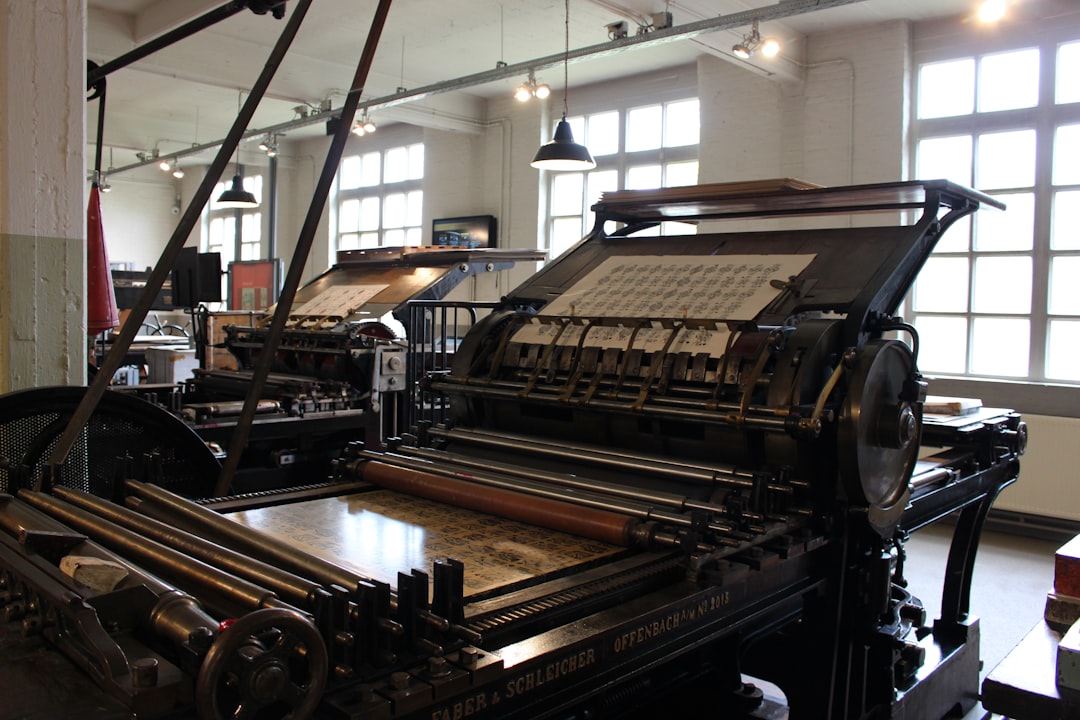
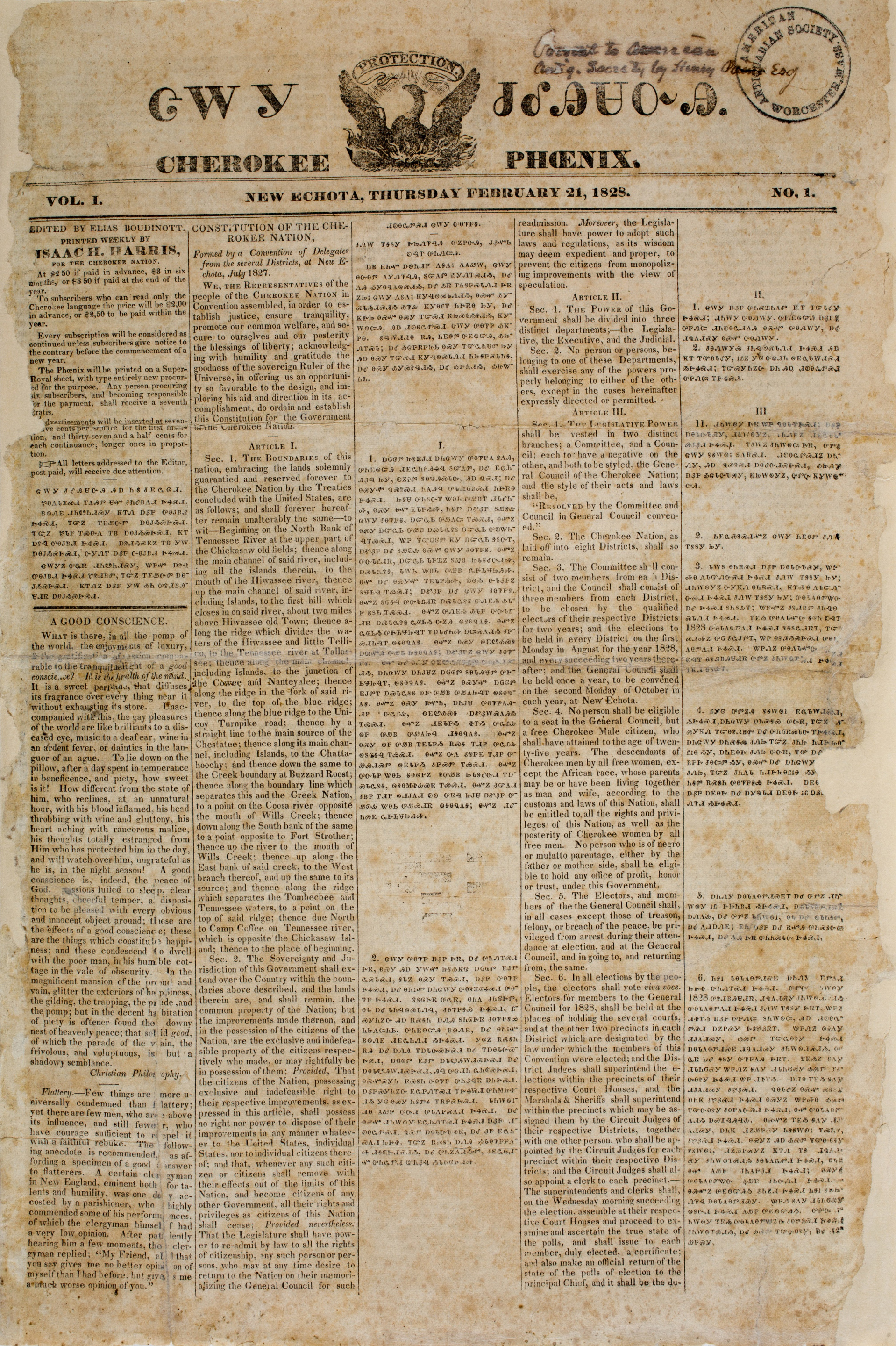
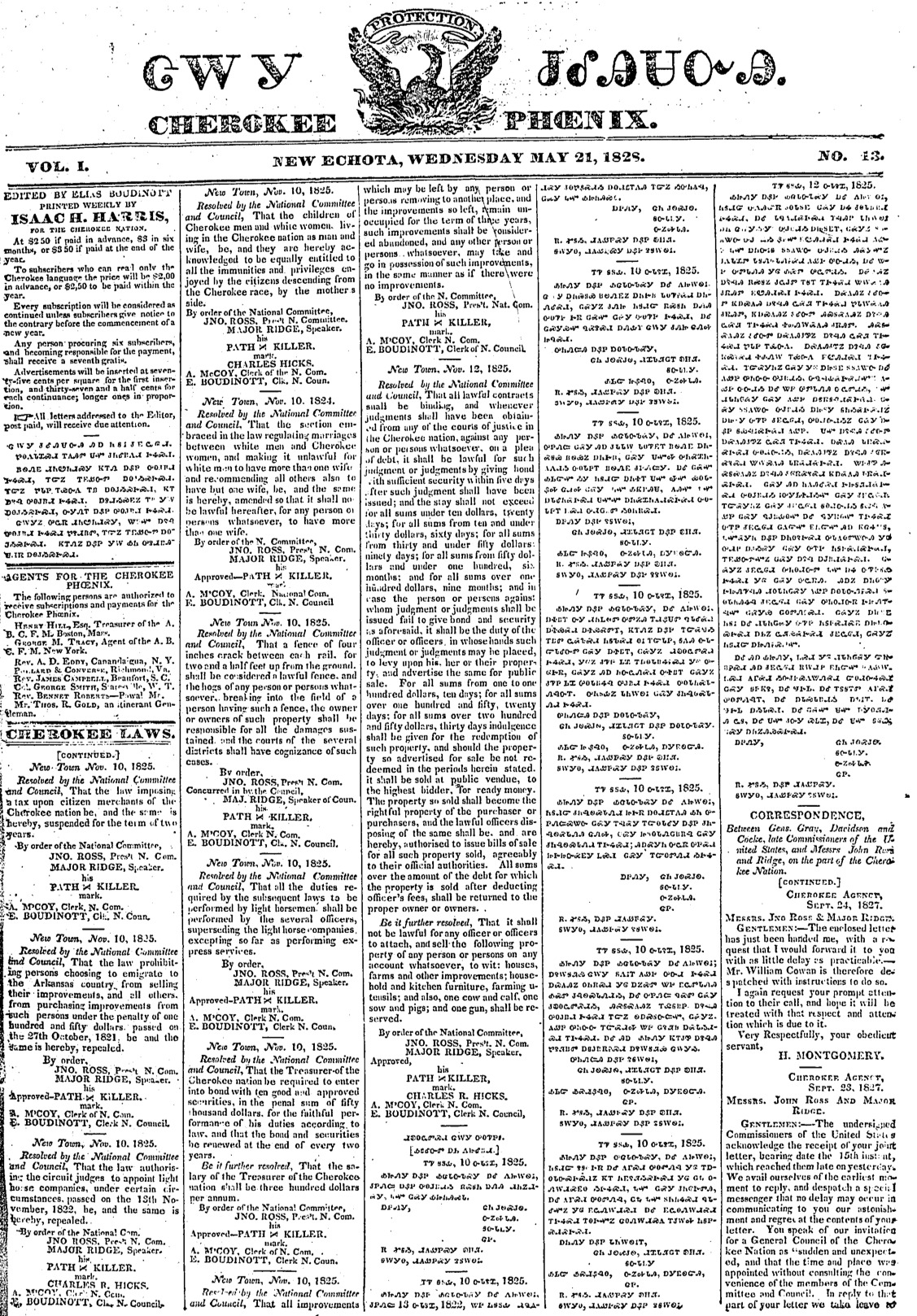
The Cherokee Nation did not stop at paper primers and handwriting; they moved straight to print. With allies who helped design type and secure a press, the Nation transported a printing outfit to New Echota, its capital in present-day Georgia, and trained staff to run it. Elias Boudinott, a Cherokee intellectual and editor, took the helm, steering a paper that would speak both inward and outward in Cherokee and English. Casting syllabary characters in metal required careful adaptation, a quiet feat of engineering that translated a hand-drawn script into durable, repeatable glyphs. The result was a production line of knowledge, from local laws and public-health notices to science notes and policy debates. In effect, the press functioned like an early broadband connection for a sovereign community.
Inside the Syllabary: How a Script Rewires Minds
Reading changes the brain in measurable ways, and different writing systems recruit overlapping but distinct pathways for pattern recognition. Neuroscience studies show that learning to read trains the visual word form area to respond to recurring shapes tied to sound and meaning, and syllabaries nudge learners to parse speech in larger, more natural units. That is one reason Cherokee learners historically reached functional literacy quickly: fewer symbols than a logographic script, and fewer fragmentary decisions than an alphabet demands. Educationally, that matters, because the path from decoding to comprehension can be shorter when learners chunk syllables efficiently. For community health, governance, and science communication, faster literacy is not an abstraction – it is time saved in emergencies and clarity gained in public notices. A writing system is technology, and this one was optimized for speed to usefulness.
Launch Day in New Echota
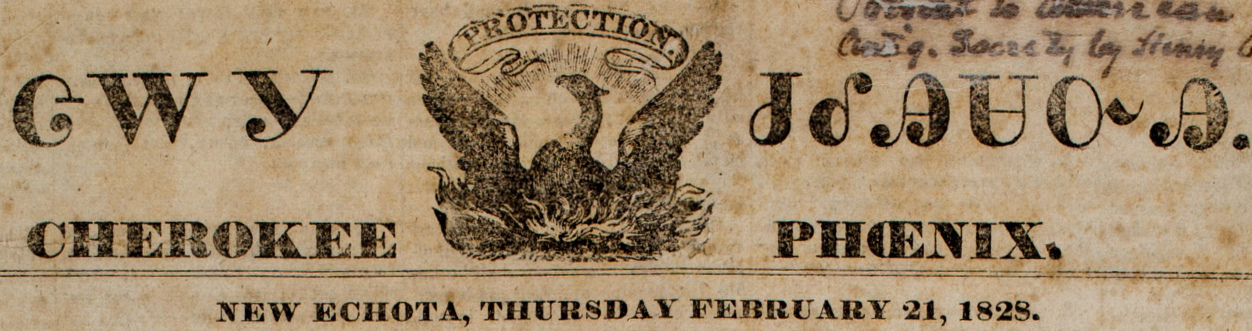
The first issue of the Cherokee Phoenix rolled off the press in February 1828, announcing a new voice in the American print landscape. The paper was bilingual by design, a rare editorial choice that showcased Cherokee perspectives while making them legible to non-Cherokee readers. Pages carried Nation Council updates, legal notices, features on education, and coverage of the accelerating pressures from state and federal policies. The physical paper – ink, type, and folded sheets – signaled something deeper: a nation writing itself into the public record. Technically, the shop functioned like any frontier press, but its typecase included a custom syllabary set, a first for a Native nation in the United States. That combination of engineering, policy, and editorial craft made the Phoenix a newsroom and a research lab at the same time.
- Groundbreaking first: a Native-run newspaper using an Indigenous script in the U.S.
- Two-language model: Cherokee and English on the same pages broadened reach.
- Civic mission: laws, health, education, science, and cultural commentary in regular circulation.
Why It Matters
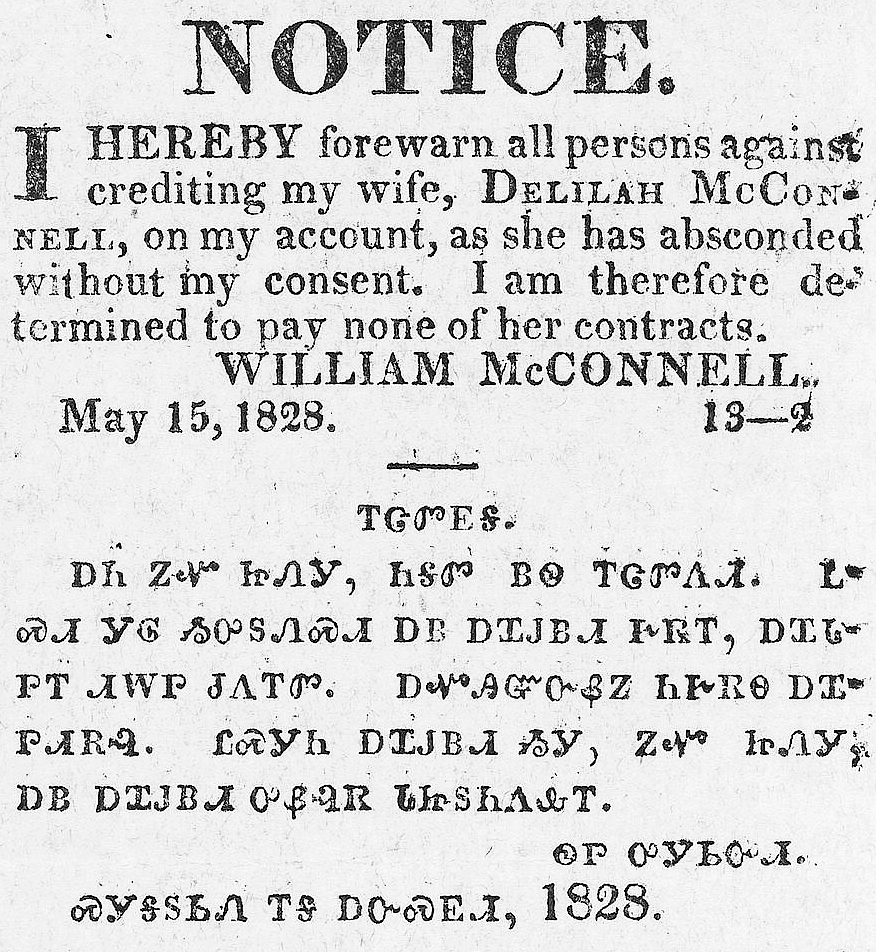
Information sovereignty is not a buzzword here; it is the right to set the narrative using tools built for the language at hand. Compared with missionary tracts or outside coverage, the Cherokee Phoenix flipped authorship and audience, enabling policy debate on Cherokee terms and timelines. In scientific terms, the paper tested how a community-designed medium affects literacy uptake, public health messaging, and political cohesion, delivering results faster than many school-based reforms. Historically, it counters the trope that technological modernity only flows one way – from centers of power to the periphery – by showing innovation rising from a sovereign Indigenous capital. The Phoenix also complicates the standard story of American print culture by proving that bilingual, bicultural journalism can be rigorous and widely read. When we teach early American media, this case belongs next to Franklin’s press and the penny papers.
Global Perspectives
Seen globally, the Phoenix belongs to a wider tradition of communities building newspapers to stabilize language and law. Hawaiian-language papers, Māori publications, and Sami periodicals would each harness their own scripts or orthographies to consolidate knowledge, debate policy, and teach literacy at scale. The Cherokee example is distinct in the U.S. context because it relied on a newly invented script and a custom metal typeface, making the technological lift unusually steep. It also prefigured modern bilingual media strategies by pairing Indigenous-language pages with English, a dual track that widened influence without diluting identity. Scholars of writing systems often point to such efforts as natural experiments in how orthography, policy, and printing technology interact. Put differently, the Phoenix shows how a newspaper can be both a cultural mirror and a laboratory instrument.
The Future Landscape
Today, the legacy lives online as digitization projects, searchable archives, and new reporting from the Cherokee Nation keep the signal strong. Unicode support for the syllabary, expanding font families, and mobile keyboards have moved Cherokee into the everyday tech stack, from texting to classroom apps. Optical character recognition tuned for the syllabary is advancing, turning scanned pages into data that historians and language teachers can analyze at scale. Machine learning tools promise transcription assistance for older typefaces and damaged pages, while community-led standards work can safeguard accuracy and privacy. On the newsroom side, multimedia reporting in Cherokee and English pushes the bilingual model into podcasts, video, and interactive explainers. The same principle holds: technology is the amplifier, but language is the operating system.
The Human Story
The original press faced relentless headwinds as political pressure mounted in the Southeast, and by the mid-1830s the paper was forced to shut down. Even so, its influence persisted, and later tribal papers carried the torch in what became Indian Territory, reasserting the role of Indigenous media in governance and education. Family by family, the habit of reading public notices, school lessons, and health updates in Cherokee and English reshaped daily life. That is a measurable health and policy effect, not just a literary flourish. I still think about a teen I met at a language workshop who toggled between a Cherokee keyboard and a climate dataset on a tablet, treating both as normal tools. That is the Phoenix in a new century: not nostalgia, but continuity.
How to Engage Today
If this story resonates, there are simple, concrete ways to help it continue. Explore reputable digital archives to read early issues and share them in classrooms, book clubs, and local libraries. Support tribal newsrooms and language programs that publish in Cherokee and English, because sustainable funding keeps reporting independent and language resources current. If you work in tech, contribute to open-source fonts, keyboard layouts, OCR models, or data labeling that improve Cherokee-language usability across devices. Educators can assign bilingual news stories alongside science units, showing how public-health or environmental reporting reads in Cherokee and English. Museums and community centers can host hands-on demos of syllabary keyboards or letterpress prints to connect the history of type with the future of code.