
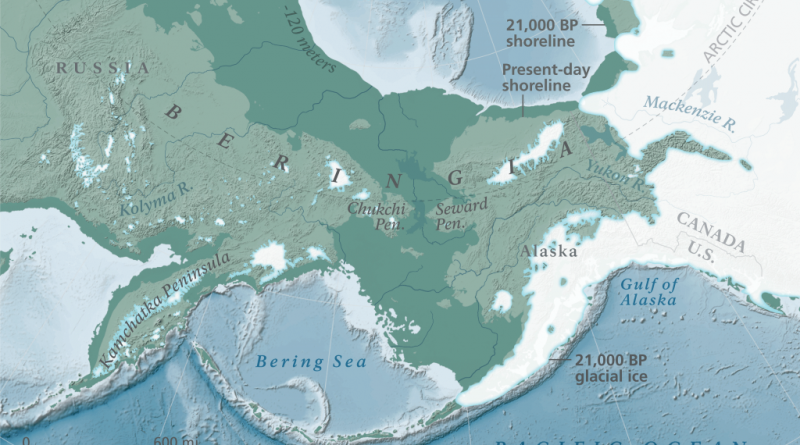
Picture this: you are not flying over an ocean or sailing across it – you are walking. Where the icy Bering Sea lies today, you would be crossing a vast, cold grassland filled with mammoth, bison, and wild horses. That drowned world, called Beringia, is where the story of America’s first immigrants most likely begins. It was not a narrow gangplank of dirt but an entire region, a homeland, that connected northeastern Asia and what is now Alaska for thousands of years.
When you trace your curiosity about how people first reached the Americas, you step into one of the most dramatic detective stories in science. Archaeologists, geneticists, geologists, and Indigenous historians all bring pieces of the puzzle, and the picture is still changing. You are not just learning about some distant hunters trudging through ice; you are looking at a long, complex journey that ultimately shapes who lives in the Americas today, including many communities whose ancestors carried those first memories across this lost land.
Stepping Into Beringia: Not Just a Bridge, but a World
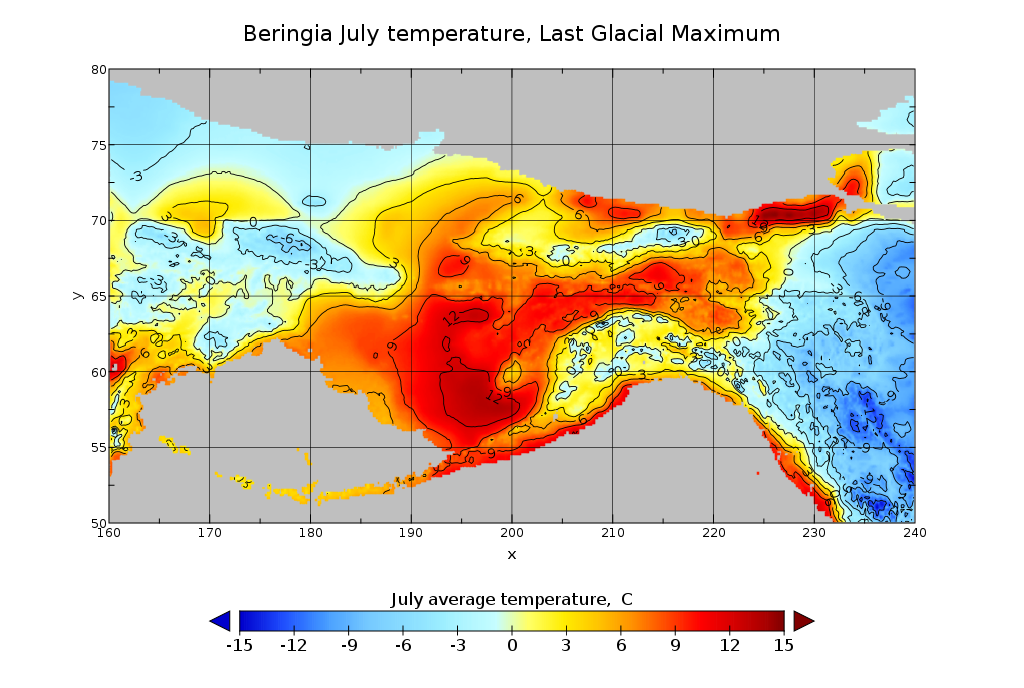
When you imagine the Bering Land Bridge, you might think of a skinny strip of dirt barely wide enough for a caravan. In reality, if you could stand there at the height of the last Ice Age, you would be in a landscape stretching roughly a thousand miles from north to south, a broad expanse of steppe-tundra where the Bering and Chukchi Seas now roll. Sea levels were dramatically lower because so much water was locked in massive ice sheets, exposing a continent-sized platform that joined Siberia and Alaska.
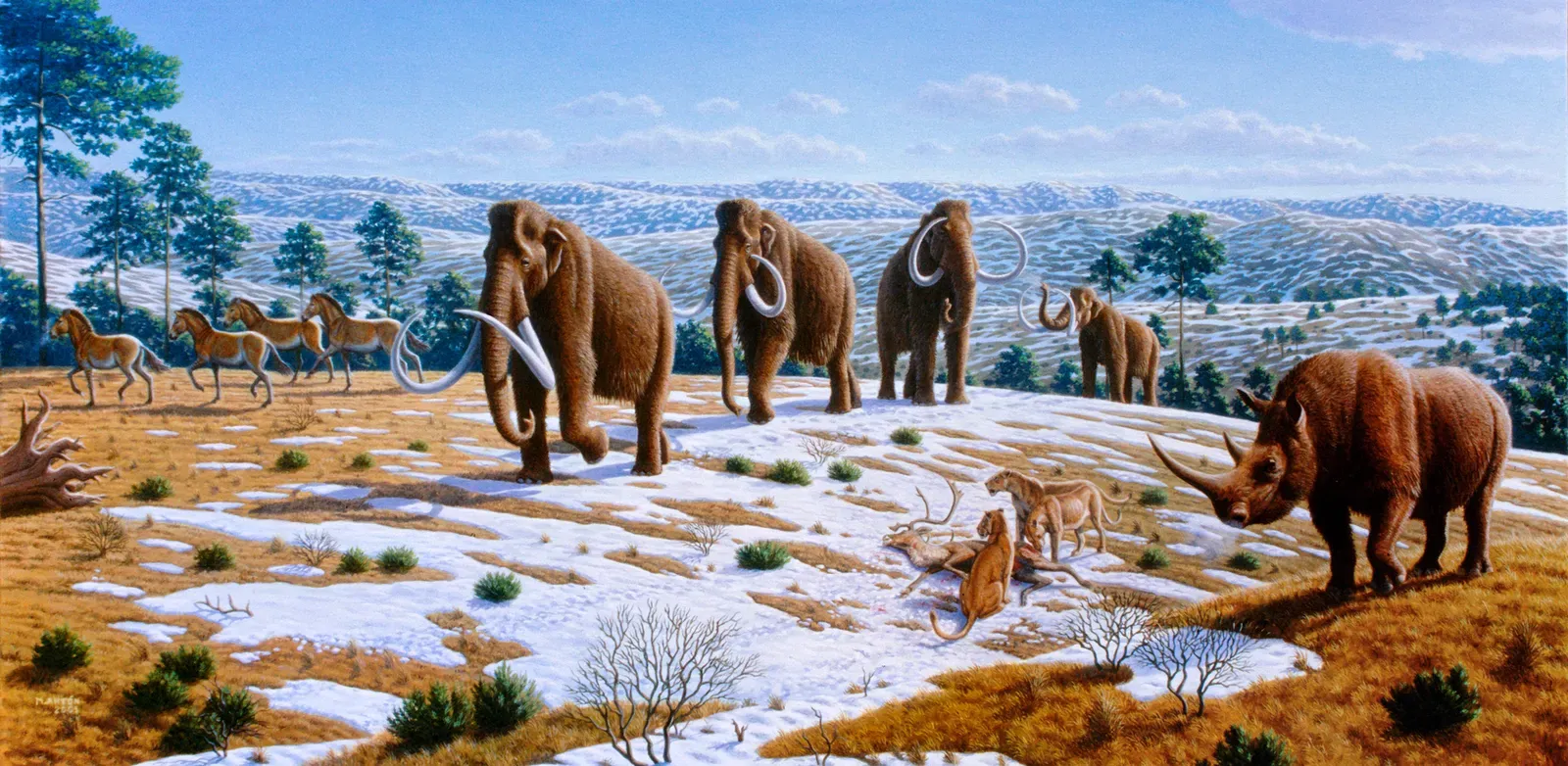
In that world, you would see tough grasses, shrubs, and scattered patches of wet ground instead of towering forests, and you would share it with woolly mammoths, steppe bison, caribou, musk oxen, and predators that shadowed them. This was not just a corridor to rush through but a place where people could hunt, camp, and raise children for generations. When scientists talk about Beringia today, they describe it less as a bridge and more as a distinctive region with its own climate, ecosystems, and human history – an entire world now hidden under water but central to the story of the Americas.
Who These First Immigrants Likely Were – and Where They Came From
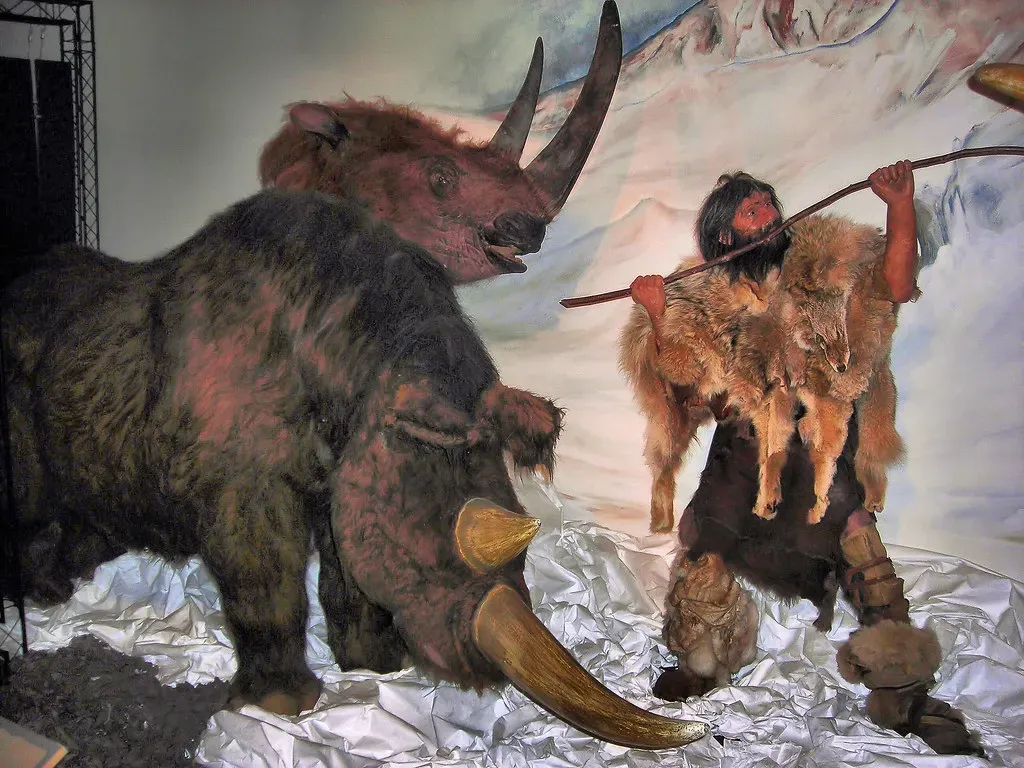
If you were to follow the trail of DNA and stone tools backward, you would find yourself among hunter-gatherers living in northeastern Asia during the late Ice Age. Genetic studies point strongly toward populations in Siberia as the closest relatives of the earliest known Americans, showing shared ancestry that branches off from other Asian groups tens of thousands of years ago. You can think of these early people as part of a broader “mammoth steppe” world, moving across cold, open country from central and eastern Siberia toward the far northeast.
As climate and environments shifted, some of these groups gradually pushed into Beringia, drawn by game, fresh water, and new territories. At some point, your ancestors – if you trace a deep genetic line into the Americas – split from related groups that stayed behind in Asia. Modern Indigenous peoples across North and South America carry signals of this ancient connection, even though languages, cultures, and histories later diversified in countless ways. You are looking at a story where a relatively small founding population, isolated on the edge of the world, eventually radiated across two continents over many thousands of years.
When Did People Cross? Living With Uncertainty and New Clues
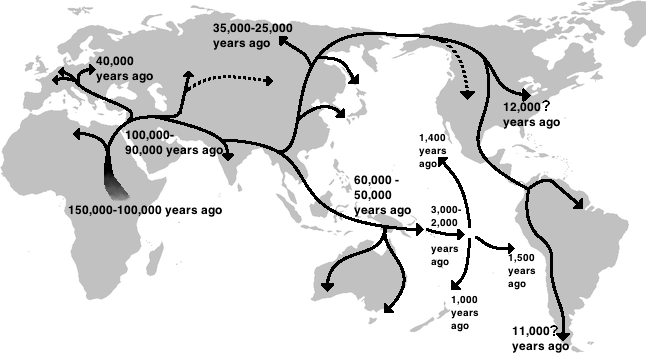
If you want a simple date for when people first entered the Americas, you will be disappointed, because the evidence does not cooperate. For a long time, schoolbook stories emphasized a late arrival around thirteen thousand years ago, tied to a specific spear-point style found across North America. This “Clovis-first” idea has largely crumbled as older sites have surfaced: tools and butchered animal bones in places like southern Chile, central Mexico, the eastern United States, and the Yukon suggest a human presence earlier than that tidy window.
What you can say, based on current evidence, is that Beringia itself existed as dry land roughly between about thirty-six thousand and eleven thousand years ago, though the exact timing is being refined as researchers reconstruct sea levels and ice sheets. Within that window, genetic studies suggest a crucial period sometime around the last glacial maximum, roughly between about twenty-three and perhaps sixteen or so thousand years ago, when a distinct ancestral American population formed. The earliest widely accepted archaeological traces south of the major ice sheets cluster around the range of about sixteen to fourteen thousand years ago, but a few sites may push that boundary earlier. When you read headlines claiming the question is settled, it helps to remember that new digs and better dating methods continue to nudge the timeline in both directions.
The Beringian Standstill: Waiting Out an Ice-Age Bottleneck
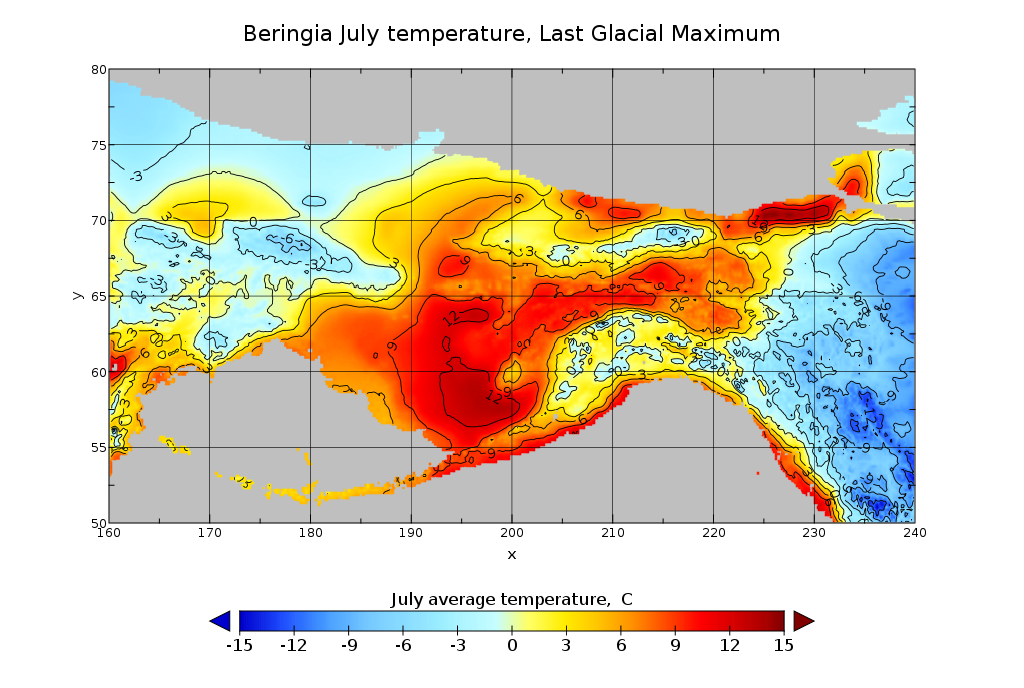
One of the more surprising ideas you encounter is that your deep human relatives might not have simply marched straight across Beringia and into the continents. Genetic research has led to what is often called the Beringian standstill hypothesis: the notion that ancestral American populations spent thousands of years living in or near Beringia, relatively isolated from other Asians. Instead of a quick crossing, you can picture a long pause, with people hunting, gathering, and adapting to harsh but familiar conditions while massive ice sheets blocked easy passage farther south.
During this standstill, population sizes were probably small, and the group’s unique genetic signature was shaped by isolation and survival in a demanding environment. Over many generations, this forged the ancestral line that later spread across the Americas. Not every detail of this hypothesis is universally accepted – different genetic markers and models can tell slightly different stories – but the general picture fits well with the idea of Beringia as a homeland, not just a hallway. When you think of those early immigrants, it might be more accurate to imagine grandparents and great-grandparents thriving in Beringia long before their descendants ever saw the Great Plains or the Amazon.
How Did They Travel? Ice-Free Corridors and Coastal Pathways
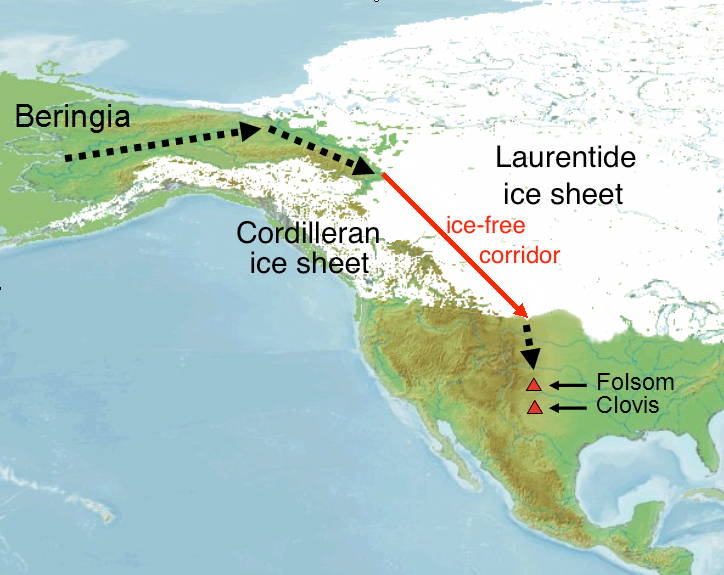
Once you accept that people were in Beringia, the next big question for you is: how did they get from that northern world into the heart of the Americas? For decades, the main story centered on an “ice-free corridor” opening between the massive Laurentide and Cordilleran ice sheets that covered much of present-day Canada. According to that model, once the corridor became habitable, people and the animals they hunted moved south through this interior route, eventually fanning out across the continent. Recent work, though, suggests that this corridor may not have been biologically welcoming early enough to explain the oldest southern sites, which forces you to consider other pathways.
This is where a coastal migration route comes in. You can imagine small, mobile groups traveling along the Pacific shoreline, perhaps combining walking with simple boats, using rich marine resources along a “kelp highway” of fish, shellfish, seaweed, and seabirds. Because ancient shorelines are now drowned by rising seas, the places where these early camps would have sat are incredibly hard to find, which is why the archaeological record is so thin. Even so, the combination of early dates in the Americas, genetic timing, and environmental reconstructions makes a coastal route, or a blend of coastal and interior routes, very plausible. When you think about these journeys, you do not have to choose a single trail; human migrations are messy, and different groups may have experimented with different paths at different times.
Competing Theories, Indigenous Knowledge, and Ongoing Debate
As you explore this topic, you will encounter alternative ideas, some more speculative than others. One of the best-known is the notion that people reached the Americas from Ice Age Europe by traveling along North Atlantic sea ice, sometimes called the Solutrean hypothesis. At first glance, it sounds dramatic and even romantic, but when you look closely at the genetics, the tool technology, and the lack of solid supporting evidence, it becomes hard to sustain. Today, most archaeologists and geneticists see this idea as highly unlikely, especially compared with the strong links between ancient Siberian and Indigenous American populations.
At the same time, you cannot ignore the fact that many Indigenous oral histories and traditions describe origins that do not match a simple migration-from-Asia story. Some communities emphasize long-standing emergence from the land itself rather than arrival from somewhere else, and for them, the Bering Land Bridge narrative can feel like an outside imposition. When you approach this subject respectfully, you can hold two truths in your head at once: scientific models about population movements based on bones, tools, and DNA, and Indigenous understandings of identity and belonging rooted in place. The ongoing debates in research circles do not erase those living perspectives; instead, they urge you to see “first immigrants” not as anonymous blobs on a map but as ancestors with memories, meaning, and voices that still matter.
What This Story Means for You Today
Once you let the scale of this migration sink in, the story of the Bering Land Bridge stops being a dry trivia fact and starts to feel like a mirror. You live in a world shaped by movement: families relocate for work, refugees cross borders, and people trace their roots through DNA kits and family stories. The first Americans, trekking or paddling their way out of Beringia, were doing something profoundly familiar – searching for food, safety, and opportunity in new lands, adapting as they went, and building cultures that fit the landscapes they found.
When you walk through a modern city in the Americas or visit a remote village, you are moving through layers of history that stretch back to those early steps across Beringia. The languages, traditions, and sacred sites of Indigenous nations carry echoes of journeys that began on that vanished grassland between Siberia and Alaska. You may never stand on the seafloor where Beringia once rose into the icy wind, but every time you ask how you or your neighbors came to be here, you are touching that story. And once you realize that, it becomes harder to see the Americas as “new” at all – they are ancient homelands, shaped by one of the longest and most remarkable migrations your species has ever made.
In the end, the Bering Land Bridge is less a single crossing and more a grand unfolding: people emerging from a frozen bottleneck, experimenting with routes, and filling two vast continents with astonishing diversity. As new discoveries surface from caves, shorelines, and ancient DNA, you will see details shift – the dates, the routes, the timing of each wave – but the core insight stands firm: the first Americans were explorers long before anyone called them that. When you think about your own path through the world, does it change anything to know that, deep in your shared human past, someone once stepped off that lost land and walked into an unknown continent without a map?