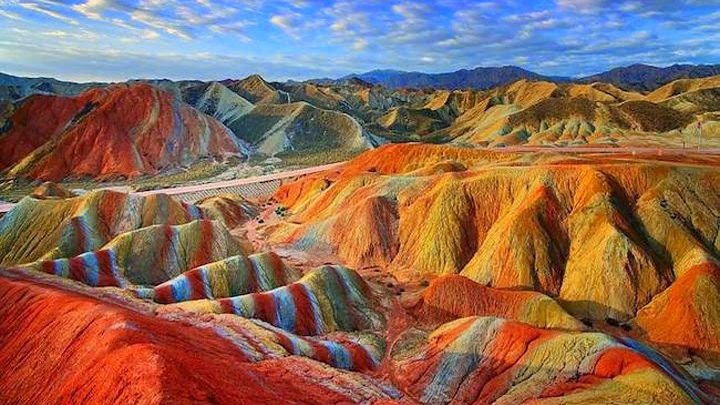

If you have ever seen photos of rainbow-colored mountains and assumed they were heavily edited, you are not alone. Your brain is wired to expect rock to be gray or brown, so landscapes painted in reds, yellows, greens, and purples feel almost fake at first glance. Yet places like China’s Zhangye Danxia and Peru’s Vinicunca are very real, and once you understand how they formed, they actually make a lot more sense than you’d expect.
When you look at these striped slopes, you are really looking at time turned sideways: ancient river beds, lake bottoms, and desert dunes stacked on each other, then tilted upright and sliced open by erosion. Each colored band is a distinct layer with its own chemistry, story, and climate from millions of years ago. As you unpack those stories, you start to see that rainbow mountains are not just pretty – they are some of the clearest, most dramatic lessons Earth is quietly trying to teach you.
The First Shock: Your Eyes Are Not Used To Rocks Like This
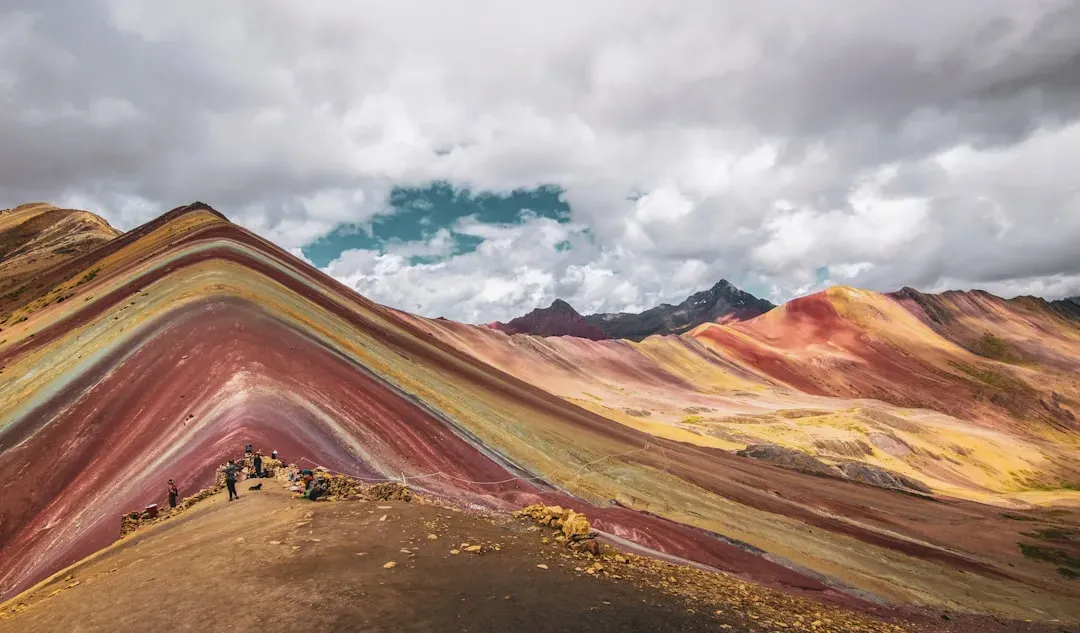
Standing in front of a rainbow mountain, your first instinct is often suspicion: you wonder if the colors are painted, filtered, or digitally boosted. You have spent your whole life surrounded by muted rock faces and gentle hills, so a slope striped like a layer cake feels almost like a glitch in reality. That shock you feel is simply your expectations colliding with geology doing something far more dramatic than you are used to seeing.
When you remind yourself that cameras and screens can exaggerate color, you also learn to notice that even without editing, these landscapes really are unusually vivid. Iron-rich reds, sulfurous yellows, and mineral greens can be genuinely intense, especially in the right light after rain has washed away dust. Once your eyes adjust, the scene stops feeling fake and starts feeling like a portal into the planet’s past, coded in color and stretched across entire valleys.
Layers Like a Sideways Cake: How Rainbow Mountains Are Built
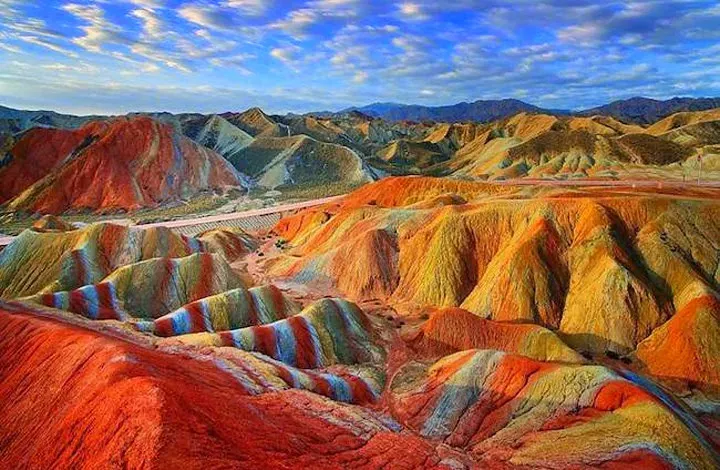
To understand rainbow mountains, you first picture a completely different landscape: a flat plain covered by rivers, lakes, or deserts slowly laying down sand, silt, mud, and mineral-rich sediments. Over millions of years, one environment replaces another, so you get stacked layers – red sands from one age, pale limy muds from another, greenish clays from yet another. At this stage, everything is horizontal, like a stack of pancakes resting at the bottom of a giant, ancient basin. ([geologyin.com](https://www.geologyin.com/2015/09/rainbow-mountains-in-chinas-danxia.html?utm_source=openai))
As more sediment piles on, pressure and minerals glue those layers into solid rock: sand turns to sandstone, mud to mudstone or shale, carbonate-rich ooze to limestone. Later, tectonic forces push, fold, and tilt these once-flat beds, lifting them into mountain ranges. What used to be a quiet lake bottom becomes a steep hillside. Erosion then does the final sculpting, shaving away softer material so that the colored bands are cleanly exposed, as if someone sliced into a multicolored cake and left the cross-section on display. ([livescience.com](https://www.livescience.com/planet-earth/geology/rainbow-mountains-chinas-psychedelic-landscape-created-when-2-tectonic-plates-collided?utm_source=openai))
The Color Code: What Each Hue Really Tells You
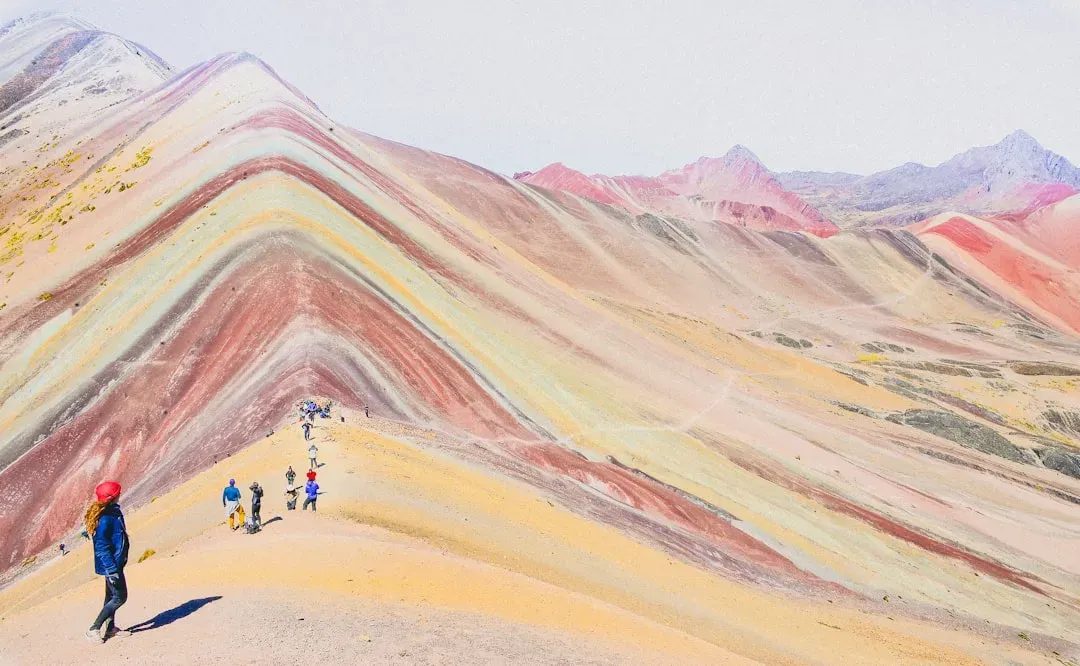
Once you know you are staring at layered sedimentary rocks, the next question is obvious: why are the colors so different from one band to the next? You can think of each color as a chemical fingerprint that records the conditions at the time that layer formed. Iron-rich, oxygen-heavy conditions tend to stain rock in deep reds and oranges, while more reducing, low-oxygen environments or different minerals can shift those tones toward yellows, greens, purples, or even nearly white. ([chinadragontravel.com](https://www.chinadragontravel.com/the-geological-origins-of-zhangye-danxia-landform/?utm_source=openai))
In many rainbow mountains, red and rust bands are packed with iron oxides such as hematite, yellow and ocher layers hold iron sulfides and weathered iron minerals, and greenish bands include minerals like chlorite or other iron- and magnesium-bearing silicates. White or very pale zones often point to abundant quartz or carbonate minerals like calcite. When you learn to read these colors, the mountain turns into a kind of geological bar code that lets you infer shifts in water chemistry, climate, and even whether the environment was once a dry desert dune or a quiet marine shelf. ([livescience.com](https://www.livescience.com/planet-earth/geology/rainbow-mountains-chinas-psychedelic-landscape-created-when-2-tectonic-plates-collided?utm_source=openai))
From Sea Floors To Sky: Tectonic Drama Behind the Stripes
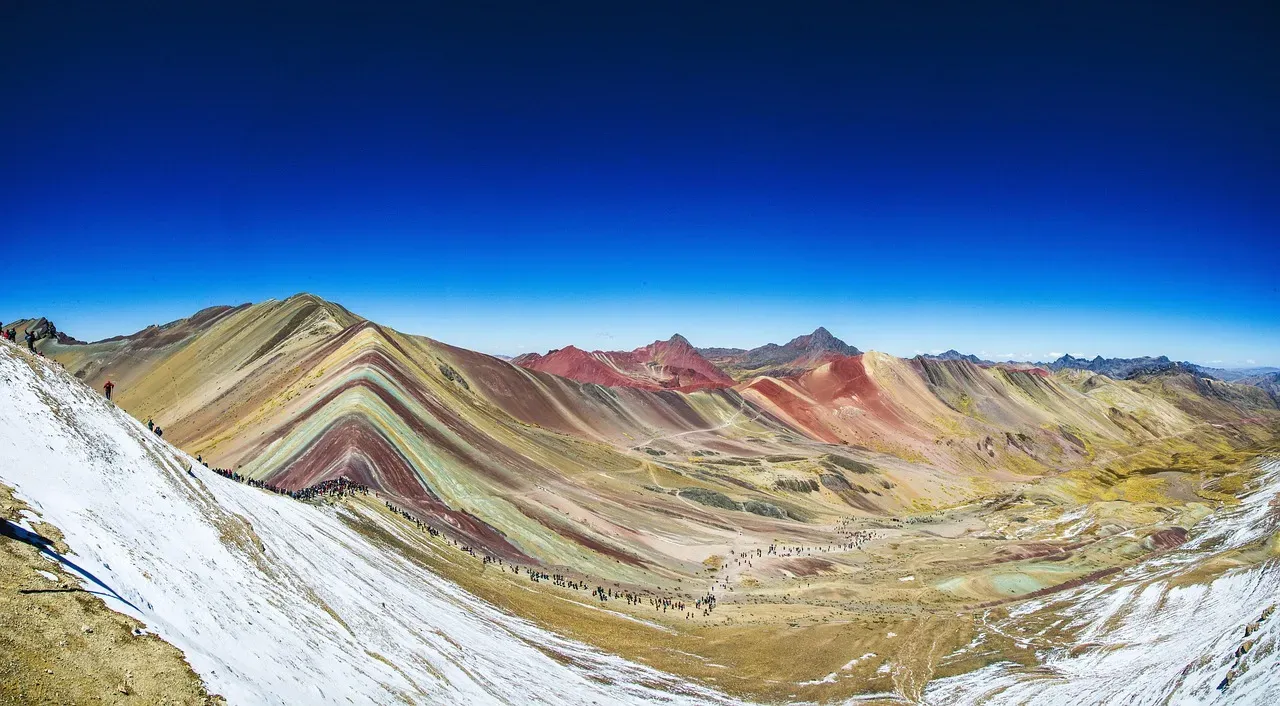
The most surreal part is realizing that many rainbow ridges you see today used to sit at the bottom of ancient seas or on low, flat plains. Over immense spans of time, the slow collision of tectonic plates crumples these sedimentary stacks, lifts them upward, and often tilts them at sharp angles. In places like China’s Zhangye Danxia or the high Andes, plate movements turned quiet sediment layers into jagged, exposed mountain belts, literally raising your future hiking trail out of deep time. ([geologyin.com](https://www.geologyin.com/2015/09/rainbow-mountains-in-chinas-danxia.html?utm_source=openai))
When two plates converge, they not only shove rock upward but also fracture and fold it, twisting once-horizontal bands into curves, chevrons, and slanted stripes. Later erosion then bites into those folded layers, leaving cliffs and slopes where color bands run diagonally across entire valleys. The wild thing is that without this violent tectonic reshaping, most colorful strata would still be hidden underground, never getting the chance to shock you with their impossible-looking patterns.
Why Some Layers Rust Red While Others Stay Pale
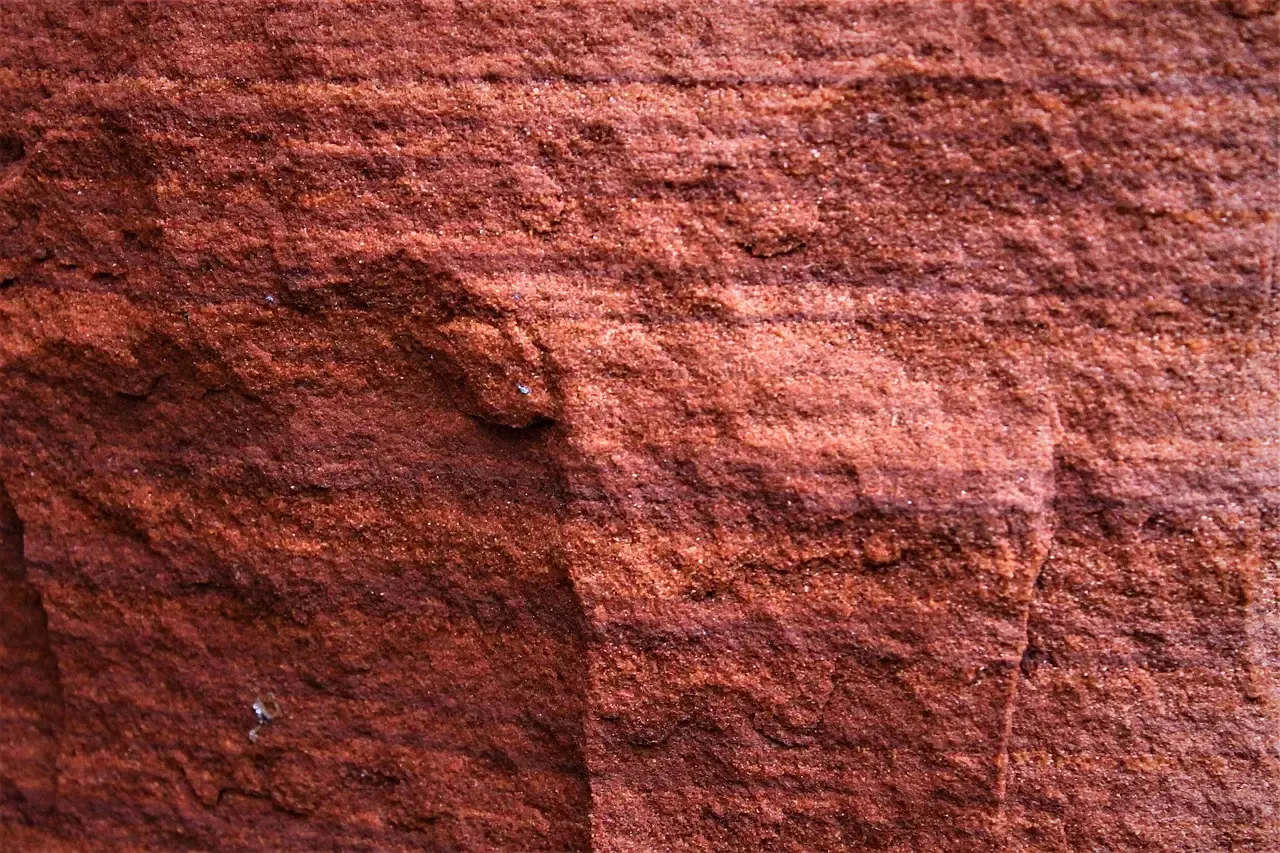
To get those intense reds and pinks, you need iron and oxygen to meet under the right conditions. When sediments rich in iron-bearing minerals are deposited in a setting where oxygenated water can circulate, the iron oxidizes and forms minerals like hematite, staining the rock in shades ranging from brick red to deep maroon. That is why so many rainbow mountains have broad bands of red and orange: you are basically seeing ancient rust, preserved and then magnified across entire hillsides. ([rainbowmountain.tours](https://www.rainbowmountain.tours/rainbow-mountain-color-effect/?utm_source=openai))
Other layers may have less iron, different minerals, or form in environments where oxygen levels or water chemistry prevent that same kind of rusting. Those beds might stay pale, greenish, yellow, or even dark gray depending on the exact mix of elements and burial history. As fluids percolate through the rock over time, they can strip or redeposit iron, sharpening some color boundaries and softening others. What looks like a simple band of color is really the end result of a long chemical tug-of-war that unfolded quietly underground.
Why The Colors Pop More After Rain (And In Real Life)
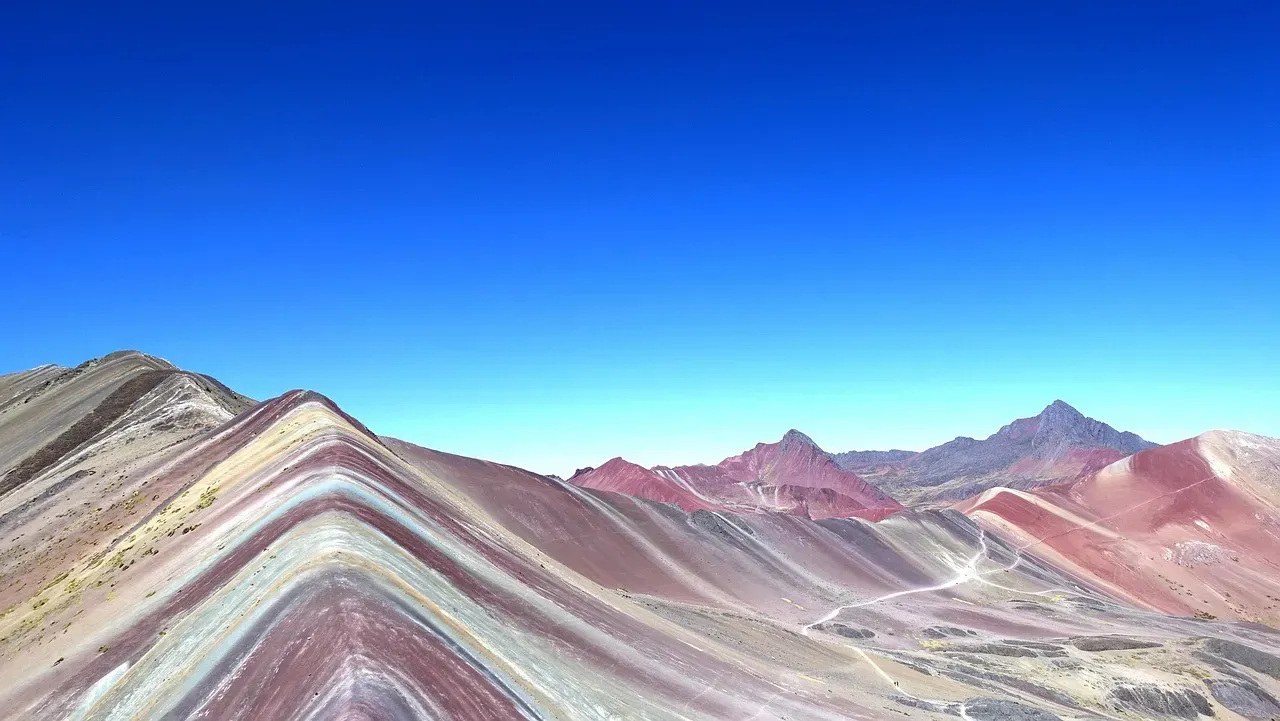
If you ever visit rainbow mountains in person, you will probably be told to hope for a little rain. When rock surfaces are dry and dusty, light scatters on tiny particles and washes out the subtler tones, so you see a flatter, chalkier palette. After a shower or snowmelt, water darkens the rock surface, knocks down dust, and makes pigments appear more saturated, much like how a wet sidewalk looks darker than a dry one. ([rainbowmountainperu.com](https://www.rainbowmountainperu.com/how-was-rainbow-mountain-formed/?utm_source=openai))
On top of that, the angle of sunlight really matters. Low-angle morning or late afternoon light casts gentle shadows and enhances contrast between bands, while harsh midday sun can bleach everything into a more uniform look. Add camera settings and social media editing on top of this, and you get a spectrum: from faithfully recorded landscapes to heavily enhanced fantasy scenes. When you understand how lighting and moisture play with the minerals, you start trusting your own eyes more than the most dramatic photos in your feed.
Famous Rainbow Mountains: Same Story, Different Details
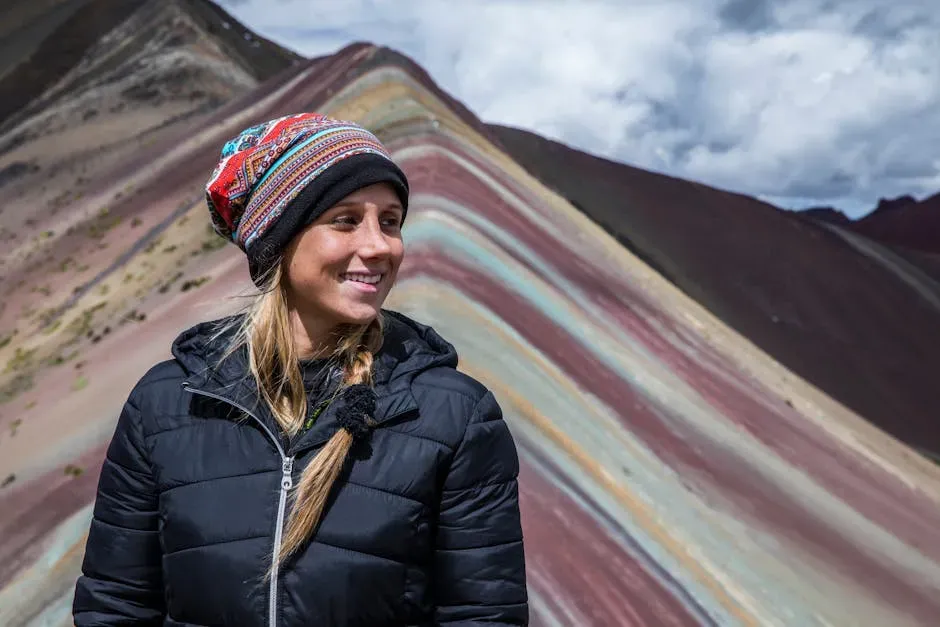
Although Zhangye Danxia in China and Vinicunca in Peru look worlds apart geographically, their underlying stories are surprisingly similar. Both are made largely of sedimentary rocks like sandstone and siltstone that were deposited in layers under changing environmental conditions, then uplifted and exposed by tectonics. The particular minerals and climates differ, but the script – layer, lithify, tilt, erode – is basically repeated on different stages. ([geologyin.com](https://www.geologyin.com/2015/09/rainbow-mountains-in-chinas-danxia.html?utm_source=openai))
In China’s case, the colors lean especially heavily on iron-rich sandstones, creating sweeping red, orange, and yellow ridges across a broad plateau. In Peru, you see a tighter mix of iron oxides, clays, carbonates, and other minerals squeezed into an Andean setting, with reds, greens, yellows, and purples banded along high-altitude slopes. Once you recognize that you are looking at regional variations on the same geologic theme, these far-flung mountains start to feel like cousins rather than isolated curiosities. ([livescience.com](https://www.livescience.com/planet-earth/geology/rainbow-mountains-chinas-psychedelic-landscape-created-when-2-tectonic-plates-collided?utm_source=openai))
Why The Whole World Is Not Covered In Rainbow Peaks
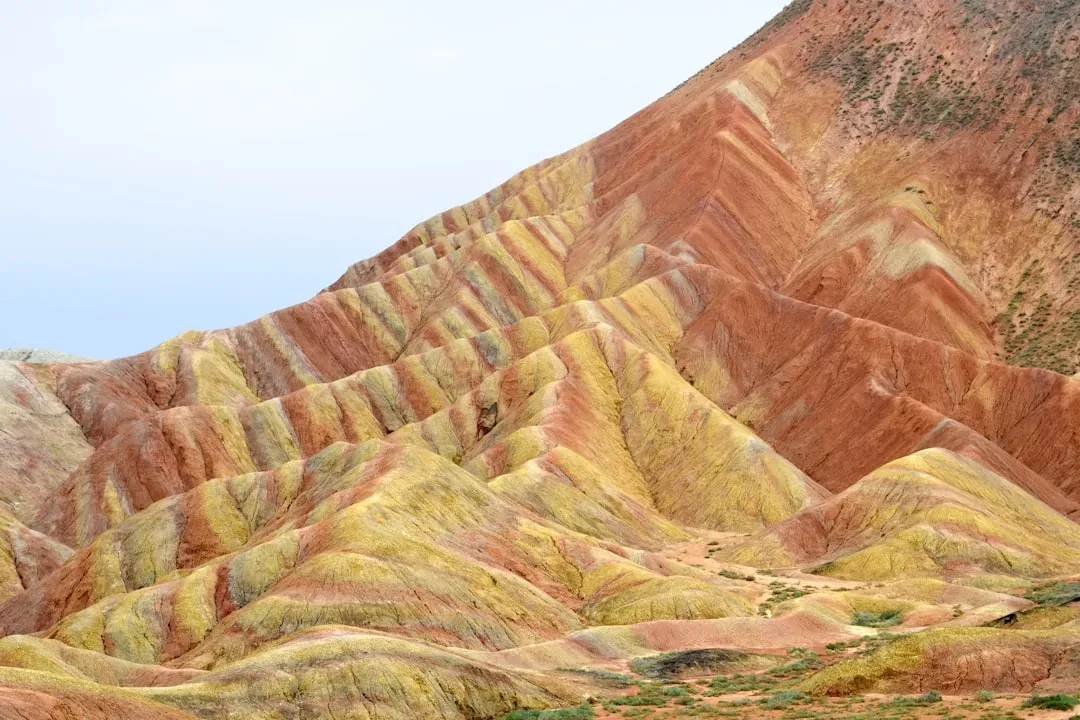
At this point, you might wonder why every mountain range is not streaked with color if the recipe is “layers plus minerals plus uplift.” The catch is that you need a very specific combination of factors to line up. You need long, uninterrupted periods of sediment deposition with shifting environments, enough iron and other coloring minerals, tectonic forces to tilt and raise the beds, and finally, erosion to shave off the overburden without stripping away the colored layers themselves. Many regions only check a few of those boxes, so their rocks stay either buried or more uniformly colored. ([science.nasa.gov](https://science.nasa.gov/earth/earth-observatory/red-rocks-and-rainbow-ridges-148234?utm_source=openai))
Climate also decides whether colors are revealed or hidden. In wetter areas with thick vegetation or loose soil, roots and greenery cloak the bedrock, so you never see the stripes even if they exist below the surface. In arid or high-altitude zones where soil is thin and plants struggle, bare rock dominates the view, so the underlying color bands can shine. This is why so many of the most vivid rainbow landscapes appear in dry, windswept deserts or cold, sparse alpine heights rather than lush, forested mountains.
How You Can “Read” A Rainbow Mountain Like A Storybook
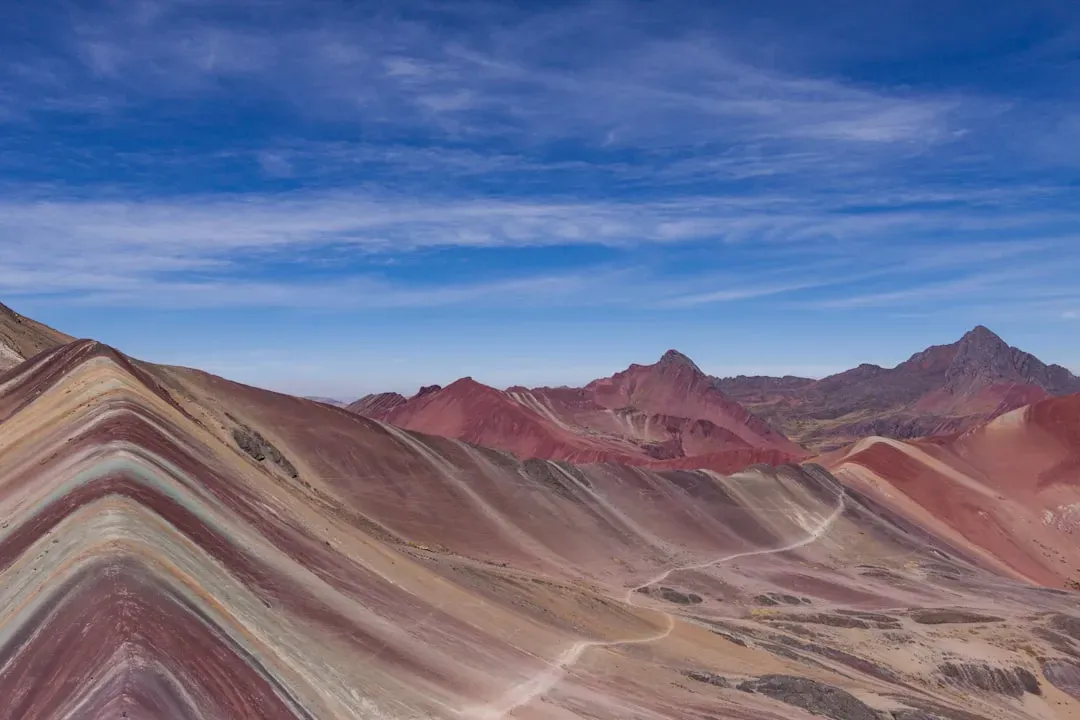
Once you know the basics, you can turn a casual viewpoint stop into a kind of field lesson where you read the mountain like a timeline. You start at one end of a slope and imagine that each band is a chapter: perhaps a red layer marks iron-rich desert sands, a greenish band hints at clay laid down in a quieter, wetter period, and a pale stripe indicates carbonates from a shallow sea. You do not need to be a professional geologist to enjoy this; you only need curiosity and a willingness to see color as evidence rather than just decoration. ([chinadragontravel.com](https://www.chinadragontravel.com/the-geological-origins-of-zhangye-danxia-landform/?utm_source=openai))
Next time you see a photo – or better, stand in front – of a rainbow mountain, try tracing a single band with your eyes as it climbs, folds, and disappears. Remind yourself that you are following a once-flat surface that has been bent and lifted over millions of years. That mental exercise turns a pretty scene into something more profound: you are literally watching deep time made visible, with every hue a reminder that Earth has been changing, layering, and repainting itself long before you ever arrived to marvel at it.
Conclusion: Seeing Beyond The Colors
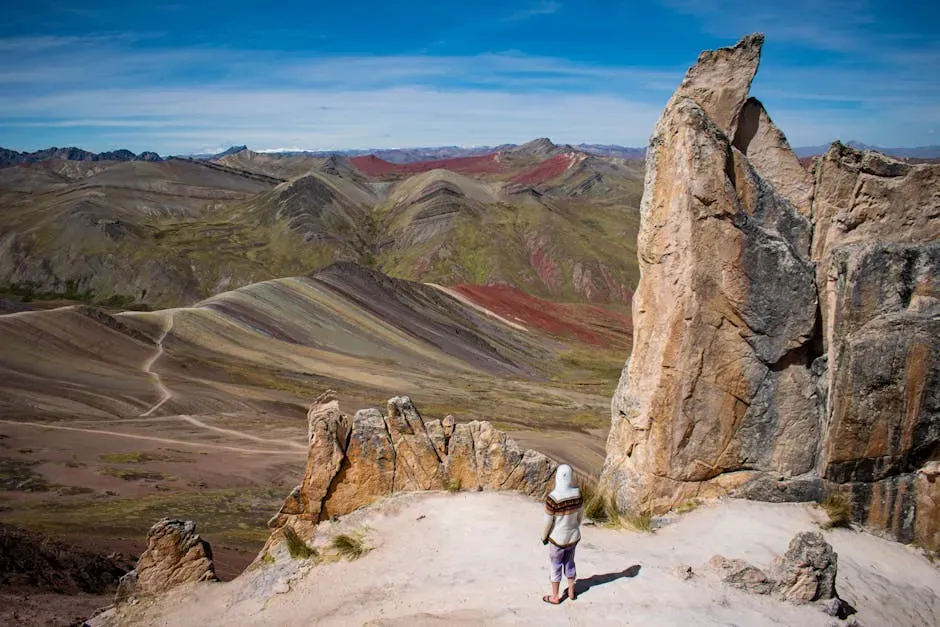
Rainbow-colored mountains might grab your attention because they look unreal, but they earn your respect when you realize how simple, patient processes created them. Sediment settled, minerals reacted, plates collided, and erosion carved – no magic, just the slow work of physics and chemistry stacking up until the result feels magical to you. When you stand there taking it in, the stripes are not just pretty; they are proof that the ground beneath your feet has a history far longer and stranger than your own imagination usually entertains.
When you look at a rainbow ridge now, you can see more than a photo opportunity: you can see rusting iron, ancient lakes, desert winds, vanished seas, and continents in motion, all layered into one view. That shift – seeing color as a clue rather than just a spectacle – changes how you notice every cliff, canyon, and rock wall around you. So the next time you catch a glimpse of striped stone, even in a small road cut, will you just admire the pattern, or will you try to read the story it has been quietly carrying for millions of years?