Articles for tag: Astronomy, planetary science, planets, Space exploration, Space Facts

Saturn and its rings

9 Planet Facts That Will Break Your Brain

Suhail Ahmed

Planets don’t behave the way our school posters promised. The closer we look, the stranger they get: days longer than years, rain that hardens into gemstones, rings that are quietly dissolving into a planet’s atmosphere. Thanks to a flood of new data from spacecraft, giant telescopes, and clever lab experiments, the universe is serving plot ...

a close up of a metal object with a black background

Magnets Could Detect Gravitational Waves – A Revolutionary Physics Discovery

Suhail Ahmed

Imagine listening to the universe’s faintest whispers not with laser interferometers stretching kilometers, but with magnets humming softly in a cryogenic hall. That’s the audacious promise of new research showing that powerful superconducting magnets – some already being built for dark matter hunts – could double as detectors for high‑frequency gravitational waves. It’s a twist ...

A close up of a planet with stars in the background

Could Humans Live on Another Planet? What the Science Says

Suhail Ahmed

It’s one of the most audacious questions of our time: not just whether we can go, but whether we can stay. The difference between a flag-planting visit and a permanent foothold is the difference between a camping trip and building a town. Scientists are now testing hardware, biology, and human limits in a coordinated push ...

Detailed image of the sun showcasing its fiery surface and glowing edges.

How Far Are We from the Sun? A Look at 149,597,870.7 km

Suhail Ahmed

It sounds simple: measure the gap between our blue world and the star that keeps it alive. Yet the answer hides inside moving targets, rippling heat, and a clock that never ticks at a constant pace. Scientists pin the average distance near one astronomical unit, a tidy figure that anchors spaceflight, climate science, and our ...

a white truck driving through sand

From Moon Landings to Mars Rovers: Humanity’s Leap Into the Cosmos

Suhail Ahmed

The first time a human footprint pressed into lunar dust, the world realized space wasn’t an abstraction – it was a place. That simple mark drew a line from myth to measurement, from stories to science. Today, that line stretches across a solar system where robots sniff the air of Mars, scoop samples from asteroids, ...

Titan

Titan: Saturn’s Massive Moon with a Methane Ocean

Suhail Ahmed

Saturn’s largest moon looks like a world a novelist might have dreamed up, then science proved it was real. Wrapped in orange haze and cold enough to crack steel, Titan holds seas of liquid hydrocarbons and hints of an ocean hidden below ice. For decades, oceans meant water and life, but Titan flips that assumption ...

Are We Alone? The Science Behind the Search for Extraterrestrial Life

Are We Alone? The Science Behind the Search for Extraterrestrial Life

Gargi Chakravorty

You’ve probably looked up at the night sky and felt that familiar tug of curiosity. Those countless stars flickering in the darkness seem to whisper a question that humanity has pondered for centuries. It’s bigger than ourselves, bigger than our tiny blue planet. The question isn’t just philosophical anymore, it’s scientific, urgent, and closer to ...

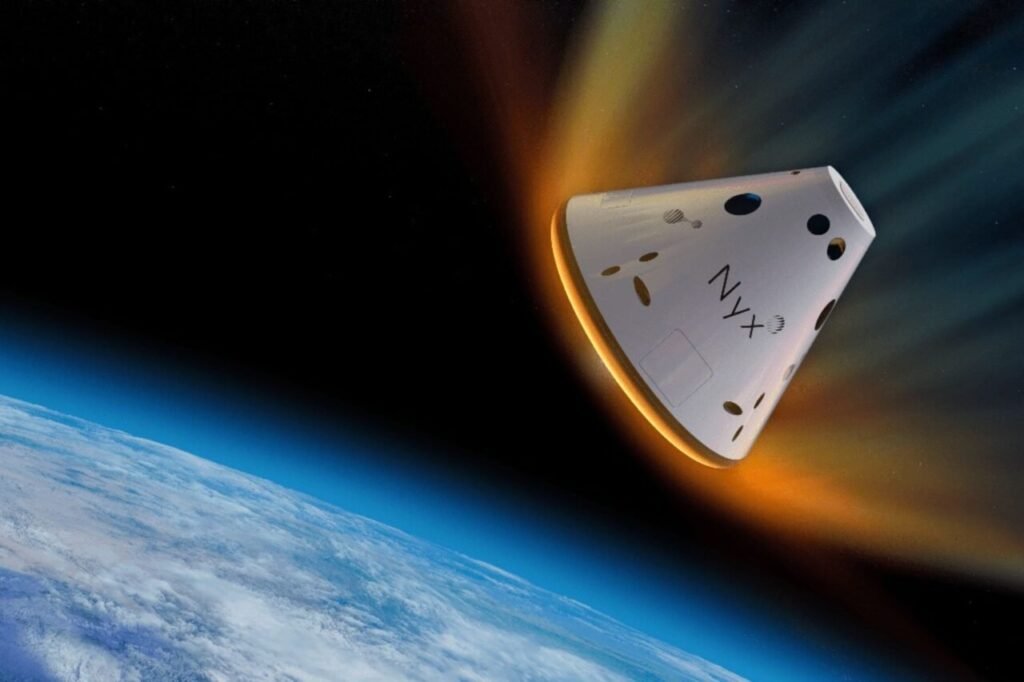
Nyx capsule illustration

Space Capsule Carrying Cannabis and Human Remains Crashes into Pacific

Suhail Ahmed

Tragic and bestowed with a sense of ambition, a German aerospace startup’s endeavor to deliver heavenly memorials and perform unique agricultural experiments in space ended in the Pacific Ocean. Aboard a SpaceX Falcon 9 rocket, the Exploration Company launched a Nyx capsule containing human remains and cannabis seeds. The female capsule’s operational orbit was reached ...

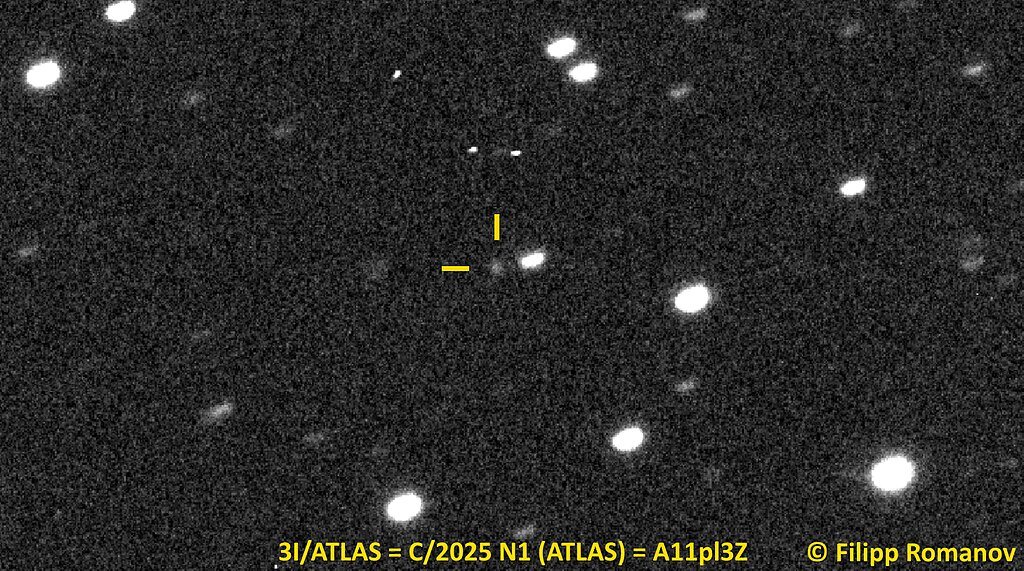
Comet 3I ATLAS

Mysterious Object From Deep Space Heads Toward Earth’s Neighborhood

Suhail Ahmed

The extraordinary features of a rapidly moving celestial object are scintillating astronomers’ interest. Upon initial discovery, A11pl3Z was given a name but recently NASA has confirmed it as 3I/ATLAS, the third interstellar object out of four comets or asteroids discovered. Unlike the comets or asteroids which are bound to the sun’s asteroid belt and viewable ...