
Picture this: you’re standing in the African savanna at midnight, surrounded by what seems like complete silence. The towering silhouettes of giraffes move gracefully through the darkness, their long necks swaying like gentle giants in a moonlit dance. But what you can’t hear might shock you. These seemingly quiet creatures are actually engaged in deep, meaningful conversations, humming to each other in frequencies so low that human ears can’t detect them. For decades, scientists believed giraffes were among the most silent animals on Earth, but recent discoveries have revealed one of nature’s most fascinating communication secrets.
The Mystery That Puzzled Scientists for Decades

For over a century, researchers scratched their heads trying to figure out how giraffes communicated with each other. Unlike elephants with their trumpeting calls or lions with their mighty roars, giraffes seemed to live in a world of complete silence. Scientists observed these majestic animals coordinating their movements, warning each other of danger, and maintaining social bonds, yet they couldn’t identify any clear vocal communication. This puzzle became even more intriguing when researchers noticed that giraffes would often synchronize their behavior across vast distances, suggesting some form of long-range communication was taking place. The mystery deepened when they realized that giraffes have all the anatomical equipment needed for vocalization, including a larynx and vocal cords, yet they appeared to use them sparingly during daylight hours.
The Groundbreaking Discovery in Vienna

Everything changed in 2015 when a team of researchers at the University of Vienna made a revolutionary discovery that would rewrite our understanding of giraffe communication. Dr. Angela Stöger and her colleagues decided to record giraffes during nighttime hours, using specialized equipment capable of detecting sounds below the range of human hearing. What they found was absolutely mind-blowing: giraffes were actually quite vocal, but they were “talking” in frequencies so low that humans couldn’t hear them without special equipment. These infrasonic hums occurred primarily during the dark hours when giraffes are most active socially. The discovery was like finding a hidden radio station that had been broadcasting all along, we just didn’t have the right receiver to tune in.
What Does a Giraffe Hum Actually Sound Like?

When played through speakers that can reproduce these ultra-low frequencies, giraffe hums sound like deep, rumbling drones that seem to vibrate through your entire body. The humming ranges between 10 to 20 Hz, which is well below the typical human hearing range that starts around 20 Hz. To put this in perspective, imagine the lowest note you can hum, then imagine something three times deeper than that. These vocalizations last anywhere from a few seconds to over a minute, creating what researchers describe as a “rich acoustic landscape” in the African night. The intensity of these hums varies significantly, with some being barely detectable even with sensitive equipment, while others are surprisingly powerful.
The Science Behind Infrasonic Communication

Giraffes produce these incredible low-frequency sounds using their unusually long tracheas and large lungs, which act like enormous wind instruments. Their 12-foot-long necks contain an equally impressive windpipe that can amplify and modulate these deep tones with remarkable precision. The physics of sound production in giraffes is similar to how a massive pipe organ creates its deepest notes, but instead of metal pipes, giraffes use their own anatomy as a living instrument. Scientists believe that the unique structure of their larynx, combined with the extended length of their vocal tract, allows them to generate these powerful infrasonic waves. This biological sound system is so efficient that it can produce hums that travel for miles across the African landscape.
Why Nighttime is Prime Time for Giraffe Conversations

The timing of these vocal exchanges isn’t coincidental – nighttime offers the perfect acoustic environment for long-distance infrasonic communication. During the day, atmospheric turbulence and thermal currents can scatter and distort low-frequency sounds, making them less effective for communication. However, the cooler, more stable air conditions at night allow these deep hums to travel much farther with less distortion. Additionally, nighttime brings fewer competing sounds from other animals, vehicles, and human activities, creating a cleaner acoustic environment for giraffes to “hear” each other. This nocturnal communication window also coincides with peak social activity among giraffes, when they engage in behaviors like grooming, mating displays, and coordinating group movements.
The Long-Distance Network Effect

What makes giraffe communication truly remarkable is how these infrasonic hums can travel across the vast African savanna, creating what scientists call an “acoustic network.” Low-frequency sounds can travel several kilometers through the air with minimal energy loss, allowing giraffes to maintain contact with family members and herd mates who might be grazing miles away. This long-range communication system works like a natural cell phone network, where individual giraffes can send and receive messages across territories that would take hours to cross on foot. Research suggests that giraffes can detect these hums from distances of up to 1.5 kilometers, effectively expanding their social circle far beyond what their eyes can see. This invisible communication web helps explain how scattered giraffe groups can coordinate their movements and respond to threats even when they’re not in visual contact.
Decoding the Messages: What Are Giraffes Actually Saying?

While scientists are still working to crack the giraffe communication code, early research suggests these hums carry different types of information depending on their pitch, duration, and pattern. Some hums appear to be simple contact calls, like saying “I’m here” to maintain social bonds within the group. Others seem more urgent and might serve as warning signals about approaching predators or environmental changes. Researchers have also identified what they believe are “comfort” hums, which occur during peaceful social interactions like grooming sessions or when mothers are communicating with their calves. The complexity of these vocalizations suggests that giraffes have a much richer social life than previously imagined, with sophisticated emotional and informational exchanges happening right under our noses – or more accurately, right under our hearing threshold.
The Mother-Calf Connection Through Hums

Perhaps the most touching aspect of giraffe humming involves the special bond between mothers and their young calves. Female giraffes produce distinctive low-frequency calls that appear to be specifically directed toward their offspring, creating an acoustic umbilical cord that keeps families connected even in the darkness. These maternal hums often have unique acoustic signatures that allow calves to identify their mothers among a group of adults, much like how human babies learn to recognize their mother’s voice. Scientists have observed that separated mothers and calves will often engage in extended humming sessions, seemingly calling out to each other until they reunite. This discovery has profound implications for our understanding of giraffe family dynamics and emotional intelligence.
How Giraffes’ Anatomy Enables This Hidden Talent

The giraffe’s extraordinary anatomy isn’t just designed for reaching high acacia leaves – it’s also perfectly engineered for infrasonic communication. Their massive hearts, which can weigh up to 25 pounds, pump blood with enough force to create the internal pressure needed for powerful vocalizations. The incredibly long trachea acts as a resonating chamber, while their large chest cavity provides the lung capacity necessary to sustain these extended humming sessions. Even their famous long necks play a crucial role, allowing them to position their heads at optimal angles for sound projection across the landscape. This biological design is so sophisticated that it rivals the engineering of any human-made communication system.
Comparing Giraffe Communication to Other Animals

Giraffes aren’t the only animals using infrasonic communication, but their approach is uniquely sophisticated. Elephants also use low-frequency rumbles to communicate across long distances, but their calls are typically louder and occur more frequently throughout the day. Whales produce infrasonic calls that can travel across entire ocean basins, but they rely on water as a medium, which conducts sound differently than air. What sets giraffes apart is their exclusive use of nighttime humming and the subtle, almost whisper-like quality of their vocalizations. Unlike the dramatic trumpeting of elephants or the haunting songs of whales, giraffe communication is remarkably understated, reflecting their generally peaceful and gentle nature.
The Role of Humming in Giraffe Social Structure

These newly discovered vocalizations are revolutionizing our understanding of giraffe social behavior and hierarchy. Previously, scientists thought giraffes had relatively simple social structures with loose associations between individuals. However, the complexity of their vocal communication suggests much more sophisticated social relationships than anyone imagined. Different types of hums might indicate social status, with dominant individuals producing certain patterns that subordinate giraffes recognize and respond to accordingly. The timing and frequency of these communications also appear to play a role in maintaining group cohesion and coordinating activities like migration patterns and feeding schedules. This hidden vocal dimension adds an entirely new layer to giraffe society that researchers are only beginning to explore.
Environmental Factors That Affect Giraffe Humming

The effectiveness of giraffe communication depends heavily on environmental conditions, and climate change is beginning to impact these ancient communication patterns. Temperature inversions, which are common in African savannas at night, can create acoustic channels that either enhance or block infrasonic transmission. Increased human activity and infrastructure development in giraffe habitats introduces noise pollution that can interfere with these delicate vocal exchanges. Researchers have noticed that giraffes in areas with heavy vehicle traffic or industrial activity produce louder, more frequent hums, suggesting they’re working harder to communicate over the background noise. This acoustic pollution could be disrupting traditional giraffe social networks and contributing to the challenges these animals face in the modern world.
Technology That Made the Discovery Possible

The breakthrough in giraffe communication research was only possible thanks to advances in acoustic recording technology and computer analysis. Scientists used specialized microphones capable of detecting sounds below 20 Hz, combined with sophisticated software that could identify patterns in these ultra-low frequency recordings. The equipment had to be extremely sensitive, as these hums are often barely above the background noise level of the environment. Researchers spent countless hours in the field, often sleeping in vehicles parked near giraffe herds to capture these elusive nighttime conversations. The data analysis required powerful computers to process thousands of hours of recordings and separate genuine giraffe vocalizations from other environmental sounds like wind, distant thunder, or geological activity.
Conservation Implications of This Discovery
Understanding giraffe communication has immediate and important implications for conservation efforts aimed at protecting these vulnerable giants. If giraffes rely on acoustic networks to maintain social bonds and coordinate survival behaviors, then habitat fragmentation could be even more devastating than previously thought. Roads, fences, and human settlements might not just physically separate giraffe populations – they could be disrupting crucial communication networks that have existed for thousands of years. Conservation strategies now need to consider “acoustic corridors” that allow these infrasonic signals to travel unimpeded across the landscape. This discovery also highlights the importance of preserving large, continuous habitats where giraffes can maintain their natural communication patterns and social structures.
The Mystery of Daytime Silence

One of the most intriguing aspects of giraffe communication is why they remain relatively silent during daylight hours. Scientists believe this daytime quietness might be an evolutionary strategy to avoid attracting predators when giraffes are most visible and vulnerable. During the day, giraffes rely more heavily on visual communication through body language, neck positioning, and subtle movements that can convey information without creating acoustic signals that might alert lions or other predators. The switch to vocal communication at night coincides with reduced visibility, when acoustic signals become more valuable than visual cues. This behavioral adaptation demonstrates the remarkable intelligence and survival instincts that have allowed giraffes to thrive in challenging environments for millions of years.
Future Research Directions and Unanswered Questions

The discovery of giraffe humming has opened up entirely new research possibilities that could revolutionize our understanding of these magnificent animals. Scientists are now working to create a comprehensive “dictionary” of giraffe vocalizations, mapping different hum patterns to specific behaviors and social situations. Researchers are also investigating whether individual giraffes have unique vocal signatures, similar to how humans have distinctive voices. Long-term studies are needed to understand how these communication patterns change with age, social status, and environmental conditions. There’s also growing interest in whether giraffes use different “dialects” in different geographic regions, which could provide insights into their evolutionary history and population genetics.
What This Means for Our Relationship with Wildlife

The revelation that giraffes have been having complex conversations all along serves as a humbling reminder of how much we still don’t know about the natural world around us. This discovery challenges our assumptions about animal intelligence and communication, suggesting that many species might have rich inner lives and social connections that we’ve completely overlooked. It also highlights the importance of using new technologies and approaches to study wildlife, as traditional observation methods can miss crucial aspects of animal behavior. For wildlife enthusiasts and conservationists, this discovery reinforces the need to approach animal behavior with curiosity, respect, and an open mind about the possibility that animals might be more complex and sophisticated than we ever imagined.
The Ripple Effects on Animal Communication Research

The giraffe humming discovery has inspired researchers to take a fresh look at other supposedly “silent” animals, leading to similar breakthroughs across the animal kingdom. Scientists are now using infrasonic recording equipment to study everything from rhinoceros communication to the potential vocalizations of large reptiles. This research is revealing that infrasonic communication might be much more common in the animal world than anyone previously suspected. The success of the giraffe studies has also led to increased funding and interest in acoustic ecology, the study of how animals use sound in their natural environments. These investigations are painting a picture of the natural world as an incredibly rich acoustic landscape, full of conversations and communications that have been happening right under our noses for millennia.
Personal Encounters: What Researchers Experience in the Field

Researchers who have spent nights recording giraffe communications describe the experience as both scientifically thrilling and deeply moving. Dr. Stöger and her colleagues often speak about the profound moment when they first heard these gentle giants “talking” to each other through their equipment. Many describe feeling like they were eavesdropping on private conversations, gaining access to a secret world that had been hidden from human perception. The emotional impact of realizing that these graceful animals have been trying to communicate all along has motivated many scientists to become even more passionate advocates for giraffe conservation. Field researchers also report that once you know about the humming, spending time around giraffes at night feels completely different – you become aware of the invisible conversations happening all around you.
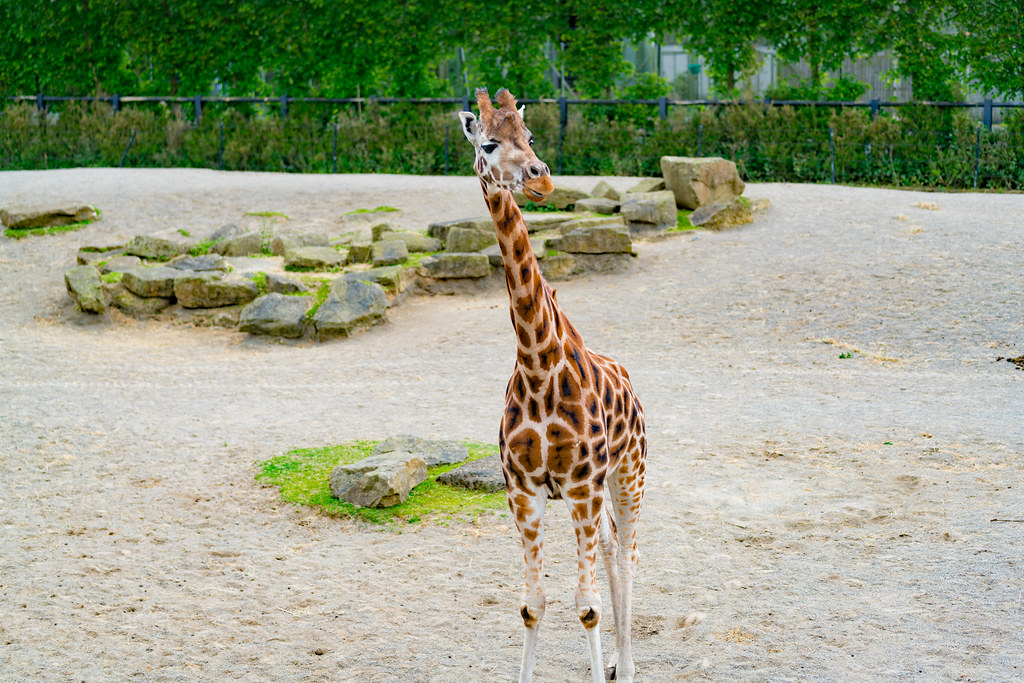
The next time you see a giraffe at a zoo or in a nature documentary, remember that you’re looking at an animal with a secret life full of midnight conversations and invisible social networks. These gentle giants have been humming their hearts out under the African stars for thousands of years, sharing information, maintaining friendships, and caring for their young through a communication system so sophisticated that we’re only just beginning to understand it. The discovery of giraffe humming reminds us that the natural world is full of mysteries waiting to be uncovered, and that sometimes the most profound discoveries come from simply listening more carefully to what’s already there. What other hidden conversations might be happening right now in the animal kingdom that we haven’t learned to hear yet?