On the surface, our everyday world feels pretty straightforward. Turn on a light, it glows. Drop your phone, it falls. Things have causes, and those causes sit somewhere nearby in space and time. But tucked underneath that familiar reality is a stranger layer of nature where particles that have never even met can act as if they share a private line, coordinating their behavior instantly, across any distance, with no signal we can see. That is the unsettling promise of quantum entanglement, and even after roughly a century of wrestling with it, nobody can say with confidence exactly what is “really” going on.
When you first hear that two distant particles can share a connection no distance can break, it sounds like sci‑fi wishful thinking or a social‑media exaggeration. Yet this effect has been tested so many times and so carefully that physicists now use it as a tool to build real technologies. The weird part is that the equations work just fine, the experiments check out, and the devices do what they should – while our intuitive picture of reality keeps shattering. The mystery is not whether entanglement is real. The mystery is what kind of universe we must be living in for it to be possible at all.
How Can Two Particles Be Connected Without Ever Meeting?

Here’s the first shock: in quantum physics, particles do not need to bump into each other like billiard balls to become mysteriously correlated. You can create pairs of particles with linked properties in the lab, send them off to opposite sides of a city, a continent, or a planet, and still see patterns in their measurements that classical physics says should be impossible. In many modern experiments, the particles are created together but then travel so far, and are handled in ways so carefully separated, that no ordinary influence could pass between them in time to explain the results.
Even stranger, you can sometimes talk about entanglement between particles that never shared a single common interaction, thanks to a process called entanglement swapping. Roughly speaking, by doing the right kind of joint measurement on two particles, you can indirectly cause their distant partners – who have never met – to end up entangled with each other. It is as if you introduced two friends of friends at a distance and they instantly formed a shared secret, bypassing any direct encounter. That possibility alone tells you we are far away from the everyday idea that a “connection” must be a little thread or signal running through space.
Einstein’s “Spooky Action” and Why It Still Haunts Physics

Albert Einstein disliked this deeply. To him, the notion that a choice of measurement here could affect the outcome there, instantly, was an insult to the idea that the universe should be local and sensible. He called it “spooky action at a distance” and tried to argue that quantum theory was incomplete – that there must be hidden details, some deeper layer of reality, restoring ordinary cause and effect. In his view, the correlations between entangled particles were not magical; they were simply the result of shared instructions written in advance, like matching fortune-cookie slips placed in two envelopes before mailing them apart.
Decades later, experiments inspired by John Bell’s work put that “hidden instructions” idea under a microscope and repeatedly found it wanting. If the particles really just carried prewritten instructions, the statistics of their outcomes would be limited in a precise way. What experimenters observed instead blew past that limit again and again. Nature obeyed the quantum rules, not Einstein’s preferred ones. We did not just learn that the universe is weird; we learned it is incompatible with any simple picture where all properties are locally decided in advance. The ghost Einstein tried to exorcise now sits at the heart of modern quantum technologies.
What Entanglement Actually Is (And What It Definitely Is Not)
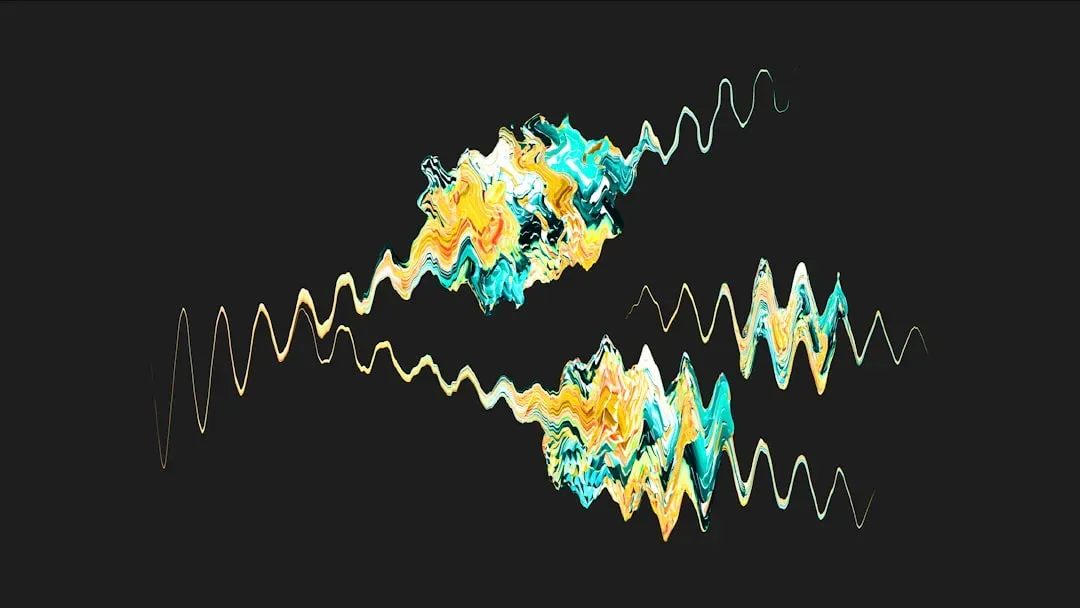
It helps to be clear about one thing up front: entanglement is not telepathy, not faster‑than‑light messaging, and not a hack for cheap sci‑fi teleporters. When two particles are entangled, what is shared between them is not a literal signal or a hidden wire but a joint state, a kind of shared description that only makes full sense when you consider the system as a whole. Before you measure them, you cannot even say each particle has its own independent set of properties; instead, they form a single mathematical object stretching across space.
When you finally make a measurement on one particle, you get a random outcome, but that random result is correlated with what a distant observer will see if they measure the other particle in a compatible way. No information travels faster than light because neither side can control which random outcome they get. It is like two people opening sealed boxes to find colored cards that always match in a way no ordinary pre‑planning can explain. The “connection” here is about patterns in the outcomes, not about one side sending a message to the other. The unsettling lesson is that the deepest description of reality may not live in individual things at all, but in relationships between them.
Experiments That Pushed Entanglement From Thought Experiment to Hard Fact
For a long time, entanglement sounded like an almost philosophical puzzle buried in the equations. That changed when experiments began to close the loopholes skeptics could hide behind. Researchers sent entangled photons through kilometers of optical fiber and open air, separated detectors far enough that no light‑speed signal could link them in time, and sealed experimental choices in ways that made coordination by pre‑arranged tricks essentially impossible. Each time, the quantum predictions held up and the classical alternatives fell away.
Over the past decade, experiments have extended these tests across cities, between ground stations and satellites, and under conditions tight enough to win major scientific prizes. Some experiments have even used astronomical sources to choose measurement settings, reaching back billions of years in cosmic history to block certain types of hidden‑variable explanations. The message from nature has been stubbornly consistent: if you insist on keeping locality and classical realism together, the world just will not cooperate. Entanglement is not a theoretical curiosity. It is an experimental reality we can now engineer and manipulate.
Why No One Agrees on What Entanglement Means About Reality

Here’s the part that both frustrates and fascinates people: physicists can calculate with entanglement, use it in the lab, and even design technologies around it, yet they still argue fiercely about what it is telling us about reality. Some interpretations say there is no deep mystery at all, that the wave function is just a tool for predicting measurement results and we should stop asking what is “really” happening in between. Others say entanglement is a clue that our basic notion of separate objects is flawed, that the fundamental stuff of the universe is more like an undivided whole than a collection of little beads.
There are also pictures where every possible outcome of a quantum process actually happens in different branches of a larger reality, turning entanglement into a kind of stitching between parallel worlds. Other approaches bring in hidden variables but sacrifice some version of locality, allowing influences that do not fit within ordinary spacetime intuition. None of these views has won universal acceptance, in part because they all carry profound philosophical costs. The uncomfortable truth is that our mathematical grip on entanglement is far firmer than our conceptual grip, and that mismatch may last for a long time.
From Weirdness to Workhorse: Quantum Tech Built on Entanglement
Even though no one fully agrees on what entanglement means, engineers have been remarkably happy to put it to work. Quantum key distribution uses entangled particles to let two distant parties share encryption keys in a way that reveals any eavesdropping attempt in the statistics of the measurements. Developing quantum networks aim to chain together entanglement across multiple nodes, forming early versions of a quantum internet where information is encoded in delicate quantum states instead of classical bits. These systems do not require us to know whether reality is many‑worlds or something else; they only require that the quantum predictions continue to hold.
Inside quantum computers, entanglement acts like the secret sauce that lets multiple qubits share information in ways no classical bits can imitate. When many qubits are entangled, the system can explore patterns in data in an enormously rich, parallel fashion. This does not magically solve every computational problem, but for certain tasks – like simulating quantum materials or factoring large numbers – it offers a genuine edge. The irony is hard to miss: the same phenomenon that left Einstein grumbling has become a practical resource, the way electricity once evolved from a parlor trick with sparks into the invisible backbone of modern life.
Why the Mystery Might Be the Feature, Not the Bug
There is a temptation to treat our confusion about entanglement as a failure, as if we simply have not yet found the one story that will make the whole thing feel as tidy as high school physics. But maybe the deeper lesson is that our everyday instincts were never meant to handle the quantum scale in the first place. After all, our brains evolved to throw spears and bake bread, not to parse nonlocal correlations between photons. From that angle, the fact that the universe politely follows our equations while rudely ignoring our intuitions is not a glitch. It is a reminder that reality owes us no comfort.
Personally, I find it oddly reassuring that even the brightest minds cannot tie this into a neat bow. It means there is still genuine mystery left in the world, not the kind you solve with a quick search, but the kind that might reshape how future generations think about space, time, and information itself. Entanglement takes the humble idea that two things can be linked and stretches it beyond anything common sense would tolerate. Maybe the real question is not why particles can share a connection no distance can break, but why we ever thought the universe had to play by rules our everyday experiences prepared us for. In a world this strange, are you sure your deepest assumptions were ever safe?