
Imagine you flip a coin in New York and, without even looking at it, instantly know the result of another coin being flipped in Tokyo. Not because of some clever trick or hidden wire, but because nature itself has linked the two coins in a way that ignores distance entirely. That kind of connection sounds like pure science fiction, but in quantum physics, it has a name: entanglement. And it is not only real, it is one of the most carefully tested and confirmed features of our universe.
When you start to explore quantum entanglement, you quickly realize you are stepping into a world where your usual intuitions about space, time, and cause-and-effect begin to wobble. You are asked to accept that two objects can share a single, unified state, even when they are separated by light-years. You are asked to accept that measuring one can instantly affect what you can say about the other. It feels like a cheat code built into the fabric of reality, and yet it underpins some of the most exciting technologies being developed today.
The Wild Idea at the Heart of Entanglement
At its core, quantum entanglement is about correlation taken to an extreme. You are used to everyday correlations: if you open a pair of gloves and pull out one left-hand glove, you instantly know the other is right-handed. That is a simple, classical correlation based on pre-existing properties. Entanglement is different. Instead of each particle carrying a fixed property from the start, the pair shares a single, joint quantum state that only becomes definite when you perform a measurement.
When two particles are entangled, you cannot fully describe one without also describing the other, no matter how far apart they are. Their combined state is what is well defined, not the individual pieces. You only get concrete outcomes when you measure them, and those outcomes are strongly linked, always in line with the shared quantum state. The strange part is that these correlations show up even when you separate the particles by huge distances, and experiments keep confirming that nothing classical or local is hiding behind the scenes.
How Entanglement Breaks Your Intuition About Distance

The unsettling feature of entanglement is how it seems to ignore distance. If you measure one member of an entangled pair, you can immediately predict what result you will see when you measure the other, even if it is far away. It feels as if some signal is traveling faster than light, but that is not actually what is happening. The key is that the quantum state of the pair was never just about two separate objects in the first place; it was always a single, shared description.
You never get to use entanglement to send a controllable message faster than light, because the individual results of your measurements are still random. What you do get are correlations that are stronger than any classical system with hidden instructions could ever produce. When you compare results after the fact, using normal slower-than-light communication, you find patterns that simply cannot be explained by local common causes. Your familiar notion that distant things are always independent unless something travels between them starts to crack.
What Bell’s Theorem Really Tells You

To understand how radical entanglement is, you need to look at what you would expect if the world behaved in a more familiar way. You might imagine that each particle carries a set of hidden properties, like a secret list of answers to every possible measurement you could perform. Bell’s theorem shows you that if those hidden properties were both local (no faster-than-light influence) and realistic (properties exist with definite values before measurement), then there is an upper limit on how strong the correlations can be.
Quantum mechanics predicts correlations that go beyond that classical limit, and carefully designed experiments have repeatedly found that nature matches the quantum prediction, not the classical one. When you see those stronger correlations, you are forced to give up at least one of your cherished assumptions about how reality works. Either you abandon locality, or you give up the idea that physical properties are well defined before you look, or you accept a more subtle reshaping of both. Bell’s theorem corners you into acknowledging that entanglement is not just a mathematical trick; it reflects a deep feature of the world.
Why Entanglement Does Not Let You Break Causality

With all this talk of instant correlations, it is tempting to think entanglement lets you send a message into the past or violate causality. When you look more closely, though, you find that quantum theory is extremely strict about what you can and cannot control. Even in an entangled pair, the result of any single measurement is random, you simply cannot choose whether you see one outcome or another. What you can predict is how those outcomes will line up with those from a measurement on the other particle.
Because you cannot control the random result on your side, you cannot use entanglement alone to encode a meaningful message that someone else could read before any ordinary signal arrives. The universe gives you spooky correlations, but it refuses to let you turn them into a time machine or a faster-than-light telephone. In a way, entanglement walks right up to the edge of breaking causality and then stops, as if nature enjoys flirting with paradox while still keeping the overall story consistent.
How You Actually Create Entangled Particles

Entanglement might sound abstract, but in modern laboratories it is a routine resource. You can generate entangled photons, for example, by sending a high-energy photon through a special crystal, where it splits into two lower-energy photons whose polarizations are linked. You can entangle atoms by letting them interact inside a trap, or connect ions with carefully tuned laser pulses. Each setup is engineered so that the particles leave the interaction in a joint quantum state that cannot be separated into independent pieces.
When you work in such experiments, you do not see entanglement directly with your eyes; you infer it from careful statistics. You measure one particle many times in different ways, measure the other with different settings, and then look at how the patterns of results correlate. If the correlations violate the bounds that any classical, local model would obey, you know you are dealing with an entangled state. It is a bit like uncovering a secret handshake: you only recognize it by the structure of repeated outcomes when you test it from different angles.
Entanglement as a Power Source for Quantum Technologies
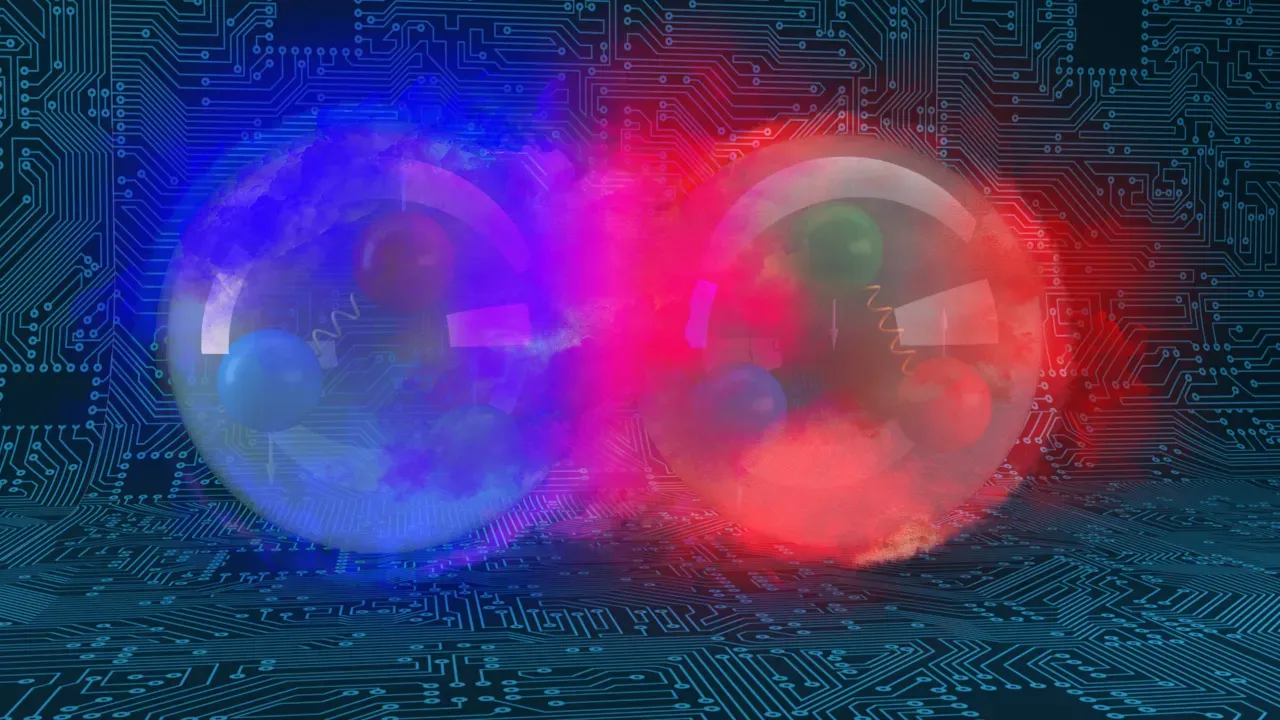
What makes entanglement more than a philosophical curiosity is how it boosts your ability to process and transmit information. In a quantum computer, for example, you use entangled qubits to explore many computational paths at once in a coordinated way. The collective state of several qubits cannot be written as a simple list of separate bits; it holds a rich web of amplitudes that algorithms can exploit. Entanglement is also at the heart of quantum error correction, where you spread information across many physical qubits so that no single error can destroy it outright.
In communication, you can harness entanglement for tasks that would be impossible or far less secure in a classical world. Quantum key distribution protocols use correlations from entangled pairs to help you and a partner generate shared cryptographic keys, while making any eavesdropping attempt leave a detectable trace. Other protocols, like teleportation of quantum states, use entanglement plus normal communication to transfer the exact state of a particle from one place to another without physically moving the original system. The more you learn about these tools, the more you see entanglement as a kind of currency you can spend to do uniquely quantum things.
What Entanglement Suggests About the Nature of Reality
Living with entanglement forces you to rethink what you mean by separateness and individuality in physics. When two systems are entangled, they behave less like two independent objects and more like different aspects of a single, extended entity. Some researchers even suspect that entanglement is not just a weird feature sitting on top of space-time, but a building block of space-time itself. In that view, the fabric of reality might be woven from networks of entangled degrees of freedom, with geometry emerging from patterns of connection.
From your perspective, the hardest part is letting go of the idea that the world always has definite properties waiting to be revealed. Quantum theory suggests that in many situations, what is real is the structure of possible outcomes and the relationships between them, rather than a hidden list of fixed values. Entanglement shows you that those relationships can span large distances and defy classical intuitions, yet still remain mathematically consistent and experimentally verified. You are left with a universe that is less like a set of clockwork gears and more like a vast, interdependent web of possibilities.
How You Can Intuitively Relate to Something So Strange
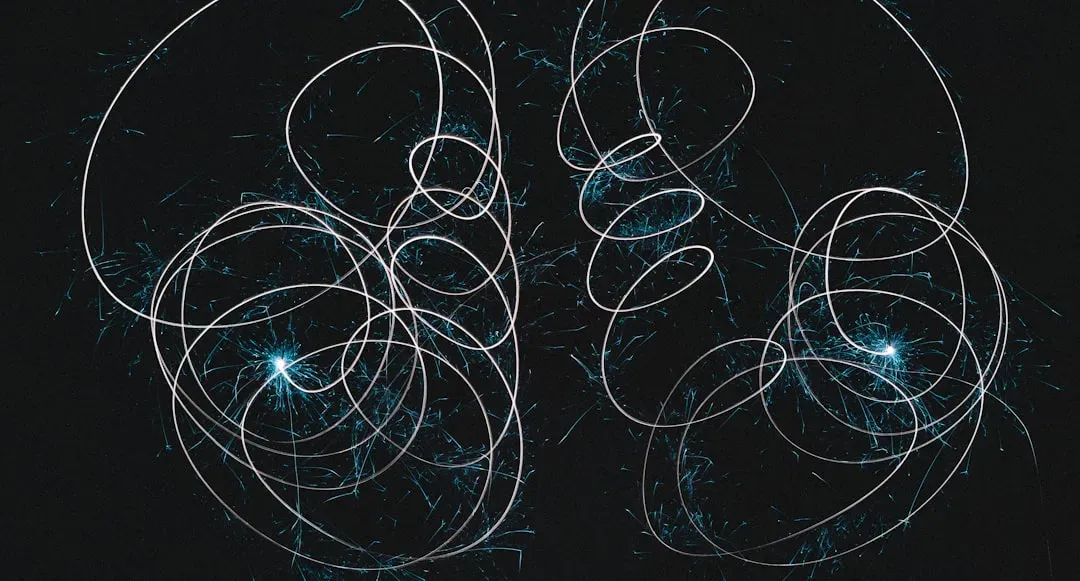
It is easy to feel overwhelmed by the math and counterintuitive features of entanglement, but you can still build a kind of emotional and conceptual intuition. You might think of entangled systems as dancers in a perfectly choreographed routine: each move by one might look random on its own, but together their steps reveal a deep, shared structure. Another way to picture it is as a story written across two books; each book on its own seems incomplete or confusing, but together they tell a coherent tale.
Of course, every analogy you use eventually breaks down, because quantum entanglement does not have a true counterpart in your everyday world. That is part of what makes it so compelling. When you sit with that discomfort, you realize you are brushing against the limits of your evolved intuitions, which were tuned for throwing rocks and reading faces, not for grasping nonlocal quantum correlations. Accepting that gap is oddly liberating, because it reminds you that the universe does not owe you simplicity or familiarity.
Conclusion: Learning to Live With a Stranger Reality

Quantum entanglement shows you that the fabric of reality is stitched together in ways that challenge almost every common-sense assumption you grew up with. You discover that distant objects can share a unified state, that no local, pre-programmed set of instructions can explain their correlations, and that yet, somehow, causality and the speed limit set by light remain intact. Instead of neatly separated pieces moving through an empty stage, you are faced with a world where relations and correlations are just as fundamental as the things they connect.
As quantum technologies mature, you will see entanglement move from thought experiment territory into everyday infrastructure, powering encryption, sensors, and perhaps large-scale quantum computers. You may never find it intuitive in the way that falling apples or orbiting planets feel intuitive, but you can learn to respect it as one of the most solidly tested and profoundly revealing aspects of modern physics. In the end, you are invited to trade a bit of comfort for a deeper, stranger, and more beautiful understanding of the universe you live in. Knowing that the fabric of reality is this bizarre, what other surprises do you think are still waiting just beyond your current imagination?