You are walking on a planet that looks ordinary from your front door, but quietly hides landscapes that seem ripped from a science‑fiction movie set. Some of them are so surreal that when you first see photos, you might assume they’re painted, edited, or completely made up. Yet every single one of these places is real rock, real water, and real time at work.
In this tour, you’ll step onto natural mirrors the size of small countries, stand before stone “waves” frozen mid‑crash, and look down at a huge stone eye staring back from the desert. You will not need a geology degree to appreciate them, either. You just need curiosity, a sense of wonder, and maybe a willingness to let your idea of what Earth “should” look like fall apart in the best possible way.
1. Salar de Uyuni, Bolivia – The Giant Sky Mirror
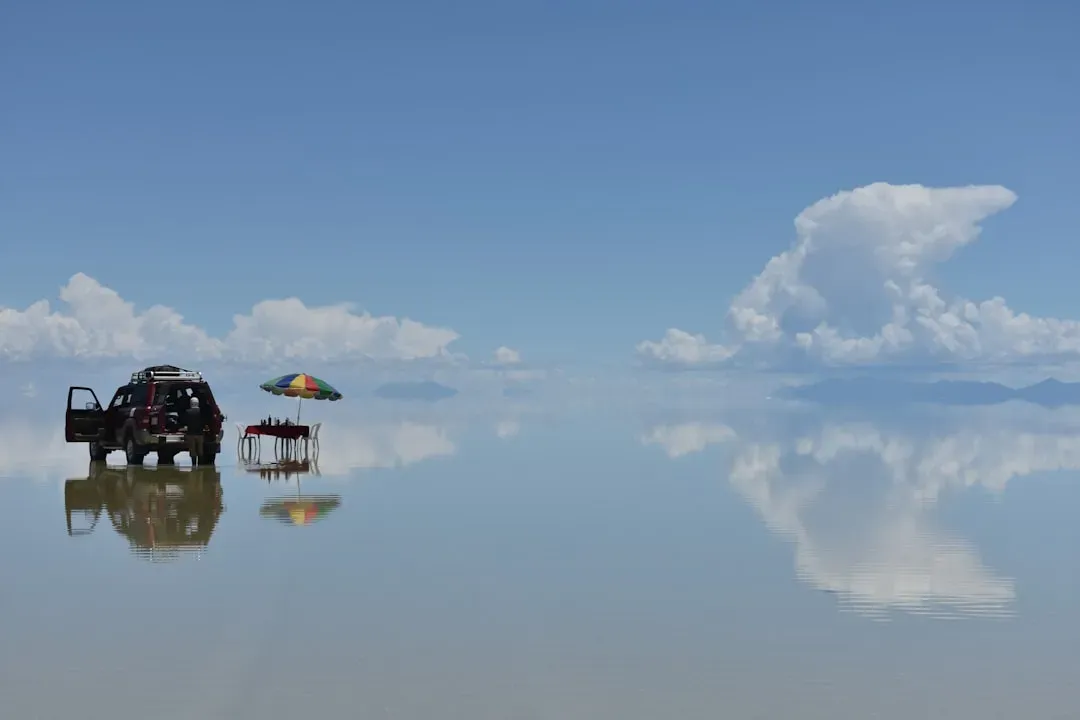
Imagine standing on a surface so vast and flat that the horizon almost disappears, and the sky seems to fold underneath your feet. That is what you experience on Salar de Uyuni, the world’s largest salt flat in southwest Bolivia, covering an area roughly the size of a small U.S. state. It formed when ancient lakes gradually evaporated, leaving behind thick layers of salt that hardened into a white, polygon‑cracked crust stretching in all directions.([rarest.org](https://rarest.org/nature/the-most-unusual-natural-formations-on-earth?utm_source=openai))
During the rainy season, a thin layer of water transforms this desert into a gigantic mirror that reflects clouds, sunsets, and stars so perfectly that you can lose all sense of where Earth ends and sky begins. When it is dry, you can see the textbook‑sharp geometric salt patterns and even stay in hotels built partially from salt blocks. On top of that, you are standing on one of the planet’s most important stores of lithium, a key metal for batteries, which makes this place not just visually jaw‑dropping but also geopolitically important.([rarest.org](https://rarest.org/nature/most-unusual-geological-formations-on-earth?utm_source=openai))
2. The Wave, Arizona, USA – Sandstone Frozen in Motion
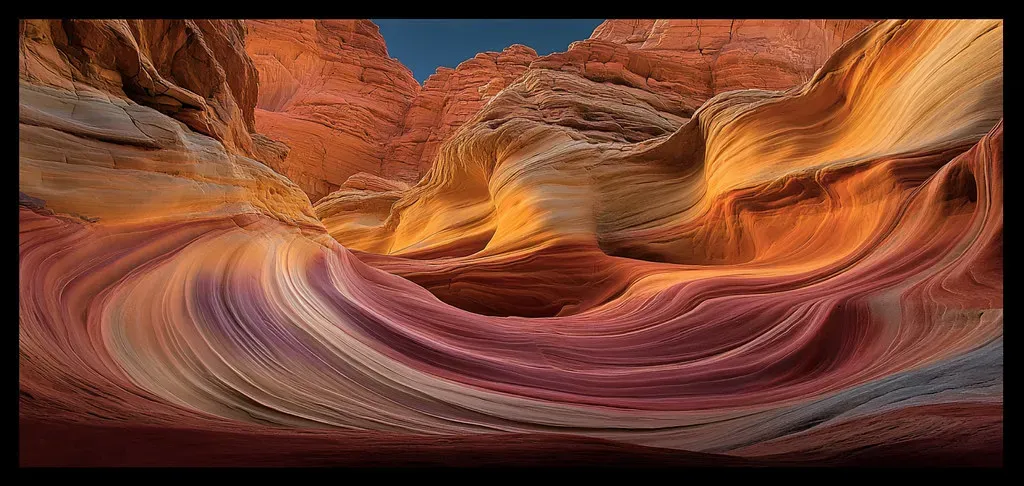
If you have ever seen a photo of rock that looks like a melted candy cane, twisting and curling in impossible stripes, you have probably already met The Wave. Tucked inside the Paria Canyon–Vermilion Cliffs Wilderness on the Arizona–Utah border, this sandstone formation formed from ancient desert dunes that turned into rock and were then sculpted by wind and water. Over millions of years, erosion carved smooth troughs and ridges, exposing layers of iron‑rich sandstone that show off long, flowing bands of red, orange, and gold.([timesofindia.indiatimes.com](https://timesofindia.indiatimes.com/travel/web-stories/8-geological-landmarks-that-look-supernatural/photostory/119187558.cms?utm_source=openai))
When you walk through it, you feel like you are surfing on solid stone as the striped walls curl around you in fluid shapes. Because the rock is highly fragile and easily damaged, access is strictly limited through a daily permit lottery, which keeps the experience quieter and helps preserve the delicate ridges. If you ever plan to go, you have to treat the place like a museum that you walk inside of: you take only photos, leave only footprints, and let the desert keep the rest of its secrets undisturbed.([rarest.org](https://rarest.org/nature/bizarre-geological-features-found-in-remote-regions?utm_source=openai))
3. Zhangye Danxia, China – Mountains That Look Hand‑Painted
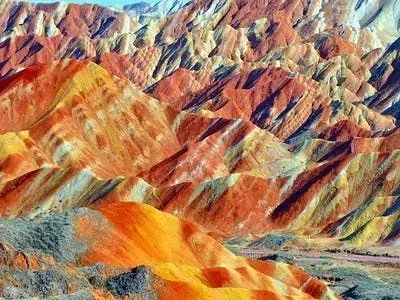
When you first see Zhangye Danxia in China’s Gansu Province, your brain might decide it is looking at a digitally edited image instead of real rock. The hills and ridges here glow with broad bands of red, orange, yellow, and sometimes green, layered like a watercolor painting that someone tilted until the colors ran. These “rainbow mountains” formed from layers of sandstone and minerals deposited over millions of years, which were then lifted and folded by tectonic forces and slowly eroded to reveal their colorful stripes.([rarest.org](https://rarest.org/nature/the-most-unusual-natural-formations-on-earth?utm_source=openai))
As you move around the park, the colors shift with angle and lighting; sunrise and sunset can make the ridges look almost unreal. What looks decorative is actually a record of changing environments in deep time, with each band marking a different period of sediment laid down. You are, in a very literal sense, reading Earth’s diary in color. While heavily photographed and sometimes over‑edited online, the real place is still astonishing enough that you do not need any filters to feel like you stepped into a fantasy landscape.([en.wikipedia.org](https://en.wikipedia.org/wiki/Danxia_landform?utm_source=openai))
4. Giant’s Causeway, Northern Ireland – A Puzzle of Basalt Columns
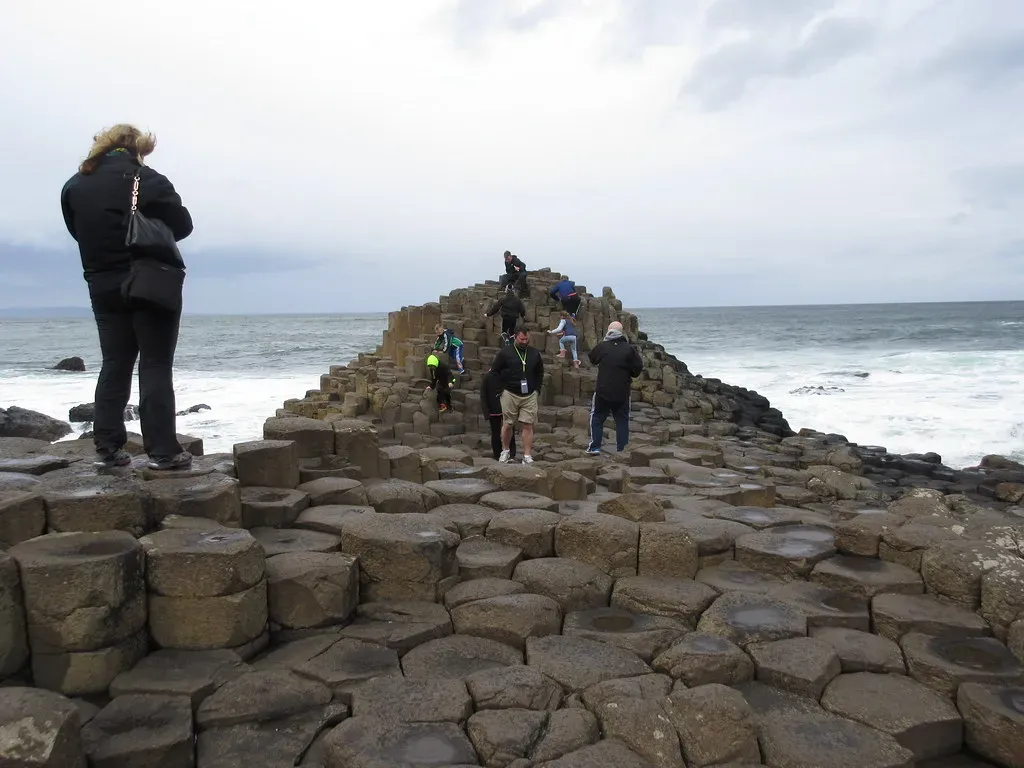
At the edge of the North Atlantic in Northern Ireland, you can walk out on what looks like a neatly arranged stone staircase vanishing into the sea. Giant’s Causeway is made of around forty thousand interlocking basalt columns created by volcanic eruptions roughly tens of millions of years ago. As thick lava cooled and contracted, it cracked into naturally hexagon‑shaped pillars, in the same way drying mud sometimes forms polygon patterns, just on a far more massive, three‑dimensional scale.([rarest.org](https://rarest.org/nature/most-unusual-geological-formations-on-earth?utm_source=openai))
Today, those columns rise and fall in steps, some forming low pavements right at the water’s edge, others stacked into higher platforms that feel custom‑built for exploring. From above, it looks almost like an enormous, broken honeycomb carved from dark stone. The site is protected as a UNESCO World Heritage Site, which means that when you visit, you are not just walking on a tourist attraction; you are walking across a piece of globally recognized geological history shaped by fire and ocean.([amp.cnn.com](https://amp.cnn.com/cnn/travel/worlds-most-unusual-landscapes-list?utm_source=openai))
5. Pamukkale, Turkey – A White “Cotton Castle” of Hot Springs
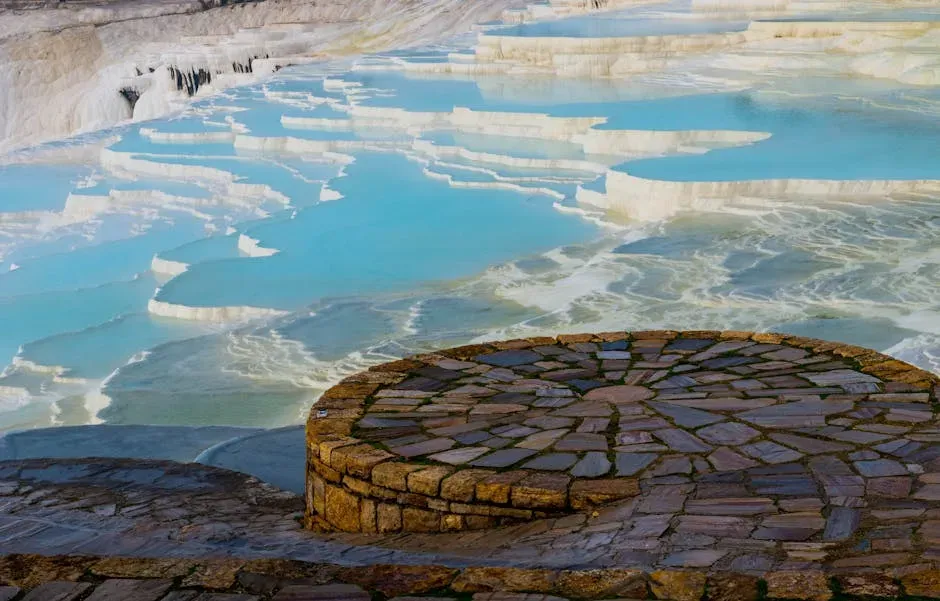
When you first see Pamukkale in western Turkey, you could easily think you are looking at a frozen waterfall or a hillside made of compacted clouds. The cliff is coated in gleaming white travertine terraces, formed by mineral‑rich hot springs that bubble up from underground. As the warm water flows over the slope and cools, it deposits calcium carbonate, slowly building natural pools and rims that step down the hillside in rounded, overlapping layers.([rarest.org](https://rarest.org/nature/the-most-unusual-natural-formations-on-earth?utm_source=openai))
You can walk along designated paths and even soak your feet in some of the shallow pools, looking out over the valley while standing on rock that feels almost like chalk. Nearby, the ruins of the ancient Greco‑Roman city of Hierapolis remind you that people have been drawn to these springs for wellness and relaxation for thousands of years. The area is carefully managed now, with strict rules on where you can walk and bathe, to protect the bright white surfaces from being stained or eroded by modern tourism.([livescience.com](https://www.livescience.com/31471-weirdest-geological-formations.html?utm_source=openai))
6. The Eye of the Sahara, Mauritania – A Giant Target in the Desert
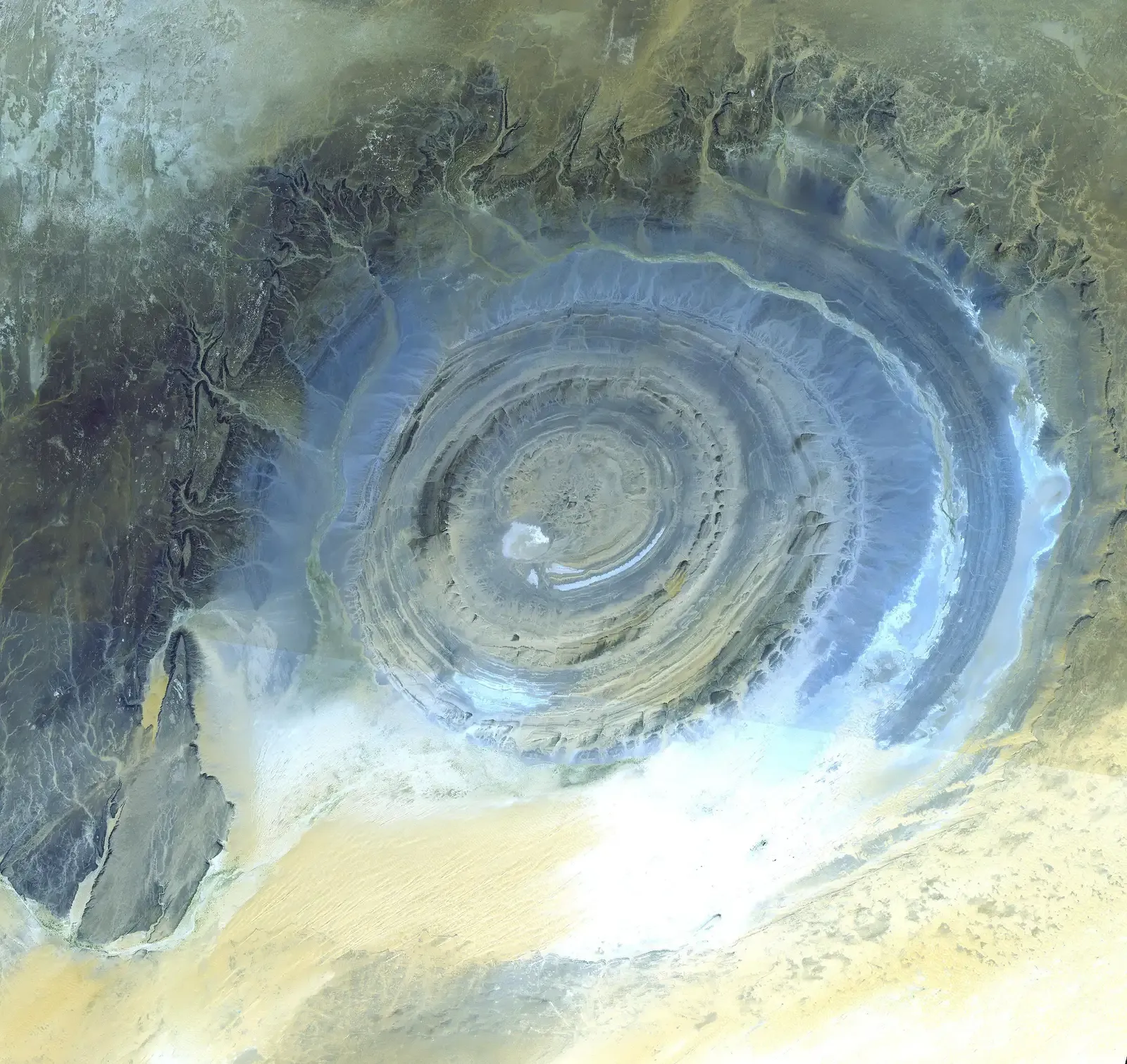
From the ground, the Eye of the Sahara in Mauritania looks like a rocky, windswept landscape in the middle of a huge desert. But if you see it from the air or in satellite images, you suddenly notice a set of nearly perfect concentric rings etched into the Earth, about forty kilometers across. Known formally as the Richat Structure, it was once thought to be an impact crater, but studies suggest it is an eroded geologic dome made of different rock layers that weathered at different rates.([rarest.org](https://rarest.org/nature/strange-geological-formations-found-in-uninhabited-lands?utm_source=openai))
You can think of it like a gigantic onion of rock, with each ring representing a different layer that has been peeled back by time, wind, and water. Early astronauts even used it as a landmark from space because it stands out so clearly against the flat Sahara around it. When you realize that natural processes alone carved something that looks like a deliberate symbol visible from orbit, you start to see how patient and precise planetary forces can be without any human hand involved.([ecolodgesanywhere.com](https://ecolodgesanywhere.com/geological-wonders-of-the-world/?utm_source=openai))
7. Waitomo Glowworm Caves, New Zealand – A Starry Sky Underground
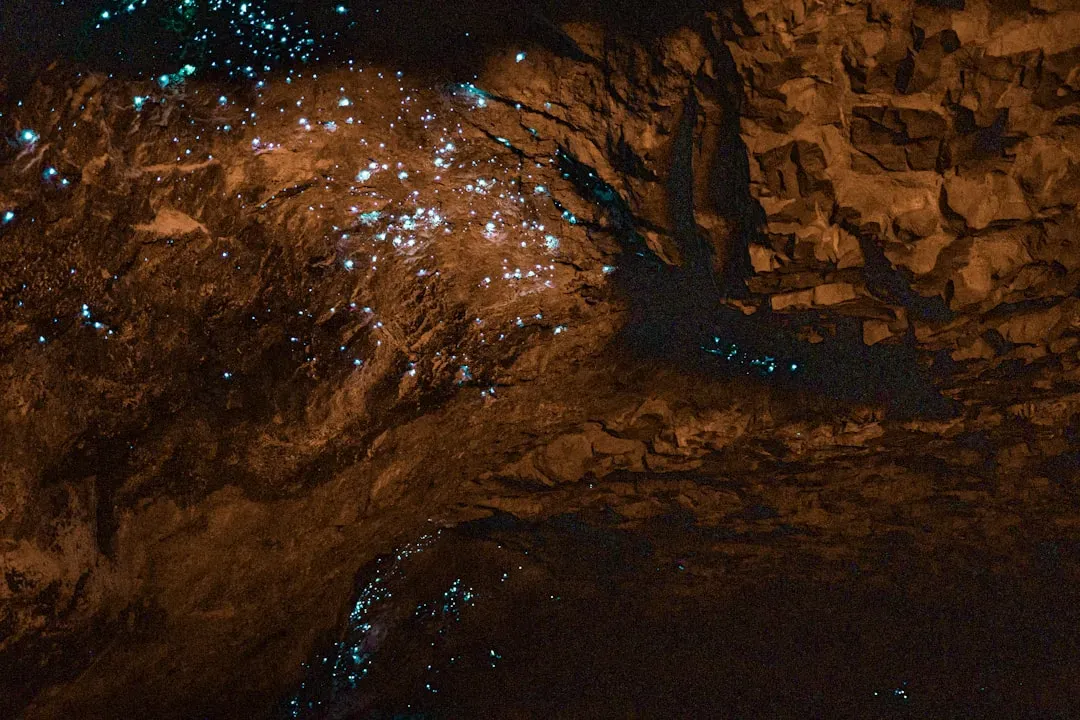
If you have ever dreamed of drifting under a galaxy of blue stars, you can get surprisingly close in the Waitomo Glowworm Caves on New Zealand’s North Island. Inside these limestone caverns, thousands of tiny bioluminescent insects cling to the ceilings and walls, emitting a soft blue‑green light. The glowworms hang down sticky silk threads to catch prey, and the light they produce acts like a lure in the complete darkness of the cave.([timesofindia.indiatimes.com](https://timesofindia.indiatimes.com/travel/web-stories/8-geological-landmarks-that-look-supernatural/photostory/119187558.cms?utm_source=openai))
When you float through by boat with the lights off, the outside world disappears and you feel like you are gliding through space under a motionless starfield. The caves themselves are carved out of rock that formed from ancient marine sediments, later dissolved and sculpted by underground rivers into tunnels, chambers, and delicate formations. What makes this place especially wild is how it combines geology and biology: stone and water created the stage, and the glowworms turned it into a living planetarium.([geologypage.com](https://www.geologypage.com/2018/04/20-strange-geological-formations-on-earth.html?utm_source=openai))
8. Mono Lake Tufa Towers, California, USA – Alien Spires in a Salty Lake
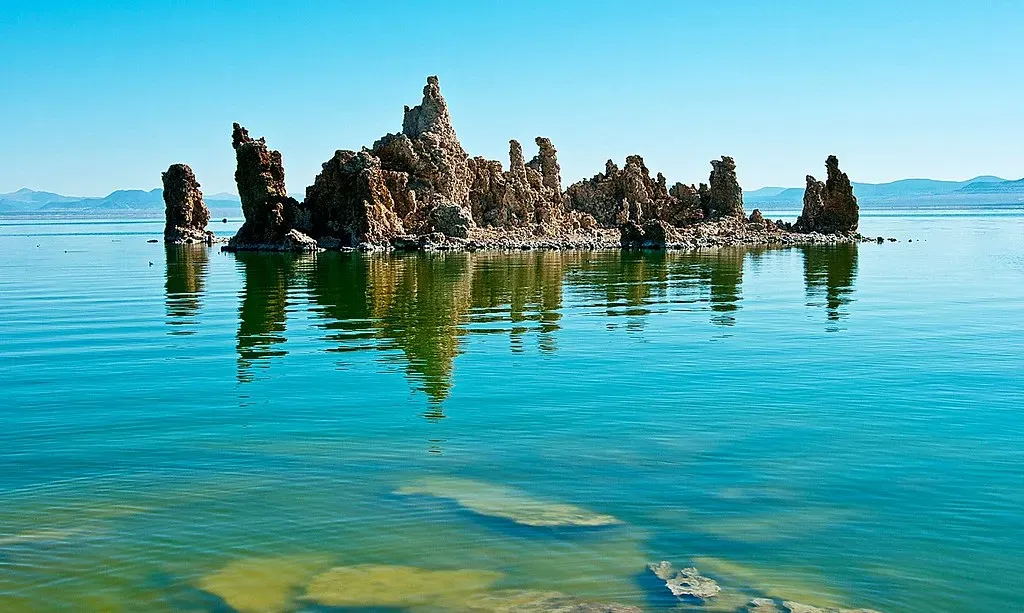
On the eastern side of the Sierra Nevada in California, Mono Lake looks like an ordinary body of water from a distance, but as you approach the shore you start to notice strange, spiky towers rising from the shallows. These tufa towers are made of calcium carbonate and formed underwater when freshwater springs rich in calcium met the lake’s alkaline, carbonate‑rich water. The minerals reacted, precipitating solid limestone that slowly built up around the springs into chimneys and spires.([rarest.org](https://rarest.org/nature/strange-geological-formations-found-in-uninhabited-lands?utm_source=openai))
When water levels dropped in the twentieth century due to diversions feeding Los Angeles, many of these towers emerged into open air, creating a bizarre, otherworldly landscape. Today, Mono Lake is also important as a habitat for brine shrimp and birds, turning this seemingly inhospitable, salty environment into a thriving ecosystem. As you walk among the pale, coral‑like spires, you are literally wandering through stone structures that grew quietly in the dark, unseen, until human water use accidentally revealed them.([rarest.org](https://rarest.org/nature/strange-geological-formations-found-in-uninhabited-lands?utm_source=openai))
9. Wave Rock, Western Australia – A Stone Surfing Break
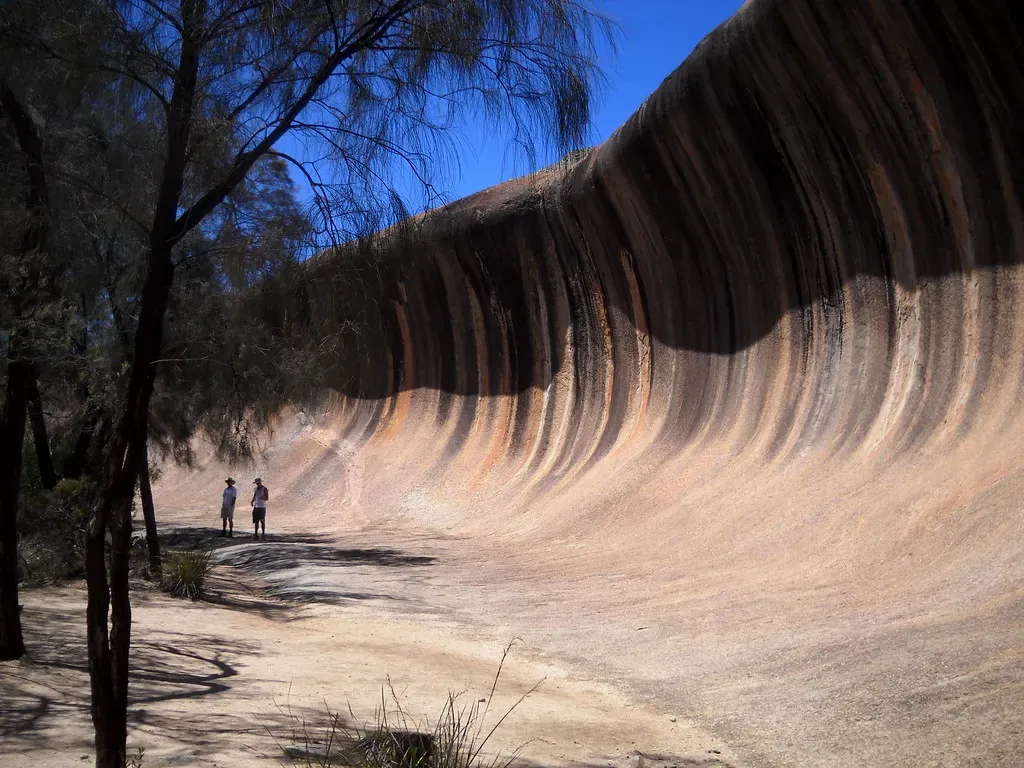
In the middle of farmland in Western Australia, you can stand beneath a rock formation that looks like a massive ocean wave about to crash, frozen in place and turned to granite. Wave Rock is part of a much larger ancient outcrop called Hyden Rock, which formed from granite more than two billion years old. Weathering and erosion sculpted the “wave” shape, as water running down the rock face over long periods dissolved and carried away minerals, undercutting the base and leaving the upper section overhanging in a dramatic curve.([geologypage.com](https://www.geologypage.com/2018/06/20-most-amazing-landscapes-and-rock-formations.html?utm_source=openai))
The surface is streaked with dark vertical stains caused by water dissolving minerals and redepositing them, which makes the rock look as if it has been painted with long, flowing brushstrokes. When you stand at the base and look up, the curve above you feels surprisingly dynamic, as if it might suddenly start moving. It is a reminder that even the hardest rock is slowly reshaped when time and gravity keep pushing, drop by drop and grain by grain.([geologypage.com](https://www.geologypage.com/2018/06/20-most-amazing-landscapes-and-rock-formations.html?utm_source=openai))
10. Rainbow Mountain (Vinicunca), Peru – A Striped Summit in Thin Air
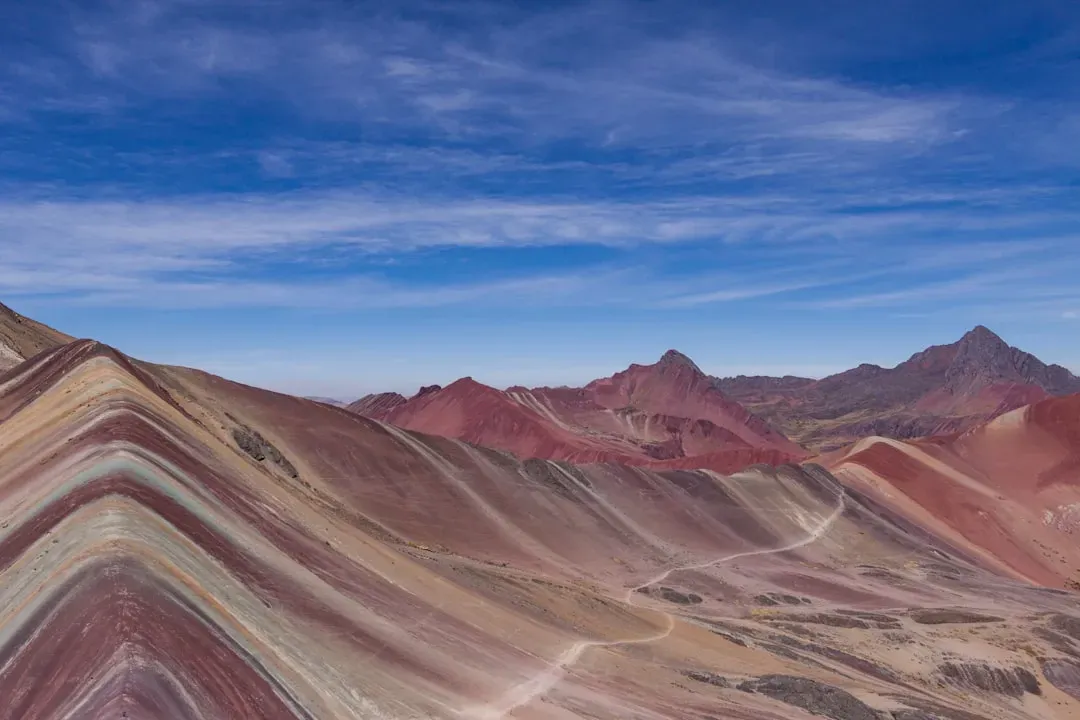
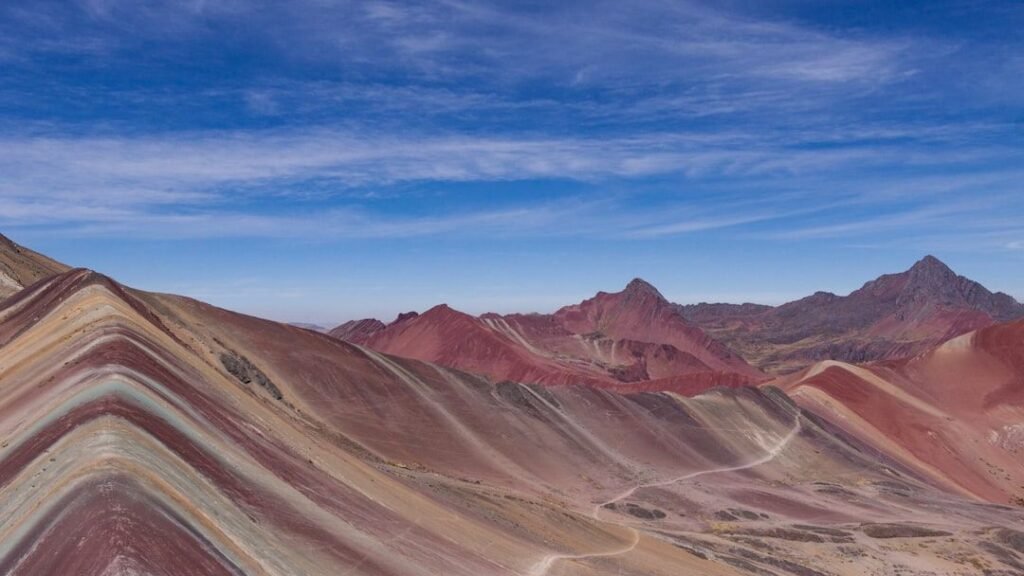
High in the Peruvian Andes, you can hike to a ridge where the mountain itself seems to be wearing stripes. Known as Rainbow Mountain or Vinicunca, this formation shows bands of red, yellow, green, and other subtle hues that run diagonally across the slopes. Those colors come from different minerals in layered sedimentary rocks, including iron oxides and other compounds that were laid down on ancient sea floors before being pushed up to high altitude by the collision of tectonic plates.([ecolodgesanywhere.com](https://ecolodgesanywhere.com/geological-wonders-of-the-world/?utm_source=openai))
The mountain was hidden under snow and ice for much of recent history and became widely known only after melting exposed more of the colorful rock, drawing a surge of visitors. As you climb, the thin air and sweeping views drive home how recent your own presence is compared to the slow uplift and erosion that painted this landscape. With tourism growing, local communities and authorities have been working to balance access with protection, so that the very trails that bring you to this spectacle do not end up erasing it.([ecolodgesanywhere.com](https://ecolodgesanywhere.com/geological-wonders-of-the-world/?utm_source=openai))
Conclusion – Seeing Earth With New Eyes
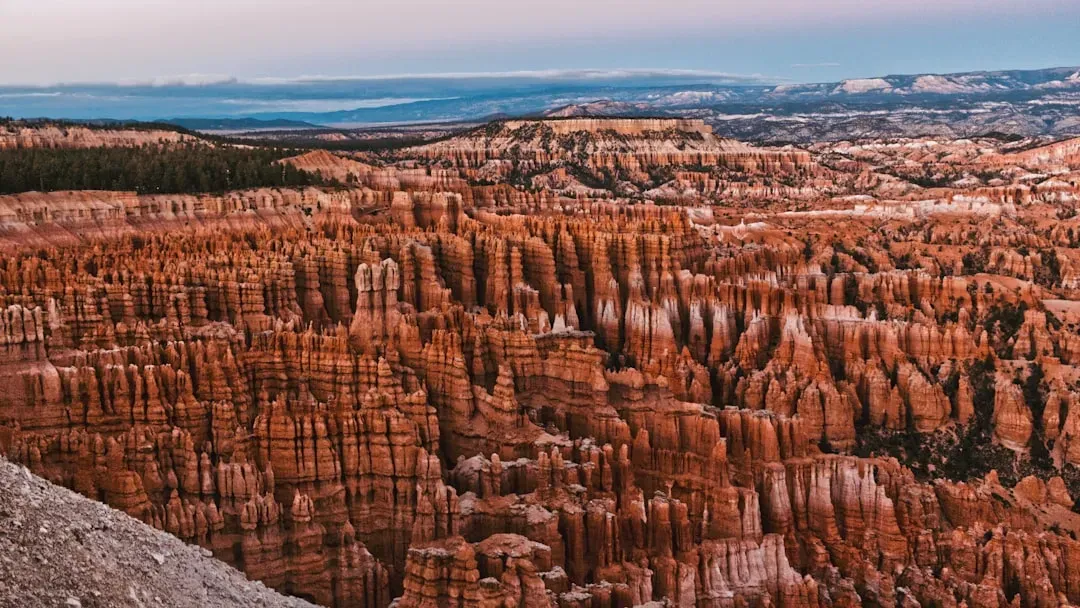
By the time you have mentally walked through these ten places, your picture of Earth probably feels a bit less ordinary. You have met mountains that look airbrushed, deserts that turn into mirrors, caves that mimic the night sky, and rocks that curl, stripe, and stack themselves into patterns you would swear needed a designer. What ties them all together is not magic, but time, chemistry, and physics patiently at work on a restless planet.
The next time you look at a simple hill or coastline near you, you might catch yourself wondering what story it would tell if you could see it on the timescale of millions of years. You do not have to visit every one of these formations to start paying attention; you just have to remember that even the most familiar stone under your feet is part of an ongoing experiment in shape and color. Which of these places would you want to stand in first, if you could step through a door and be there tomorrow?