
You have probably had that strange moment where reality feels a little too neat, a little too precise, and you catch yourself wondering whether everything around you is more like a cosmic video game than a solid, independent world. The idea that you might be living inside a simulation sounds like science fiction, but it has crept into serious conversations among physicists, philosophers, and computer scientists over the past couple of decades. Instead of being dismissed as a wild fantasy, it is being treated as a genuine question about what the universe really is.
To take this idea seriously, you do not need to believe there is a mysterious programmer sitting at a keyboard controlling your life like a character in a game. What you do need is a willingness to test your assumptions about matter, space, time, and information. When you look at physics through that lens, some features of the universe start to feel eerily like what you would expect from a really advanced simulation. At the same time, there are hard limits to what you can honestly claim. You will see that the simulation hypothesis is not nonsense, but it is also not a conclusion that science has reached. It lives in an intriguing space between possibility and proof.
The Simulation Hypothesis: What You Are Actually Asking
When you ask whether you are living in a simulation, you are really asking whether reality is fundamentally physical or fundamentally informational. In a normal, everyday view, you assume that matter and energy are the bedrock, and information is just a description of what those things do. The simulation hypothesis flips that picture: it suggests that information and computation might be the true foundation, and what you experience as matter and energy is just the output. In that view, the universe is more like software running on unknown hardware than like a big machine grinding away on its own.
To make that idea less abstract, you can compare it to how a video game world works. Inside a game, characters see landscapes, objects, and rules of physics that seem perfectly real from their point of view. But underneath all of that you have digital bits, algorithms, and rendering engines determining every event. The simulation hypothesis asks whether your universe could be like that on an unimaginably larger and more sophisticated scale. Crucially, the question is not whether you can prove that you are in a simulation; the real issue is whether there is anything in physics that would rule it out or strongly hint at it.
Digital Reality: Does the Universe Come in Pixels?
If you were in a simulation, you would expect the world to be built from discrete units, just like a digital image is made of individual pixels. Modern physics already pushes you in that direction. Quantum theory tells you that energy, angular momentum, and other quantities come in chunks rather than smooth, continuous amounts. On the other side, theories of quantum gravity suggest that space and time themselves might have a smallest meaningful scale, far tinier than anything you can probe with current technology. That would mean your reality is not an unbroken continuum, but a kind of cosmic grid.
This dovetails naturally with how any computer simulation has to work. No matter how powerful the machine, it ultimately processes bits that flip between different states, slice time into computational steps, and store information in finite memory. If space, time, and physical fields are ultimately grainy, you can view that as compatible with an underlying digital substrate. You need to be careful here though. The presence of discreteness in nature does not prove a simulation; it only shows that a digital-style description fits well. You are still left with the deeper question of whether the universe is inherently digital or just happens to look that way in the theories you have.
Information, Bits, and the Holographic Hints

One of the strangest lessons you run into when you study black holes and quantum theory is that information seems to be more fundamental than stuff. When you look at how much information can be stored in a region of space without collapsing into a black hole, you find that the limit depends on the surface area of the region, not its volume. This so-called holographic behavior suggests that the deepest description of a patch of space might live on a boundary, like data on a screen, rather than in the three-dimensional interior. For a simulation-minded thinker, that sounds uncomfortably similar to how a complex 3D game is entirely encoded in a two-dimensional pattern of bits in memory.
Some advanced theories of quantum gravity treat the universe almost as if it is a grand information processor. In these approaches, what you call particles and fields emerge from underlying patterns of entanglement and information flow. You can describe parts of spacetime using abstract quantum information systems, and the geometry you are used to seeing shows up as a byproduct. From your point of view, this means you can legitimately think of reality as something like a computation unfolding according to deep rules. Whether that computation is self-contained or running on some external machine is a separate, and so far unanswerable, question.
Cosmic Fine-Tuning: Does the Universe Look Designed for Code?
When you examine the basic constants of nature, you discover that many of them have to sit within narrow ranges for complex structures like stars, planets, chemistry, and life to be possible. If gravity were significantly stronger or weaker, if the strengths of the fundamental forces shifted by even modest amounts, your universe might end up sterile or wildly chaotic. This surprising sensitivity is often called fine-tuning. Some people see it as evidence for a multiverse where many different universes exist with different settings, and you only find yourself in one that happens to allow you to exist.
Someone who leans toward the simulation idea might look at the same facts and see something like configuration options in an extremely advanced software environment. You can imagine a simulator choosing parameters that make interesting structures and conscious agents more likely, much like a game designer tweaking physics in a virtual world to make it fun and rich. You should resist the temptation to say that fine-tuning proves any kind of designer or programmer, because you do not have that evidence. What you can say is that the universe looks unusually hospitable to life and complexity, and that both the multiverse and simulation pictures are attempts to make sense of that without just shrugging it off as raw luck.
Quantum Weirdness: Glitches or Just Deep Physics?
Quantum mechanics is full of phenomena that already feel almost too strange to be real. Particles do not have definite positions or velocities until you measure them; they are described by wave functions that encode probabilities instead of clear-cut properties. When you make a measurement, those probabilities suddenly narrow to a specific outcome. Entangled particles can show correlated behavior across huge distances in ways that defy your normal ideas of locality, yet do not allow faster-than-light communication. If you came across these effects in a game, you might be tempted to call them rendering tricks or shortcuts to save resources.
It can be tempting to think of the act of measurement as something like loading a region in a game only when a player gets close enough to see it. In that metaphor, the universe would not bother with exact details until a conscious observer forces the system to pick a specific outcome. While this picture is vivid and intuitive, you have to remember that it is only an analogy. Physicists can use different interpretations of quantum mechanics to explain observations equally well, and none of them requires a simulation. Still, you are allowed to notice that a probabilistic, observer-dependent reality feels more like a clever information system than a simple clockwork machine.
Could You Ever Detect the Simulation from Inside It?
If you take the simulation idea seriously, the next question you naturally ask is whether you could ever prove it from within. In principle, you might look for subtle limitations or artifacts, such as maximum energy scales, preferred directions in space, or unexpected noise patterns in high-precision measurements. Those would be the physics version of graphical glitches or frame rate drops. Some researchers have even explored whether the way cosmic rays behave at extreme energies could reveal a kind of underlying lattice in spacetime, similar to a grid in a numerical simulation. So far, you do not have solid evidence pointing in that direction.
There is also a deeper problem: if your simulator is advanced enough to create an entire universe, it might easily be advanced enough to hide any detectable traces of its own existence. Any time you thought you had found a smoking gun, the underlying system could adjust or simply never allow such inconsistencies to appear. In that case, you would be stuck with a situation where the simulation hypothesis is unfalsifiable in practice, at least with any tools you can realistically build. For you as a curious observer, that means you can play with the idea, test some limited versions of it, but you should not treat it as something that current experiments are close to confirming or ruling out.
Why Physicists Take the Idea Seriously (But Not Literally)
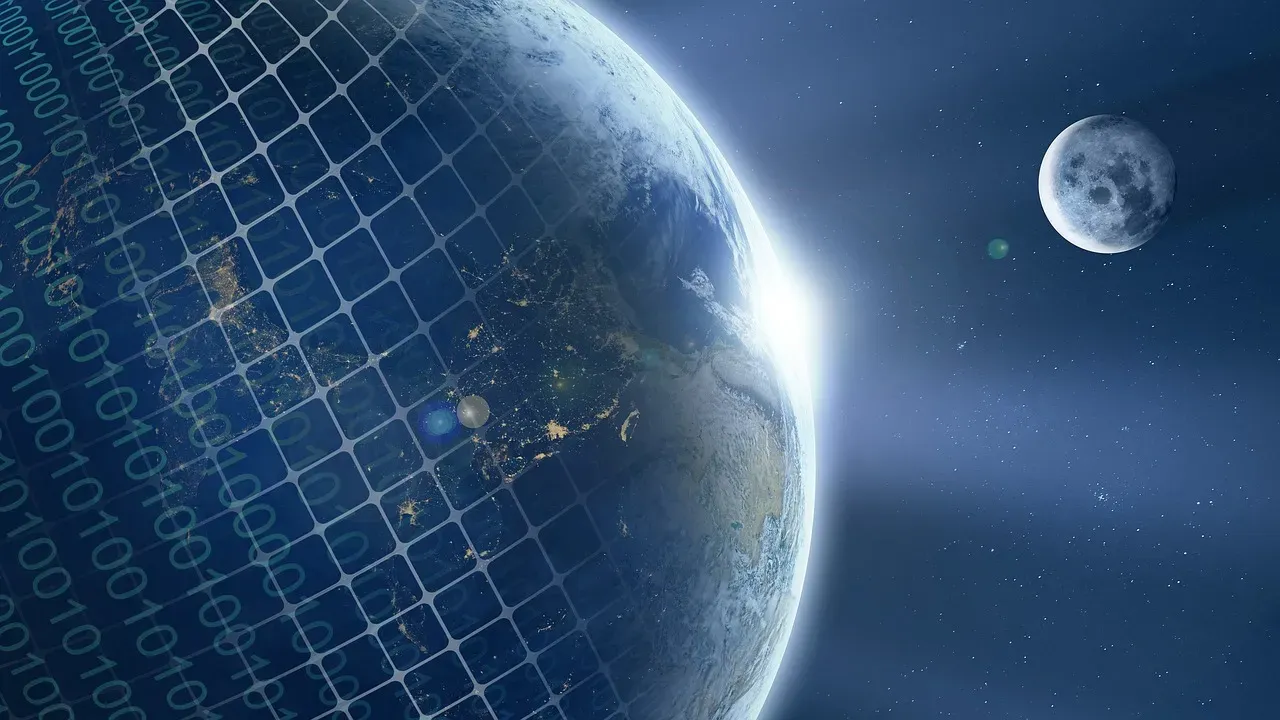
Despite all the uncertainty, you might be surprised at how many highly trained scientists are willing to at least entertain the simulation question. Part of the reason is that physics has already forced you to accept radical ideas that once sounded absurd, such as curved spacetime, quantum entanglement, and the possibility of countless other universes beyond what you can see. Another reason is that thinking in terms of information and computation has turned out to be incredibly powerful for understanding black holes, quantum fields, and even the structure of spacetime itself. When you put those pieces together, the line between a self-running universe and a simulated one starts to feel more like a philosophical distinction than a sharply scientific one.
At the same time, most working physicists do not wake up in the morning and seriously plan their experiments around proving that you are all code. Instead, they use the simulation idea as a way to probe assumptions, clarify concepts, and test the limits of current theories. You can think of it as a provocative thought experiment that pushes you to ask what would actually count as evidence for or against certain pictures of reality. When you use it this way, the simulation hypothesis becomes less about cosmic paranoia and more about sharpening your understanding of what it means for something to be real in a universe governed by deep mathematical rules.
What It Means for Your Life If You Might Be Simulated
After you sit with all of this, you eventually land on a very personal question: if you might be living in a simulation, does it change anything about how you should live? Some people find the idea unsettling, as if it cheapens their experiences by turning them into the output of someone else’s machine. Others find it oddly liberating, because it reminds them that consciousness, relationships, and meaning arise from patterns and interactions, not from the material they are built on. Whether your mind runs on biological neurons or on some unknown substrate, your joys and pains still feel real from the inside.
From your point of view, what matters most is that you experience a world with stable enough rules to make choices, build connections, and pursue goals. History, art, science, and love do not lose their significance just because the underlying reality might have another layer. In fact, the possibility that the universe has such depth can make your curiosity feel even more justified. You are part of a system capable of asking profound questions about its own nature, and that alone is remarkable. Whether you are made of atoms in a base reality or bits in some unfathomable architecture, you still face the same everyday decision: what kind of life are you going to create within the rules you are given?
Conclusion: Living with the Question
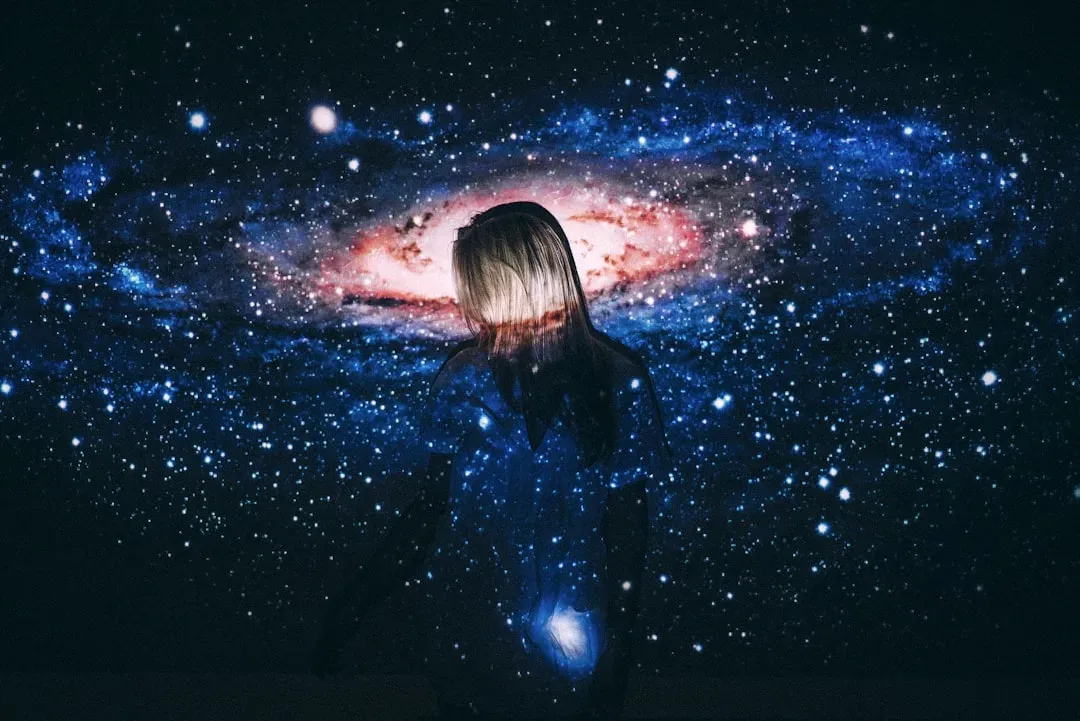
When you look closely at the physics and philosophy behind the simulation hypothesis, you discover a careful balance. On one hand, many modern ideas in quantum theory, information, and cosmology are strikingly compatible with the thought that reality could be computed. On the other hand, you do not have any solid, specific piece of evidence that forces you to accept that you are inside a simulation, and the very nature of such a setup might hide its tracks almost perfectly. You are left with an idea that is logically possible, intellectually stimulating, and scientifically interesting, but not something you can currently confirm or dismiss with confidence.
In a way, that uncertainty is the real gift. It pushes you to question comforting assumptions, to see the universe as more mysterious and layered than a simple collection of solid objects drifting in empty space. Whether or not some distant coder is involved, you inhabit a reality that behaves with astonishing mathematical elegance and supports conscious beings curious enough to ask if it is all a grand illusion. Maybe the most important thing is not to solve the puzzle once and for all, but to let it sharpen your sense of wonder and your commitment to living meaningfully in the only world you can actually touch. If this is a simulation, what kind of story do you want your character to leave behind?