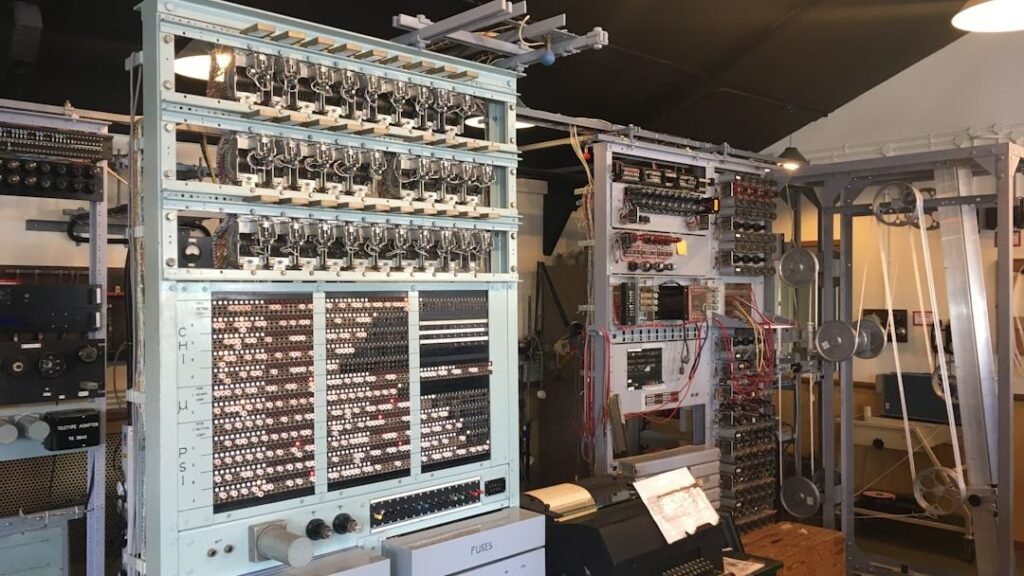

If you fast‑forwarded a few decades and looked back at today, quantum computing might be the thing that makes this era feel like the moment electricity went mainstream. You live in a world where your phone can already do more than entire rooms of computers could manage a generation ago, yet quantum machines promise something stranger: the ability to solve certain problems so fast that today’s “supercomputers” look like pocket calculators by comparison.
What makes this fascinating is that you’re not just dealing with faster chips or smaller transistors. You’re stepping into a world where the rules of everyday experience simply don’t apply, and where your intuition will regularly be wrong. If that sounds unsettling, that’s exactly why quantum computing is so exciting: it forces you to rethink what’s possible in science, security, medicine, finance, and even the way you understand information itself.
The Mind‑Bending Basics: Qubits, Superposition, and Entanglement
When you use a normal computer, every piece of information is stored as bits that are either zero or one, on or off, like tiny light switches. In a quantum computer, you work with qubits, and a qubit can be in a state that is not just zero or one, but a blend of both at the same time, a property called superposition. That means a quantum computer can explore many possible states simultaneously, like testing a whole bundle of keys in parallel instead of trying them one by one.
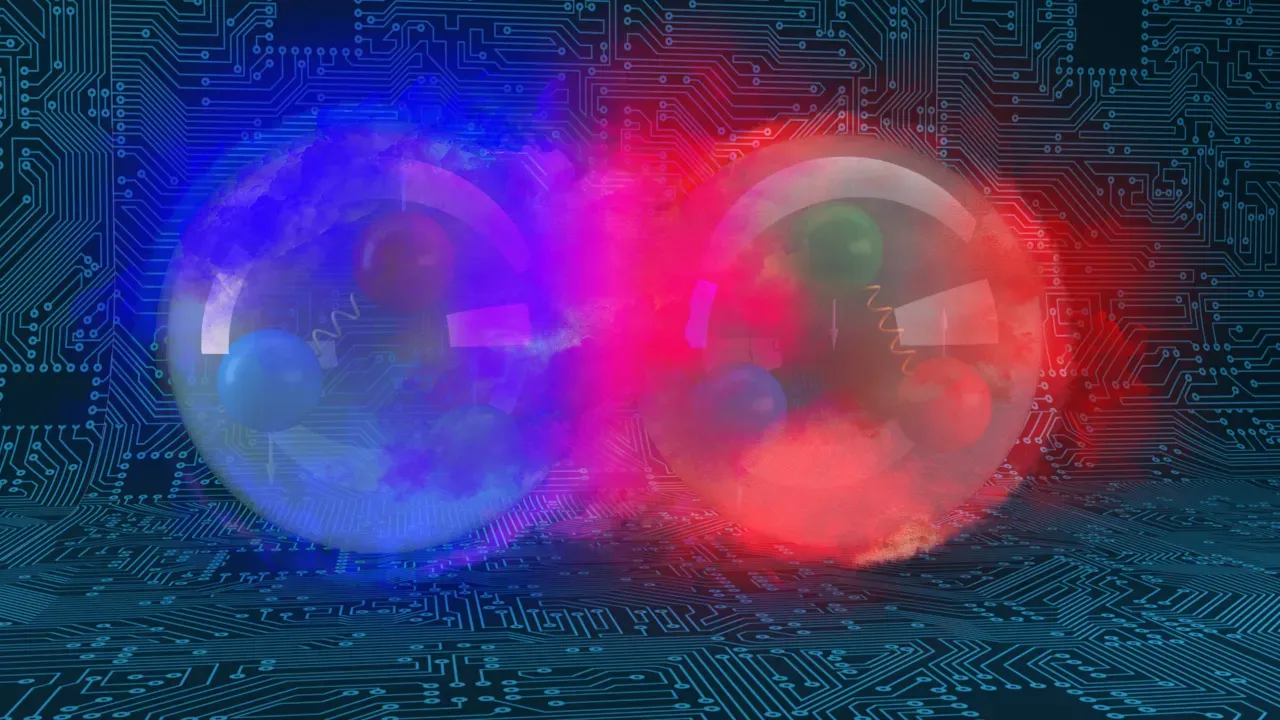
The weirdness doesn’t stop there. Qubits can also become entangled, which means their states are linked in a way that has no classical equivalent: changing one instantly changes the other, no matter how far apart they are. You can think of it like two coins tossed on opposite sides of the planet that somehow always land in a coordinated pattern once you look at them. Together, superposition and entanglement let a quantum computer process certain types of information in profoundly different ways than any machine you’ve used before.
How Quantum Computers Actually Work Under the Hood
Even though it sounds abstract, quantum hardware is brutally physical and messy, and you would not confuse it with a sleek laptop. Many of today’s most advanced quantum processors are cooled to temperatures colder than deep space using giant dilution refrigerators, because thermal noise would otherwise destroy their fragile quantum states. You might picture the iconic vertical silver cylinder full of cables and gold‑plated parts – that’s not sci‑fi art, that’s what it takes just to keep a handful of qubits alive long enough to run calculations.
To control those qubits, you typically use extremely precise electromagnetic pulses, often in the microwave range, to nudge them into the right quantum states and then read them out before they lose coherence. Every operation is a dance against time, error, and environmental interference, and you constantly fight decoherence, which is what happens when the qubits accidentally interact with the surrounding world and lose their quantum behavior. Right now, you’re in an era called Noisy Intermediate‑Scale Quantum (NISQ), where machines have tens to hundreds of qubits but are still too error‑prone for most large, practical tasks, so a lot of progress depends on better hardware and clever error‑correction techniques.
Why Quantum Computing Is Not Just “A Faster Computer”
If you think of quantum computing as just a speed boost for everything you do on a laptop, you’ll miss the real story. A quantum computer does not make browsing social media quicker or editing videos magically smooth; it is not going to replace your phone or your gaming PC. Instead, it promises huge advantages for very specific types of problems – especially those where you need to explore enormous combinations, simulate complex quantum systems, or optimize tangled networks.
For example, if you wanted to simulate a molecule with many interacting electrons using a classical computer, the amount of information you’d need can explode so badly that even the best supercomputers struggle. A quantum machine, built from the same quantum rules, can in principle represent and manipulate those states much more naturally. That’s why you see so much focus on fields like chemistry, materials science, optimization, and certain cryptographic tasks: these are the areas where a quantum approach lets you leap over barriers that would take classical systems absurd amounts of time and energy to cross.
Cracking Codes and Securing Data in a Quantum World
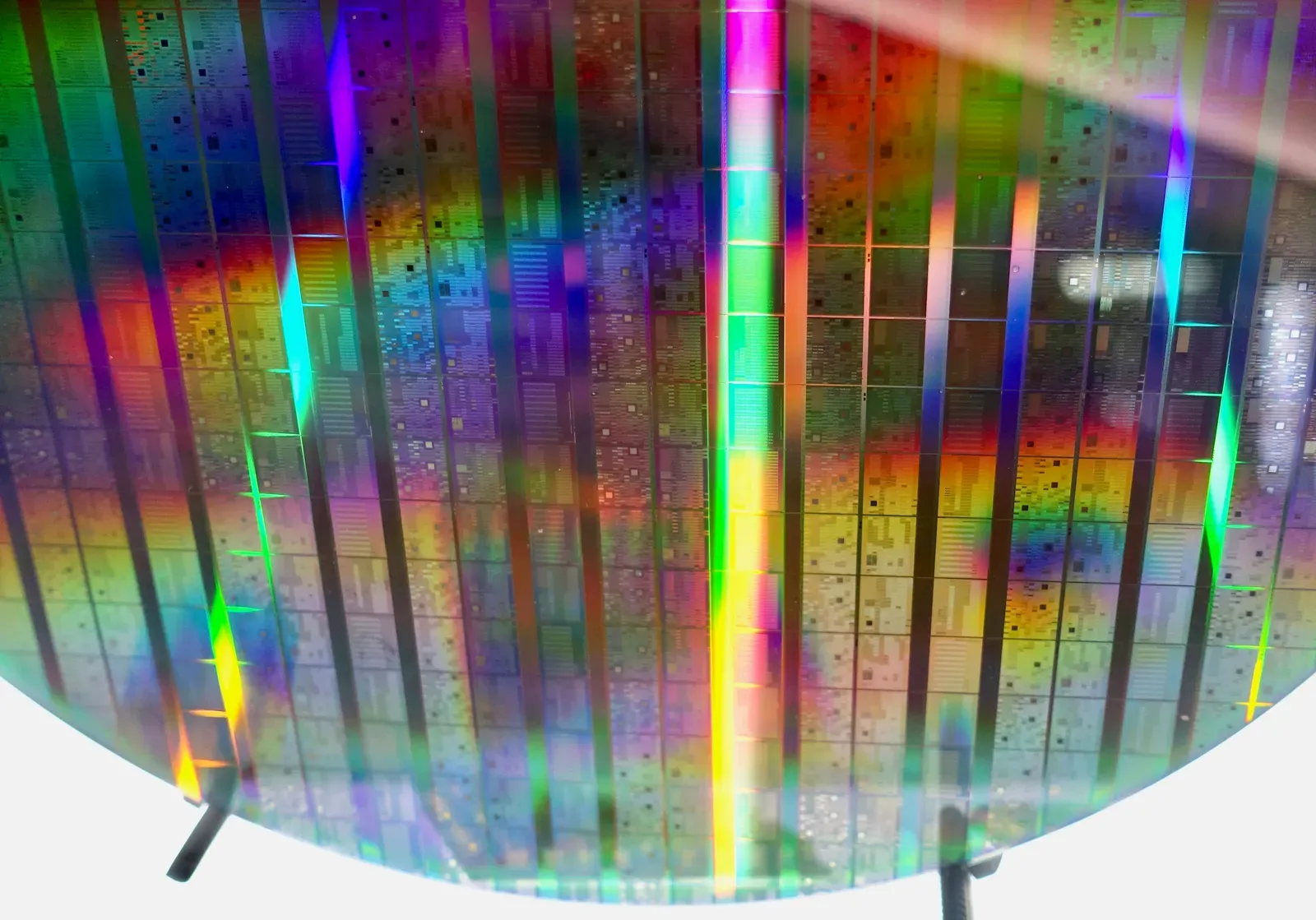
One of the first things you’ll hear about quantum computing is that it could break much of today’s encryption, and that’s not just hype. Many of the systems you rely on for secure communication – like the public‑key cryptography behind HTTPS and online banking – depend on the difficulty of problems such as factoring huge numbers or solving discrete logarithms. A powerful enough fault‑tolerant quantum computer could, in theory, run special algorithms that solve these problems far more efficiently than any classical machine, threatening the security foundations you currently take for granted.
At the same time, you’re not helpless in this story. Researchers are developing and standardizing post‑quantum cryptography, which uses mathematical problems believed to resist both classical and quantum attacks, so that future systems can stay secure even if large quantum computers materialize. There is also quantum key distribution, where you use quantum properties themselves to detect eavesdropping attempts in a communication channel, giving you a way to know if someone has tried to intercept your encryption keys. For you, the practical takeaway is simple: quantum computing is both a threat and an opportunity for security, and the transition to quantum‑resistant methods needs to start before the threat fully materializes.
Reinventing Science, Medicine, and Materials
Where quantum computing really shines for you is in areas where nature itself behaves quantum mechanically. Think about designing a new battery chemistry, a new drug molecule, or a new catalyst to make industrial reactions cleaner and cheaper; all of these involve quantum interactions between electrons and atoms that are incredibly hard to simulate with conventional methods. With a mature quantum computer, you could explore these systems more directly, testing configurations that would be impossible to handle with brute‑force classical simulations.
Imagine being able to search the landscape of possible molecules the way you now search the web, quickly narrowing down promising candidates before you ever run a lab experiment. That could mean better medicines tailored to specific protein structures, lightweight materials with precisely tuned properties, or more efficient solar cells and superconductors. You would not see quantum computers replacing lab work, but they could become a powerful shortcut, cutting the trial‑and‑error cycle from years down to something much more manageable and focused.
Supercharging Optimization, AI, and Complex Systems
Beyond chemistry and physics, you constantly face problems where you need to juggle trade‑offs: how to route delivery trucks, how to allocate resources, how to schedule flights, or how to optimize a financial portfolio. These optimization problems can become so complex that even the best classical algorithms must rely on approximations and heuristics. Quantum algorithms, including quantum‑inspired approaches, aim to explore solution spaces in new ways, sometimes by encoding possible answers into quantum states and nudging them toward better configurations.
There is also a growing interest in how quantum methods might interact with machine learning and AI. You might see attempts to use quantum systems for tasks like sampling from complicated probability distributions, speeding up certain subroutines in training, or improving pattern recognition in specific niches. It’s important to be realistic here: you won’t see a general “quantum AI” that suddenly becomes omnipotent, and many claims are still speculative or limited to narrow use cases. Still, for you as someone living in a world already shaped by algorithms, even incremental quantum‑enabled gains in optimization and learning could ripple through logistics, finance, energy grids, and other infrastructure you rely on every day.
The Harsh Realities: Limits, Hype, and What Quantum Cannot Do
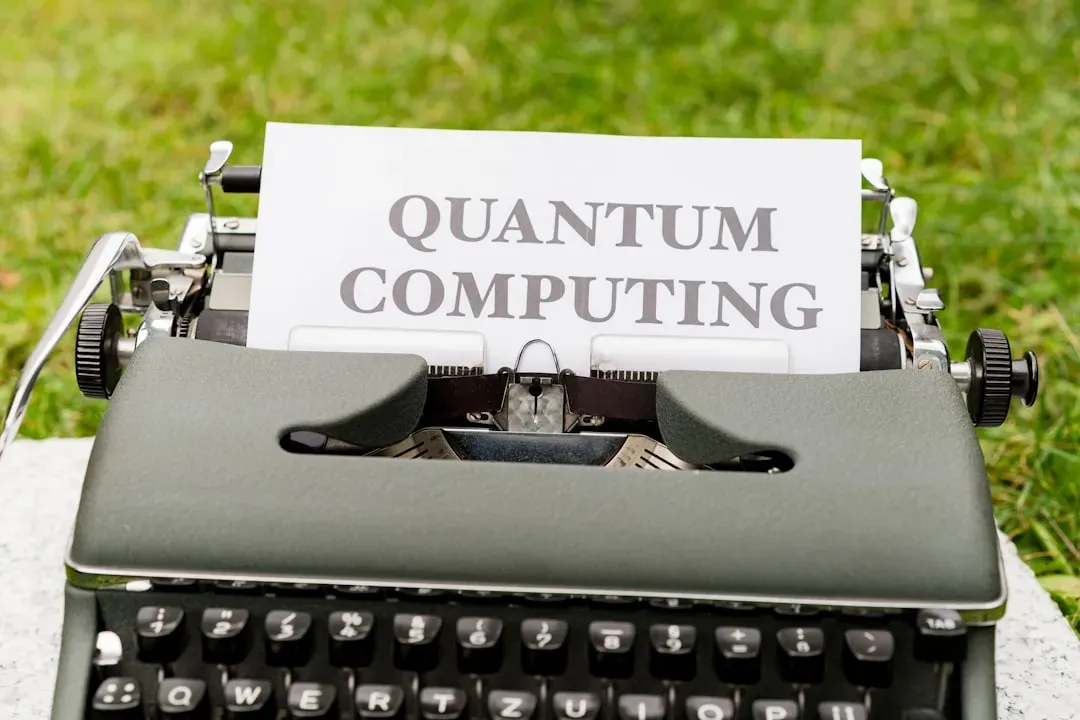
With all this promise, you’re also surrounded by buzzwords, headlines, and grand predictions, and it’s easy to walk away with the wrong impression. A lot of what you hear is aspirational: fully fault‑tolerant, large‑scale quantum computers don’t exist yet, and building them is an enormous engineering challenge. The machines currently available to researchers and companies are powerful in a scientific sense but extremely finicky, noisy, and limited; most cannot yet outperform classical supercomputers in a broad, unambiguous way on practical tasks.
It also matters that quantum computing is not a magical solution to every hard problem. Some tasks are simply not sped up by known quantum algorithms, and there are strong reasons to believe many remain stubbornly difficult even with perfect quantum hardware. When you see claims that quantum computers will “solve climate change” or “replace all classical computing,” you should treat those as overstatements. The real story is more nuanced: you’re looking at a tool that, if it matures, becomes extremely powerful for specific problem classes while leaving much of everyday digital life to good old classical chips.
How You Can Prepare for a Quantum Future Today
You do not need a PhD in physics to start positioning yourself for a quantum‑enabled world. If you work in software, data, or security, you can begin by learning the basic concepts of qubits, superposition, and quantum gates, and experimenting with beginner‑friendly development kits and cloud‑based quantum devices that many companies already provide. Even running small toy programs can help you build intuition, the same way writing your first lines of code once opened up classical programming for you.
Beyond the technical side, you can pay attention to how quantum developments intersect with your field: if you are in finance, watch advances in quantum optimization and risk analysis; if you are in logistics, follow routing and scheduling research; if you are in healthcare or materials, track quantum simulation work. On the security front, it’s wise to stay informed about post‑quantum cryptography standards and migration timelines, especially if you handle long‑lived sensitive data. The quantum era will not arrive overnight, but by the time it becomes mainstream, you’ll want to have moved beyond the buzzwords and into informed, practical action.
In the end, quantum computing is less about replacing what you already know and more about adding a new, strange dimension to it. You’re witnessing the early, awkward phase of a technology that could eventually redefine how you tackle some of the hardest problems humans face, from designing life‑saving medicines to securing digital societies and managing complex global systems. The promises are big, the hurdles are real, and the timeline is uncertain, but that tension is exactly what makes this frontier so compelling. If this is the moment before everything changes, how will you choose to be part of it?