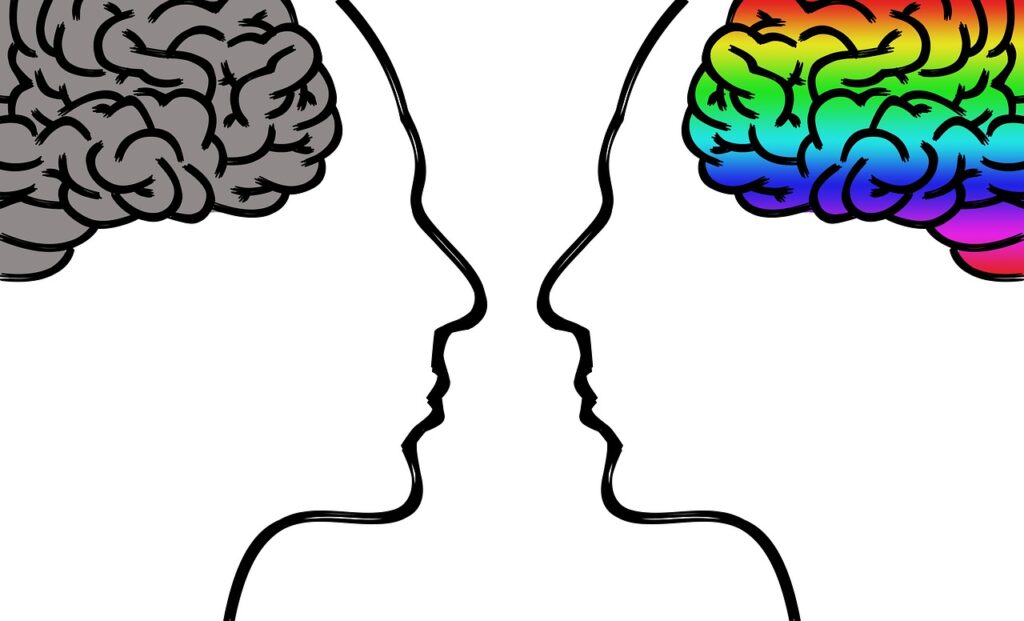

You wake up every morning utterly certain of one thing: you are having an experience. Maybe you feel groggy, maybe you feel oddly calm, but whatever is happening, it is happening to you. Now compare that with what you know about the people around you. You see their faces, you hear their voices, you watch them laugh, cry, and complain about the weather. But deep down, you never actually step inside their minds. You just infer that they are conscious, because they act a lot like you do.
This silent gap between your experience and everyone else’s is one of the most unsettling and stubborn puzzles in philosophy and science. You can measure brain activity, model behavior, and predict what someone will do, but you still cannot open a direct window into what it feels like to be them. For centuries, philosophers have argued that this is not just a technical inconvenience but a fundamental limit. In 2026, with all your neuroscience, AI, and brain scans, that limit is still there, staring you in the face.
You Only Ever Directly Know Your Own Experience
If you pause for a second and look at what you actually have access to, you find something surprisingly small: your current thoughts, feelings, sensations, and memories. You feel pain in your knee, you see a blue sky, you remember yesterday’s conversation. All of that is immediate and undeniable from your point of view. You do not need brain scans or scientific papers to convince yourself that you feel anxious before a big talk or peaceful when you sit by the ocean. Your experience is self-verified in a way nothing else is.
Now try to apply that same certainty to another person. You see their behavior and maybe even their brain patterns, but you never get their inner movie itself. You might feel very confident that your friend is genuinely sad when they cry, but that is still an interpretation based on what you observe, not direct access to their sadness. The uncomfortable truth is that there is a sharp epistemic line: your own conscious life is given to you from the inside; everyone else’s is, at best, a very good guess.
The “Problem of Other Minds” Has Been Haunting Philosophy for Centuries
When you wonder whether you can really know if someone else is conscious, you are stepping right into what philosophers call the problem of other minds. It is not a trendy new puzzle; it has been around as long as people have tried to understand knowledge itself. Again and again, thinkers have run into the same wall: you can observe bodies and behavior, but you cannot literally experience another person’s experience. That gap does not go away, no matter how clever your arguments are.
Over the centuries, proposed solutions have tended to follow a pattern: you are told to trust analogy, to lean on common sense, or to accept that doubting other minds is intellectually possible but practically absurd. You recognize that if you treated everyone as an unfeeling robot, you would quickly become isolated, cruel, or simply unable to navigate everyday life. Yet, even when you accept that others are conscious, you are still relying on faith, habit, and inference – not the kind of airtight proof you have about your own inner life.
Science Can Track Brain Activity, But It Still Sees from the Outside
Modern neuroscience lets you see astonishing details of what happens in a brain when someone reports pain, pleasure, fear, or joy. You can map regions that tend to activate together, track patterns of electrical firing, and even predict in rough ways what a person is looking at or thinking about. From the outside, the brain starts to look like a complex, dynamic system you can measure, model, and manipulate with increasing precision. It is an impressive achievement and incredibly useful for medicine and psychology.
But all of that remains third-person data: readings on a screen, colored blobs on an image, statistical correlations over time. You still do not get the actual feeling of the pain itself or the taste of the coffee as the person experiences it. No matter how advanced your instruments become, they report structure and function, not the raw quality of “what it is like” for the person. You are always looking at correlates of consciousness, not consciousness itself, like studying the music’s waveform without ever hearing the melody in your own ears.
Behavior and Language Give You Clues, But Not Certainty

In daily life, you lean heavily on behavior and language to decide who or what is conscious. When someone yelps and pulls away from a hot stove, you assume they felt pain. When a friend tells you they are heartbroken or excited, you take their words seriously because you know how those emotions feel in your own case. This is what some philosophers call an argument from analogy: you project your own inner states onto others who act similarly. It is a reasonable move, and you would be lost socially without it.
Still, when you look closely, you realize that behavior and language only give you outward signs, not direct access. A sophisticated robot could be built to say all the right things about feelings, preferences, and fears, yet you would still wonder whether anything is really happening inside. The same anxiety sometimes appears in more human contexts too, like when you quietly ask yourself whether someone is genuinely feeling remorse or just performing it. In all these cases, you infer, you judge, you hypothesize – but you never quite escape the leap from what you see to what you think they must feel.
Artificial Intelligence Intensifies Your Unease About Consciousness
As AI systems become more fluent, responsive, and convincing, you may feel a creeping discomfort: if a machine talks like a conscious being, reasons like one, and reacts in complex ways, is it experiencing anything at all? You can imagine chatting with an advanced AI that describes its “fears” of shutdown or its “joy” at solving a problem. Intellectually, you might know it has been trained to generate those words, but emotionally, it can be hard to shake the instinctive sense that something is behind the scenes, having a point of view.
This experience with AI highlights the core problem: behavior that looks conscious does not automatically guarantee an inner life, yet you have no independent test for inner life besides behavior and physical structure. You may find yourself torn between two uncomfortable options – either you treat increasingly sophisticated systems as empty shells, or you start to extend the concept of consciousness beyond its familiar human boundaries. In both directions, you are still relying on guesswork, because nothing lets you step outside your own awareness and confirm, from the inside, what is going on in anything else.
The “Hard Problem” of Consciousness Refuses to Go Away
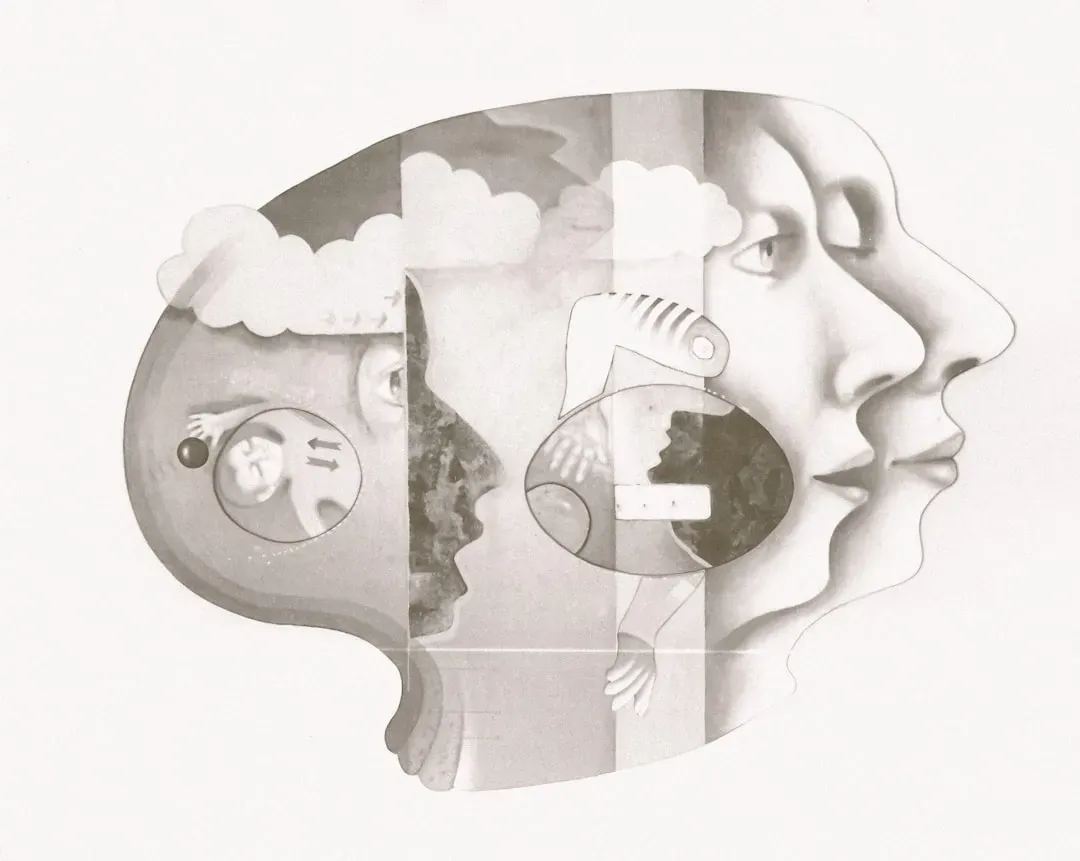
Even when you accept that brain processes can explain a lot of behavior, there is a deeper question that keeps nagging: why are those physical processes accompanied by any experience at all? You can, in principle, explain how light hits your retina, how signals travel through your brain, and how you end up saying that you see the color red. But that still leaves the raw feel of redness – the vivid, subjective sense of seeing red – hanging in the air, not obviously reducible to circuitry or chemistry.
This is often called the hard problem of consciousness, and it sits right at the center of the issue. You can map what happens when someone is conscious, you can even interfere with those processes, but you do not yet have a widely accepted theory that shows why any of it should be accompanied by a point of view. As long as you cannot explain why there is something it is like to be a brain at all, you also cannot explain why there is something it is like to be this brain rather than that one – or why or whether there is anything it is like for anyone else besides you.
No Experiment Can Directly Measure Another Person’s Inner Life
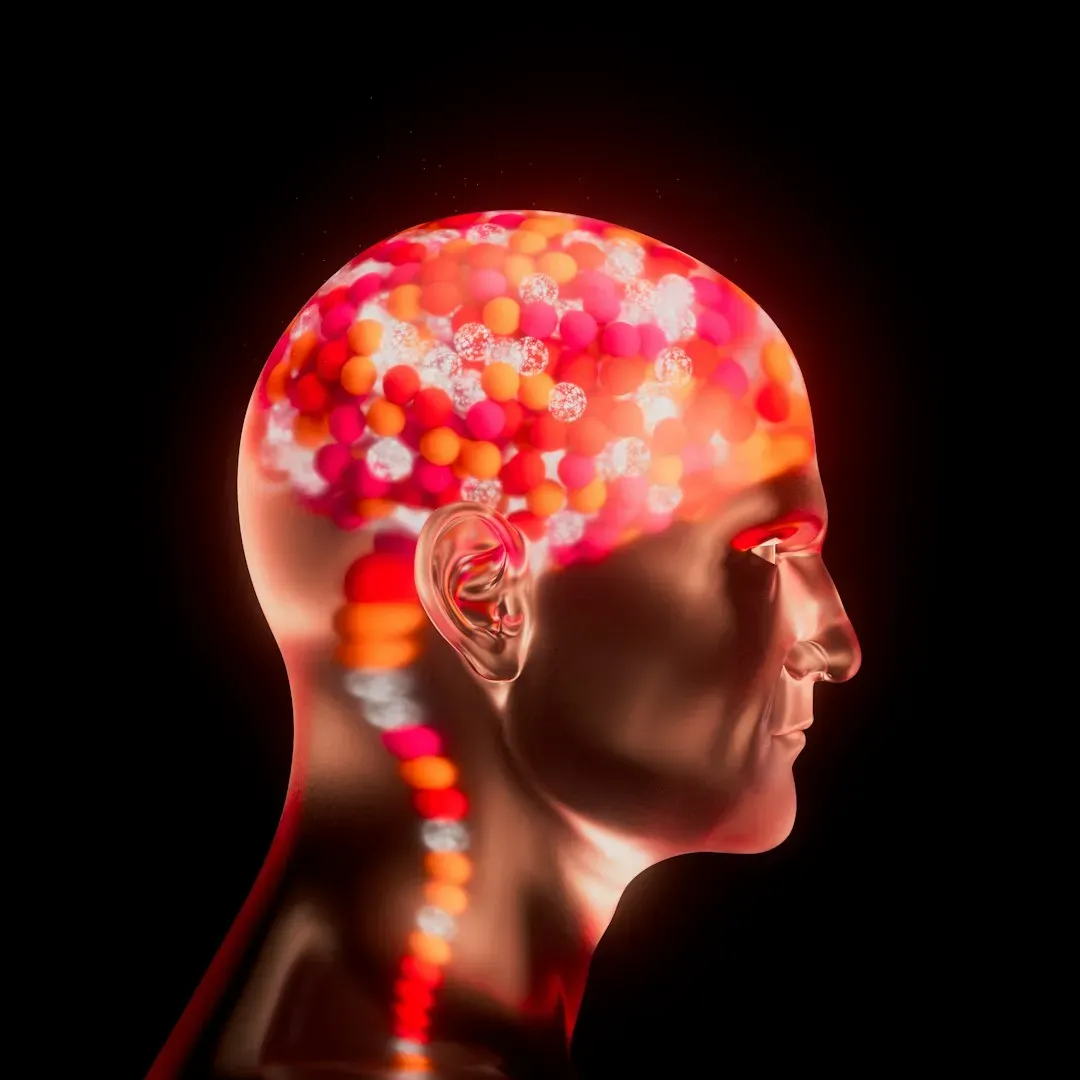
Imagine trying to design the perfect scientific test for whether someone else is conscious. You could hook them up to every available scanner, record every neuron, track every hormone, and catalog their behavior minute by minute. You would build a stunningly detailed portrait of their physical and functional state. You could even get them to report their experiences moment by moment, trying to match every description with precise brain patterns. On paper, it would be a scientific masterpiece.
Yet, after all that work, you would still be relying on their reports and your interpretations of their signals. You would never actually feel their pain, see through their eyes, or occupy their perspective. There is no measurement device that transports you into someone else’s consciousness, because any device you build will just give you more data to interpret from the outside. That is why, even today, you have to be careful: you can say a lot about the conditions under which consciousness seems to arise, but you cannot experimentally prove that a particular being genuinely has experiences the way you do.
You Live by Trust and Inference, Not Absolute Proof

Despite all these limits, you do not walk around doubting that your family, friends, or colleagues are conscious. You operate on the assumption that they feel, think, and suffer much like you do, because life would be unlivable otherwise. You extend empathy, assign moral responsibility, and build relationships on top of this unprovable but deeply intuitive belief. In practice, you treat the consciousness of others as a starting point, not a conclusion you constantly need to re-justify.
This means your everyday world rests on a kind of rational faith: you accept that you cannot have the same kind of direct evidence for other minds that you have for your own, but you move forward anyway. You rely on shared language, emotional resonance, and the long track record of predicting other people’s behavior reasonably well. It is not absolute proof, but it is enough to make a meaningful life possible, even while the philosophical and scientific gaps remain stubbornly open.
Conclusion: Learning to Live with the Mystery

When you face the fact that you can only be absolutely certain of your own experience, it can feel eerie, even isolating, as if everyone around you might be a beautifully animated mask. At the same time, this very limitation might be what makes your relationships and moral choices so profound. You choose to trust that others are conscious, to care about their inner lives, and to act as if their unseen experiences matter just as much as your own. That choice is not forced on you by logic; it is a commitment you make in order to live in a shared human world.
No new scan, theory, or algorithm has yet erased the gap between first-person experience and third-person observation, and you should be wary of anyone who claims to have fully solved it. For now, you stand in a strange but oddly beautiful position: forever locked inside your own awareness, yet constantly reaching beyond it to meet other minds you can never fully prove. Maybe that is the real question you have to wrestle with: not whether others are conscious, but how you will live, love, and act given that you will never know for sure.