I like to think of myself as an analytical idealist with something of an existential crisis—one that often leads me into endless debates with myself about consciousness, Cosmopsychism, and spirituality. How do we really define ourselves in relation to universal laws, and what place does our consciousness occupy in a cosmos that I believe is infinite? To me, it’s actually quite simple: if there was no true beginning, there can be no true end.
That being said, lately I’ve found AI fascinating. But much like Nobel Prize-winning physicist Roger Penrose, I don’t believe AI can truly transcend the uniqueness of the human mind. At the heart of Penrose’s argument is the idea that artificial intelligence follows formal computational rules without actually understanding why those rules lead to something we recognize as truth. AI cannot create its own rules from a genuine understanding of their truth; it ultimately depends on the computational framework and information we give it.
And yet, perhaps because we are so overwhelmed and fascinated by what AI can already do, we’ve begun to attribute an almost superhuman—or rather, metahuman—aura to it. We increasingly speak of AI as though there is a mind somewhere behind the computation, when the more interesting question may be whether computation itself can ever become consciousness. While Silicon Valley races to convince the world that machines are on the verge of thinking for themselves, Sir Roger Penrose isn’t impressed by chatbots that write essays or models that pass the bar exam. In his view, none of it amounts to intelligence at all — because none of it is conscious. Here’s why he says the term “artificial intelligence” may be the biggest misnomer of our time.
Who Is Roger Penrose, and Why Should Anyone Listen?
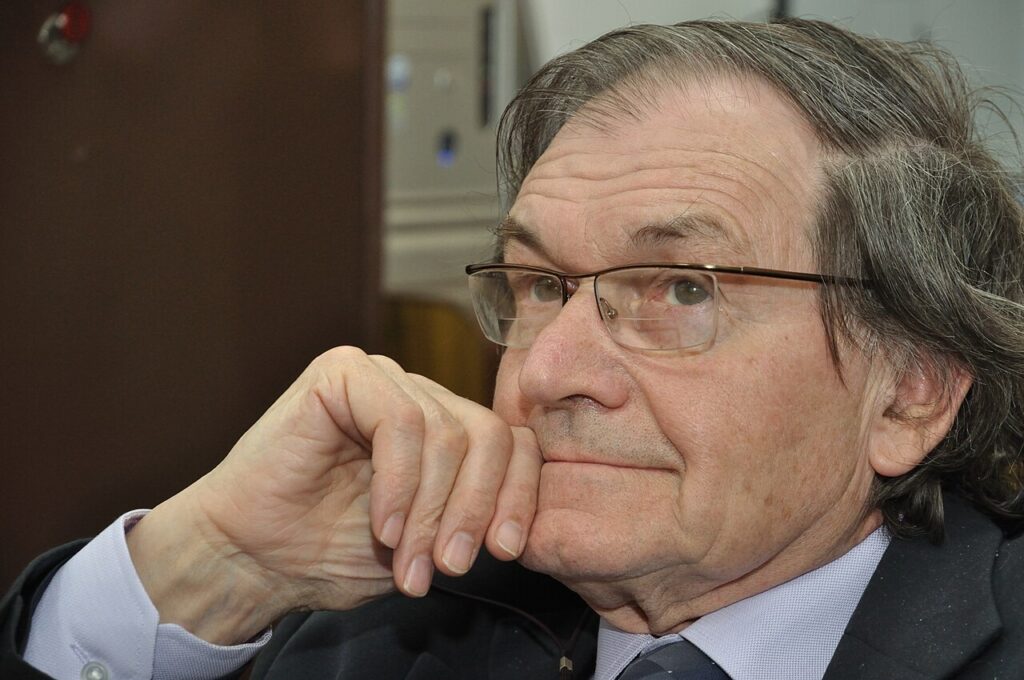
Biswarup Ganguly, CC BY 3.0, via Wikimedia Commons
Roger Penrose isn’t a tech pundit chasing headlines. He’s a mathematical physicist who shared the 2020 Nobel Prize in Physics for proving that black holes are an inevitable consequence of Einstein’s general relativity — work he completed decades before it was honored. He has spent a career at the intersection of physics, mathematics, and philosophy of mind, producing ideas (like Penrose tilings and twistor theory) that reshaped how scientists think about geometry and the universe itself.
His credentials matter here because his skepticism about AI isn’t the knee-jerk resistance of someone who doesn’t understand the technology. It’s the considered position of a man who has spent over forty years studying the boundary between computation and cognition, ever since his 1989 book The Emperor’s New Mind took on the claim that the human brain is just an elaborate computer.
The Core Claim: “AI” Is the Wrong Name for the Wrong Thing
In a video interview in 2025 posted on the YouTube channel “This is the World” Penrose provides fascinating insight on the true nature of AI. His central argument is disarmingly simple: intelligence, properly defined, requires consciousness — an inner experience of understanding what you’re doing. Machines, he argues, have no such experience. They process symbols according to rules, but there is no “someone home” experiencing the process. Without that inner witness, he says, calling the output “intelligent” stretches the word past its meaning.
He has even proposed a replacement term: artificial cleverness. The distinction sounds subtle but is not — cleverness describes a system that can execute a task extremely well without knowing why it works, the way a calculator can multiply large numbers without understanding what multiplication means. Intelligence, in Penrose’s framework, is reserved for the kind of insight that recognizes truth, meaning, and context — not just pattern completion.
Gödel’s Incompleteness Theorem: The Mathematical Backbone
Penrose leans heavily on a result from 1931, when logician Kurt Gödel proved that any sufficiently powerful, consistent formal system will contain true statements that cannot be proven from within that system’s own rules. In plain terms: no fixed set of rules can capture every mathematical truth.
Penrose argues this has a direct implication for machines. Because computers operate strictly within formal, rule-based systems, there will always be true statements a computer cannot prove or “see” — yet a human mathematician can recognize those truths anyway, through insight that isn’t rule-following. If human mathematical understanding can step outside the system in a way no algorithm can, he reasons, then the human mind cannot itself be a purely computational process — and neither can true intelligence be manufactured by one.
Consciousness as Something Physical, Not Just Computational
Penrose doesn’t stop at the abstract argument; he pairs it with a physical theory of where consciousness might actually come from. Alongside anesthesiologist Stuart Hameroff, he developed the Orchestrated Objective Reduction (Orch-OR) theory, which proposes that consciousness arises from quantum-level events inside microtubules — structural proteins within brain neurons. These events, in his account, are non-algorithmic: they can’t be reduced to a step-by-step computational process, no matter how fast or powerful the underlying hardware.
This matters because it moves his argument from a philosophical objection into a testable (if controversial) scientific claim. If consciousness genuinely depends on a specific kind of quantum physical process that silicon transistors simply don’t perform, then no amount of scaling up conventional computers — no bigger data center, no more parameters — would ever cross the threshold into genuine awareness. The gap wouldn’t be a matter of degree; it would be a matter of physical kind.
How the Hype Cycle Made People Stop Asking the Question
Part of Penrose’s frustration isn’t with the machines — it’s with us. He has said plainly that people have “lost the plot” in the sheer power of modern computing, mistaking fluent output for genuine understanding. When a system can hold a convincing conversation, write poetry, or generate working code, it feels intuitive to assume something must be “thinking” in there.
But fluency is not the same as comprehension, and Penrose argues society has stopped distinguishing between the two. The commercial incentive to call every new model “intelligent” — because it sounds more impressive, more fundable, more world-changing — has quietly rewritten the public’s intuitions about what intelligence even means, without anyone actually resolving the underlying philosophical question.
The Calculator Analogy: Clever Isn’t the Same as Aware
Penrose often returns to a comparison with mathematics students. Some students, he notes, genuinely understand why a technique works; others have simply memorized the steps well enough to reproduce them convincingly. Both can arrive at the correct answer. Only one of them understands it.
He places today’s AI systems firmly in the second category — extraordinarily well-trained pattern reproducers, not comprehending minds. A calculator does not know what multiplication is; it manipulates electrical states according to a fixed procedure and returns a result. In Penrose’s view, today’s most advanced AI is a vastly more elaborate version of the same thing: no soul, no substance, no experience of the task — just mechanism dressed up in humanlike output.
Why the Distinction Isn’t Just Semantic
If Penrose is right, the stakes of getting this label wrong are not trivial. Calling a system “intelligent” invites people to attribute understanding, judgment, even moral consideration to something that, in his account, is simply executing rules. That has consequences for how much independent authority we hand these systems, how we regulate them, and how we talk about their limitations.
Renaming the field “artificial cleverness,” in his view, would be a small linguistic shift with a large clarifying effect — a constant reminder that no matter how impressive the output, nothing is actually experiencing the work being done.
The Other Side of the Argument
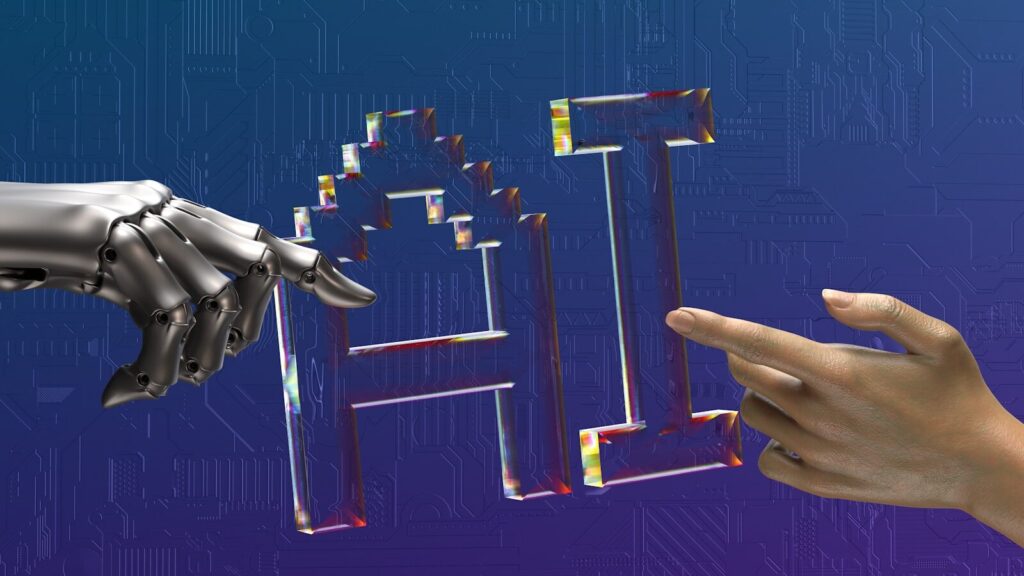
It’s worth noting that Penrose’s position is far from universally accepted, even among people who respect his physics. Critics argue that he stretches Gödel’s theorem beyond its original mathematical scope, since Gödel’s proof concerns formal axiomatic systems, not necessarily the messy, adaptive way biological or artificial neural networks actually operate. Others point out that human mathematical insight might itself be a computational process we simply don’t understand well enough yet to formalize — meaning the “insight beats algorithm” argument may not hold up as cleanly as it first appears. And functionalist philosophers of mind maintain that consciousness could, in principle, emerge from any sufficiently complex information-processing system, biological or not — a claim Penrose’s physical theory directly disputes but hasn’t definitively settled.
As a layman mentally invested in such topics, can AI truly mimic the power of consciousness thought? It would be insane to think it could because while the basic understanding is how our brain is the result of physical anatomy, there is still a neuroscientific debate on consciousness and how we can truly define or understand it. While of course there are fascinating theories of how humans may one day be able to upload from organic matter to digital tech. Take for example The Oxford Whole Brain Emulation (WBE) Roadmap (2008): Published by Anders Sandberg and Nick Bostrom through the Future of Humanity Institute at Oxford University, this peer-reviewed technical paper is the definitive foundational text. It explicitly lays out the exact engineering phases, scanning technologies, and computational power required to achieve a digital human mind. But of course, this is a topic that still borders on fascination and fact.
What’s clear is that Penrose has put a precise, falsifiable argument on the table in a debate usually dominated by vague intuition. Whether or not his answer holds up, the question he’s forcing — what do we actually mean when we call a machine “intelligent”? — remains very much unresolved. Check out the interview here.