Most people think fossils are like stone photographs: a complete, objective snapshot of an ancient creature frozen in time. They’re not.
A shocking number of the fossils you grew up trusting were rebuilt from a handful of fragments, artistic guesswork, and whatever theory happened to be fashionable that decade. Some reconstructions turned out mostly right. Others were closer to science fiction than science, and museums don’t love advertising how much of the exhibit is bone versus best guess. Quietly, over the last few decades, palaeontologists have started admitting just how speculative some of these iconic fossils really were – and the list is longer, and weirder, than you’d expect.
#14 – The First Iguanodon: Built on a Rhino Skeleton and a Guess
The original Iguanodon reconstruction was so off-base it looked more like a horned, heavy-set monster than the agile herbivore we know today. Early 19th-century scientists had only a handful of bones and teeth, and did what humans always do when the picture is incomplete: they filled the gaps with imagination and the biases of their time. They stuck a spike on its nose, when it was actually a thumb, made it stand like a rhino, and padded the missing pieces with generic “reptile” parts. Victorian artists then locked that guess into public memory with dramatic statues and prints.
What changed everything was the slow, painful accumulation of more complete skeletons over decades. Suddenly, the “fat rhino dinosaur” turned into a much more bird-hipped, bipedal animal with a very awkward thumb spike. Today, palaeontologists openly call that first version a cautionary tale in overconfident reconstruction, since the bones never actually justified the posture or anatomy the public was shown.
#13 – Hadrosaur “Duck-Billed Dinosaurs” With Totally Invented Soft Tissues
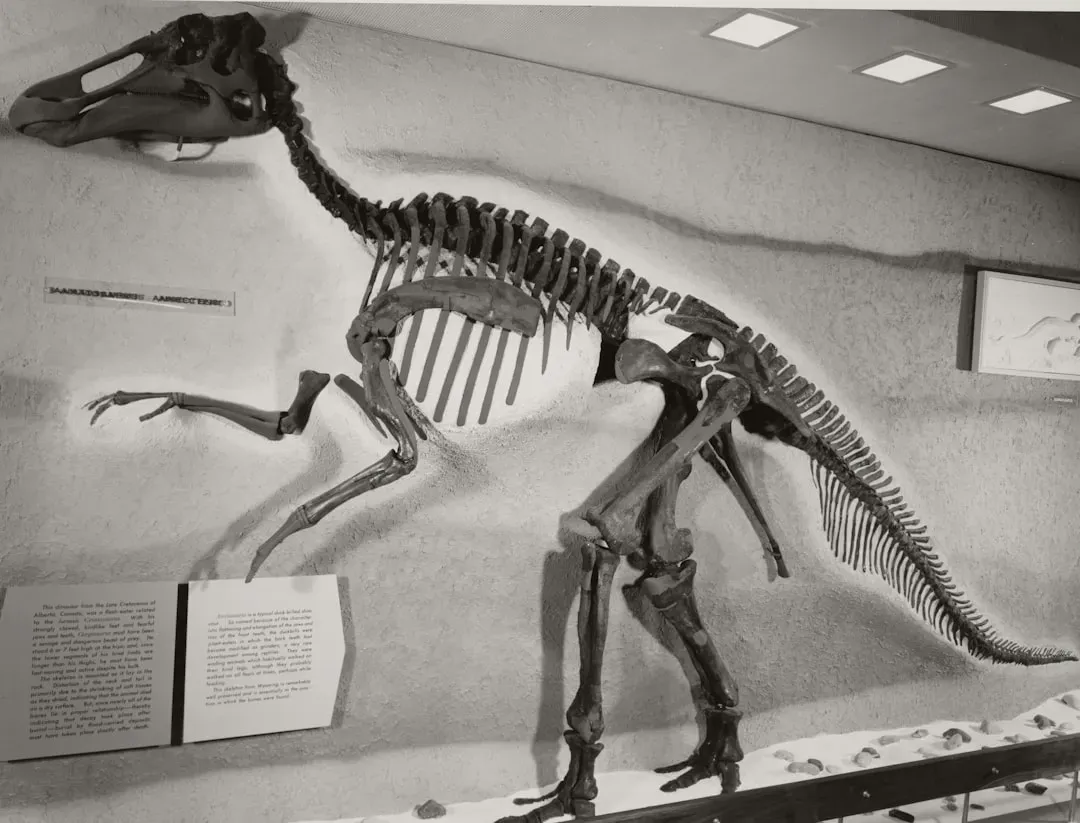
You’ve seen the classic illustrations: duck-billed dinosaurs with floppy, cartoonish beaks and smooth, saggy skin. The problem is that most of that soft-tissue detail never had fossil support. Early hadrosaur fossils were often partial skeletons missing the really informative parts, like full skull roofs, soft-tissue impressions, or complete tails, so artists and scientists filled the gaps with modern analogies: ducks, lizards, even cows, depending on what they personally believed these animals did.
Only later did more complete fossils and skin impressions reveal muscular tails, intricate crests, and rough, scaly skin textures that didn’t match the smooth “lizard cow” look. Even the famous duck bill turned out to be more complex, with keratinous coverings and biting surfaces unlike anything on a living duck. Insiders now admit that mid-20th-century hadrosaur reconstructions were at least half speculation, and basic assumptions about posture, social behavior, and facial shape are still being revised.
#12 – Brontosaurus: The Wrong Head on the Wrong Body
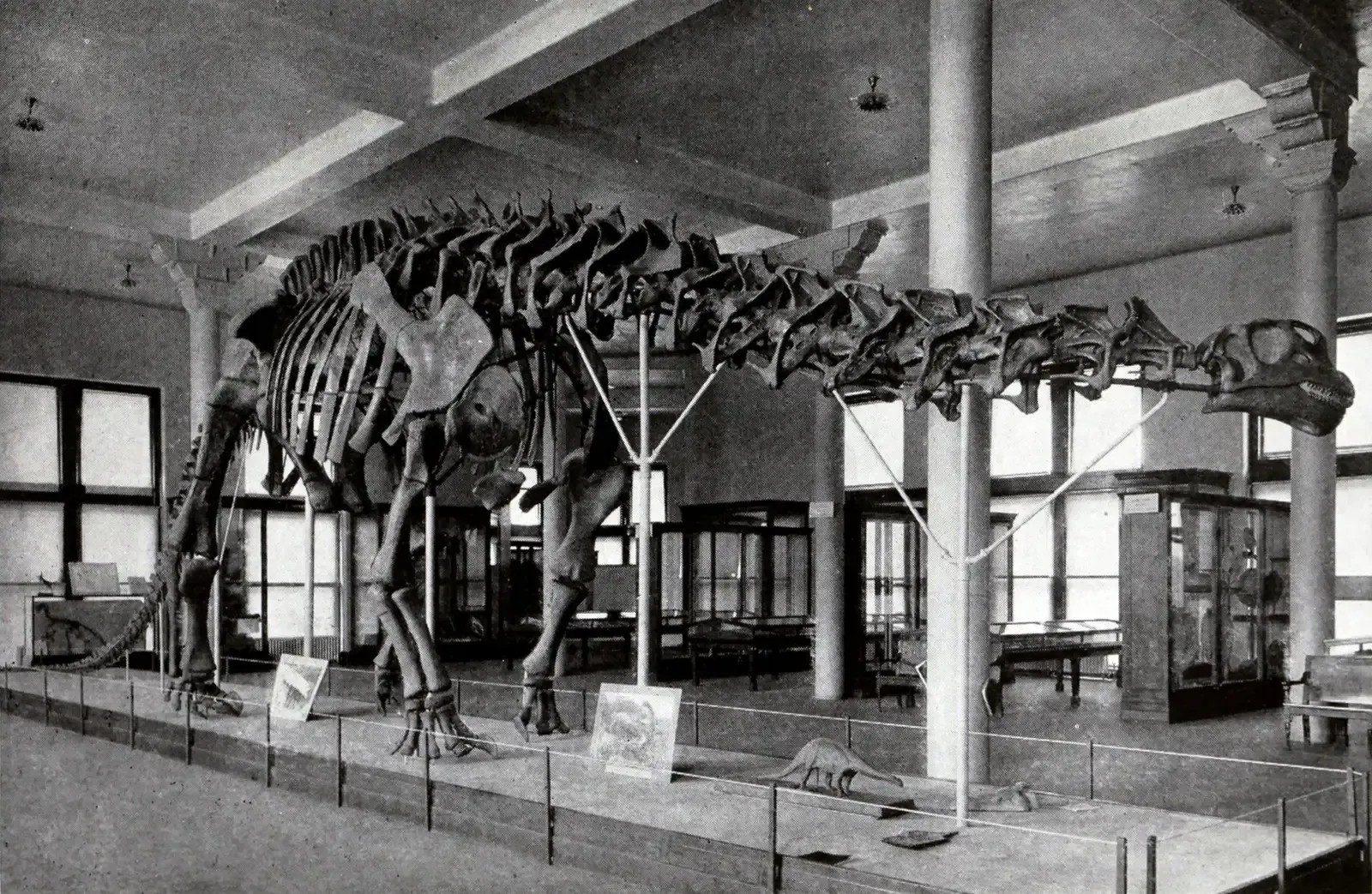
For decades, museum-goers stared up at “Brontosaurus” skeletons that were basically Frankenstein animals. During the Bone Wars of the late 1800s, palaeontologists rushed to name new dinosaurs, sometimes combining bones from multiple individuals, or even species, into a single mount. In the most infamous case, a long-necked sauropod body was crowned with a totally mismatched skull borrowed from a different dinosaur, largely because it “looked right” to the scientists involved.
Those early mounts were educated guesses made under insane competitive pressure, where skulls were rare and careers depended on flashy new species names. Later work showed that the original Brontosaurus mount had the wrong head and probably belonged to a related genus, Apatosaurus. Even the name Brontosaurus was dropped, then cautiously revived after new analyses, proving how unstable the whole picture really was. The public saw majestic certainty; behind the scenes, it was patch-work guesswork.
Fast Facts
- Othniel Charles Marsh first described Brontosaurus in 1879 from a nearly complete, but headless, skeleton unearthed at Como Bluff, Wyoming.
- In 1903, paleontologist Elmer Riggs argued the specimen was simply a species of Apatosaurus, erasing the name “Brontosaurus” from science for over a century.
- A massive 2015 study comparing 477 physical traits across 81 sauropod specimens found enough anatomical differences to bring Brontosaurus back as its own valid genus.
#11 – Archaeopteryx: The “First Bird” Drawn Around a Few Feathers
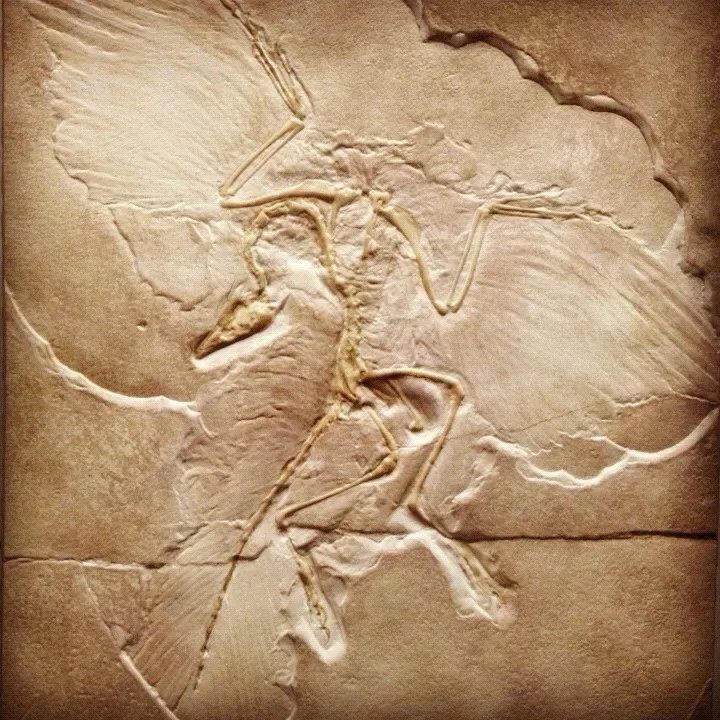
Archaeopteryx became the poster child for evolution, the “first bird” perfectly bridging dinosaurs and modern birds. The fossils are extraordinary, yes, but they’re also flat, fragile, and incomplete, preserving mostly impressions of feathers and partial bones crushed into limestone. Early reconstructions leaned heavily on the narrative scientists wanted to tell: a crow-sized, tree-dwelling, fully feathered flyer that looked almost like a modern bird with a dinosaur tail tacked on.
Over time, reanalyses, CT scans, and comparisons with other feathered dinosaurs have revealed just how much early depictions were nudged by expectation. Flight style, posture, muscle layout, even the exact shape of the head were, and still are, debated. Was it gliding? Flapping? Mostly terrestrial? Many palaeontologists now stress that the famous silhouette you know is a best-guess composite, not a photograph of reality.
#10 – The “Terrible Claw” Deinonychus With Shrink-Wrapped Muscles
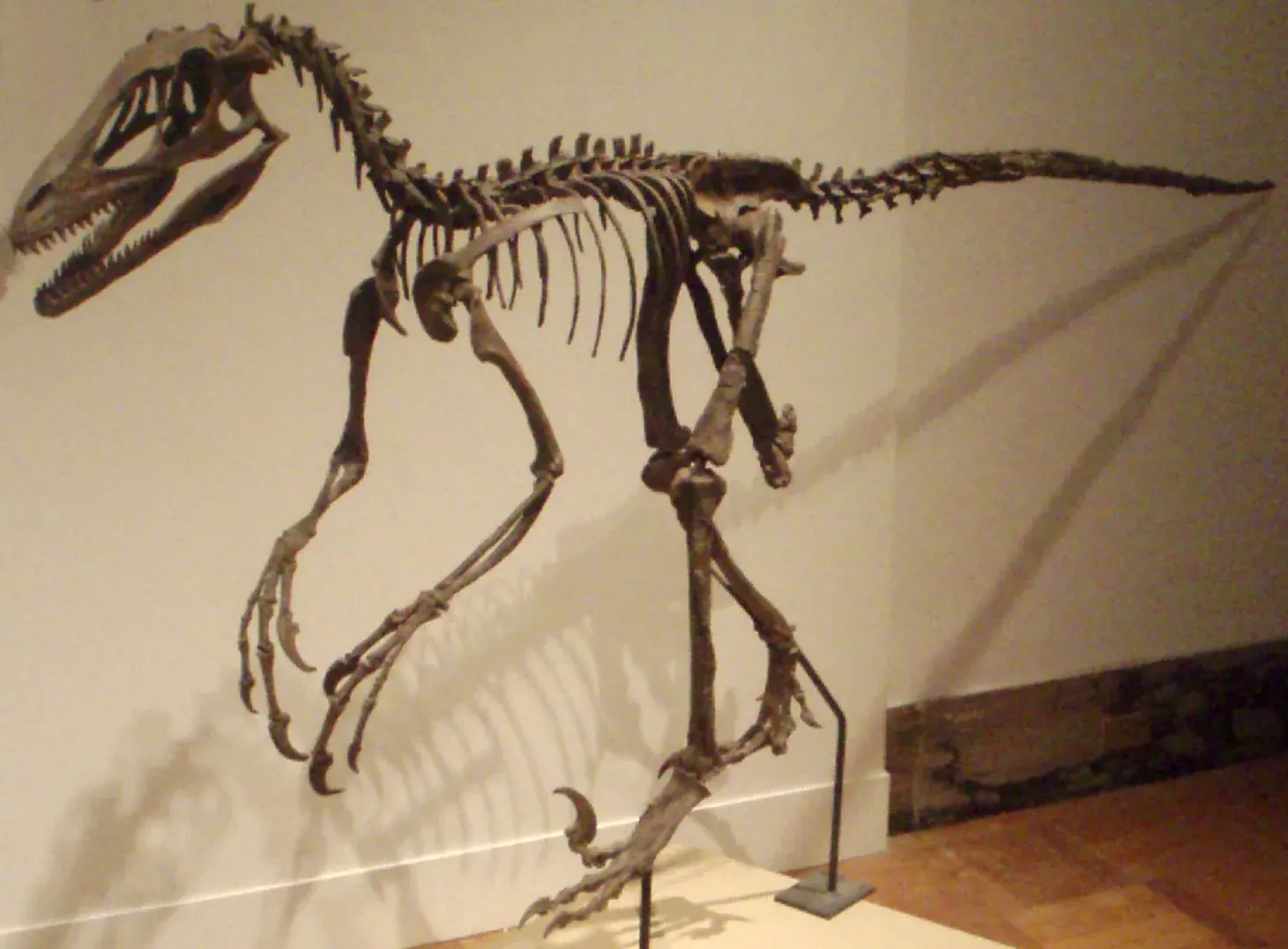
Deinonychus, the raptor that helped kick off the dinosaur-as-active-predator revolution, has suffered from a different kind of guesswork: the hyper-minimalist, shrink-wrapped look. The first reconstructions in the late 1960s and 70s had limited skeletal material and zero soft tissue, so artists drew the animal with skin vacuum-sealed directly onto bone and muscle outlines based on modern reptiles. It looked sleek and deadly, and biologically unrealistic.
Later work on feathered relatives, muscle attachments, and body mass estimates suggested Deinonychus was bulkier, possibly feathered, and nowhere near the knife-thin greyhound of early art. Even the famous sickle claw’s exact use, whether for slashing, gripping, or climbing, remains debated. Palaeontologists now openly criticize those ultra-lean reconstructions as a relic of older thinking that favored “sports-car” predators over biological reality.
#9 – Spinosaurus: The Dinosaur Rewritten More Than Any Other
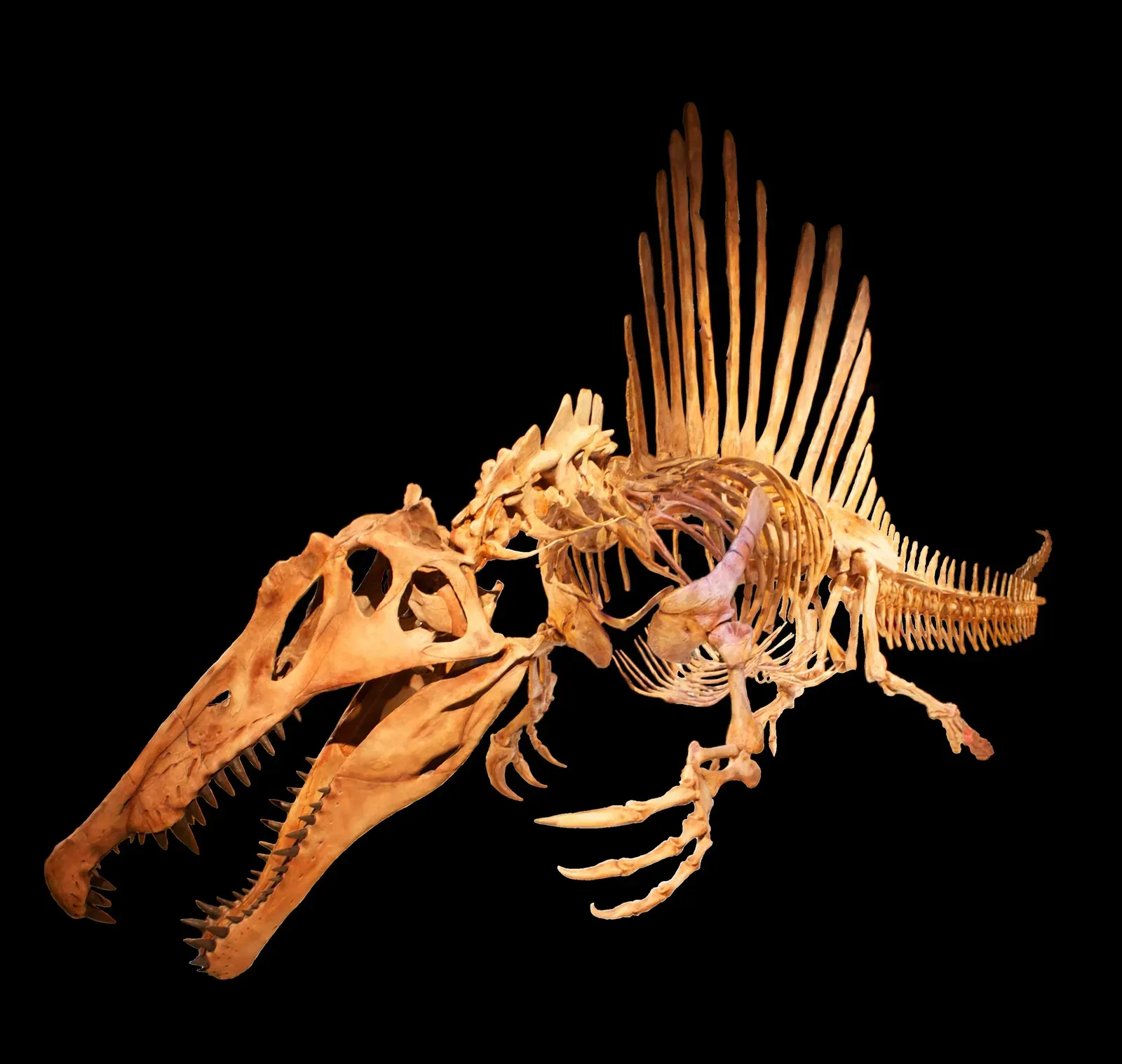
Very few dinosaurs have been reinvented as violently as Spinosaurus. The original fossils, discovered in the early 1900s, were destroyed in World War II, leaving only notes, photos, and scattered pieces behind. For decades, reconstructions were built around fragments and analogies with other theropods, drawing Spinosaurus like a T. rex with a sail on its back purely because that’s what seemed plausible with the limited data available.
Then more bones turned up in the 21st century, hinting at a semi-aquatic lifestyle, weirdly short hind limbs, and a body plan nothing like the land-stalking predator people grew up with. Each new find forced another radical redraw, and there still isn’t a completely agreed-upon version. Palaeontologists admit that for most of the 20th century, Spinosaurus was essentially a guess wearing a sail, and even now, major aspects of its posture and swimming style are under active debate.
Quick Compare
- Then (1915-1990s): Built from a single Egyptian specimen destroyed in an Allied bombing raid on Munich in April 1944, Spinosaurus was drawn as a land-bound predator, essentially a sail-backed T. rex.
- Now (2014-present): Newer partial skeletons recovered in North Africa point to a semi-aquatic hunter with unusually short hind limbs and a flexible tail built for swimming.
- Still unsettled: Exact swimming ability, hunting style, and overall body proportions remain hotly debated among palaeontologists today.
#8 – Pterosaur Heads With Ridiculously Oversized Crests
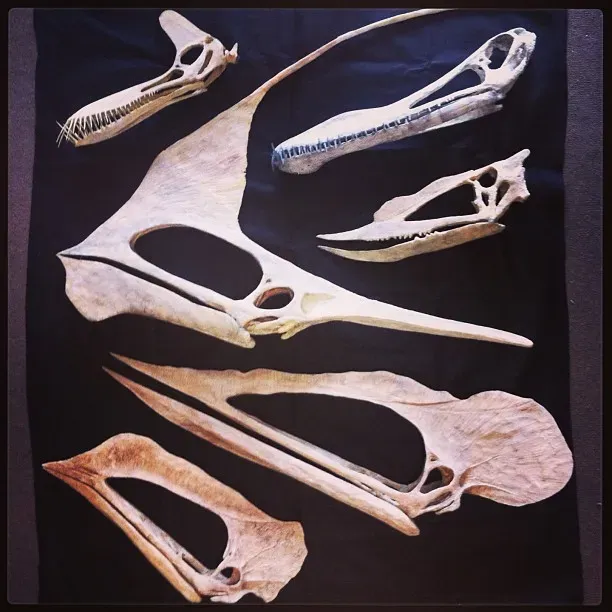
Early pterosaur fossils were often flattened roadkill in rock: fragile bones crushed and separated, with almost zero soft tissue preserved. Artists filling these gaps went wild, slapping on gigantic, colorful crests and smooth, bat-like wings to make them look dramatic. Most of those exaggerated head crests and wing membranes were pure speculation, loosely inspired by bats and birds rather than actual fossil evidence.
More complete finds and rare soft-tissue impressions have revealed complex wing fibers, thicker bodies, and crests that don’t always match the older, showy artwork. Some crests were indeed large, but others were modest or potentially absent in certain life stages or sexes. Palaeontologists now admit that the classic “paper-thin pterosaur with a sailboat mast on its head” was built more for visual impact than anatomical accuracy.
#7 – Woolly Mammoths With Overly Neat, Cartoon Fur Coats
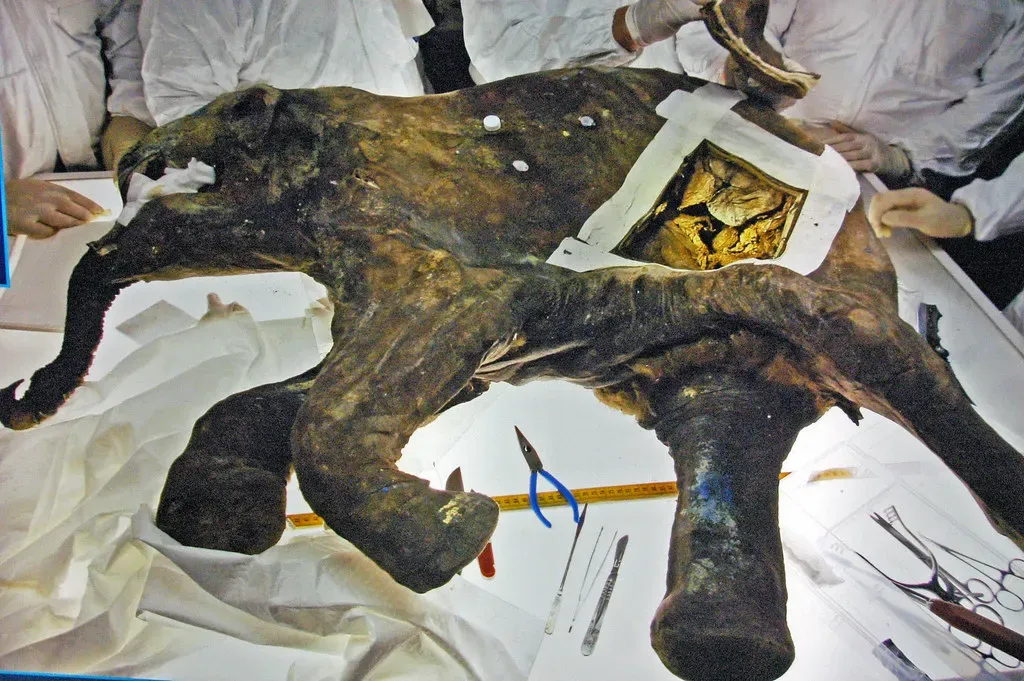
We tend to think Ice Age megafauna are safe from speculation because they’re relatively recent. That confidence is misleading. Early mammoth reconstructions leaned heavily on frozen carcasses, but those remains are often incomplete, distorted by thawing, and missing large sections of skin and soft tissue, so artists filled in the blanks with overly clean, even, shaggy coats, smooth tusks, and generic “elephant plus fur” bodies.
Modern analyses of hair density, isotopes, and skin fragments suggest a messier reality: patchy fur, seasonal molting, and possibly visible scars or skin folds. Body proportions, especially around the shoulders and humps, were initially guessed from partial skeletons and elephant comparisons. Some experts now argue that many museum mounts oversimplify mammoths into soft, friendly giants, when the real animals likely looked harsher and far more variable.
Worth Knowing
- Frozen mammoth carcasses are rarely fully intact – thawing, scavengers, and decay often strip away large sections of skin and hair before scientists ever examine them.
- Genetic and isotope studies increasingly point to a shaggier, patchier coat than the neat “shag carpet” look popularized by classic museum dioramas.
- Shoulder humps and body proportions were originally sketched from partial skeletons and living elephants, not from complete mammoth remains.
#6 – Early Saber-Toothed Cats With Broken-Neck Hunting Myths
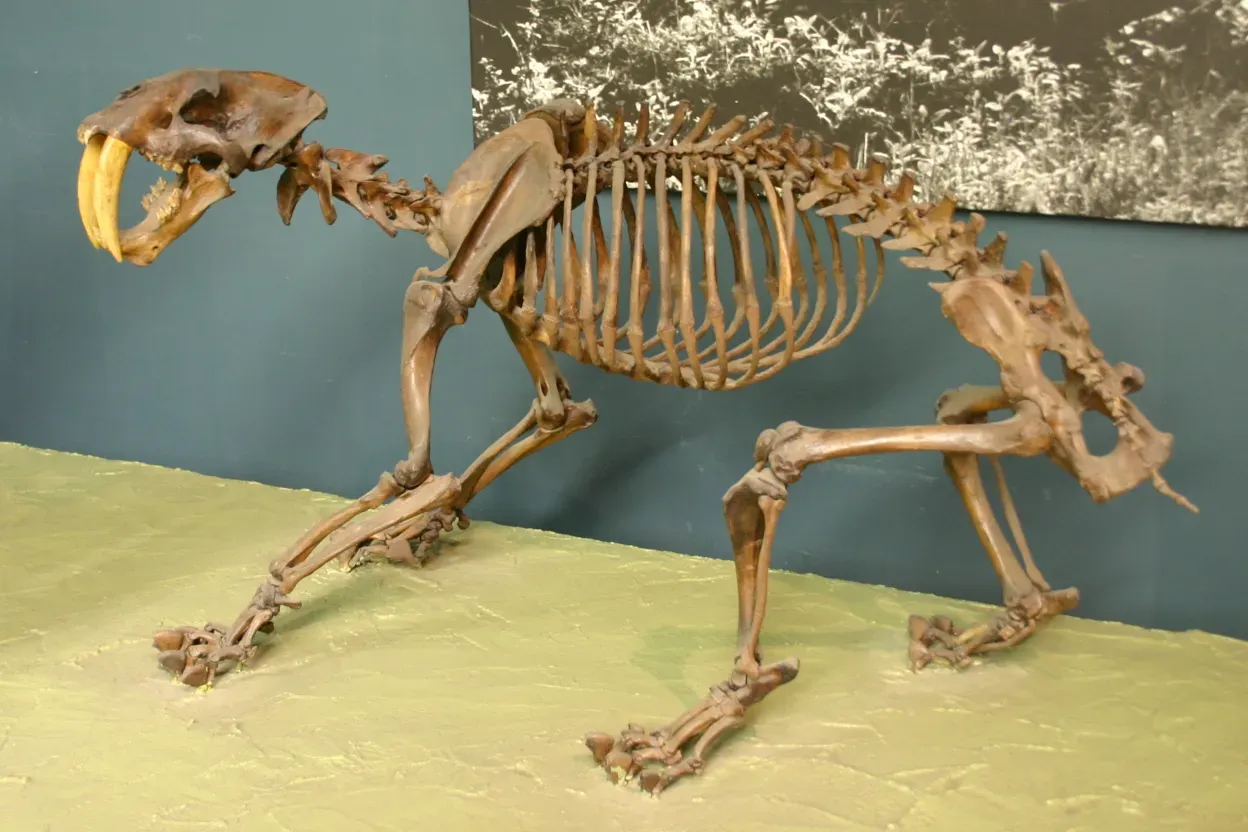
Saber-toothed cats like Smilodon have impressive skulls, but the rest of the body is often reconstructed from partial remains, sometimes of different individuals, plus modern big-cat analogies. The famous idea that they used those huge canines to stab and snap prey necks came as much from storytelling as from hard evidence, and with limited postcranial fossils early on, reconstructions defaulted to generic lion-like bodies with dramatic, over-muscular shoulders.
Later finds showed more robust limbs, different joint shapes, and biomechanical models that question the classic killing style entirely. Those enormous teeth were actually quite fragile against bone, suggesting a far more careful technique than the gory illustrations implied. Palaeontologists have since toned down the Hollywood violence, admitting that much of saber-tooth hunting behavior and facial soft tissue remains largely speculative.
#5 – Therizinosaurus: The “Sloth Dinosaur” Drawn Around Giant Claws
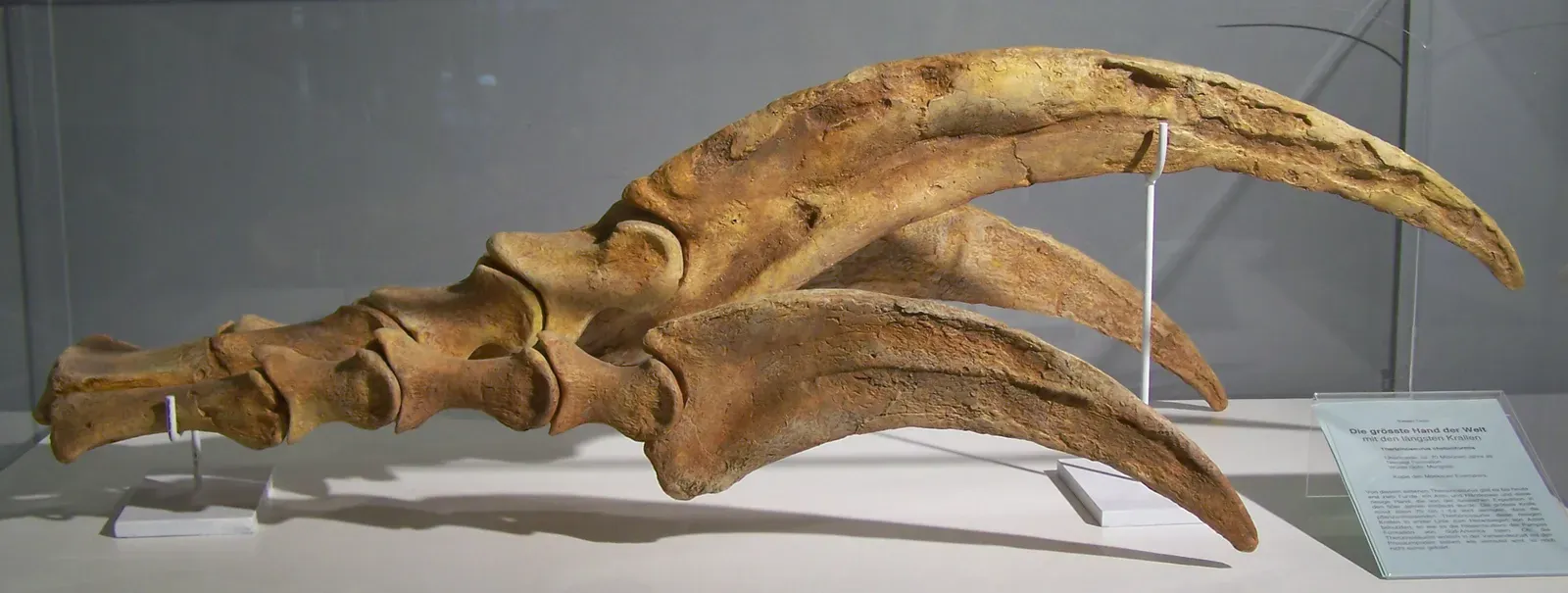
Therizinosaurus was originally known from almost nothing but its absurdly long claws. For decades, no one had a good idea what the rest of the animal looked like, so reconstructions bounced between monstrous predator and weird turtle-like creature. With only claws and fragments to work from, early depictions were basically horror-movie guesses: huge, scythe-armed killers prowling the Late Cretaceous.
It took additional related finds to push the idea that this was actually a pot-bellied, plant-eating, feathered dinosaur. Even now, much of its soft tissue, feather coverage, and exact posture remain hypothetical, borrowed from better-known relatives. Palaeontologists openly acknowledge that Therizinosaurus is one of those creatures where the iconography far outpaces the solidity of the data: huge claws plus educated guesswork equals a fan-favorite freak.
#4 – Dunkleosteus: Armored Fish Turned Into a Monster Head Only
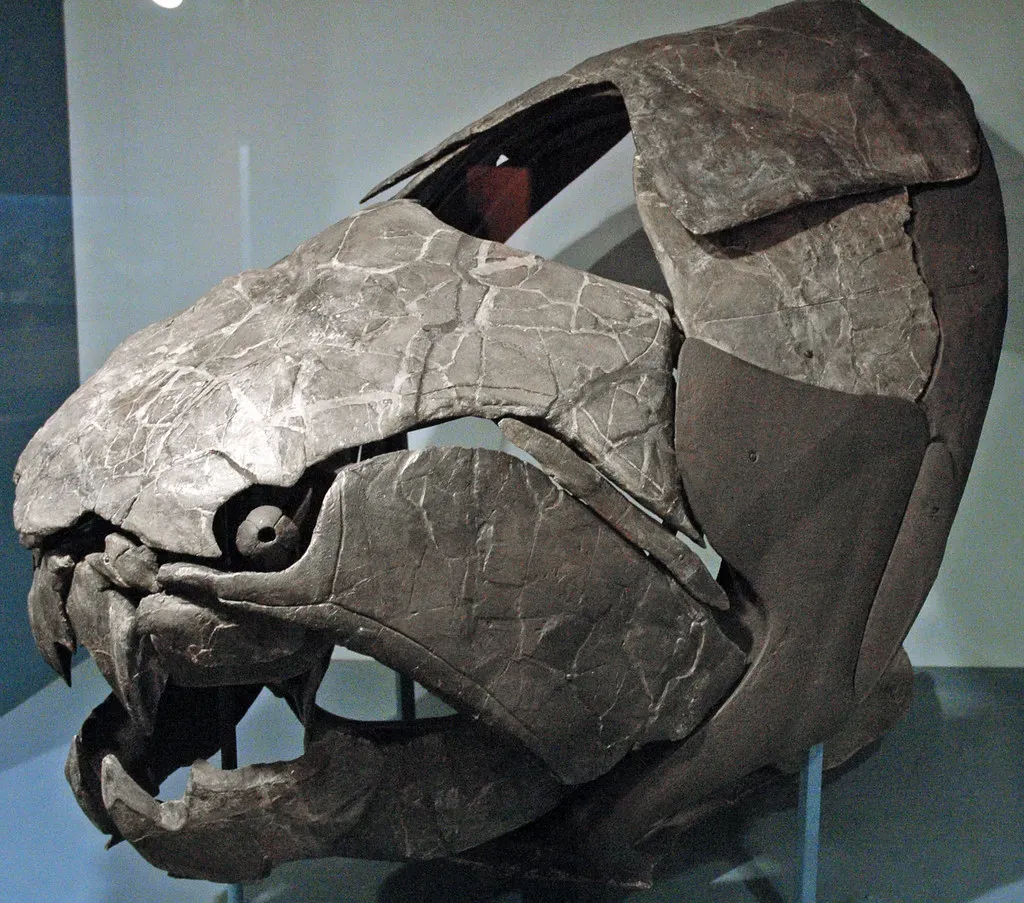
This prehistoric armored fish is usually shown as an enormous, torpedo-shaped predator with a massive bony head and a powerful tail. The truth is that we have great skull armor and almost no confirmed body fossils. The rest of Dunkleosteus, its exact length, tail form, and fin placement, is largely inferred from smaller, related species and modern fish analogues, meaning that sleek body you’ve seen in documentaries is an informed sketch, not an observed fact.
Early reconstructions exaggerated its size and bulk, turning it into a super-predator longer and heavier than the fragmentary evidence can confidently support. Newer research often scales it down and softens some of the more extreme bite-force claims. Even the dark, shark-like skin texture you picture has zero direct fossil backing. Palaeontologists will tell you plainly: Dunkleosteus is basically a very real head attached to a best-guess body.
#3 – “Prosauropods” and the Awkward Two-Legged, Four-Legged Flip-Flop
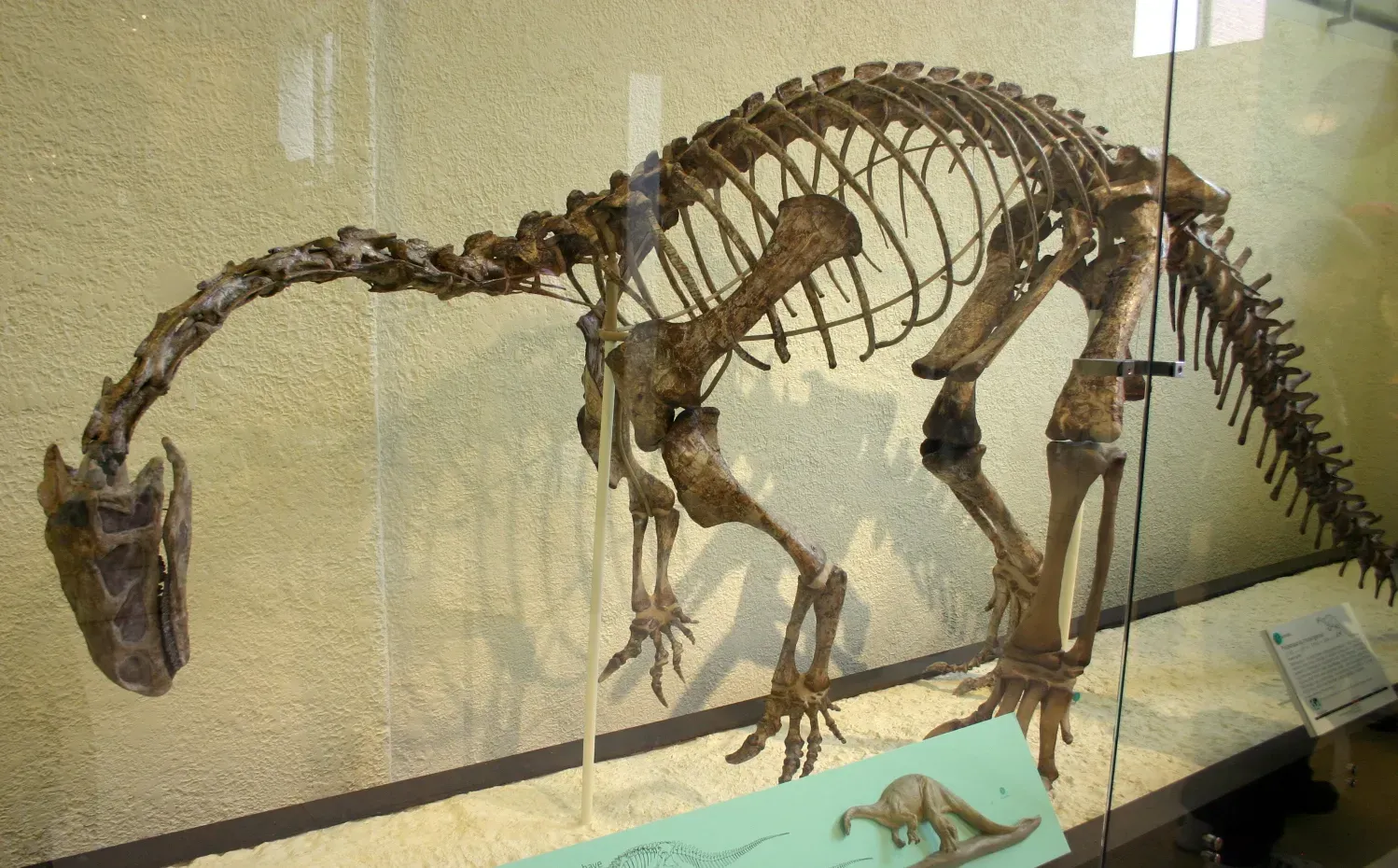
Early long-necked dinosaurs that predated giants like Apatosaurus, often lumped under “prosauropods,” suffered some of the messiest reconstructions in the field. Fossils were typically incomplete and scattered, sometimes mixing multiple individuals, and scientists couldn’t agree whether these animals were primarily bipedal or quadrupedal. Museum mounts and illustrations seesawed between tail-dragging lizards and semi-upright, kangaroo-like beasts.
As more specimens accumulated, limb proportions and joint surfaces suggested a more nuanced, flexible posture, but the damage was already done. For decades, textbooks showed awkward, semi-erect animals based largely on interpretive fashion rather than robust data. Palaeontologists now cite these early reconstructions as a textbook case of how filling in missing anatomy with whatever seems plausible can harden into “fact” in the public’s mind.
#2 – The First “Feathered Raptors” Drawn Like 1990s Movie Monsters With Plumes
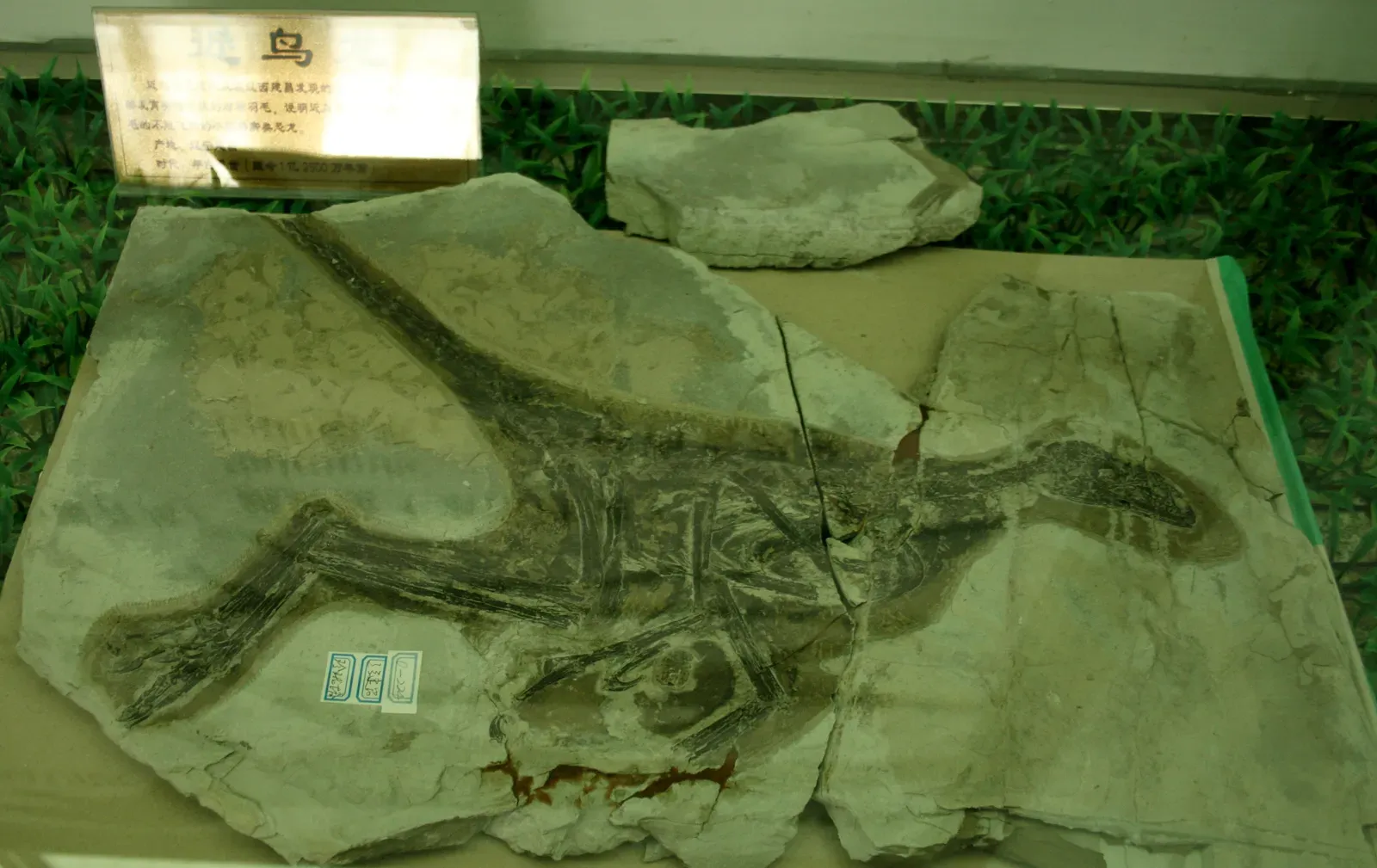
Once the first clear feathered dinosaur fossils came out of China, the scientific world pivoted fast. But the reconstructions that made it to the public often mashed together Hollywood raptor shapes with vague feather suggestions, creating animals that were still mostly scaly movie villains wearing decorative arm-wings and mohawks. Early feather impressions were patchy, fossils were flattened, and whole body regions were missing.
Artists, under pressure to deliver something thrilling and recognizable, kept much of the old sleek-lizard silhouette and just sprinkled feathers where they were easiest to paint. Only later, with more complete specimens and better preservation, did it become clear that many of these animals were likely fully feathered, far fluffier, and more bird-like than audiences were shown. Some palaeontologists now argue that the “half-feathered raptor” phase was almost entirely an aesthetic compromise, not honest uncertainty.
#1 – T. rex: The King Built on a Patchwork and Still Being Redrawn
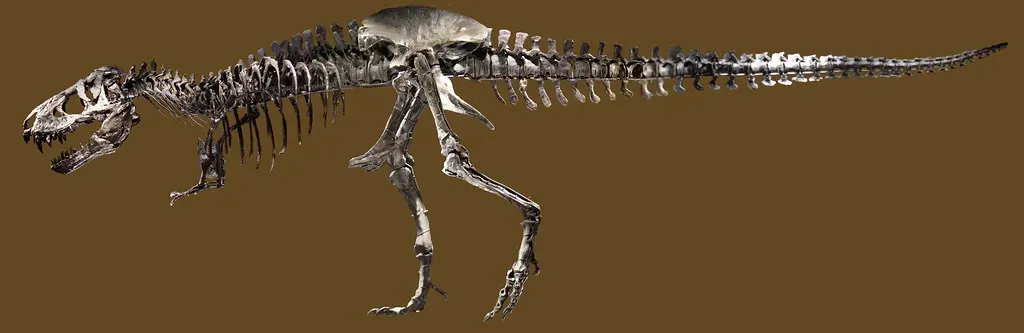
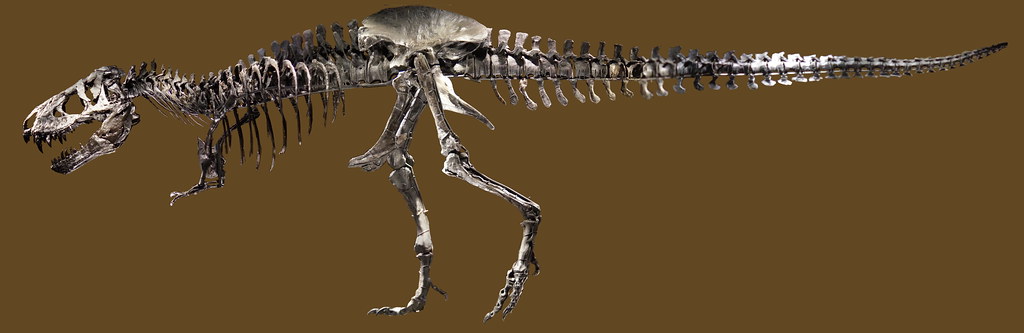
Tyrannosaurus rex is marketed as the most “known” dinosaur on Earth, but a surprising amount of what you picture is still guesswork. Yes, we have several good skeletons. But when it comes to lips versus exposed teeth, feather coverage, exact bulk, skin texture, and even basic posture, the data are incomplete and actively debated.
Early reconstructions gave T. rex an upright, tail-dragging stance. Later, it became a horizontal, hyper-muscular sprinter. Now, some studies argue it was heavier and slower than we were told as kids. Soft tissues remain the biggest blank: crocodile-like scales, sparse juvenile feathers, muscular lips covering the teeth? These details massively change how it looks, yet the hard fossil evidence is thin and often indirect. Behind the confident CGI and museum mounts, palaeontologists quietly argue over models, analogies, and statistical reconstructions. The “King of the Dinosaurs” you know is a scientifically constrained illustration, not a definitive portrait, and it will almost certainly keep changing.
At a Glance
- 1910s-1960s reconstructions gave T. rex an upright, kangaroo-style tail-dragging posture that modern skeletal analysis has fully abandoned.
- By the 1990s, a horizontal, hyper-athletic sprinter had replaced the old tail-dragger in the public imagination.
- Ongoing debates cover whether its teeth were covered by lizard-like lips, how much of its body carried feathers, and just how fast it could actually move.
The Bottom Line
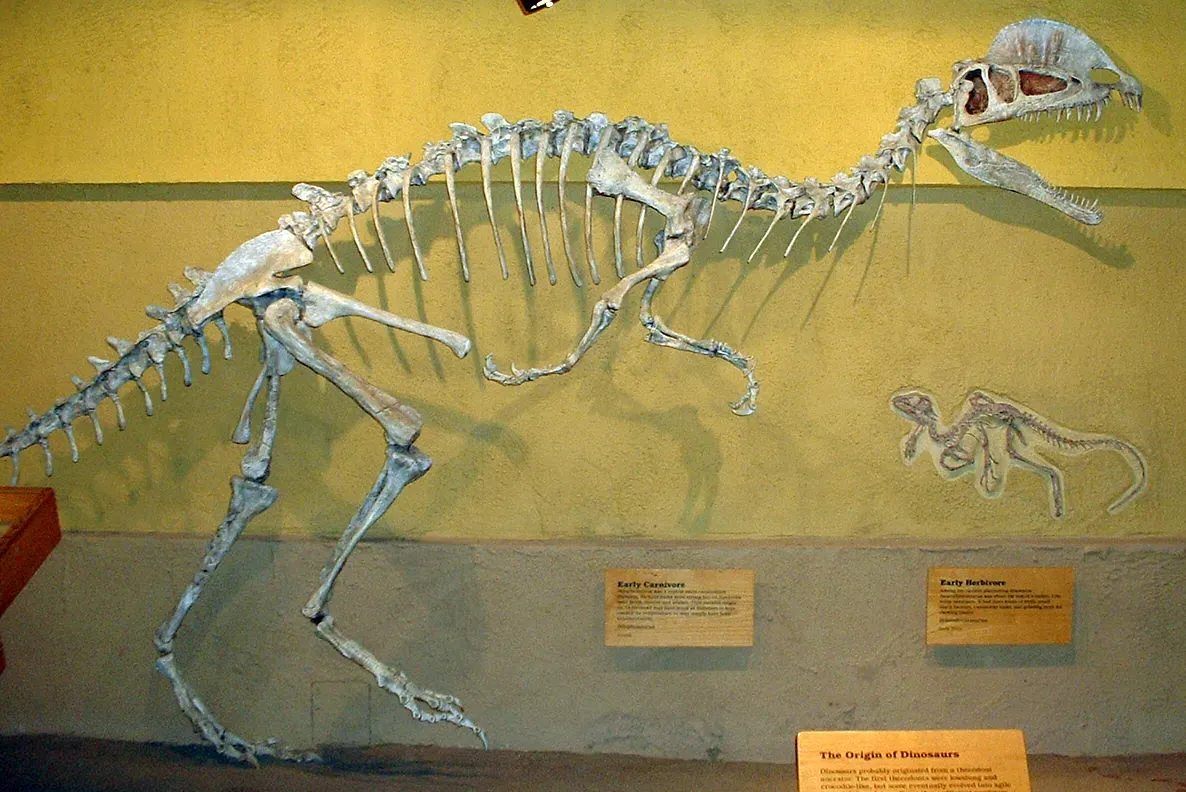
When you zoom out, a pattern appears: the most famous fossils aren’t just bones, they’re stories, stitched together from fragments, comparisons, and whatever theory was fashionable at the time. Brontosaurus’s wrong head, Spinosaurus’s shifting body plan, Dunkleosteus’s imaginary tail, even T. rex’s face and skin, are all reminders that “iconic” often means “stabilized guess,” not settled truth.
That doesn’t make palaeontology dishonest; it makes it human. The field advances by admitting past overconfidence and revising what the public thinks is solid ground. If anything, the real scandal isn’t the guesswork itself, it’s how slowly museums and media update the pictures once the guesswork gets corrected.
Which reconstruction on this list do you think is the hardest for people to let go of, and what do you suspect we’re still getting wrong today?