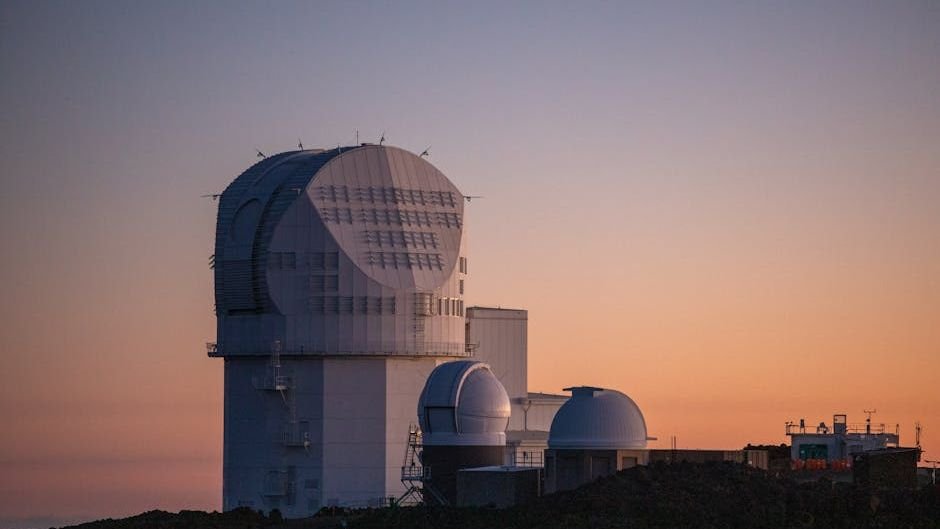
A Legacy Built on Hubble’s Shoulders (Image Credits: Pexels)
NASA officials unveiled the Roman space telescope at the Goddard Space Flight Center in Maryland this week, marking a pivotal step toward deeper cosmic understanding. The spacecraft stands ready to survey enormous sky regions, potentially cataloging tens of thousands of exoplanets while investigating dark matter and dark energy. This development arrives at a crucial moment, 36 years after the Hubble Space Telescope transformed astronomy, as scientists seek answers to enduring questions about the universe’s composition and expansion.
A Legacy Built on Hubble’s Shoulders
The Roman telescope honors Nancy Grace Roman, the astronomer known as the “Mother of Hubble” for her instrumental role in that mission’s development. Construction spanned more than a decade and exceeded $4 billion in costs, culminating in a 12-meter silvery structure equipped with expansive solar panels. NASA Administrator Jared Isaacman described it during the unveiling as a tool that “will give Earth a new atlas of the universe.”
Positioned 1.5 million kilometers from Earth, the telescope will orbit in a stable vantage point. Transport to Florida precedes its launch aboard a SpaceX rocket, scheduled no earlier than September. Engineers emphasized its infrared capabilities, which allow observation of ancient light from billions of years past, offering a window into the early universe.
Field of View Dwarfs Predecessors
Engineers at Goddard highlighted Roman’s primary advantage: a field of view at least 100 times larger than Hubble’s. This wide-angle design enables sweeping scans of vast cosmic territories in single observations. Systems engineer Mark Melton noted that the telescope will transmit 11 terabytes of data daily to ground stations.
Such volume represents a leap forward. Melton explained, “In the first year, we’ll have sent down more data than Hubble will have for its entire life.” The influx will fuel detailed analyses, pinpointing targets for follow-up by telescopes like James Webb.
| Capability | Hubble | Roman |
|---|---|---|
| Field of View | Standard | 100x larger |
| Daily Data Output | Limited | 11 terabytes |
| First-Year Data | Less than lifetime total | Exceeds Hubble’s full archive |
Cataloging Exoplanets and Celestial Census
NASA’s Science Mission Directorate Associate Administrator Nicky Fox outlined the mission’s ambitious inventory goals. The telescope aims to detect tens of thousands of planets beyond our solar system, alongside billions of galaxies, thousands of supernovae, and tens of billions of stars. Fox stated, “Roman will discover tens of thousands of new planets outside our solar system. It will reveal billions of galaxies, thousands of supernovae and tens of billions of stars.”
These observations will refine estimates of planetary prevalence across the galaxy. Researchers anticipate insights into planetary formation and potential habitability zones. The data trove will also map stellar populations and explosive events, contributing to a fuller picture of galactic evolution.
Probing Dark Matter and Energy
Dark matter and dark energy, estimated to comprise 95 percent of the universe, remain elusive despite decades of study. Dark matter appears to bind galaxies, while dark energy accelerates cosmic expansion. Roman’s infrared gaze will trace these influences through gravitational effects on light and matter distributions.
Michigan State University’s Darryl Seligman, an assistant professor of physics and astronomy, pointed to specific probes: “how the dark matter structures itself throughout cosmic time” and efforts to “calculate how fast galaxies are moving away from us.” The mission complements efforts by Europe’s Euclid telescope and Chile’s Vera Rubin Observatory, potentially reshaping models of cosmic structure.
What matters now: Roman’s data surge will demand advanced computing and collaboration, accelerating discoveries in exoplanet demographics and dark component behaviors.
Toward Launch and Enduring Impact
Astrophysicist Julie McEnery, who led the Roman project, underscored its potential for unforeseen breakthroughs. The mission builds on Hubble’s legacy while addressing unresolved frontiers. Melton speculated, “If Roman wins a Nobel Prize at some point, it’s probably for something we haven’t even thought about or questioned yet.”
Launch preparations proceed amid high expectations. Success could redefine priorities for future observatories. Ultimately, Roman positions astronomers to confront the universe’s greatest riddles with unprecedented precision and scale.