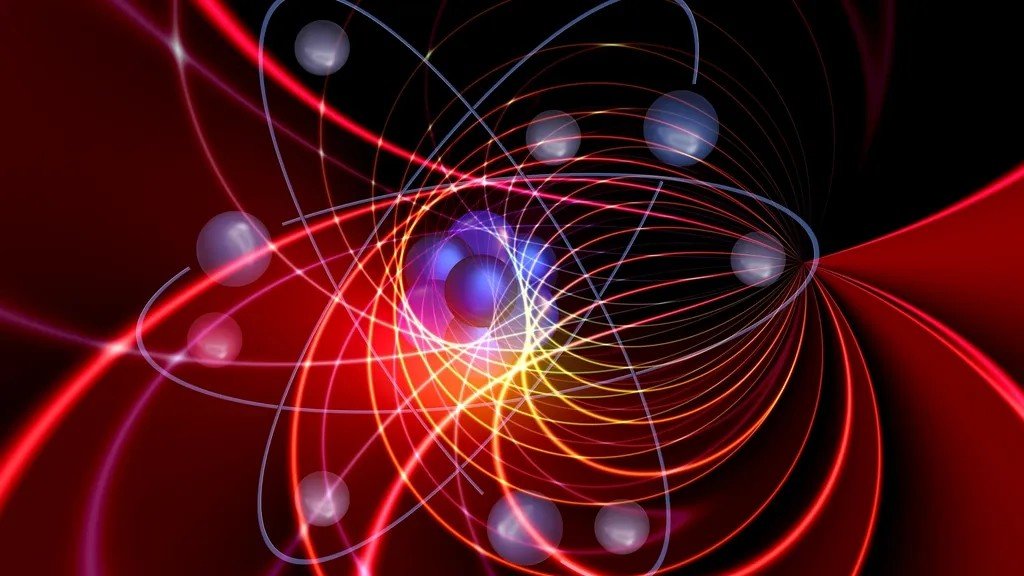

If you have ever stared at the night sky and felt that quiet tug of mystery, quantum physics is basically that feeling turned into an entire branch of science. You are not just made of atoms; you are made of rules that are stranger, softer, and more flexible than anything your everyday experience prepared you for. At the quantum level, particles can be waves, choices can seem to influence the past, and the very idea of “solid reality” starts to wobble.
Yet, this isn’t just weird trivia for science nerds. Quantum physics is quietly running your life: it is inside the chips in your phone, the lasers in your checkout scanner, the MRI that images your brain, and the GPS that gets you home. As you follow these ideas down to the smallest scales, you start to see something wild: reality is not a rigid machine, it is more like a shimmering web of possibilities, patterns, and relationships. Once you see that, you cannot unsee it.
The Quantum World: Where Certainty Falls Apart
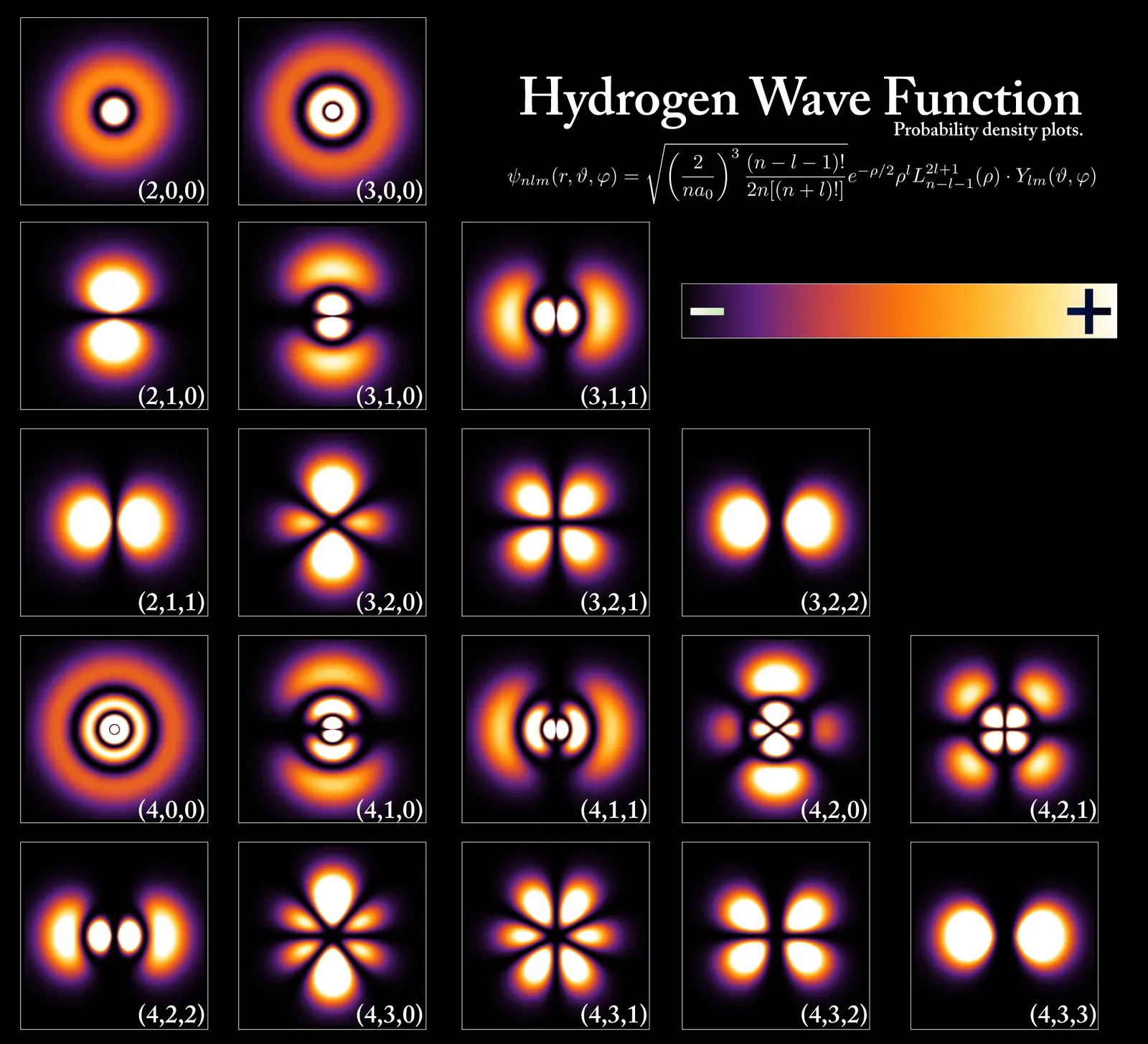
In your everyday life, things seem straightforward: a ball is either here or there, a light is either on or off. Quantum physics tells you that this sense of certainty is more of a convenience than a truth. At very small scales, particles do not sit neatly in one place; instead, they are described by a spread of possibilities, a kind of probability cloud that only sharpens into a definite outcome when you measure it.
This is where the famous uncertainty principle comes in. You cannot know both the exact position and the exact momentum of a particle at the same time, no matter how perfect your tools are. It is not about bad instruments; it is built into the way nature works. So instead of a clockwork universe grinding away predictably, you find a universe that leaves room for uncertainty and chance. Reality, at its core, is less like a perfectly written script and more like improv – structured, but never fully locked down until the moment happens.
Wave-Particle Duality: When Light Refuses to Pick a Side
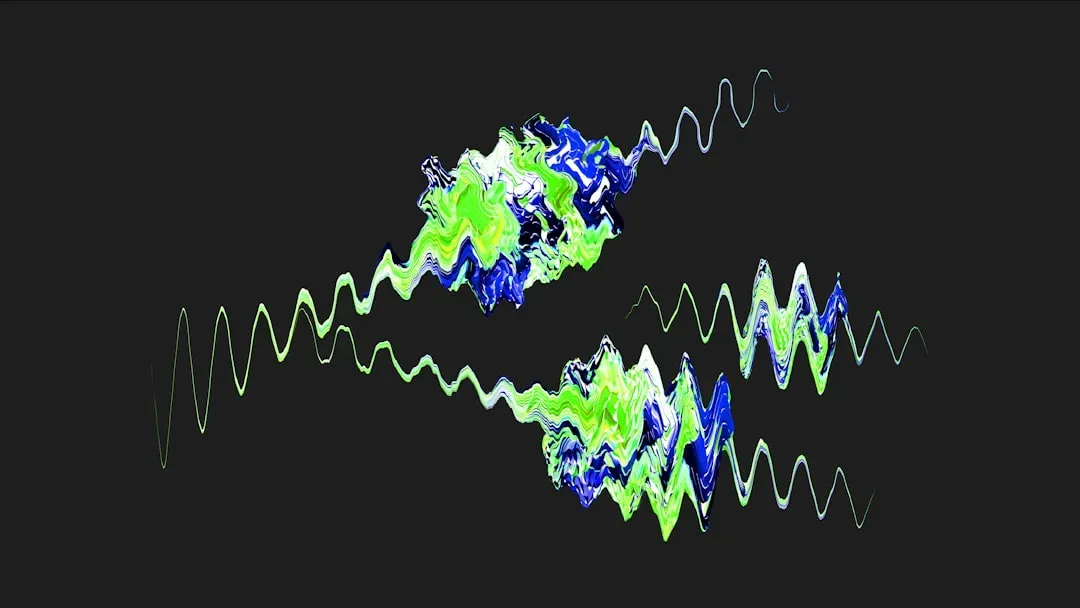
If someone asked you whether light is made of particles or waves, classical thinking would push you to choose one. Quantum physics forces you to hold both ideas at once. In some experiments, light behaves like a stream of tiny packets of energy, which you call photons. In others, it behaves like a smooth, spreading wave that can interfere with itself, creating beautiful, precise patterns that no simple particle model can explain.
What makes this even more unsettling is that this dual nature is not just for light. Matter itself – electrons, atoms, even larger groups of particles – can show wave-like behavior under the right conditions. You start to realize that the neat categories you rely on are partly mental shortcuts. At a deep level, what you call a “particle” is a concentrated expression of a more general underlying wave of possibility. Reality is not picking a side; it is you who is trying to force it into your familiar boxes.
Superposition: Living in Many Maybes at Once
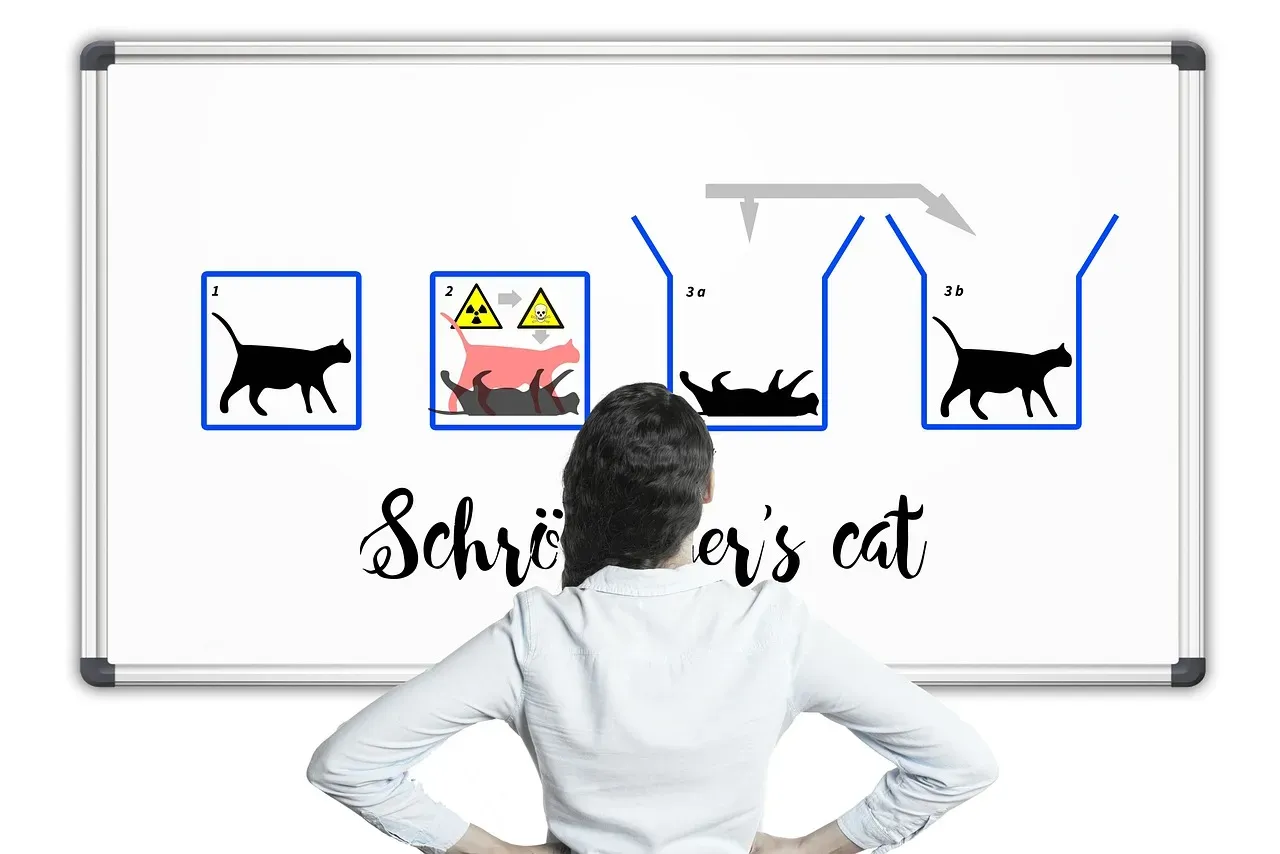
Superposition is one of those ideas that sounds like science fiction until you realize it is standard quantum physics. Instead of being in one definite state, a quantum system can exist in a blend of states at the same time. An electron can be in a superposition of spinning “up” and “down,” a photon can be in a superposition of several paths, and an atom can be in a superposition of energy levels, all before you look.
When you measure the system, you always get a single concrete result, but the probabilities of those results are shaped by the full superposed state beforehand. It is as if the quantum world explores a whole landscape of maybes, and your measurement pins down one path out of many. In your daily life, you are used to clear either–or choices, but at the fundamental level, nature leans heavily on both–and until something forces a decision. Once you see superposition this way, you start to think of reality not as a single fixed track, but as a branching network of possibilities that only solidify when they must.
Entanglement: Invisible Threads Stitching the Cosmos Together
Entanglement is the part of quantum physics that really pushes your intuition to the edge. When two particles become entangled, they share a joint quantum state. If you measure one, you instantly know something about the other, even if it is on the other side of the galaxy. You are not sending a signal faster than light, but you are uncovering a deep connection that was already there in the shared quantum description.
This phenomenon has been tested repeatedly and is no longer just a philosophical curiosity. You now see it as a resource, something you can harness in quantum communication, cryptography, and computing. For you, entanglement hints that reality is not fundamentally made of separate pieces, but of relationships. Instead of thinking in terms of individual objects, you start seeing a woven tapestry where cutting one thread affects the tension across the whole fabric. The universe looks less like a scattered pile of marbles and more like a single, deeply correlated whole.
Quantum Fields: Particles as Ripples in a Deeper Ocean
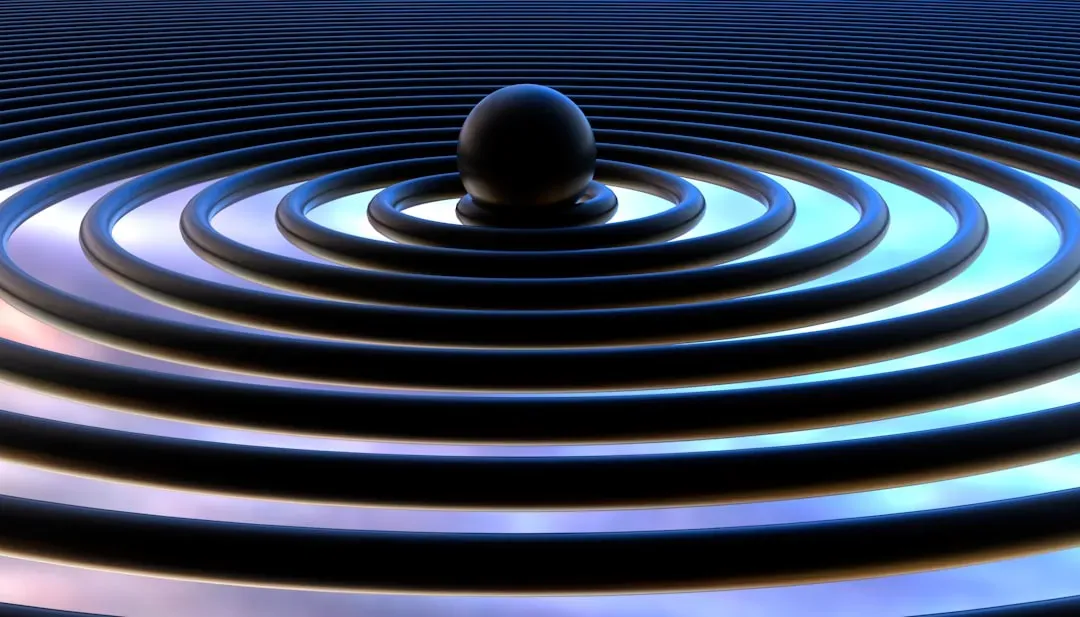
If you zoom out from individual particles and ask what they really are, quantum field theory offers you a powerful answer. According to this framework, the basic stuff of the universe is not particles, but fields that fill all of space. A particle is just a localized ripple or excitation in one of these fields, the way a small splash on the surface of a lake is just a disturbance in the water beneath.
This view radically changes how you picture “empty space.” What looks like a vacuum to you is actually a restless sea of quantum fields, constantly fluctuating. Even when nothing seems to be happening, the fields carry energy, structure, and potential. Forces between particles emerge from interactions between these fields, binding matter together and shaping the behavior of everything from atoms to galaxies. When you embrace this picture, the hidden fabric of reality stops being a metaphor and becomes a literal network of dynamic fields, humming quietly under every moment of your life.
From Lasers to GPS: How Quantum Rules Run Your Everyday Life
It is tempting to treat quantum physics as something distant, locked away in labs and chalkboard equations, but you are already living in a quantum-powered world. The laser in your barcode scanner, the LED in your screen, and the chip in your smartphone all rely on quantum principles. The way electrons occupy specific energy levels in materials, and how they jump between those levels, underpins the design of semiconductors and light-emitting devices that you use constantly.
Even your sense of location depends on quantum effects. GPS satellites rely on extremely precise atomic clocks, which exploit quantum transitions between energy levels in atoms to keep time with extraordinary accuracy. Without that, your navigation apps would quickly drift and fail. Medical imaging techniques like MRI also lean heavily on quantum behavior of atomic nuclei. So while the equations can look abstract, their consequences are very concrete: the invisible quantum rules determine what is possible in your technology, your medicine, and your communication.
Quantum Computing: Turning Weirdness into Raw Power
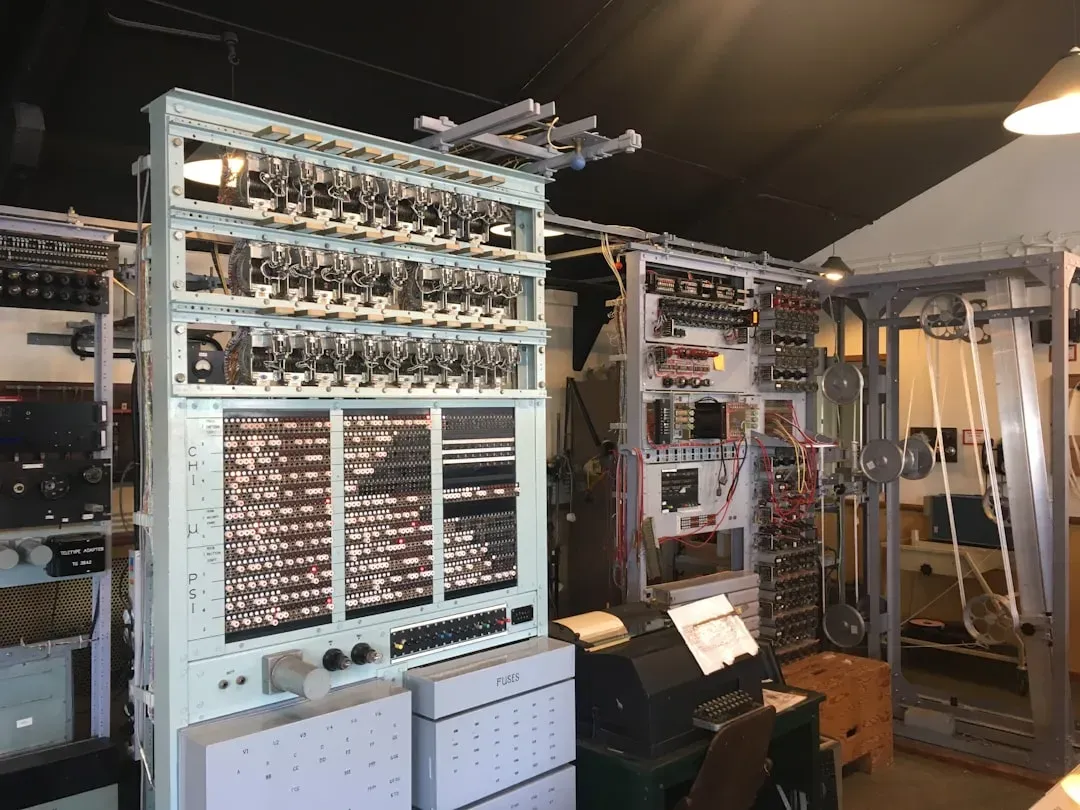
When you hear about quantum computers, it can sound like marketing hype, but the core idea comes straight from the strange properties you have already met. Instead of bits that are just zeros or ones, a quantum computer uses quantum bits, or qubits, that can exist in superpositions of states. By entangling many qubits, you can, in principle, process a vast number of possible configurations at once, exploring a problem space in ways a classical machine simply cannot.
This does not mean a quantum computer is just a faster version of your laptop; it is more like a different kind of mind, one that excels at certain tasks such as factoring large numbers, simulating molecules, or optimizing complex systems. The engineering challenges are enormous: you have to protect fragile quantum states from noise, keep systems extremely cold, and correct for errors without destroying the information. Yet, progress is real, and as these machines mature, they may let you design new materials, drugs, and algorithms by directly harnessing the underlying quantum fabric instead of fighting against it.
What Quantum Physics Reveals About Reality (and About You)
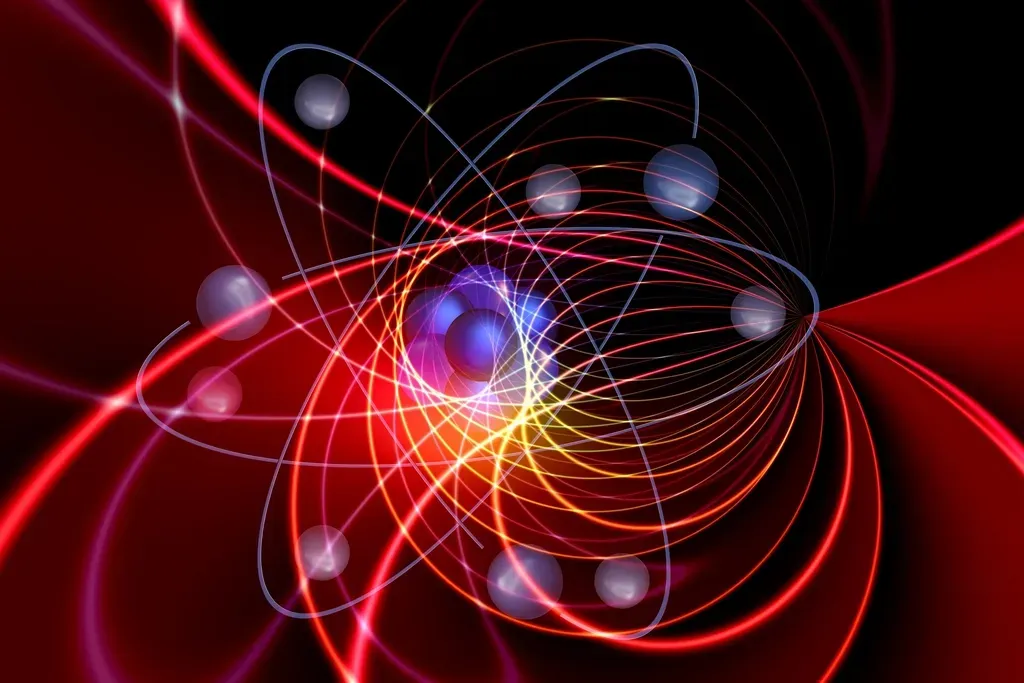
As you absorb these ideas – uncertainty, superposition, entanglement, quantum fields – your picture of reality slowly shifts. The world stops looking like a pile of tiny billiard balls and starts to feel more like a web of relationships and possibilities. What you consider “solid” is, at the deepest level, a pattern in restless fields. What you consider “separate” is, in many cases, profoundly connected. The rules are not intuitive, but they are astonishingly consistent and have passed every experimental test so far.
On a more personal level, quantum physics nudges you toward a kind of humility and wonder. You realize that your everyday experience is just one smooth surface of a much stranger underlying ocean. You are part of that ocean, made from the same quantum stuff, following the same subtle rules. When you look at your own life through that lens, you may feel a little more comfortable with uncertainty, a little more open to possibility, and a lot more amazed that anything as rich and complex as your experience can emerge from ripples in an invisible fabric.
In the end, quantum physics does not just rewrite the equations of science; it reshapes the way you feel about being alive in this universe. You are walking around inside an intricate, vibrating, probabilistic tapestry, and even your simplest actions are woven into that deeper pattern. The more you learn about this hidden fabric of reality, the more you see that mystery is not a bug in the system; it is part of its design. Knowing that, how could you ever look at an ordinary day and still think it is ordinary?