

You probably grew up hearing a lot of confident statements about how your body works. You were told to drink eight glasses of water every day, that you only use ten percent of your brain, and that shaving makes your hair grow back thicker. These ideas feel familiar and comforting, almost like rules of the game you never thought to question.
But when you look at what science actually says, a surprising number of these so-called facts fall apart. Your body is far stranger, smarter, and more adaptable than the myths give it credit for. Once you see which beliefs are wrong, you can ditch a lot of unnecessary guilt and worry – and start treating your body with a bit more respect and curiosity.
You Do Not Only Use Ten Percent Of Your Brain
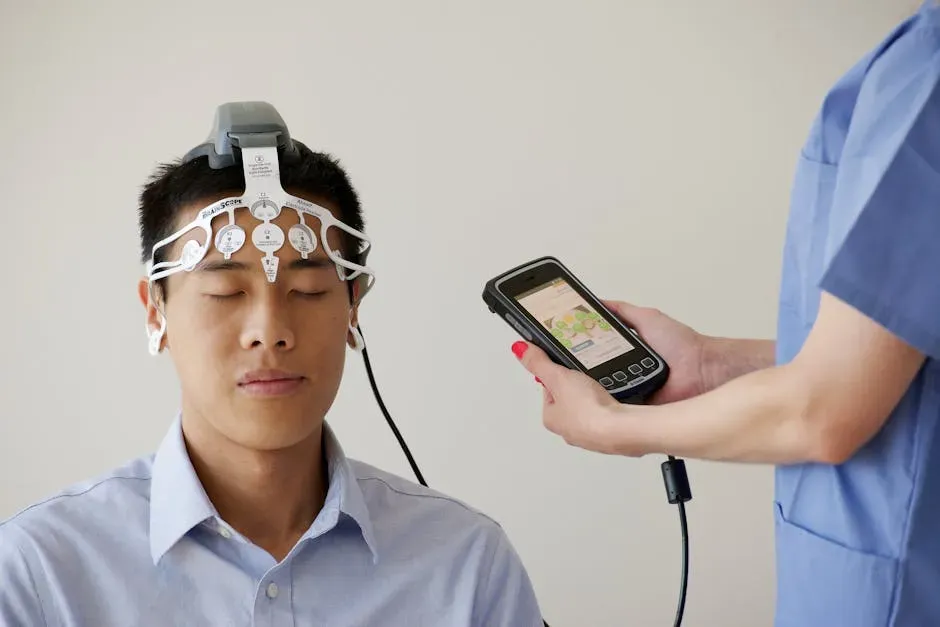
This one sounds dramatic and humbling: the idea that you walk around wasting ninety percent of your brain’s potential. You might even have been told that if you could just “unlock” the rest, you’d suddenly become a genius. Neuroscience, though, paints a very different picture of what is going on in your head.
When you look at brain imaging studies, you see activity spread across many regions, even when you do something simple like read a word, move a finger, or remember a face. Different networks light up for different tasks, but over the course of a day, you use nearly every part of your brain. You are not sitting on an ocean of unused gray matter; you are coordinating a dense, busy city of neurons working almost nonstop to keep you alive, thinking, and aware.
Your Tongue Does Not Have Neat “Taste Zones”

You might remember that classroom diagram of a tongue divided into sections: sweet at the tip, salty and sour on the sides, bitter at the back. It looks tidy and logical, and it stuck in a lot of people’s minds. The only problem is that it seriously misrepresents how your taste system actually works.
You have taste receptors for sweet, sour, salty, bitter, and umami spread all over your tongue, not just in rigid zones. Some regions are slightly more sensitive than others, but you can detect all major tastes across most of the surface. When you enjoy a bite of food, your brain blends signals from many receptors at once, more like an orchestra than a row of separated instruments lined up on your tongue.
You Do Not Need Exactly Eight Glasses Of Water A Day

How much water you need depends on many moving parts: your size, activity level, climate, diet, and even how much water you get from fruits, vegetables, and other drinks. Your thirst mechanism is generally reliable; if you listen to it and keep your urine a pale yellow, you are usually doing fine. For most people, obsessing over a fixed number adds stress without adding health benefits, unless a doctor has given specific instructions for a medical reason.
Cracking Your Knuckles Does Not Cause Arthritis

If you like cracking your knuckles, you have probably been warned you will regret it when you are older. The sound can be annoying to others, so the arthritis threat is a convenient way to make you stop. But when researchers look at joints over time, the scary claim does not hold up the way people assume.
The popping sound you hear usually comes from gas bubbles rapidly forming or collapsing in the fluid that cushions your joints, not from bones grinding or ligaments tearing. Long-term studies comparing people who cracked their knuckles daily with those who did not have not found a clear increase in arthritis just from the habit. You might still irritate the surrounding tissues if you overdo it, but the idea that you are dooming your hands to arthritis simply by cracking them is not supported by solid evidence.
Shaving Does Not Make Hair Grow Back Thicker Or Darker

Shaving cuts hair at the surface of your skin, giving it a blunt edge. As it grows out, that blunt tip can feel coarser and look more noticeable, especially compared to the softer, tapered end of uncut hair. But shaving does not affect the root, the follicle, or the hormones that control growth and color, so it cannot change how thick or dark the hair ultimately becomes. What you are seeing is an illusion created by shape and contrast, not a fundamental shift in how your body produces hair.
You Do Not Lose Most Of Your Body Heat Just Through Your Head

Heat escapes from any uncovered part of your body, and your head is often just the part that is left bare when you are bundled up. If you went outside wearing only a T-shirt and no pants, you would not insist that you lose most of your heat through your legs. Your head is important, and you should keep it warm, but you do not need to believe that it is a magical heat drain that breaks the rules of physics.
Muscle Does Not Turn Into Fat When You Stop Working Out

Muscle and fat are two completely different types of tissue with distinct cells and functions. When you stop working out, your muscles can shrink because they are no longer being challenged, and your body might store more fat if you keep eating the same way while moving less. To your eyes, that shift can look like a “conversion,” but what you are really seeing is muscle mass decreasing while fat mass increases, not a magical swap from one type to another.
Your Memory Does Not Work Like A Perfect Video Recorder
Each time you recall something, you are reconstructing it from bits and pieces, weaving together sensory traces, emotions, and later information you picked up along the way. That means your memory can feel certain and still be wrong, not because you are lying, but because the brain is designed to prioritize meaning and usefulness over perfect accuracy. Understanding this helps you be more humble about your recollections and more compassionate when other people’s memories do not match yours exactly.
When you step back and look at all these myths at once, a pattern jumps out: you have been taught to treat your body as fragile, clumsy, or mysteriously wasteful, when in reality it is adaptable, efficient, and surprisingly well-designed. Many of the old “facts” you heard were simplified stories, half-truths, or misunderstandings that stuck around because they sounded neat or made it easier to control behavior. By letting go of them, you give yourself permission to listen more closely to your own signals and to ask better questions instead of just accepting hand-me-down rules.
You do not need to become a scientist to benefit from this; you just need to stay curious and a little skeptical when someone tells you an absolute rule about how your body supposedly works. The more you understand what is really going on under your skin, the less fear and confusion you carry – and the more you can make choices that actually fit you. Now that you know some of the biggest myths, which “fact” about your body are you most ready to stop believing?